IB Chemistry SL 1.4.6 Avogadro's Law

Practise using equal gas volumes at the same temperature and pressure as direct measures of mole ratio. Read coefficients from a balanced gas equation to identify the limiting…

Syllabus
First assessment 2025
Objective
1.4.6
Level
SL

Exam points

  • translate balanced-equation coefficients directly into gas-volume ratios at fixed conditions
  • identify the limiting gas from the available volumes before calculating product volume
  • subtract the reacting volume to determine how much excess gas remains after completion

1.4.6—Avogadro's law question 1

[Maximum number: 1]

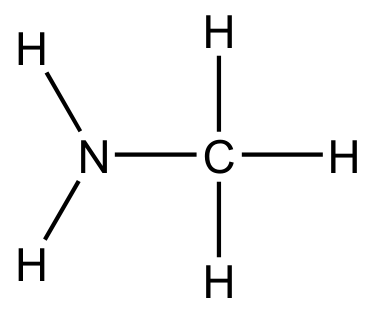
Two hydrides of nitrogen are ammonia and hydrazine, N2H4\mathrm{N}_{2} \mathrm{H}_{4}. One derivative of ammonia is methanamine whose molecular structure is shown below.

Figure for Question 1.4.6—Avogadro's law question 1 — IB Chemistry SL

Calculate, showing your working, the mass of hydrazine needed to remove all the dissolved oxygen from 1000dm31000 \mathrm{dm}^{3} of the sample.

Calculate the volume, in dm3\mathrm{dm}^{3}, of nitrogen formed under SATP conditions.
(The volume of 1 mol of gas =24.8dm3=24.8 \mathrm{dm}^{3} at SATP.)

All question bank results loaded