EduNinja

A-Level CAIE Biology A218.3 ConservationQuestion Bank

Question 1

[Maximum number: 4]

The St. Lawrence river in Canada has been identified as an area with very high biodiversity.

Question 1(c)

(a)

The St. Lawrence river runs through very busy industrial areas. It has many ports for cargo ships, a good fishing trade and many whale-watching boat trips for tourists.

Decades of whale hunting has caused a large decrease in whale population sizes. Since whale hunting was banned, whale populations have not recovered.

Seven of the thirteen whale species in the St. Lawrence river have been rated as endangered species.

Suggest two reasons why the populations of whales have not recovered since the ban on whale hunting.

[ 2 ]

Question 1(d)

(b)

Fat samples from under the skin of individual whales of several different species were taken. These were analysed and the concentrations of the toxins DDT and PCBs were measured.

Suggest why whales were found to have accumulated very high concentrations of DDT and PCBs in their fatty tissues.
[ 2 ]

Question 1

[Maximum number: 6]

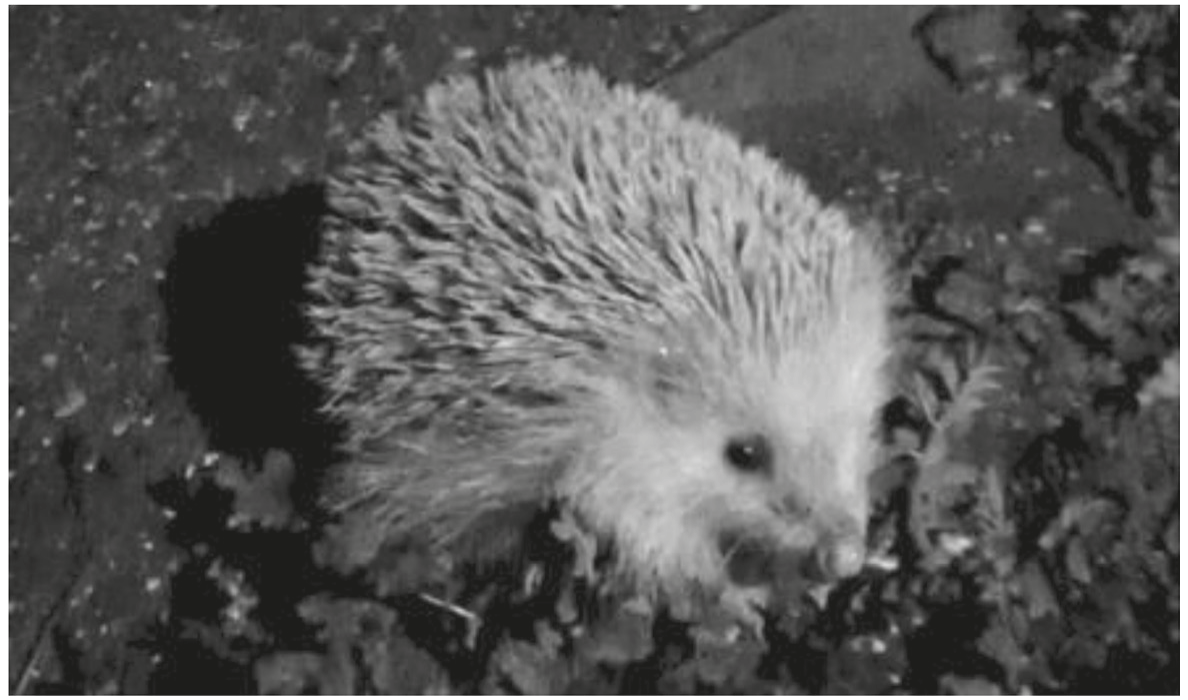
The European hedgehog, Erinaceus europaeus, is a small omnivorous mammal. Its body is covered in spines, which are usually brown. A rare variant, which lacks the brown pigment, has blonde (pale yellow) spines. This characteristic is coded for by a recessive allele.

Fig. 1.1 shows a European hedgehog with blonde spines.

Fig. 1.1

Fig. 1.1

Question 1(a)

(a)

Alderney is a small island between the UK and France. Hedgehogs were not found on Alderney until the 1960s, when three pairs of hedgehogs were introduced to the island. The hedgehogs started to breed and some of the offspring had blonde spines.

By 2017, the population of hedgehogs, including individuals with brown spines and individuals with blonde spines, had increased to approximately 600.

[ 2 ]

Question 1(a)(i)

(i)

Suggest reasons why the population of hedgehogs increased to such a large number.

[ 2 ]

Question 1(b)

(b)

The hedgehogs on Alderney are an example of an invasive alien species.

Explain why it is sometimes important to control invasive alien species.

[ 4 ]

Question 1

[Maximum number: 4]

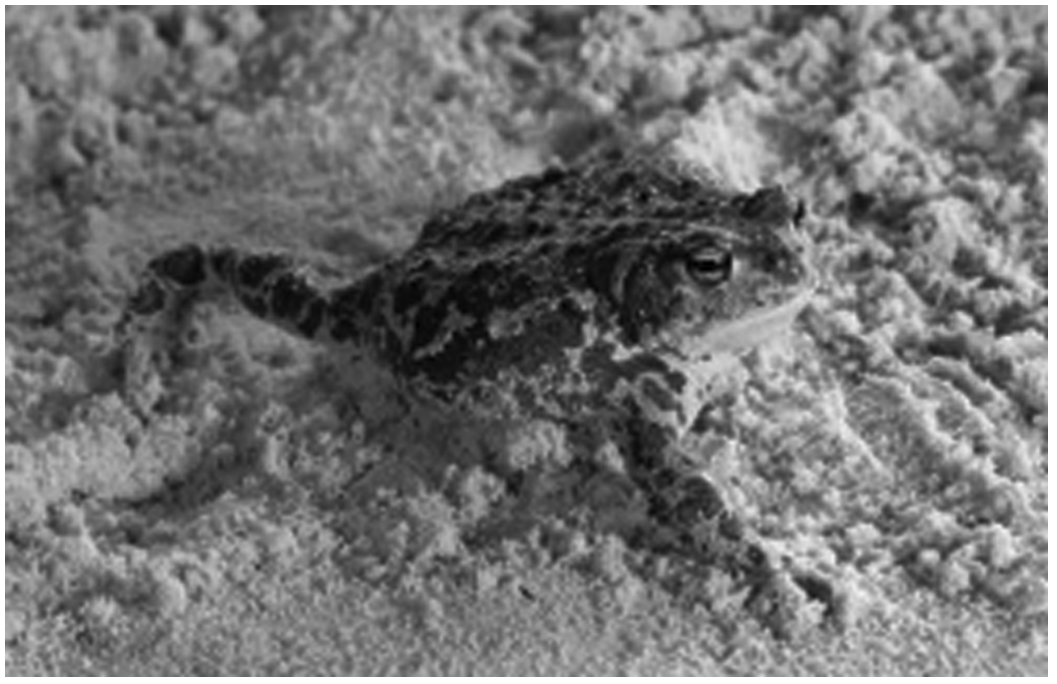
The natterjack toad, Bufo calamita, is an endangered amphibian species in the UK. It comes out of hibernation in April and breeds in pools by sand dunes along parts of the UK coast. A young natterjack toad will take about 10 weeks to develop from a fertilised egg. A natterjack toad feeds at night, by running at its prey, mainly insects and worms, on the sand dunes.

Fig. 1.1 shows a natterjack toad.

Fig. 1.1

Fig. 1.1

Question 1(a)

(a)

Suggest what may have caused the natterjack toad to become an endangered species in the UK.

[ 3 ]

Question 1(d)

(b)

Each year the International Union for the Conservation of Nature and Natural Resources (IUCN) publishes a list of endangered species called the Red List. The Red List has a very high proportion of vertebrates compared to invertebrates.

Suggest one reason why the Red List has many more vertebrates than invertebrates.

[ 1 ]

Question 1

[Maximum number: 4]

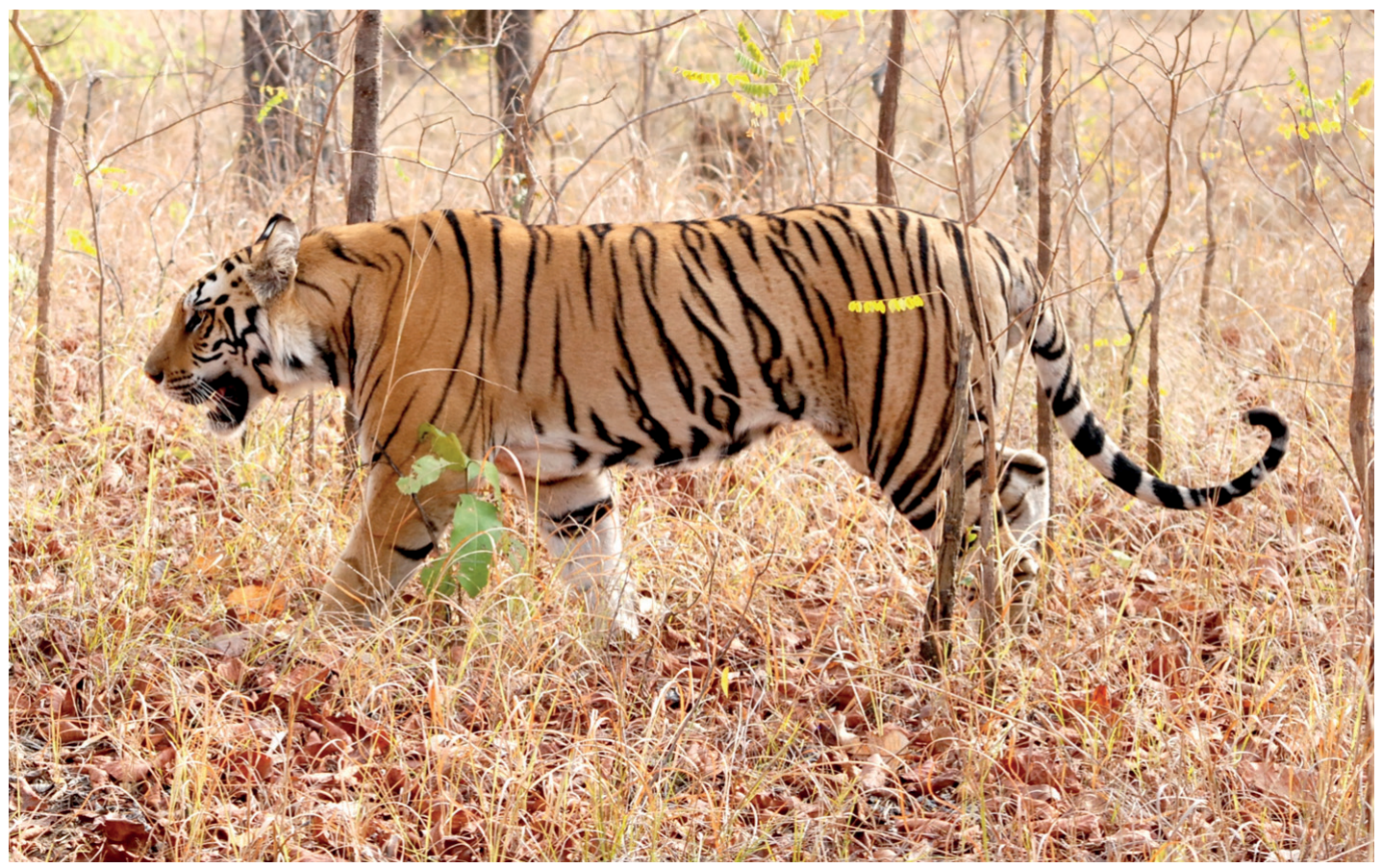
The Bengal Tiger, Panthera tigris tigris, is an endangered mammalian species of Southern Asia. It lives mostly in a forest habitat.

Fig.1.1 shows a Bengal Tiger.

Fig. 1.1

Fig. 1.1

Question 1(b)

(a)

Suggest methods to conserve the Bengal Tiger.

[ 4 ]

Question 1

[Maximum number: 3]

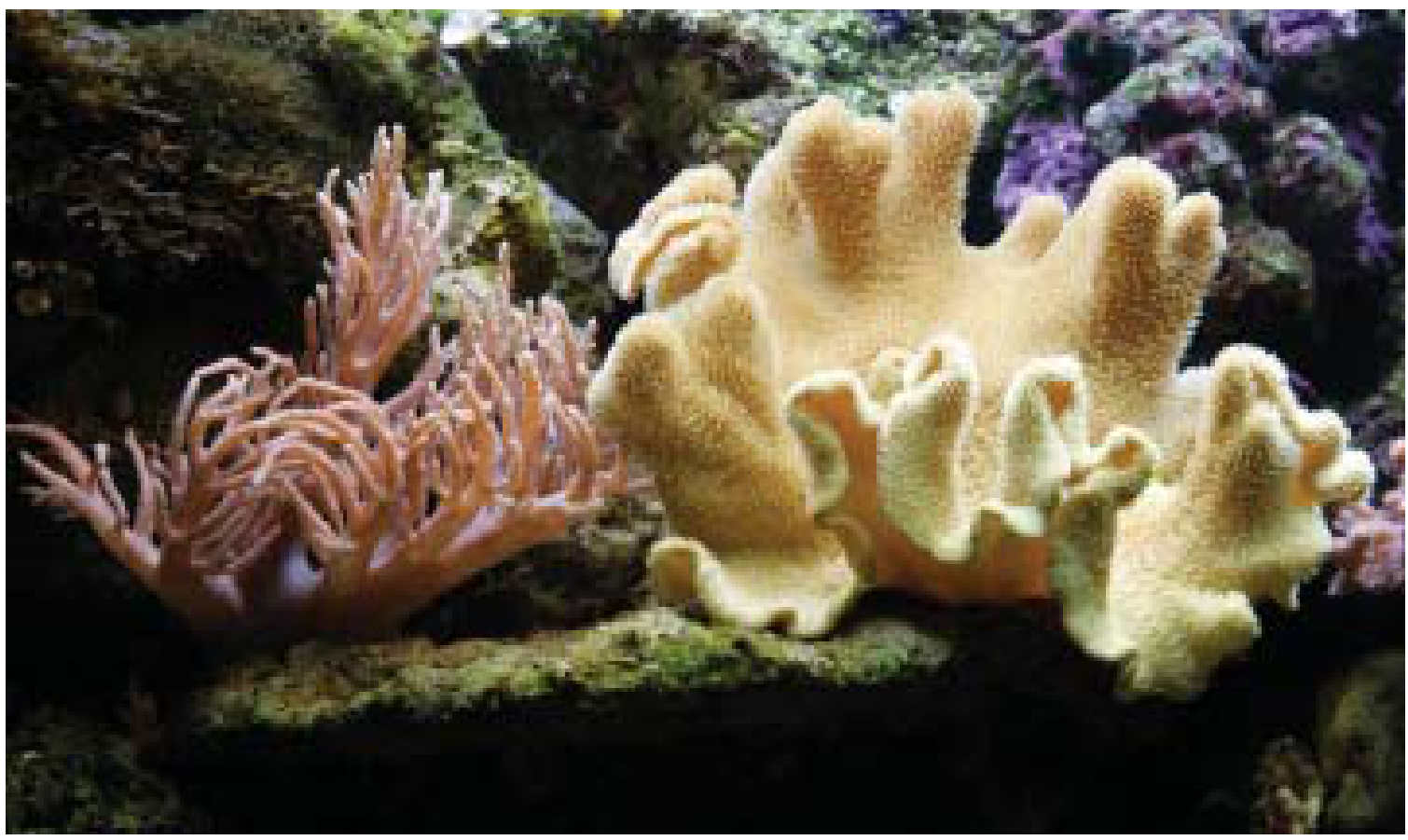
Corals are simple marine animals and usually exist in colonies of thousands of individuals.
Fig. 1.1 shows a coral colony.

Fig. 1.1

Fig. 1.1

Corals absorb calcium carbonate from the sea to build their skeletons, which help to form large coral reefs. Coral reefs provide a home for about 25 % of known fish species and have the highest biodiversity of any marine ecosystem.

Question 1(c)

(a)

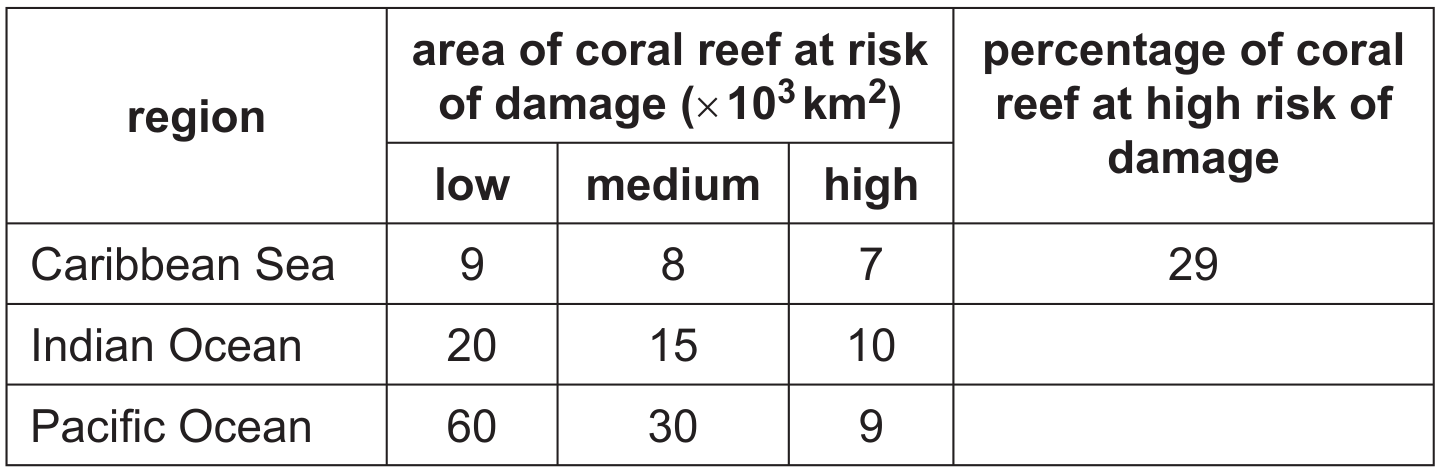
Coral reefs are at risk of damage due to human activities. All the coral reefs in three regions were classified as being at low, medium or high risk of damage.

Table 1.1 shows the areas of coral reef at risk of damage in these three regions.

Table 1.1

Table 1.1

[ 3 ]

Question 1(c)(ii)

(i)

Suggest how human activities could damage coral reefs.

[ 3 ]

Question 1

[Maximum number: 6]

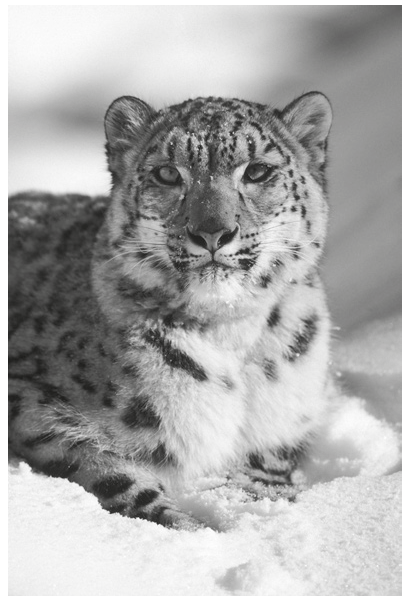
Fig. 1.1 shows a snow leopard, Panthera uncia. The habitat of the snow leopard is the high mountains of Central Asia.

Fig. 1.1

Fig. 1.1

Snow leopards usually live and hunt alone. Their main prey is grazing herbivores, such as wild sheep and wild goats. They will also hunt domesticated animals and livestock.

The number of snow leopards has decreased dramatically in the last 40 years.

Question 1(a)

Question 1(a)(i)

(a)
(i)

Predict the consequences to the ecosystem if the number of snow leopards continues to decrease.

[ 3 ]

Question 1(b)

(b)

The Convention on International Trade in Endangered Species of Wild Fauna and Flora (CITES) is an agreement between the governments of most countries.

The snow leopard is endangered and is listed on this agreement.
Describe the actions taken by participating governments that help to conserve endangered animals, such as the snow leopard.

[ 3 ]

Question 1

[Maximum number: 4]

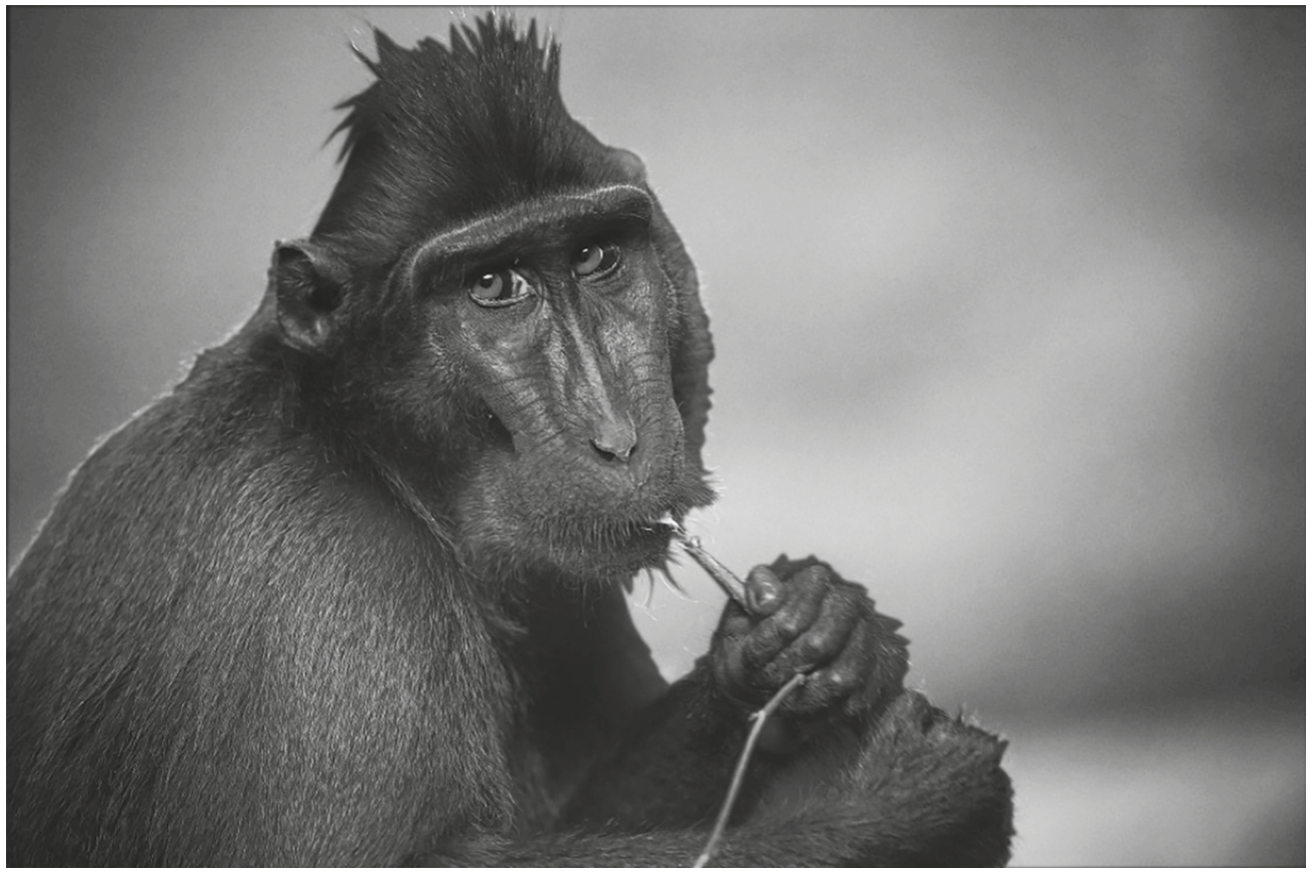
The Sulawesi macaque, Macaca nigra, is found on the large island of Sulawesi in Indonesia. The Sulawesi macaque is also found on other smaller islands close to Sulawesi, such as the island of Bacan.

Fig. 1.1 shows a Sulawesi macaque.

Fig. 1.1

Fig. 1.1

Question 1(b)

(a)

Suggest ways of protecting the Sulawesi macaque.

[ 4 ]

Question 1

[Maximum number: 8]

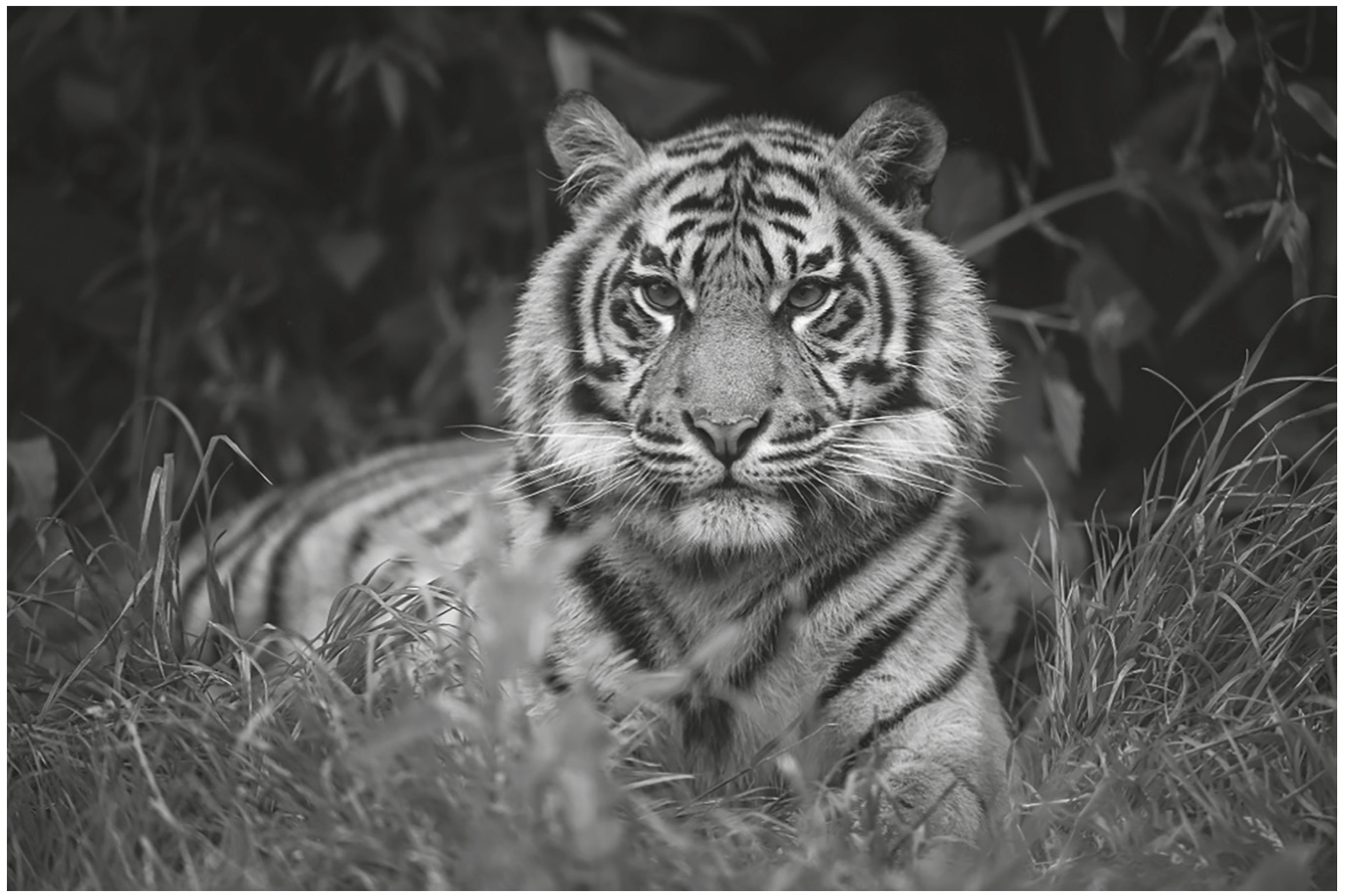
The Sumatran tiger lives on the island of Sumatra, Indonesia.
Fig. 1.1 shows a Sumatran tiger.

Fig. 1.1

Fig. 1.1

Question 1(a)

(a)

The International Union for Conservation of Nature (IUCN) is the world's largest global environmental organisation. The IUCN Red List of Threatened Species ™ { }^{\text {™ }} evaluates the conservation status of plant and animal species.
The Sumatran tiger is categorised as critically endangered on the IUCN Red List. There are approximately 400 Sumatran tigers left in the wild.

Suggest reasons why the Sumatran tiger has become critically endangered.

[ 3 ]

Question 1(b)

(b)

Some zoos in Europe have captive breeding programmes for the Sumatran tiger, which breeds well in captivity. Once cubs have reached maturity they may be moved to other zoos. For example, as part of a coordinated breeding programme carried out in 2013, one tiger born in Chester Zoo in England was moved to France and another tiger born in the same zoo was moved to Germany. This type of coordinated breeding programme is essential for the survival of the Sumatran tiger.

Explain why it is important to the gene pool of Sumatran tigers to move tigers from one zoo to another.

[ 3 ]

Question 1(c)

(c)

Some animals do not breed well in captivity.

List the methods of assisted reproduction that may be used with animals that do not breed well in captivity.

[ 2 ]

Question 1

Question 1(a)

(a)

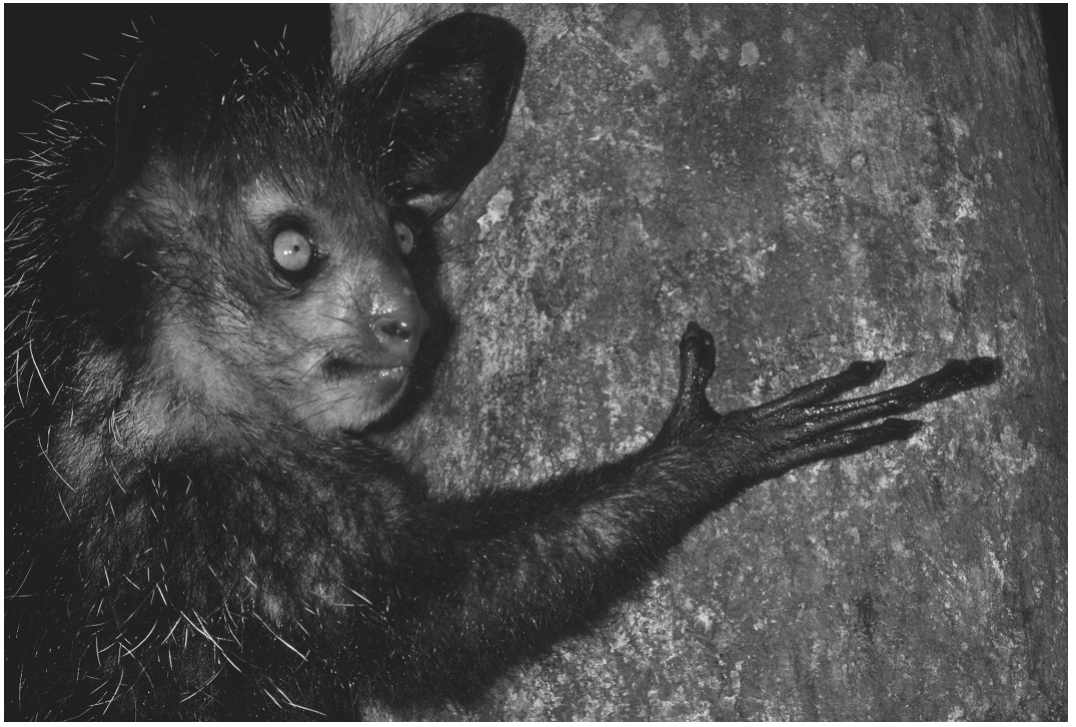
The aye-aye, Daubentonia madagascariensis, is a primate native to Madagascar. Aye-ayes are nocturnal (active at night) and make their nests high up in trees. They feed on insect larvae in the trunks of trees.

Fig. 1.1 shows an aye-aye.

Fig. 1.1

Fig. 1.1

The International Union for Conservation of Nature (IUCN) is the world's largest global environmental organisation. The IUCN Red List of Threatened Species TM { }^{\text {TM }} evaluates the conservation status of plant and animal species.

The aye-aye is categorised as endangered on the IUCN Red List, which means that it faces a very high risk of becoming extinct in the wild.

[ 4 ]

Question 1(a)(ii)

(i)

Suggest one reason why aye-ayes have become endangered.

[ 1 ]

Question 1(a)(iii)

(ii)

Suggest ways in which zoos may help to protect this species from extinction.
Question 1 continues on page 4

[ 3 ]

Question 1

[Maximum number: 4]

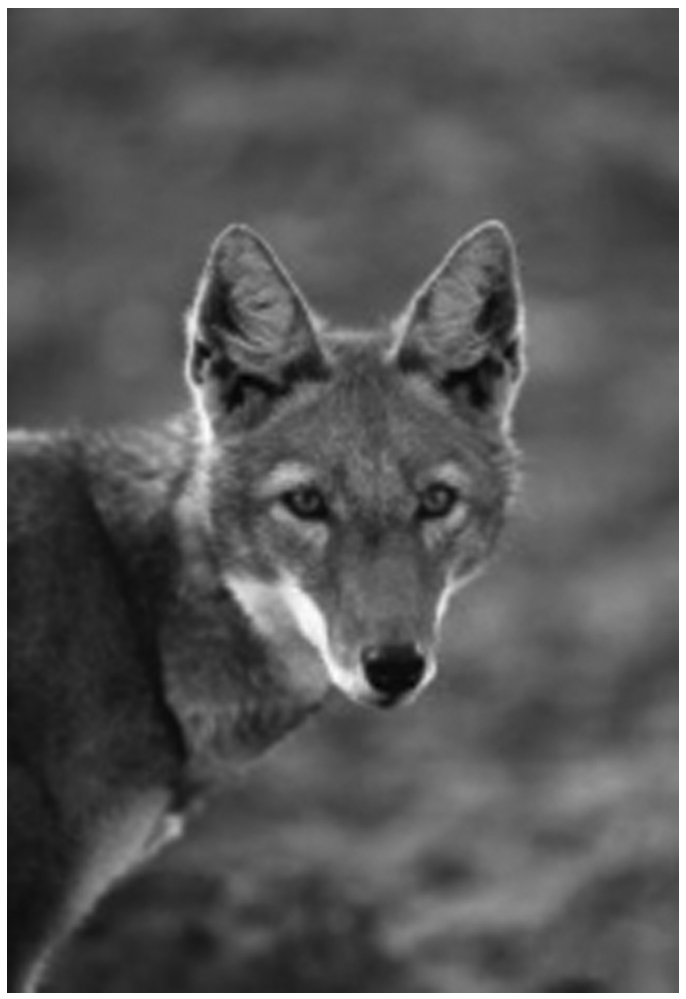
The Ethiopian wolf, Canis simensis, is a member of the Canidae family of carnivores.
Fig. 1.1 shows an Ethiopian wolf.

Fig. 1.1

Fig. 1.1

Question 1(c)

(a)

The Ethiopian wolf is classified as an endangered species by the International Union for the Conservation of Nature and Natural Resources (IUCN). It publishes an annual list of endangered species called the Red List.

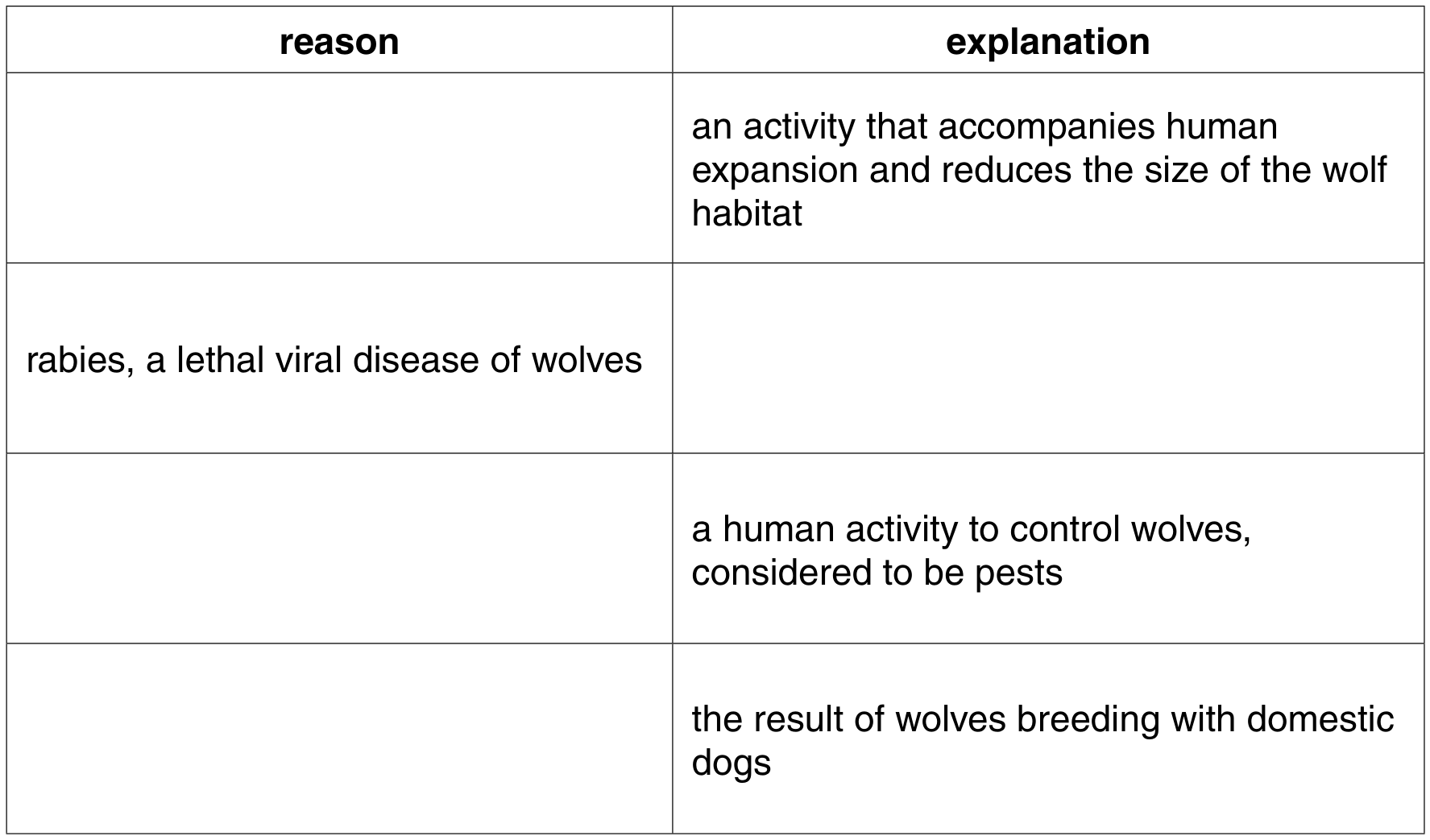
Complete Table 1.1 to summarise four of the main reasons, with further explanation, as to why the Ethiopian wolf has become an endangered species.

Table 1.1

Table 1.1

[ 4 ]
0 selected