Question 1
Question 1(a)
(a)
Fig. 1.1 shows part of a cell in a growing region of a plant.
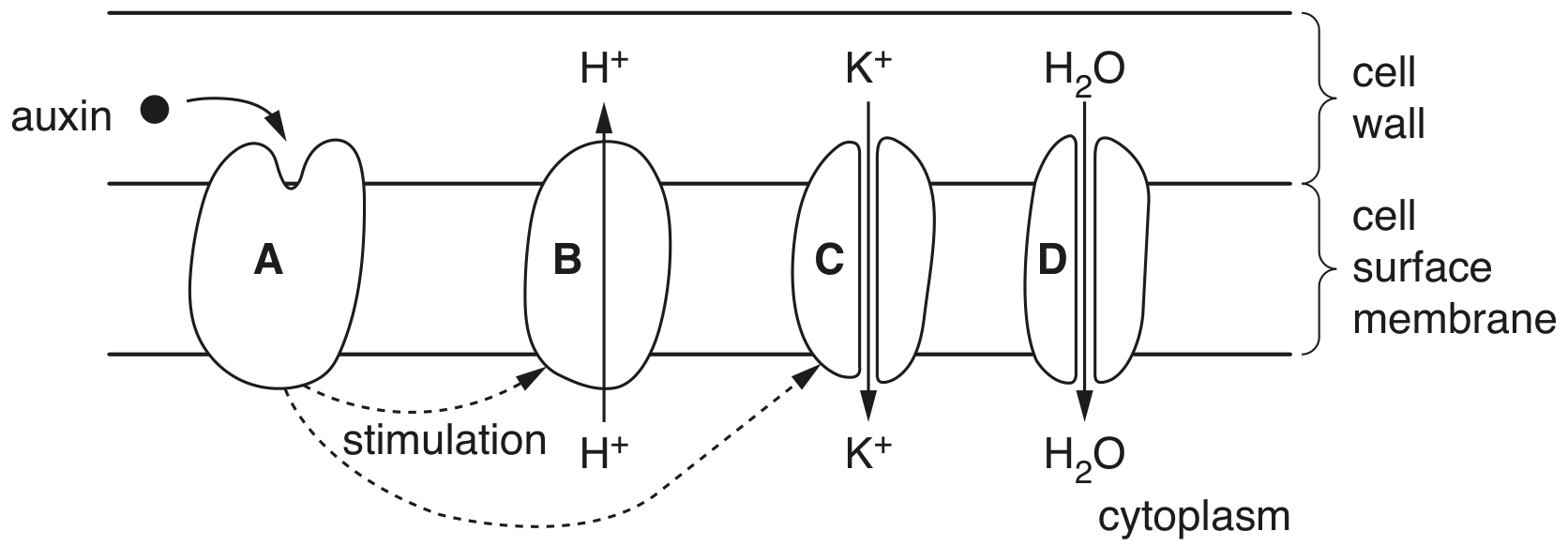
Fig. 1.1
[ 1 ]
Question 1(a)(i)
(i)
State the type of protein represented by A.
[ 1 ]
 EduNinja
Fig. 1.1 shows part of a cell in a growing region of a plant.
Fig. 1.1
State the type of protein represented by A.
The scientist Gregor Mendel investigated differences in the length of the stem in the pea plant, Pisum sativum. In 1866, he published the results of his investigation into this trait (characteristic).
Fig. 2.1 shows a diagram of a pea plant.
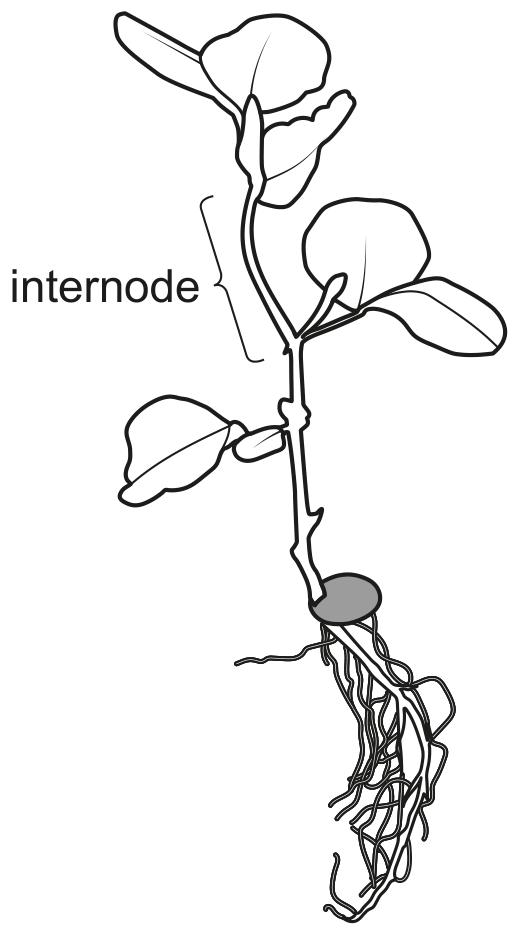
Fig. 2.1
Mendel observed that the pea plants he grew either had tall stems or dwarf (short) stems. In his investigation, Mendel carried out crosses using pea plants with these two phenotypes.
The scientists P W Brian and H G Hemming identified that the difference in the length of the stem in pea plants was associated with the presence or absence of gibberellin. They published their findings in 1955.
Gibberellin leads to a response in plant cells by binding to specific receptor molecules.
State the term used to describe a molecule, such as gibberellin, that binds to specific receptor molecules and leads to a response in cells.
Suggest the response of the cells in the internode region of the stem, as labelled in Fig. 2.1, to the presence of gibberellin and describe how this response affects the trait investigated by Mendel.
One example of chemical control and co-ordination in plants is in the breakdown of food reserves during the germination of cereal grains, such as wheat.
Fig. 3.1 is a diagram of a grain of wheat.
The numbered arrows indicate the sequence of events that occurs after the uptake of water by the grain of wheat.
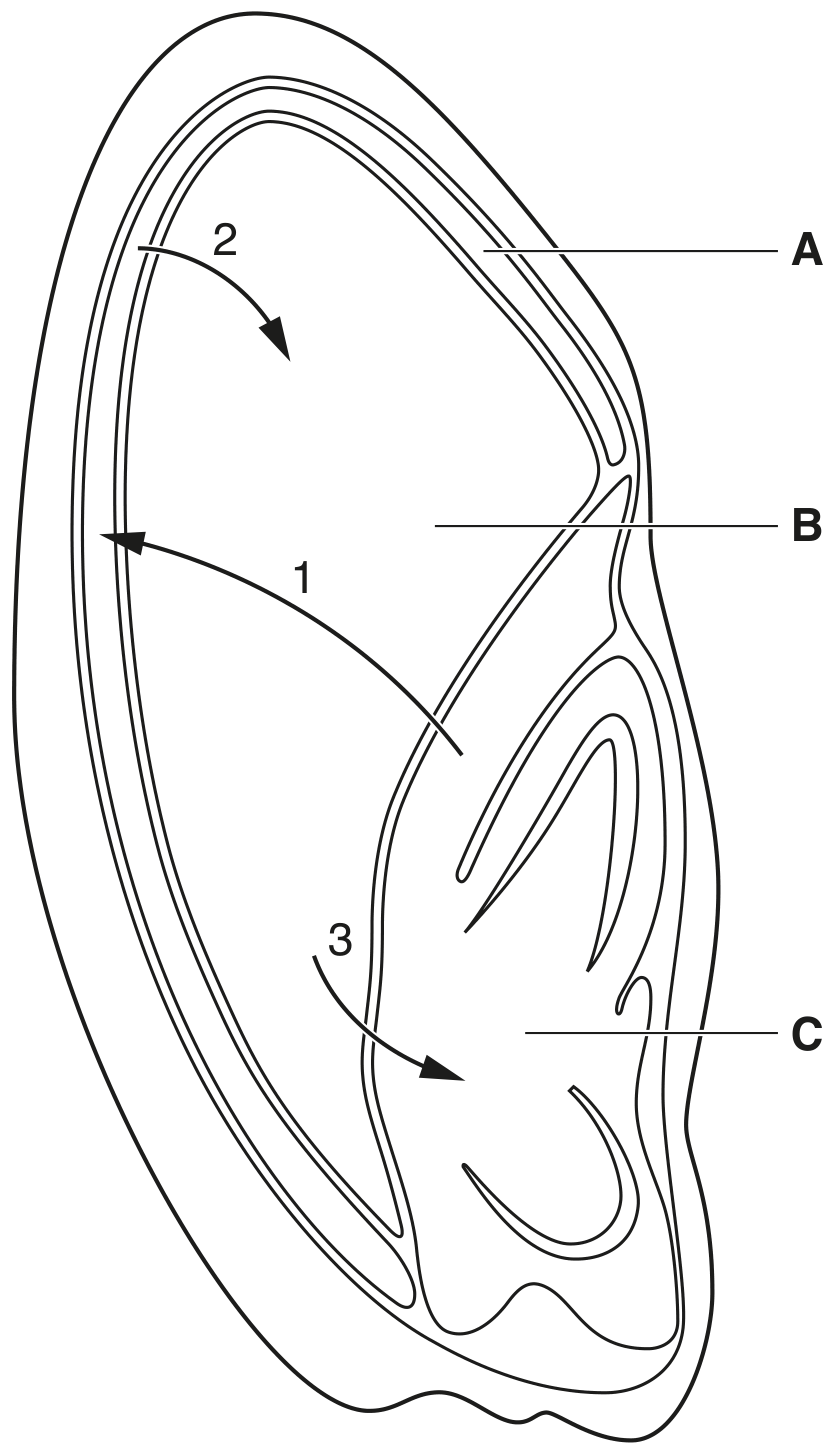
Fig. 3.1
With reference to the three numbered arrows in Fig. 3.1, describe the sequence of events that follows the uptake of water by the grain of wheat.
Growth in plants occurs in areas such as shoot and root tips. Growth occurs by cell division and cell elongation.
Fig. 3.2 shows the effect of the plant growth regulator auxin on mean cell length in the shoot tips of wheat seedlings.
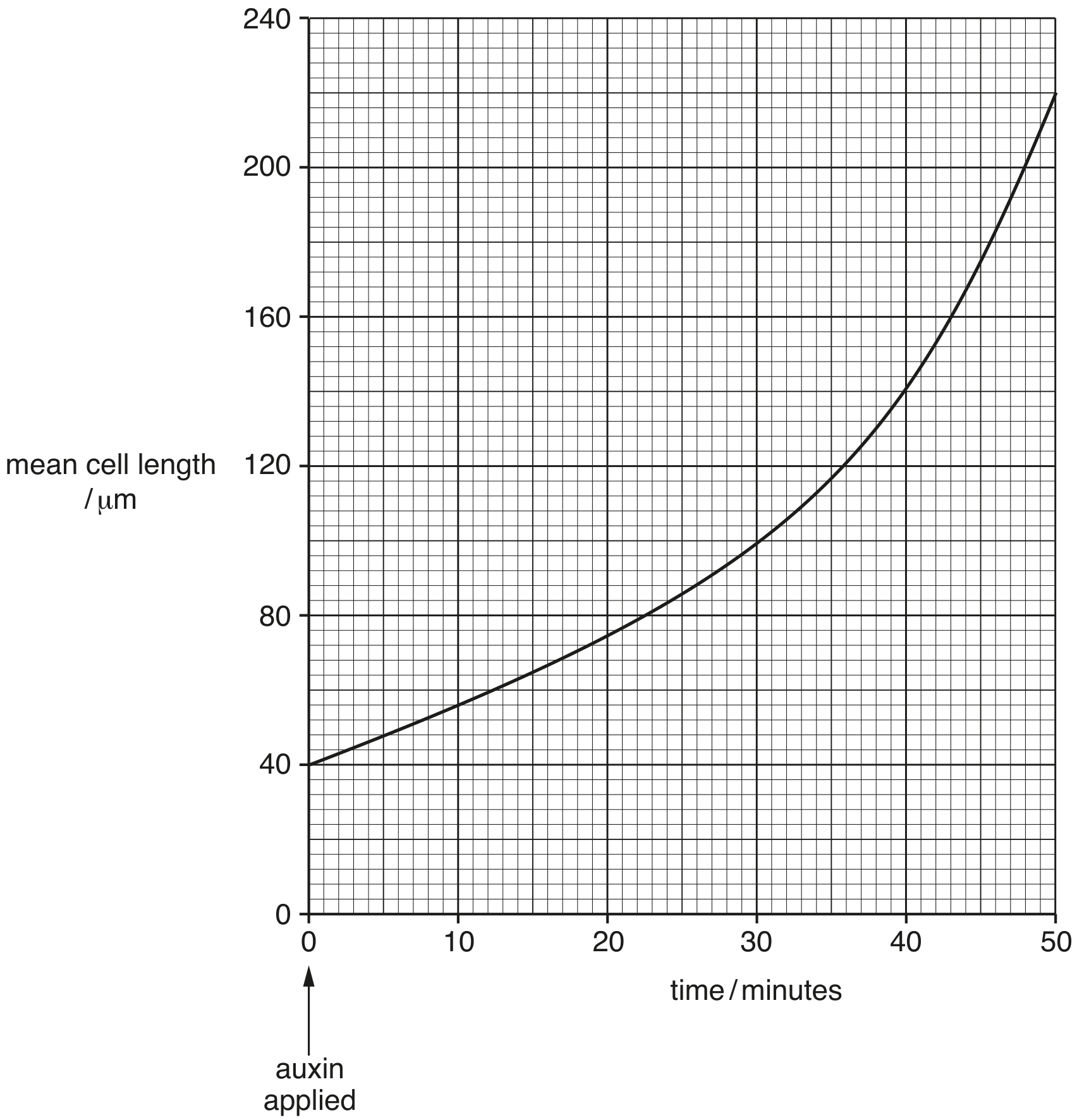
Fig. 3.2
The pH of the cell walls decreased after the application of auxin.
Outline the events that occurred to cause this decrease in pH .
Explain the increase in the length of the cells following the decrease in pH of the cell walls.
Bread wheat, Triticum aestivum, is a hexaploid that has developed from diploid wild grasses.
Wheat seeds begin to germinate when they are in warm conditions and can take up water.
Fig. 4.1 shows a germinating wheat seedling.
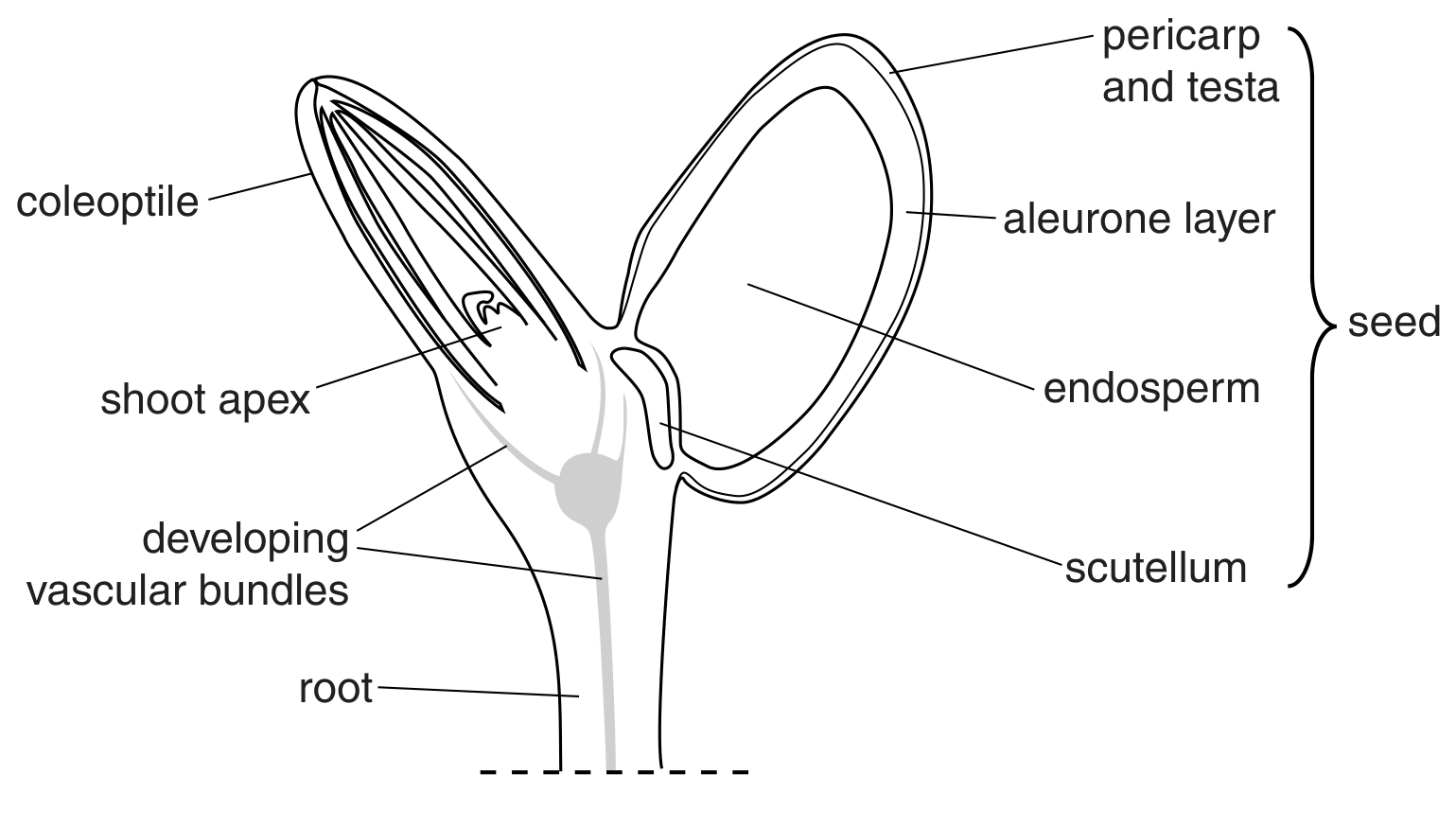
Fig. 4.1
The endosperm contains starch stores. There are also small quantities of sucrose stored in the aleurone layer.
Water uptake stimulates the production of a plant growth regulator in the seed, which in turn activates the synthesis of enzymes in the aleurone layer. These enzymes hydrolyse starch to maltose and glucose.
Name the plant growth regulator involved in the activation of the synthesis of the enzymes.
Oryza is a genus of grass plants that includes the rice, Oryza sativa, a food crop.
Farmers flood fields of rice because this encourages faster growth and higher yields.
Auxin is a plant growth hormone that affects the growth of rice stems.
Explain how auxin affects the growth of rice stems.
Cultivated rice, Oryza sativa, is often grown in fields flooded with water.
Some varieties of cultivated rice are able to grow long internodes when they are submerged in water, keeping the leaves and flowers above water level (an internode is a length of stem between leaves). These varieties are known as deepwater rice.
The snorkel genes SK1 and SK2, thought to be responsible for this response, were identified in a variety of deepwater rice, C9285. A non-deepwater variety, T65, did not have these genes.
When submerged, rice plants produce the gaseous plant hormone ethene. This has a very low solubility in water, so it accumulates in the aerenchyma tissue in the rice stems.
Fig. 4.1 shows the concentration of ethene in the aerenchyma of T65 and C9285 when the plants are submerged in water for 18 hours.
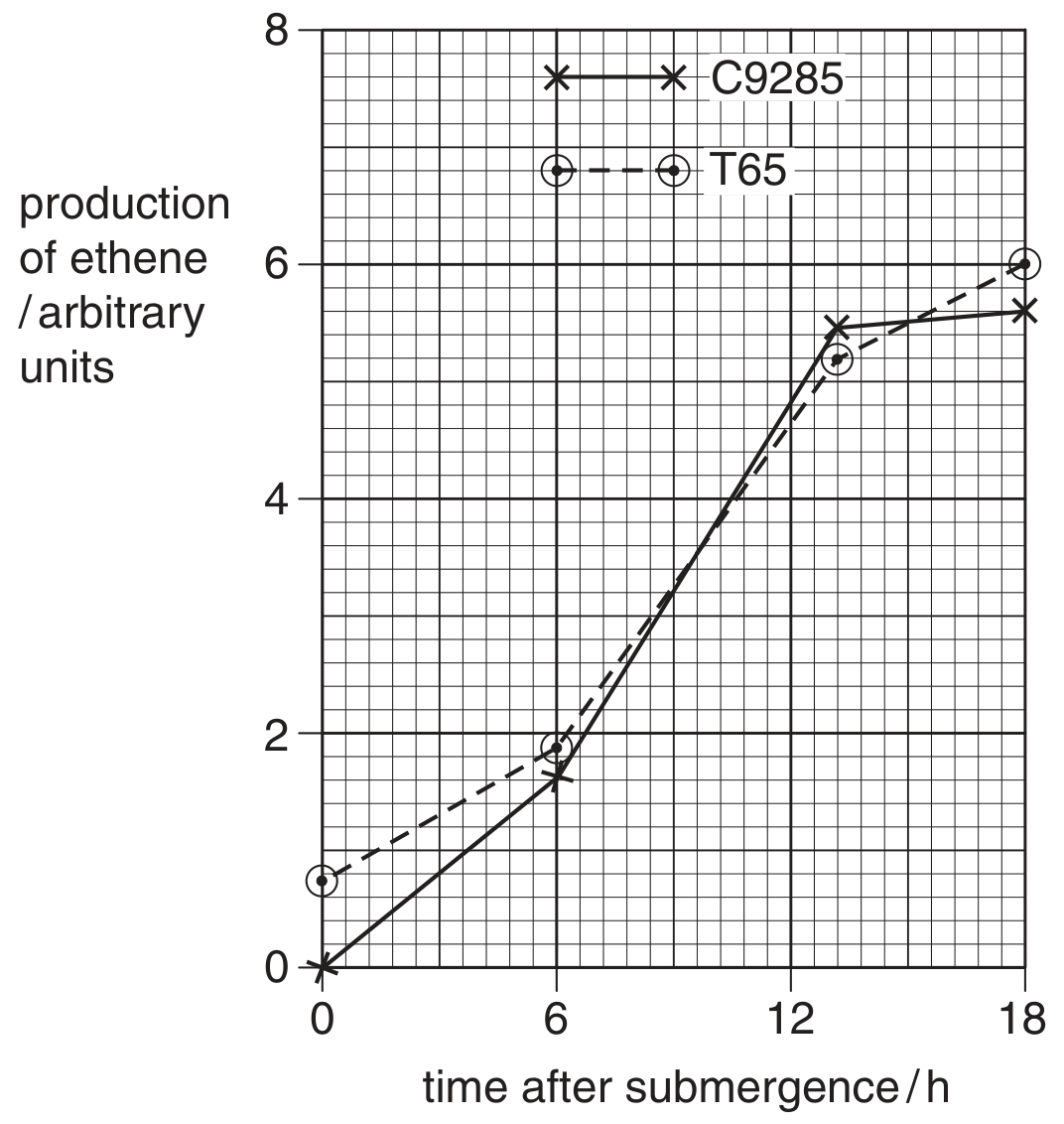
Fig. 4.1
Fig. 4.2 shows the results of exposing T65 and C9285 to different concentrations of ethene in dry conditions.
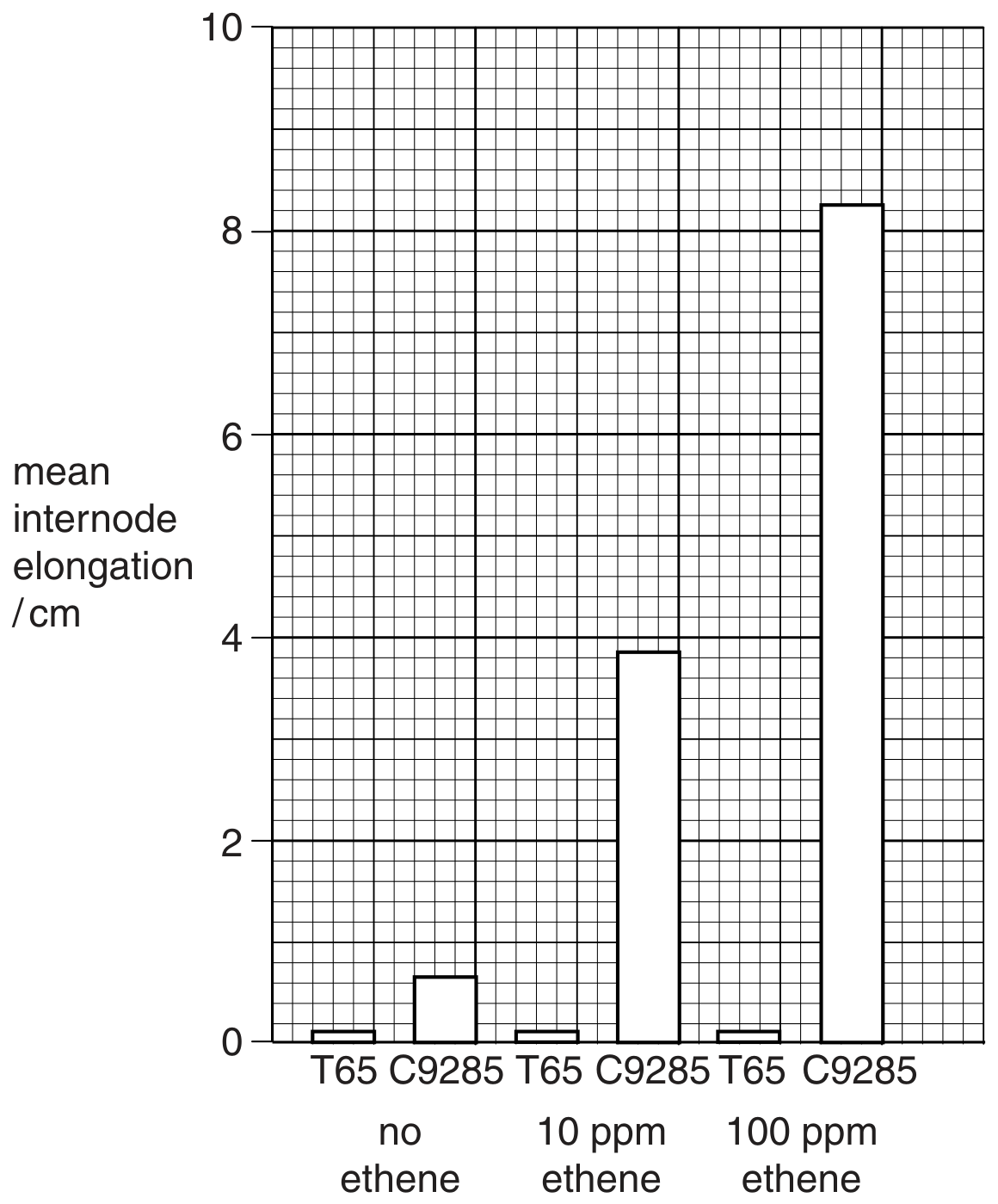
Fig. 4.2
With reference to Fig. 4.1, describe the effect of submergence in water on the production of ethene in rice.
There are more than 600 plant species in the genus Ipomoea. Many species are grown for their attractive flowers, and some species are used as crop plants.
Scientists are researching whether abscisic acid can be used in crop treatment to increase yield. Evidence suggests that abscisic acid modifies the effect of auxin on elongation growth in plants.
Scientists investigated the effect of different concentrations of abscisic acid on root elongation in seedlings of thale cress, Arabidopsis thaliana.
The seedlings were divided into four groups:
- a control group ( abscisic acid)
- three experimental groups, each treated with a different concentration of abscisic acid: , or .
For each group of seedlings, root length was measured for six days during treatment. The rate of root elongation was calculated each day.
The results are shown in Fig. 3.3.
Key
- control (no abscisic acid)
- of abscisic acid
of abscisic acid
△ of abscisic acid
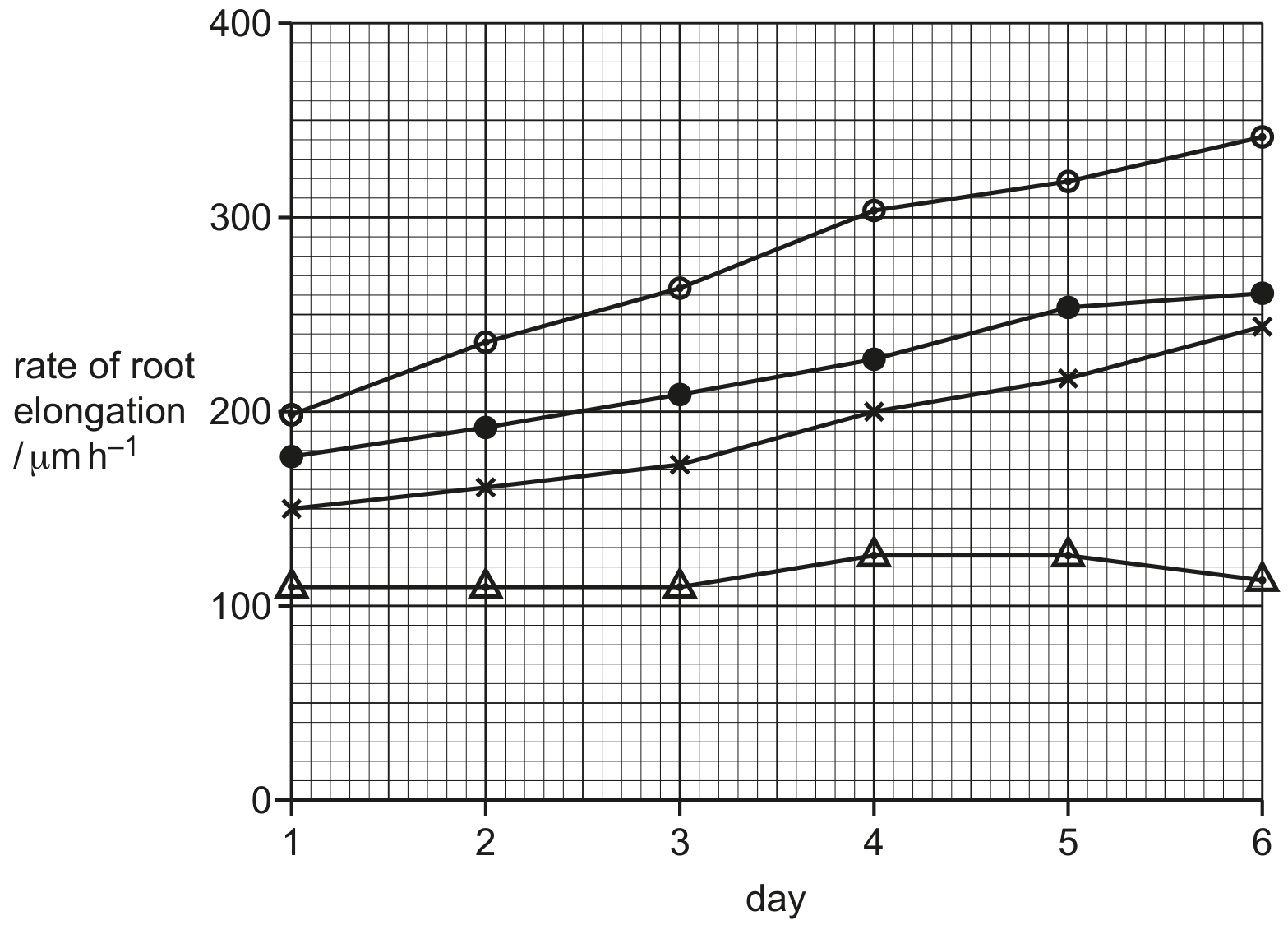
Fig. 3.3
With reference to Fig. 3.3, describe the effect of treatment with abscisic acid on the rate of root elongation.
The passage outlines the role of auxin in elongation growth in plants.
Complete the passage by using the most appropriate scientific terms.
The binding of auxin to receptors causes to be pumped into cell walls.
This activates proteins called expansins, which disrupt the links between microfibrils. The cell walls are then able to expand.
There are more than 600 plant species in the genus Ipomoea. Many species are grown for their attractive flowers, and some species are used as crop plants.
Scientists are researching whether abscisic acid can be used in crop treatment to increase yield. Evidence suggests that abscisic acid modifies the effect of auxin on elongation growth in plants.
The passage outlines the role of auxin in elongation growth in plants.
Complete the passage by using the most appropriate scientific terms.
The binding of auxin to receptors causes to be pumped into cell walls.
This activates proteins called expansins, which disrupt the links between microfibrils. The cell walls are then able to expand.
Gibberellin is a plant growth regulator involved in barley seed germination. Production of gibberellin is stimulated by the uptake of water.
State the location of gibberellin synthesis in a barley seed during germination.
During barley seed germination, gibberellin stimulates the synthesis of enzymes.
State the name of one of these enzymes and the precise location of its synthesis.
enzyme
location
The Venus fly trap is a plant that is able to capture and digest insects. It has modified leaves, which have sensory hairs that respond to touch. When an insect comes into contact with the hairs, receptor potentials are generated.
If two or more of these hairs are stimulated within a period of 20-35 seconds, action potentials are generated, causing the leaf to close quickly and trap the insect.
Suggest why it is beneficial to the plant for stimulation of two or more hairs to be necessary before the leaf will close.