EduNinja

A-Level CAIE Biology A215.1 Control and Coordination in MammalsQuestion Bank

Question 1

Question 1(a)

(a)

Nerve impulses have to cross synapses. The events that enable a nerve impulse to cross a cholinergic synapse are listed in Table 1.1.

The events are not listed in the correct order.
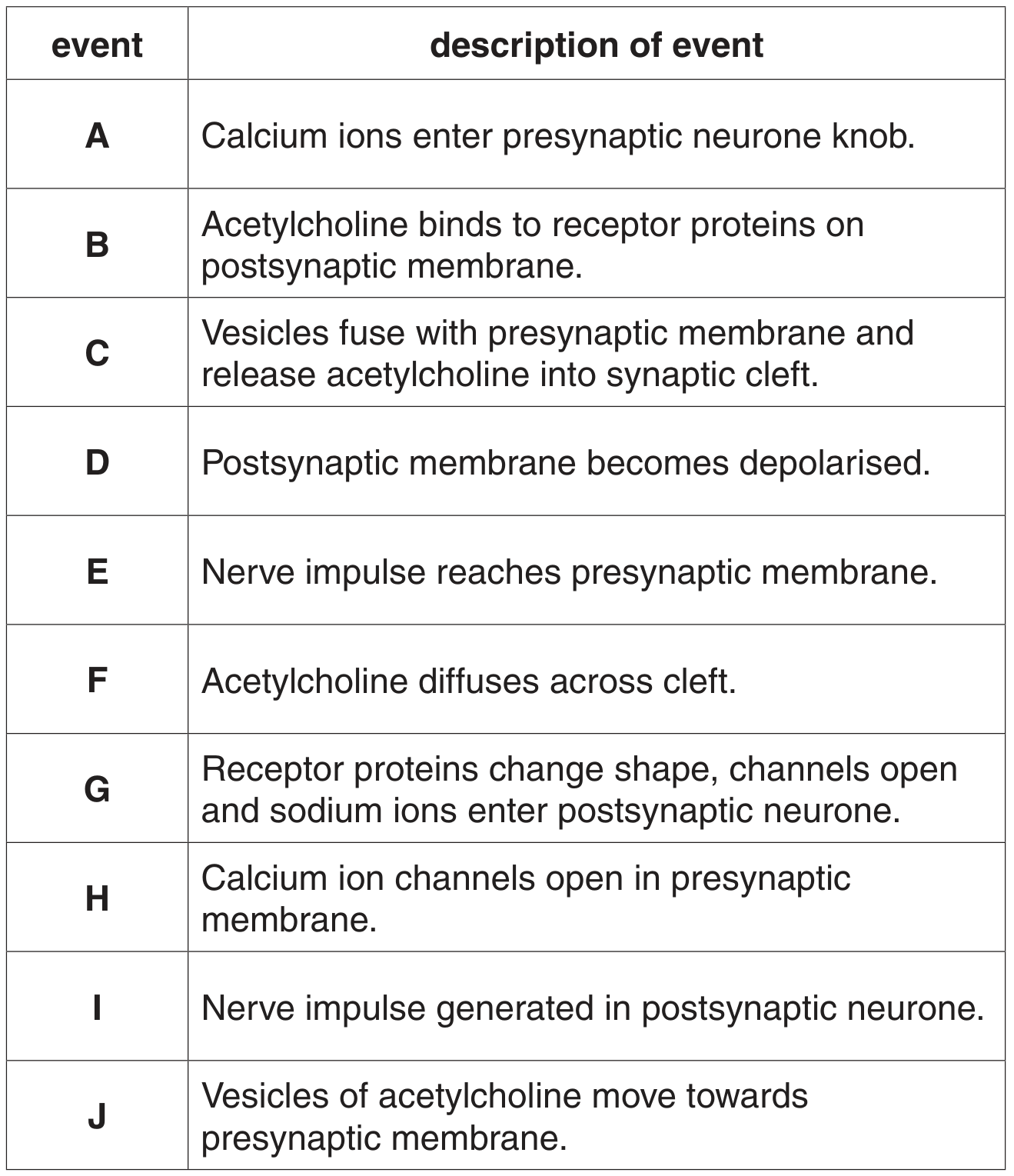
Table 1.1

Table 1.1

Complete Table 1.2 to show the events in the correct order.

Two of the events have been done for you.
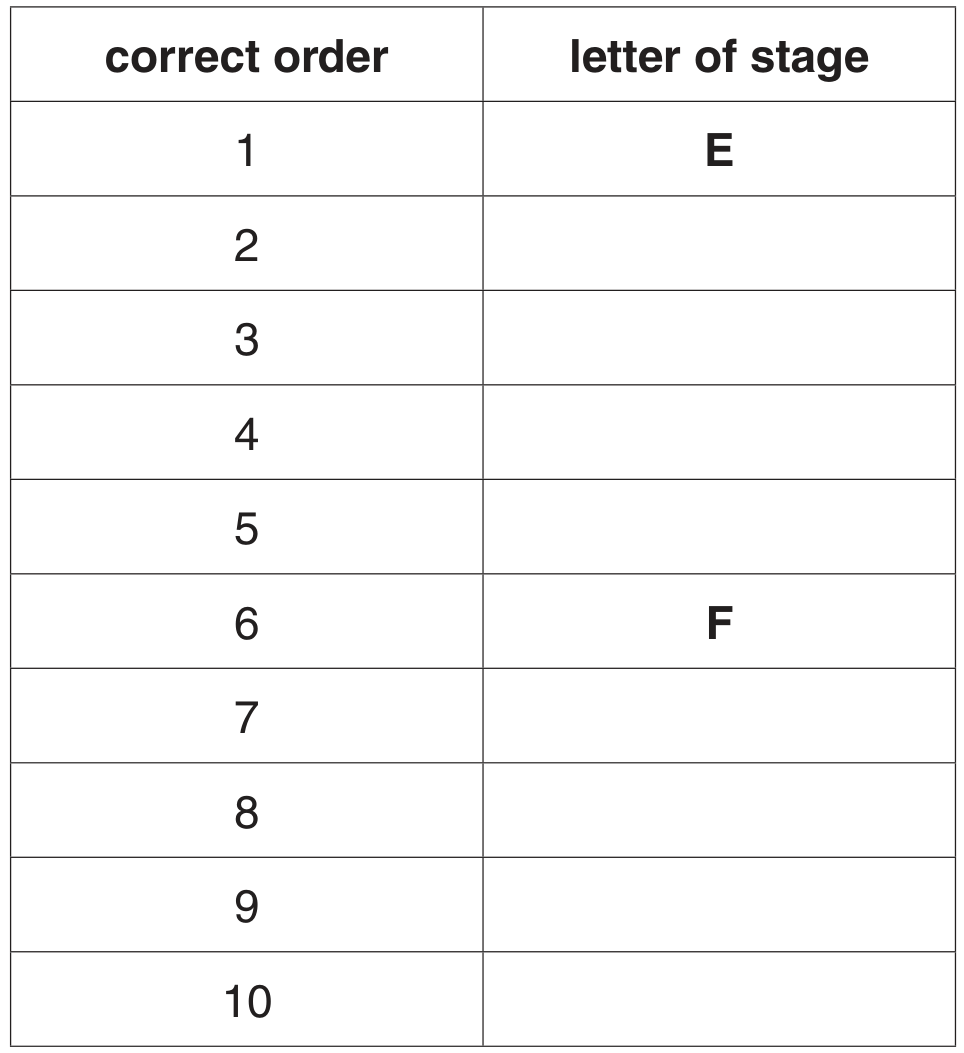
Table 1.2

Table 1.2

[ 4 ]

Question 1(b)

(b)

Synapses have many roles in nervous coordination in mammals.

[ 2 ]

Question 1(b)(i)

(i)

Explain how synapses ensure one-way transmission of nerve impulses.

[ 2 ]

Question 1(b)(ii)

(ii)

In a learning activity, it is believed that the number of synapses between brain neurones increases. Suggest the advantages of this increased number of synapses.
Question 1

Question 1(a)

(a)

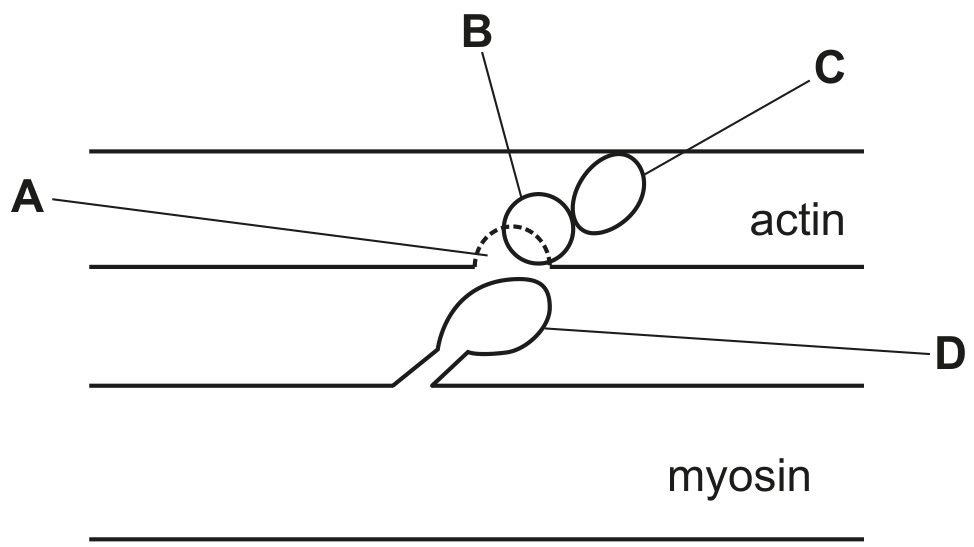
Fig. 1.1 is a diagram of a part of a sarcomere in striated muscle.

Fig. 1.1

Fig. 1.1

With reference to Fig. 1.1, name A, B, C and D.
A

B

C

D

[ 4 ]

Question 1(b)

(b)

When a muscle cell is stimulated, calcium ions are released from the sarcoplasmic reticulum.

With reference to Fig. 1.1, describe the role of calcium ions in the contraction of the sarcomere.

[ 4 ]

Question 1

[Maximum number: 2]

The St. Lawrence river in Canada has been identified as an area with very high biodiversity.

Question 1(e)

(a)

Algal blooms sometimes occur in the area of the Atlantic ocean near the St. Lawrence river. These result from rapid population growth of unicellular algae such as Alexandrium tamarense.

[ 2 ]

Question 1(e)(i)

(i)

A. tamarense produces saxitoxin, a neurotoxin that causes muscle paralysis by acting on voltage-gated sodium ion channels in neurones. Saxitoxin can kill whales.

Suggest how saxitoxin results in the death of a whale.

[ 2 ]

Question 1

Question 1(a)

(a)

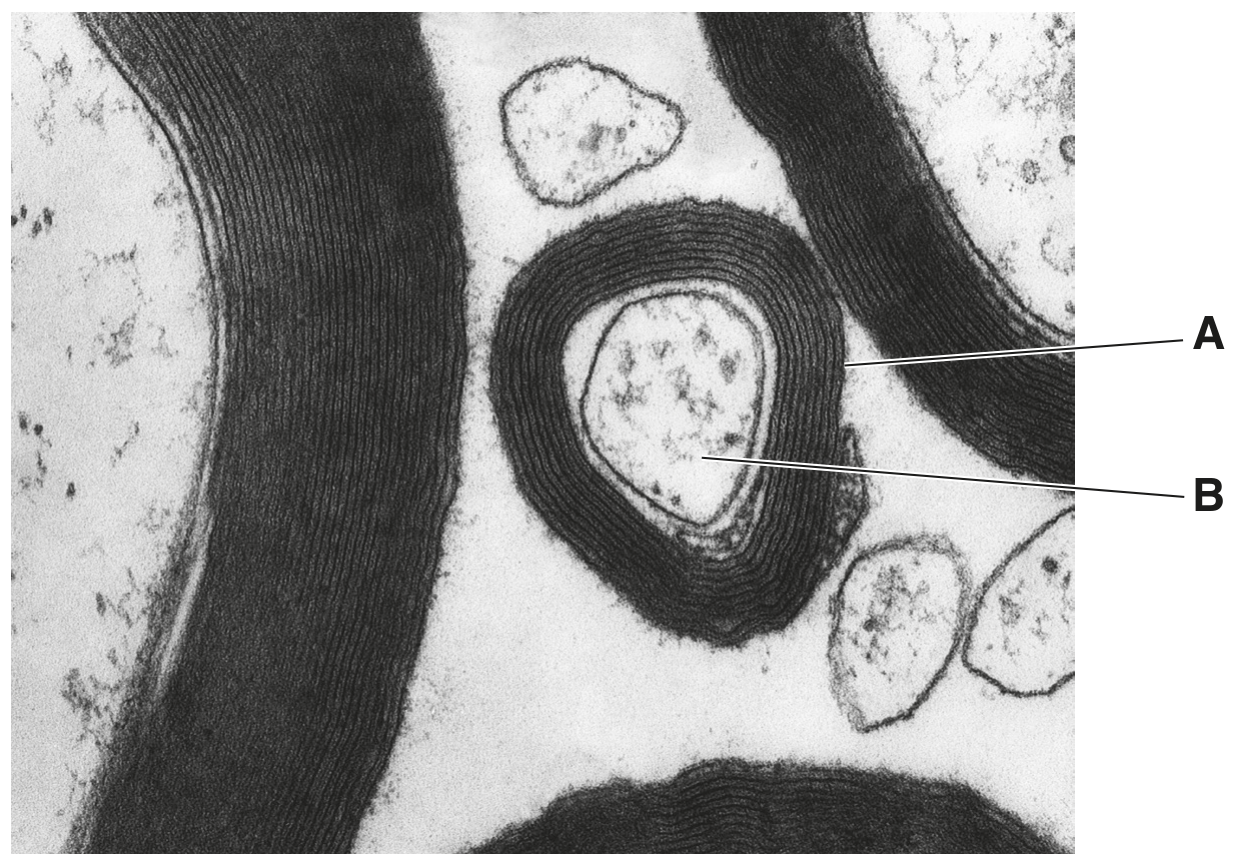
Fig. 1.1 is an electron micrograph showing a cross-section of a myelinated neurone.

Fig. 1.1

Fig. 1.1

Name A and B.

A

B

[ 2 ]

Question 1(b)

(b)

Explain what is meant by saltatory conduction and describe its effect on the transmission of a nerve impulse.

[ 3 ]

Question 1(c)

(c)

A type of sea snail, Conus purpurascens, produces a toxin that blocks calcium ion channels in the presynaptic knob of a cholinergic synapse. The presence of this toxin results in no action potentials in the postsynaptic neurone.

Explain why the presence of this toxin results in no action potentials in the postsynaptic neurone.

[ 5 ]

Question 1

Question 1(a)

(a)

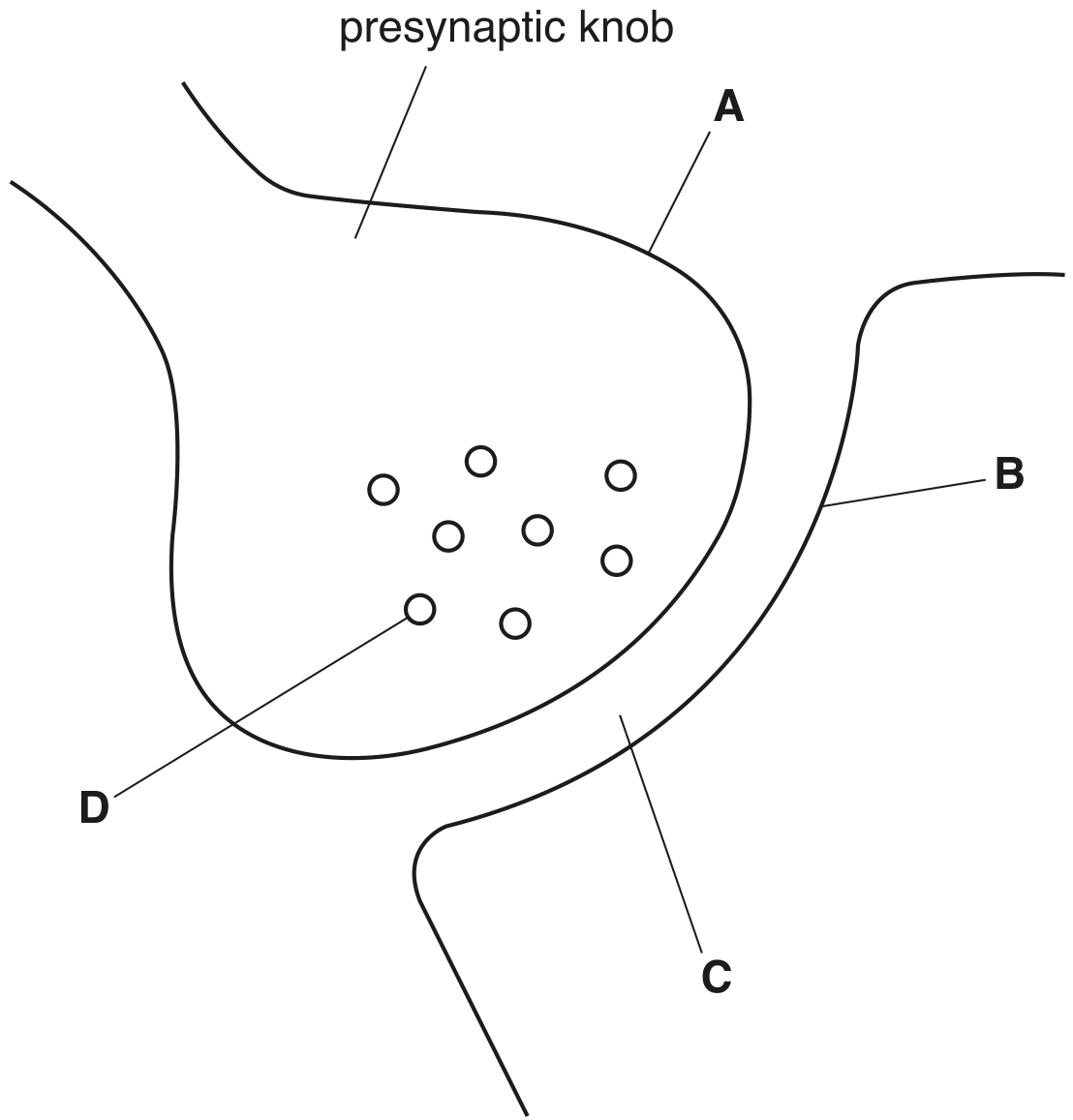
Fig. 1.1 shows a cholinergic synapse.

Fig. 1.1

Fig. 1.1

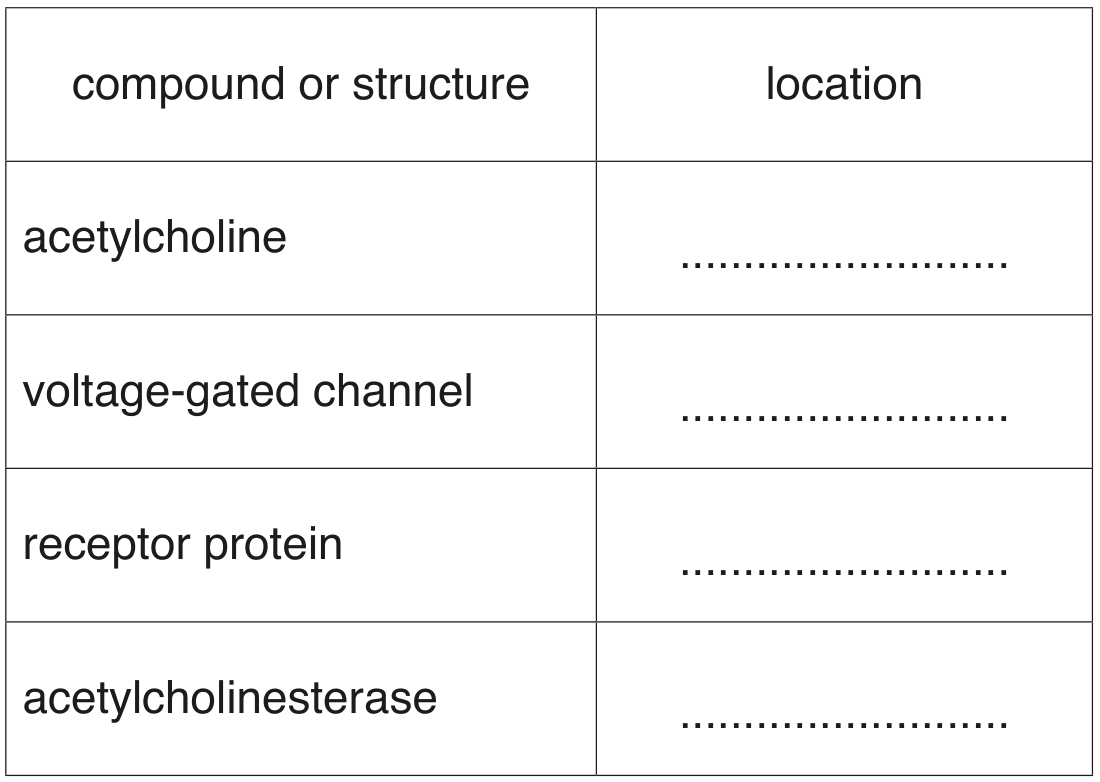
Complete Table 1.1, using the letters A, B, C or D from Fig. 1.1, to show the location of compounds and structures associated with a cholinergic synapse.

You may use A, B, C and D once, more than once, or not at all.

Table 1.1

Table 1.1

[ 4 ]

Question 1(b)

(b)

Explain what is meant by a voltage-gated channel.

[ 2 ]

Question 1(c)

(c)

Explain the role of acetylcholinesterase in a synapse.

[ 3 ]

Question 1(d)

(d)

Outline the roles of synapses in the nervous system.

[ 2 ]

Question 1

Question 1(a)

(a)

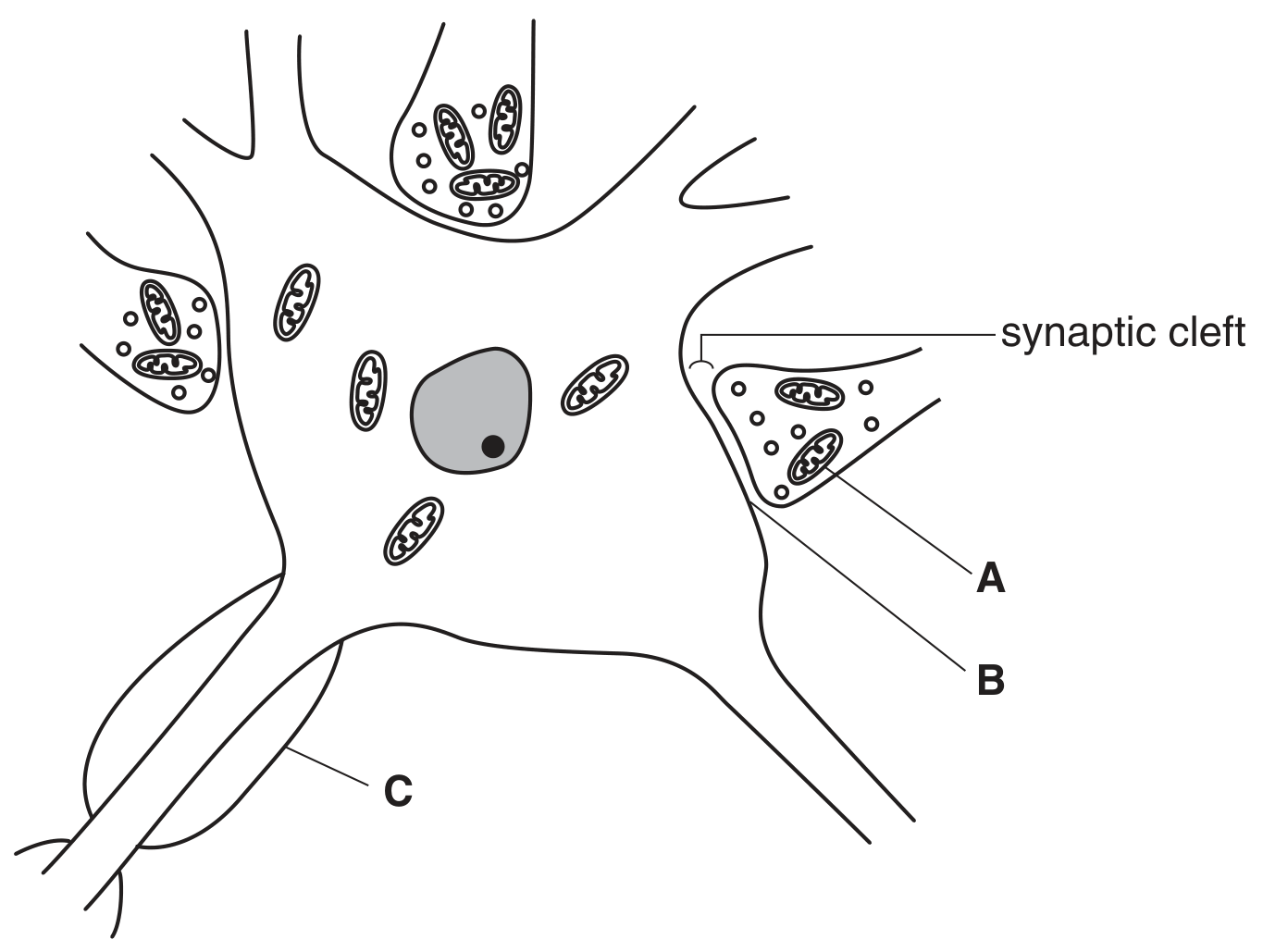
Fig. 1.1 shows a neurone forming three synapses with adjacent neurones.

Fig. 1.1

Fig. 1.1

Name A, B and C.

A

B

C

[ 3 ]

Question 1(b)

(b)

Outline the role of structure A in synaptic transmission.

[ 3 ]

Question 1(c)

(c)

The drug nicotine has a similar structure to acetylcholine.

Suggest the effects on brain neurones of inhaling nicotine from a cigarette.

Question 1

Question 1(b)

(a)

Some drugs can affect the functioning of neuromuscular junctions or cholinergic synapses.

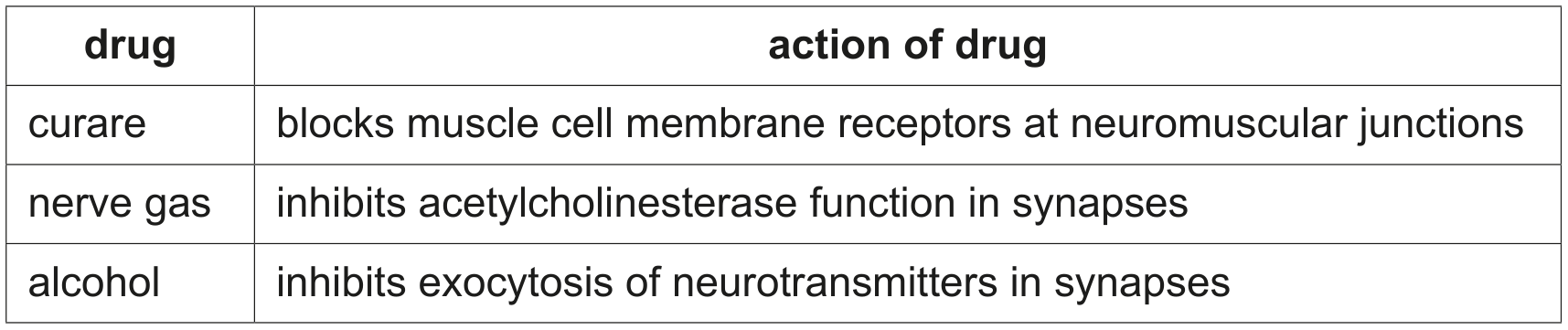
Table 1.1 lists three drugs and describes their action on neuromuscular junctions or cholinergic synapses.

Table 1.1

Table 1.1

Suggest and describe the immediate consequence of the action of each drug on a neuromuscular junction or cholinergic synapse.

[ 5 ]

Question 1

Question 1(b)

(a)

The toxin in the skin of the golden mantella affects the action of the sarcomeres in muscle fibres (muscle cells) of mammalian striated muscle. The toxin inhibits a protein, Ca2+\mathrm{Ca}^{2+} ATPase, found in the membrane of the sarcoplasmic reticulum.
Ca2+\mathrm{Ca}^{2+} ATPase pumps calcium ions from the cytoplasm into the sarcoplasmic reticulum when the fibre is no longer stimulated.

Suggest the consequences to the sarcomere of the action of the golden mantella toxin.

[ 3 ]

Question 1(c)

(b)

Describe the role of calcium ions in a cholinergic synapse.

[ 3 ]

Question 2

Question 2(a)

(a)

Coordination in humans involves two main systems: the nervous system and the endocrine system. Paracrine cell signalling is a third way in which coordination occurs. In paracrine signalling, one cell secretes a chemical that diffuses a short distance to act upon cells that are very near to the secreting cell.

[ 2 ]

Question 2(a)(ii)

(i)

Explain why a neurotransmitter such as acetylcholine could be described as a paracrine signalling molecule.

[ 2 ]

Question 2(c)

(b)

The process of protein translation is inhibited in developing muscle cells when stress genes are expressed.

Suggest how developing muscle cells that express stress genes will differ in structure from normal muscle cells.

[ 3 ]

Question 2

[Maximum number: 6]

Giant axonal neuropathy (GAN) is a rare autosomal recessive disease, which affects neurones.

Question 2(a)

(a)

Mitochondria can move freely within the axons of neurones.

In GAN, the axons of neurones become enlarged and blocked by the accumulation of specific proteins. This prevents the free movement of mitochondria and affects the transmission of action potentials along the axon membrane.

[ 6 ]

Question 2(a)(i)

(i)

Suggest and explain why preventing the free movement of mitochondria within the cytoplasm of the axon affects the transmission of action potentials along the axon membrane.

[ 2 ]

Question 2(a)(ii)

(ii)

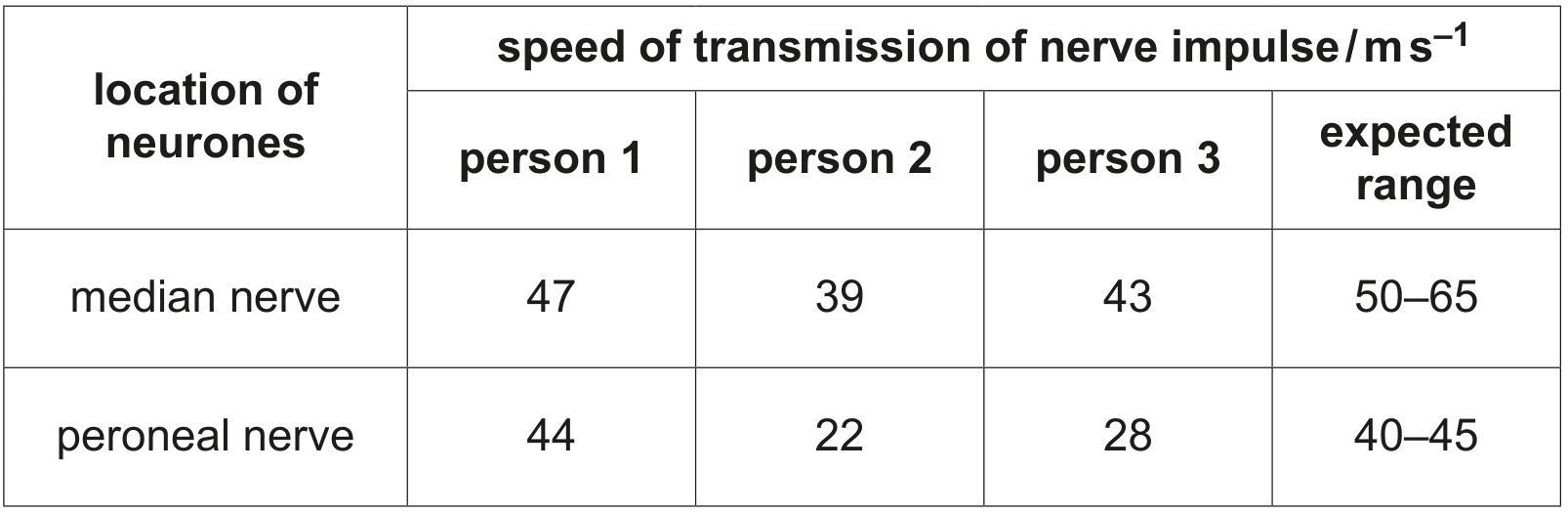
A nerve conduction velocity (NCV) test can be used to measure the speed of transmission of nerve impulses along neurones in different parts of the body.

NCV tests were carried out on three people with GAN. The speed of transmission of nerve impulses was measured in neurones in two nerves:
- the median nerve, one of the main nerves in the arm
- the peroneal nerve, one of the main nerves in the leg.

Table 2.1 shows the NCV test results for the three people with GAN and the expected range for a person without GAN.

Table 2.1

Table 2.1

With reference to Table 2.1, describe the effect of GAN on the speed of transmission of nerve impulses.

[ 2 ]

Question 2(a)(iii)

(iii)

Walking requires nervous control to coordinate movements. One of the first signs of GAN is having problems with walking.

Explain how the speed of transmission of nerve impulses in people with GAN can affect walking.

[ 2 ]
0 selected