EduNinja

A-Level CAIE Biology A218.1 ClassificationQuestion Bank

Question 1

[Maximum number: 2]

The greenish warbler, Phylloscopus trochiloides, is a species of small bird that originated in northern India, on the southern edge of the Himalayan mountain range.

Fig. 1.1 shows a greenish warbler.
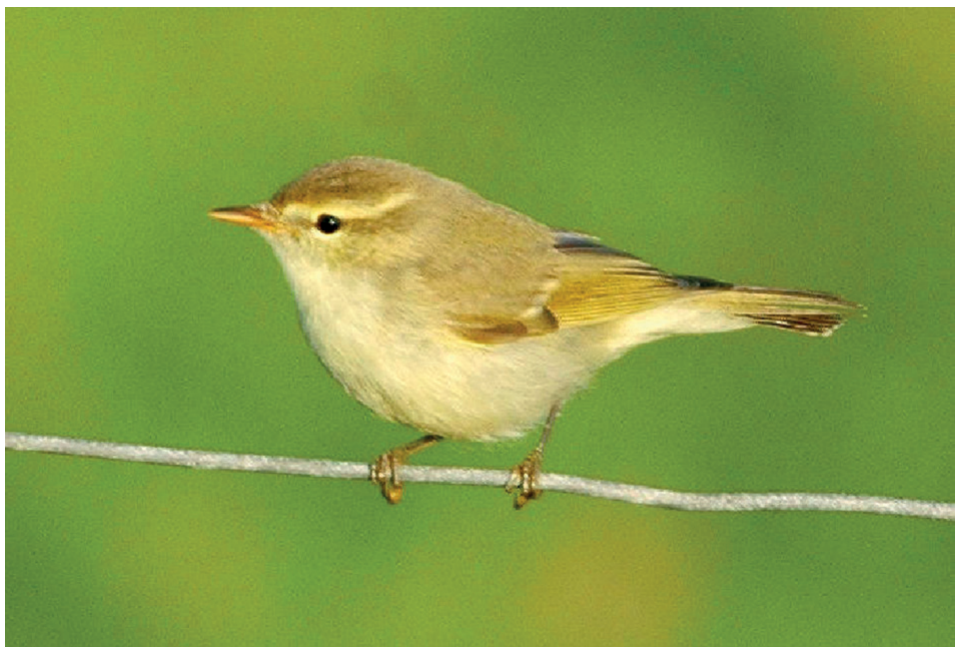
Fig. 1.1

Fig. 1.1

Thousands of years ago, populations of the greenish warbler spread around the western and eastern edges of the Himalayan mountain range to establish themselves in north-eastern Europe and Siberia.
- A gradual change in characteristics occurred in these populations, leading to different forms of the greenish warbler.
- One example of gradual change is in the song of the male warbler, which is very distinctive and is used in mating behaviour.
- When greenish warblers from north-eastern Europe meet those from Siberia no mating takes place.
- The greenish warblers from north-eastern Europe and Siberia are now considered to be two separate species.
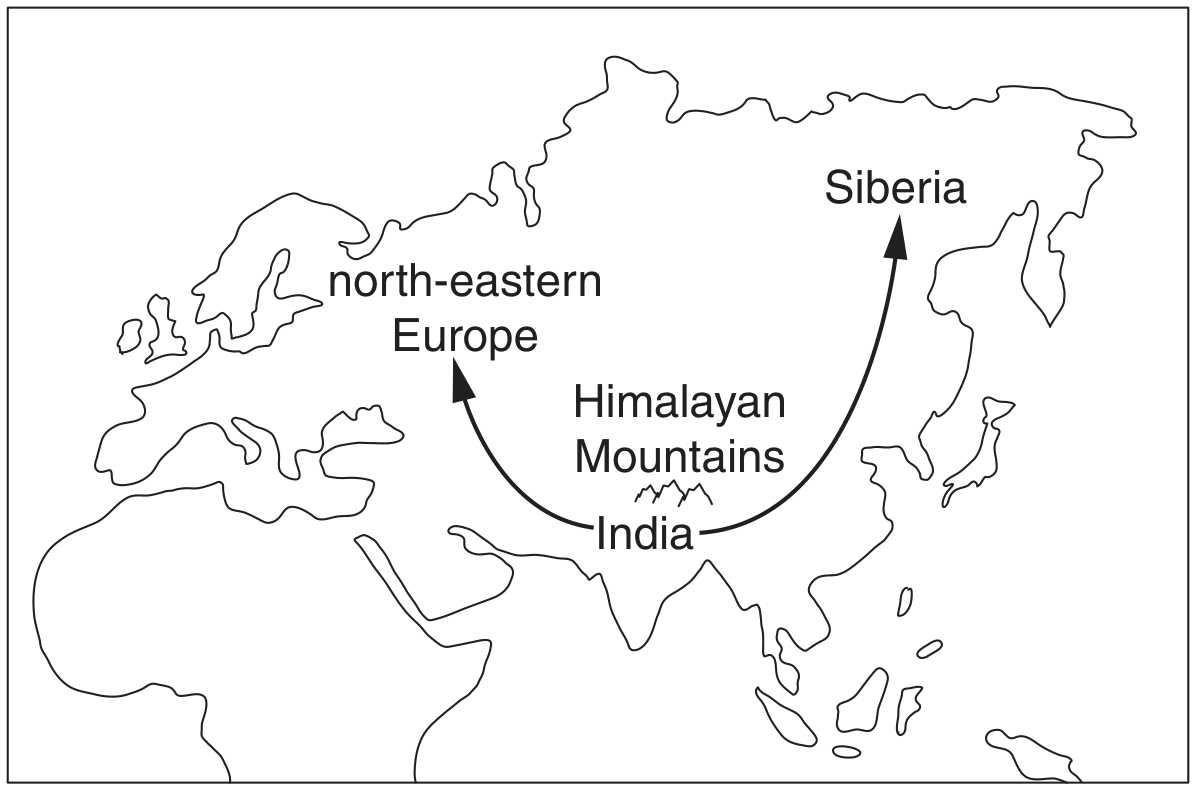
Fig. 1.2 shows the spread of the greenish warbler.

Fig. 1.2 shows the spread of the greenish warbler.

Question 1(a)

(a)

Explain what is meant by the term species.
[ 2 ]

Question 1

[Maximum number: 1]

The St. Lawrence river in Canada has been identified as an area with very high biodiversity.

Question 1(e)

(a)

Algal blooms sometimes occur in the area of the Atlantic ocean near the St. Lawrence river. These result from rapid population growth of unicellular algae such as Alexandrium tamarense.

[ 1 ]

Question 1(e)(ii)

(i)

Algae, such as A. tamarense, used to belong to the kingdom Plantae but are now classified in the kingdom Protoctista.

State one reason why A. tamarense is classified in the kingdom Protoctista and not in the kingdom Plantae.

[ 1 ]

Question 1

Question 1(a)

(a)

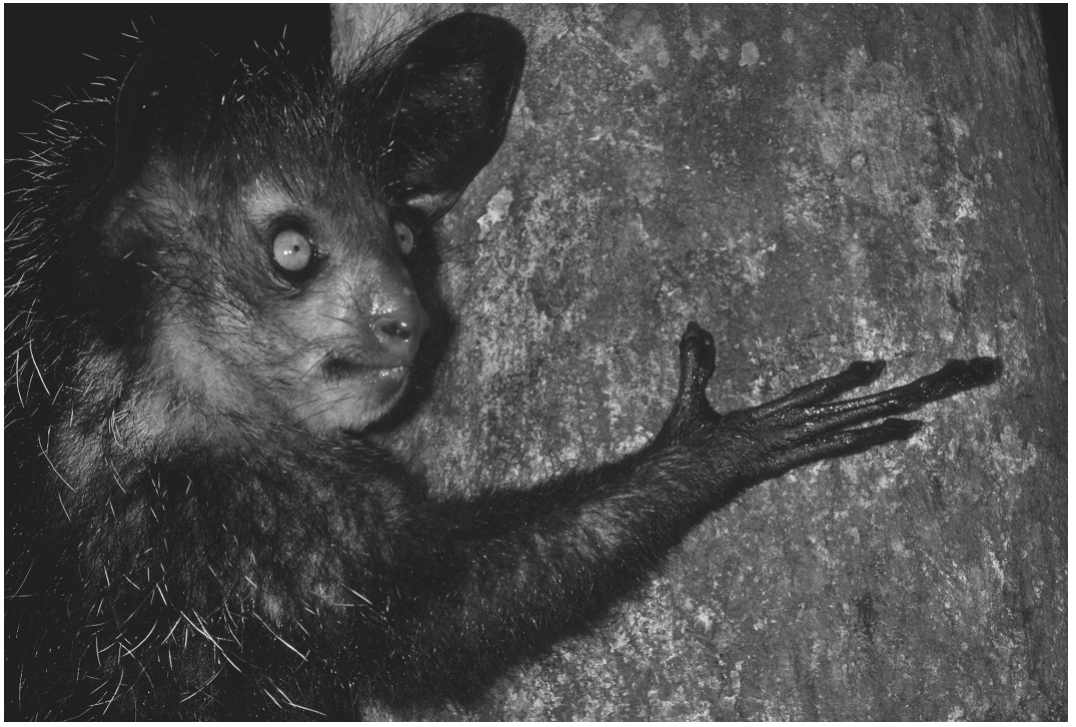
The aye-aye, Daubentonia madagascariensis, is a mammal, native to Madagascar. Aye-ayes are active at night and make their nests high up in trees. They feed on insect larvae in the trunks of trees.

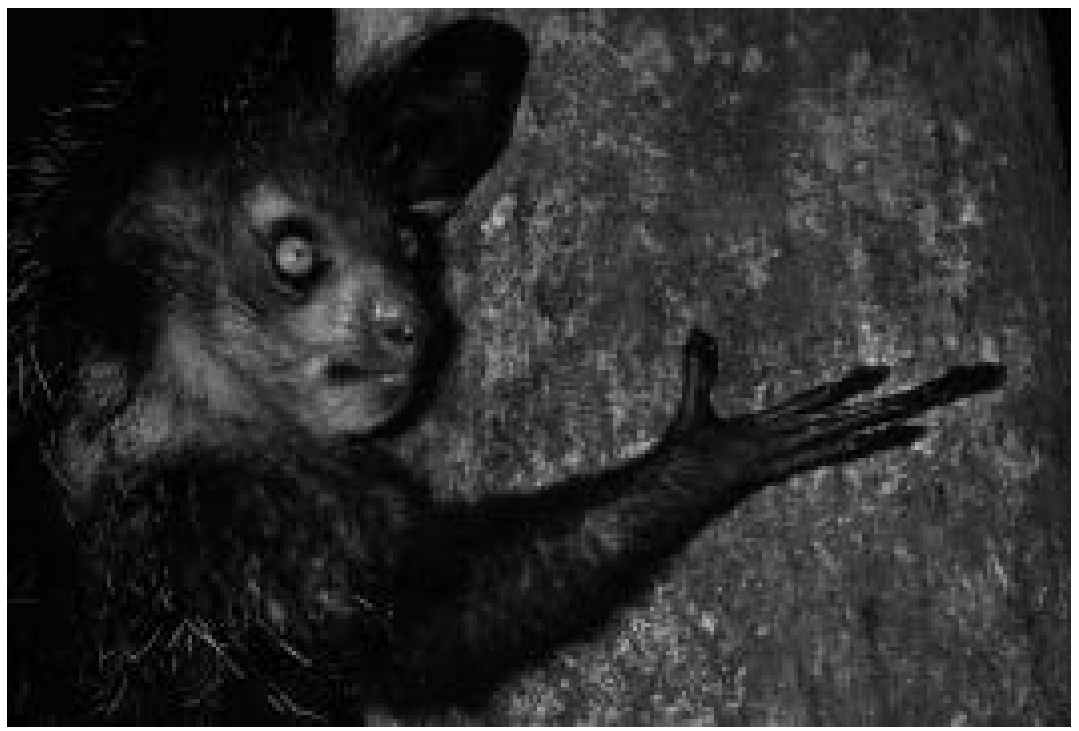
Fig. 1.1 shows an aye-aye.

Fig. 1.1

Fig. 1.1

The International Union for Conservation of Nature (IUCN) categorises the aye-aye as endangered. This means that the aye-aye has a very high risk of becoming extinct in the wild.

[ 1 ]

Question 1(a)(i)

(i)

Name the domain to which the aye-aye belongs.

[ 1 ]

Question 1

Question 1(a)

(a)

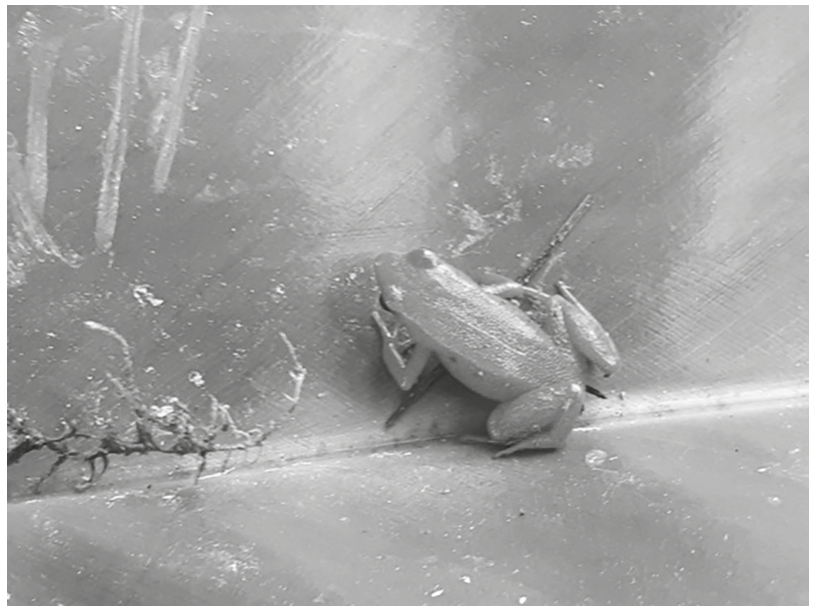
The golden mantella, Mantella aurantiaca, is a small terrestrial frog found in Madagascar.
Fig. 1.1 shows a golden mantella.

Fig. 1.1

Fig. 1.1

[ 2 ]

Question 1(a)(i)

(i)

Name the domain and kingdom to which the golden mantella belongs.
domain
kingdom

[ 2 ]

Question 1

[Maximum number: 2]

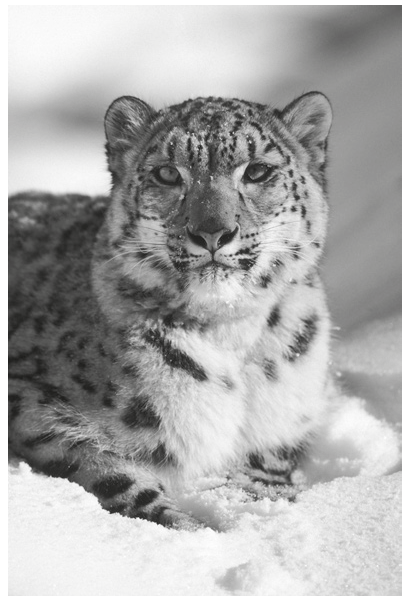
Fig. 1.1 shows a snow leopard, Panthera uncia. The habitat of the snow leopard is the high mountains of Central Asia.

Fig. 1.1

Fig. 1.1

Snow leopards usually live and hunt alone. Their main prey is grazing herbivores, such as wild sheep and wild goats. They will also hunt domesticated animals and livestock.

The number of snow leopards has decreased dramatically in the last 40 years.

Question 1(d)

(a)

In 1775 the snow leopard was classified as the only species in the genus Uncia and was known as Uncia uncia.

More recently, new techniques showed similarities to the tiger, Panthera tigris, and so in 2006 the snow leopard was reclassified in the genus Panthera.

Suggest the type of evidence used to classify the snow leopard in 1775.

[ 2 ]

Question 1

Question 1(b)

(a)

The domestic dog, Canis familiaris, is found worldwide. It is able to breed with all other members of the genus to form fertile hybrids.

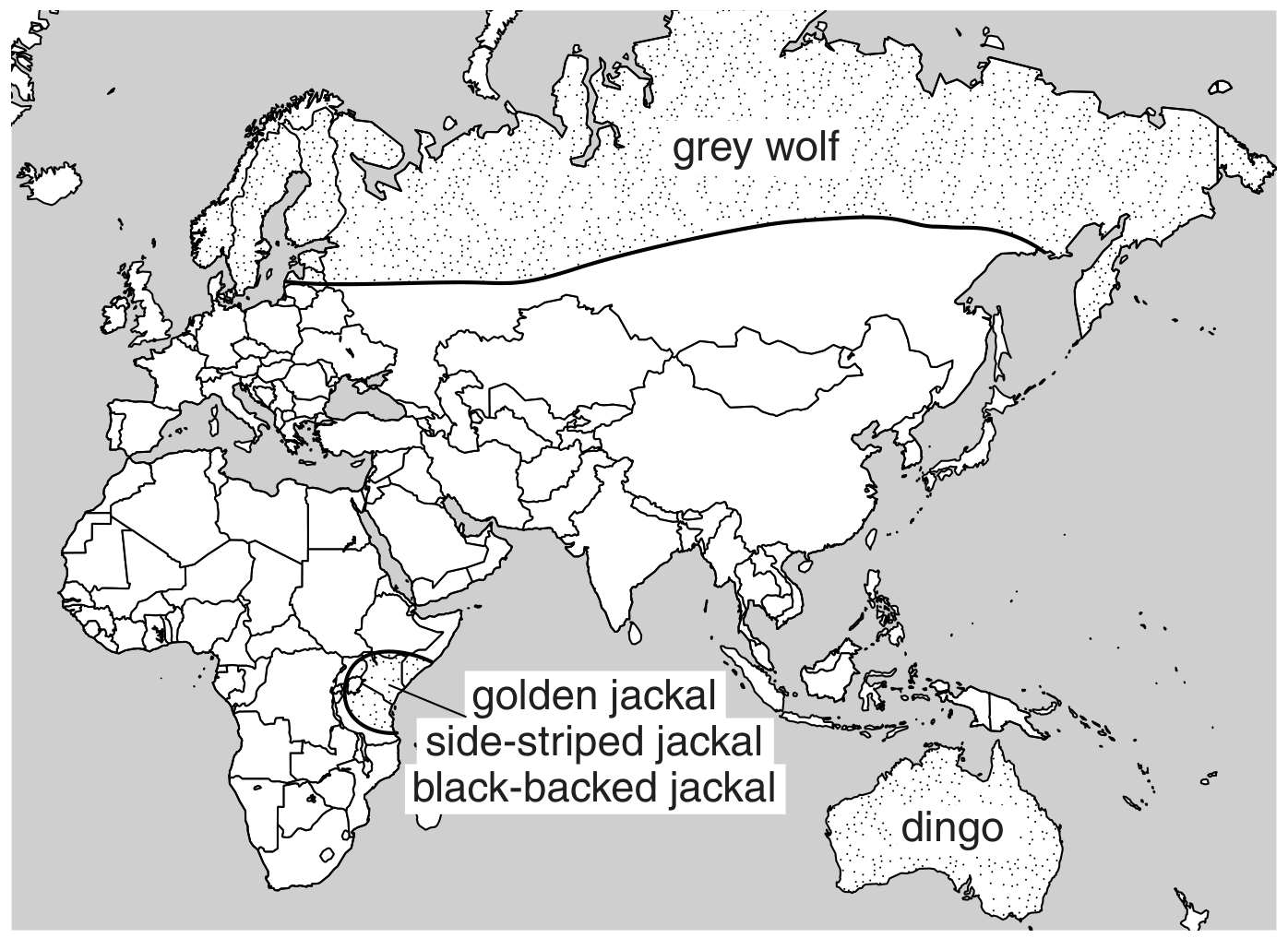
The distribution of some of the species belonging to the genus Canis is shown in Fig. 1.2.
The dingo and the grey wolf species have distinct ranges but the ranges of three species of jackal overlap in East Africa.

Fig. 1.2

Fig. 1.2

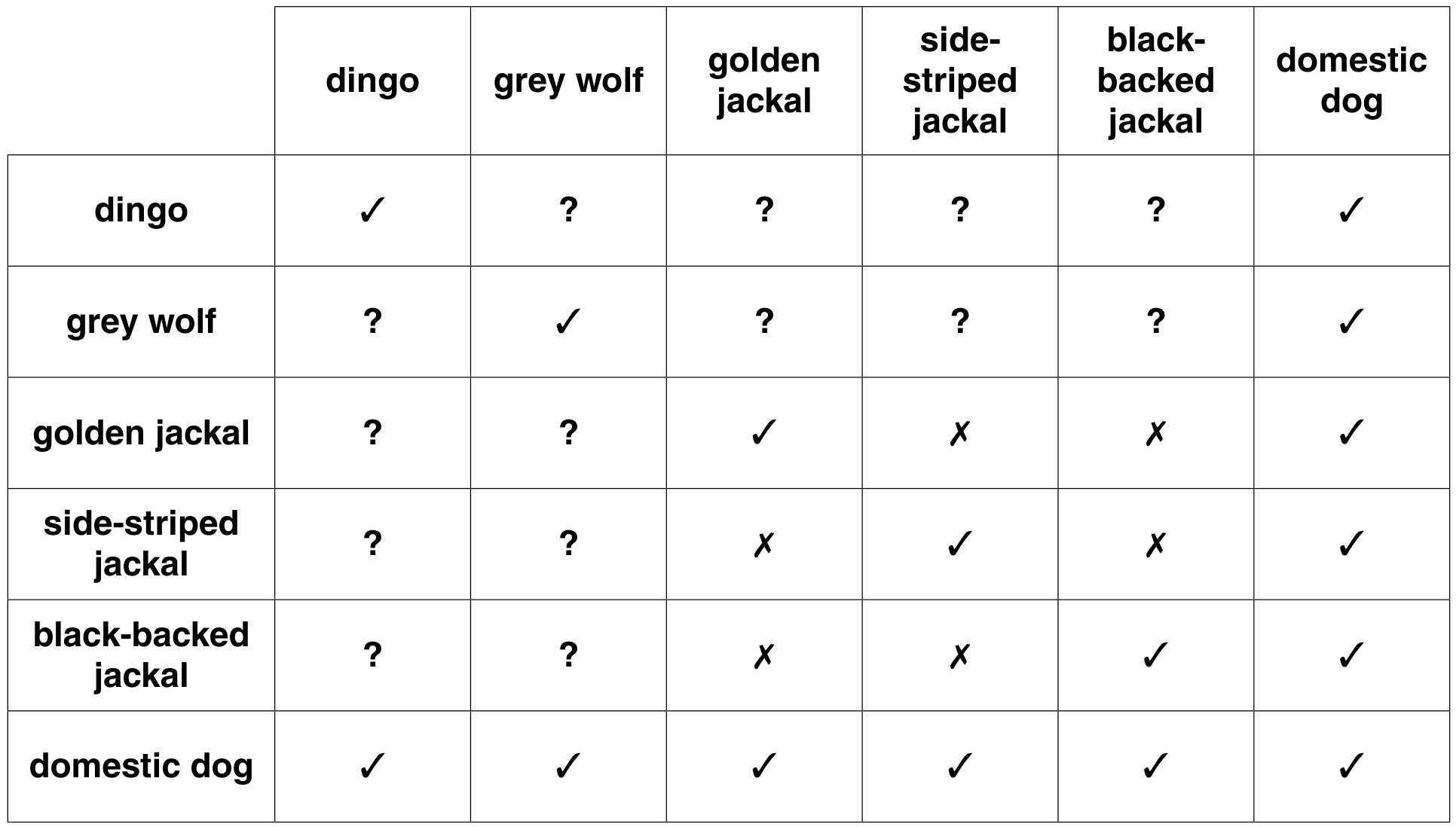
Table 1.1 shows whether members of different species of the genus Canis are able to breed with each other.

Table 1.1
key: \(\checkmark=\) able to interbreed \(\quad \boldsymbol{X

Table 1.1 key: \(\checkmark=\) able to interbreed \(\quad \boldsymbol{X

[ 2 ]

Question 1(b)(ii)

(i)

Using the information in Fig. 1.2 and Table 1.1, state:
- one reason why the members of the genus Canis could be described as one species
- one reason why they should be described as separate species.

[ 2 ]

Question 1

Question 1(a)

(a)

The aye-aye, Daubentonia madagascariensis, is a primate native to Madagascar. Aye-ayes are nocturnal (active at night) and make their nests high up in trees. They feed on insect larvae in the trunks of trees.

Fig. 1.1 shows an aye-aye.

Fig. 1.1

Fig. 1.1

The International Union for Conservation of Nature (IUCN) is the world's largest global environmental organisation. The IUCN Red List of Threatened Species TM { }^{\text {TM }} evaluates the conservation status of plant and animal species.

The aye-aye is categorised as endangered on the IUCN Red List, which means that it faces a very high risk of becoming extinct in the wild.

[ 1 ]

Question 1(a)(i)

(i)

Name the domain to which the aye-aye belongs.

[ 1 ]

Question 1

[Maximum number: 5]

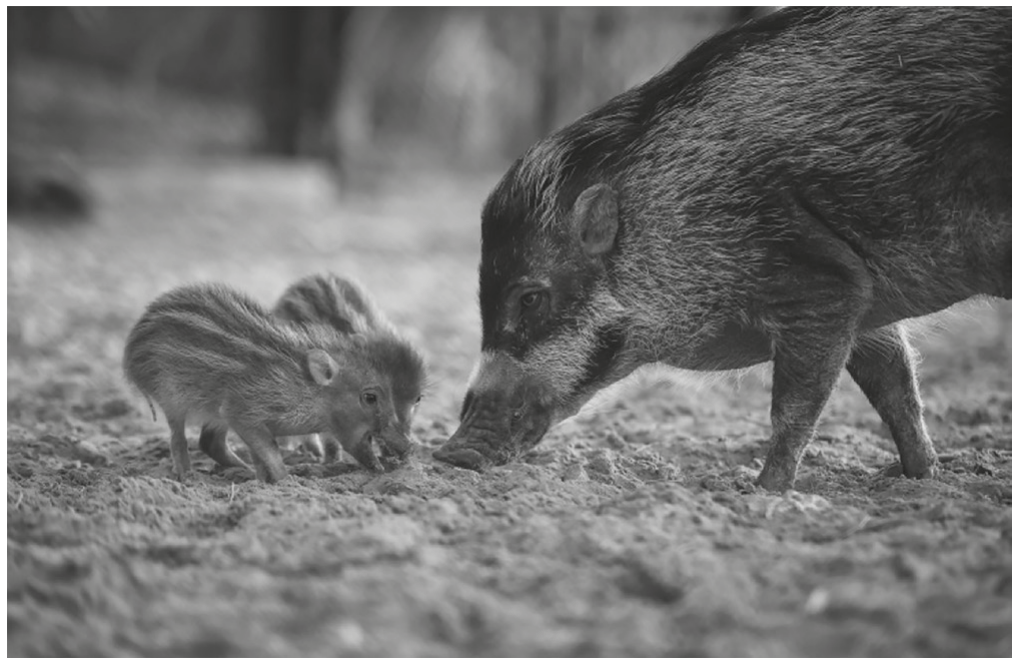
The Visayan warty pig, Sus cebifrons, is found on two islands in the Philippines.
Fig. 1.1 shows a female Visayan warty pig with her young.

Fig. 1.1

Fig. 1.1

Question 1(b)

(a)

Sometimes the Visayan warty pigs will breed with domestic pigs, Sus domesticus.

Suggest the consequences of this interspecific breeding.

[ 3 ]

Question 1(c)

(b)

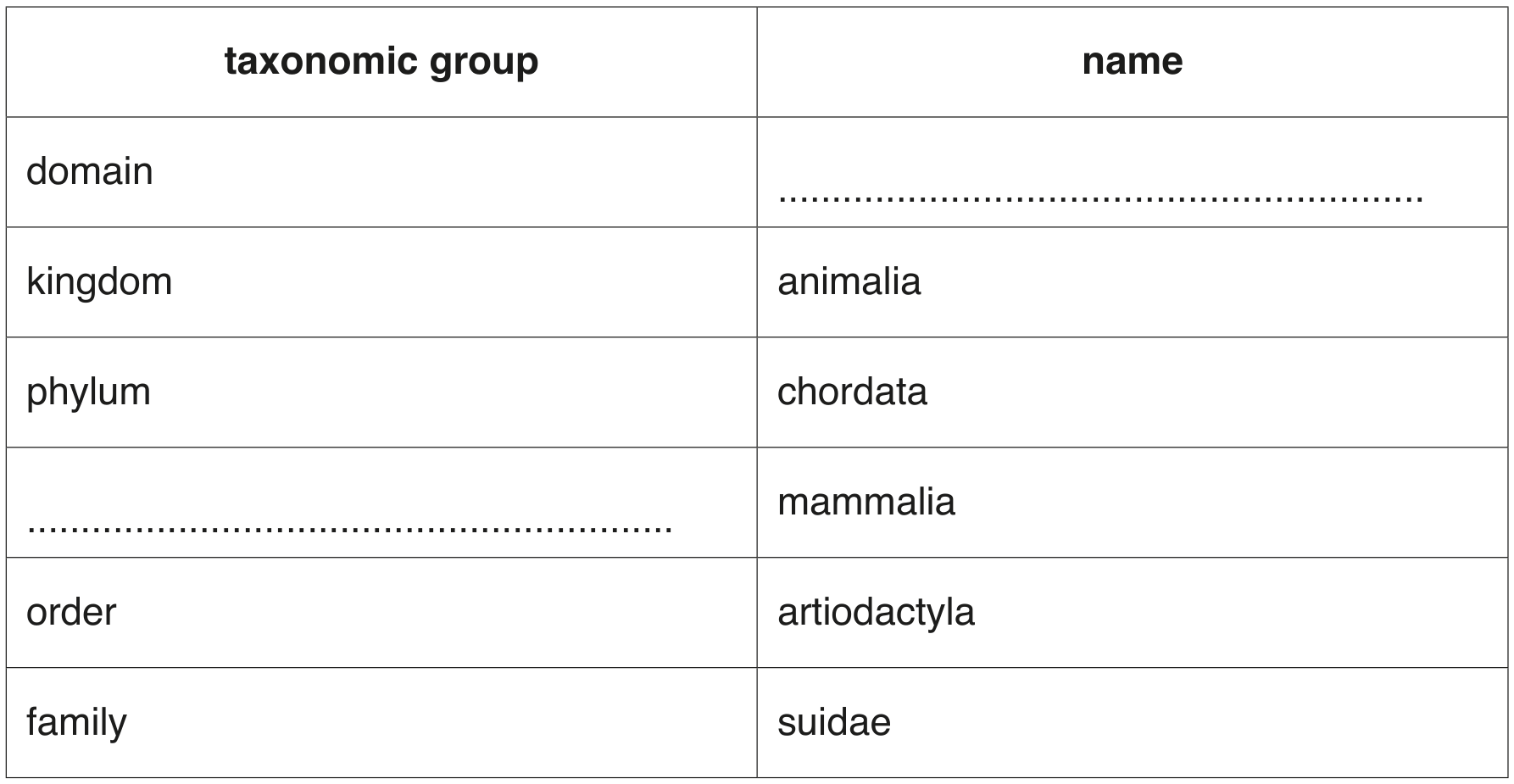
Table 1.1 shows part of the classification of the Visayan warty pig.

Complete Table 1.1.

Table 1.1

Table 1.1

[ 2 ]

Question 1

[Maximum number: 2]

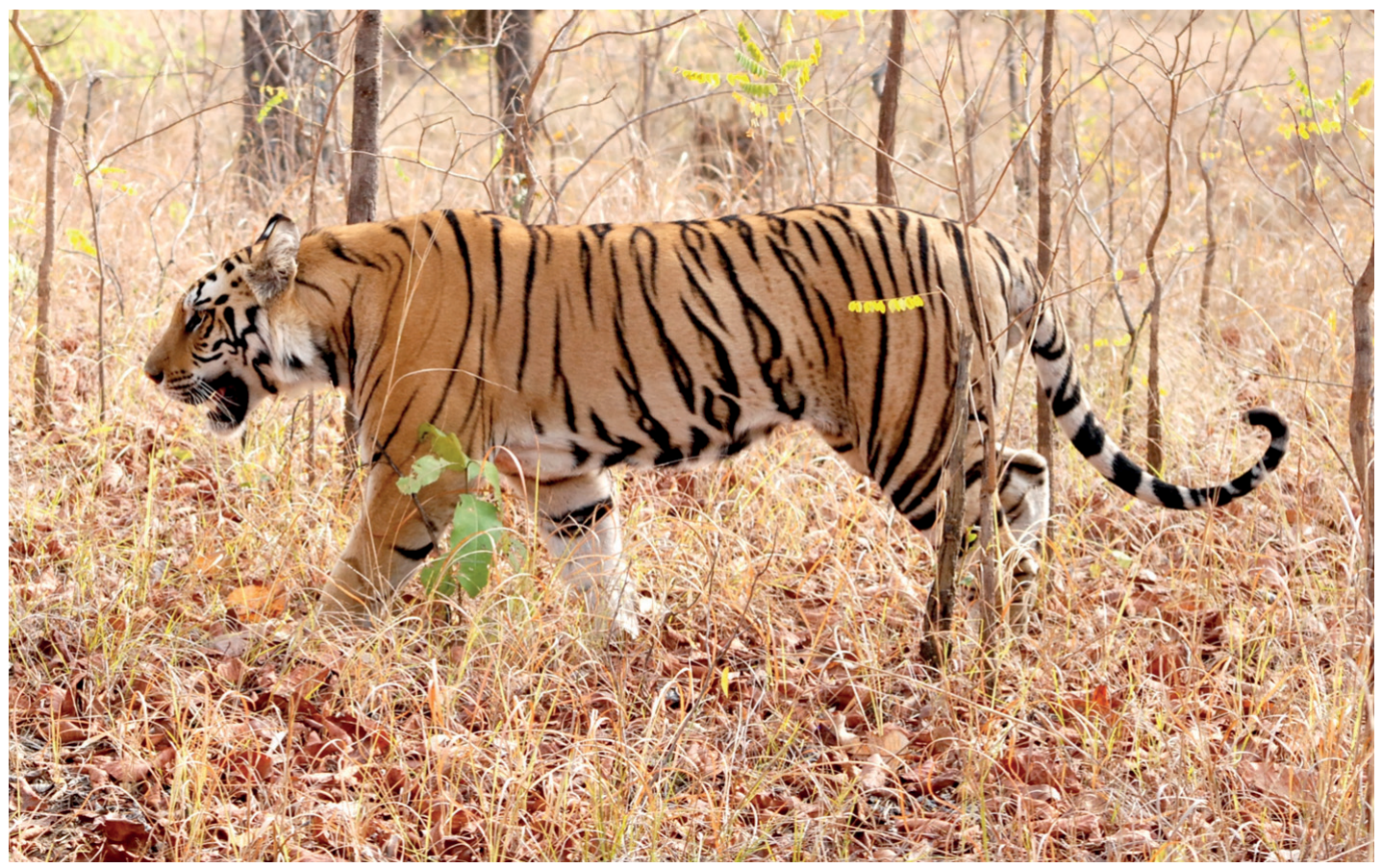
The Bengal Tiger, Panthera tigris tigris, is an endangered mammalian species of Southern Asia. It lives mostly in a forest habitat.

Fig.1.1 shows a Bengal Tiger.

Fig. 1.1

Fig. 1.1

Question 1(c)

(a)

The Bengal Tiger belongs to the kingdom Animalia. State two differences between members of the kingdom Animalia and the kingdom Plantae.

[ 2 ]

Question 1

[Maximum number: 1]

The courgette plant, Cucurbita pepo, produces edible fruits that vary in colour and shape.
Fruit colour in courgettes is controlled by the gene A / a.
Fruit shape in courgettes is controlled by the gene B/b.
- A yellow fruit is produced when the dominant allele A is present.
- A round fruit is produced when the dominant allele B is present.

Genes A / a and B/b occur on different chromosomes.
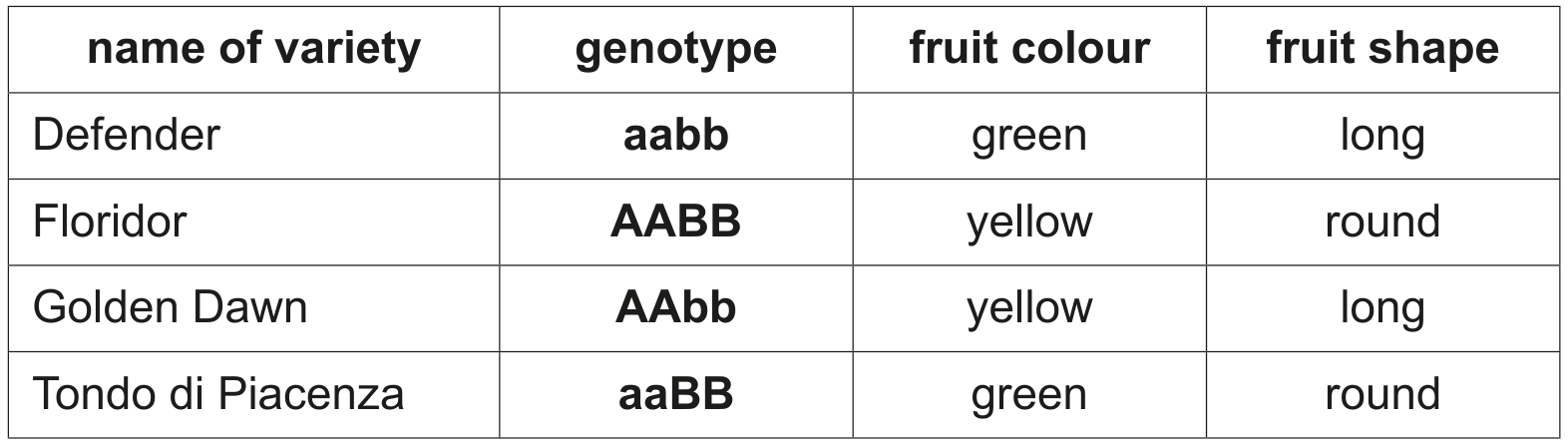
Table 1.1 shows the genotypes and phenotypes of four different varieties of courgette with respect to their fruit colour and shape.

Table 1.1

Table 1.1

Question 1(c)

Question 1(c)(i)

(a)
(i)

Watermelons are attacked by watermelon mosaic virus (WMV). In 1965, a WMV-resistant plant in the same family, Cucurbita ecuadorensis ( 2 n=40 ), was found growing wild in South America.

State why a WMV-resistant variety of watermelon cannot be obtained by breeding Cucurbita ecuadorensis with a normal diploid watermelon.

[ 1 ]
0 selected