EduNinja

A-Level CAIE Biology A216.2 The Roles of Genes in Determining PhenotypeQuestion Bank

Question 1

[Maximum number: 7]

The jaguar, Panthera onca, is a large cat that lives mainly in South America. The majority of jaguars have light brown fur with black spots, as shown in Fig. 1.1. Some jaguars have completely black fur, as shown in Fig. 1.2.
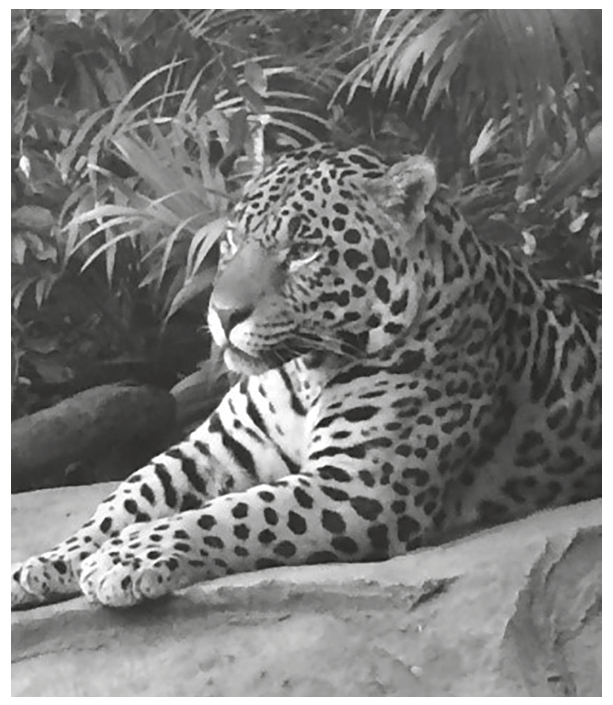
Fig. 1.1
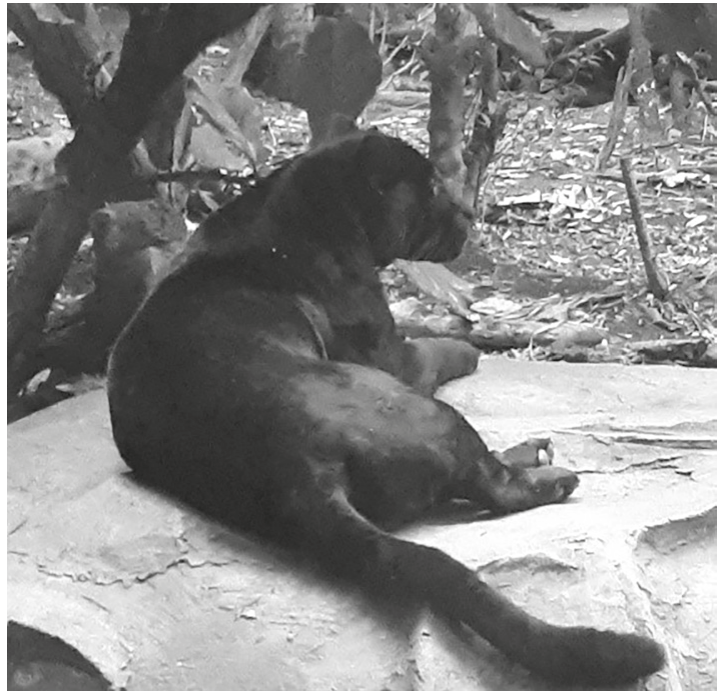
Fig. 1.1

Fig. 1.2

Fig. 1.2

Question 1(a)

(a)

The pigments involved in fur colour are produced as a result of biochemical pathways that take place in cells called melanocytes. These pathways are similar to those that occur in human melanocytes.

The melanocortin 1 receptor (MC1R) is located on the cell surface membrane of melanocytes and is coded for by the MC1R gene.

Fig. 1.3 outlines the processes that occur in jaguar melanocytes.
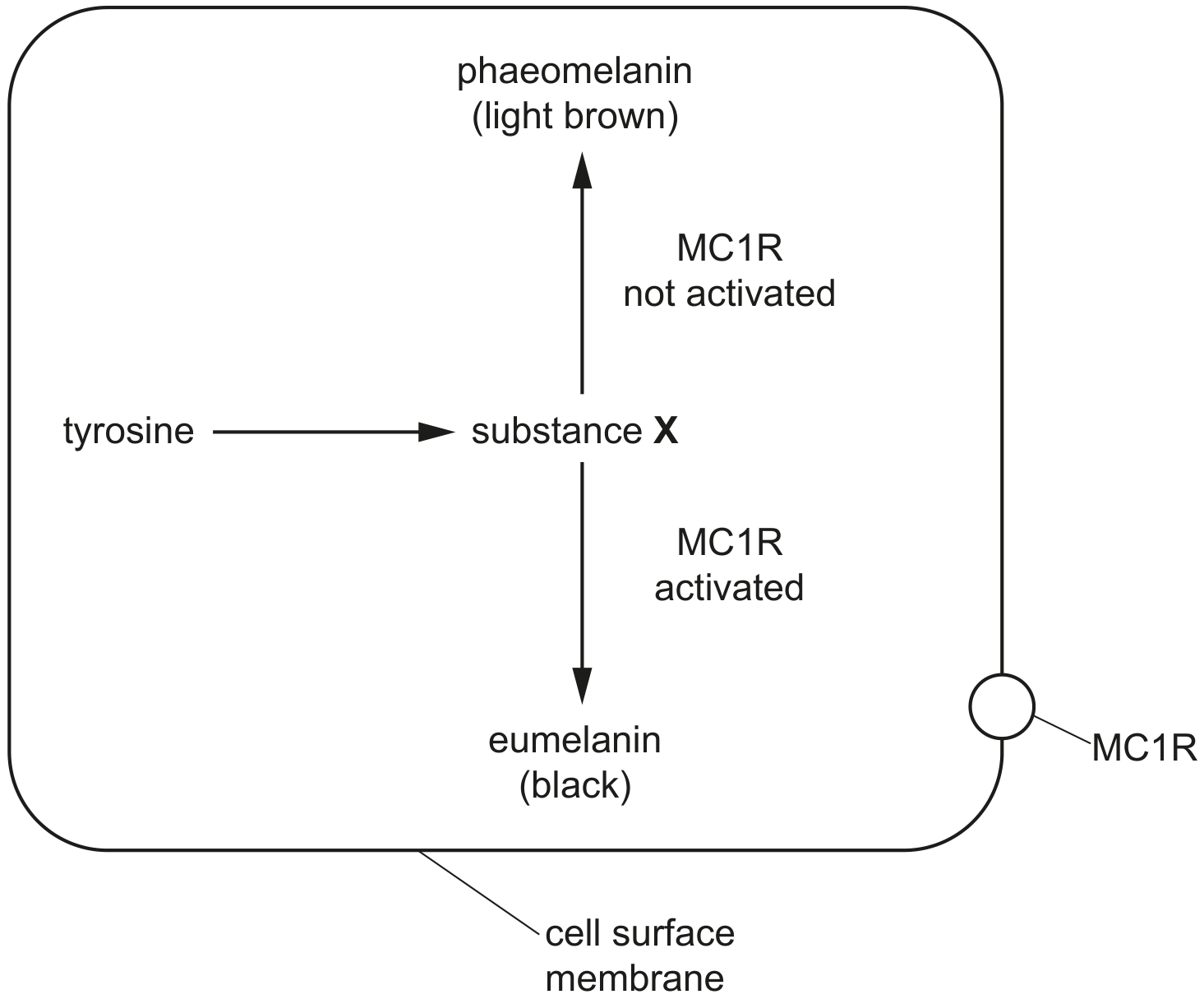
Fig. 1.3

Fig. 1.3

[ 3 ]

Question 1(a)(i)

(i)

Name the substance represented by X.

[ 1 ]

Question 1(a)(iii)

(ii)

Substance X is also produced in humans, but a mutation of the TYR gene can result in substance X not being produced.

Describe the phenotype of a person with this mutation.

[ 2 ]

Question 1(b)

(b)

The MC1R gene has two alleles and is located on an autosome.
- When two jaguars with light brown fur mate all the offspring have light brown fur.
- When two jaguars with black fur mate either all the offspring will have black fur or some offspring will have black fur and some will have light brown fur.

Using symbols, construct a genetic diagram to show how two jaguars with black fur can produce some offspring with black fur and some offspring with light brown fur.

[ 4 ]

Question 1

[Maximum number: 6]

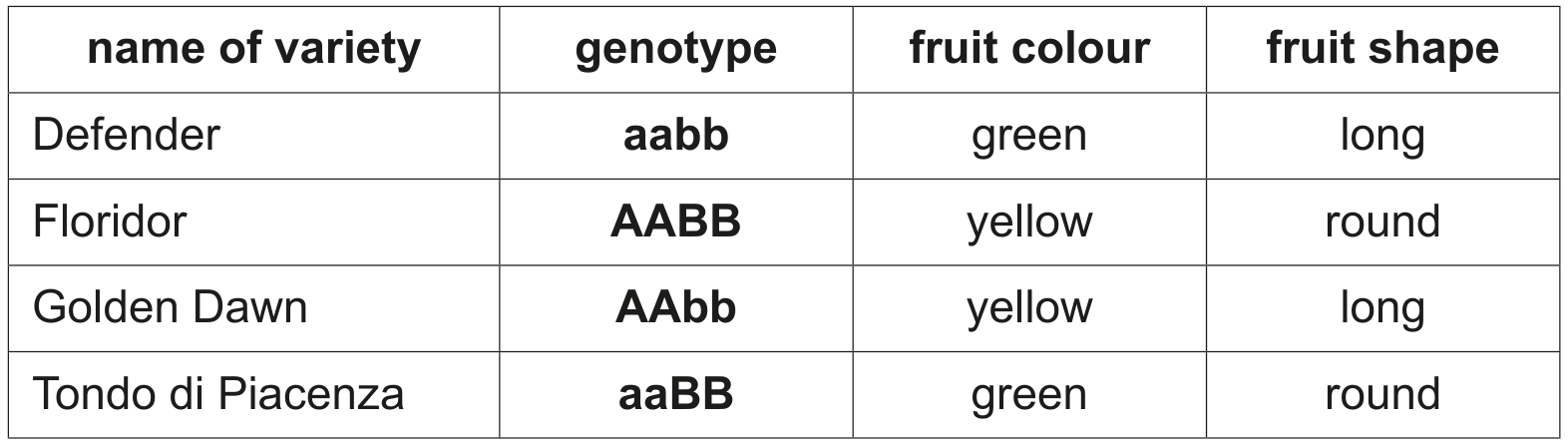
The courgette plant, Cucurbita pepo, produces edible fruits that vary in colour and shape.
Fruit colour in courgettes is controlled by the gene A / a.
Fruit shape in courgettes is controlled by the gene B/b.
- A yellow fruit is produced when the dominant allele A is present.
- A round fruit is produced when the dominant allele B is present.

Genes A / a and B/b occur on different chromosomes.
Table 1.1 shows the genotypes and phenotypes of four different varieties of courgette with respect to their fruit colour and shape.

Table 1.1

Table 1.1

Question 1(a)

Question 1(a)(i)

(a)
(i)

The varieties Golden Dawn and Tondo di Piacenza were grown in the same garden and cross-pollination occurred between them. The gardener grew these cross-pollinated F1 seeds into plants that formed fruits.

The gardener did not know the genotypes of the parent plants and did not know that cross-pollination had occurred.

State the phenotype of the fruits of the F1 plants and explain why it was unexpected for the gardener.

[ 2 ]

Question 1(a)(ii)

(ii)

The gardener crossed two of these F1 plants.

Complete Fig. 1.1 with the F1 gametes, F2 genotypes and F2 phenotypes.
State the ratio of fruit phenotypes in the F2 offspring.

Fig. 1.1

Fig. 1.1

ratio of fruit phenotypes

[ 4 ]

Question 1

Question 1(a)

(a)

Huntington's disease (HD) is an inherited disease of the central nervous system. The symptoms of HD usually develop in adulthood and include uncontrollable muscular movements, short-term memory loss and changes in mood.

HD is caused by a dominant allele of the huntingtin gene on chromosome 4.
Explain what is meant by the terms allele and dominant.
allele
dominant

[ 2 ]

Question 1

[Maximum number: 2]

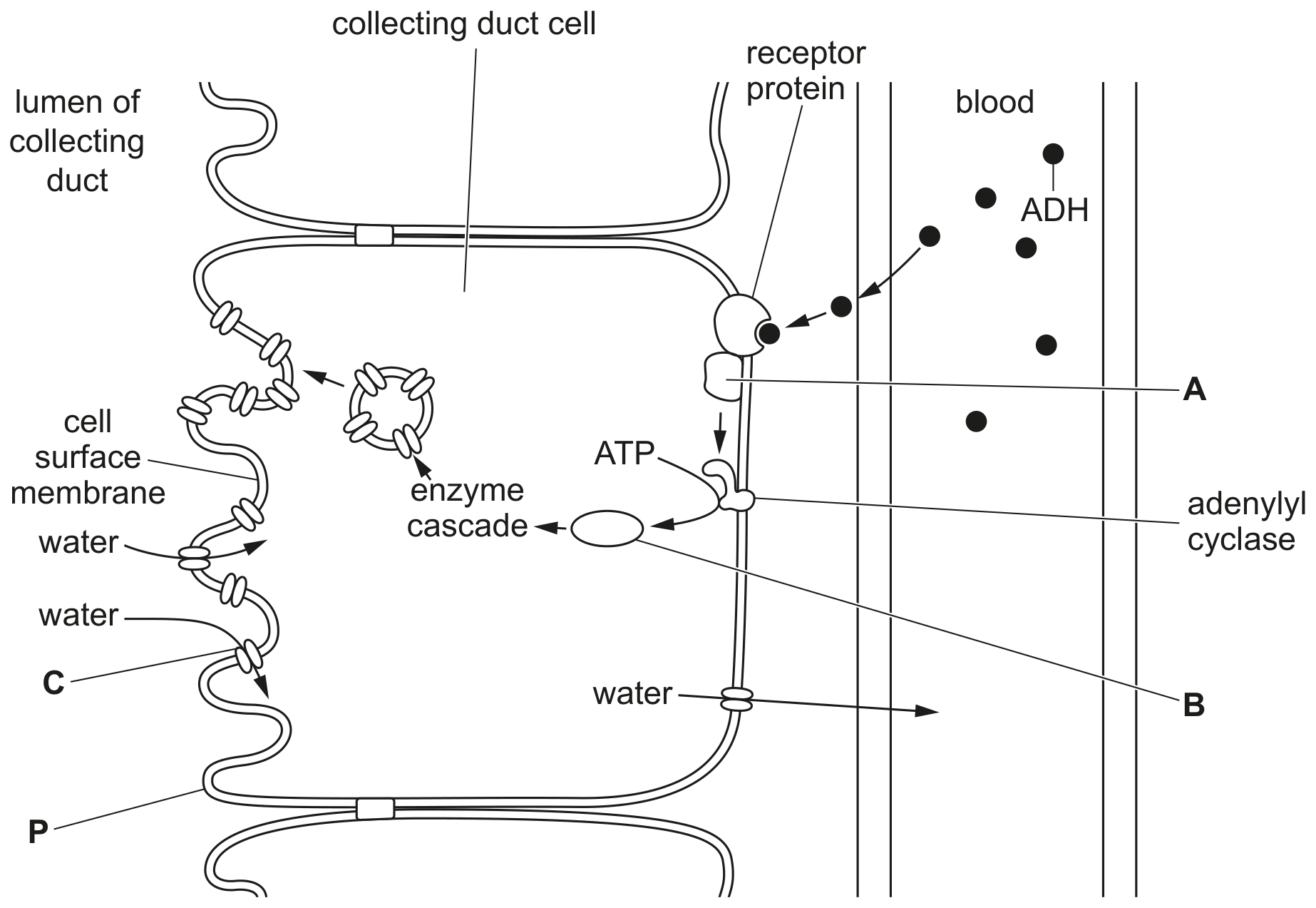
Fig. 1.1 outlines the effect of antidiuretic hormone (ADH) on the cells of the collecting duct. The cell-signalling mechanism of ADH is similar to that of glucagon on liver cells.

Fig. 1.1

Fig. 1.1

Question 1(e)

(a)

NDI is caused by a recessive allele of the gene coding for the receptor protein. The gene is located on the X chromosome.

Explain why a man with NDI could not have inherited the condition from his father.

[ 2 ]

Question 1

[Maximum number: 8]

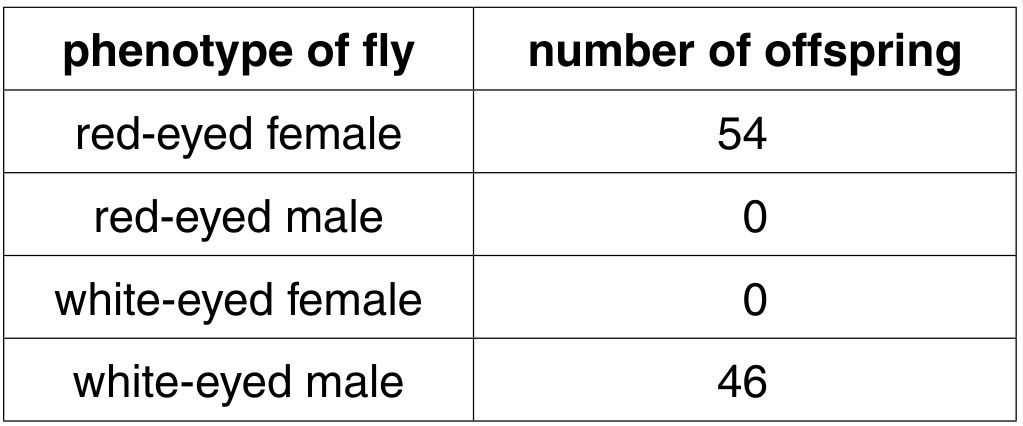
A mutation in a gene in the fruit fly, Drosophila melanogaster, gives rise to white-eyed flies instead of the normal red-eyed flies. The allele for red eyes (R) is dominant to the allele for white eyes (r).

A student crossed a red-eyed fly with a white-eyed fly.
The results are shown in Table 1.1.

Table 1.1

Table 1.1

Question 1(a)

(a)

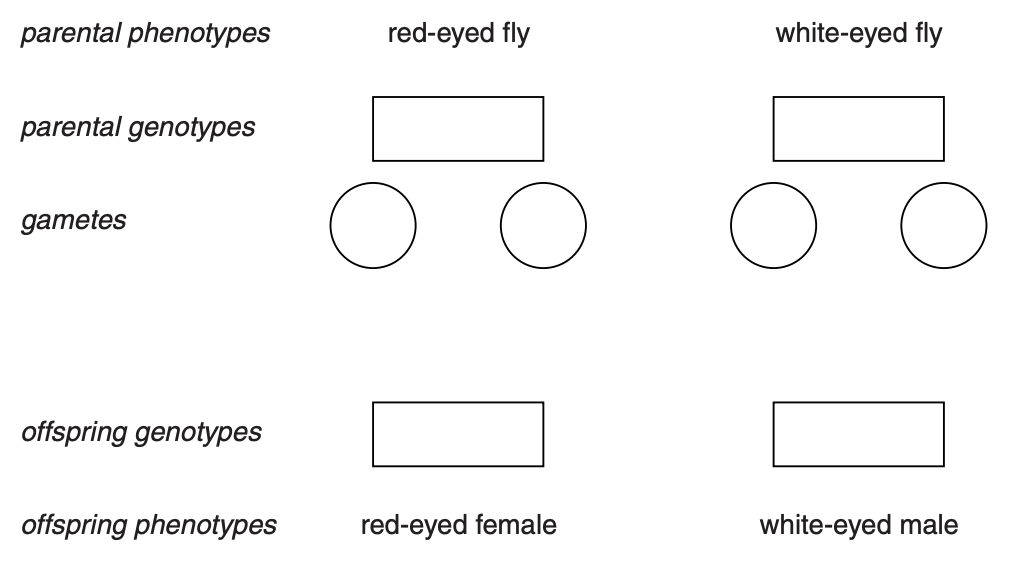
In Drosophila, males possess two different sex chromosomes, X and Y , as in humans.

Complete the genetic diagram below to show how the results in Table 1.1 could have been produced.

Question image
[ 3 ]

Question 1(b)

Question 1(b)(i)

(b)
(i)

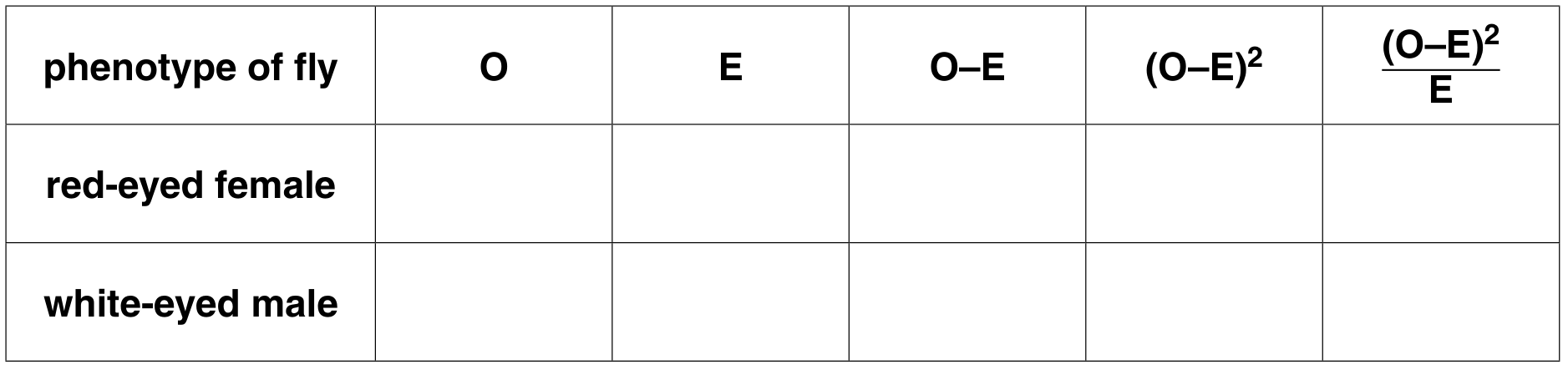
The chi-squared (χ2)\left(\chi^{2}\right) test can be used to analyse the results in Table 1.1.

The expected ratio of red-eyed females to white-eyed males is 1: 1.

Complete Table 1.2 and use this to calculate a value for chi-squared (χ2)\left(\chi^{2}\right).
χ2=Σ(O−E)2Ev=n−1\chi^{2}=\Sigma \frac{(\mathrm{O}-\mathrm{E})^{2}}{\mathrm{E}} \quad v=\mathrm{n}-1
key
Σ=\Sigma= sum of
v= degrees of freedom
n= number of classes
O = observed value
E = expected value

Table 1.2

Table 1.2

χ2=\chi^{2}=
[ 3 ]

Question 1(b)(ii)

(ii)

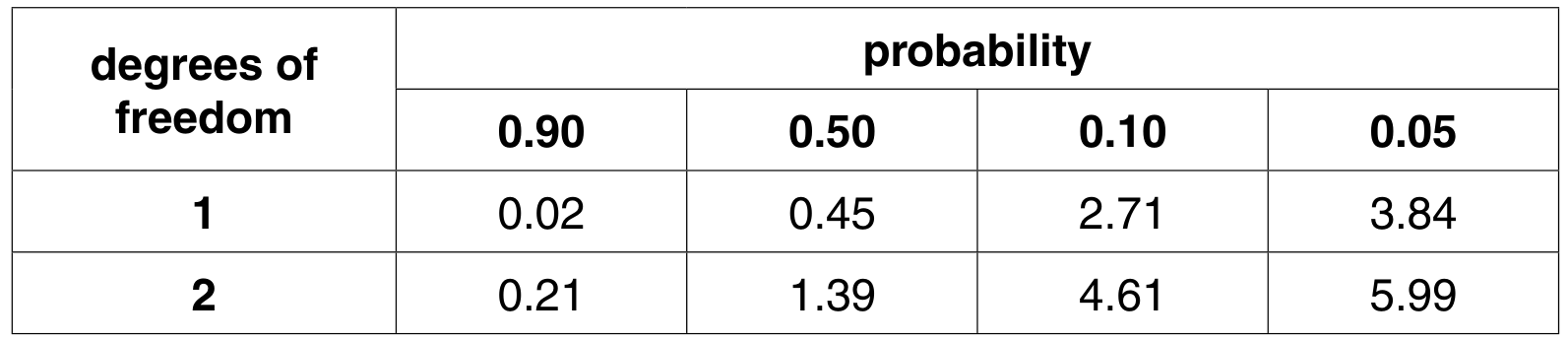
Use your calculated value of χ2\chi^{2} and the table of probabilities below, to test the significance of the difference between observed and expected results.

Table
[ 2 ]

Question 1

[Maximum number: 8]

The Labrador retriever is a modern breed of dog that can have yellow, black or brown fur and pale, black or brown noses. The inheritance of fur and nose colour is the result of the interaction between genes at two different loci, the B locus and the E locus.

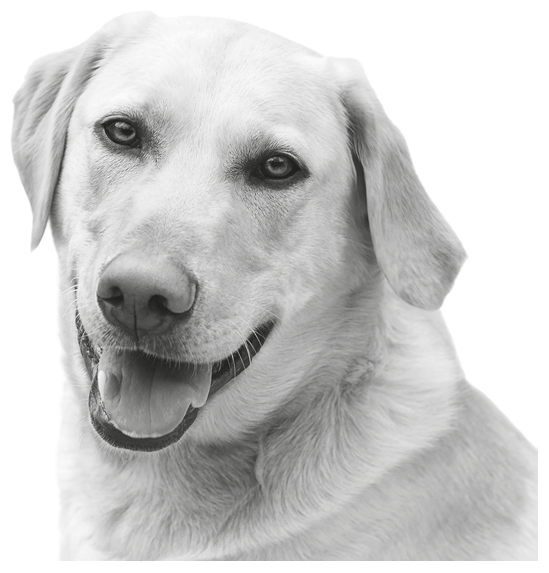
Fig. 1.1 shows a Labrador retriever.

Fig. 1.1

Fig. 1.1

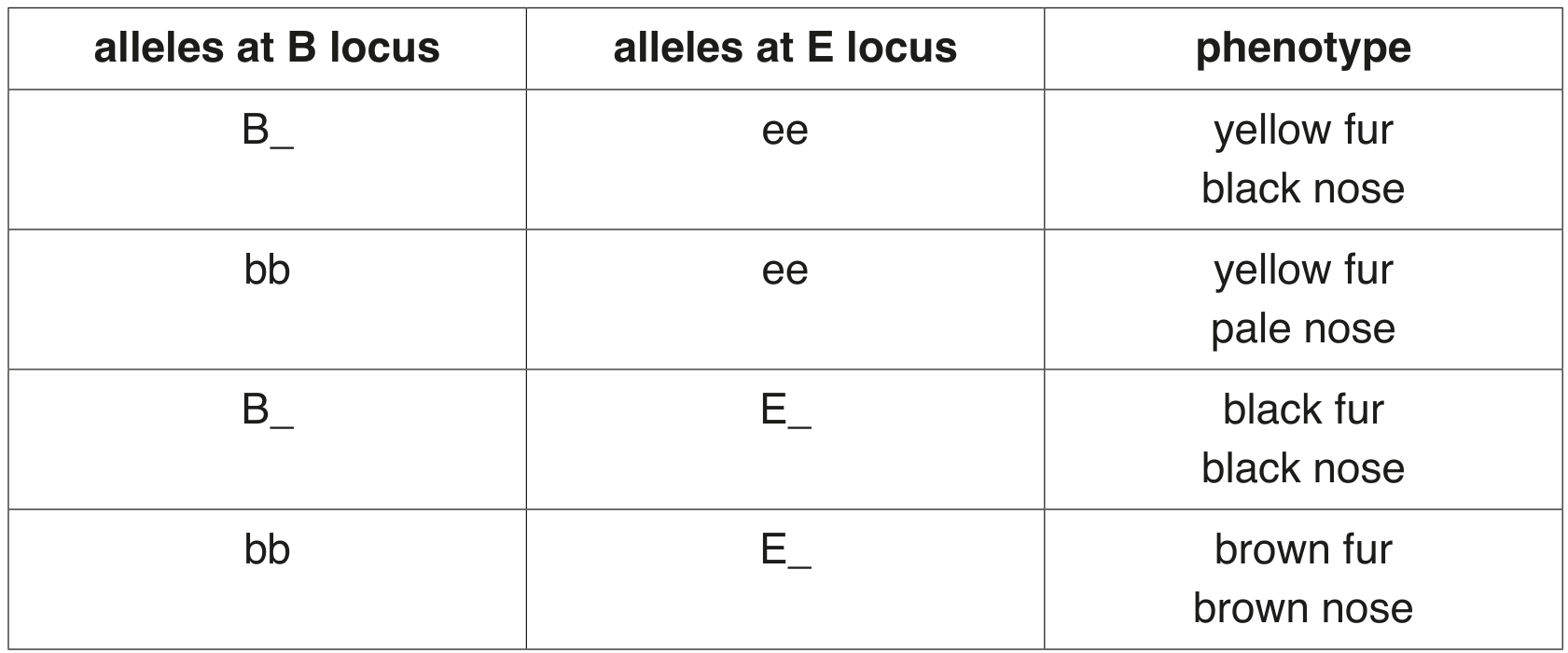
Table 1.1 shows how gene interaction results in different phenotypes.

Table 1.1

Table 1.1

A male Labrador retriever, heterozygous at the B locus and homozygous recessive at the E locus, was mated with a female Labrador retriever heterozygous at both loci.

Question 1(a)

(a)

Explain the terms locus and homozygous.
locus
homozygous

[ 2 ]

Question 1(b)

(b)

Use a genetic diagram to show the possible genotypes and phenotypes of the offspring from the mating between the two Labrador retrievers.
parental phenotypes
parental genotypes
gametes
offspring genotypes and phenotypes

[ 6 ]

Question 1

Question 1(b)

(a)

An inherited form of DI may be caused by faulty membrane receptors. These receptors are coded for by a sex-linked allele.

[ 5 ]

Question 1(b)(i)

(i)

Explain the term sex linkage.

[ 1 ]

Question 1(b)(ii)

(ii)

Use a genetic diagram to show how parents who do not have this condition can have a child with the inherited form of DI.
symbols
parental genotypes
gametes
offspring genotypes
offspring phenotypes

[ 4 ]

Question 2

[Maximum number: 4]

The scientist Gregor Mendel investigated differences in the length of the stem in the pea plant, Pisum sativum. In 1866, he published the results of his investigation into this trait (characteristic).

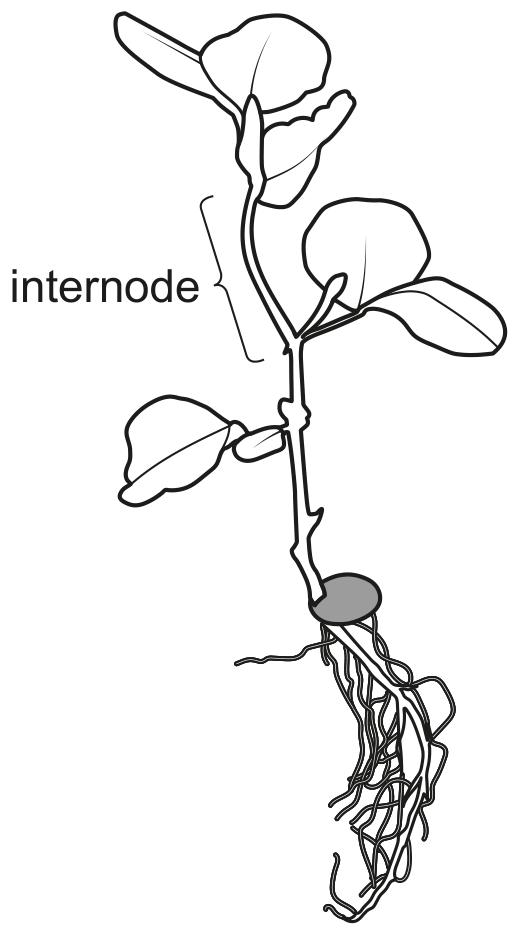
Fig. 2.1 shows a diagram of a pea plant.

Fig. 2.1

Fig. 2.1

Mendel observed that the pea plants he grew either had tall stems or dwarf (short) stems. In his investigation, Mendel carried out crosses using pea plants with these two phenotypes.

Question 2(a)

(a)

From the results of these crosses, Mendel demonstrated that tall stems were dominant to dwarf stems in pea plants.

It is now known that the stem length trait in pea plants is controlled by one gene that has two alleles:
- a dominant allele, Le
- a recessive allele, le.

Describe a cross that could be carried out and how the results of the cross could be analysed to determine the genotype of a pea plant with a tall stem.

[ 4 ]

Question 2

[Maximum number: 3]

Mammoths are extinct mammals related to elephants. About three million years ago, the ancestors of mammoths migrated from Africa into Europe and Asia. There, about 1.7 million years ago, the steppe mammoth evolved and became adapted to the cooler conditions. Then, about 700000 years ago, as the climate changed and the Arctic became much colder, the woolly mammoth evolved.

Woolly mammoths showed a number of obvious adaptations to reduce heat loss, including thick fur, small ears and small tails.

Question 2(b)

(a)

A frozen, 43000 year old woolly mammoth was found in Siberia. Its DNA was extracted and sequenced. The sequences of the genes coding for the α\alpha and β\beta chains of haemoglobin were compared with those of modern Asian elephants.

The results suggested that, when compared with Asian elephants:
- there was only one different amino acid in the woolly mammoth's α\alpha chains
- there were three different amino acids in the woolly mammoth's β\beta chains.

Explain the likely effect of these differences on a molecule of mammoth haemoglobin.

[ 3 ]

Question 2

[Maximum number: 2]

Myostatin is a protein that is produced in mammalian skeletal muscle cells. It circulates in the blood and acts on muscle tissue to slow down further differentiation and growth.

In thoroughbred racehorses, a mutation involving the substitution of a single nucleotide has been identified in the MSTN gene which codes for myostatin. At the site of this mutation, the DNA nucleotide has either a cytosine (C) base or a thymine (T) base, giving race horses three possible genotypes for this mutation: CC, CT or TT.

Question 2(a)

(a)

At two years of age, racehorses with the MSTN CC genotype have greater muscle mass than those with the TT genotype.

Suggest an explanation for this difference.

[ 2 ]
0 selected