3.2.9—Oxidation of organic functional groups
- Syllabus
- First assessment 2025
- Objective
- 3.2.9
- Level
- SL
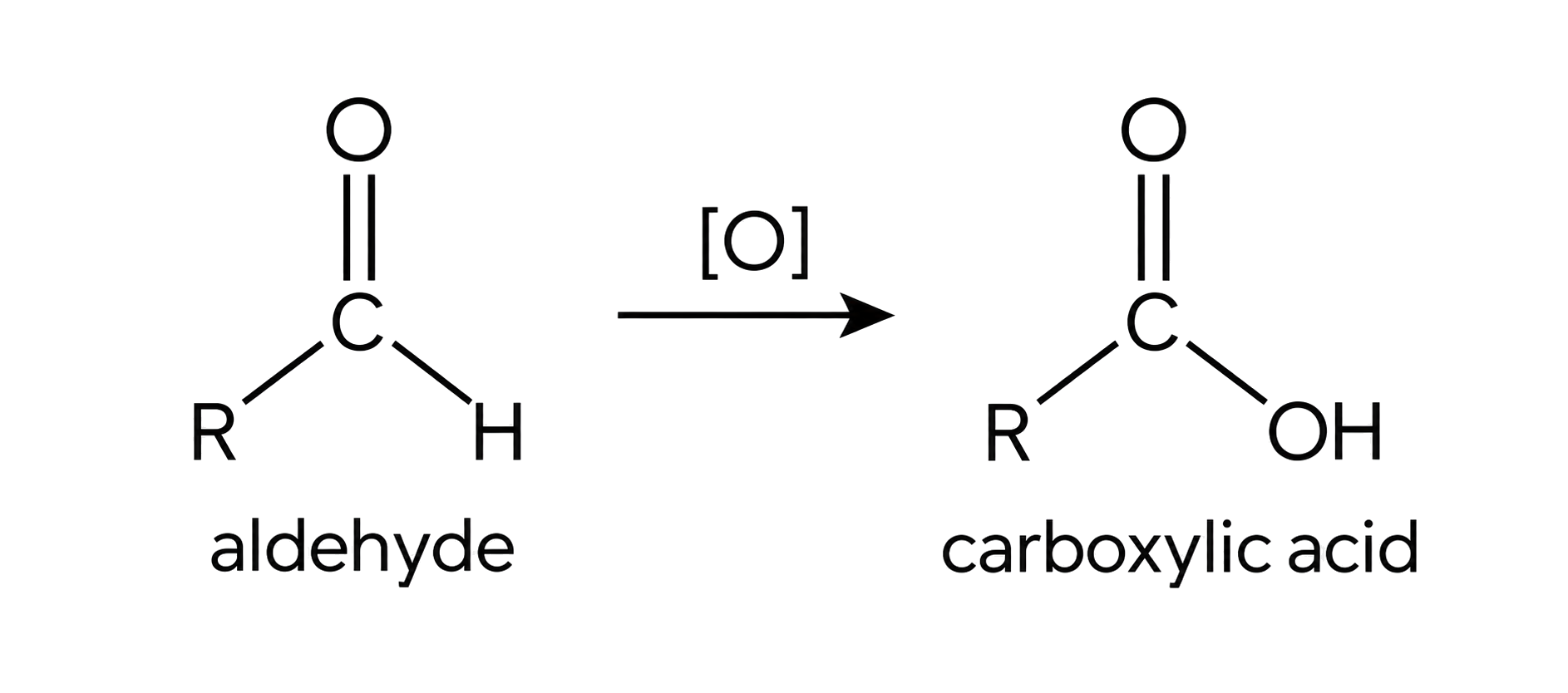
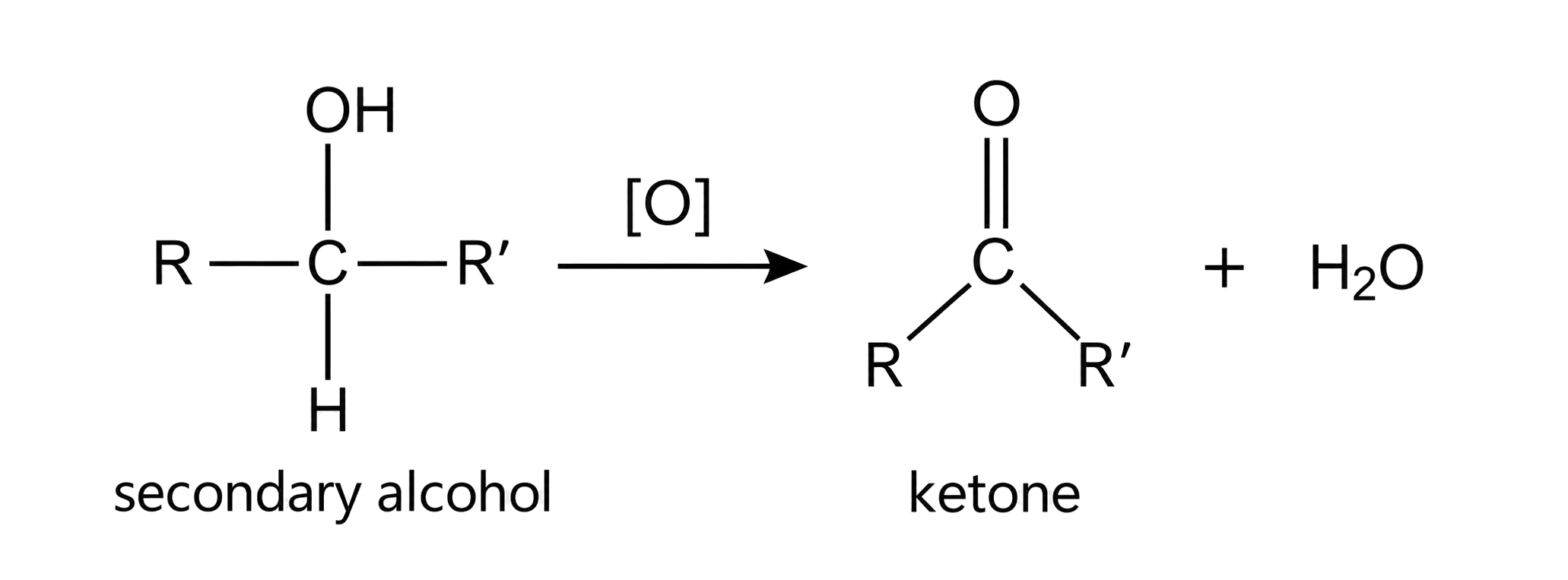
A primary alcohol oxidizes to an aldehyde and then a carboxylic acid; a secondary alcohol oxidizes to a ketone. Reflux supports further oxidation to the acid, while distillation can remove an aldehyde.
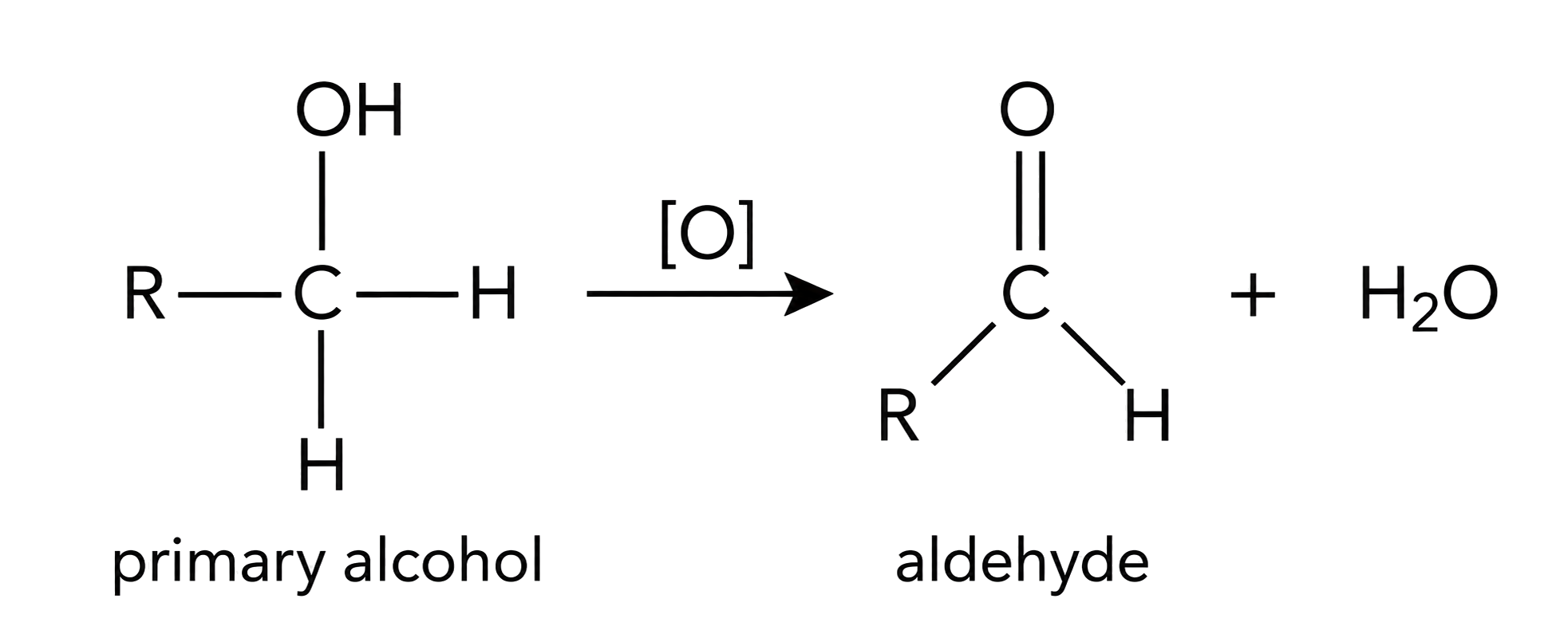
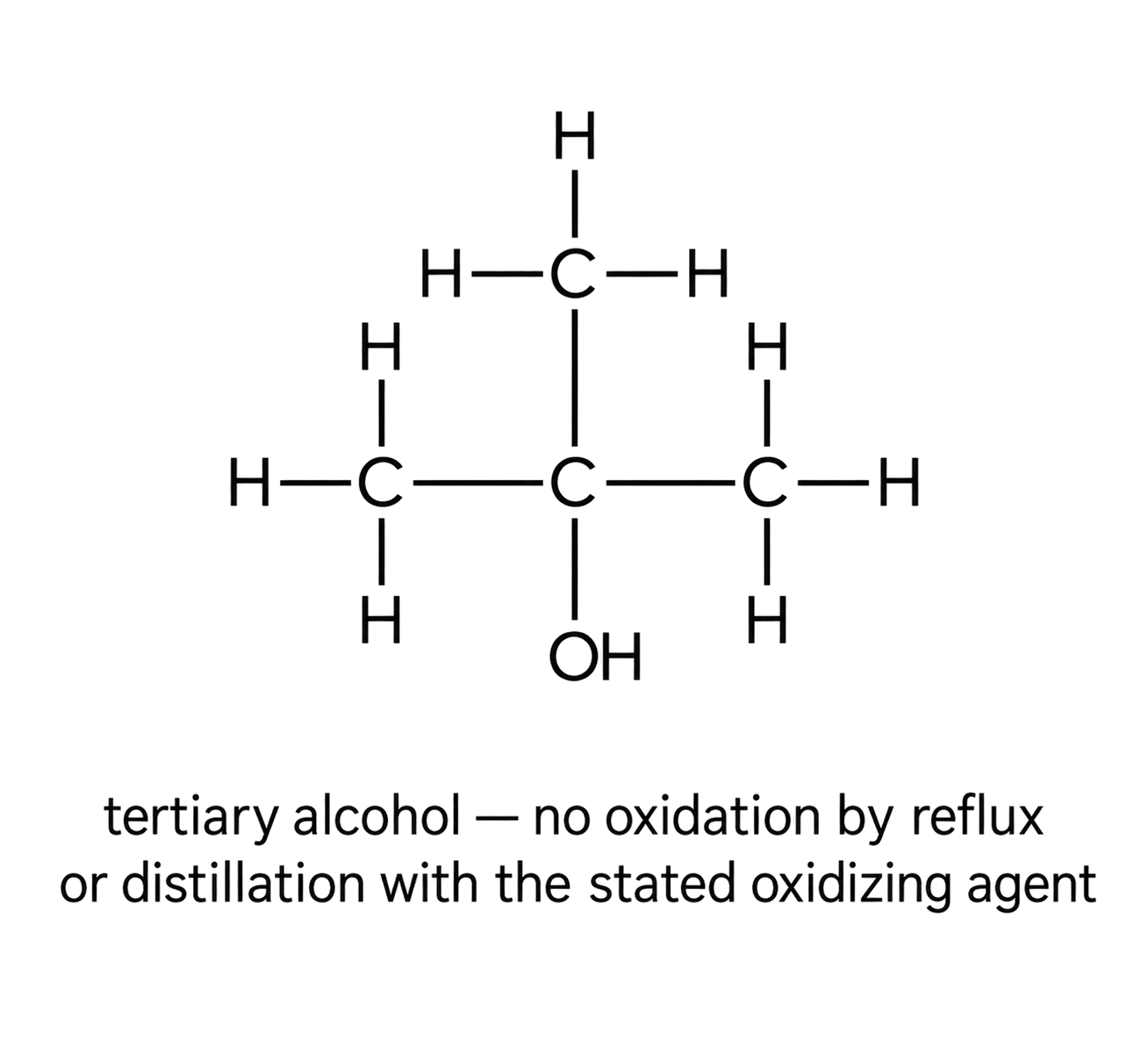
In a primary-alcohol experiment, distil the aldehyde as it forms to limit further oxidation; heat under reflux when the carboxylic acid is required. Tertiary alcohols lack the required hydrogen on the carbon bearing –OH and are not oxidized in the same way.
Representative question
Deduce the organic products when butan-1-ol and butan-2-ol are separately heated under reflux with acidified potassium dichromate(VI).
Butan-1-ol:
Butan-2-ol:
butanoic acid
butanone
Marking guidance:
Accept butan-2-one / 2-butanone.
Accept correct structures
Retrieve the route: assign oxidation states, balance half-equations, predict displacement, label cells, trace electrons and ions, follow organic redox pathways, calculate potentials and choose electrolysis products.
Check electron loss/gain, anode/cathode versus polarity, spontaneous sign, salt-bridge direction, ions present, organic functional-group direction and object-cathode placement.