3.2 Electron transfer reactions
- Syllabus
- First assessment 2025
- Topic
- 3.2
- Level
- SL
Oxidation always occurs at the anode and reduction always occurs at the cathode. In a voltaic cell the anode is negative and cathode positive; in an electrolytic cell the anode is positive and cathode negative.
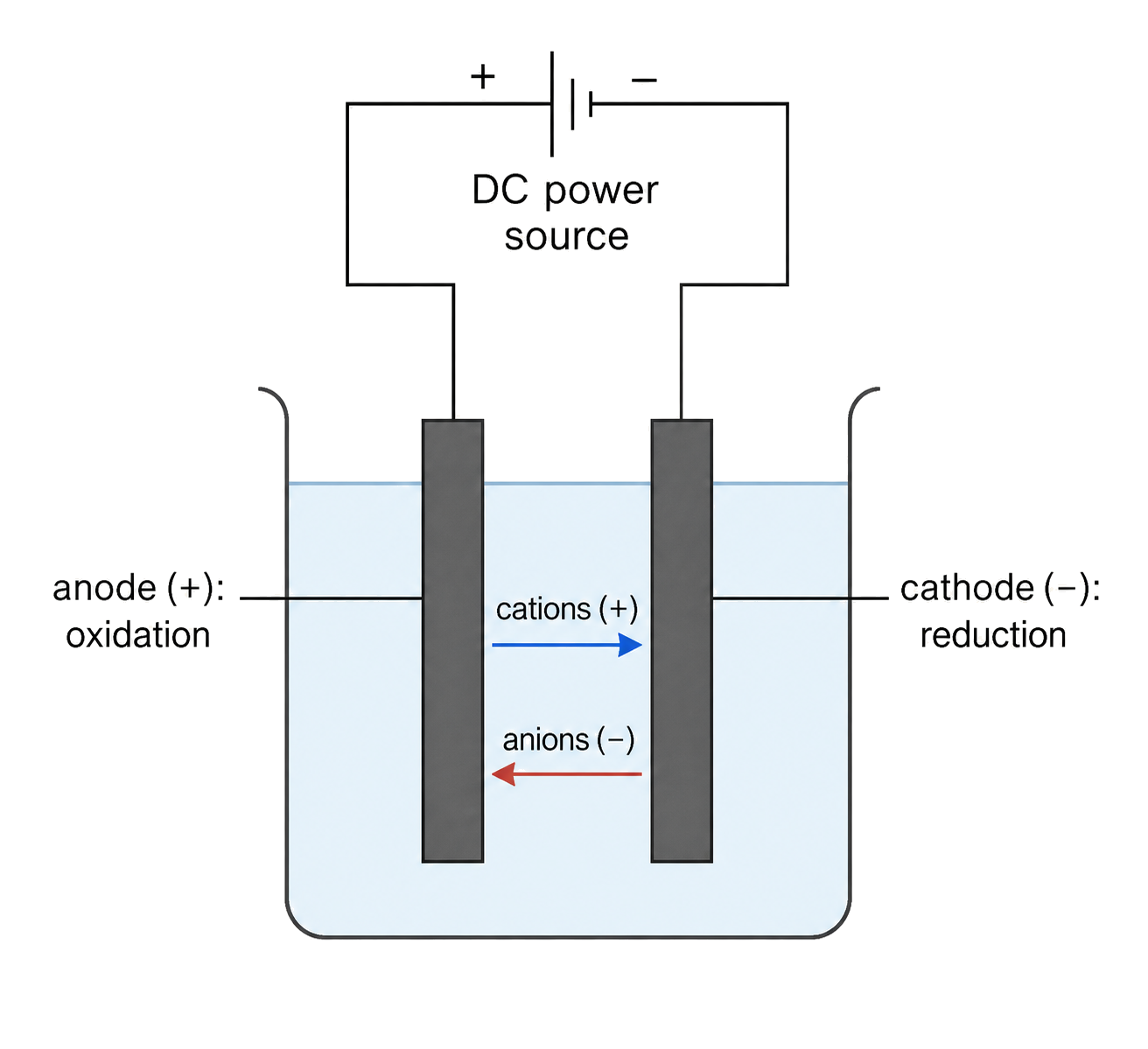
Name electrodes from the half-reactions before assigning signs. Electrons leave the anode and reach the cathode through the external circuit; a power supply reverses the polarities in an electrolytic cell but never changes where oxidation and reduction occur.
A voltaic cell uses a spontaneous redox reaction to convert chemical energy to electrical energy. Electrons flow through the wire from anode to cathode; the salt bridge carries ions to maintain charge neutrality.
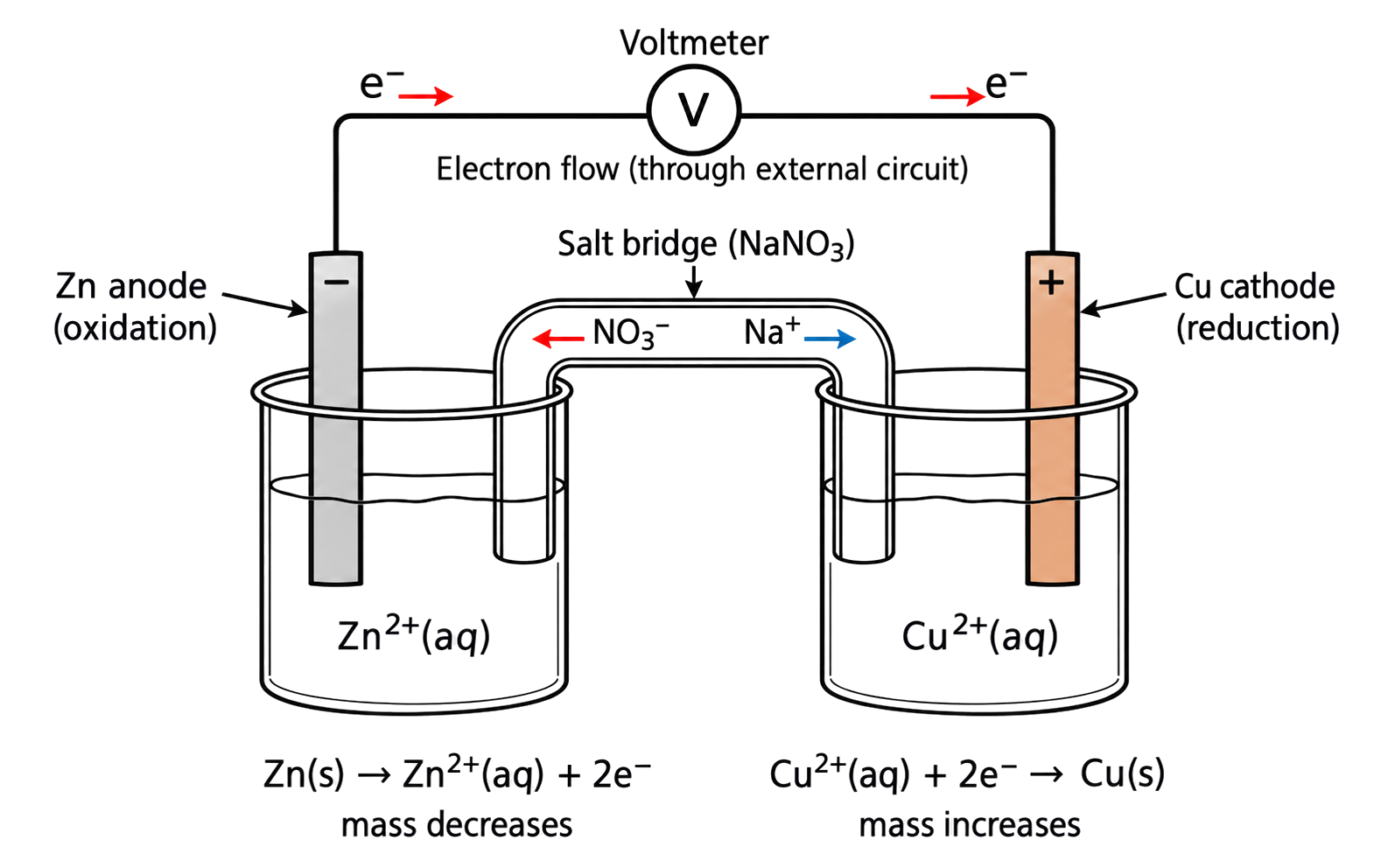
Both half-cells connect to the external circuit and the salt bridge must contact both solutions.
In a Zn|Zn²⁺ || Cu²⁺|Cu cell, Zn is oxidized at the negative anode and electrons travel through the wire to the positive Cu cathode, where Cu²⁺ is reduced. Salt-bridge anions migrate toward the anode compartment and cations toward the cathode compartment to prevent charge buildup; electrons do not flow through the bridge.
In molten salt there is no water: metal ions are reduced to metal at the cathode and anions are oxidized at the anode. For molten chloride, chloride forms chlorine gas.
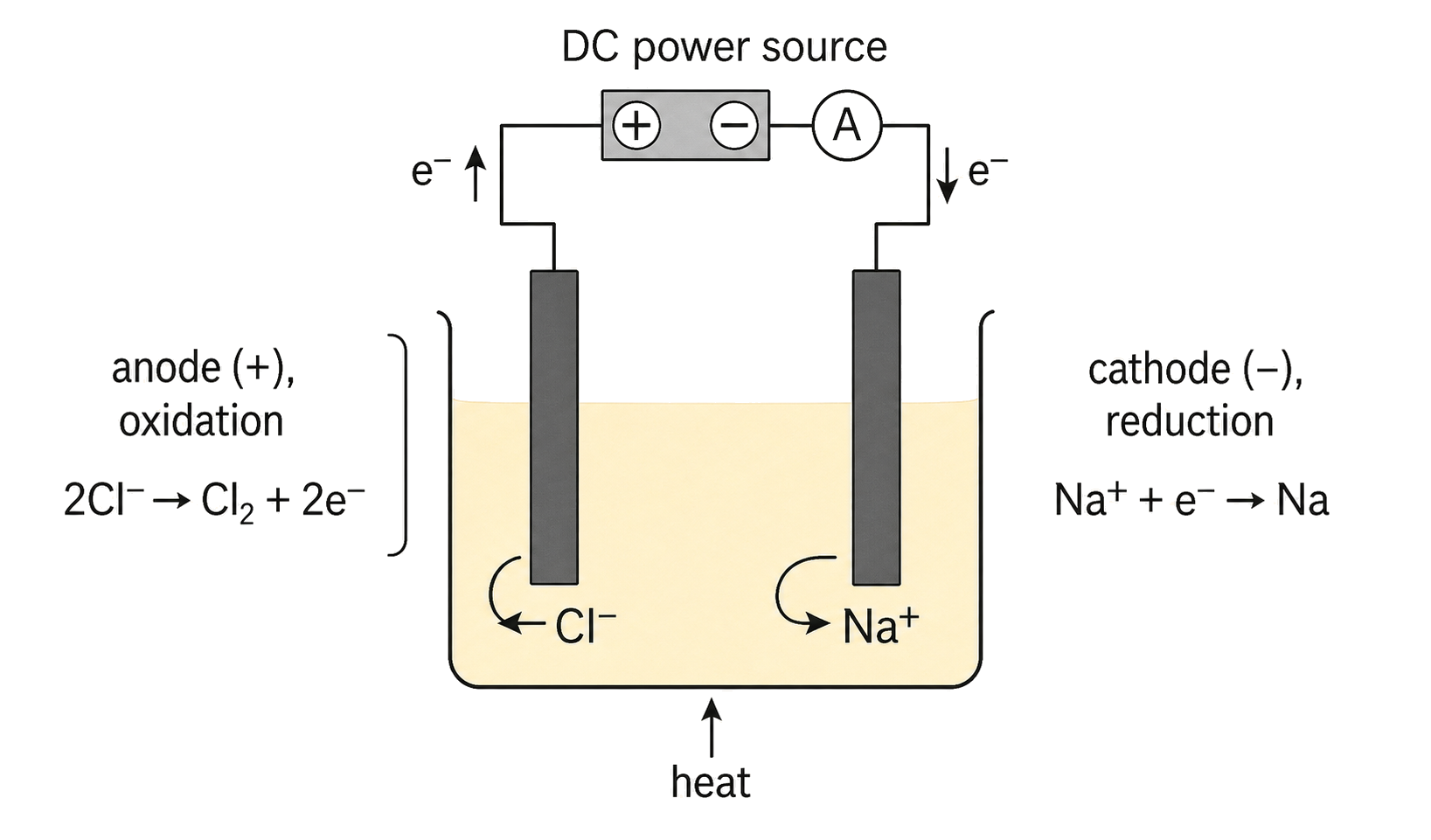
Molten MgCl₂ contains only Mg²⁺ and Cl⁻: Mg²⁺ + 2e⁻ → Mg at the cathode and 2Cl⁻ → Cl₂ + 2e⁻ at the anode. The melt conducts by ion migration; do not introduce H₂, O₂ or water-based competition into a molten-salt question.
A primary alcohol oxidizes to an aldehyde and then a carboxylic acid; a secondary alcohol oxidizes to a ketone. Reflux supports further oxidation to the acid, while distillation can remove an aldehyde.
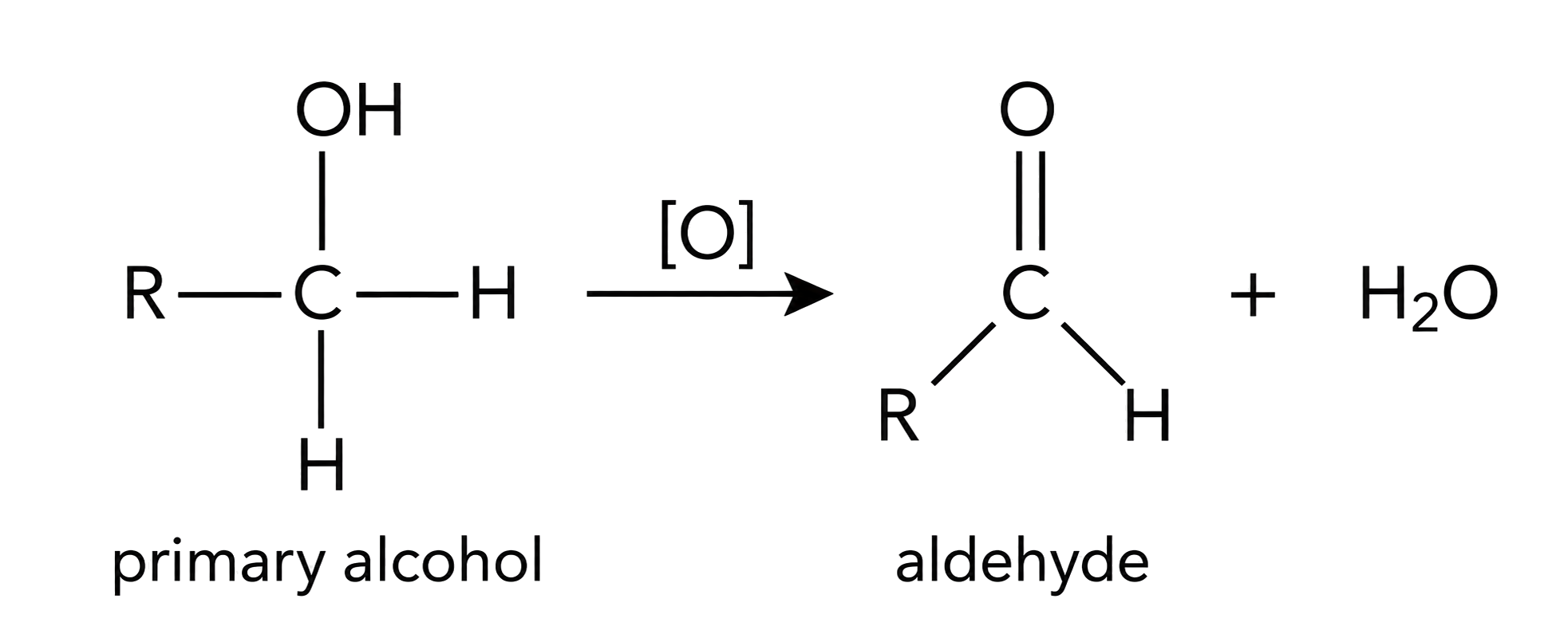
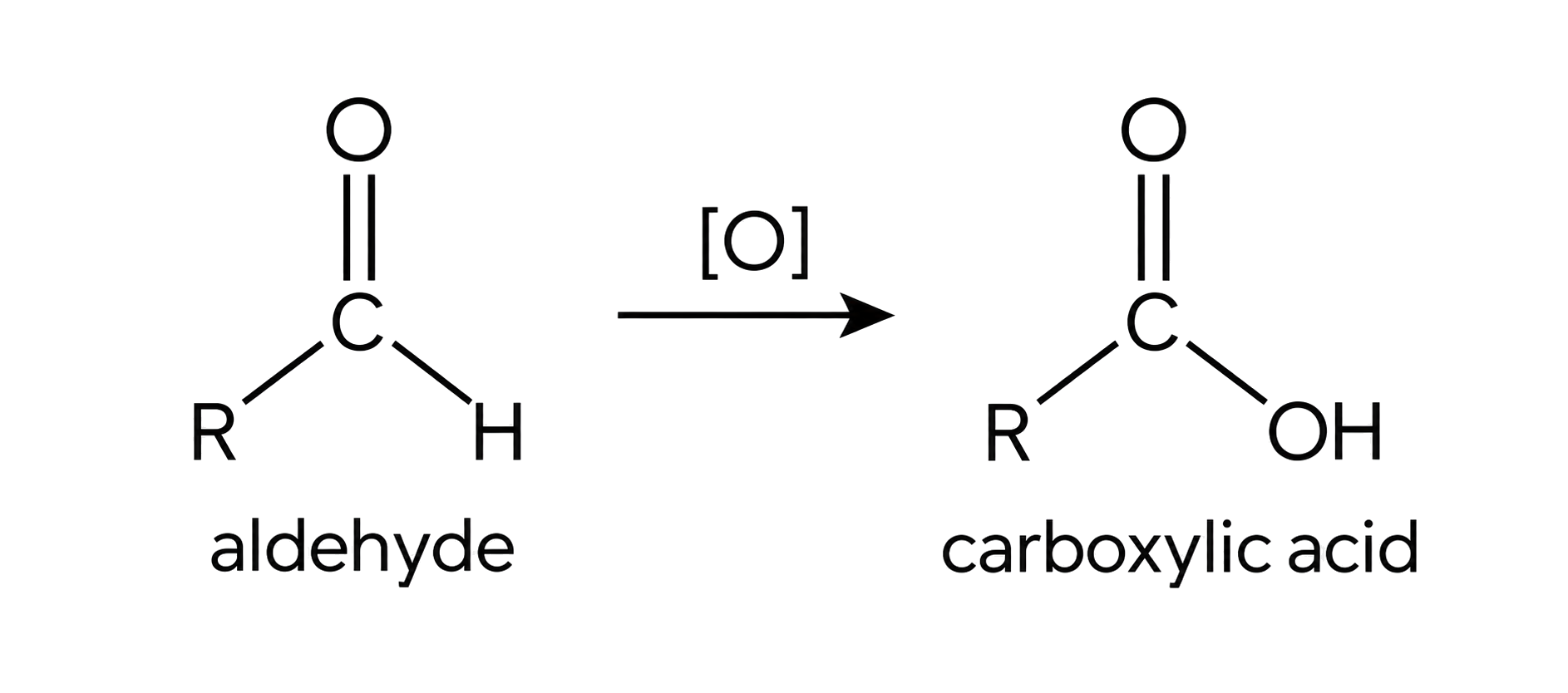
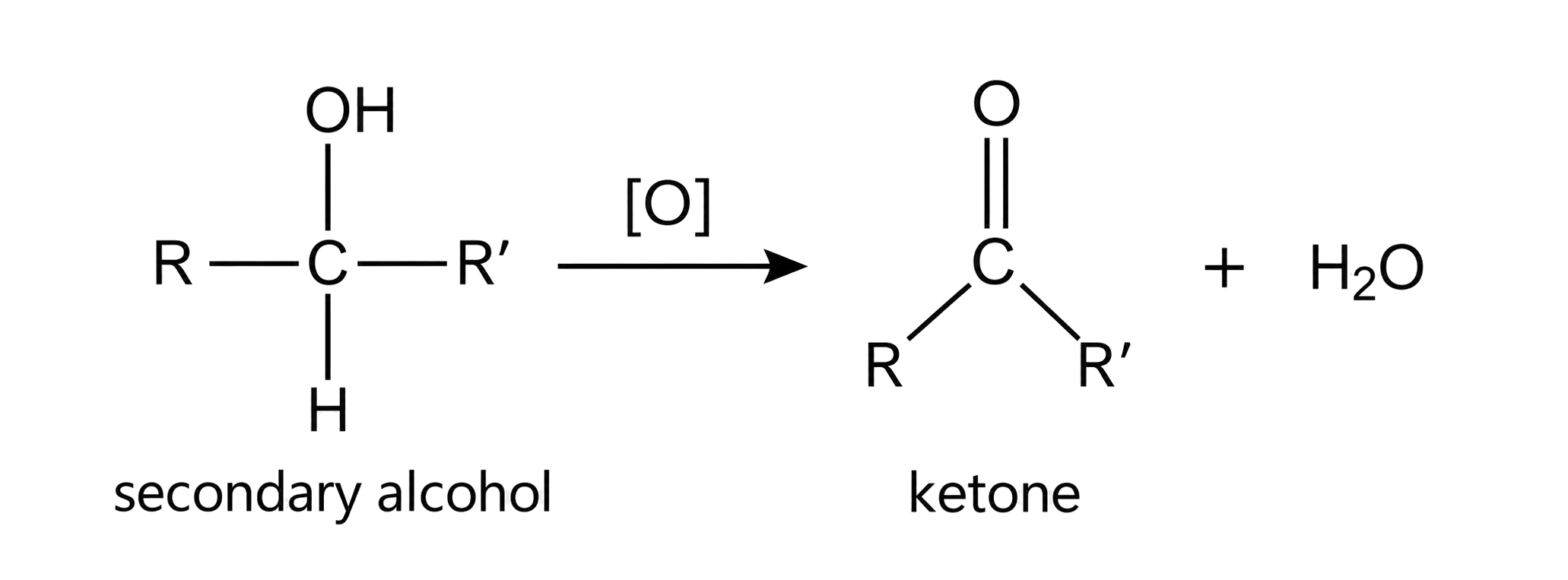
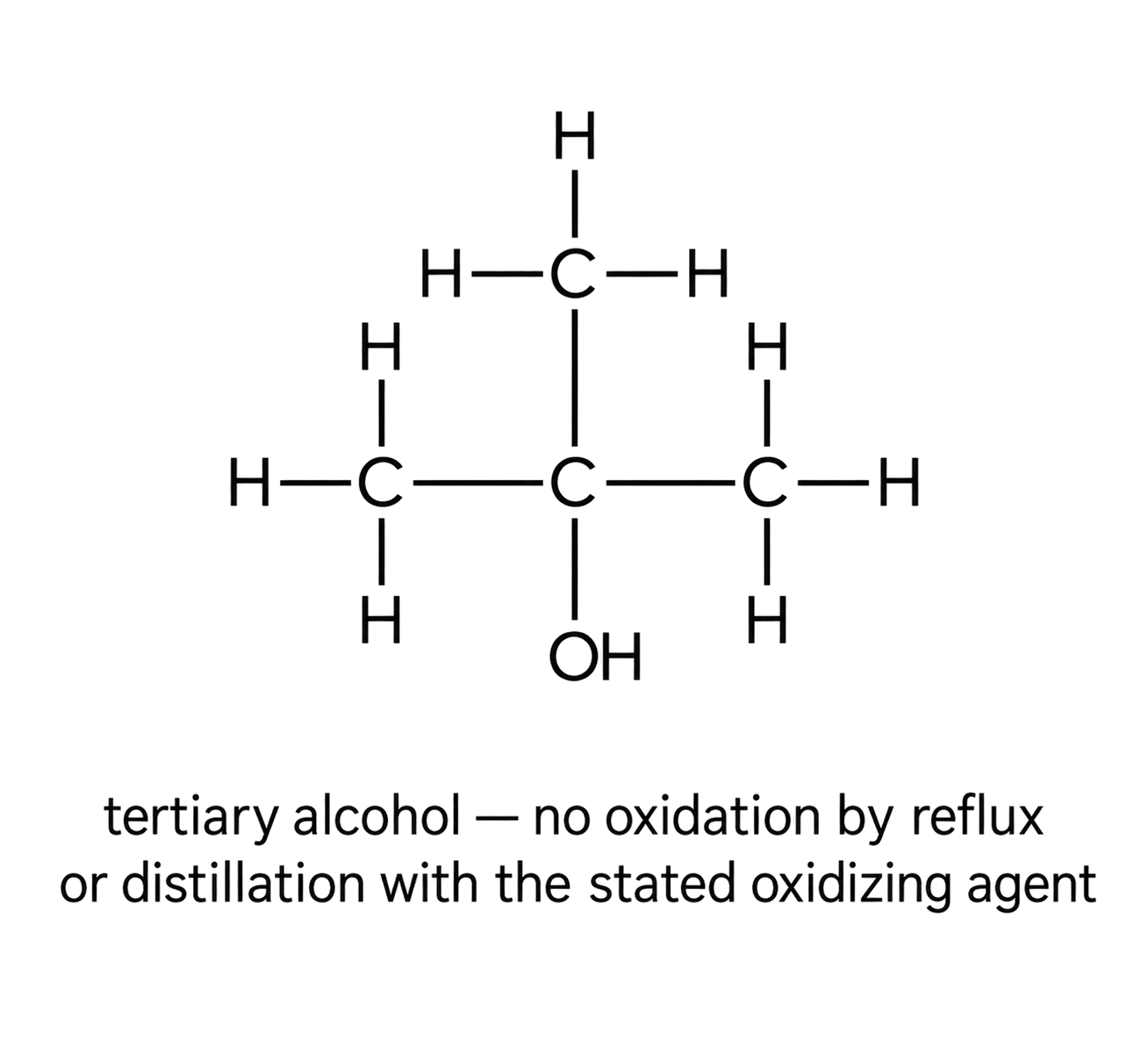
In a primary-alcohol experiment, distil the aldehyde as it forms to limit further oxidation; heat under reflux when the carboxylic acid is required. Tertiary alcohols lack the required hydrogen on the carbon bearing –OH and are not oxidized in the same way.
A carboxylic acid can be reduced through an aldehyde to a primary alcohol; a ketone is reduced to a secondary alcohol. Hydride ions supply the reduction equivalent in these transformations.
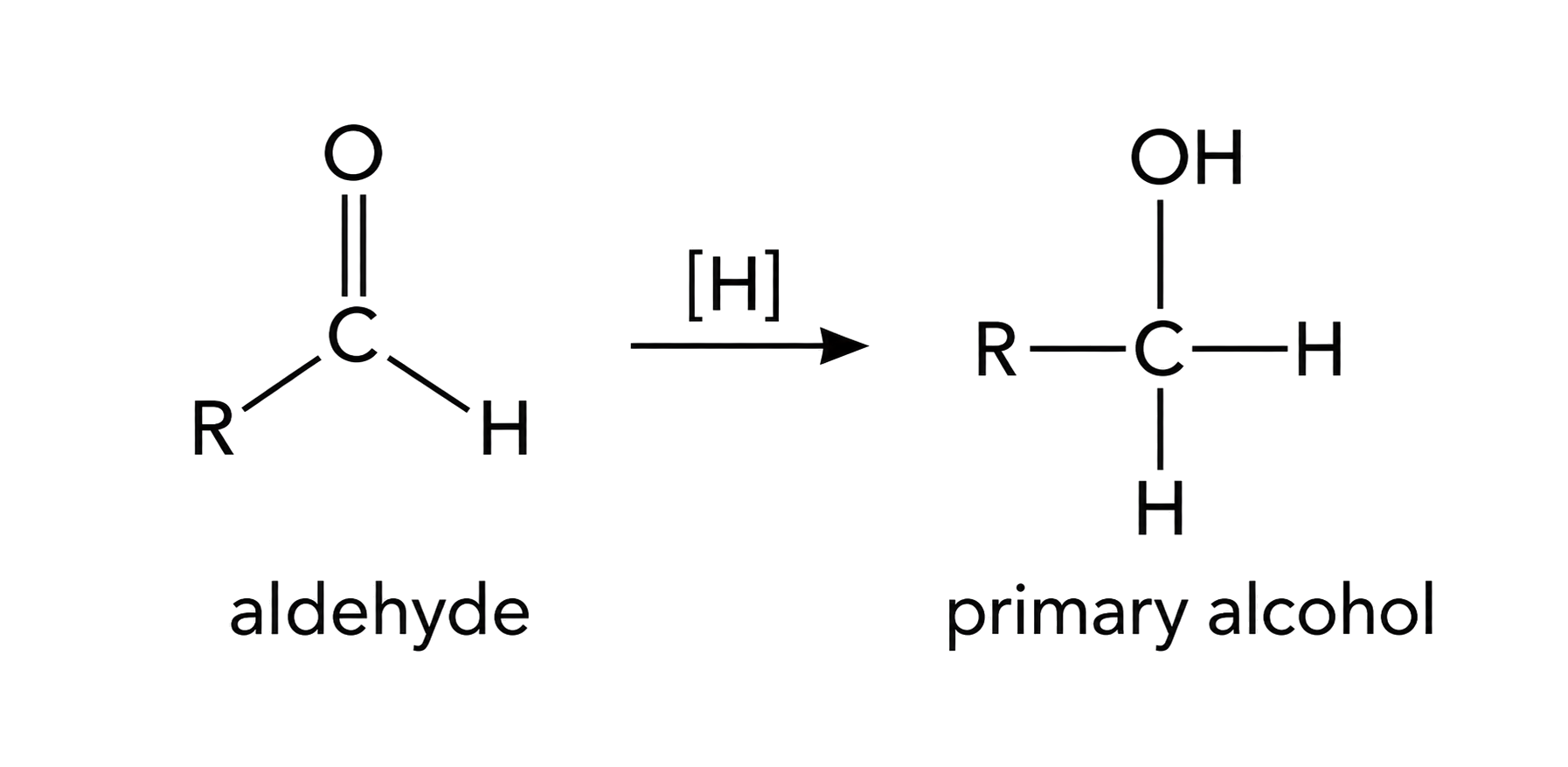
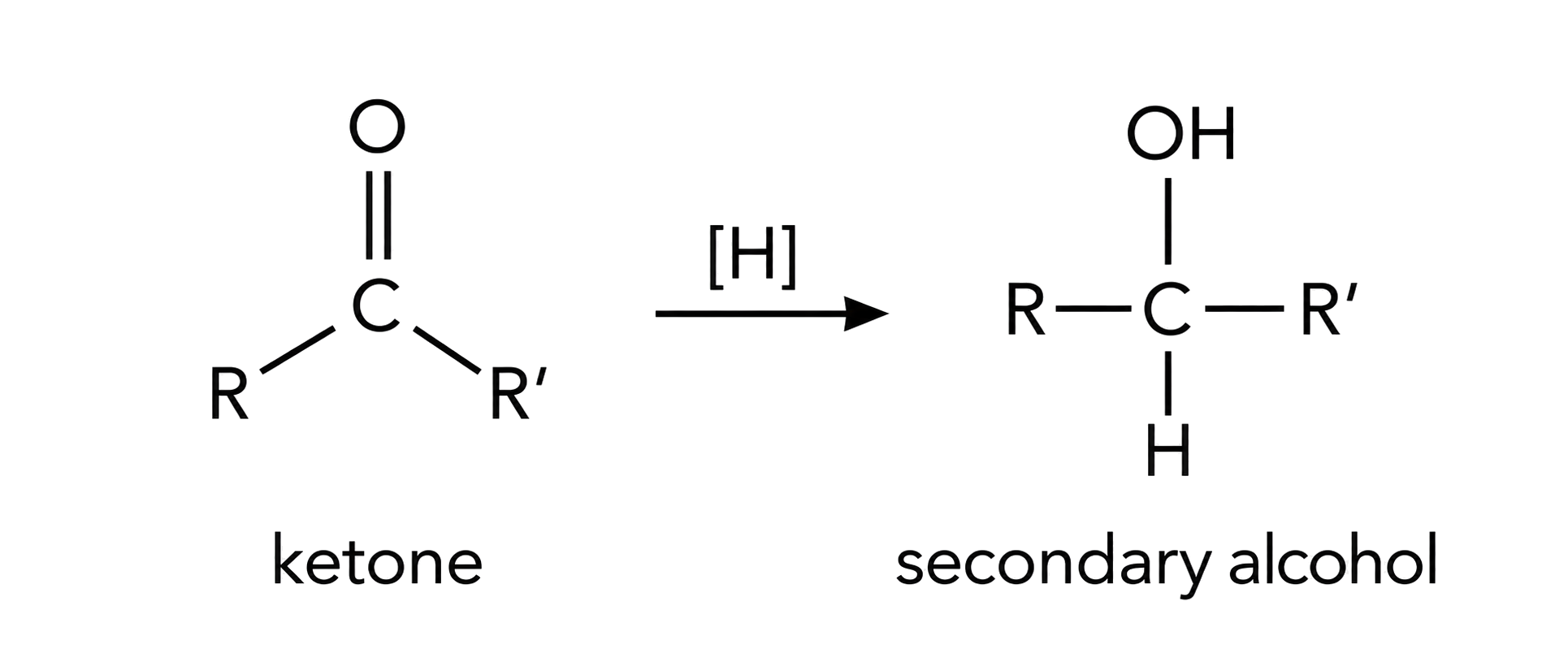
Track the carbon functional group rather than only the reagent: an aldehyde gives a primary alcohol and a ketone gives a secondary alcohol. Hydride supplies an electron-rich H unit to the carbonyl carbon; named reducing agents and detailed mechanisms are outside this objective.
Hydrogenation adds H2 across π bonds. Continue addition until the required saturated product is formed; nickel, palladium or platinum catalysts with heat or pressure are typical conditions.
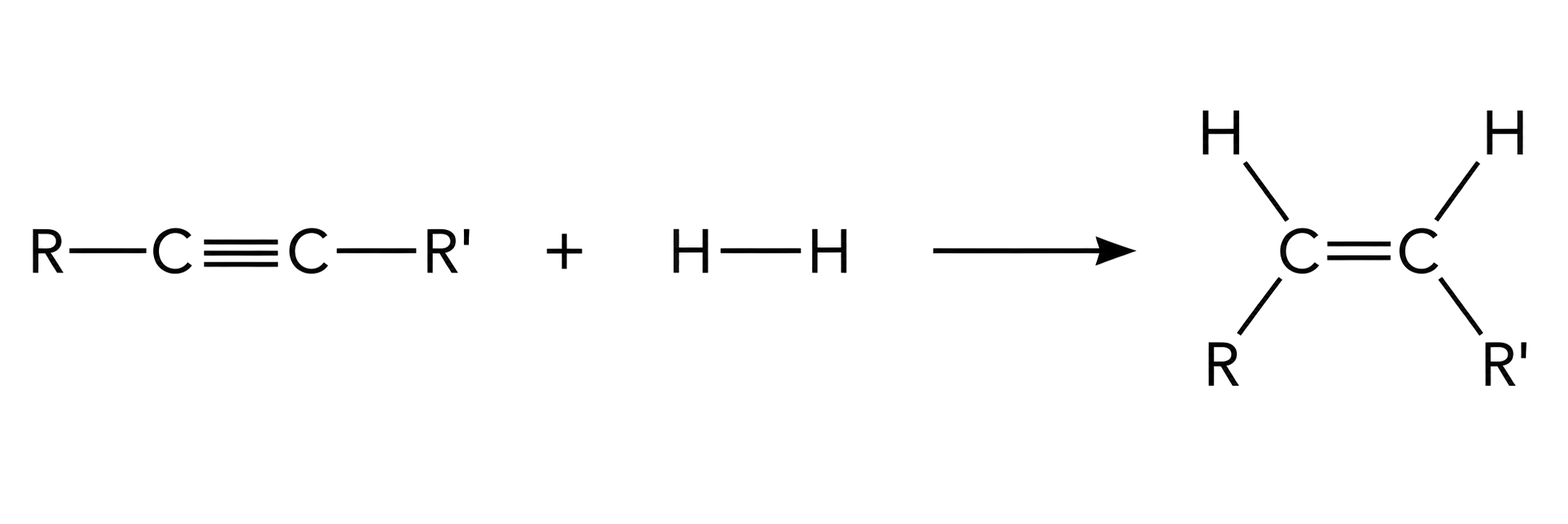
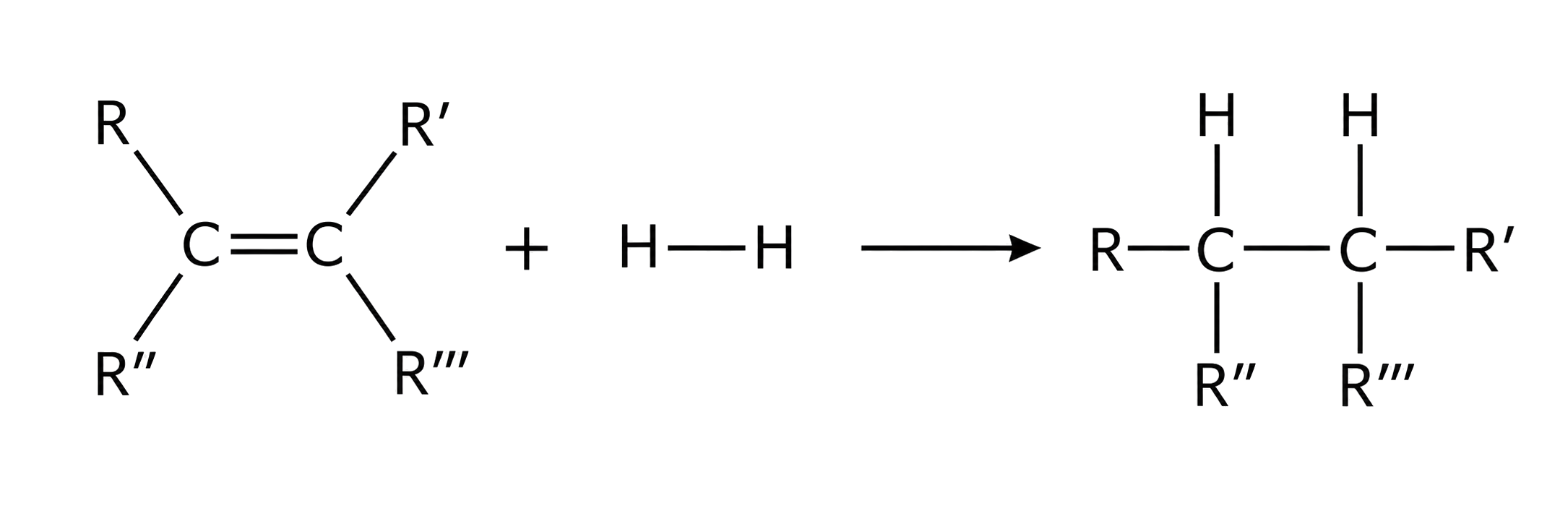
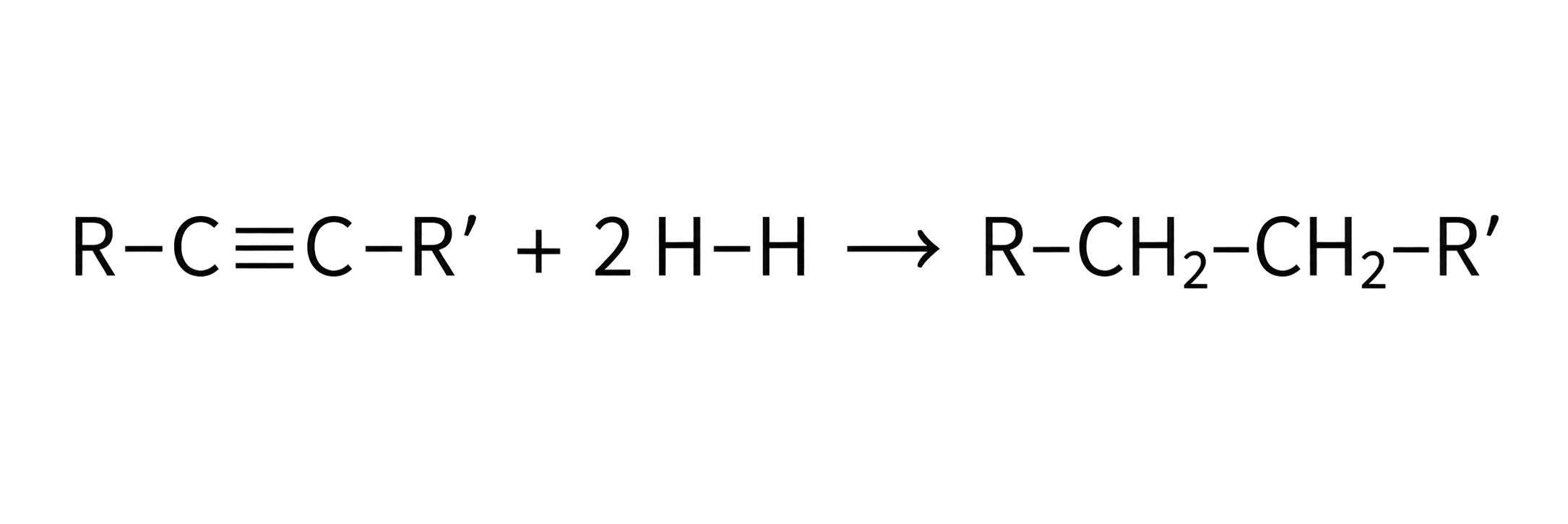
Count π bonds to determine hydrogen demand: one mole of H₂ saturates one C=C, while full conversion of one C≡C to C–C needs two moles of H₂. Keep the carbon skeleton unchanged when drawing the product.