2.4.3—Alloys
- Syllabus
- First assessment 2025
- Objective
- 2.4.3
- Level
- SL
An alloy is a mixture containing a metal and one or more other metals or non-metals. Different-sized atoms disrupt the regular lattice, making layer sliding more difficult while non-directional metallic bonding remains.
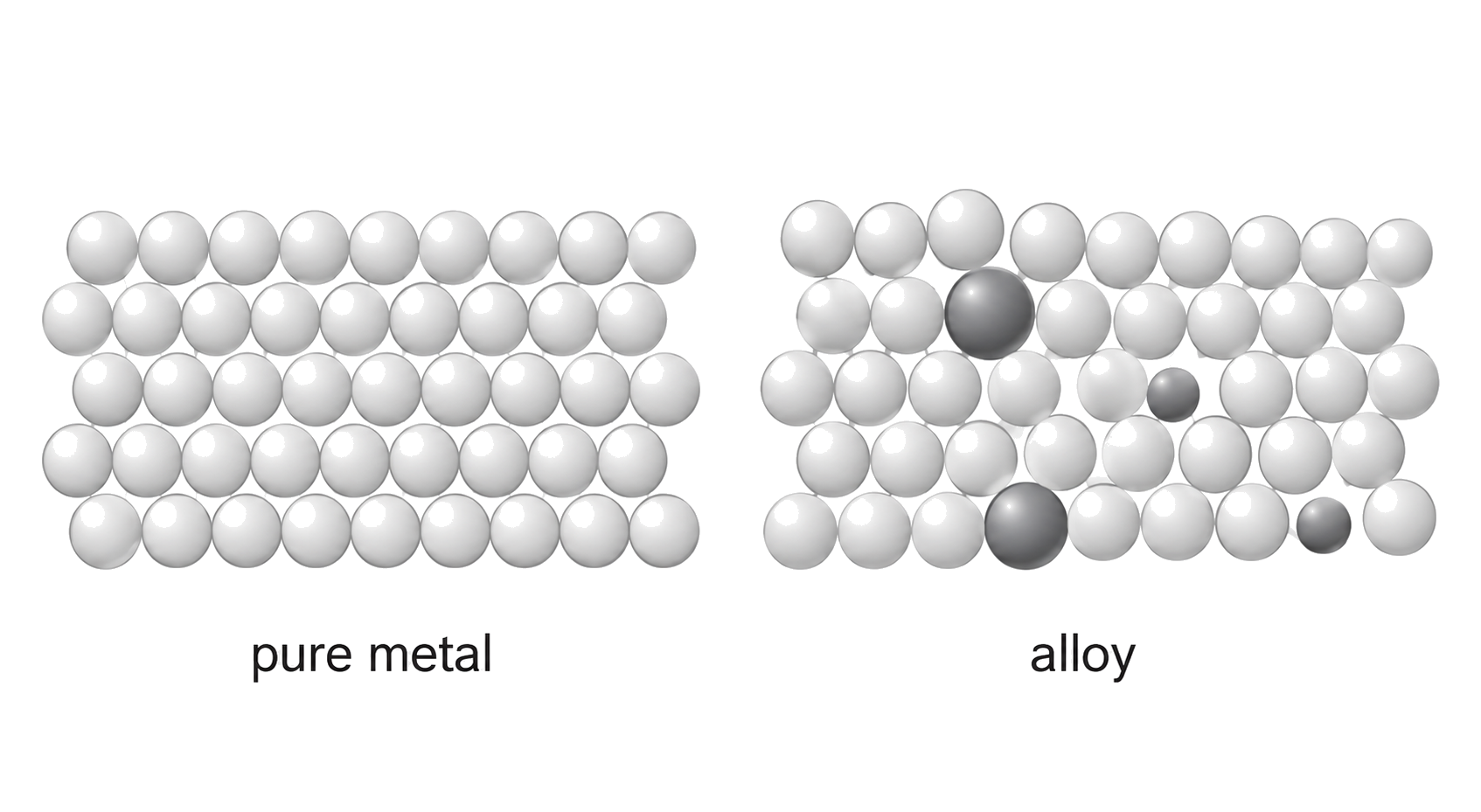
Explain an alloy property by referring to composition, lattice disruption, and the restricted movement of layers; do not call the alloy a compound.
In brass, differently sized Cu and Zn atoms disturb regular layer alignment, so dislocations move less easily and the alloy can be harder than pure copper. Material choice still involves trade-offs—an alloy may gain strength while losing ductility or conductivity—and its variable composition confirms that it is a mixture.