1.2.3 (HL)—Mass spectrometry
- Syllabus
- First assessment 2025
- Objective
- 1.2.3
- Level
- HL
In a mass spectrum, peak position identifies an isotope's mass-to-charge value and relative peak height represents its abundance in the sample. Use those two pieces of evidence together to identify isotopes and determine relative atomic mass.
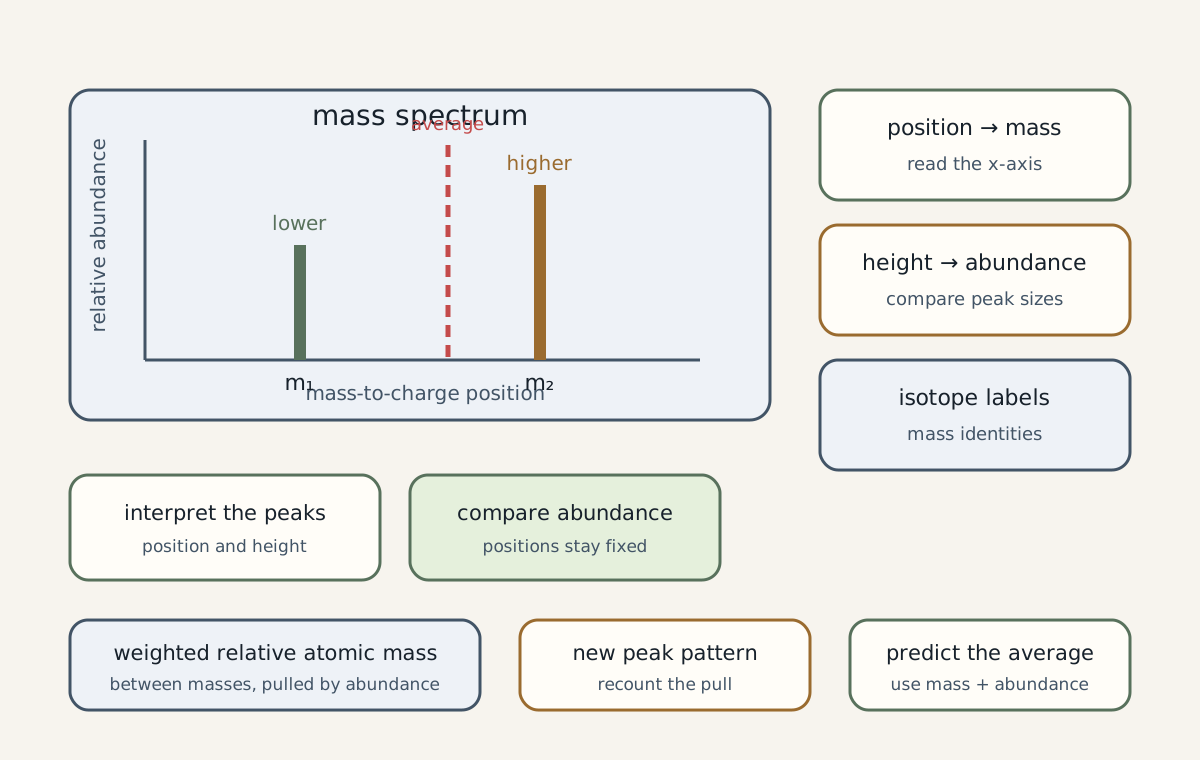
| Read | Infer | Use |
|---|---|---|
| Peak position | Isotope mass | Label the isotope |
| Relative peak height | Relative abundance | Weight that isotope's contribution |
| All peaks together | Isotopic composition | Calculate the weighted relative atomic mass |
The syllabus assesses interpretation of mass spectra, not operational details of how the spectrometer works.
If singly charged isotope peaks occur at m/z 35 and 37 in a 3:1 height ratio, use fractional abundances 0.75 and 0.25 to obtain Aᵣ = 35.5. First confirm the charge state: m/z is a ratio, so a multiply charged ion cannot be read as mass alone.