1.1.2—Endothermic vs. exothermic
- Syllabus
- First assessment 2025
- Objective
- 1.1.2
- Level
- HL
| Type | Energy direction | Surroundings temperature |
|---|---|---|
| Endothermic | Absorbed by the system | Decreases |
| Exothermic | Released by the system | Increases |
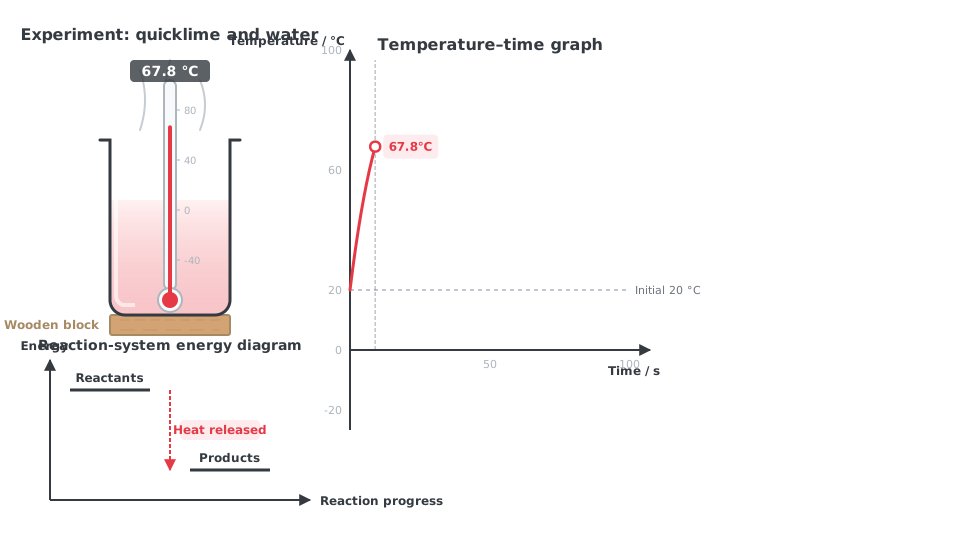
Classify from the direction of energy transfer, then check that the observed temperature change of the surroundings agrees.
Connect three representations: exothermic means energy flows out of the system, the surroundings warm, and ΔH for the system is negative; endothermic gives the opposite pattern and positive ΔH. State the observed part before inferring the reaction type.
Representative question
Which statement about an exothermic reaction is correct?
Temperature decreases and the products have higher enthalpy than the reactants.
Temperature decreases and the products have lower enthalpy than the reactants.
Temperature increases and the products have higher enthalpy than the reactants.
Temperature increases and the products have lower enthalpy than the reactants.
D
Retrieve the route: define system/surroundings transfer, classify endothermic or exothermic, read stability from energy profiles, then calculate Q and ΔH with the correct sign.
Check the energy direction, surroundings temperature, reactant/product levels, moles, units, and ΔH sign.