B3.1.5—Lung ventilation
Ventilation moves air by coordinated diaphragm and intercostal muscle actions that change thoracic volume, pressure and airflow direction during breathing.
- Syllabus
- First assessment 2025
- Objective
- B3.1.5
- Level
- SL
Ventilation moves air by coordinated diaphragm and intercostal muscle actions that change thoracic volume, pressure and airflow direction during breathing.
Coverage 2010–2025 · Updated 15 Jul 2026
Air moves because thoracic volume changes alter lung pressure. Inspiration is active: diaphragm and external intercostals contract, increasing volume and lowering pressure below atmospheric.
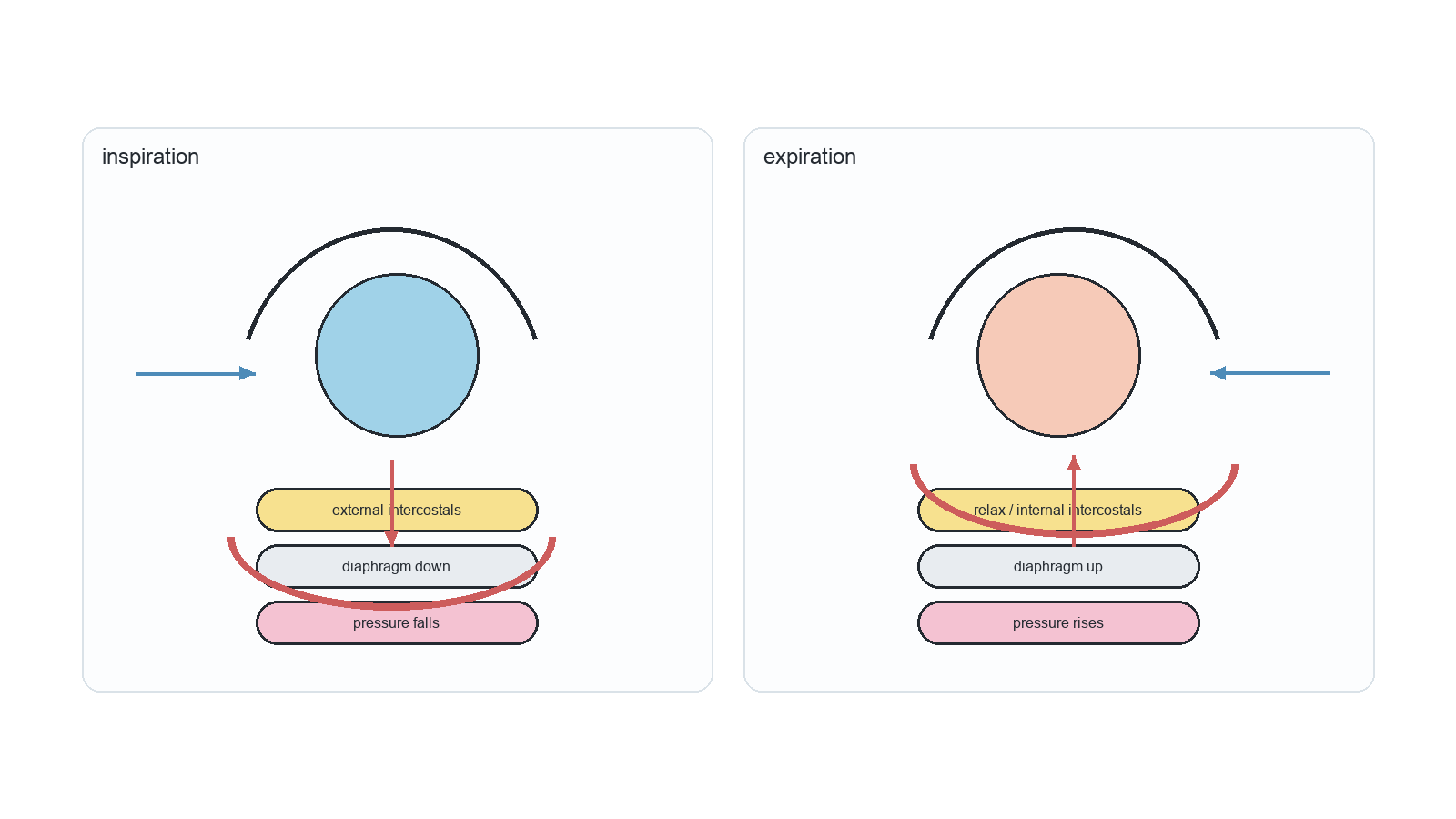
inspiration: muscles contract → thorax expands → pressure falls → air enters
quiet expiration: muscles relax + elastic recoil → volume falls → pressure rises → air leaves
