IB Physics Data Booklet: Formula Use and Exam Mistakes
Use the IB Physics data booklet better with formula choice, units, substitution, common exam mistakes and data-handling practice.
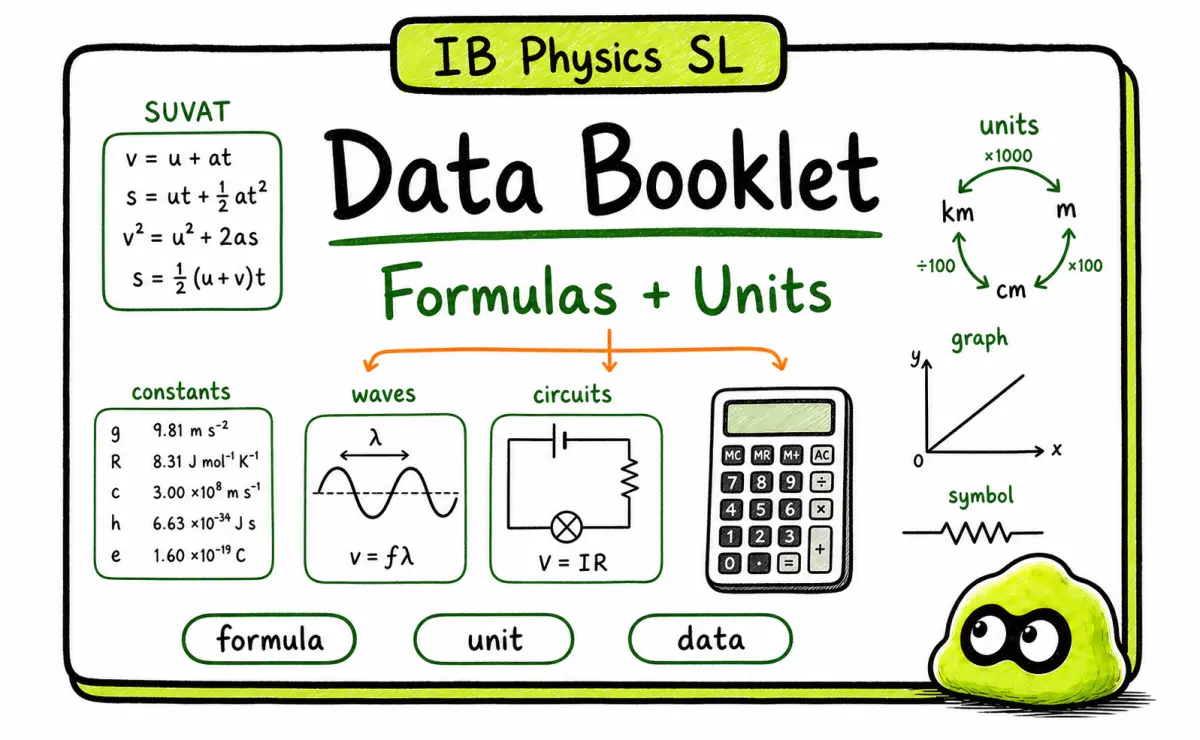
If you search for the IB Physics data booklet, the real revision problem is usually not finding the formula. It is choosing the right formula, converting the units correctly, and showing enough method for the answer to score.
This IB Physics SL bridge page is not a replacement for the official data booklet or your school's exam instructions. It is an exam-practice guide for using formula data properly: identify variables, choose the relationship, substitute with units, and check the final answer.
Quick Answer
| Step | What to do | Common trap |
|---|---|---|
| Choose formula | Match the question to the physical situation | Picking a familiar formula too quickly |
| Define symbols | Identify what each symbol means | Mixing similar symbols |
| Check units | Convert before substitution | cm, ms or kJ left unchanged |
| Substitute | Put values in carefully | Rearranging after substitution incorrectly |
| Review answer | Check size and unit | No final unit or impossible value |
What the Data Booklet Can and Cannot Do
The data booklet gives formulas, constants and reference information. It helps you avoid memorising every equation, but it does not remove the need to understand the physics. You still need to decide which relationship fits the question.
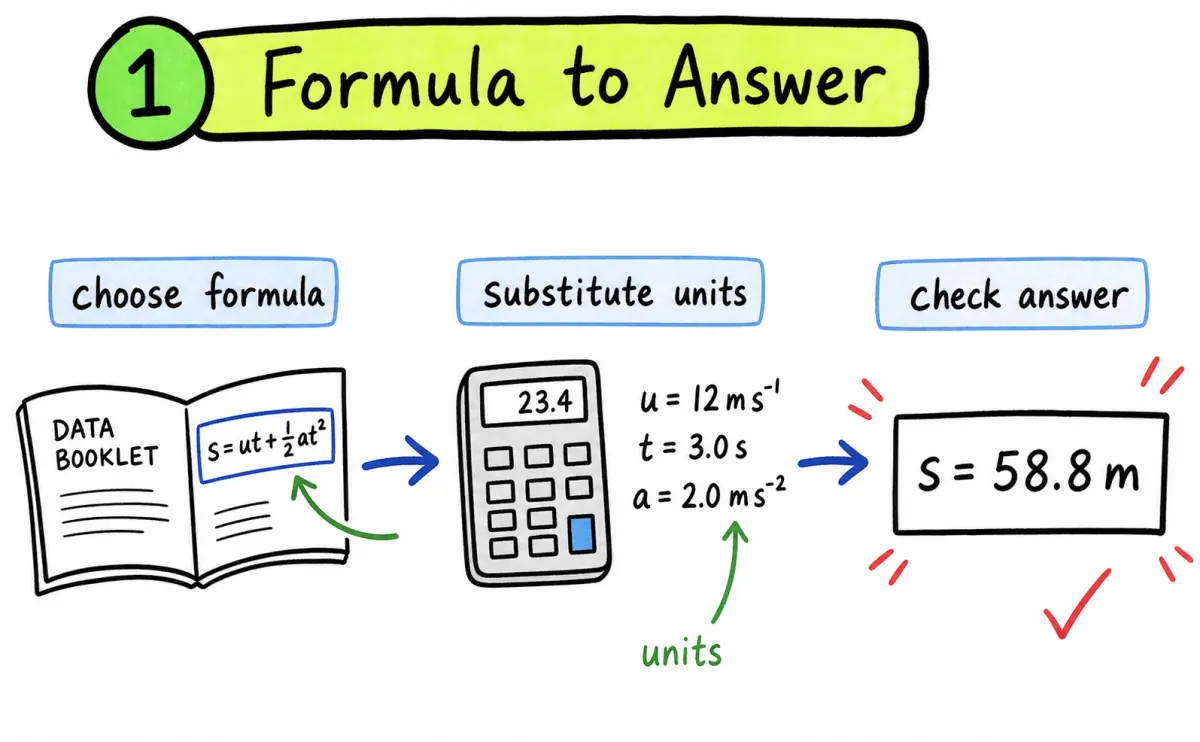
For example, a mechanics question may give initial velocity, acceleration and time. The booklet can show a SUVAT relationship, but you must still choose the version containing the unknown quantity and the given variables.
Worked Example
Question: A student uses a formula from the data booklet but forgets to convert time from milliseconds to seconds. Explain why the final answer may lose marks even if the correct formula was chosen.
Answer: The formula may be correct, but substitution must use consistent SI units unless the question states otherwise. If milliseconds are used as if they were seconds, the numerical value changes by a factor of 1000. The final answer may have the wrong magnitude and unit, so the method is incomplete.
Why this scores: The answer does not only say "convert units." It explains why the conversion affects the result and why a correct formula can still lead to a wrong answer.
Exam-Safe Wording
| Stage | Exam-safe habit |
|---|---|
| Read | Underline the required quantity |
| Select | Choose a formula containing the known values and unknown |
| Convert | Put values into consistent units |
| Rearrange | Rearrange before substitution where possible |
| Calculate | Show enough substitution for the method to be followed |
| Check | Add unit and judge whether the answer is reasonable |
This workflow is especially useful for data-processing and graph questions where students jump to calculation before identifying the physics.
Common Mistakes
| Mistake | Why it loses marks | Better wording |
|---|---|---|
| Copying a formula without defining symbols | The examiner cannot see your reasoning | State variables before substitution |
| Skipping unit conversion | Wrong numerical answer | Convert to SI units first |
| Choosing by topic name only | Several formulas may look similar | Match variables and physical situation |
| No final unit | Incomplete measured quantity | Include the correct unit |
| Ignoring significant figures | Final value may look over-precise | Match the data and question context |
Mini Practice Set
- A question gives time in ms. What should you check before substituting into a formula?
- Explain why two formulas from the same topic may not both fit the same question.
- State two checks you should make after calculating a physics answer.
Practice This Topic
Try this exam-style question:
A student chooses the correct formula from the IB Physics data booklet but substitutes 250 ms as 250 s. Explain the error and describe the correct exam habit.
Answer guide:
- The formula choice may be correct, but the unit substitution is wrong.
- 250 ms should be converted to 0.250 s before using SI-based formula work.
- Using 250 s changes the answer by a large factor.
- A good answer defines variables, converts units, substitutes, then writes the final unit.
Practice this exact topic
Practise IB Physics data handling questions
Some questions may require an EduNinja membership.
Browse broader practice
Browse the full IB Physics SL Question Bank
Use this if you want to explore more available practice by topic.
Related Study Links
- Review the complete syllabus Study Hub
- Frequency Symbol in IB Physics: f, Period and Hz
- Simple Harmonic Motion Explained: IB Physics Revision Guide
- IB Physics SL Mechanics: Forces, Motion, and Exam Marks
FAQ
Can you use the IB Physics data booklet in exams?
IB Physics students should follow the official instructions given by IB, their school and their teacher for the current exam session. This article does not replace official exam rules. For revision, the useful skill is learning how to select formulas, convert units and explain the physics behind the calculation.
Is the IB Physics data booklet enough for revision?
No, the data booklet is not enough by itself. It gives formulas and constants, but it does not tell you which relationship fits the question. You still need exam-style practice so you can connect variables, units, graphs and assumptions to the correct formula.
What is the biggest data booklet mistake?
The biggest mistake is treating the data booklet like an answer sheet. Students often copy the first familiar equation and force the numbers into it. A stronger approach is to identify the unknown, list known values, check units, then choose a formula that actually matches the situation.
How should I practise formula questions?
Practise formula questions by writing the reasoning chain before using a calculator. Name the unknown, choose the formula, rearrange if needed, convert units, substitute values and check the final unit. This prevents repeated errors such as using milliseconds as seconds or missing a square term.
Why do unit conversions matter in IB Physics?
Unit conversions matter because many formulas assume consistent units. If a time in milliseconds is substituted as seconds, the answer can be wrong by a factor of 1000. In exam work, converting values before substitution makes the method clearer and the final answer more reliable.
Final Takeaway
The IB Physics data booklet helps most when you treat it as a reference, not a shortcut. Formula choice, units and final checking are what turn the booklet into marks.
Put topic practice back into your full IB Physics SL study plan.
Return to the complete course overview, or move directly into the most relevant study tool.
Related articles
More course notes, updates and study resources from the EduNinja blog.
Transverse vs Longitudinal Waves
Compare transverse and longitudinal waves using particle motion, wave direction, compressions and rarefactions.
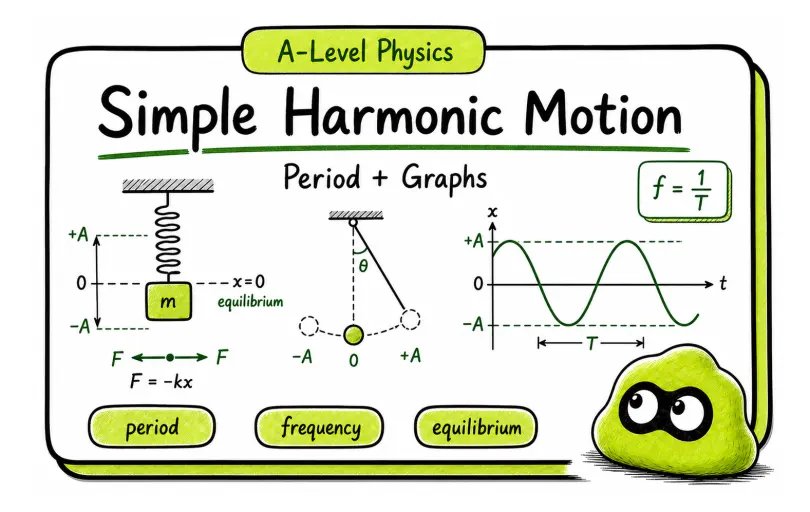
Simple Harmonic Motion in A-Level Physics: Period and Graphs
Revise simple harmonic motion for CAIE A-Level Physics with period, frequency, displacement graphs, restoring force and practice questions.
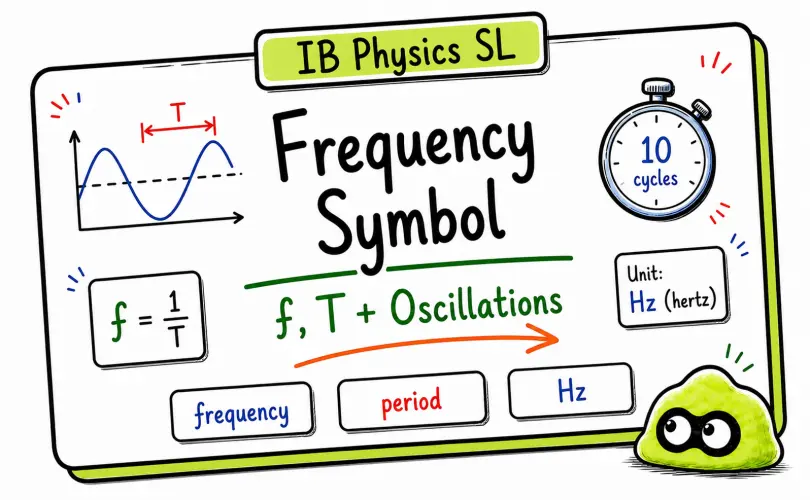
Frequency Symbol in IB Physics: f, Period and Hz
Revise the frequency symbol f in IB Physics, including hertz, period links, wave graph wording and exam-style practice.