IB Biology SL Cell Theory: SA:V, Stem Cells, and Microscopy
Revise IB Biology SL cell theory with surface area to volume ratio, stem cells, microscopy, and mark-worthy explanation patterns.
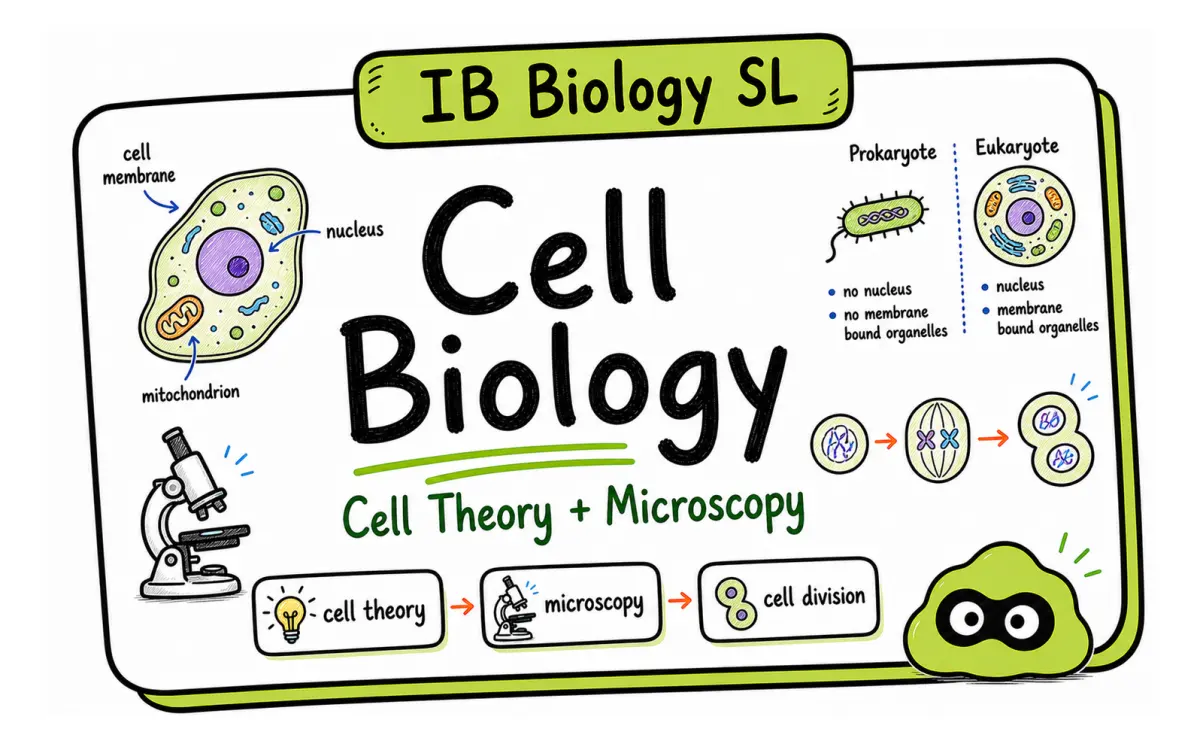
Cell theory in IB Biology SL means three things: living organisms are made of cells, cells are the basic unit of life, and new cells come from existing cells. The exam usually tests this through applications, not just recall. You may need to explain why cell size is limited by surface area to volume ratio, why stem cells can form specialised cells, or how microscopy evidence supports cell structure.
Useful starting points:
Quick Answer: IB Biology SL Cell Theory
- Cell theory says organisms are made of cells, cells are the basic unit of life, and new cells come from existing cells.
- SA:V ratio explains why very large cells exchange substances less efficiently.
- Stem cells are unspecialised cells that can divide and differentiate.
- Microscopy questions often test scale, magnification and visible cell structures.
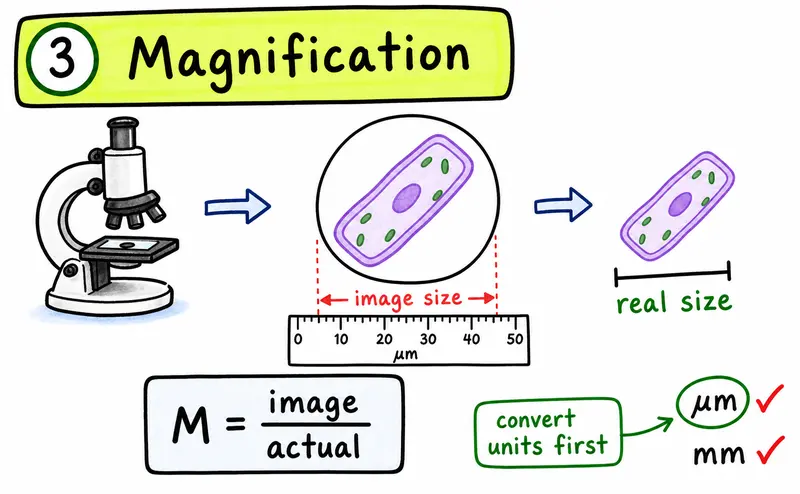
- For magnification, use image size divided by actual size after converting units.
- A strong answer links the cell idea to the command term, not just to a memorised definition.
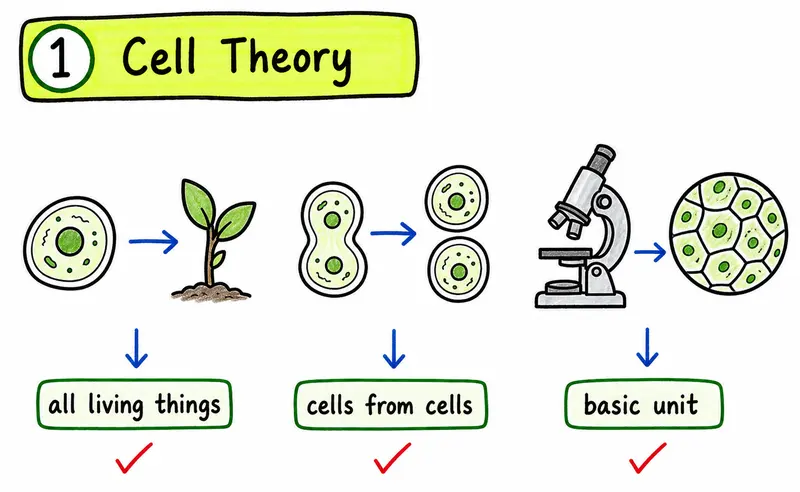
What Does Cell Theory Actually Say?
Cell theory is not only a list of statements. In exam answers, it works as a framework for explaining why cells are treated as the smallest living unit.
Use this wording:
Safe wording: Living organisms are composed of cells. Cells are the basic unit of structure and function in living organisms. New cells arise from pre-existing cells by cell division.
That answer is short, but it is precise. It avoids vague phrases such as "cells are important" and gives the three statements examiners usually expect.
Why SA:V Limits Cell Size
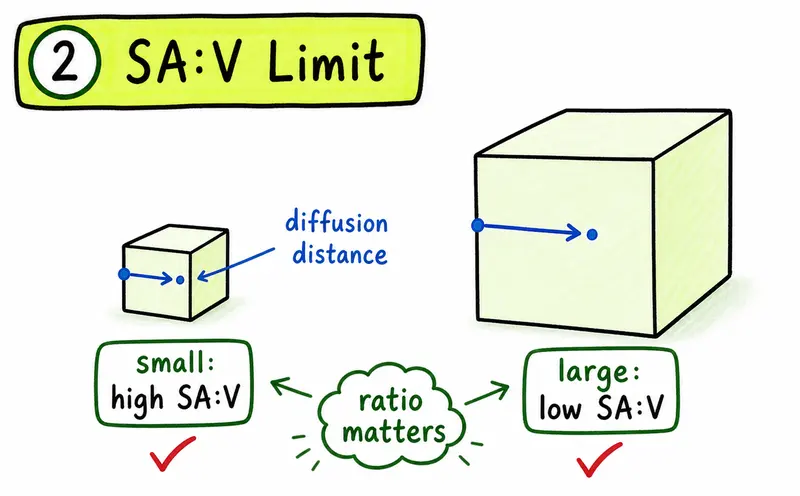
Surface area controls exchange. Volume controls demand. As a cell gets larger, volume increases faster than surface area, so the surface area to volume ratio falls.
That is why a larger cell may not exchange oxygen, nutrients, waste, or heat quickly enough for the amount of cytoplasm inside it.
| Cell size idea | What it means in an answer |
|---|---|
| Surface area | where exchange across the cell membrane happens |
| Volume | how much cytoplasm needs substances and produces waste |
| SA:V ratio | exchange surface compared with cell demand |
| Larger cell | lower SA:V ratio, so exchange becomes less efficient |
Stem Cells: Division First, Specialisation Second
For stem cells, make the sequence clear:
Markscheme chain: stem cell divides -> daughter cells remain unspecialised or differentiate -> specialised cells form tissues
This wording is stronger than saying "stem cells become any cell," which can be too vague. In an IB Biology answer, name the process and then connect it to the example in the question.
Worked Example: Stem Cell Differentiation
Question: Explain why stem cells are useful in growth or tissue repair.
Markscheme-style answer: Stem cells are unspecialised cells that can divide. Some daughter cells can differentiate into specialised cells. This allows new cells to be produced for growth or to replace damaged cells in tissues.
Why this works: It gives the starting state, the two key abilities and the biological use. It does not simply say stem cells are "useful" or "can become anything."
Microscopy Questions: Scale Before Structure
For micrograph questions, identify the scale first. Then name the visible structure. Only explain function if the command term asks for it.
| Command cue | First move | Avoid |
|---|---|---|
| identify | name the visible structure | over-explaining |
| calculate magnification | write the formula | mixing mm and micrometres |
| explain evidence | link observation to cell theory | listing organelles only |
If a micrograph question gives a scale bar, use it. Do not guess size from how large the image looks on the screen.
Worked Example: Magnification Calculation
Question: A cell image is 40 mm long. The actual cell is 20 micrometres long. Calculate the magnification.
Markscheme-style answer: First convert 40 mm to 40,000 micrometres. Then use magnification = image size / actual size. The magnification is 40,000 / 20 = 2,000.
Why this works: It uses the correct relationship and converts units before calculating. Many wrong answers come from dividing millimetres by micrometres without conversion.
Mistake: Comparing Total Surface Area Instead of Ratio
Weak answer:
- A bigger cell has a bigger surface area, so it can exchange more.
Better answer:
- A bigger cell may have more total surface area, but it has less surface area per unit volume. Exchange across the membrane becomes less efficient relative to the needs of the cytoplasm.
The word ratio is doing the work. The examiner is not asking whether the surface area is larger in total. They are asking whether the surface is large enough for the volume inside.
Worked Example: Explaining SA:V in One Paragraph
Question: Explain why cells cannot keep increasing in size indefinitely.
Markscheme-style answer: As cell size increases, volume increases faster than surface area. This lowers the surface area to volume ratio. Substances enter and leave across the cell surface, but the demand for materials depends on the volume of cytoplasm. A low SA:V ratio makes exchange less efficient, so very large cells may not obtain enough nutrients or remove waste quickly enough.
Why this works: It compares surface area with volume, links exchange to the membrane, and explains the biological consequence.
Trap: Do not only say "large cells have less surface area." That is not accurate. The issue is less surface area relative to volume.
How to Write the Markscheme Chain
For SA:V:
Markscheme chain: size increases -> volume increases faster than surface area -> SA:V ratio decreases -> exchange becomes less efficient
For stem cells:
Markscheme chain: unspecialised cell -> can divide -> can differentiate -> forms specialised cell type
For microscopy:
Markscheme chain: scale or magnification -> observed structure -> cell feature -> evidence or function
Use EduNinja Notes to rebuild the cell-theory statements, then test SA:V and microscopy wording in the Question Bank. If the same mistake repeats, turn that exact wording into a flashcard.
Cell Theory Revision Loop
Use this order when revising:
- Write the three cell theory statements from memory.
- Practise one SA:V explanation without notes.
- Do one microscopy or magnification question.
- Check the markscheme for missing wording.
- Turn the missing wording into a short flashcard.
Related Cell Biology Links
- IB Biology SL notes
- IB Biology SL question bank
- IB Biology Study Library
- IB Biology cell biology guide
Related Study Links
FAQ
What is cell theory in IB Biology SL?
Cell theory says organisms are made of cells, cells are the basic unit of life, and new cells come from pre-existing cells.
Why does SA:V ratio limit cell size?
As a cell gets larger, its volume increases faster than its surface area. Exchange across the cell surface becomes less efficient relative to the cell's needs.
What is the safest way to answer stem cell questions?
Start with the idea that stem cells are unspecialised. Then say they can divide and differentiate into specialised cells.
How do you calculate magnification in IB Biology?
Use magnification = image size / actual size. Convert both measurements into the same unit before dividing, especially when the image is in millimetres and the actual size is in micrometres.
Put PDF source back into your full IB Biology SL study plan.
Return to the complete course overview, or move directly into the most relevant study tool.
Related articles
More course notes, updates and study resources from the EduNinja blog.
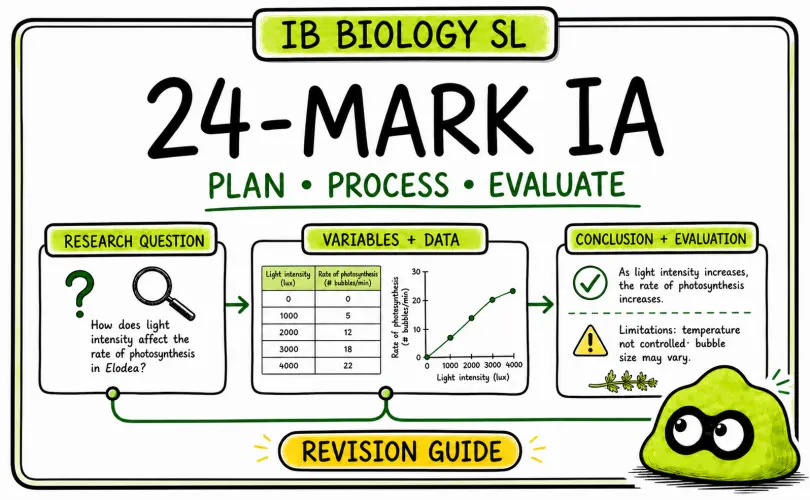
IB Biology Scientific Investigation Guide: How to Build a Strong 24-Mark IA
A practical IB Biology guide to the 24-mark Scientific Investigation: choose a workable research question, control variables, process data, draw a supported conclusion and evaluate limitations with specific improvements.
Abiotic Factors Explained | IB Biology SL
Revise IB Biology SL abiotic factors, tolerance ranges, limiting factors and how environmental variables affect distribution.
Active Transport vs Passive Transport | A-Level Biology
Revise A-Level Biology active and passive transport with concentration gradients, ATP, carrier proteins, examples, common mistakes and practice.