Electronegativity Trend Across a Period: IB Chemistry Guide
Revise the electronegativity trend across a period in IB Chemistry, including nuclear charge, shielding, bond polarity and exam wording.
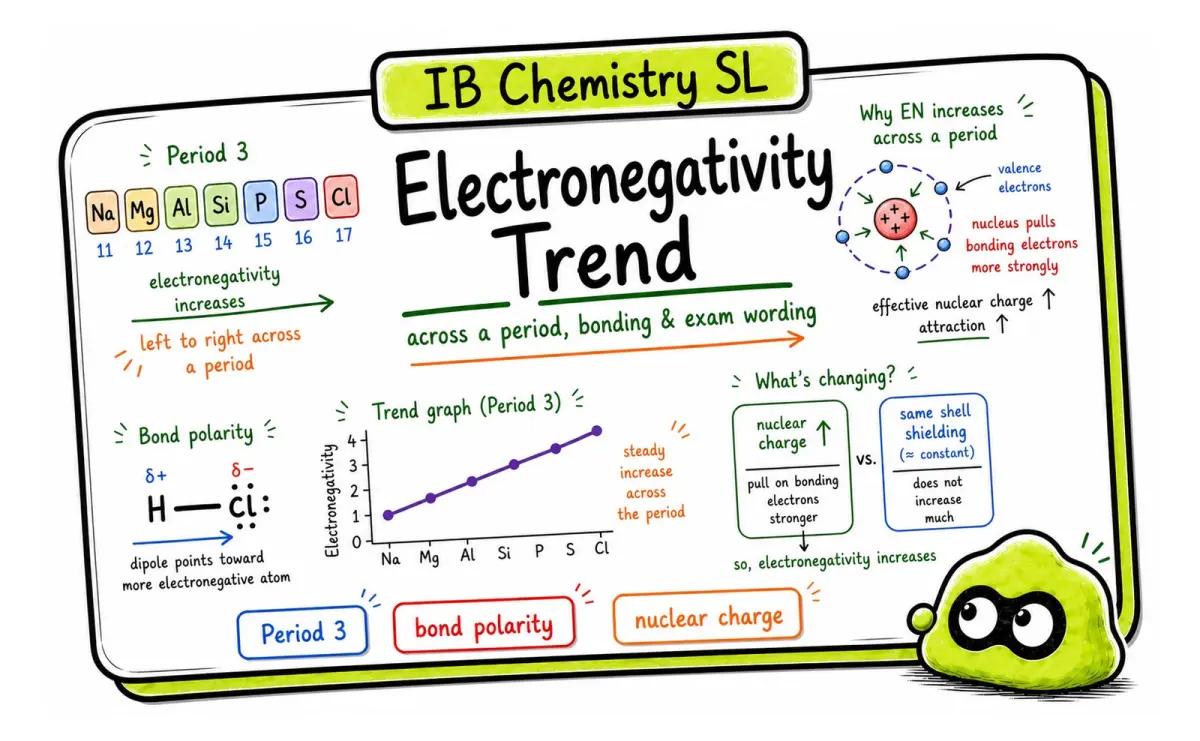
The electronegativity trend across a period is a small topic with a surprisingly high chance of exam mistakes. Students often know the arrow points left to right, but they do not explain why.
In IB Chemistry, the key idea is that electronegativity usually increases across a period because nuclear charge increases while shielding stays similar, so the nucleus attracts bonding electrons more strongly.
Quick Answer
- Electronegativity is the ability of an atom in a bond to attract the bonding pair of electrons.
- Across a period, electronegativity generally increases from left to right.
- The nuclear charge increases because there are more protons.
- Electrons are added to the same main energy level, so shielding does not increase much.
- The attraction for bonding electrons becomes stronger.
- More electronegative atoms become delta negative in polar bonds.
- Do not confuse electronegativity with electron affinity.
Electronegativity Trend Across a Period
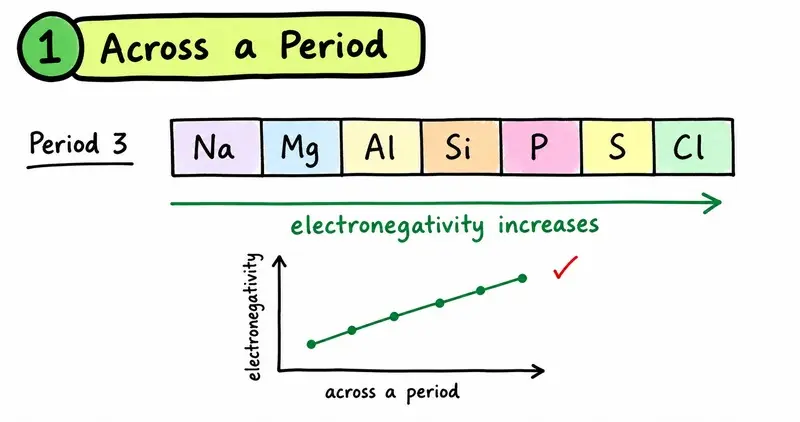
Across a period, electronegativity generally increases from left to right. For Period 3, the trend runs from sodium toward chlorine.
The simple exam statement is:
Electronegativity increases across a period because nuclear charge increases while shielding remains similar, so bonding electrons are attracted more strongly.
That sentence is stronger than just writing "it increases because atoms want electrons more". Keep the answer about attraction, protons and shielding.
What Electronegativity Means
Electronegativity is about atoms in a bond. It describes how strongly an atom attracts the shared pair of electrons in a covalent bond.
This matters because electronegativity differences create polar bonds. If one atom attracts the bonding electrons more strongly, that atom becomes slightly negative, while the other atom becomes slightly positive.
| Term | Meaning |
|---|---|
| Electronegativity | Attraction for bonding electrons |
| Polar bond | Unequal sharing of bonding electrons |
| Delta negative | Slightly negative atom in a polar bond |
| Delta positive | Slightly positive atom in a polar bond |
Why Electronegativity Increases Across a Period
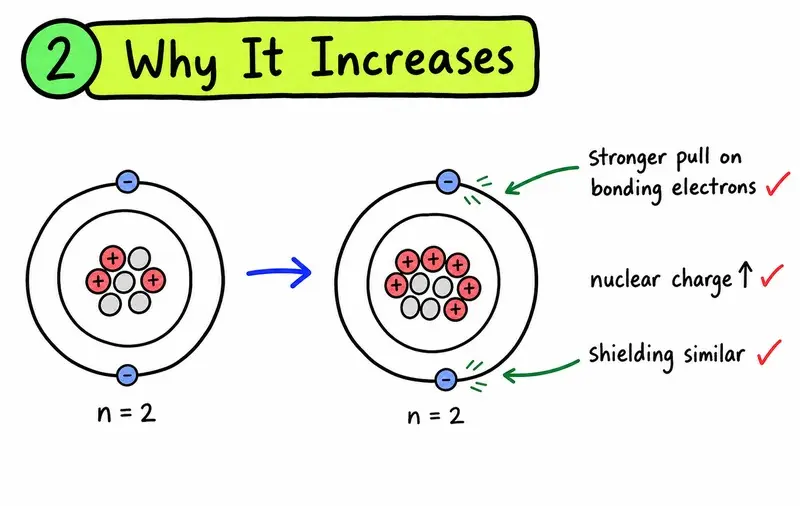
The reason is a balance between nuclear charge and shielding.
Across a period:
- proton number increases
- nuclear charge increases
- electrons are added to the same main shell
- shielding stays similar
- atomic radius generally decreases
- attraction for bonding electrons increases
This is why the trend is not explained by "more electrons" alone. The important idea is that the nucleus has a stronger pull on bonding electrons.
Electronegativity and Bond Polarity
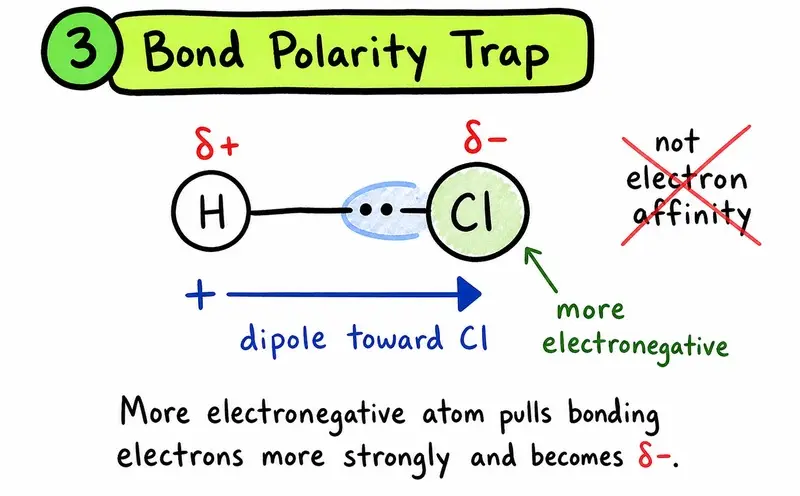
When two atoms have different electronegativities, the bonding electrons are pulled closer to the more electronegative atom. This creates a polar bond.
For example, in H-Cl, chlorine is more electronegative than hydrogen. Chlorine attracts the bonding electrons more strongly, so chlorine is delta negative and hydrogen is delta positive.
The dipole arrow points toward the more electronegative atom.
Common Exam Mistakes
These mistakes are easy to fix:
| Mistake | Why it is weak | Better version |
|---|---|---|
| "Electronegativity is gaining electrons." | That sounds like electron affinity or ion formation. | It is attraction for bonding electrons. |
| "It increases because atoms get bigger." | Across a period, atoms generally get smaller. | Nuclear charge increases and shielding is similar. |
| "The dipole points to the positive atom." | Dipole direction is often marked toward the more electronegative atom. | The more electronegative atom is delta negative. |
| "More shells means more electronegativity." | Across a period, electrons are added to the same shell. | Same shell, stronger nuclear pull. |
For markscheme wording, always connect the trend to nuclear charge and shielding.
Worked Example
Question: Explain why chlorine is more electronegative than sodium.
Mark-worthy answer: Chlorine has a higher nuclear charge than sodium and its outer electrons are in the same main energy level across Period 3, so shielding does not increase much. Chlorine therefore attracts bonding electrons more strongly.
Why this works: The answer names nuclear charge, shielding and attraction for bonding electrons.
How EduNinja Helps with This Topic
Use IB Chemistry periodic table questions to practise trends such as electronegativity across a period. Then use IB Chemistry covalent model questions to connect electronegativity to bond polarity and electron sharing.
If the electron-shell explanation feels weak, review IB Chemistry electron configuration questions before doing mixed practice.
Practice This Topic
Try this exam-style question:
Explain why electronegativity generally increases across a period from left to right.
Answer guide:
- The number of protons increases across a period, so nuclear charge increases.
- Electrons are added to the same main energy level, so shielding does not increase much.
- The bonding pair of electrons is attracted more strongly by the nucleus.
- This gives a general increase in electronegativity across the period.
Practice this exact topic
Periodicity question bank
Some questions may require an EduNinja membership.
Browse broader practice
Browse the full IB Chemistry SL Question Bank
Use this if you want to explore more available practice by topic.
Related Study Links
- Explore the subject Study Hub
- IB Chemistry Question Bank
- Inert Gas vs Noble Gas: IB Chemistry Group 18 Guide
- Arrhenius Equation Explained
FAQ
What is the electronegativity trend across a period?
Electronegativity generally increases from left to right across a period. Nuclear charge increases while shielding stays similar, so atoms attract bonding electrons more strongly.
Why does electronegativity increase across Period 3?
Across Period 3, proton number increases and electrons are added to the same main shell. Because shielding does not increase much, the nucleus attracts bonding electrons more strongly.
Is electronegativity the same as electron affinity?
No. Electronegativity is attraction for bonding electrons in a covalent bond. Electron affinity is about the energy change when an atom gains an electron.
How does electronegativity affect bond polarity?
The more electronegative atom attracts the bonding electrons more strongly and becomes delta negative. The less electronegative atom becomes delta positive, so the bond is polar.
Final Takeaway
Use this memory line: more protons, similar shielding, stronger pull. That is the cleanest way to explain why electronegativity increases across a period.
Put electronegativity back into your full IB Chemistry SL study plan.
Return to the complete course overview, or move directly into the most relevant study tool.
Related articles
More course notes, updates and study resources from the EduNinja blog.
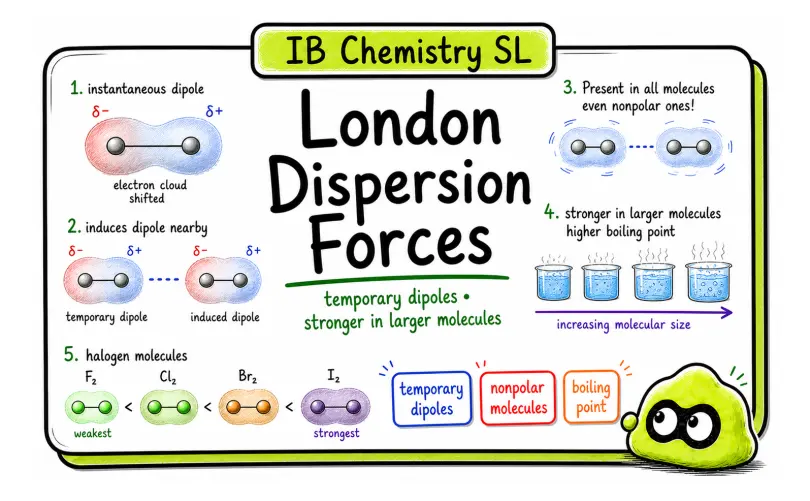
London Dispersion Forces Explained for IB Chemistry
Learn London dispersion forces for IB Chemistry with temporary dipoles, induced dipoles, molecular size, boiling point trends, examples and practice.
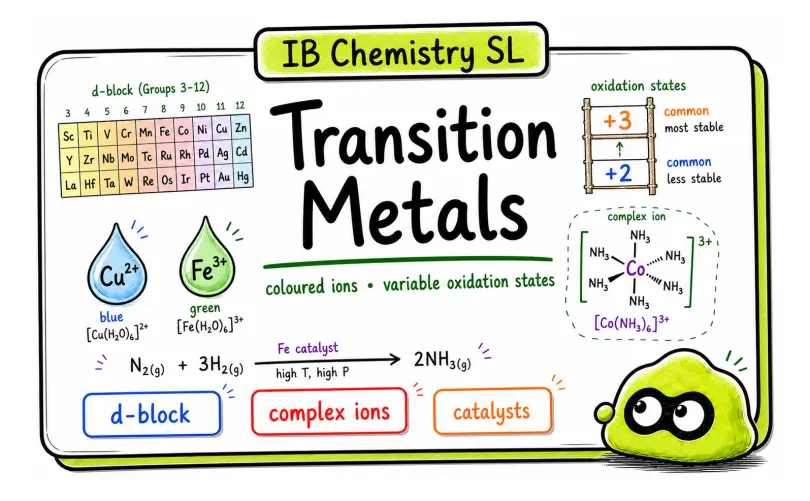
Transition Metals Explained for IB Chemistry
Revise transition metals in IB Chemistry, including coloured ions, variable oxidation states, complex ions, catalysts and common exam mistakes.
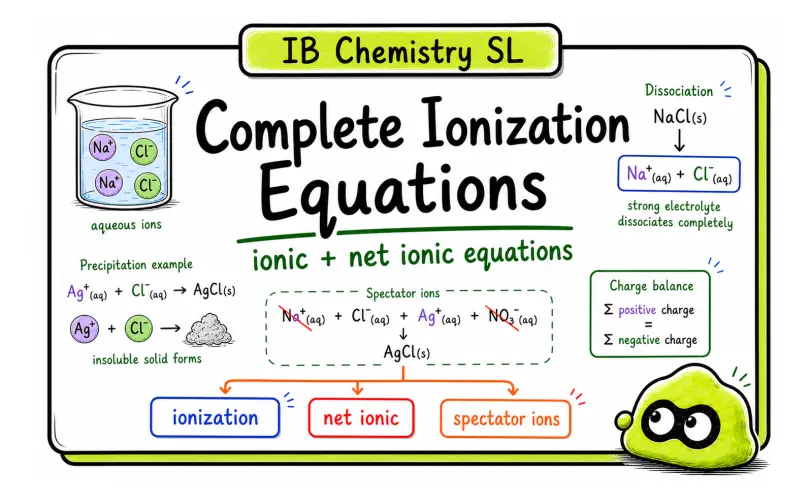
How to Complete Ionization and Net Ionic Equations
Learn complete ionization and net ionic equations for IB Chemistry, with ion charges, state symbols, spectator ions, worked examples and practice.