Question 1(b)(i)
[Maximum number: 1]
The diagram shows a forest food web.
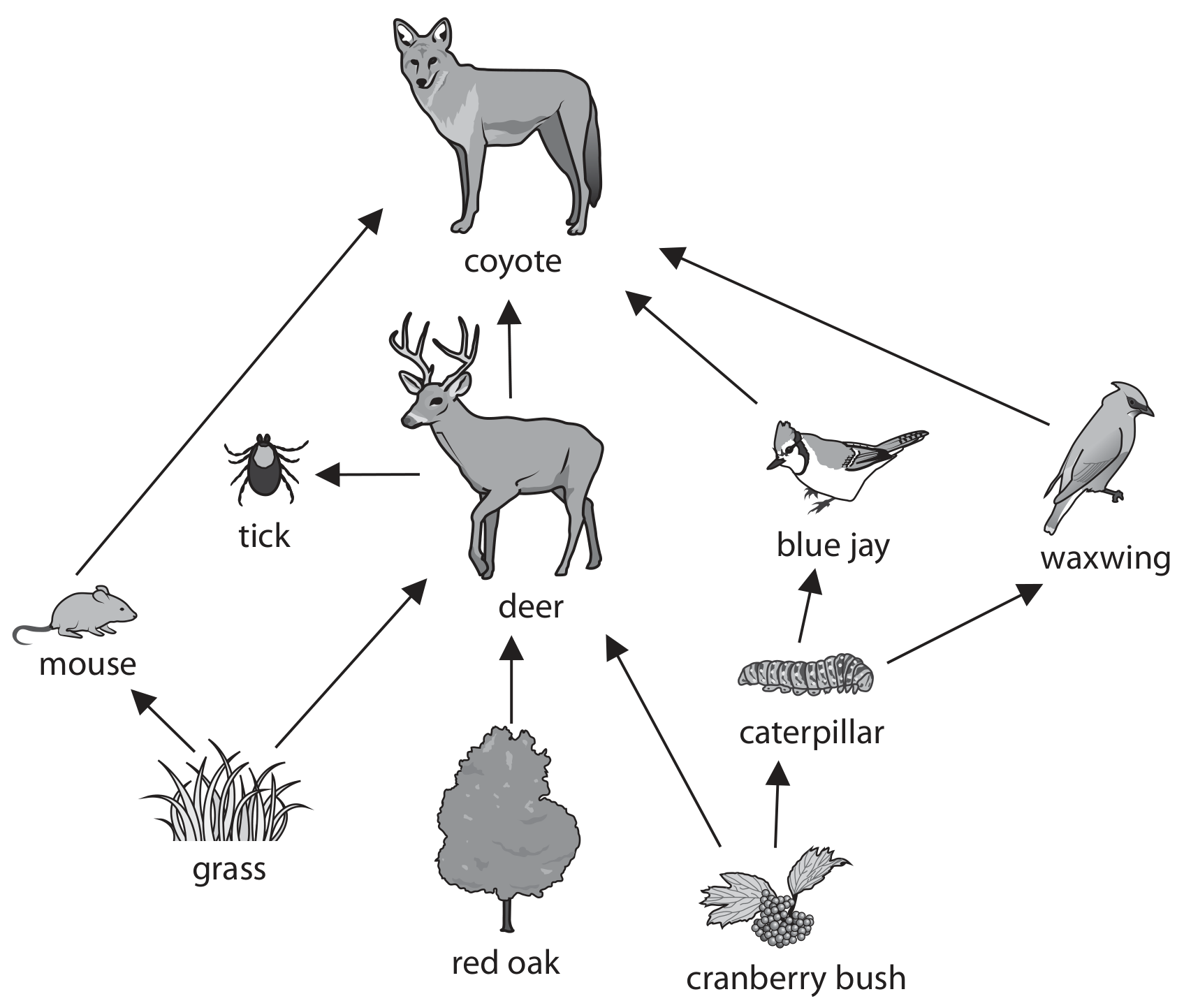
The coyote uses some of its senses to catch deer.
Name the sense that uses receptor cells in the retina.
 EduNinja
Edexcel IGCSE Biology (j) Co-ordination and response question practice helps you revise this syllabus point with the course map in view. Use this page to focus on one topic, check the style of questions available, and connect each attempt back to the knowledge area it is testing.
EduNinja keeps Biology practice aligned to Edexcel, so you can move from topic review into exam-style question bank work without losing the syllabus structure. Start with a small set, mark the weak steps, then return to nearby topic links when a definition, graph, calculation, or explanation needs repair.
The diagram shows a forest food web.
The coyote uses some of its senses to catch deer.
Name the sense that uses receptor cells in the retina.
Organs in the human body have different functions.
Which organ releases progesterone?
the brain
the ovary
the pituitary
the testis
Which of these is an example of positive phototropism?
a plant root growing away from light
a plant root growing downwards due to gravity
a plant stem growing towards light
a plant stem growing upwards due to gravity
Read the passage below. Use the information in the passage and your own knowledge to answer the questions that follow.
Male contraception
Hormonal contraception has been used by women for many years to control their fertility. A recent study investigated a new contraceptive injection to be used by men.
The study was done in seven different countries: the United Kingdom, Australia, Germany, Italy, India, Indonesia and Chile. The researchers investigated a total of 320 healthy men aged between 18 and 45, all with female partners aged between 18 and 38.
All the men had normal sperm counts and produced sperm with no abnormalities in shape or movement. They had no sexually transmitted infections and no medical or mental health illnesses. Their female partners were healthy and did not intend to become pregnant within the next two years. They were willing to accept a low, but unknown, chance of becoming pregnant.
The study had two phases. These were the initial suppression phase lasting 26 weeks, followed by a contraceptive effectiveness testing phase lasting just over one year. In the suppression phase, the men were given injections of a drug called progestin and the hormone testosterone. This was repeated at 8,16 and 24 weeks. Progestin inhibits sperm production and reduces the release of testosterone. Semen samples were collected every two weeks to monitor the sperm count. During this phase, couples had to use alternative barrier methods of contraception, such as condoms.
When a man had produced two consecutive semen samples with a sperm count of less than one million per , they began the contraceptive effectiveness testing phase. During this phase, the men continued to receive regular injections every eight weeks for just over one year. Semen samples were taken at the same time as each injection to monitor the sperm count. If the sperm count went above one million per , the injections were stopped. At this point the men left the trial and other methods of contraception were resumed.
The contraceptive injections prevented pregnancies in the partners of 98.4\% of the men. However, a number of men reported side effects. For example, just under half of the men developed acne (skin infections and irritation) and one in five reported mood disorders. In approximately 5% of the men, their sperm count had not returned to normal one year after stopping the injections. Despite the side effects, more than three-quarters of the men, and their partners, said they would be happy to continue to use this new method of contraception.
The scientists concluded that this was a valuable early-stage trial that gave a good indication of the potential safety and effectiveness of the progestin and testosterone injections for male contraception.
State where in the male body testosterone is produced.
The human body has different hormones that are produced by endocrine glands.
The diagram labels some of the endocrine glands in the body.
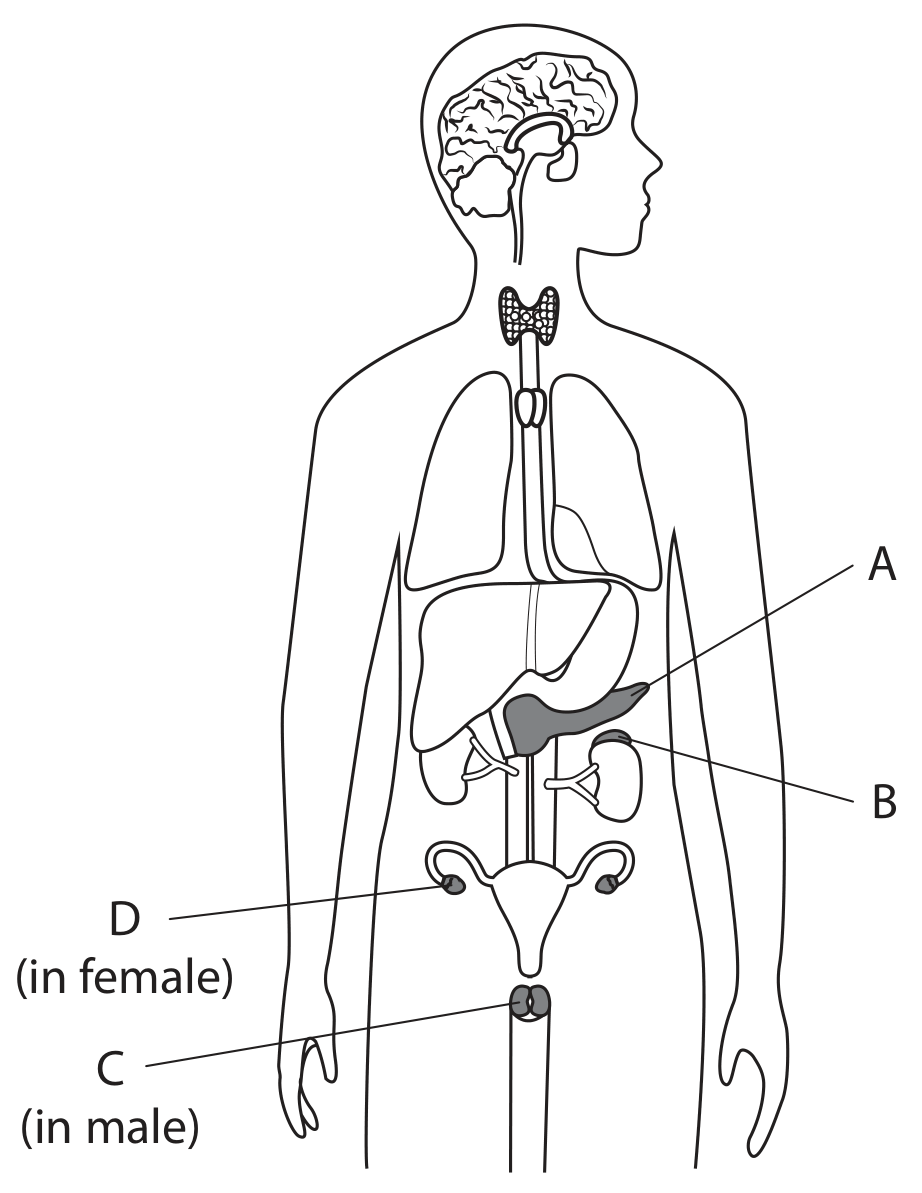
Which gland produces insulin?
Which gland produces progesterone?
The human body has two systems of communication, nervous and hormonal.
Students research the speed of nervous and hormonal communication.
They find this data
- hormones travel at a speed of 420 centimetres per minute
- nerve impulses travel at a speed of 55 metres per second
Determine the ratio of the speed of nervous communication to the speed of hormonal communication.
Give your answer in the form n: 1
ratio =
Describe three other differences between the nervous system and the hormonal system.
Read the passage below. Use the information in the passage and your own knowledge to answer the questions that follow.
Rivers - the arteries of the world
Rivers are important supplies of water for drinking, farming, industry, and leisure activities. Like our circulatory system, rivers are essential for transport, and have a homeostatic effect on nature. The biodiversity in rivers is high as they are the habitat for many different species. In many countries rivers are under threat from human impact, particularly the release of untreated sewage.
Flooding can cause untreated sewage to run into rivers from pipelines. Scientists estimated that in England and Wales during 2022, sewage was released into rivers for a total time of 300000 hours. This sewage came from 1200 different pipelines. Untreated sewage may contain fertilisers, pesticides, pathogenic bacteria, and pharmaceutical drugs.
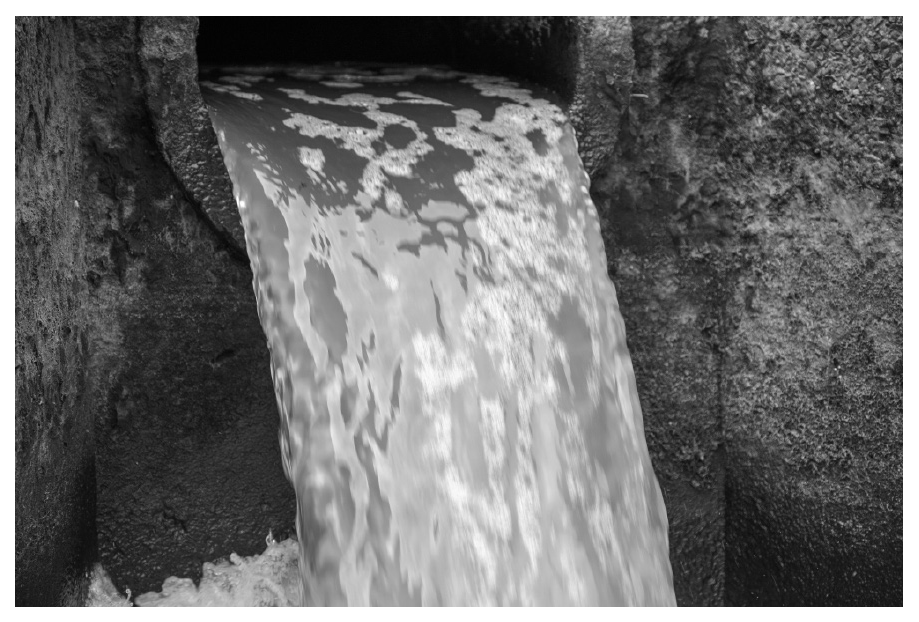
The photograph shows sewage being released into a river. The sewage causes the growth of something called 'sewage fungus'. Sewage fungus looks like fungus but is a solid collection of several types of anaerobic bacteria. Sewage fungus is common in rivers that are polluted with untreated sewage or are near to cattle and intensive crop farms. If sewage fungus is found in a river it often indicates that the biodiversity of the river will be low.
Pesticides from agriculture are also released into rivers, and these are frequently transferred through natural food chains. Even pharmaceutical drugs, such as those containing the hormones oestrogen and progesterone, have been found in polluted rivers. These drugs must have been consumed by humans, excreted and then released into the sewage flowing into rivers.
Untreated sewage can also contain pathogenic species of bacteria that then enter rivers. If humans are infected with these bacteria, the large intestine absorbs less water, causing diarrhoea. Some of the bacteria found in sewage are resistant to antibiotics.
Scientists are looking for ways to prevent river pollution. One way is to reduce the risk of pollution from fertilisers and from cattle urine and faeces. Woodchip bioreactors are being trialled in agricultural fields that are near to rivers. These bioreactors are pits filled with woodchips and denitrifying bacteria. Water drains through these bioreactors, which helps to remove nitrates before they reach the rivers. In some countries, efforts are being made to replant forests in areas upstream of rivers to reduce river flooding and the risk of untreated sewage release.
Rivers have a homeostatic effect on nature. This is similar to the role of homeostasis in humans.
State what is meant by the term homeostasis (lines 2 and 3).
Oestrogen and progesterone in polluted water lower the levels of FSH and LH in mammals.
State why lower levels of FSH can reduce fertility in mammals.
State why lower levels of LH can reduce fertility in mammals.
Read the passage below. Use the information in the passage and your own knowledge to answer the questions that follow.
Physic Gardens
The photograph shows a physic garden. Physic gardens are places where people grow many types of plants that produce medicinal drugs.
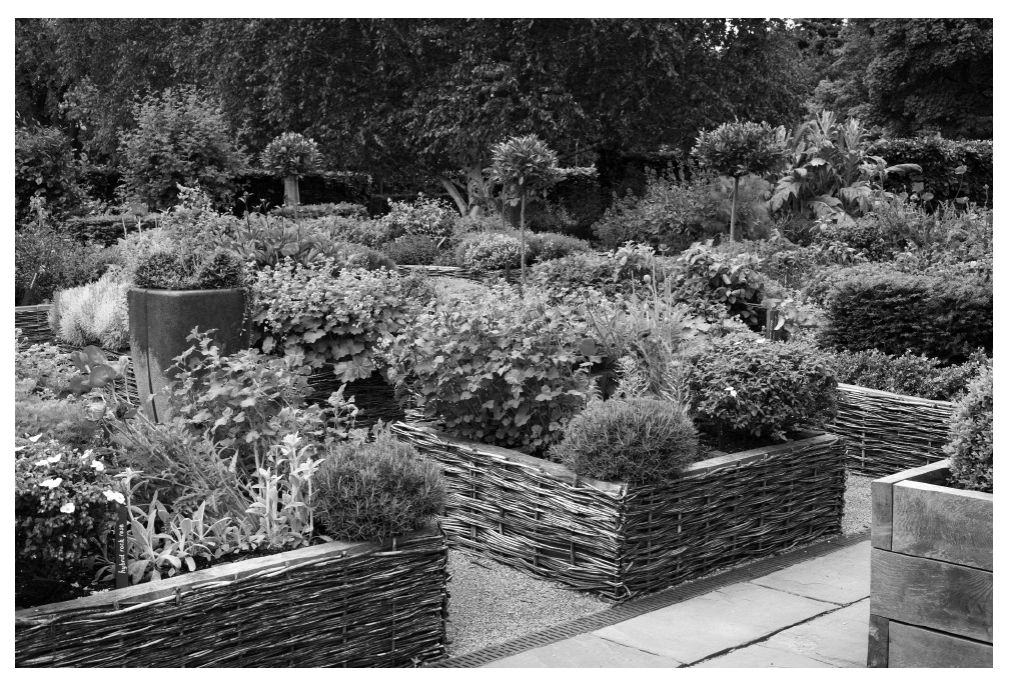
People have grown medicinal plants in physic gardens for thousands of years. It was estimated in 2016 that out of 30000 plant species that are known to be useful to humans, 17000 of these plant species have medicinal uses.
Medicinal plants produce a wide range of types of drugs including alkaloids, glycosides, terpenes and polyphenols.
Alkaloids are bitter-tasting, alkaline chemicals found in many different plant species. Alkaloids are often toxic in high doses so care needs to be taken when using them. Examples of alkaloids are caffeine and quinine. Caffeine, found in tea and coffee, can stimulate the adrenal glands. Quinine from the bark of the cinchona tree has been used for many centuries to kill the parasite that causes malaria.
An example of a glycoside drug is senna. This drug is extracted from the Senna plant and is used to treat constipation. The drug affects muscles in the intestine.
Terpenes are chemicals that often have strong smells. Terpenes are thought to have evolved to prevent herbivore animals from eating certain plants. An example of a plant that produces terpenes is thyme. The terpenes in thyme have an antiseptic effect which means they can be used to sterilise wounds.
Phytoestrogens are molecules found in plants such as angelica and have been used for many years to treat problems with human fertility. Examples of polyphenols are phytoestrogens, taxol and curcumin. Polyphenols have many roles within plants and many are used as medicines. Taxol is a drug extracted from yew trees and is used to prevent cell division in human body cell tumours.
25 Curcumin is a drug produced by the turmeric plant. Curcumin can help widen the airways to the lungs so can help people with asthma breathe.
Scientists are looking to reproduce many of these drugs artificially. They are developing genetically modified bacteria containing genes that will allow these drugs to be mass produced in fermenters.
Phytoestrogens are very similar to human oestrogen.
Explain why eating phytoestrogens can help improve fertility (lines 20 to 21 ).
The diagram shows the structure of a human eye.
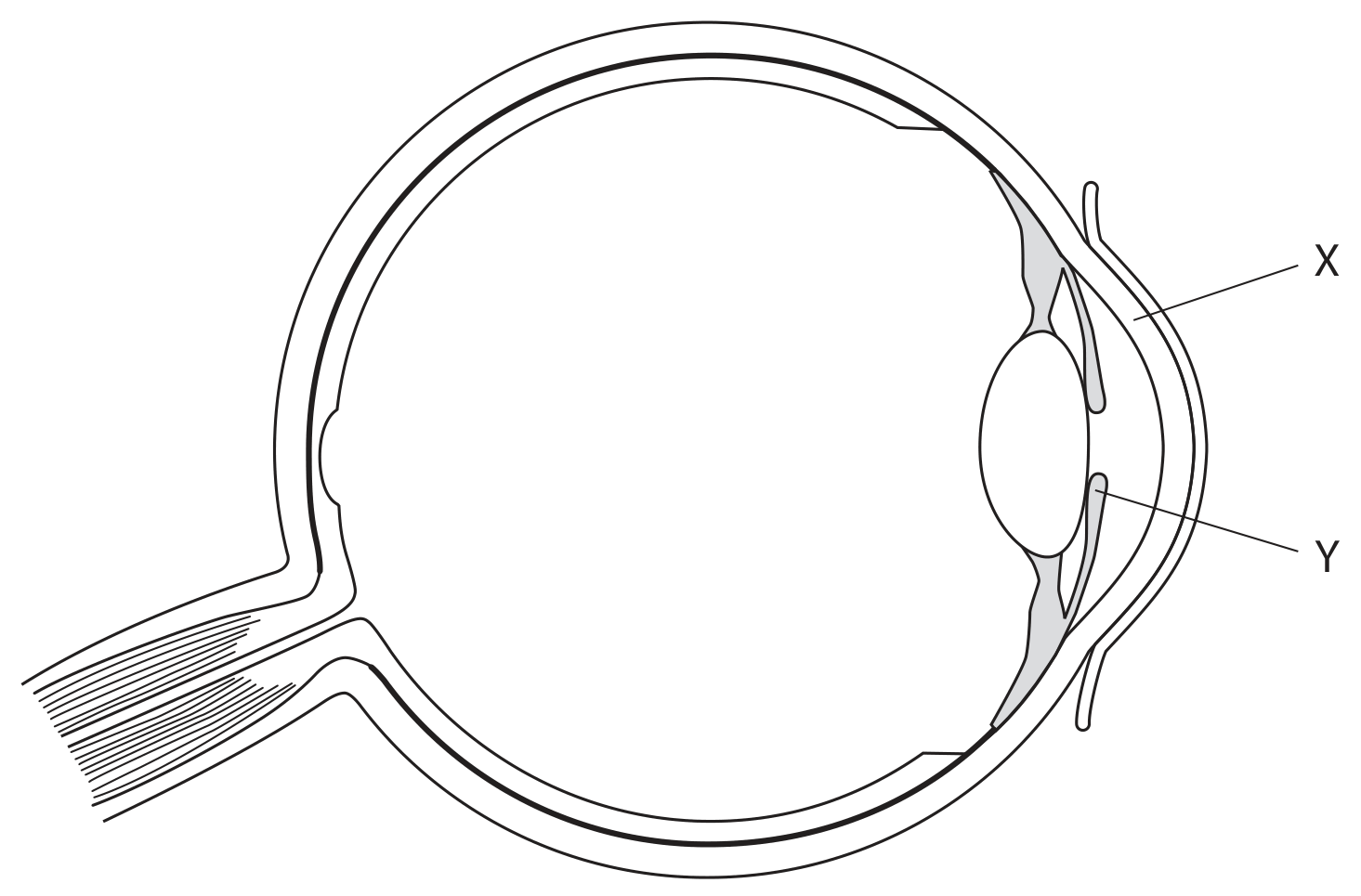
Which of these is the structure labelled X ?
conjunctiva
cornea
lens
retina
When looking at a close object, which row of the table shows the state of the ciliary muscles and suspensory ligaments?
□ A
□ B
□ C
□ D
Ciliary muscles
Suspensory ligaments
contracted
loose
contracted
tight
relaxed
loose
relaxed
tight
Explain how structure Y controls the light entering the eye when someone walks into a dark room.
Multiple sclerosis is a condition that can slow down the speed at which electrical impulses travel along neurones.
The time taken for the blink reflex to occur can be used to help diagnose if someone has multiple sclerosis.
The blink reflex causes the eyelid to close.
Air is blown on to the eye and the time taken for the eyelid to close is recorded.
The diagram shows the reflex pathway.
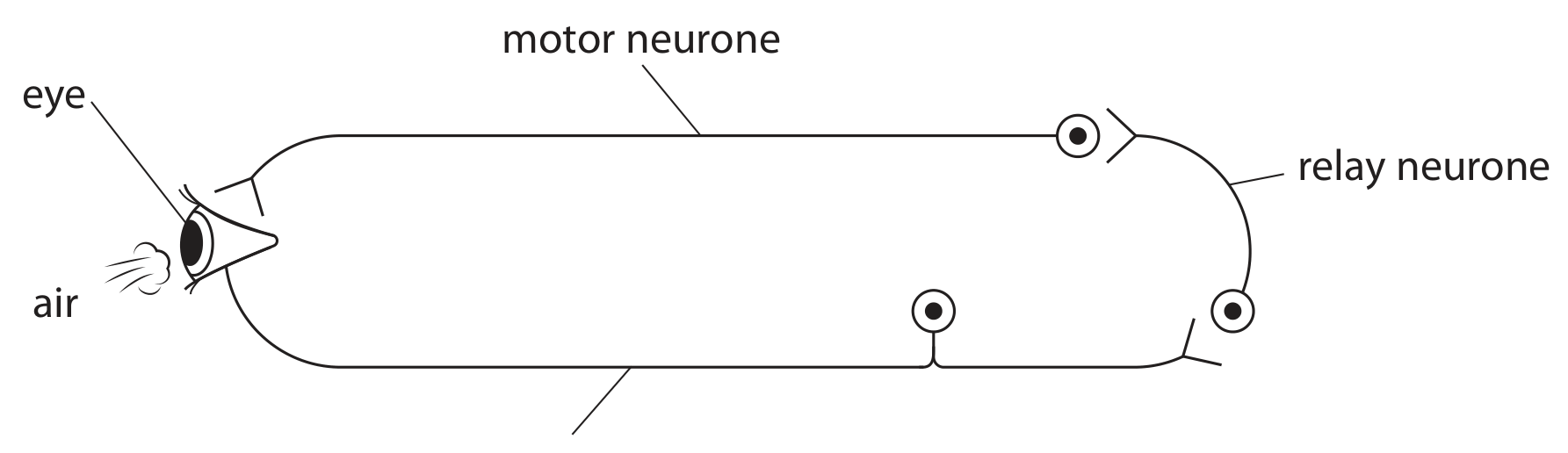
sensory neurone
The speed the impulse moves along the reflex arc consisting of all three neurones in a person without multiple sclerosis is 77 metres per second.
The time taken for the blink reflex to occur in a person with multiple sclerosis is 0.0050 s .
The total length of the neurones in the reflex arc for the person with multiple sclerosis is 25 cm .
Calculate the difference between the speed of impulse for the person with multiple sclerosis and for the person without multiple sclerosis, in metres per second.
The speed of an impulse along the axon of the motor neurone for someone without multiple sclerosis is 120 metres per second.
Suggest why the speed of the impulse calculated along all three neurones is less than the speed of the impulse along only the motor neurone.
The diagram shows the position of some hormone producing glands in the female body.
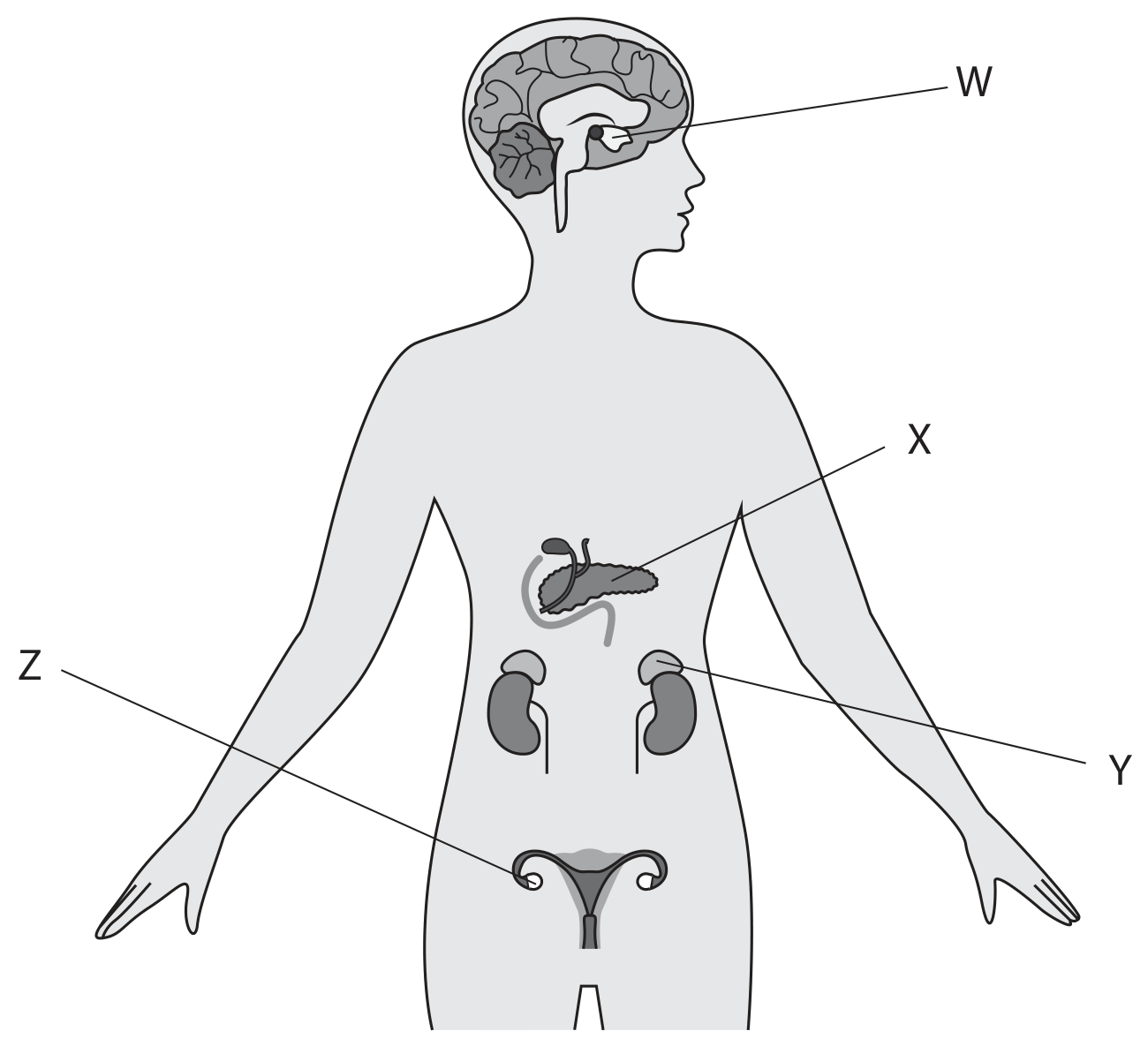
Which of these structures is the adrenal gland?
W
X
Y
Z
Adrenaline is released into the blood when there is danger.
The list gives the effects of adrenaline on different parts of the body.
- dilates the pupil in the eye
- increases heart rate
- narrows small arteries in the intestine
- converts glycogen into glucose in the liver
Explain the advantages of these effects to a person in danger.
The diagram shows a human eye.
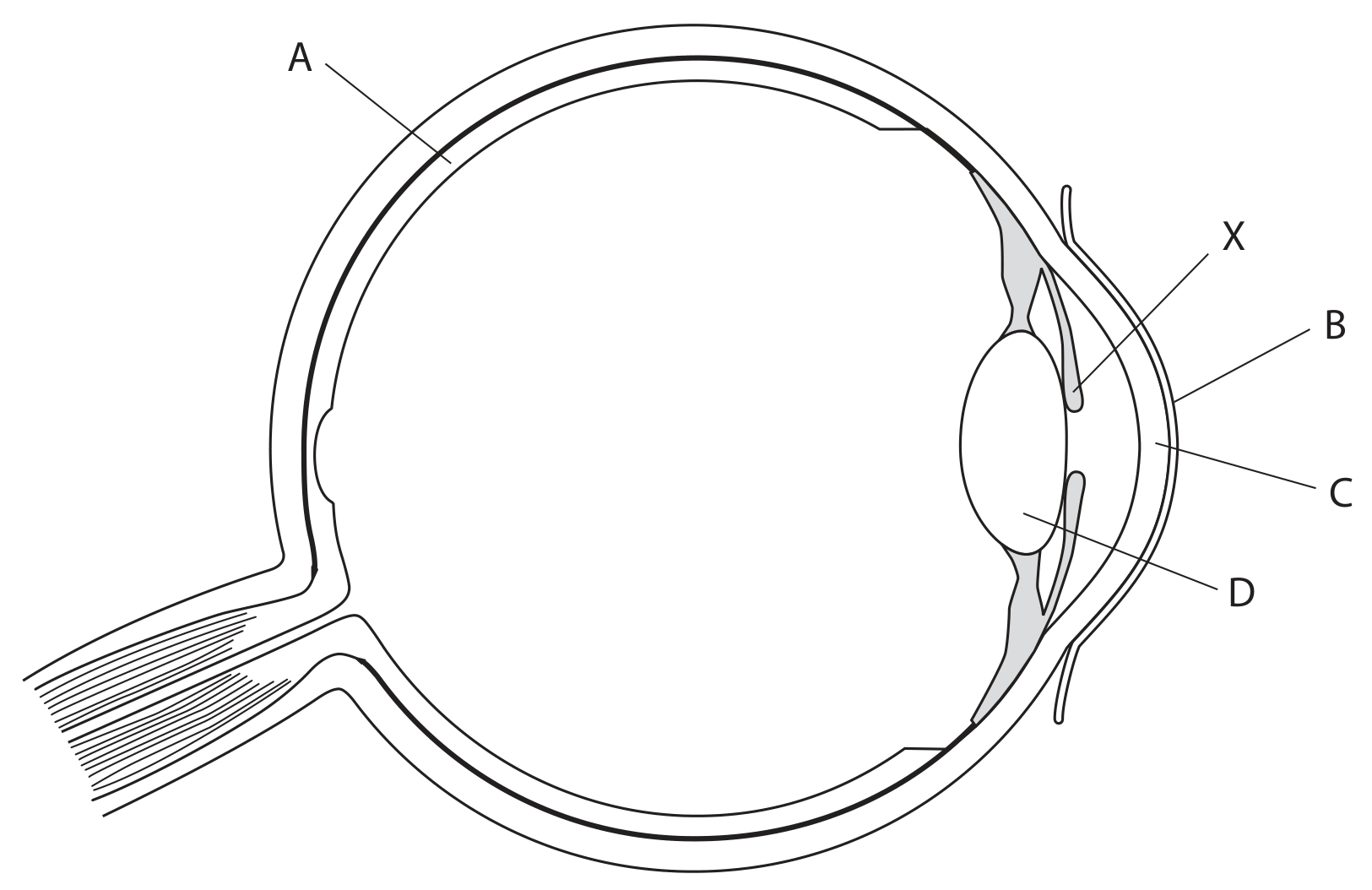
Which labelled structure is the cornea?
Explain the changes in structure X as a person moves from a room where the light is dim to a room where the light is bright.
A student investigates if using one eye or using two eyes is better for judging the distance of objects.
The student uses the plastic block shown in the diagram. The block has a grid where six different coloured pins can be placed as shown in the diagram.
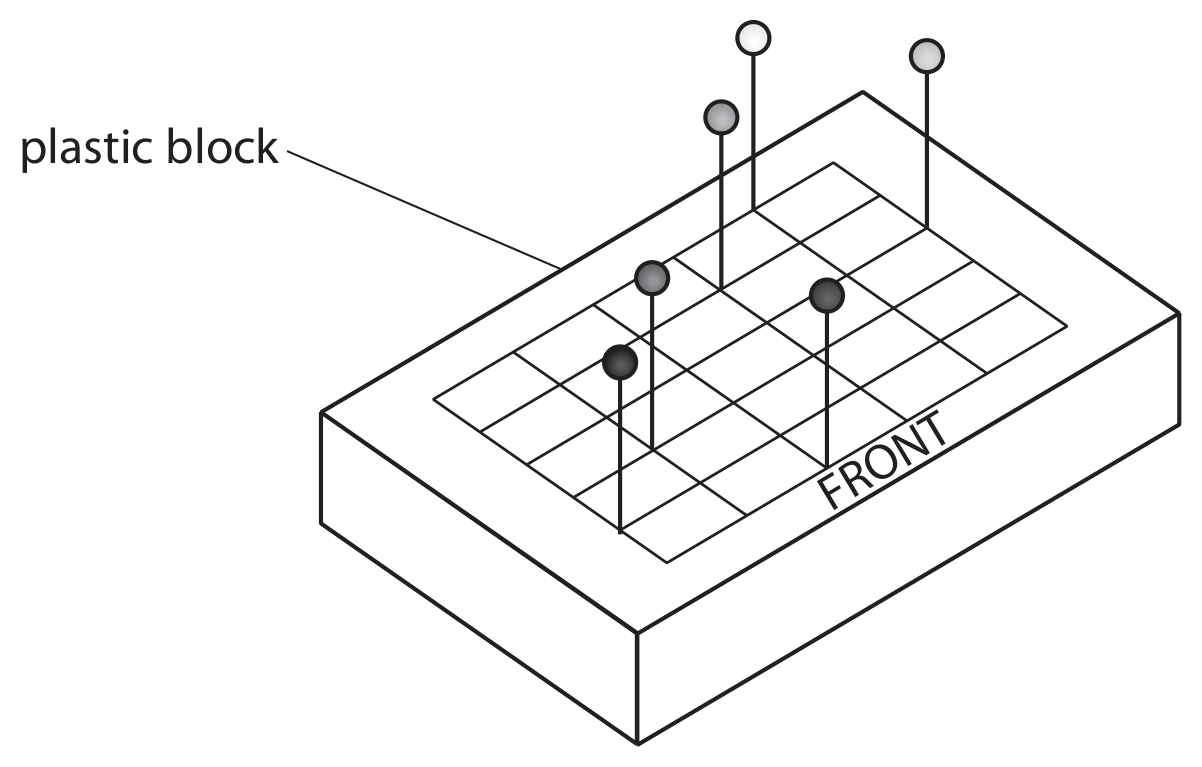
This is the student's method.
- place one pin into the lines of each column and row so that each pin is a different distance from the front of the grid
- ask a volunteer to close one eye
- hold the grid in front of the volunteer so they can see the coloured pins but not the grid
- ask the volunteer to call out the colour of the pins in order of distance, from nearest to furthest
- record the number of pins that the volunteer identifies correctly
- repeat eight more times, each time moving the pins to different positions in the grid
The student does the experiment again with both eyes open.
The field of view is the area that an animal can see with their eyes. The diagram shows the field of view for a cat.
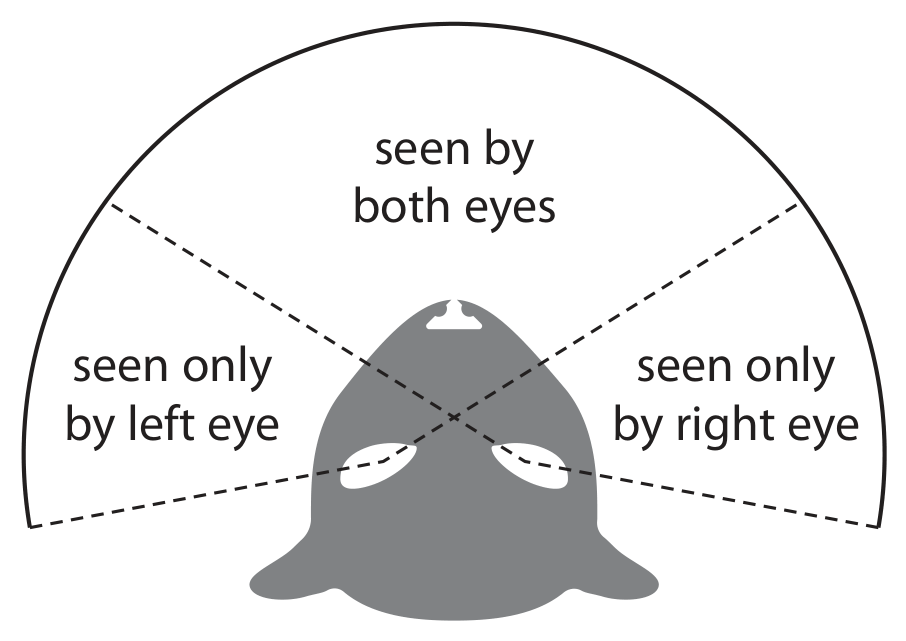
Explain why predators, such as cats, have two forward facing eyes.
Use the information in the diagram and Table 2 to support your answer.