EduNinja

IGCSE Biology2.88 Skin and temperature controlTopic Practice

2.88 Skin and temperature control

Understand that stimulation of receptors in the sense organs sends electrical impulses along nerves into and out of the central nervous system, resulting in rapid responses.

Question 2(b)(i)

[Maximum number: 3]

Multiple sclerosis is a condition that can slow down the speed at which electrical impulses travel along neurones.

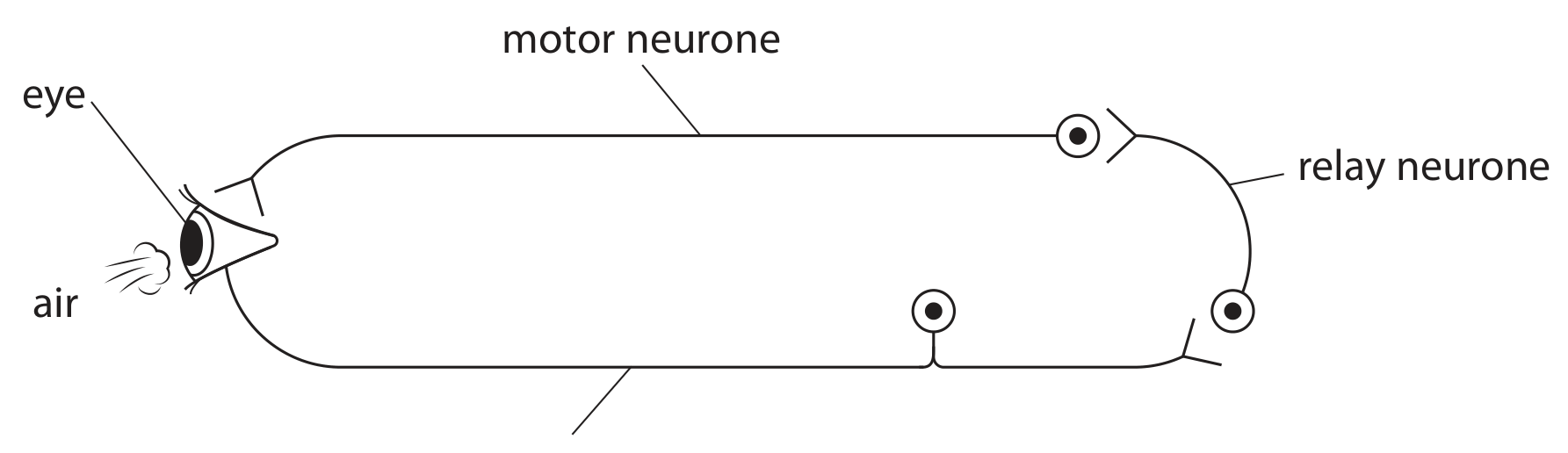
The time taken for the blink reflex to occur can be used to help diagnose if someone has multiple sclerosis.

The blink reflex causes the eyelid to close.
Air is blown on to the eye and the time taken for the eyelid to close is recorded.
The diagram shows the reflex pathway.
sensory neurone

sensory neurone

The speed the impulse moves along the reflex arc consisting of all three neurones in a person without multiple sclerosis is 77 metres per second.

The time taken for the blink reflex to occur in a person with multiple sclerosis is 0.0050 s .

The total length of the neurones in the reflex arc for the person with multiple sclerosis is 25 cm .

Calculate the difference between the speed of impulse for the person with multiple sclerosis and for the person without multiple sclerosis, in metres per second.
Question 6

[Maximum number: 5]

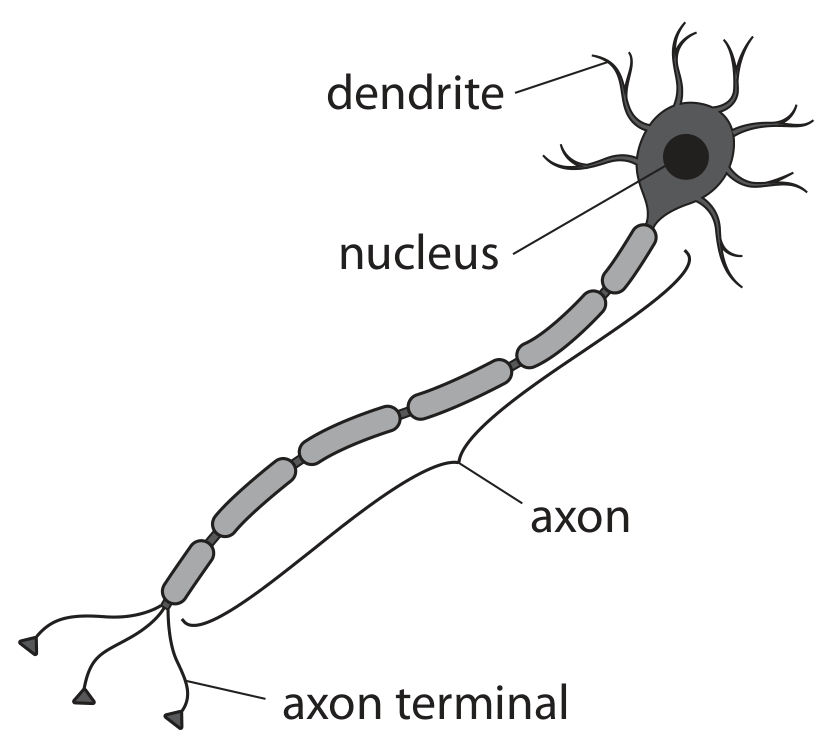
Neurones transmit nerve impulses.
The diagram shows a neurone.

Question image

Question 6(b)

(a)

Some neurones do not have a myelin sheath.

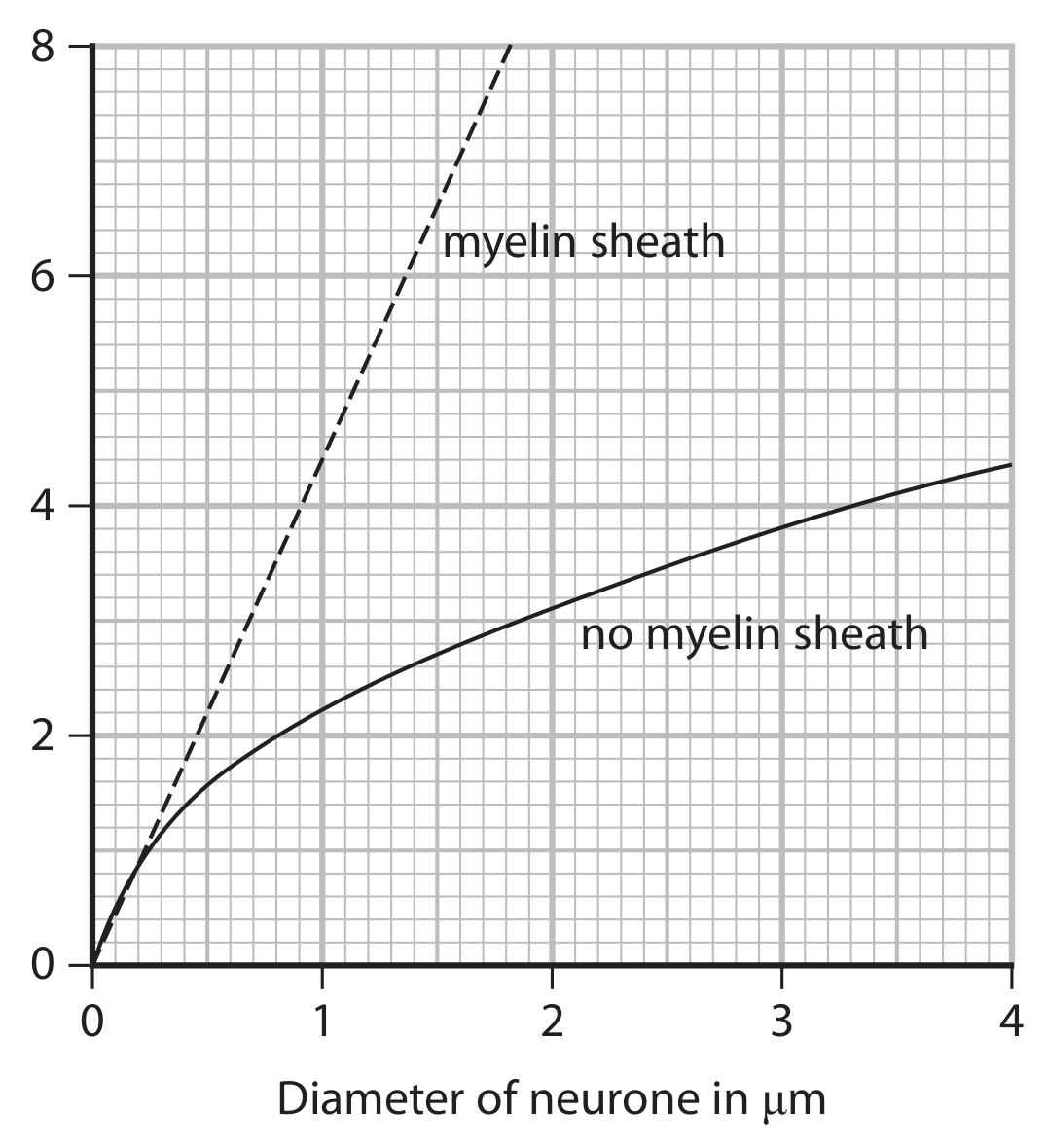
A scientist investigates the impulse speed for neurones with different diameters. She does this for neurones with a myelin sheath and neurones without a myelin sheath.

The graph shows the scientist's results.

Impulse speed in m per s

Question image
[ 5 ]

Question 6(b)(i)

(i)

Which conclusion is supported by the graph?

A

impulses are always faster in neurones with a myelin sheath

B

neurones always have a myelin sheath

C

wider neurones have a myelin sheath

D

wider neurones have faster impulses

[ 1 ]

Question 6(b)(ii)

(ii)

A neurone with a myelin sheath has a diameter of 1.0μ m1.0 \mu \mathrm{~m}.

Use the graph to determine the speed of an impulse in this neurone.
speed = m per s

[ 1 ]

Question 6(b)(iii)

(iii)

The neurone is 90 cm long.

Calculate the time taken for an impulse to travel along this neurone.
Give your answer in standard form.
time ==\ldots.
s

[ 3 ]

Question 6(b)(i)

[Maximum number: 2]

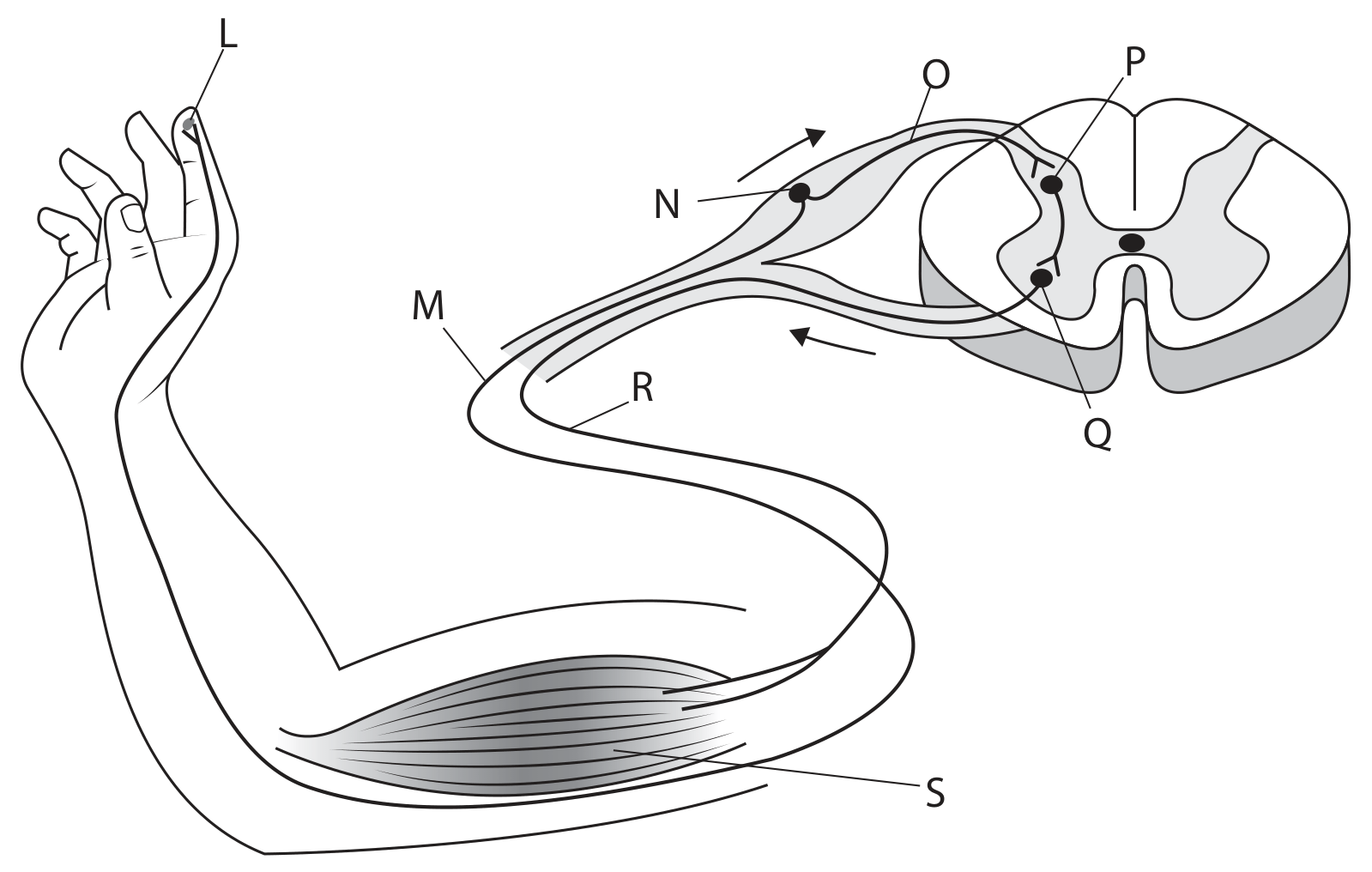
The diagram shows a human reflex arc with some structures labelled. It is the withdrawal reflex, which allows a person to remove their hand from a hot object quickly.

Question image

A nerve impulse travels at 50 metres per second.

Calculate the time taken for an impulse to travel 180 cm.
time = seconds

Question 10

Question 10(b)

(a)

A teacher uses this method to estimate the speed of a nerve impulse.
- students stand in a circle and hold hands
- student A in the circle starts a timer and at the same time squeezes the hand of student B on his left
- when student B feels his hand being squeezed, he immediately squeezes the hand of the student on his left
- this process continues around the circle of students until student A feels his hand being squeezed and he stops the timer

[ 4 ]

Question 10(b)(i)

(i)

Explain what other measurements the teacher would need to make in order to calculate the speed of a nerve impulse.

[ 2 ]

Question 10(b)(ii)

(ii)

Describe whether the teacher's method is likely to give an accurate estimate of the speed of a nerve impulse.

[ 2 ]
0 selected