Question 2(a)(ii)
[Maximum number: 2]
The diagram shows a human eye.
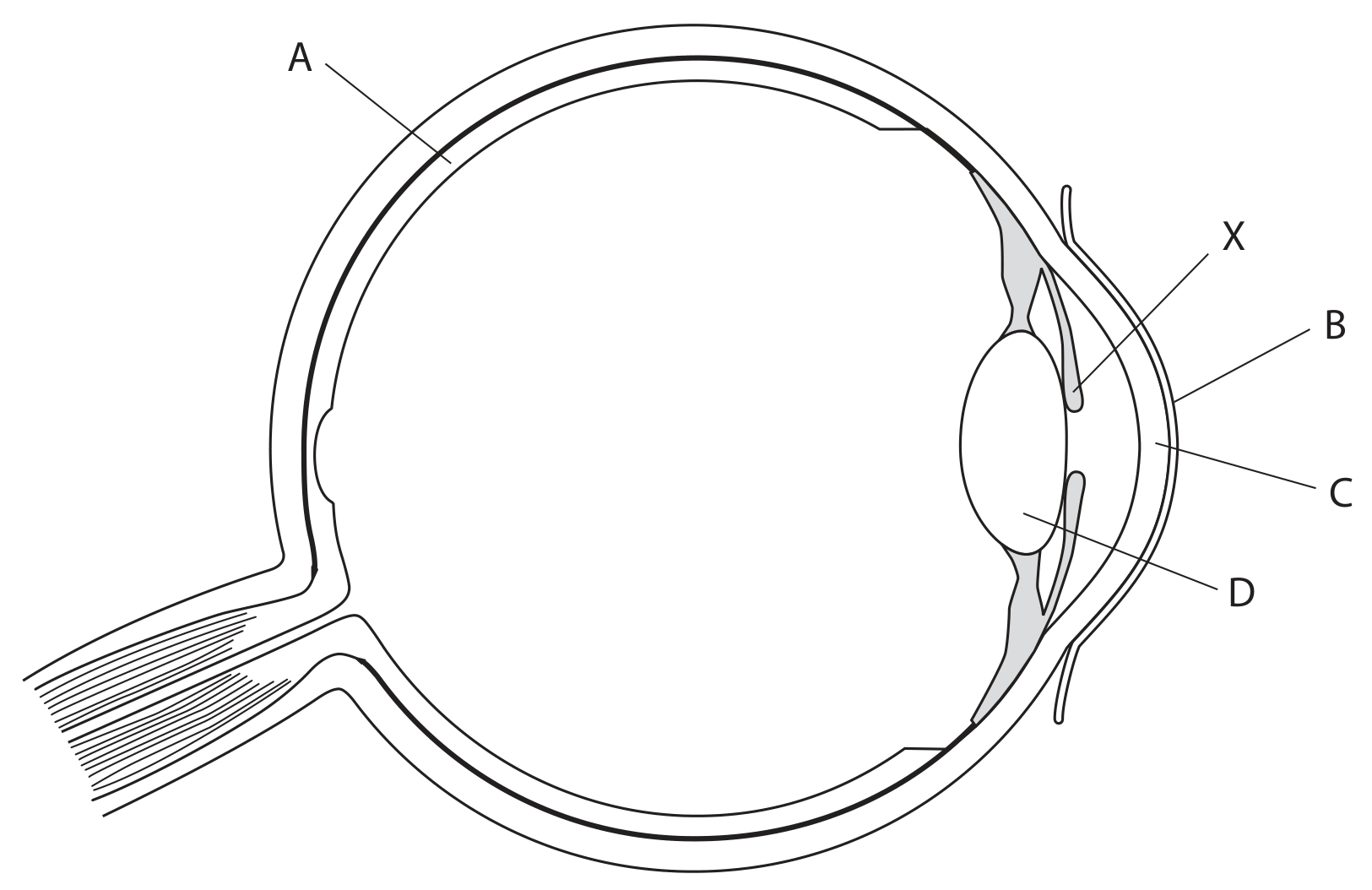
Explain the changes in structure X as a person moves from a room where the light is dim to a room where the light is bright.
 EduNinja
Understand the function of the eye in focusing on near and distant objects, and in responding to changes in light intensity.
The diagram shows a human eye.
Explain the changes in structure X as a person moves from a room where the light is dim to a room where the light is bright.
The diagram shows a section through an eye with some parts labelled.
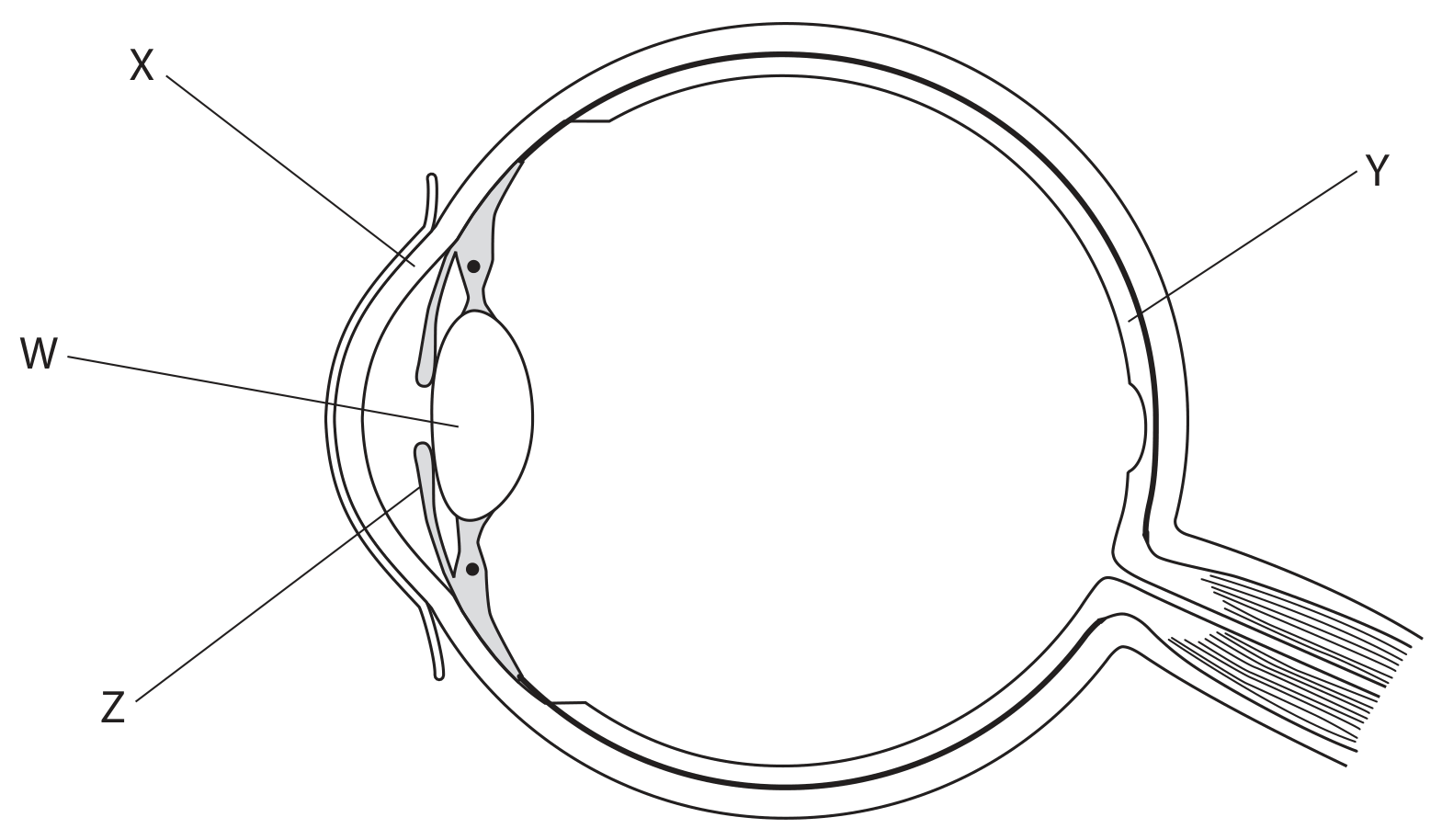
Describe how structure Z changes when a person moves into a dark room.
The diagram shows a section through a human eye with some structures labelled.
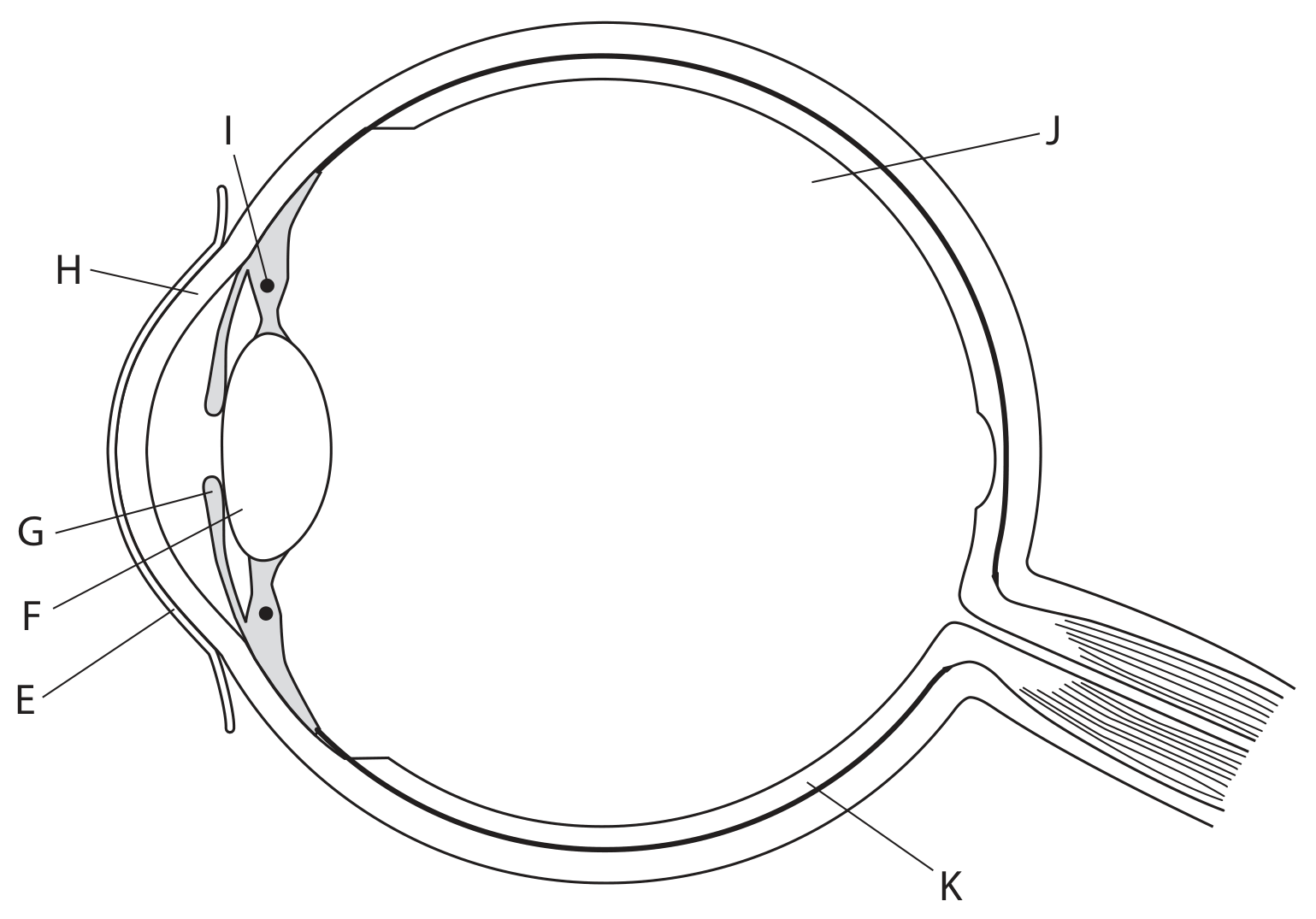
Which structure controls the amount of light reaching the retina?
E
F
G
H
The diagram shows a human eye with some structures labelled.
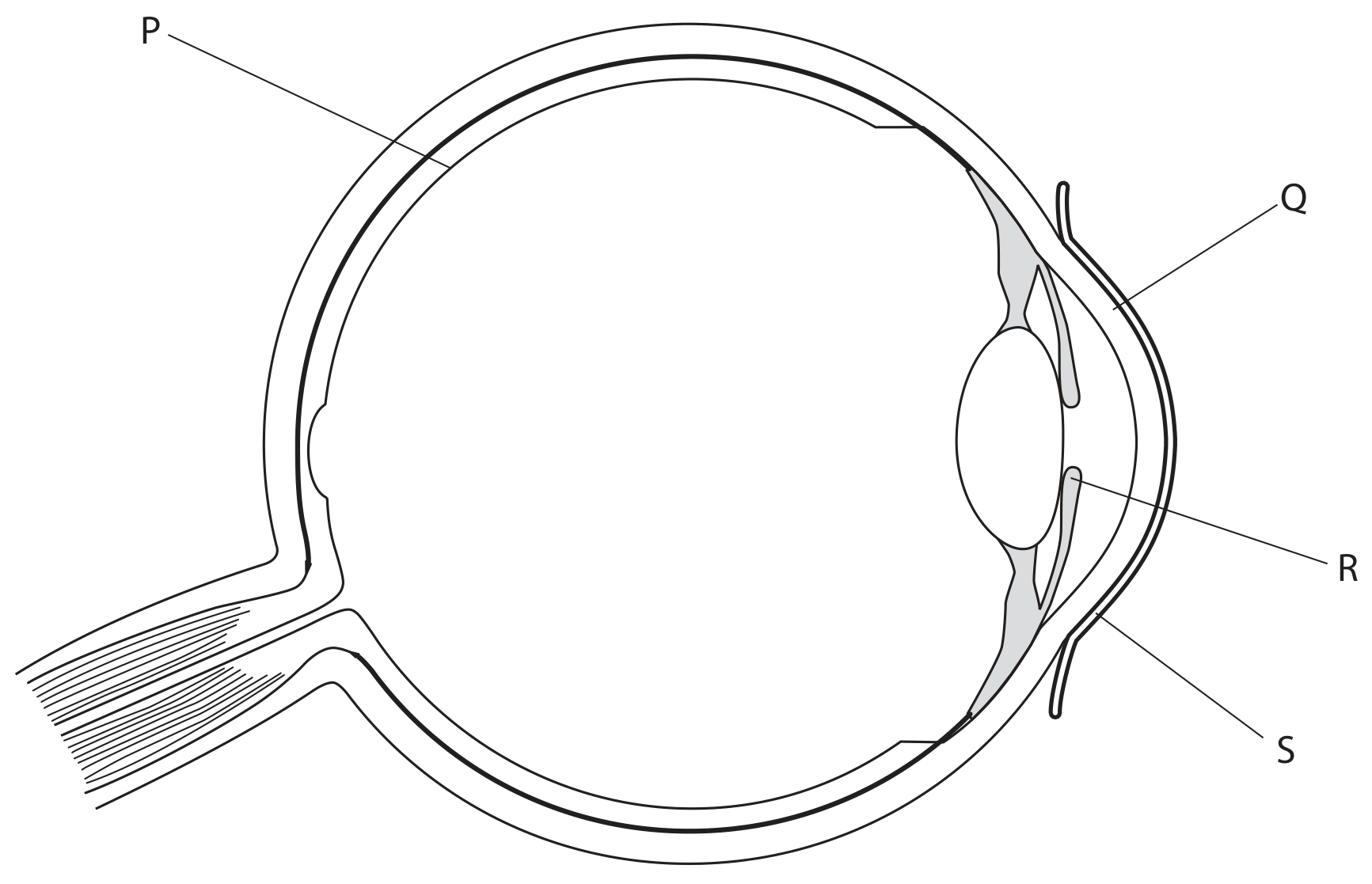
A teacher investigates the effect of light intensity on pupil diameter.
This is the teacher's method.
- cover a student's eyes with a mask
- set the light intensity in the room to a low level
- remove the mask and wait 20 seconds
- record an image of the student's pupil and iris with a camera
- measure the diameter of the pupil on the image using a ruler
- repeat two more times at the same light intensity
The teacher repeats the experiment at different light intensities.
The table shows the teacher's results.
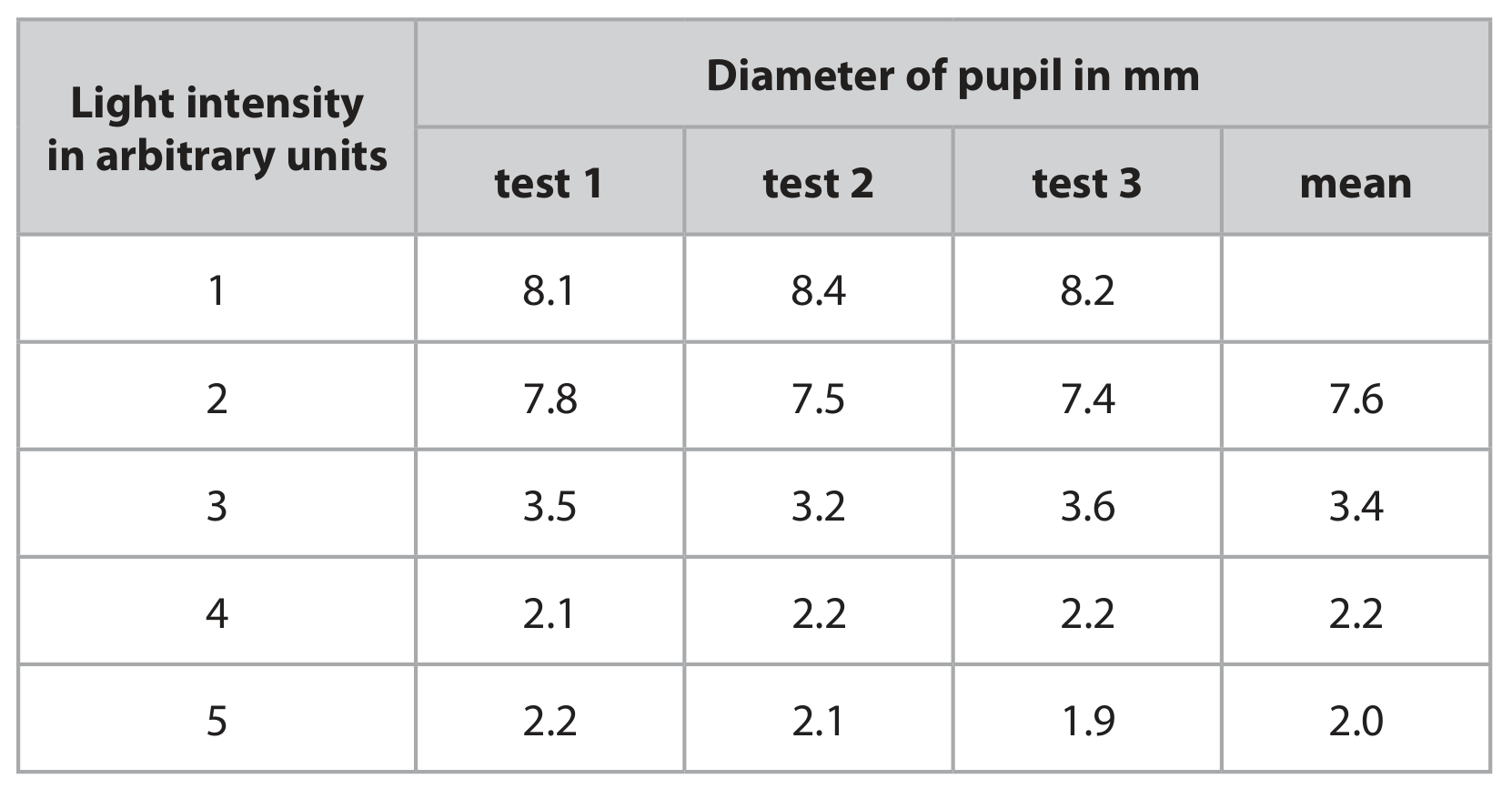
With reference to data in the table, describe the effect of increasing light intensity on the diameter of the pupil.
Explain the effect of increasing light intensity on the diameter of the pupil.
The diagram shows a section through the human eye with parts labelled F to L .
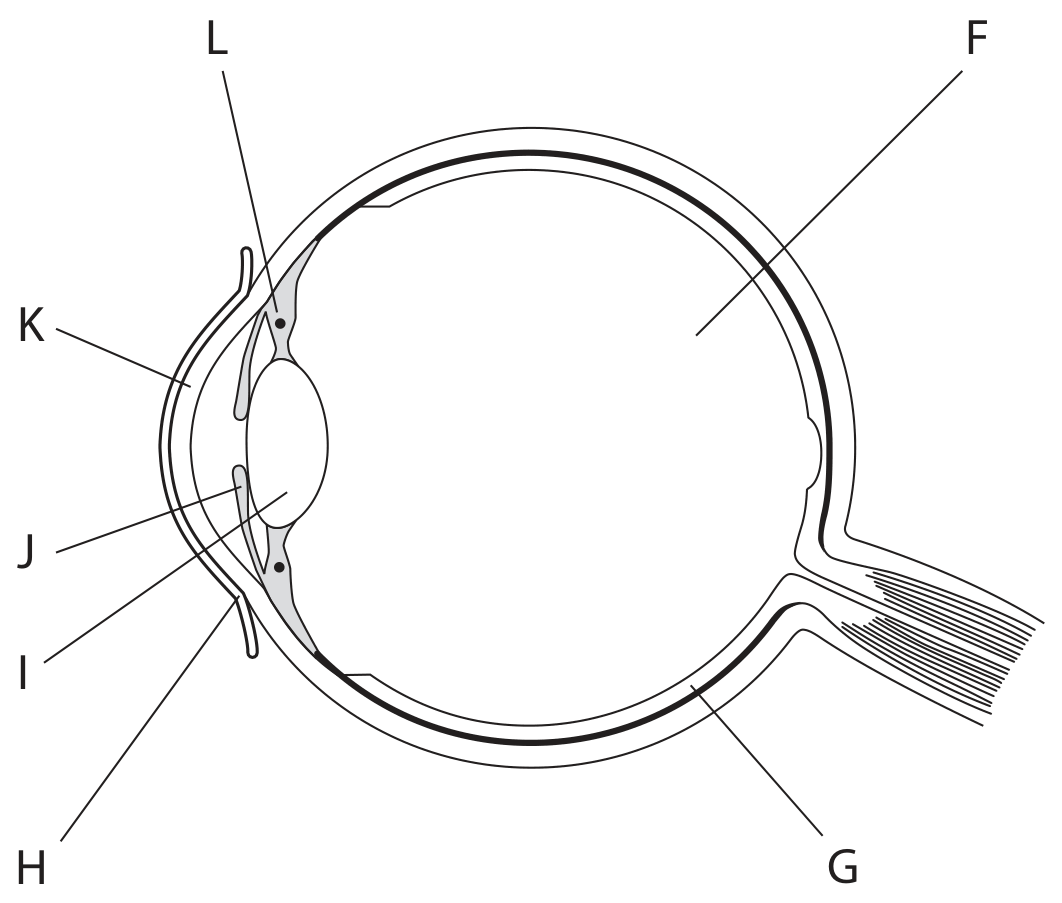
A person focuses on a near object.
Explain the changes that occur in the person's eye.
The diagram shows a section through the human eye.
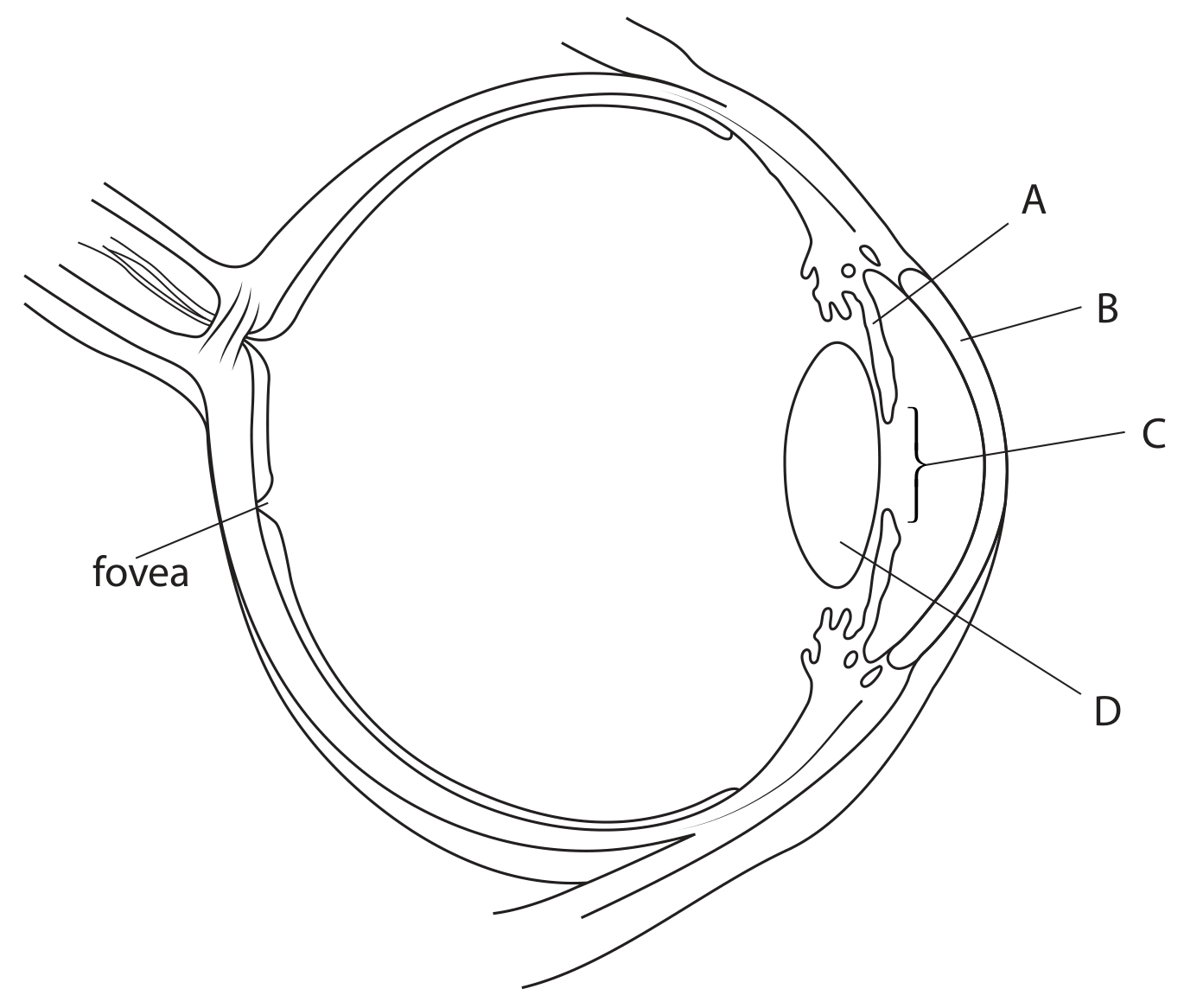
When a person looks directly at an object, light is focused on the fovea of the retina.
A person is reading a book and then looks at a distant object.
Explain the changes that occur in the structures of the eye that allow light from the distant object to be focused on the fovea.