Question 1(c)
[Maximum number: 1]
Organs in the human body have different functions.
Which row of the table correctly shows whether the kidneys and skin are involved in excretion?
kidneys
skin
no
no
no
yes
yes
no
yes
yes
 EduNinja
Edexcel IGCSE Biology (i) Excretion question practice helps you revise this syllabus point with the course map in view. Use this page to focus on one topic, check the style of questions available, and connect each attempt back to the knowledge area it is testing.
EduNinja keeps Biology practice aligned to Edexcel, so you can move from topic review into exam-style question bank work without losing the syllabus structure. Start with a small set, mark the weak steps, then return to nearby topic links when a definition, graph, calculation, or explanation needs repair.
Organs in the human body have different functions.
Which row of the table correctly shows whether the kidneys and skin are involved in excretion?
kidneys
skin
no
no
no
yes
yes
no
yes
yes
Read the passage below. Use the information in the passage and your own knowledge to answer the questions that follow.
Schistosomiasis
Schistosomiasis is an infection caused by a parasitic worm called a schistosome. The immature or larvae of the worm live in rivers and lakes in tropical parts of the world.
The diagram shows the life cycle of the schistosome worm.
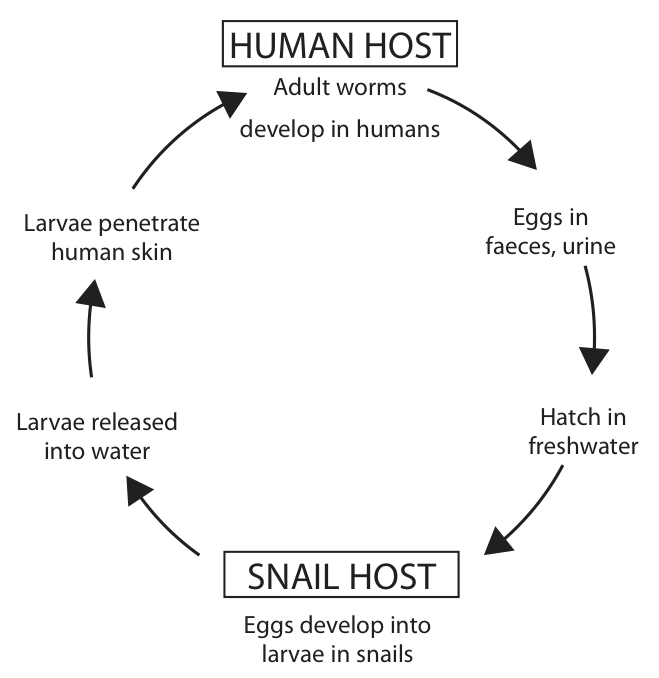
5 Some people in tropical parts of the world use water from these rivers and lakes for their daily lives. These people risk infection because the larvae burrow into their skin. The larvae are then transported to other parts of the body where they damage organs such as the kidneys, intestines, lungs and brain. The larvae develop into adult worms.
10 The adult worms lay eggs in the human body. Some of these eggs are destroyed by the immune system, but most eggs survive. These eggs can get into water if faeces or urine from infected people pass into rivers or lakes. In the water, the eggs develop into small larvae which grow inside freshwater snails. Larvae are released from the snails and infect any person they contact. These larvae develop into adult worms inside the human body.
Doctors diagnose schistosomiasis when they find eggs in the faeces or urine of infected people. Infected people also have blood cells in their urine and antibodies for the pathogen in their blood.
At present, the drug praziquantel is used to kill the worms. A dose of 0.040 g per kg of body mass is usually effective. With no treatment, affected organs can be permanently damaged, leading to death. It is estimated that 240 million people (in the world) have schistosomiasis. Every year per cent of infected people die from the disease.
A vaccine is being developed using a plasmid. The plasmid has DNA inserted that makes a protein found on the body surface of the adult schistosome worm.
In one investigation, a vaccine made using the DNA plasmid was given to a group of infected people. The results showed a mean number of 21.53 worms per person in this group. In the control group, a mean number of 40.53 worms per person was found.
Which process is affected if kidneys are damaged (line 8)?
digestion
mutation
ultrafiltration
vaccination
Read the passage below. Use the information in the passage and your own knowledge to answer the questions that follow.
Treating Kidney Disease
Chronic kidney disease affects approximately 12% of the world's population and many people are unable to obtain treatment. One method of treating chronic kidney disease is by dialysis. The diagram shows how kidney dialysis is done.
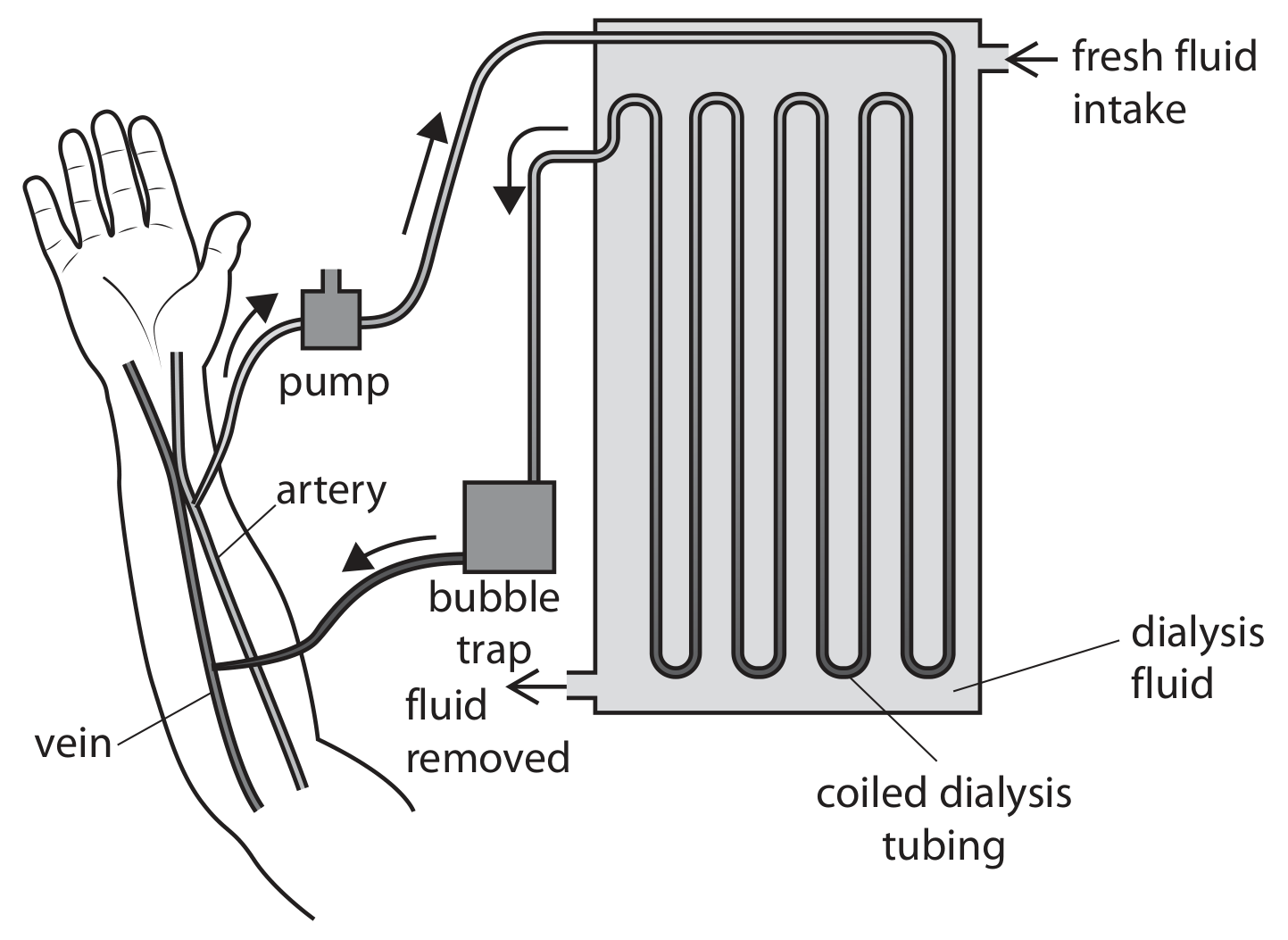
During dialysis, blood is taken from an artery in the arm and is pumped through a dialyser. In the dialyser, the blood passes through a long, coiled dialysis tube made of a thin partially permeable membrane. The tube is surrounded by dialysis fluid. The dialysis fluid contains glucose and ions at concentrations normally found in blood plasma, but does not contain urea. The urea passes from the blood into the dialysis fluid. The temperature in the dialyser is kept at . After passing through the dialyser, the blood is returned to a vein in the arm. Kidney dialysis can take up to three hours and must be done three times a week.
Scientists have now designed a new bioartificial kidney. This artificial kidney is a combination of engineering and living cells. This artificial kidney has a haemofilter made from artificial membranes that filter the blood. The substances filtered out of the blood then pass through a device called a bioreactor. This bioreactor absorbs useful substances back into the blood. The bioreactor is made of living nephron cells that are grown from stem cells. These cells are separated from the patient's blood by a silicon membrane to prevent the immune system rejecting them. Bioartificial kidneys are the same size as a human kidney and will be fitted inside the body to replace a kidney. The bioartificial kidney can react to changes in the body in the same way as a normal kidney.
Urea is an excretory product that is released by the kidneys.
Give the name of an excretory product that is released by the lungs.
Explain two ways that the dialyser is designed to increase the rate of removal of urea from the blood (Lines 5 to 11).
1
2
The haemofilter in the bioartificial kidney filters the blood (Lines 13 and 14).
Where does ultrafiltration occur in a nephron?
Bowman's capsule
collecting duct
distal convoluted tubule
loop of Henle
The cells in the bioreactor absorb glucose from the filtrate in a way that is similar to the cells in a nephron (Lines 14 to 17).
Describe how the nephron absorbs glucose back into the blood from the filtrate.
The bioartificial kidney is connected to blood vessels and to the tube that transports urine to the bladder in the same way as the human kidney.
Which row of the table is correct?
Blood vessel bringing blood
into bioartificial kidney
Tube transporting
urine to bladder
renal artery
ureter
renal artery
urethra
renal vein
ureter
renal vein
urethra
Explain how the pituitary gland and the nephron cells in the bioreactor will respond in a patient who is dehydrated (Lines 20 and 21).
The urinary system is used in excretion.
The diagram shows the urinary system with parts labelled A, B, C and D.
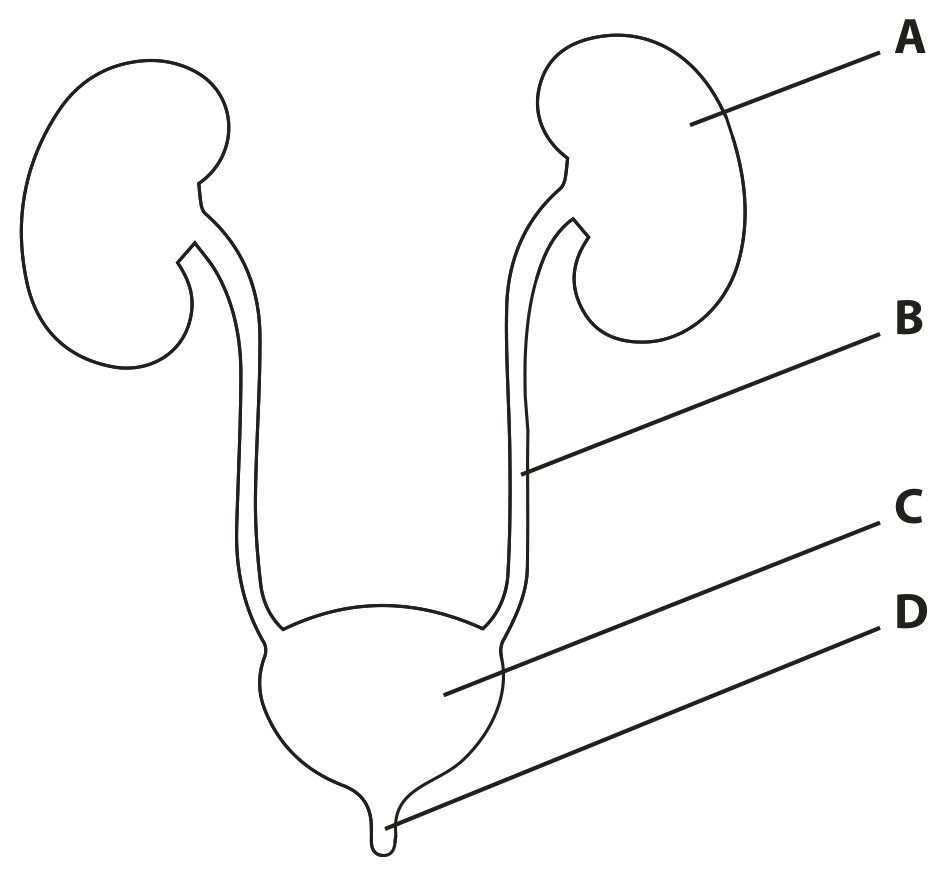
Which part of the urinary system contains nephrons?
The urinary system produces urine.
Name a substance found in urine.
A scientist uses this method to investigate the effect of drinking different liquids on urine production.
- drink of water in the morning
- measure the volume of urine produced during the next two hours
- drink of 0.8% salt (NaCl) solution at the same time the following morning
- measure the volume of urine produced during the next two hours
The table shows the scientist's results.
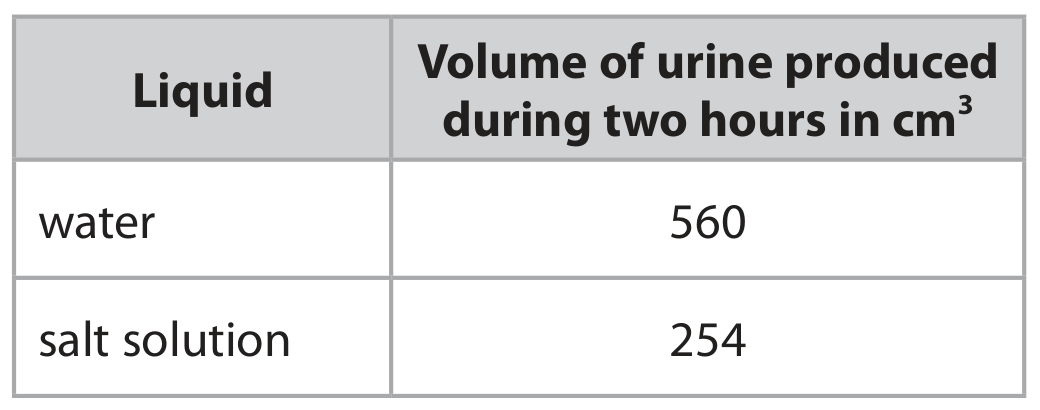
Explain the scientist's results.
Give two other factors that affect the volume of urine produced.
1
2
The diagram shows a section through a human kidney with some structures labelled.
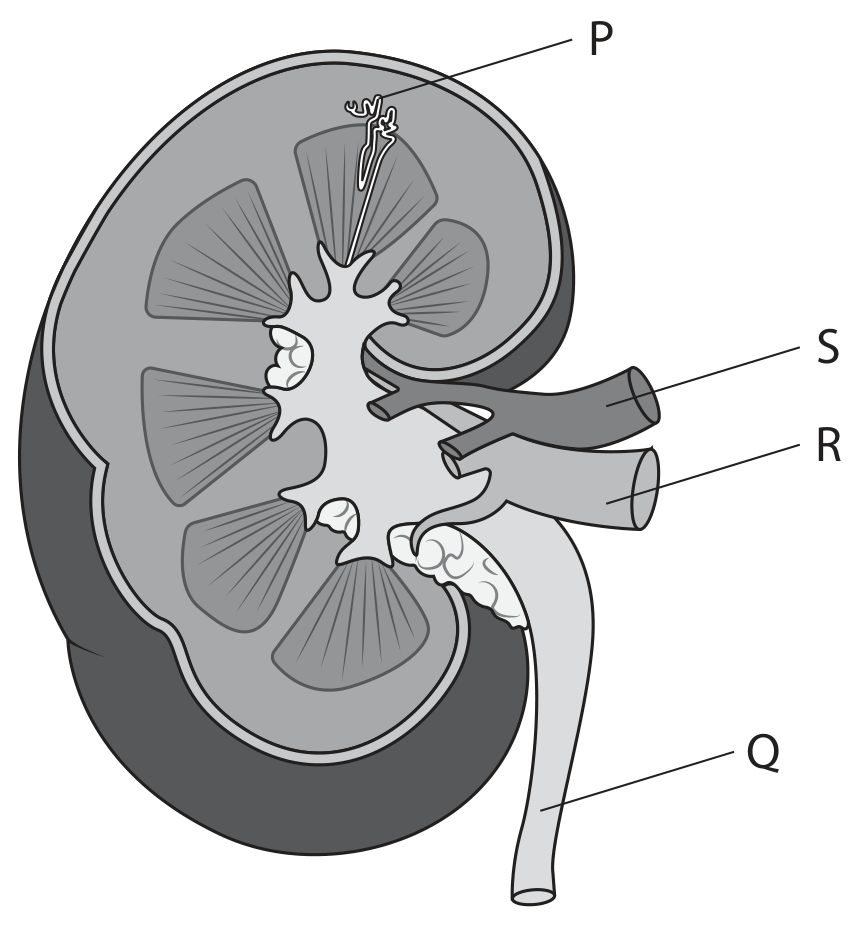
Which structure is labelled P in the diagram?
bladder
nephron
ureter
urethra
Which fluid is carried in tube S ?
bile
blood
filtrate
urine
Which tube is labelled Q in the diagram?
renal artery
renal vein
ureter
urethra
Analysis of the composition of urine can be used in the diagnosis of problems with kidney function.
Urine samples are taken from three patients and the results are shown in the table.
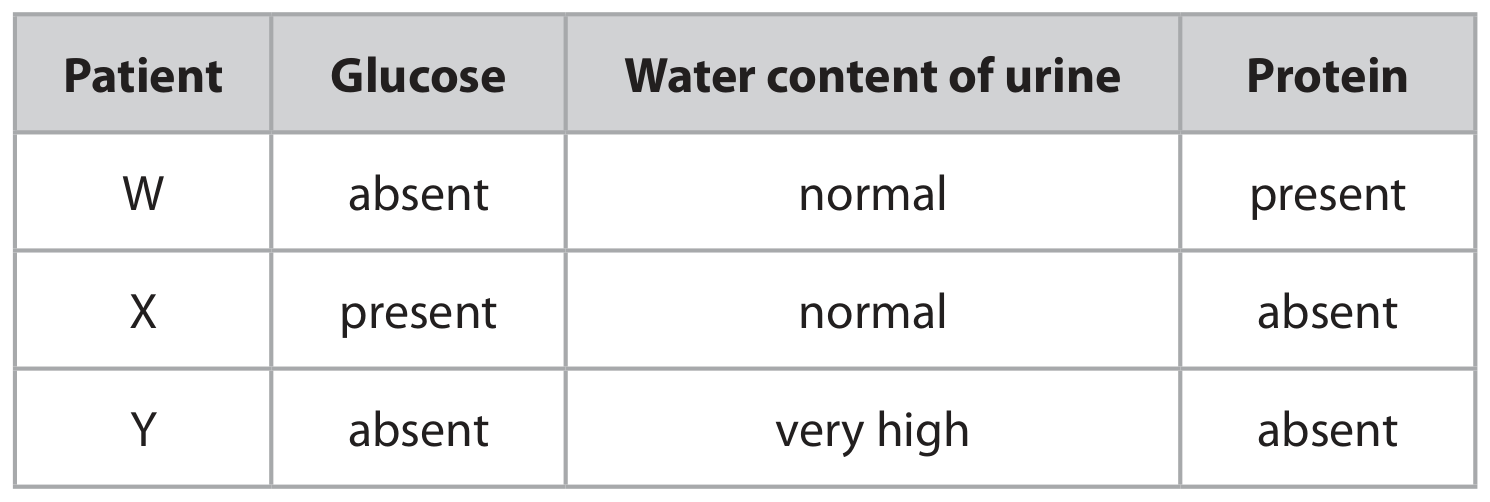
Discuss which processes in the kidney may be affected to produce the results shown.
Include in your answer where in the nephron the processes occur.
The diagram shows a nephron from a human kidney.
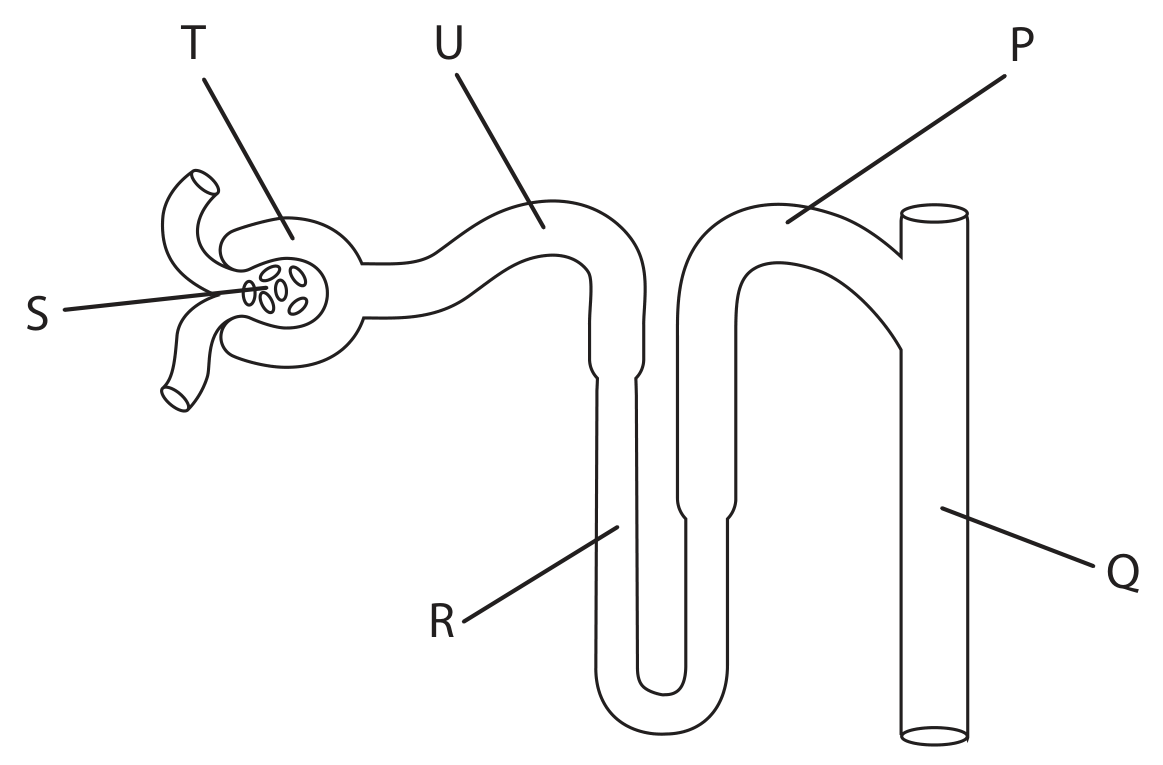
From which structure does ultrafiltration take place?
P
Q
R
S
From which structure is glucose reabsorbed?
Q
R
S
U
Which structure is the loop of Henle?
P
R
S
U
The table gives the mean values of mass filtered per day and excreted per day for different plasma components that are filtered and reabsorbed in the nephron.
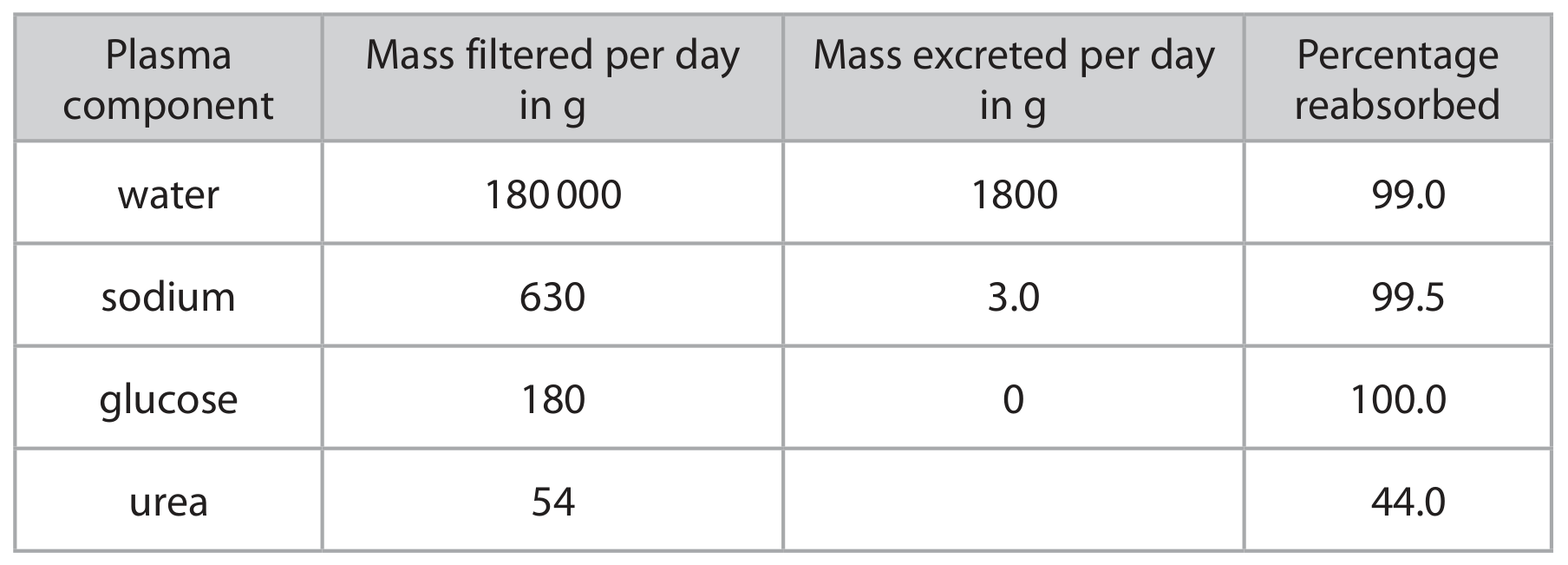
Calculate the mean mass of urea excreted per day.
mean mass of urea =

The concentration of urine is determined by the volume of water present and the mass of dissolved substances.
A person eats a meal with a high protein and salt content and drinks a small volume of water.
Comment on how this may change the values in the table and the effect it will have on urine production.
Mammals, such as humans, need to regulate their internal environment.
The photograph shows a mammal called a degu.
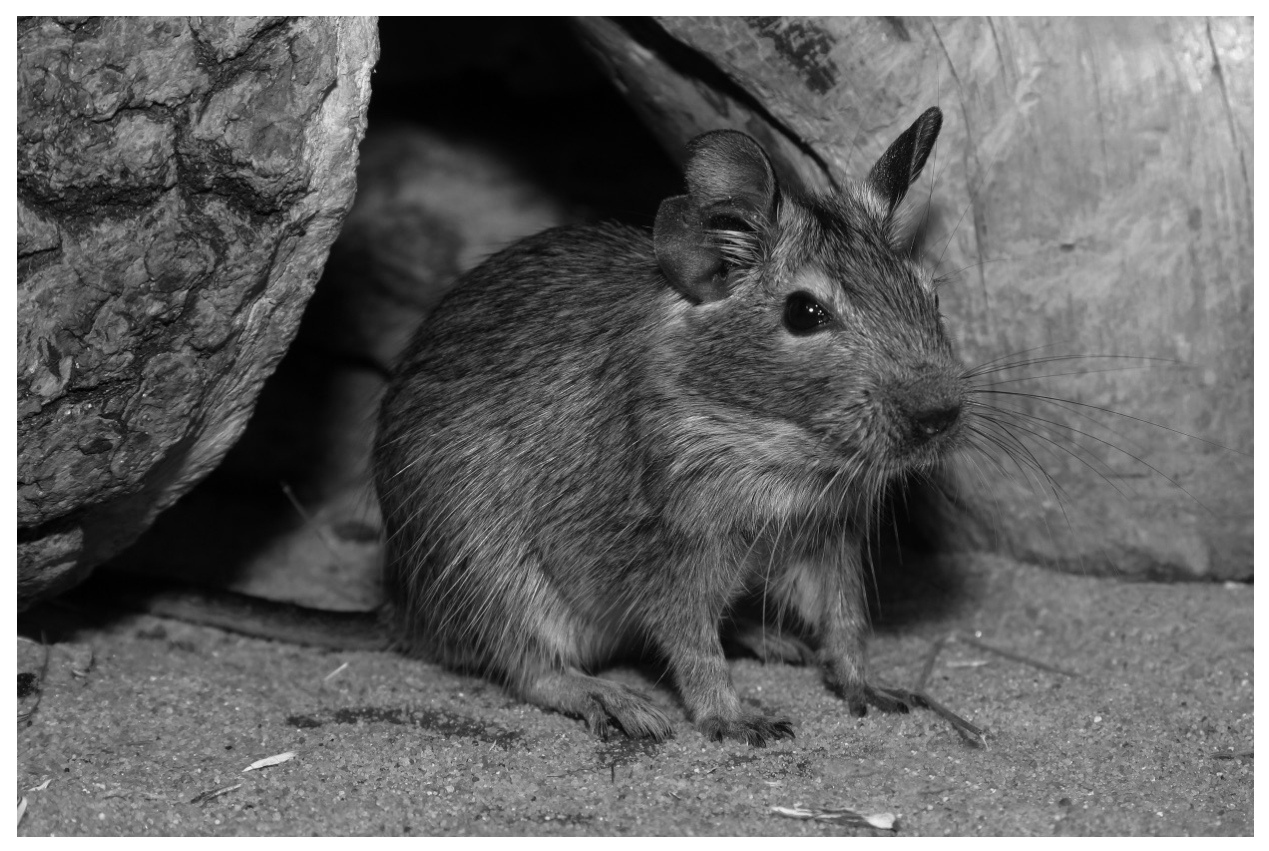
A degu is a rodent that lives in a very dry environment in South America. The degu gets its water input by feeding on plants.
The water intake of the degu changes during the winter and summer months.
Table 2 shows the body mass, water intake and urine concentration of the degu in the winter and in the summer. It also shows the total rainfall in winter and in summer.
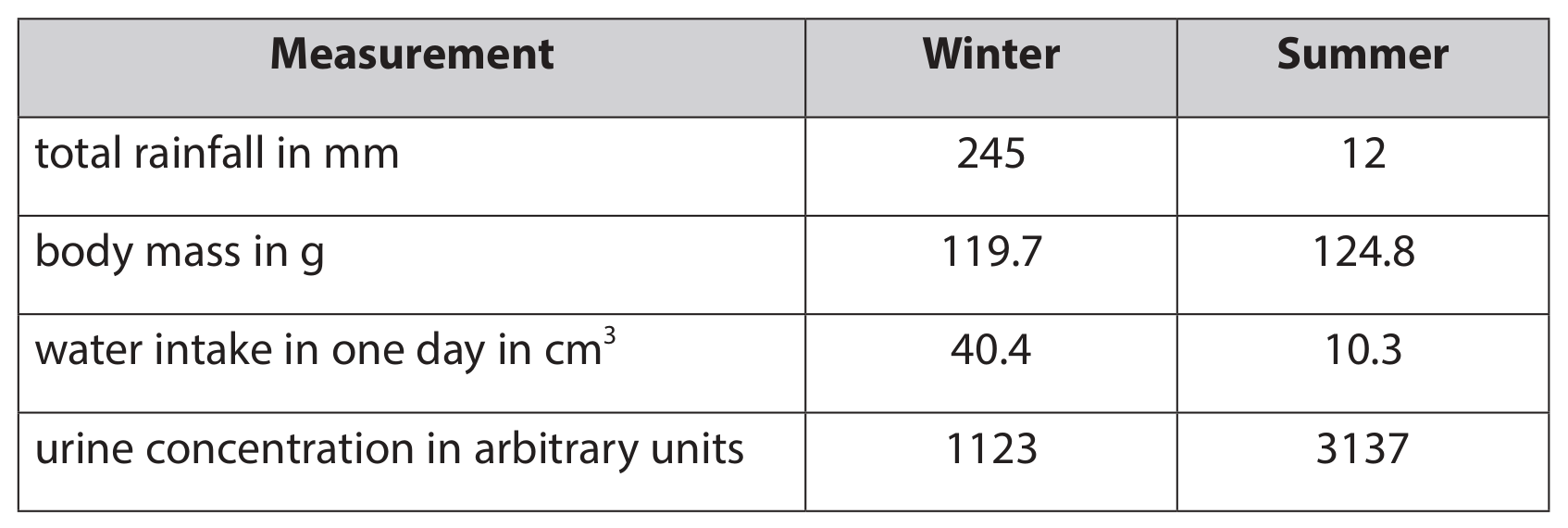
Table 2
Comment on the differences in body mass, water intake and urine concentration in winter and summer.
Use the data in the table and your own knowledge in your answer.
The lungs and the kidneys are excretory organs.
Which substances are excreted by the lungs?
carbon dioxide and urea
carbon dioxide and water
carbon dioxide, urea, and water
urea and water
People with a condition called diabetes often have very high blood sugar.
Urine from people with diabetes attracts ants but urine from people without diabetes does not attract ants.
Ants are insects that are attracted to glucose.
Explain why people with diabetes produce urine that can attract ants.
The diagram shows part of a kidney nephron.
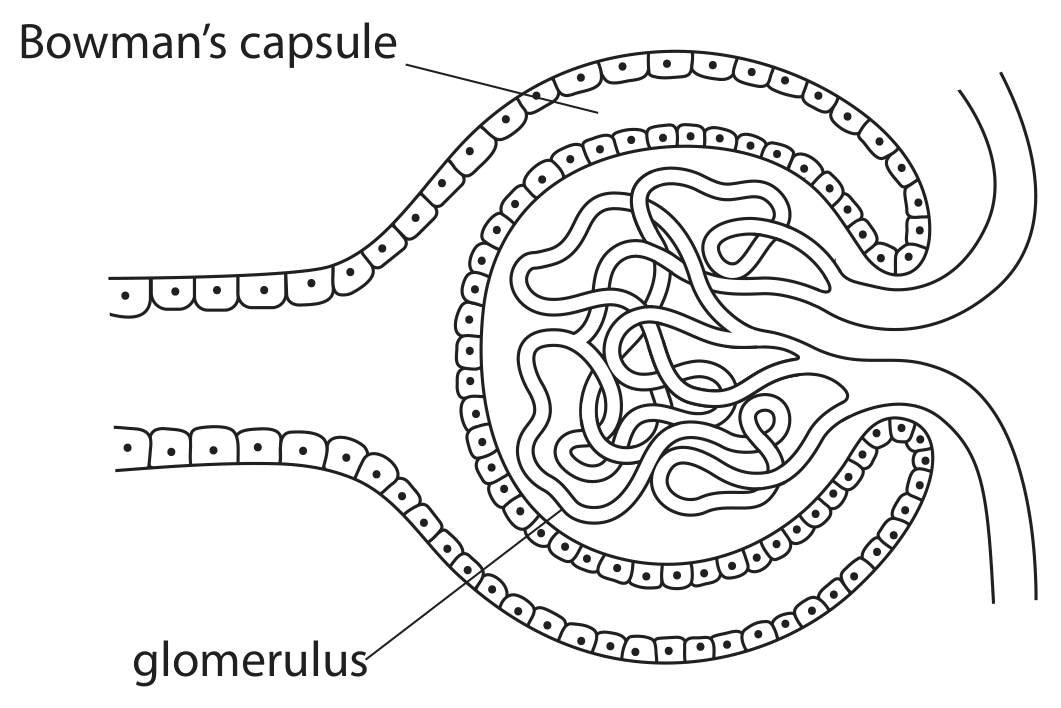
Using the graph, determine the age of a person with 1600000 glomeruli in their kidneys.
age = years
The table lists three molecules. It also gives their concentrations in the glomerulus, the Bowman's capsule and the bladder.
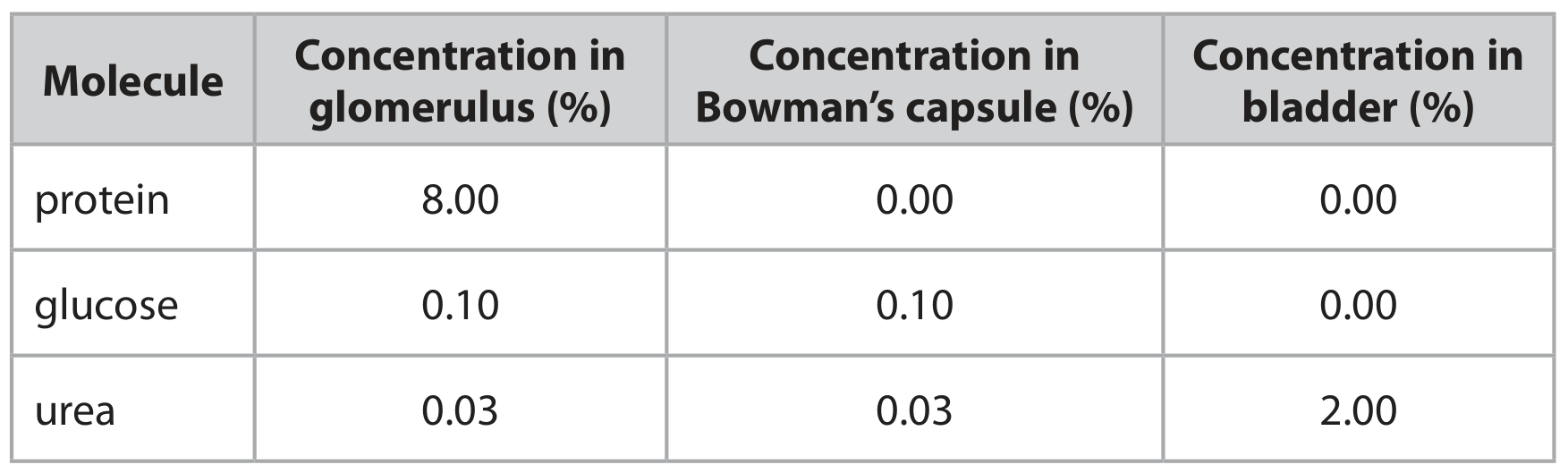
Explain the difference between the concentration of each substance in the glomerulus and in the bladder.
Diagram 1 shows the human urinary system with some structures labelled.
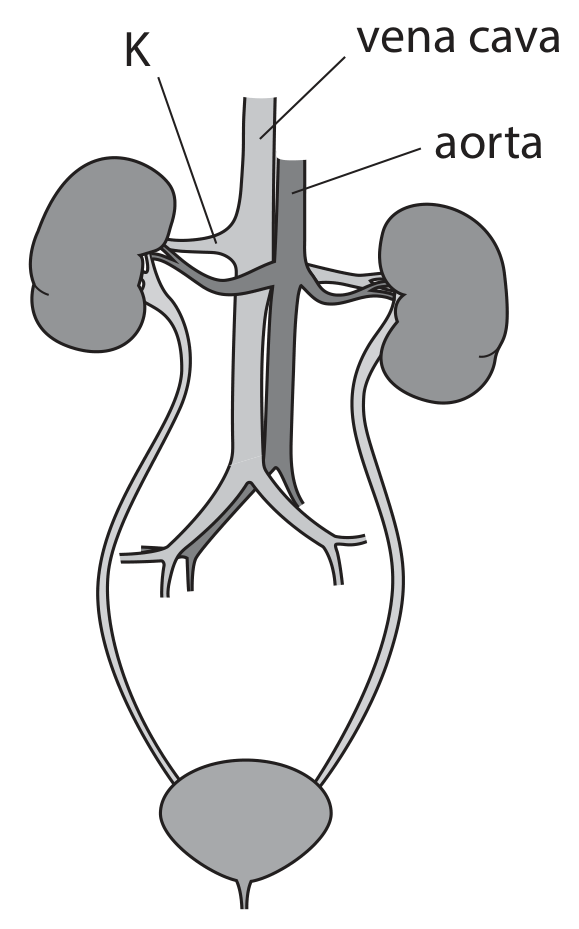
Diagram 1
What is the name and the function of the structure labelled K ?
renal artery transporting blood to the kidney
renal artery transporting blood away from the kidney
renal vein transporting blood to the kidney
renal vein transporting blood away from the kidney
Diagram 2 shows a nephron with some parts labelled.
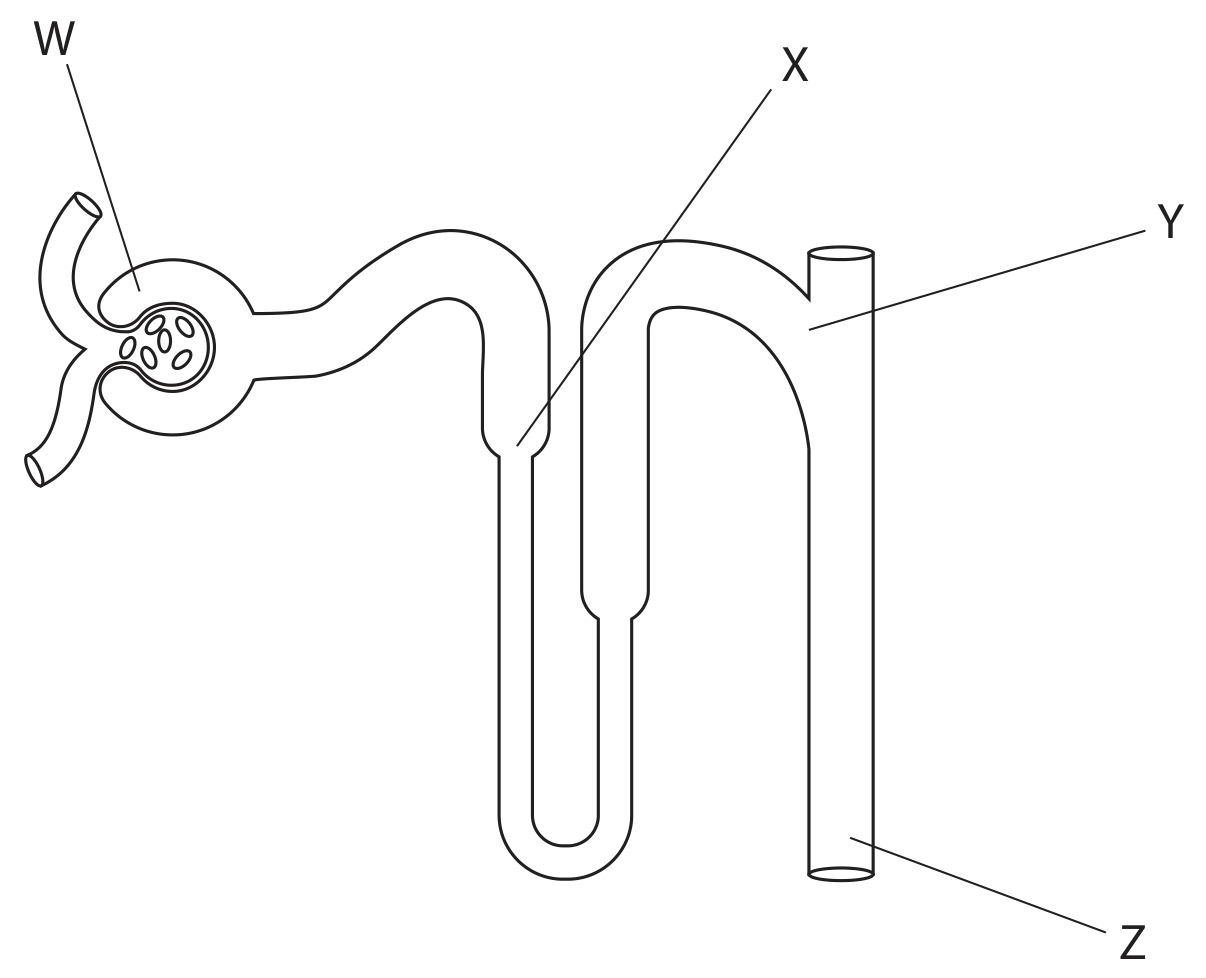
Diagram 2
The table gives the concentrations of glucose and urea in the filtrate at parts W, X, Y and Z .
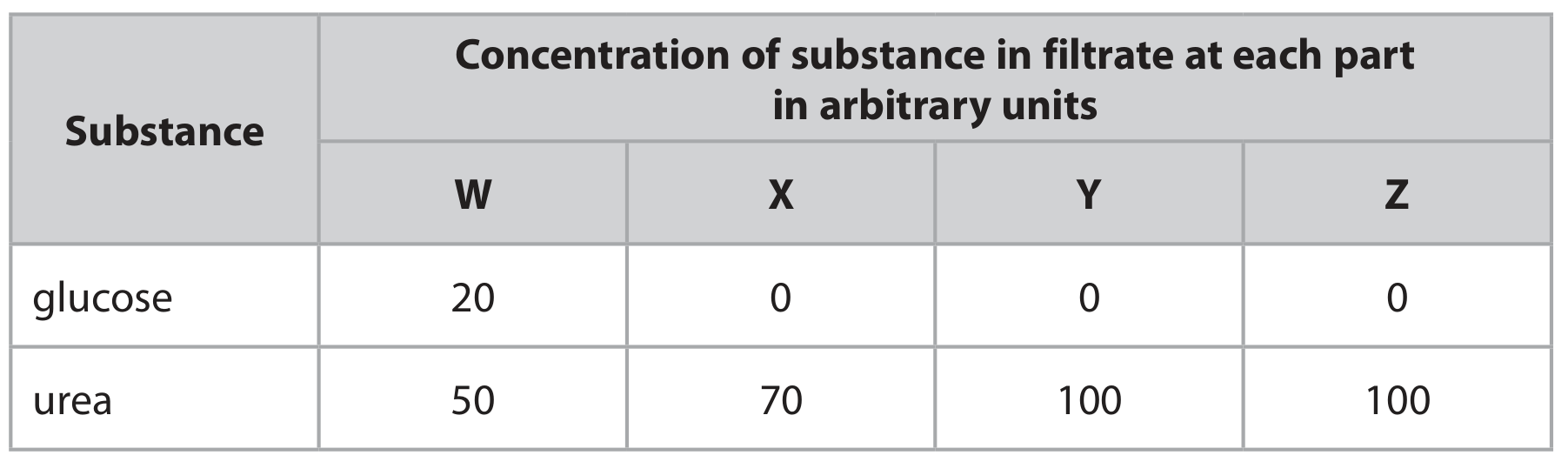
Explain the difference in concentration of glucose between W and X .
Explain the difference in the concentration of urea between X and Y .
The concentrations in the table are for a person who has drunk water and is not dehydrated.
Explain why the concentration of urea at Z would be different for a person who is severely dehydrated.