EduNinja

IGCSE Biology(c) Genetic modification (genetic engineering)Topic Practice

(c) Genetic modification (genetic engineering)

Edexcel IGCSE Biology (c) Genetic modification (genetic engineering) question practice helps you revise this syllabus point with the course map in view. Use this page to focus on one topic, check the style of questions available, and connect each attempt back to the knowledge area it is testing.

EduNinja keeps Biology practice aligned to Edexcel, so you can move from topic review into exam-style question bank work without losing the syllabus structure. Start with a small set, mark the weak steps, then return to nearby topic links when a definition, graph, calculation, or explanation needs repair.

Question 1(c)

[Maximum number: 1]

Read the passage below. Use the information in the passage and your own knowledge to answer the questions that follow.

Supercharging plants to reduce global warming

The proportion of carbon dioxide in the atmosphere has increased in the last 100 years. In 2020, a mass of 727 gigatonnes of carbon dioxide was released into the atmosphere from natural processes, along with a mass of 37 gigatonnes from human activities. Scientists have estimated that plants naturally remove a mass of 746 gigatonnes of carbon dioxide from the atmosphere every year. The difference between what is removed and what is released causes atmospheric carbon dioxide to rise every year. Carbon dioxide is a greenhouse gas, and a significant rise will cause global warming.

To help solve the problem of rising concentrations of atmospheric carbon dioxide, scientists are planning to produce transgenic, supercharged plants that can remove atmospheric carbon dioxide and store it in their roots. The scientists estimate that if these plants can be developed, the plants could remove a mass of carbon dioxide equivalent to 50% of the emissions from human activities.

Coastal plants that have their roots in seawater contain a substance called suberin in the cell walls of the outer layer of the roots. Suberin is a waterproof substance that contains a high proportion of carbon atoms. Suberin is decomposed very slowly so remains in the soil for a long time.

The photograph shows a coastal plant called a mangrove.
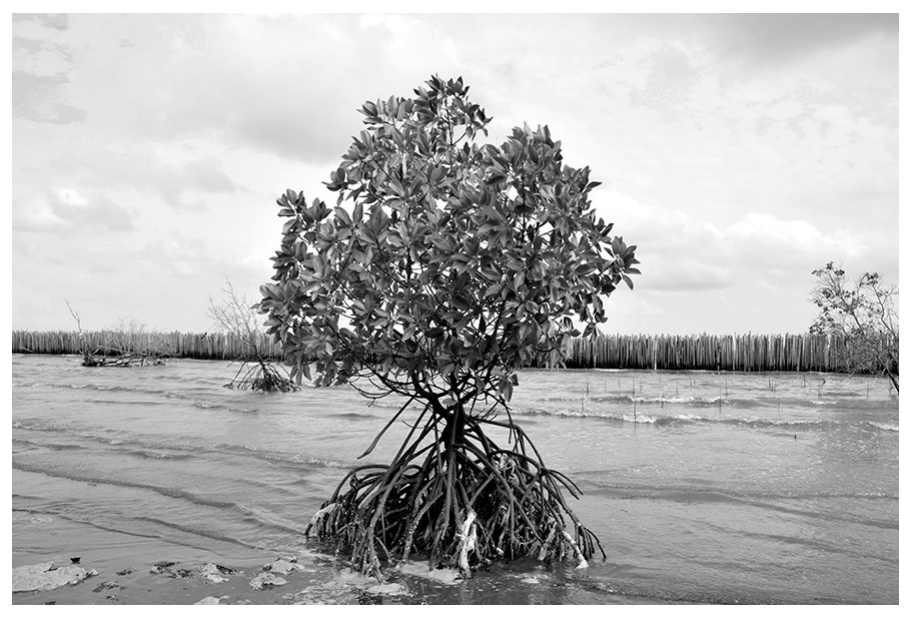
(Source: © Snow At Night/Shutterstock)

(Source: © Snow At Night/Shutterstock)

To produce the supercharged plants, scientists intend to take the gene that codes for high suberin production from a coastal plant and insert it into crop plants. The crop plants used are perennial plants. Perennial plants live for many years rather than dying each winter. The transgenic crops would take in large amounts of carbon dioxide and use the carbon atoms to make suberin. The carbon would then be locked up and stored as suberin in the roots. After successfully producing one plant, they will use micropropagation rather than pollination to produce others.

These supercharged crop plants may have other uses. Suberin in roots helps to make them tolerant to soil with a high salt concentration, helping to produce higher crop yields in areas that have difficult growing conditions.

Which enzyme is used to remove a gene from a section of DNA?

A

amylase

B

ligase

C

lipase

D

restriction

Question 1(h)

[Maximum number: 2]

Read the passage below. Use the information in the passage and your own knowledge to answer the questions that follow.

Physic Gardens

The photograph shows a physic garden. Physic gardens are places where people grow many types of plants that produce medicinal drugs.

Question image

People have grown medicinal plants in physic gardens for thousands of years. It was estimated in 2016 that out of 30000 plant species that are known to be useful to humans, 17000 of these plant species have medicinal uses.

Medicinal plants produce a wide range of types of drugs including alkaloids, glycosides, terpenes and polyphenols.

Alkaloids are bitter-tasting, alkaline chemicals found in many different plant species. Alkaloids are often toxic in high doses so care needs to be taken when using them. Examples of alkaloids are caffeine and quinine. Caffeine, found in tea and coffee, can stimulate the adrenal glands. Quinine from the bark of the cinchona tree has been used for many centuries to kill the parasite that causes malaria.

An example of a glycoside drug is senna. This drug is extracted from the Senna plant and is used to treat constipation. The drug affects muscles in the intestine.

Terpenes are chemicals that often have strong smells. Terpenes are thought to have evolved to prevent herbivore animals from eating certain plants. An example of a plant that produces terpenes is thyme. The terpenes in thyme have an antiseptic effect which means they can be used to sterilise wounds.

Phytoestrogens are molecules found in plants such as angelica and have been used for many years to treat problems with human fertility. Examples of polyphenols are phytoestrogens, taxol and curcumin. Polyphenols have many roles within plants and many are used as medicines. Taxol is a drug extracted from yew trees and is used to prevent cell division in human body cell tumours.

25 Curcumin is a drug produced by the turmeric plant. Curcumin can help widen the airways to the lungs so can help people with asthma breathe.

Scientists are looking to reproduce many of these drugs artificially. They are developing genetically modified bacteria containing genes that will allow these drugs to be mass produced in fermenters.

Scientists are trying to insert the genes for medicinal drugs into bacteria.

Describe how named enzymes are used to place genes into plasmids to transfer the genes from plants into bacteria (lines 27 to 29 ).

Question 2

[Maximum number: 9]

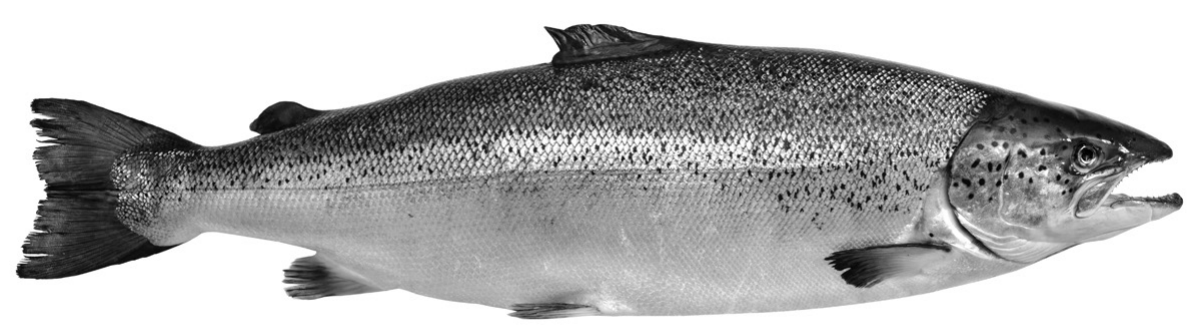
The photograph shows a type of fish called a salmon.

Question image

Some humans eat salmon as a source of protein.
Protein is a component of a balanced diet.

Question 2(c)

(a)

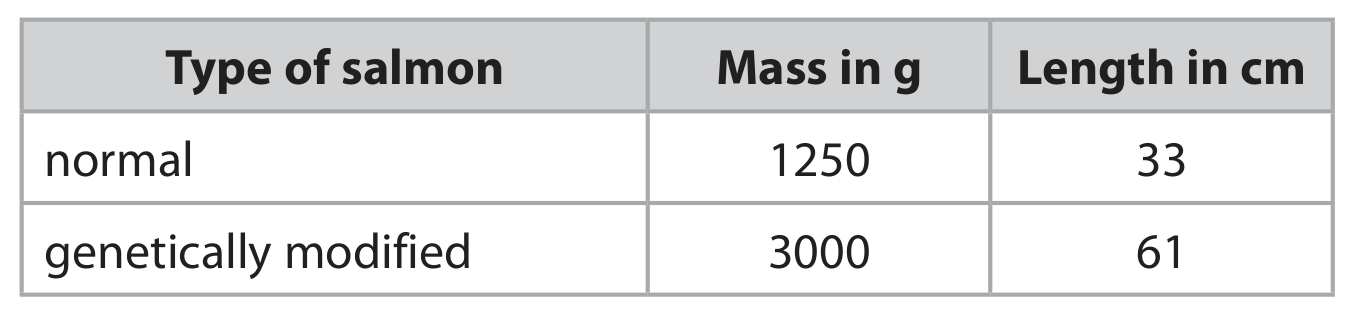
A student investigates the effect of genetic modification on the growth of salmon.

The student measures the mass and length of one normal salmon and one genetically modified salmon when both salmon are 18 months old.

The table shows the student's results.

Table
[ 6 ]

Question 2(c)(ii)

(i)

The student concludes that his results show that genetically modified (GM) salmon are useful in providing a balanced diet.

Discuss the student's conclusion.

[ 6 ]

Question 2(d)

(b)

The passage describes the role of enzymes involved in the genetic modification of salmon.

Complete the passage by writing a suitable word in each space.

All salmon contain a length of DNA called a ................................, which controls the production of growth hormone. Another length of DNA, from a different species of fish, is cut out using a ................................ enzyme. This DNA is then joined to the salmon DNA using an enzyme called ................................. .

This causes the salmon to produce growth hormone at all times.

[ 3 ]

Question 2(b)

[Maximum number: 2]

Yeast cells can be genetically modified to produce the proteins found on the outside of viruses.

A species of yeast is genetically modified to produce a protein found on the outside of a hepatitis B virus.

This protein is used to make vaccines to prevent people being infected with hepatitis B.

The gene for this protein is inserted into a plasmid.
This plasmid is then used to modify the yeast cells.
Give the roles of two named enzymes used to produce plasmids containing the gene for the hepatitis B protein.

Question 2(d)

[Maximum number: 3]

Insulin is a hormone produced in the human body.

The insulin now used for injections is obtained from bacteria that have been genetically modified.

Describe how these bacteria are genetically modified to produce human insulin.

Question 2(b)(i)

[Maximum number: 2]

Blood clotting is an important process in humans.
The process is controlled by enzymes.

Some people cannot make the proteins needed for blood clotting.

Cloning is used to produce large numbers of transgenic mammals.
These transgenic mammals can make the human blood-clotting proteins. The human blood-clotting proteins can then be removed from the mammals' milk and injected into people who cannot make the proteins.

Explain why these mammals are described as transgenic.

Question 4

[Maximum number: 2]

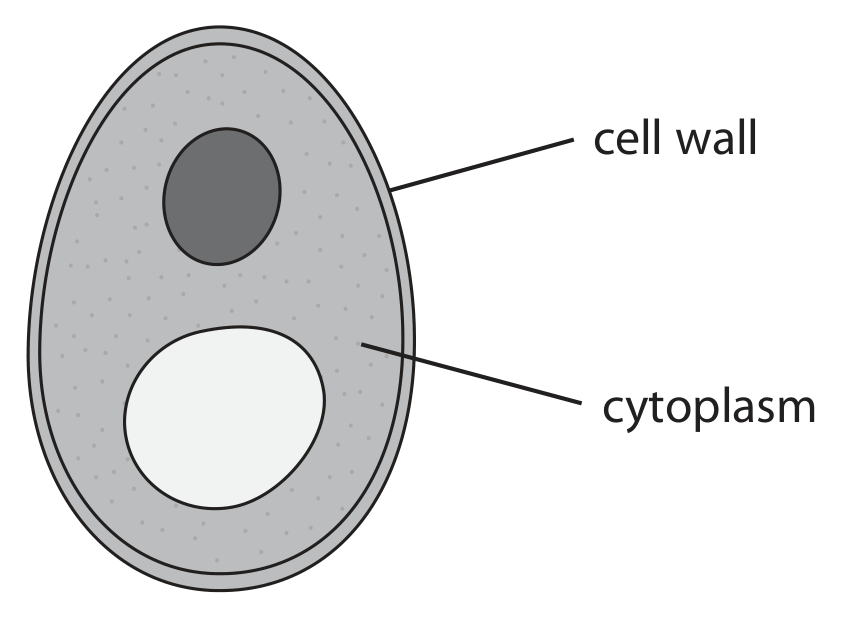
The diagram shows a yeast cell.

Question image

Question 4(b)

(a)

Biofuel is made from ethanol.

Scientists use genetically modified (GM) yeast to produce biofuel.
The GM yeast contains an enzyme that digests plant cell walls to produce glucose.
The yeast uses the glucose in respiration to produce ethanol.

[ 2 ]

Question 4(b)(ii)

(i)

Name an enzyme used by scientists to genetically modify the yeast.

[ 1 ]

Question 4(b)(iii)

(ii)

The GM yeast is a recombinant strain.

State what is meant by the term recombinant.

[ 1 ]

Question 5

[Maximum number: 9]

Plants can be genetically modified (GM) to produce insect poison.
They are modified using a bacterium called Agrobacterium.
This bacterium has a plasmid that contains recombinant DNA.

Question 5(a)

(a)

Describe how the plasmid is modified to contain recombinant DNA.

[ 3 ]

Question 5(b)

(b)

A farmer can use either of these methods to improve his crop yield.
- grow GM plants that produce the insect poison
- grow non-GM plants and use pesticides

The farmer decides to grow the GM plants rather than using pesticides.
Discuss the decision made by the farmer.

[ 6 ]

Question 5(b)(ii)

[Maximum number: 2]

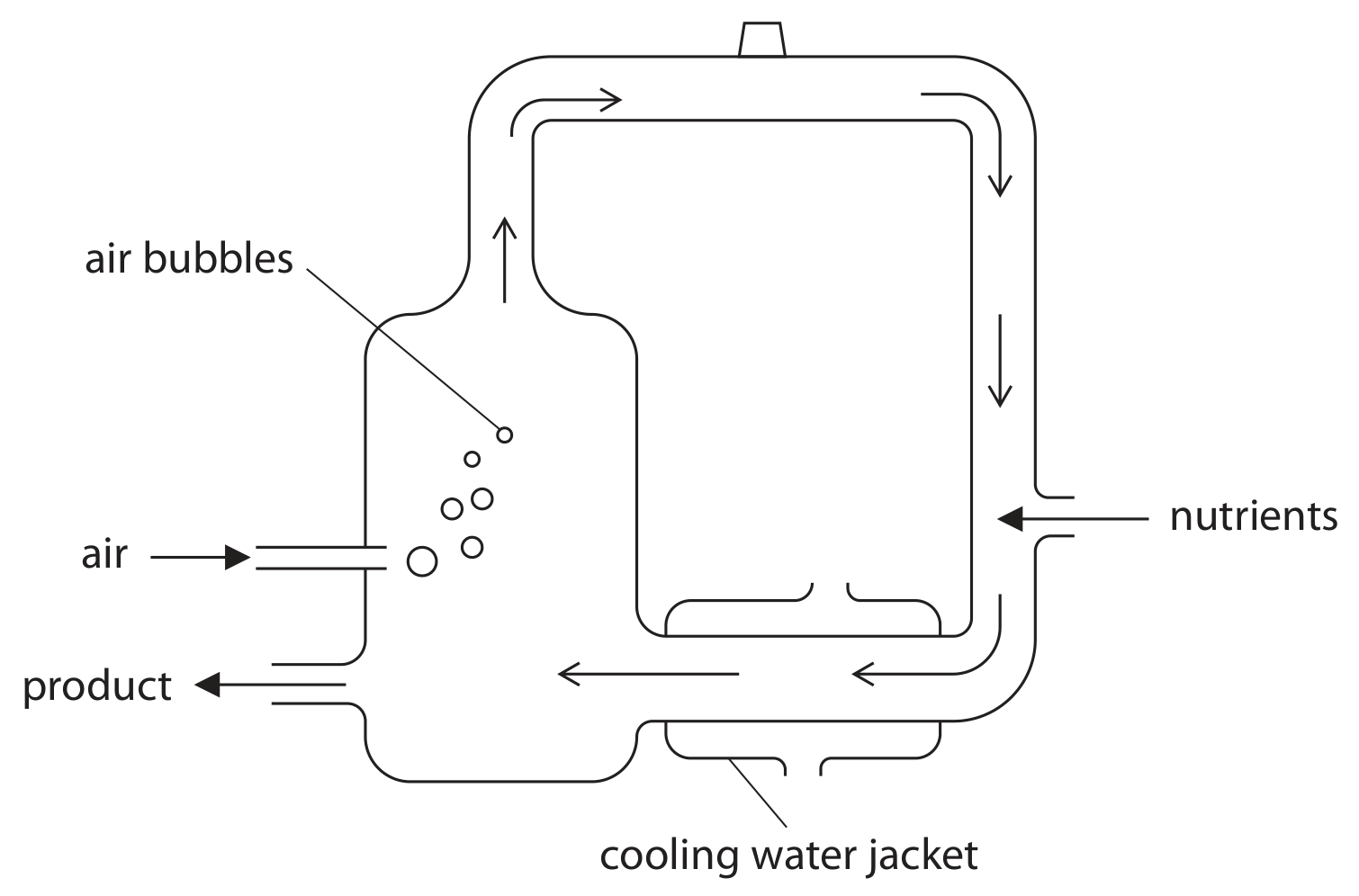
Mycoprotein is protein produced by fungi that can be made into meat substitutes. Large amounts of fungus are grown in fermenters to produce the mycoprotein. The diagram shows a typical mycoprotein fermenter.

Question image

A scientist investigates the production of mycoprotein by a genetically modified (GM) fungus and a non-genetically modified fungus (non-GM).

The scientist claims that the GM fungus will be better for large-scale production of mycoprotein.

The scientist measures the mass of mycoprotein produced by the fungi in fermenters for 30 days.

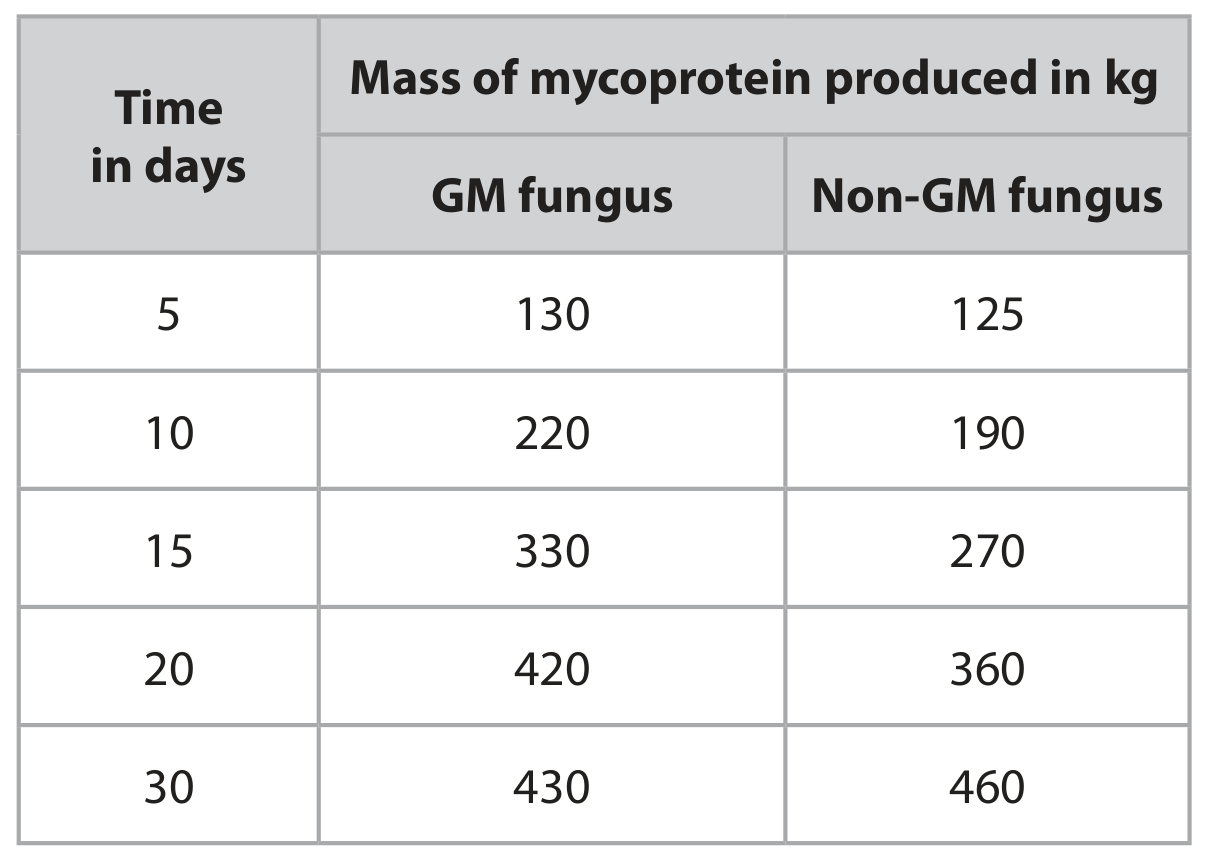
The table shows the scientist's results.

Table

The scientist claims that the GM fungus will be better for large-scale production of mycoprotein than the non-GM fungus.

Comment on the scientist's claim.

Question 6

[Maximum number: 8]

Scientists have developed genetically modified (GM) crops in order to increase food production by increasing crop yields.

Question 6(a)(i)

(a)

Some GM crops are described as transgenic.

Explain what is meant by the term transgenic.

[ 2 ]

Question 6(a)(ii)

(b)

Give the role of two named enzymes in the production of GM organisms.

1
2

[ 2 ]

Question 6(b)

(c)

Some GM crops that are available to farmers are resistant to herbicides (weedkillers).

Other GM crops are resistant to diseases caused by viruses and to damage by insects. Some people are for the use of GM crops because they may be beneficial to ecosystems. Some people are against the use of GM crops because they could harm ecosystems. Discuss these opinions for and against the use of GM crops.

[ 4 ]
0 selected