EduNinja

IGCSE Biology(a) Food productionTopic Practice

(a) Food production

Edexcel IGCSE Biology (a) Food production question practice helps you revise this syllabus point with the course map in view. Use this page to focus on one topic, check the style of questions available, and connect each attempt back to the knowledge area it is testing.

EduNinja keeps Biology practice aligned to Edexcel, so you can move from topic review into exam-style question bank work without losing the syllabus structure. Start with a small set, mark the weak steps, then return to nearby topic links when a definition, graph, calculation, or explanation needs repair.

Question 1

[Maximum number: 2]

Read the passage below. Use the information in the passage and your own knowledge to answer the questions that follow.

Coppicing

Coppicing is a traditional woodland management technique that was commonly used until about 70 years ago. Coppicing involves repeatedly cutting trees near to their base and allowing them to regrow. This provides a sustainable supply of timber. Coppicing has several benefits compared with replanting. Coppiced trees already have developed root systems, making regrowth quicker. They are also less likely to be eaten by species such as deer. Coppicing also reduces shading.
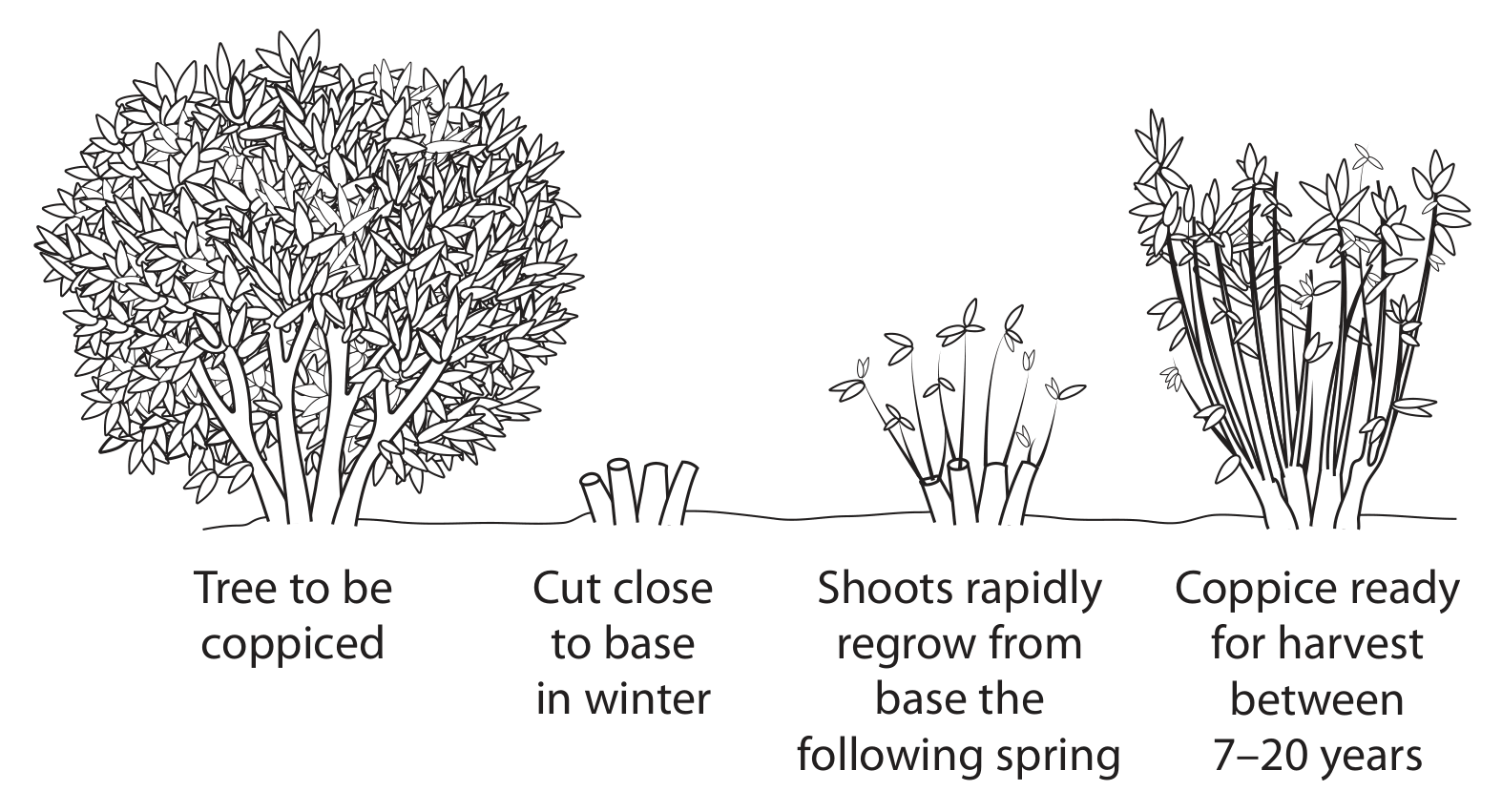
Question image

The demand for coppiced timber is beginning to increase again, as timber prices rise and other uses of coppiced timber develop. These uses include wood for biofuel. Much of this wood is used for heating schemes for homes and small factories. One exception is the huge Drax power station in North Yorkshire, United Kingdom, which has been using coppiced wood to generate electricity since 2004.
Coppicing is still a popular conservation practice because of the benefits it provides to trees and wildlife. Trees naturally lose their branches, which extends their lifespan. Coppicing is an artificial way of removing branches and increasing the lifespan of the tree.
Coppicing also increases woodland biodiversity, as greater amounts of light can reach the ground, allowing other plant species to grow. Many of these species are food sources for butterflies and other insects, providing food for birds and mammals such as bats.
In managed coppiced woodland the varied age structure of the vegetation also provides good habitat and shelter for different bird species.
Coppicing is a good way to ensure that there is a range of different light levels in a woodland, which leads to an increase in plant biodiversity.

Question 1(d)

(a)

New growth in woodland is often destroyed by species such as deer (lines 5 to 6).

Suggest one way to protect woodland from this damage.

[ 1 ]

Question 1(f)

(b)

Coppicing increases the number of insects in woodland.

A farmer owns a field next to a coppiced woodland.

[ 1 ]

Question 1(f)(ii)

(i)

Give one reason why more insects in the woodland might be a disadvantage for the farmer.
[ 1 ]

Question 1(b)(ii)

[Maximum number: 3]

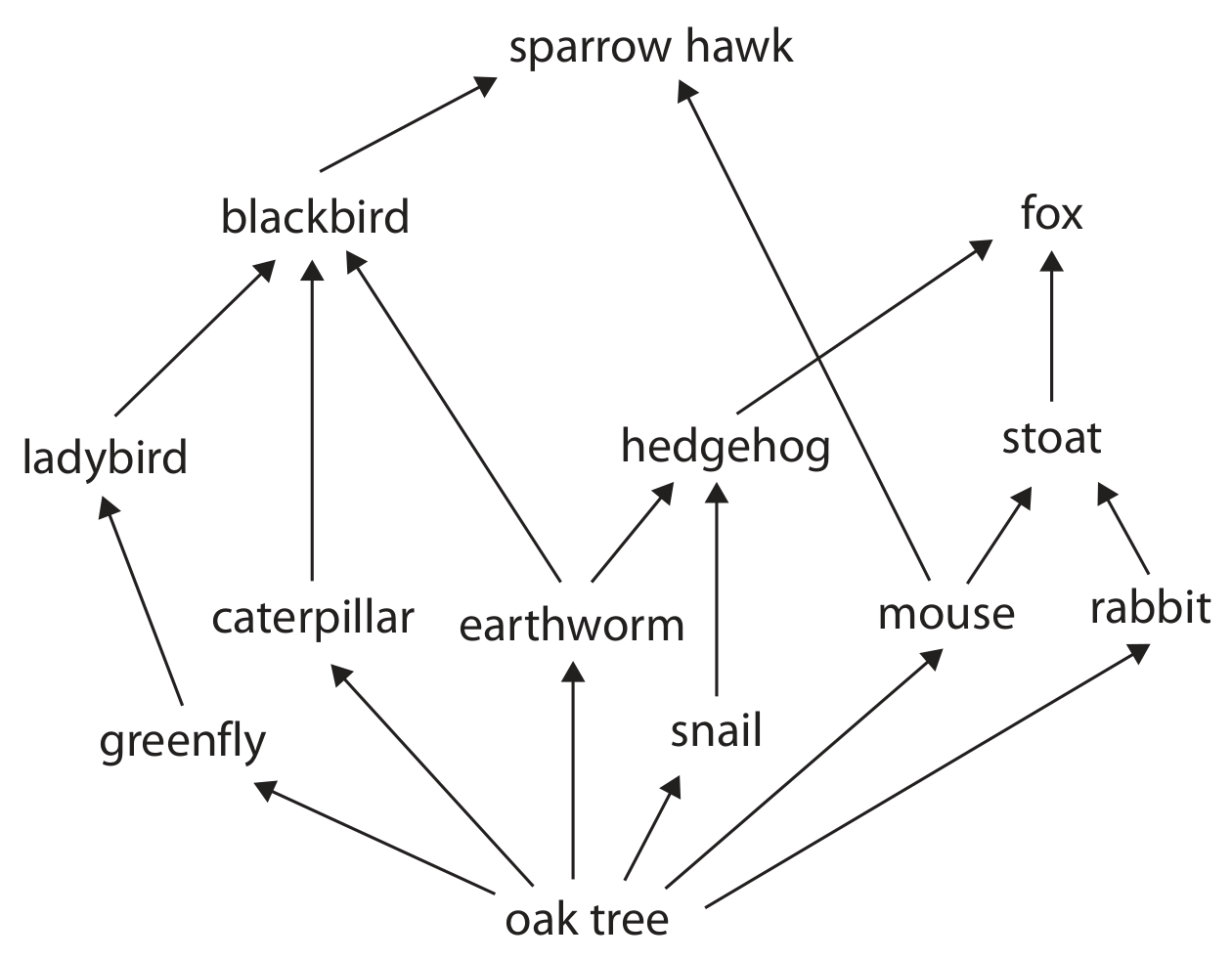
This food web comes from a woodland ecosystem.

Question image

A farmer is using a pesticide in fields next to the woodland.

The pesticide is reducing the numbers of greenfly and caterpillars in the woodland.

Describe a different method the farmer could use to reduce the number of greenfly on his crops.

Question 1

[Maximum number: 11]

Read the passage below. Use the information in the passage and your own knowledge to answer the questions that follow.

Offshore or freshwater fish farming

Fish farming in fresh water and in the sea offers the potential to increase the amount of fish harvested whilst protecting wild fish stocks. Offshore or fish farming at sea has less risk of serious injury or death to people than catching fish by deep sea fishing.

Some scientists predict that smart fish farming at sea could increase ocean fish production by an estimated 21 million tonnes from the 2020 value to 44 million tonnes by 2050 . Other estimates suggest that fish farming at sea, using an area the size of Lake Michigan, might produce the same amount of seafood as all of the world's wild-caught fisheries.

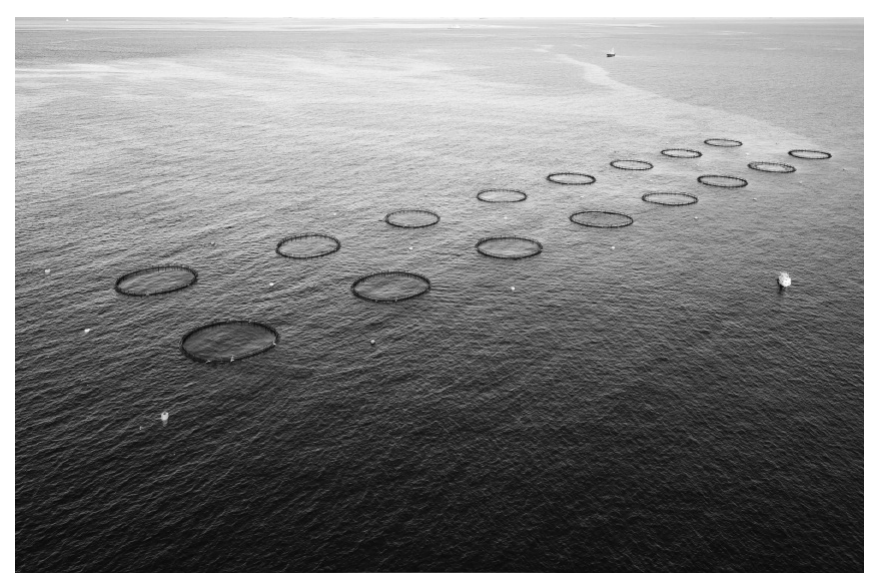
Fish farming at sea is done anywhere from three to 200 miles away from the coast. The fish produced are often Atlantic salmon, seabass and cobia. The aim is to reduce the environmental impact of fish farming near the coast by moving them further away from sensitive shorelines. This limits the impact of disease, pollution and pests such as sea lice. Further out to sea, and at deeper depths, the water movement is often faster.

Question image

Fish farm at sea

Question image

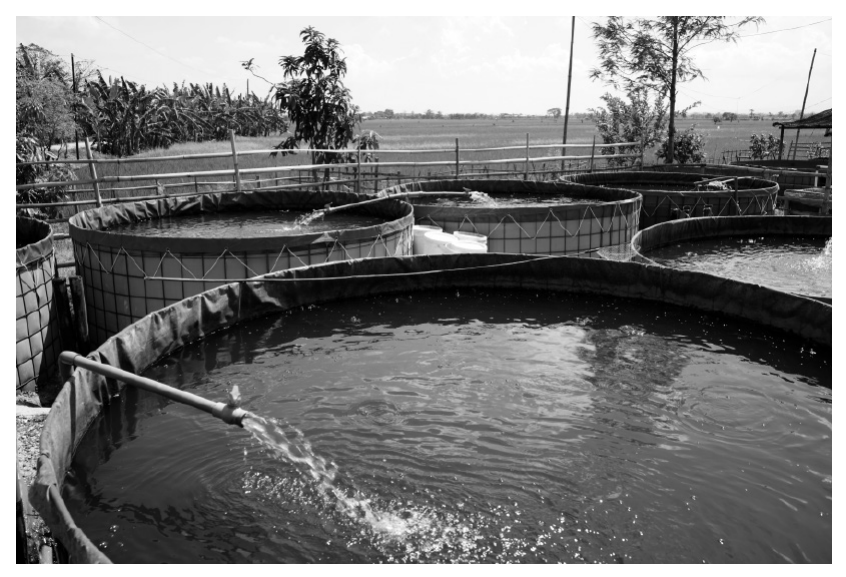
Freshwater fish farm

Critics of fish farming at sea claim that it will be more difficult to monitor and regulate any environmental impact and that pollution, disease and pests would still impact the surrounding waters. A major risk of farming at sea is the exposure to high winds and water speeds, increasing the risk of all the fish escaping. In 1997, 300000 farmed Atlantic salmon escaped into the Pacific Ocean. Wild fish are attracted to the farms by the scent of fish food. These wild fish are at risk of being hit by ships travelling to and from the large fish farms.

In contrast, other scientists support the development of fish farming in fresh water. Freshwater fish farms have increased in numbers steadily in the past 30 years. Asia is the main part of the world where this has happened. It is relatively cheap and easy to grow freshwater fish in small ponds. Fish farming provides incomes for many family farms, workers and small businesses, as well as jobs.

The main species produced by freshwater farming are carp, tilapia and catfish. These fish are herbivores or omnivores. In the farms they are fed small amounts of fish to

speed up growth, but their main diet is the by-products of crops like rice, groundnut and soy. Farmed freshwater fish are an affordable food for millions of low- and middle-income consumers.

Question 1(c)

(a)

Explain how fish farms cause pollution. (lines 12 to 16)

[ 3 ]

Question 1(d)

(b)

Fish farmers use methods to control disease in their fish farms.

[ 4 ]

Question 1(d)(i)

(i)

Describe the methods a fish farmer could use to reduce the incidence of disease in a fish farm.

[ 2 ]

Question 1(d)(ii)

(ii)

Explain how these methods may affect the local ecosystem.

[ 2 ]

Question 1(e)

(c)

Explain why locating the fish farms further out to sea may help reduce the effects on the local ecosystem. (lines 12 to 16)

[ 2 ]

Question 1(f)

(d)

Suggest why fish farming further out at sea will be more difficult to monitor and regulate. (lines 14 to 16)

[ 1 ]

Question 1(g)

(e)

Give a reason why farming fish that are herbivores is an advantage for the fish farmer. (lines 27 and 28)

[ 1 ]

Question 2

[Maximum number: 7]

Yeast cells can be genetically modified to produce the proteins found on the outside of viruses.

Question 2(c)

(a)

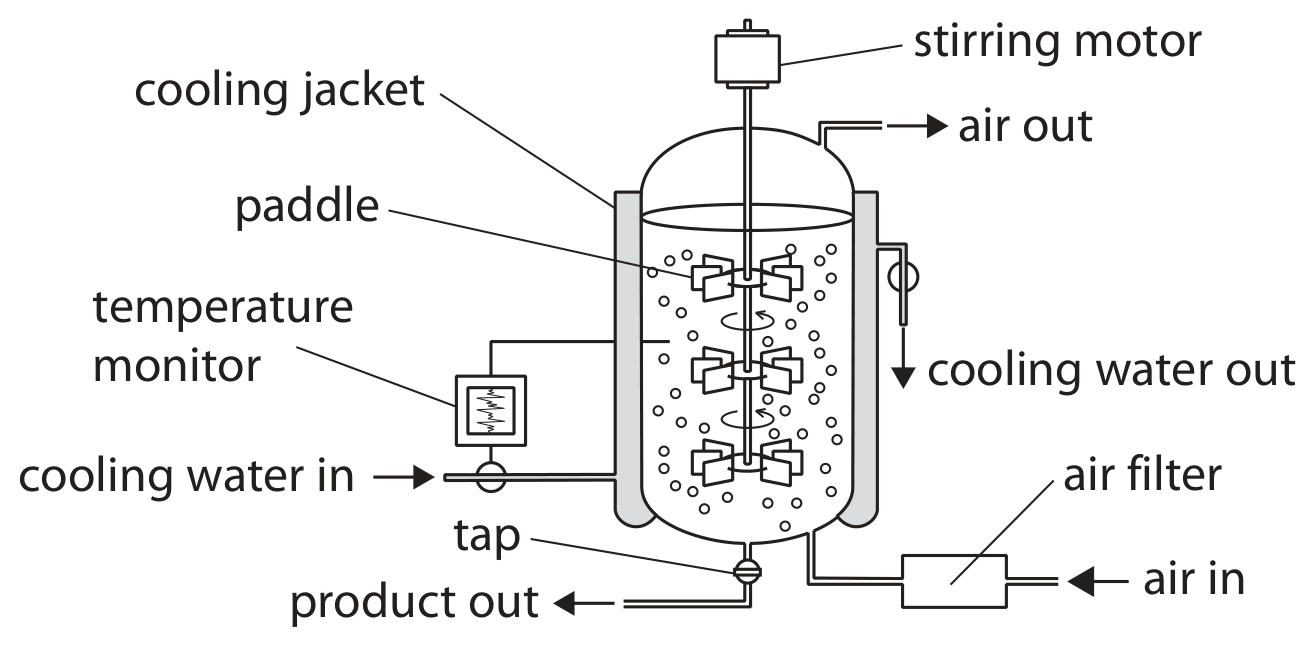
The diagram shows an industrial fermenter that can be used to grow large quantities of genetically modified yeast.

Question image
[ 7 ]

Question 2(c)(i)

(i)

Explain the function of the temperature monitor and cooling jacket.

[ 3 ]

Question 2(c)(ii)

(ii)

Explain why air is needed in the fermenter.

[ 2 ]

Question 2(c)(iii)

(iii)

Explain why the air is filtered before going into the fermenter.

[ 2 ]

Question 2

[Maximum number: 6]

Biologists classify organisms into different groups. One group of organisms is fungi.

Question 2(b)

(a)

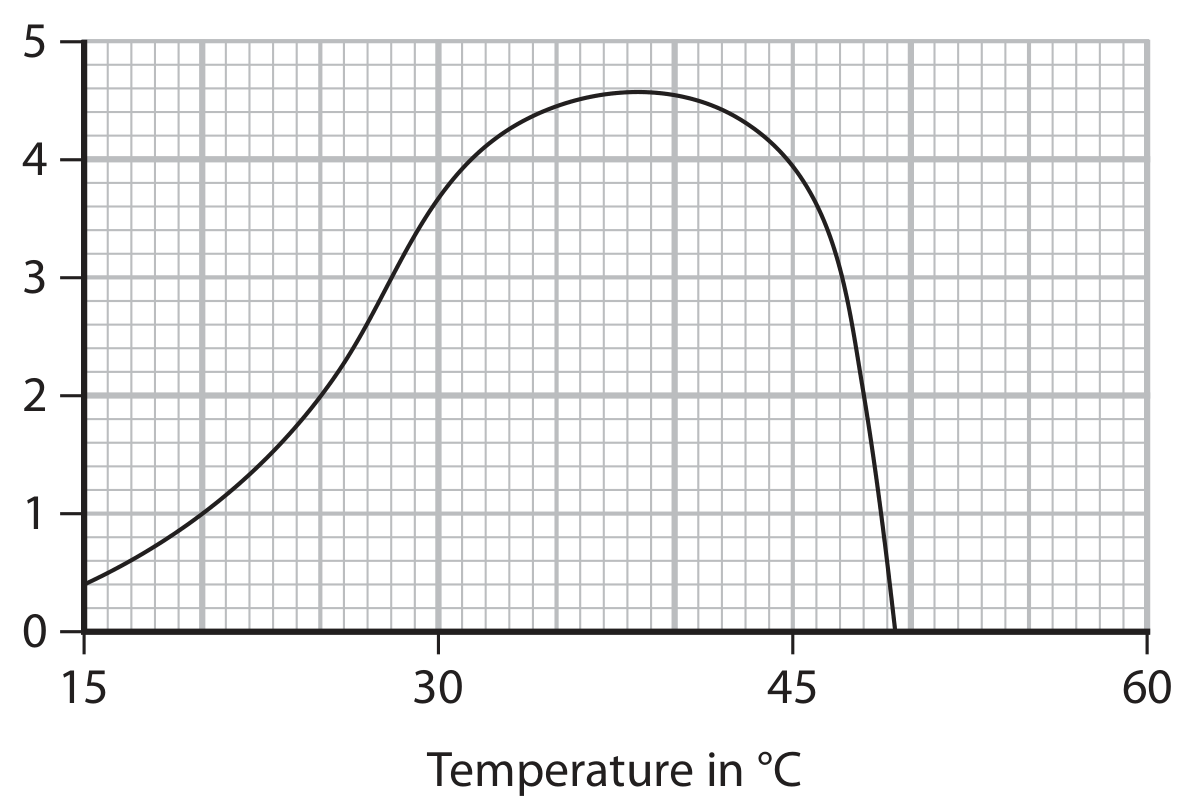
A student investigates the effect of temperature on the rate of anaerobic respiration in yeast.

The student measures the rate of gas produced in cm3\mathrm{cm}^{3} per minute.
The graph shows their results.

Rate of gas produced in cm3\mathrm{cm}^{3} per minute

Question image
[ 6 ]

Question 2(b)(i)

(i)

Name the gas produced by yeast during anaerobic respiration.

[ 1 ]

Question 2(b)(ii)

(ii)

Explain the effect that increasing temperature has on the rate of gas production by the yeast.

[ 3 ]

Question 2(b)(iii)

(iii)

Describe how the student could measure the rate of gas production in this experiment.

[ 2 ]

Question 2(e)

[Maximum number: 3]

Insulin is a hormone produced in the human body.

An industrial fermenter is used to grow the genetically modified bacteria.

Explain why the fermenter is cleaned using steam before the genetically modified bacteria are added.

Question 2(b)

[Maximum number: 4]

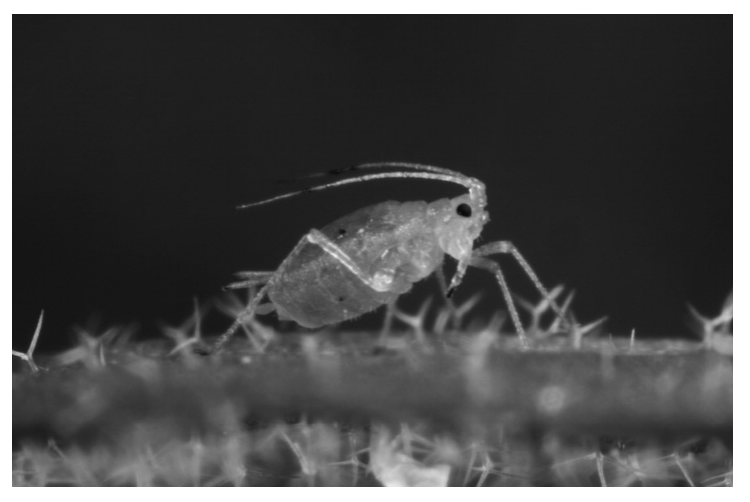
Aphids are a type of insect that are pests of many crops.
The photograph shows an aphid.

Question image

Pesticides are often used to control aphid populations.

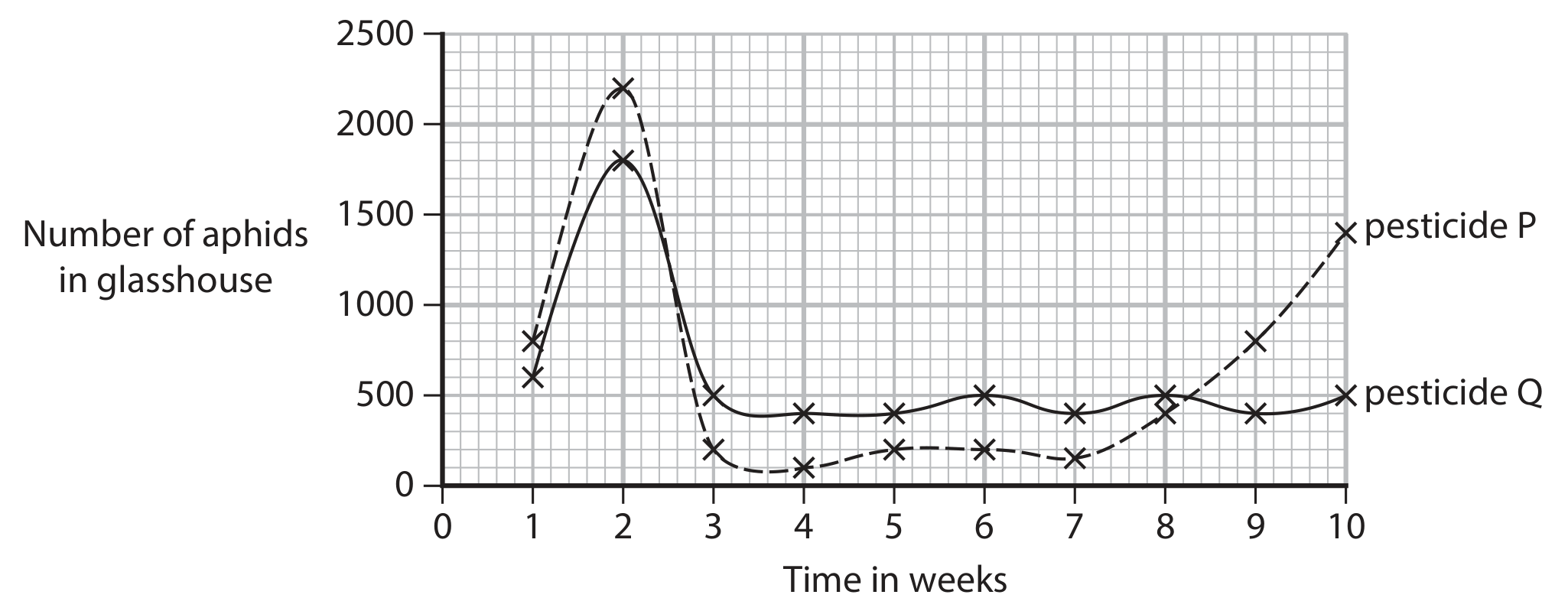
Scientists investigate the effect of using two different pesticides, P and Q, on aphid populations.

This is the scientists' method.
- grow tomato plants in two glasshouses
- place aphids into both glasshouses
- record the number of aphids in both glasshouses for two weeks
- immediately after recording the numbers of aphids in week two, spray pesticide P in one glasshouse and pesticide Q in the other glasshouse
- record the number of aphids for another eight weeks

The graph shows the scientists' results.

Question image

Comment on the effectiveness of pesticide P and pesticide Q in reducing aphid numbers.

Question 3

[Maximum number: 4]

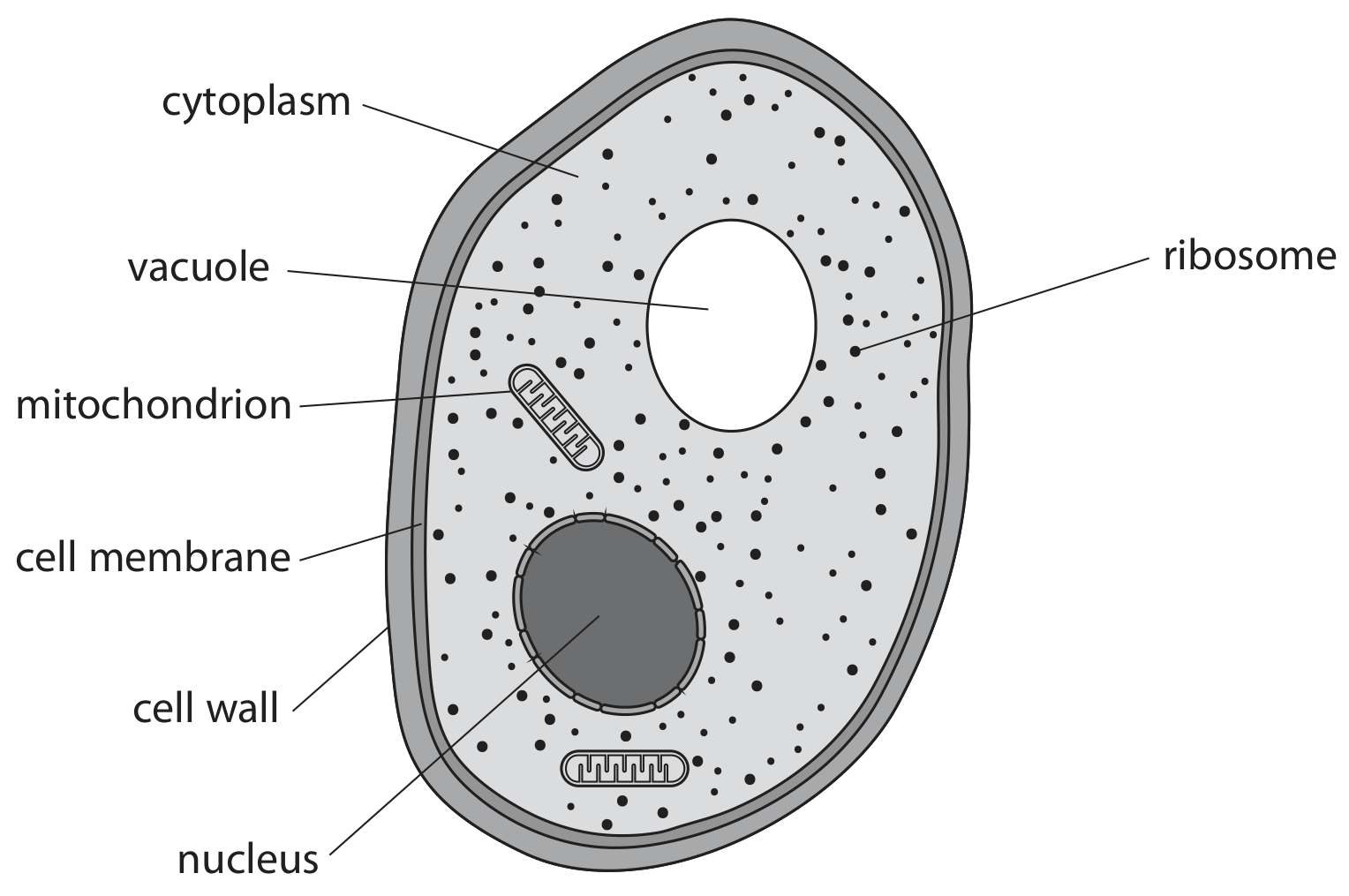
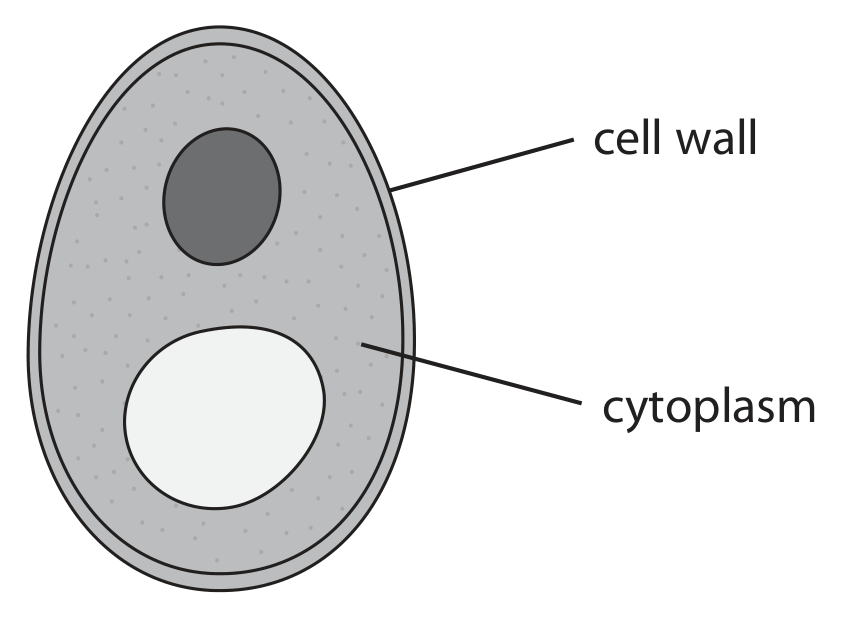
The diagram shows a yeast cell.

Question image

Question 3(b)

(a)

Yeast cells are often used when making bread.

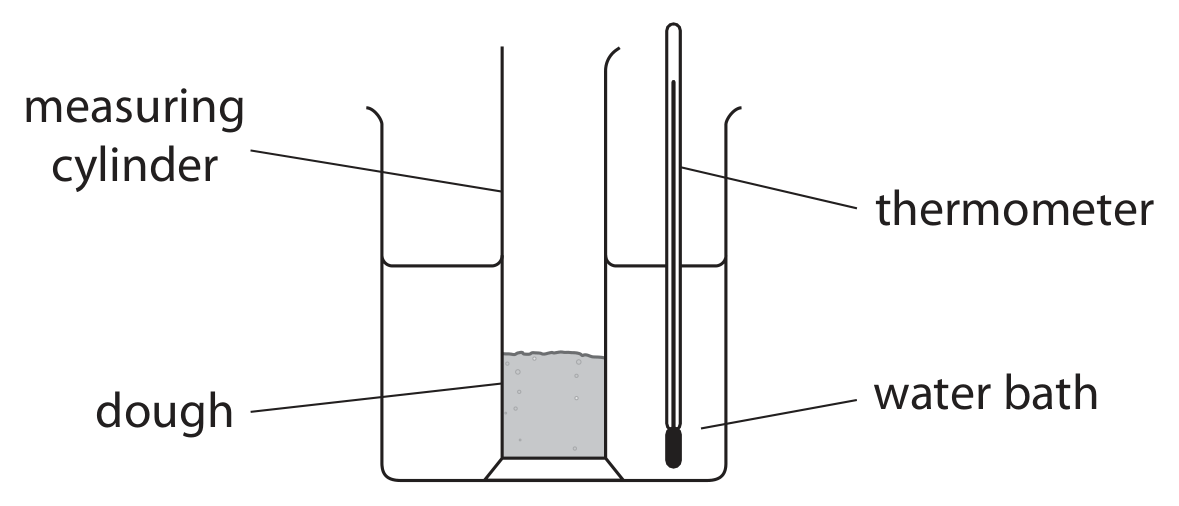
A student uses this method to investigate the effect of temperature on the height that bread dough rises.
- place dough containing flour, sugar, water and yeast into a measuring cylinder
- measure the height of the dough
- place the measuring cylinder in a 25C25^{\circ} \mathrm{C} water bath
- measure the height of the dough after two hours
- repeat the experiment at temperatures of 35C35^{\circ} \mathrm{C} and 65C65^{\circ} \mathrm{C}

The diagram shows the student's apparatus.

Question image

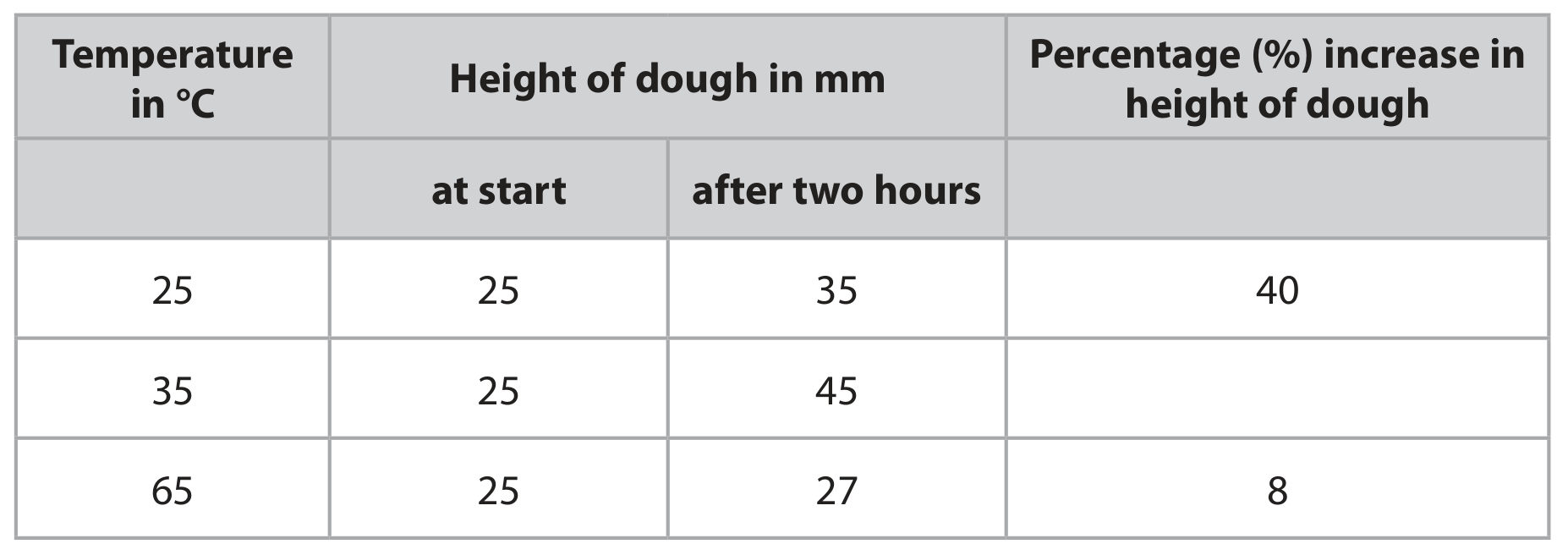
The table shows the student's results.

Table
[ 4 ]

Question 3(b)(i)

(i)

Calculate the percentage increase in the height of the dough after two hours at a temperature of 35C35^{\circ} \mathrm{C}.

[ 2 ]

Question 3(b)(ii)

(ii)

Explain why yeast causes the bread dough to increase in height.

[ 2 ]

Question 3

[Maximum number: 7]

The passage describes the process used to produce yoghurt.

Complete the passage by writing a suitable word or words in each blank space.

Yoghurt is made by heating to a high temperature.

This heating process is known as .

This ensures that bacteria present in the liquid are


The liquid is then cooled to between 40C40^{\circ} \mathrm{C} and 46C46^{\circ} \mathrm{C}.

A type of bacteria called is then added.

These bacteria use a sugar called for respiration.

The pH of the yoghurt decreases because this respiration produces a substance called .

Question 4

[Maximum number: 5]

The diagram shows a yeast cell.

Question image

Question 4(b)

(a)

Biofuel is made from ethanol.

Scientists use genetically modified (GM) yeast to produce biofuel.
The GM yeast contains an enzyme that digests plant cell walls to produce glucose.
The yeast uses the glucose in respiration to produce ethanol.

[ 1 ]

Question 4(b)(i)

(i)

Which of these equations shows the respiration in the yeast?

A

glucose → ethanol

B

glucose → ethanol + carbon dioxide

C

glucose + oxygen → ethanol

D

glucose + oxygen → ethanol + carbon dioxide

[ 1 ]

Question 4(c)

(b)

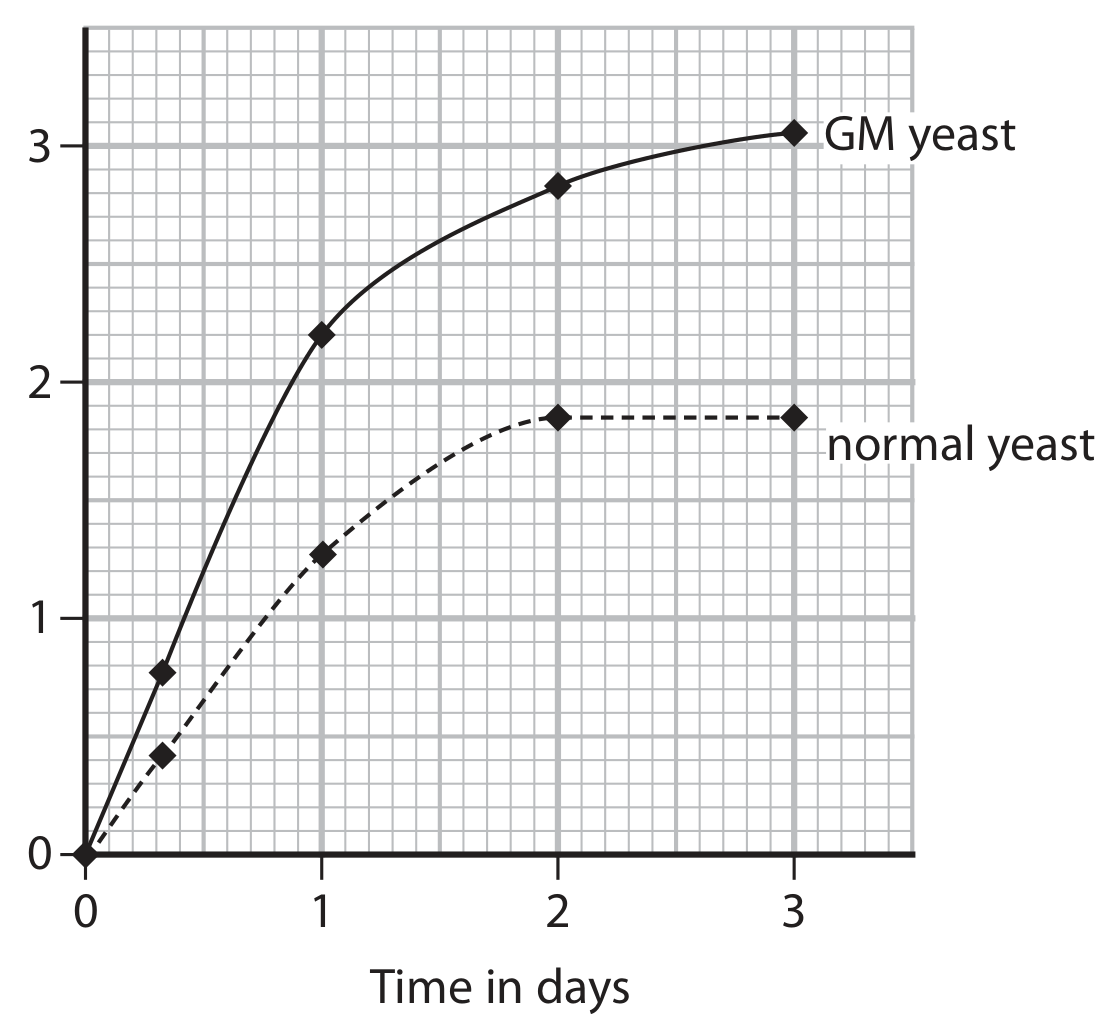
The graph shows the mass of ethanol produced by GM yeast and by normal yeast over a period of 3 days.

Mass of ethanol produced in g

Question image
[ 4 ]

Question 4(c)(i)

(i)

Calculate the percentage increase in the mass of ethanol produced by GM yeast compared to normal yeast after 1 day.

[ 2 ]

Question 4(c)(ii)

(ii)

Give two reasons why the rate of ethanol production decreases after 1 day.

1

2

[ 2 ]
0 selected