Question 1(a)(i)
[Maximum number: 1]
Fig. 1.1 is a side view of a human skull indicating the four types of teeth and the jaws.
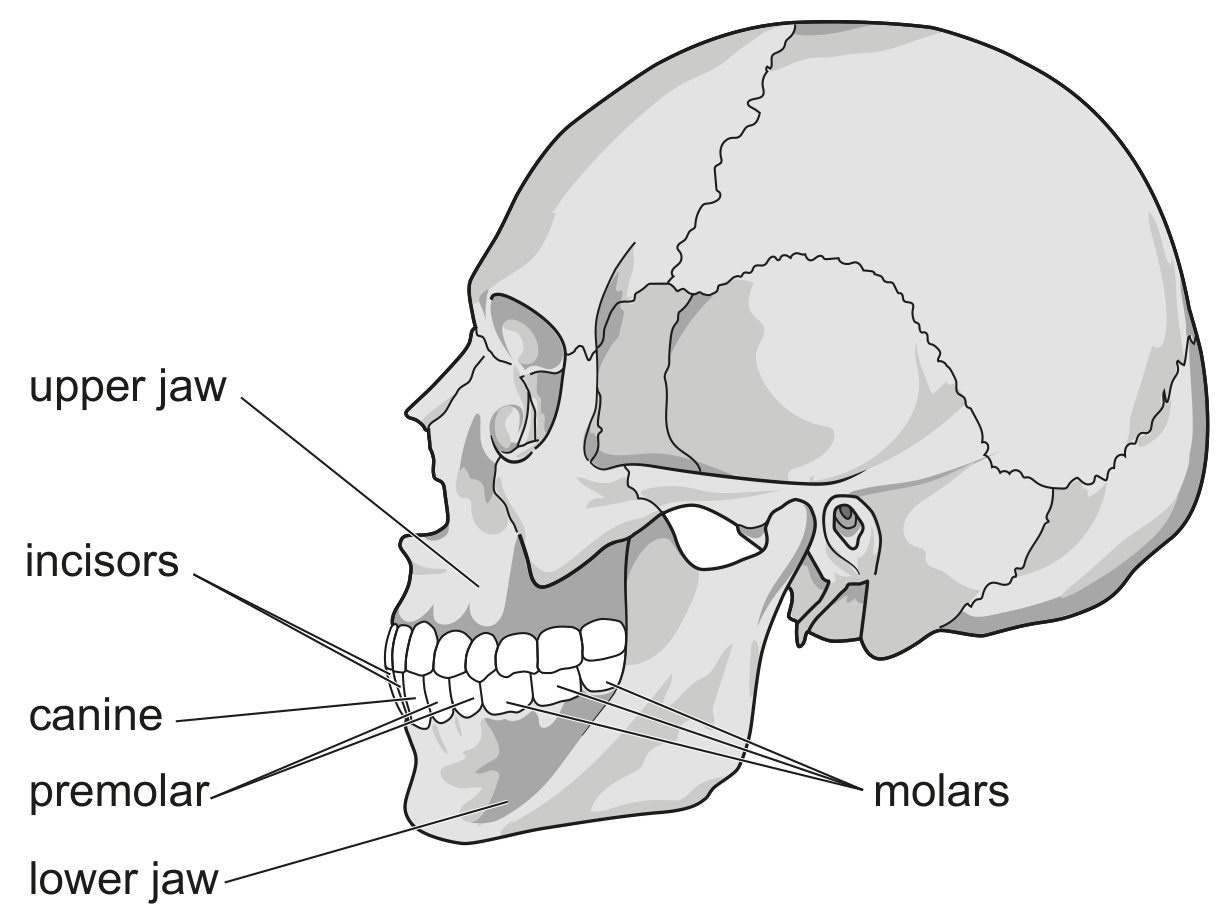
Fig. 1.1
State the function of human teeth.
 EduNinja
• Describe the functions of the types of human teeth in physical digestion of food
Fig. 1.1 is a side view of a human skull indicating the four types of teeth and the jaws.
Fig. 1.1
State the function of human teeth.
The diagram shows the four types of human tooth.
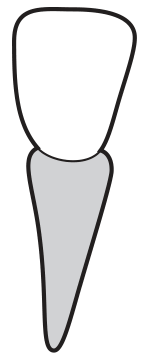
incisor

2

3
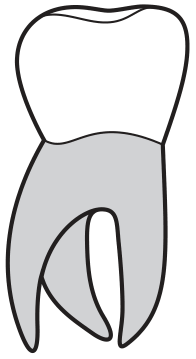
molar
Which teeth are used for grinding food?
1 and 2
2 and 3
3 and 4
4 and 1
Describe and explain the function of molar teeth.
Fig. 2.2 is an X-ray of decay in a molar tooth.
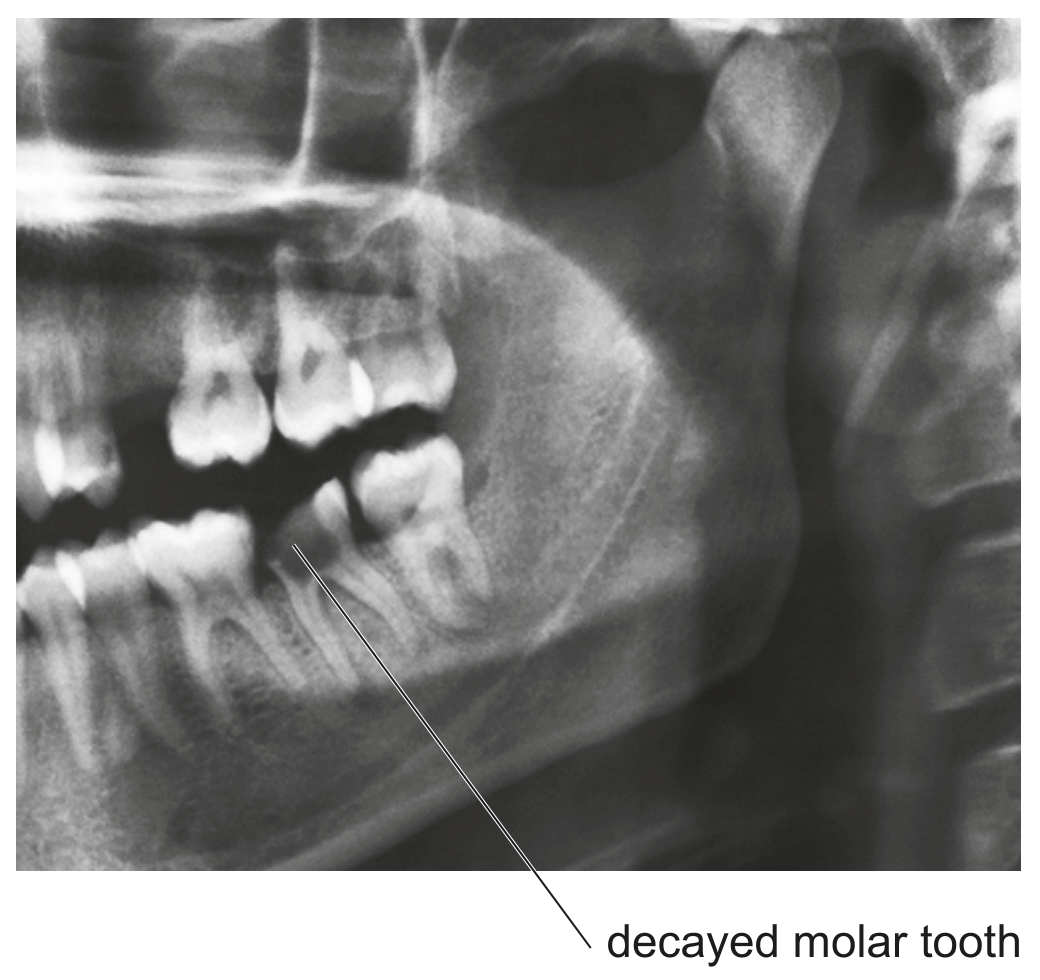
Fig. 2.2
Explain how tooth decay occurs.
The diagram shows a human tooth.
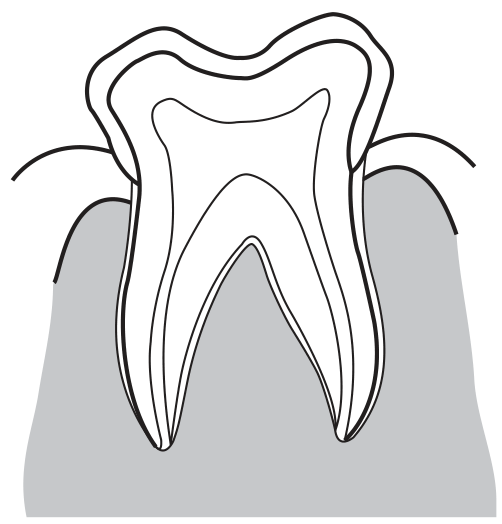
Which statement best describes the function of this tooth?
It bites into food.
It cuts food.
It grinds food.
It tears food.
The diagram shows a person's teeth. Some of their teeth are missing.
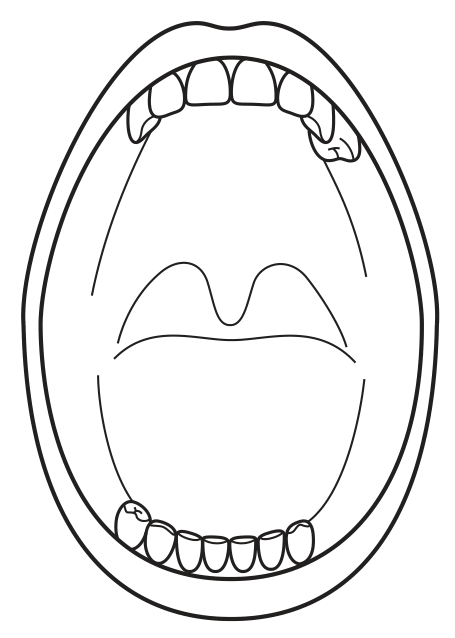
What would the person find difficult?
biting apples
drinking water
grinding meat
tearing dry bread
Which human teeth are used for biting and cutting food?
canines and molars
incisors and canines
molars and premolars
premolars and incisors
Very small pieces of plastic, called microplastics, are found in many products such as soaps and toothpaste.
Fig. 3.1 shows toothpaste that contains microplastics.
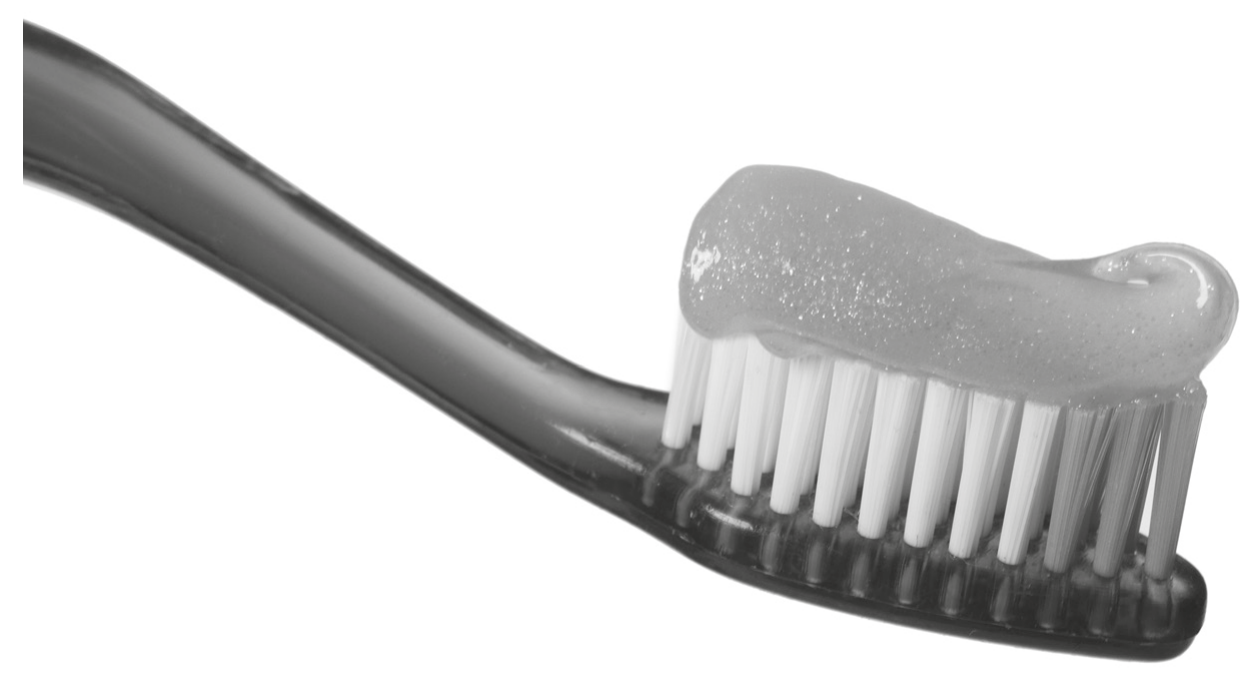
Fig. 3.1
State one recommendation, other than regular brushing, for the proper care of teeth.
The graph shows pH changes in the mouth after eating.
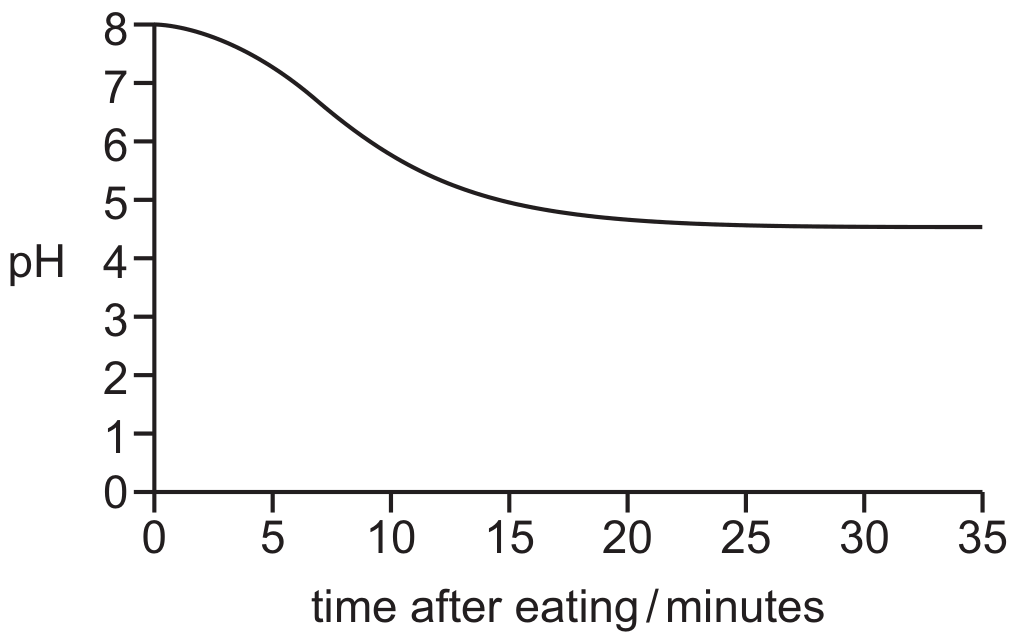
Why is it a good idea to brush teeth after eating?
Acidic conditions help bacteria to grow.
Acids dissolve tooth enamel.
Alkaline conditions help bacteria to grow.
Alkalis dissolve tooth enamel.
What is the cause of the start of dental decay?
Acid dissolves dentine.
Acid dissolves enamel.
Sugars dissolve dentine.
Sugars dissolve enamel.
Fig. 5.1 shows the different types of human teeth.
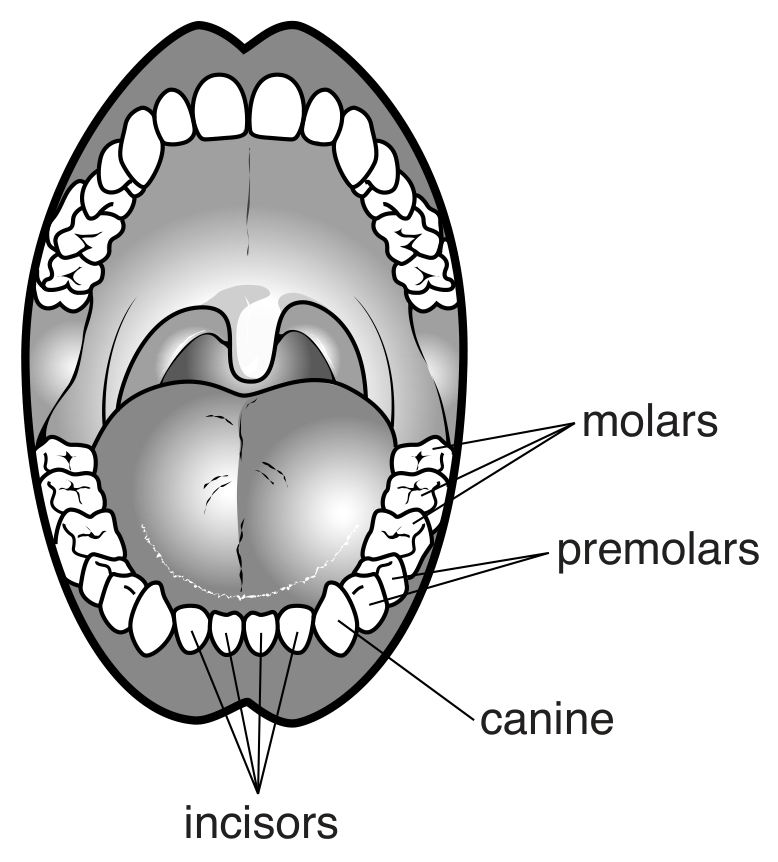
Fig. 5.1
Describe the functions of the canine and molar teeth.