Question 1(b)
[Maximum number: 6]
Fig. 1.1 is a diagram of part of a cross-section of a leaf.
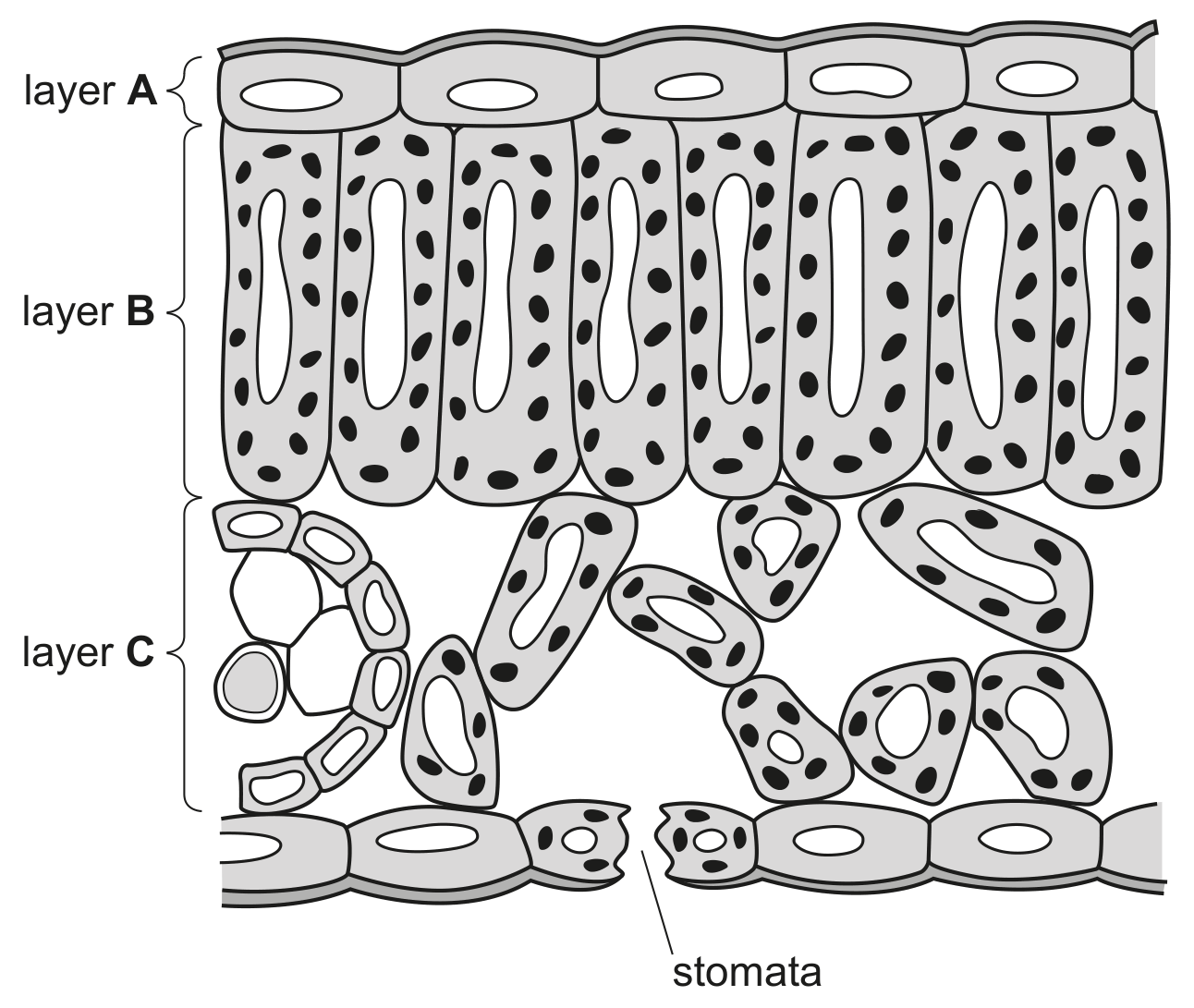
Fig. 1.1
Explain how layer B and layer C in Fig. 1.1 are adapted for their functions.
 EduNinja
• Explain how the structures listed in 6.2.2 adapt leaves for photosynthesis
Fig. 1.1 is a diagram of part of a cross-section of a leaf.
Fig. 1.1
Explain how layer B and layer C in Fig. 1.1 are adapted for their functions.
The diagram shows a cross-section of part of a leaf.
Which type of cell carries out the most photosynthesis?
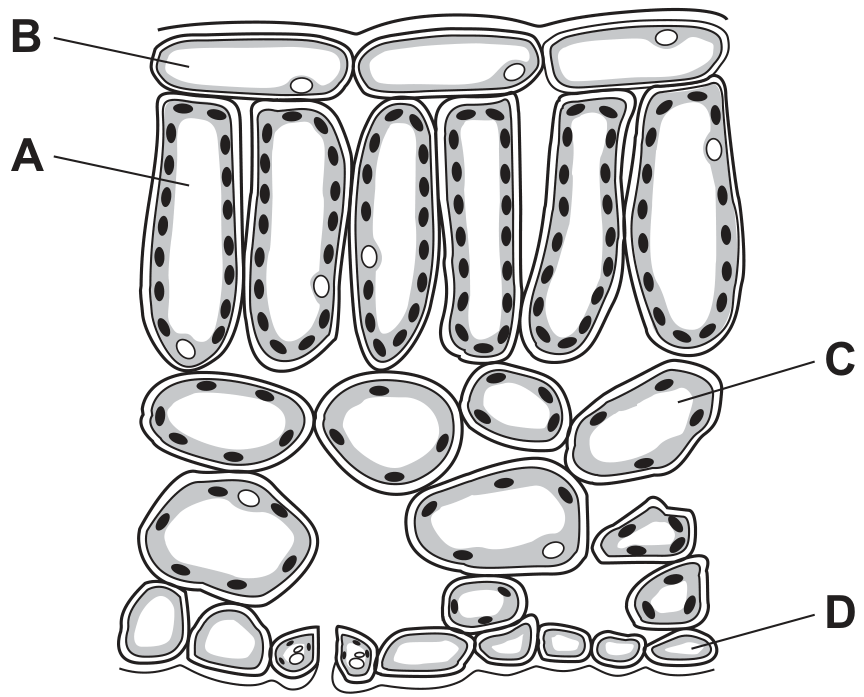
Fig. 2.1 is a diagram of a cross-section of part of a leaf.
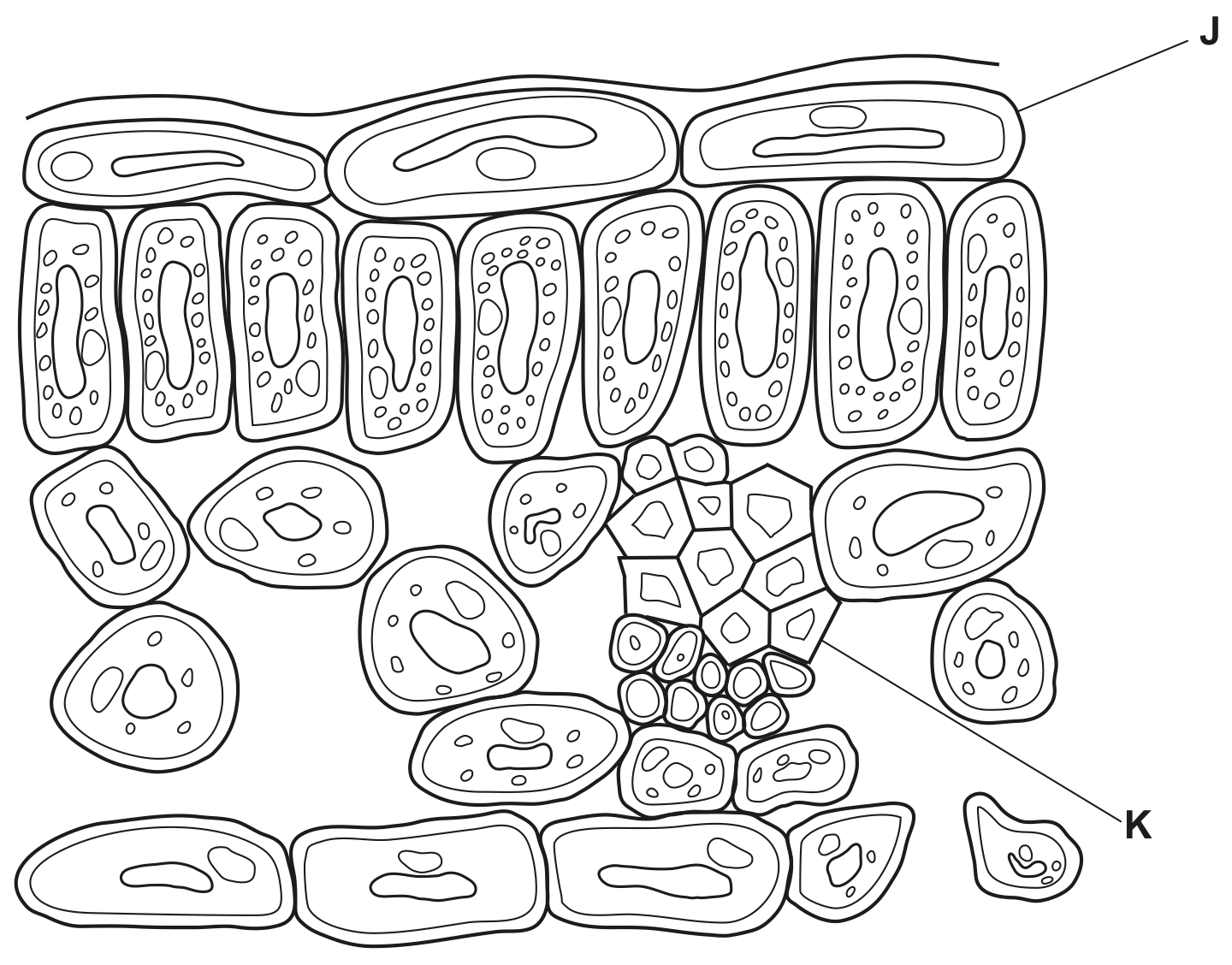
Fig. 2.1
Identify and explain how the structures labelled J and K are adapted for photosynthesis. J
K
The concentration of atmospheric carbon dioxide has increased considerably in recent years.
The scientists also made observations of the leaf structure of the soybean plants.
Epidermis and mesophyll tissues are adapted for photosynthesis.
Complete Table 2.1 by stating two structural features of each of these tissues and explain how each feature is an adaptation for photosynthesis.
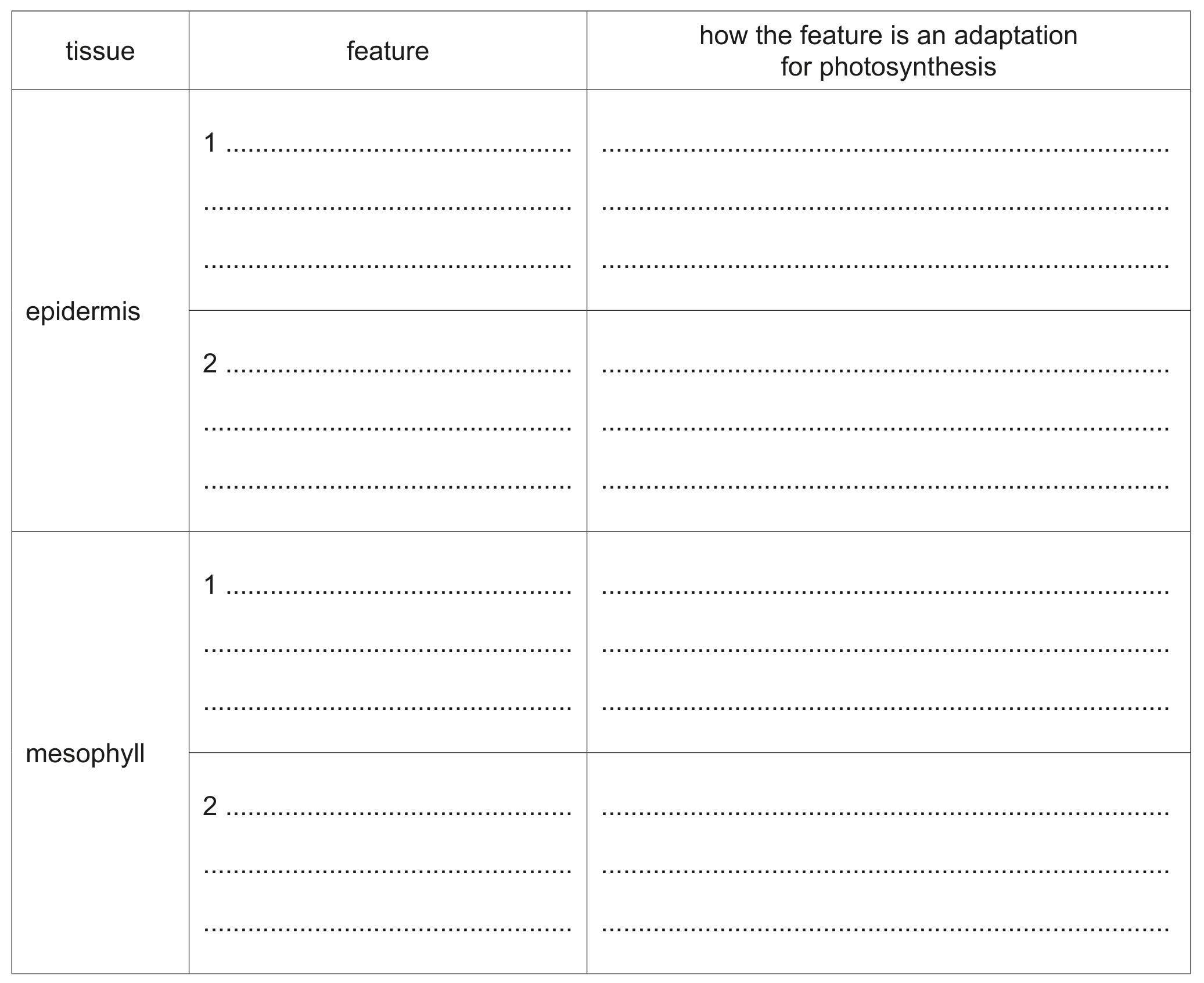
Table 2.1
The diagram shows part of a leaf in cross-section.
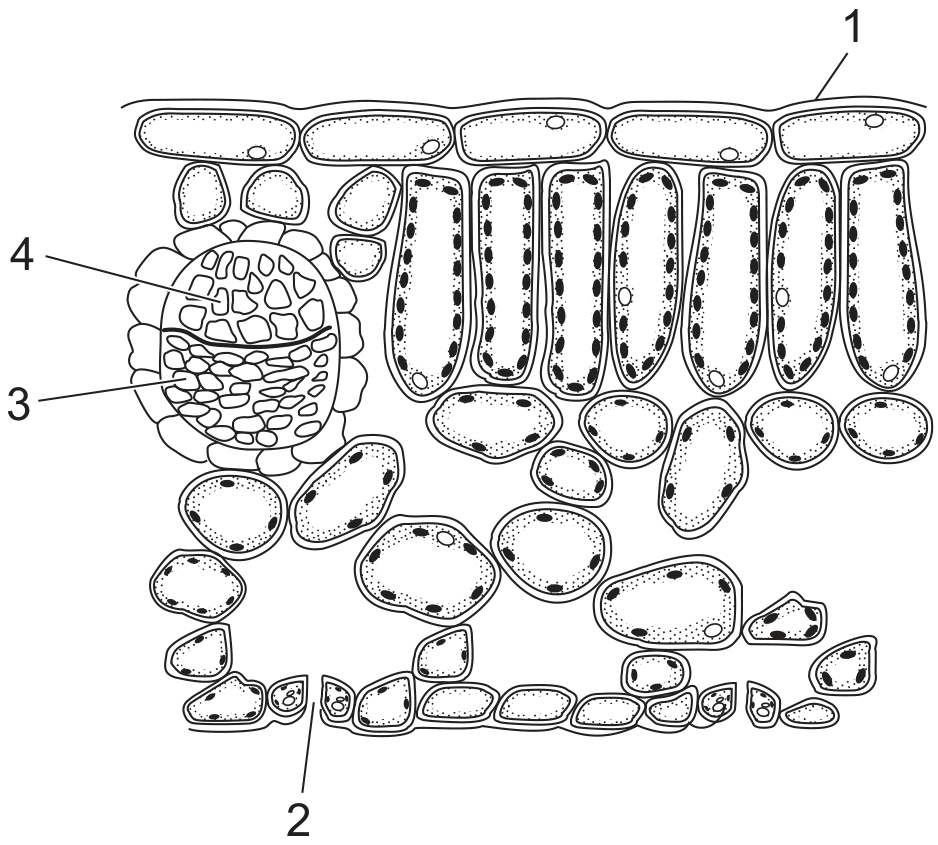
What shows the correct function of a numbered part?
part
functions
1
photosynthesis
2
gaseous exchange
3
transport of water from the root
4
transport of sugars to the root
Fig. 2.1 is a photograph of some leaves of a water lily, which is a hydrophyte. The water lily has adaptive features that are found in many different hydrophytes.
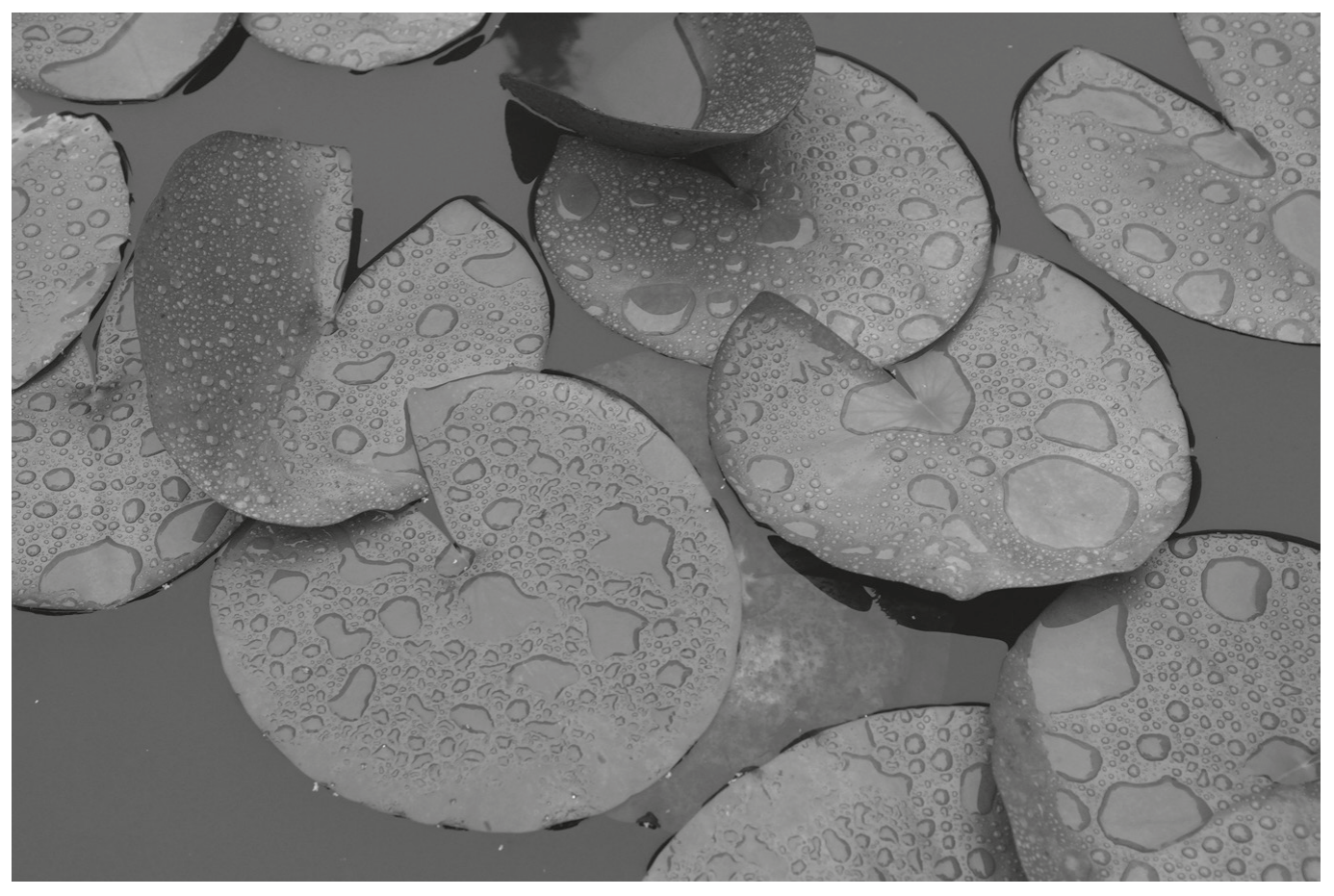
Fig. 2.1
Fig. 2.2 is a photomicrograph of a cross-section of a part of a water lily leaf.
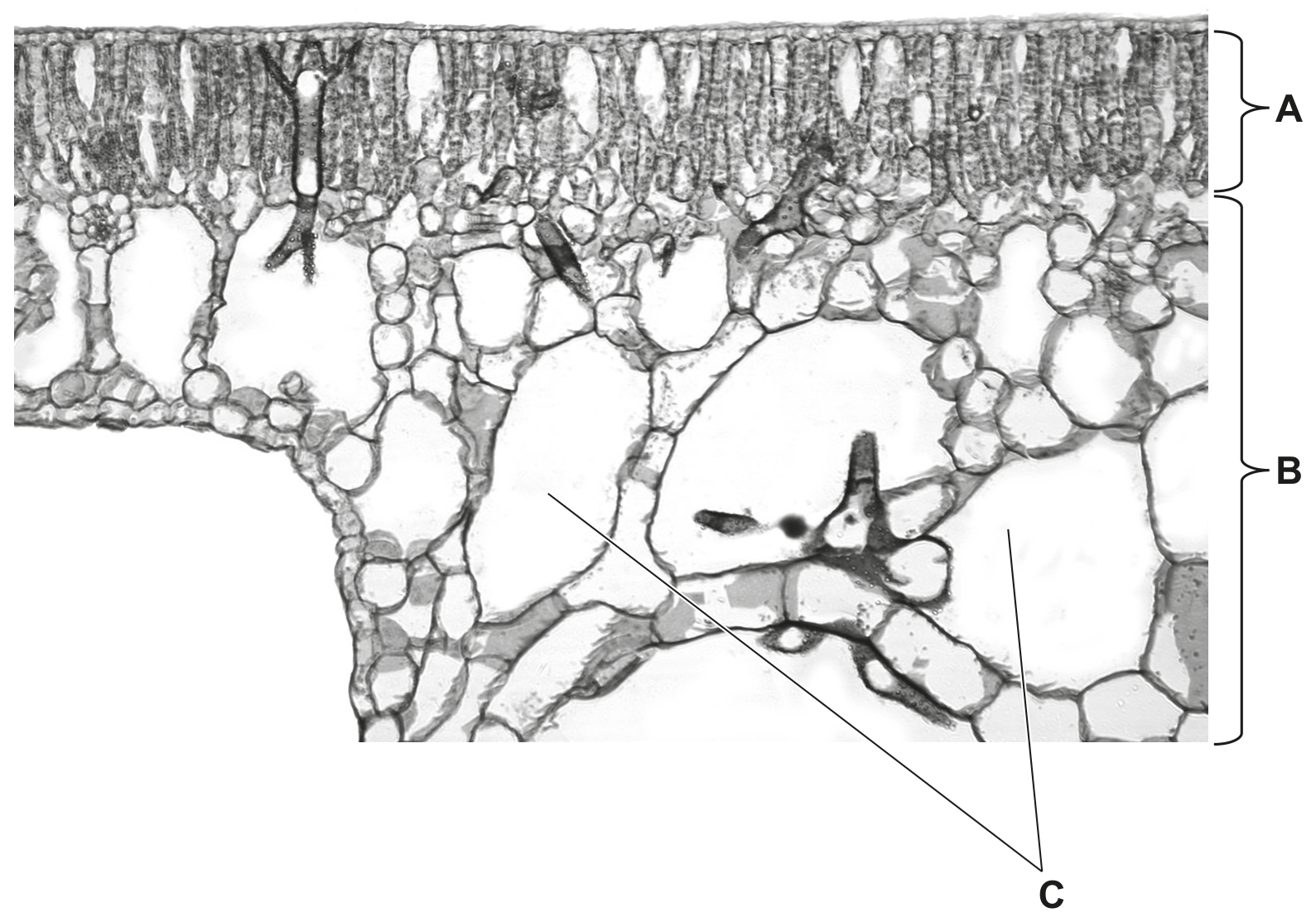
Fig. 2.2
Explain how part C in Fig. 2.2 adapts the hydrophyte for its environment.
The diagram shows a plant cell.
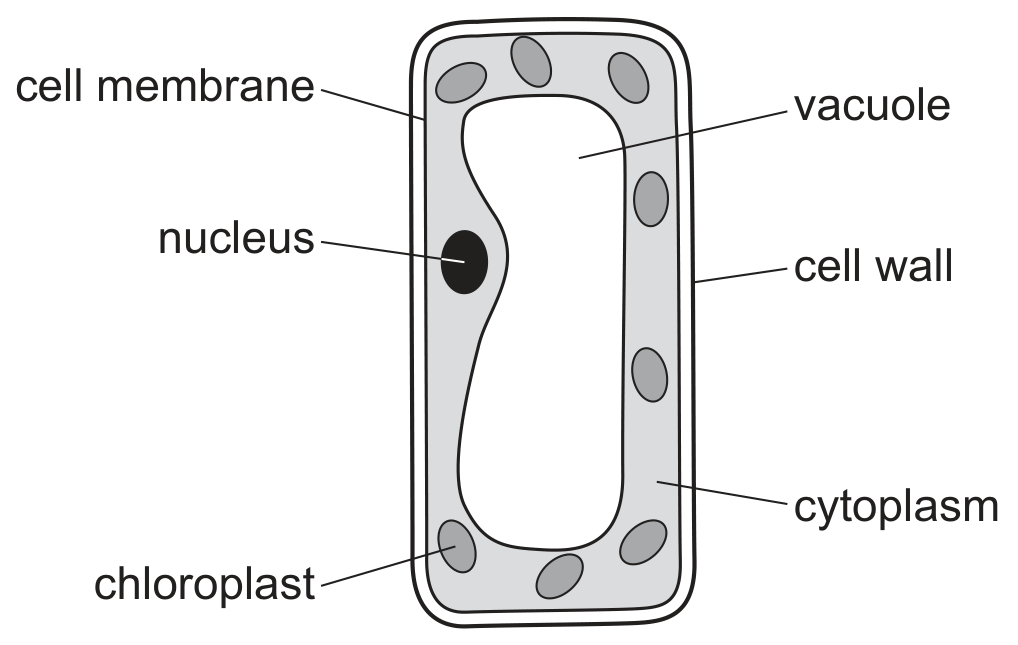
Which type of cell is shown?
cuticle cell
epidermal cell
palisade mesophyll cell
spongy mesophyll cell
The diagram shows the structure of cells from the leaf of a plant.

What type of cells are they?
epidermal cells
guard cells
palisade cells
spongy cells
How do the air spaces in the spongy mesophyll of a leaf help to adapt it for photosynthesis?
They act as a store of oxygen.
They allow carbon dioxide gas to diffuse through the leaf more rapidly.
They increase the surface area for absorption of light energy.
They let rainwater enter the leaf tissues.
The list shows features of a plant leaf.
1 air spaces between spongy mesophyll cells
2 chloroplasts in mesophyll cells
3 contains a natural insecticide
4 xylem vessels close to mesophyll cells
Which features are adaptations for photosynthesis?
1, 2 and 3
1, 2 and 4
1, 3 and 4
2, 3 and 4