EduNinja

IGCSE Biology Extended6.2.2—Following structures in the leafTopic Practice

6.2.2—Following structures in the leaf

• Identify in diagrams and images the following structures in the leaf of a dicotyledonous plant: chloroplasts, cuticle, guard cells and stomata, upper and lower epidermis, palisade mesophyll, spongy mesophyll, air spaces, vascular bundles, xylem and phloem

Question 1

[Maximum number: 3]

Fig. 1.1 is a diagram of part of a cross-section of a leaf.
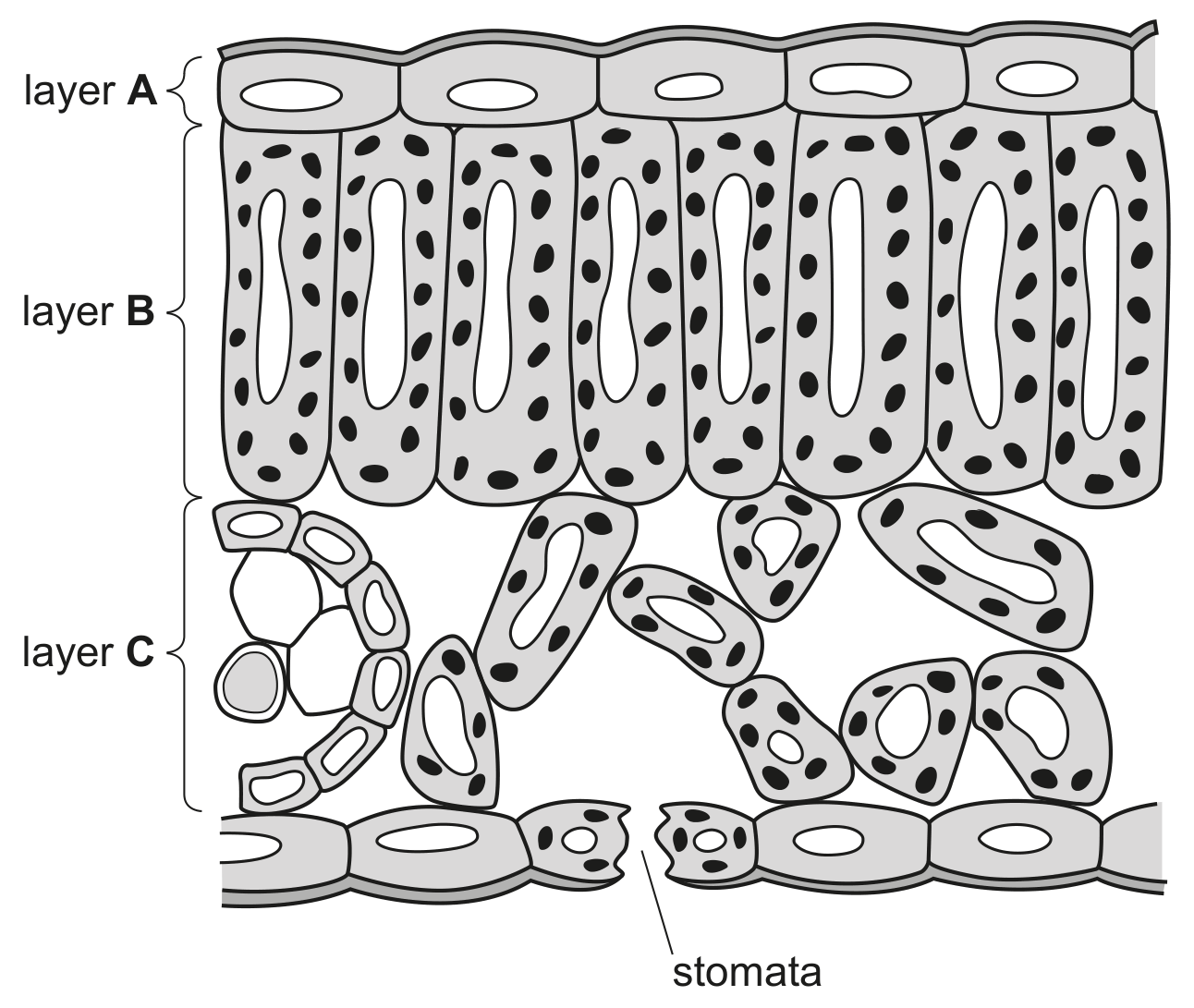
Fig. 1.1

Fig. 1.1

Question 1(c)

(a)

A student placed a plant in a very hot room for 12 hours. There was a bright light in the room and the plant was not given any water during the 12-hour period.

Fig. 1.2 shows a series of sketches that the student made of the stomata during the investigation.
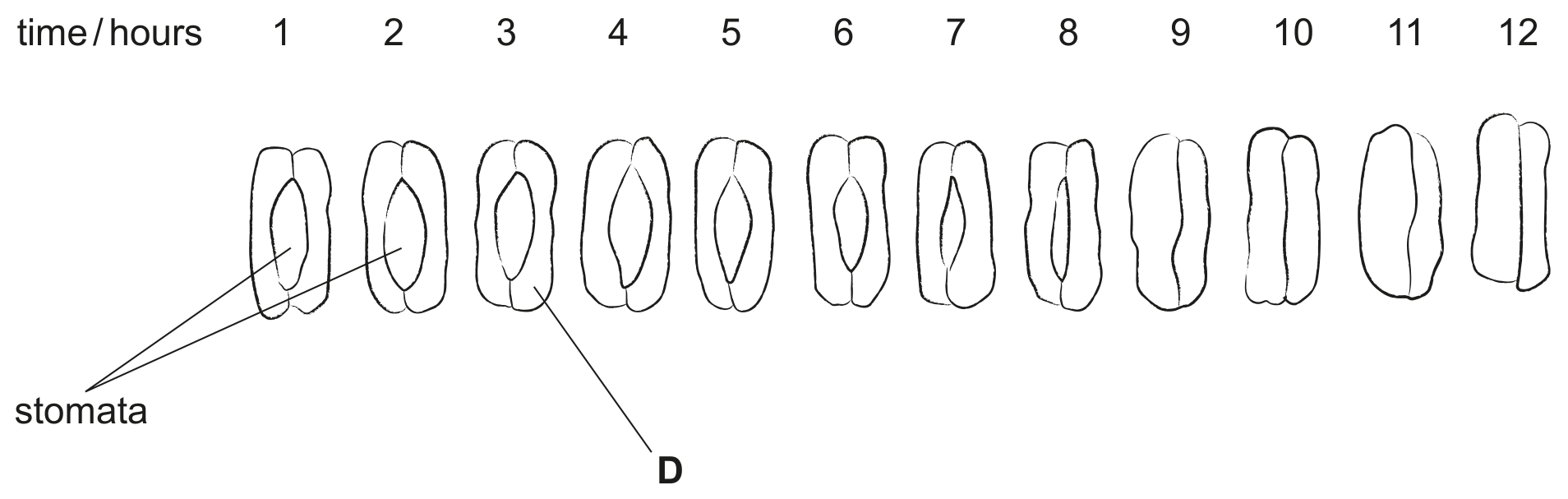
Fig. 1.2

Fig. 1.2

[ 3 ]

Question 1(c)(i)

(i)

Identify the cell labelled D on Fig. 1.2.

[ 1 ]

Question 1(c)(ii)

(ii)

State the main function of the stomata.

[ 1 ]

Question 1(c)(iii)

(iii)

State the advantage to the plant of the change to the stomata shown in Fig. 1.2.

[ 1 ]
Question 1(a)(i)

[Maximum number: 3]

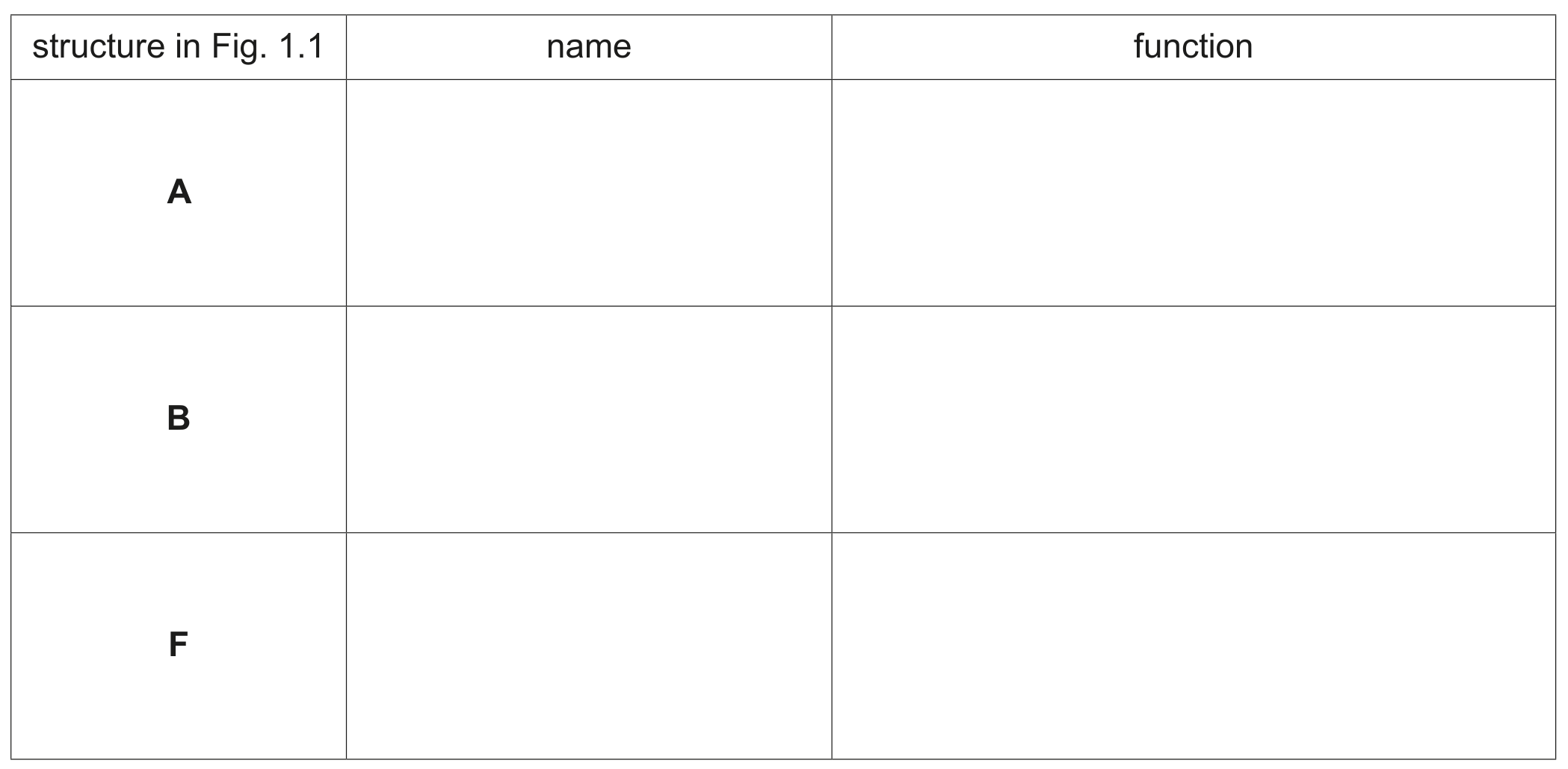
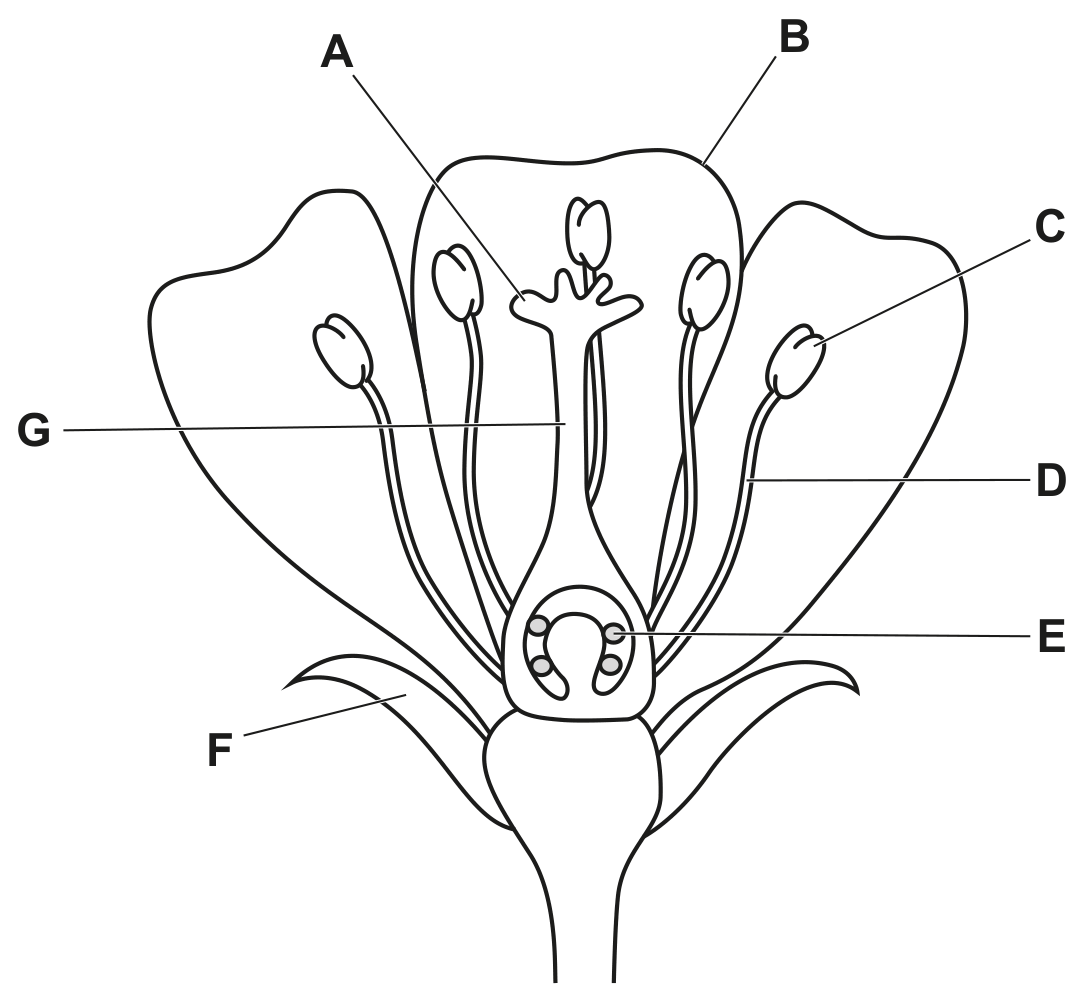
Fig. 1.1 is a diagram of an insect-pollinated flower.

Fig. 1.1

Fig. 1.1

Using the information in Fig. 1.1, complete Table 1.1.

Table 1.1

Table 1.1

Question 3

[Maximum number: 1]

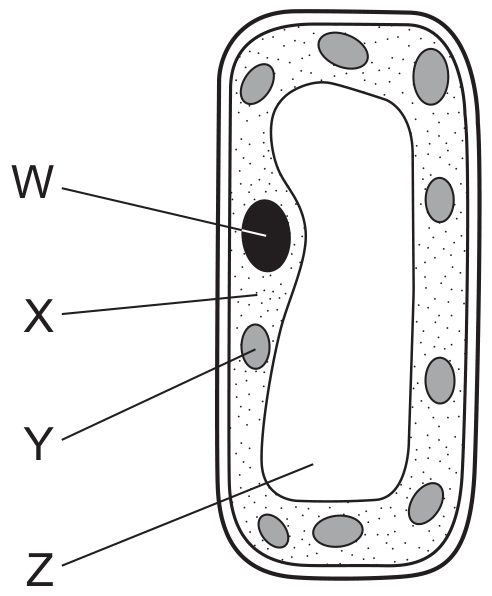
The diagram shows a palisade mesophyll cell from a green leaf.

Question image

In which labelled part does photosynthesis occur and where is starch stored?

photosynthesis

occurs

starch is

stored

X

W

X

Z

Y

X

Y

Y

Question 3

[Maximum number: 1]

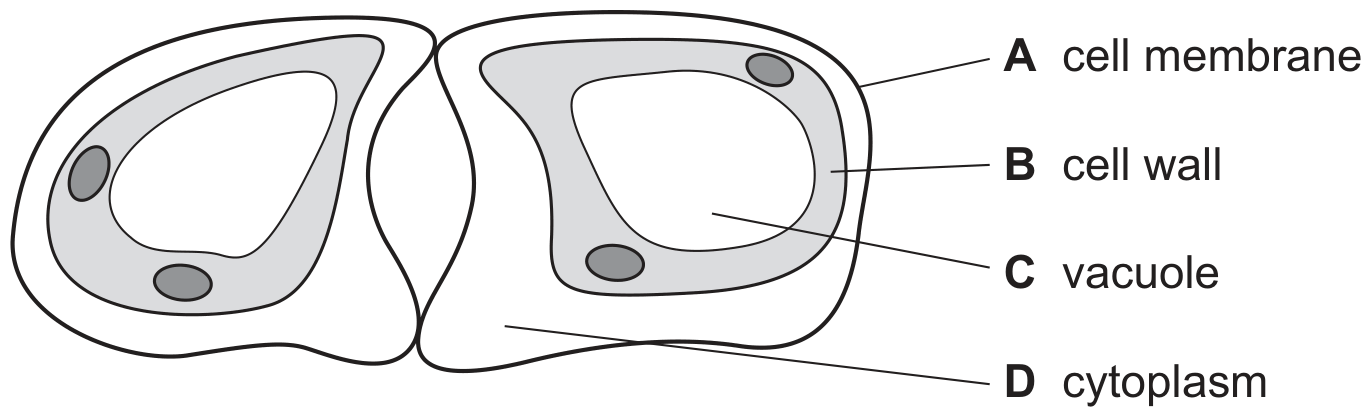
The diagram shows two guard cells.
Which label is correct?

Question image

Question 9

[Maximum number: 1]

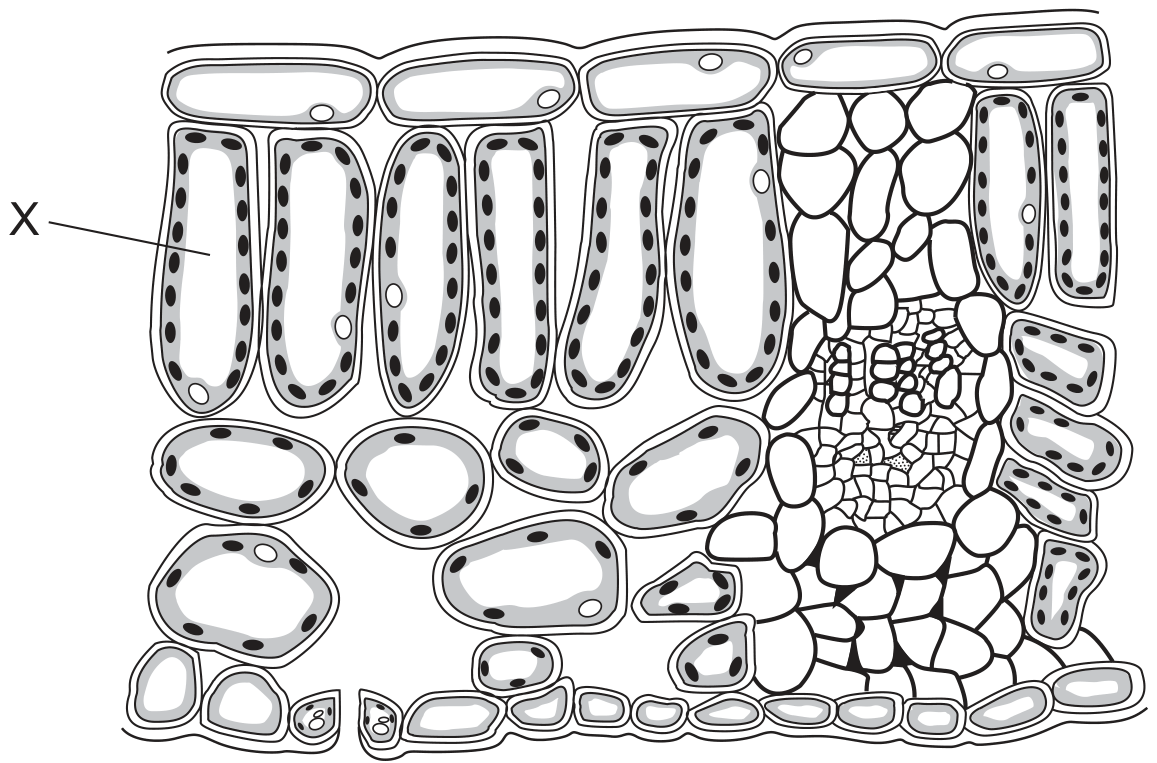
The diagram shows a cross-section through a leaf.

Question image

What is the cell labelled X ?

A

epidermis

B

guard cell

C

palisade mesophyll

D

spongy mesophyll

Question 9

[Maximum number: 1]

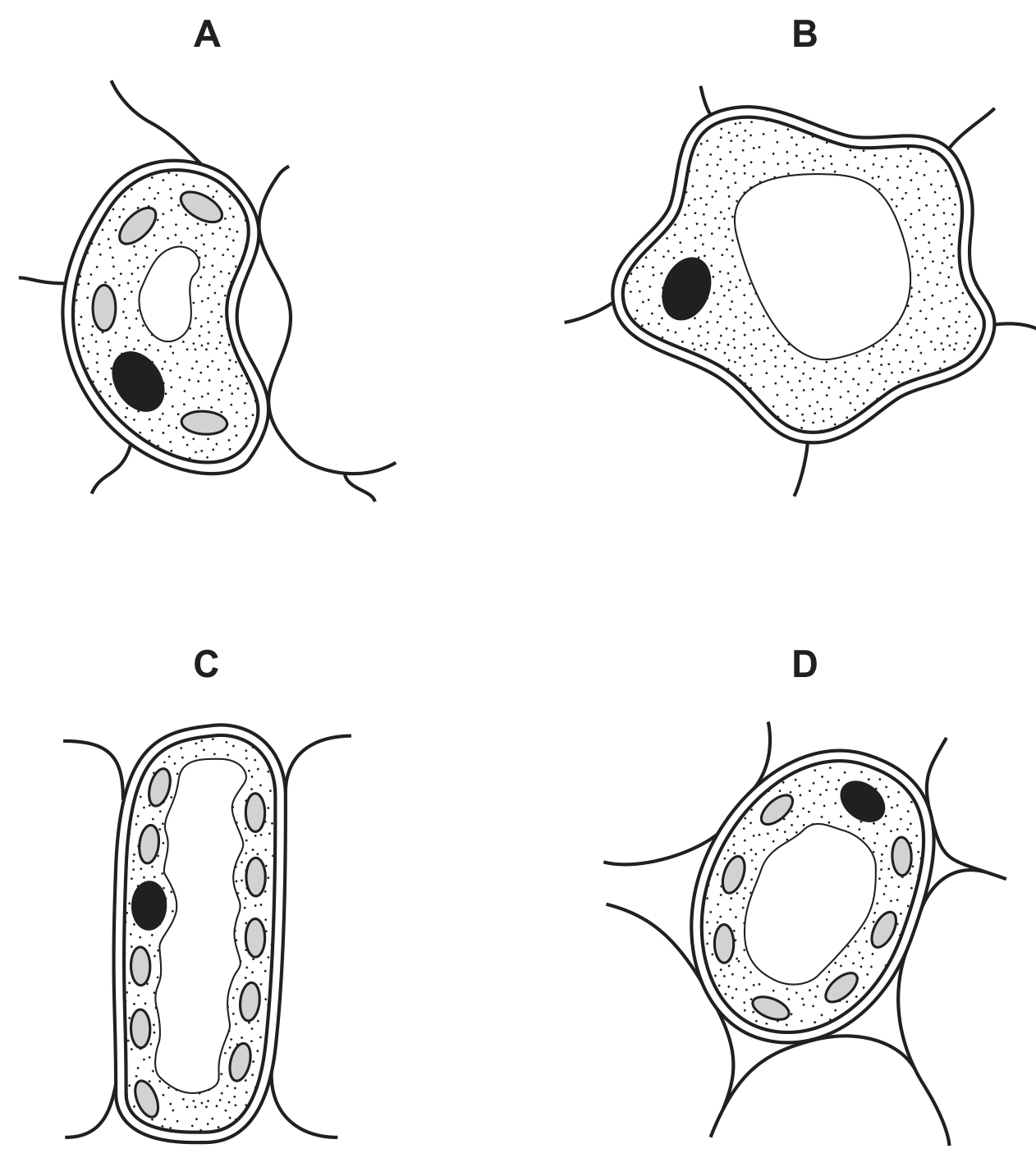
The diagrams show the structure of four different cells from the leaf of a dicotyledonous plant.
Which cell is a guard cell?

Question image

NOT TO SCALE

Question 10

[Maximum number: 1]

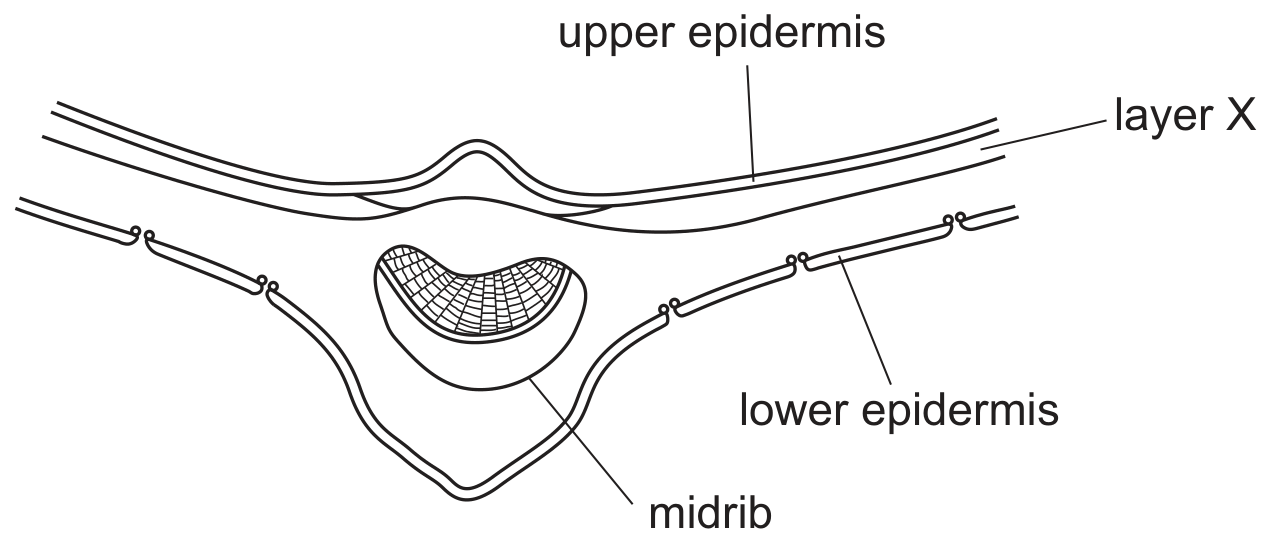
The diagram shows a cross-section of part of a leaf.

Question image

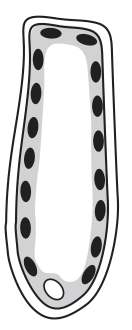
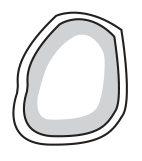
Which type of cell is found in layer X ?

A
Question image
B
Question image
C
Question image
D
Question image

Question 10

[Maximum number: 1]

Which row shows the most likely number of chloroplasts in three types of cell in a leaf?

epidermis

mesophyll

vascular
bundle cell

0

6

17

0

17

0

17

6

0

17

0

6

Question 10

[Maximum number: 1]

Which region in the leaf of a green plant contains phloem?

A

palisade mesophyll

B

spongy mesophyll

C

upper epidermis

D

vascular bundle

Question 2

[Maximum number: 4]

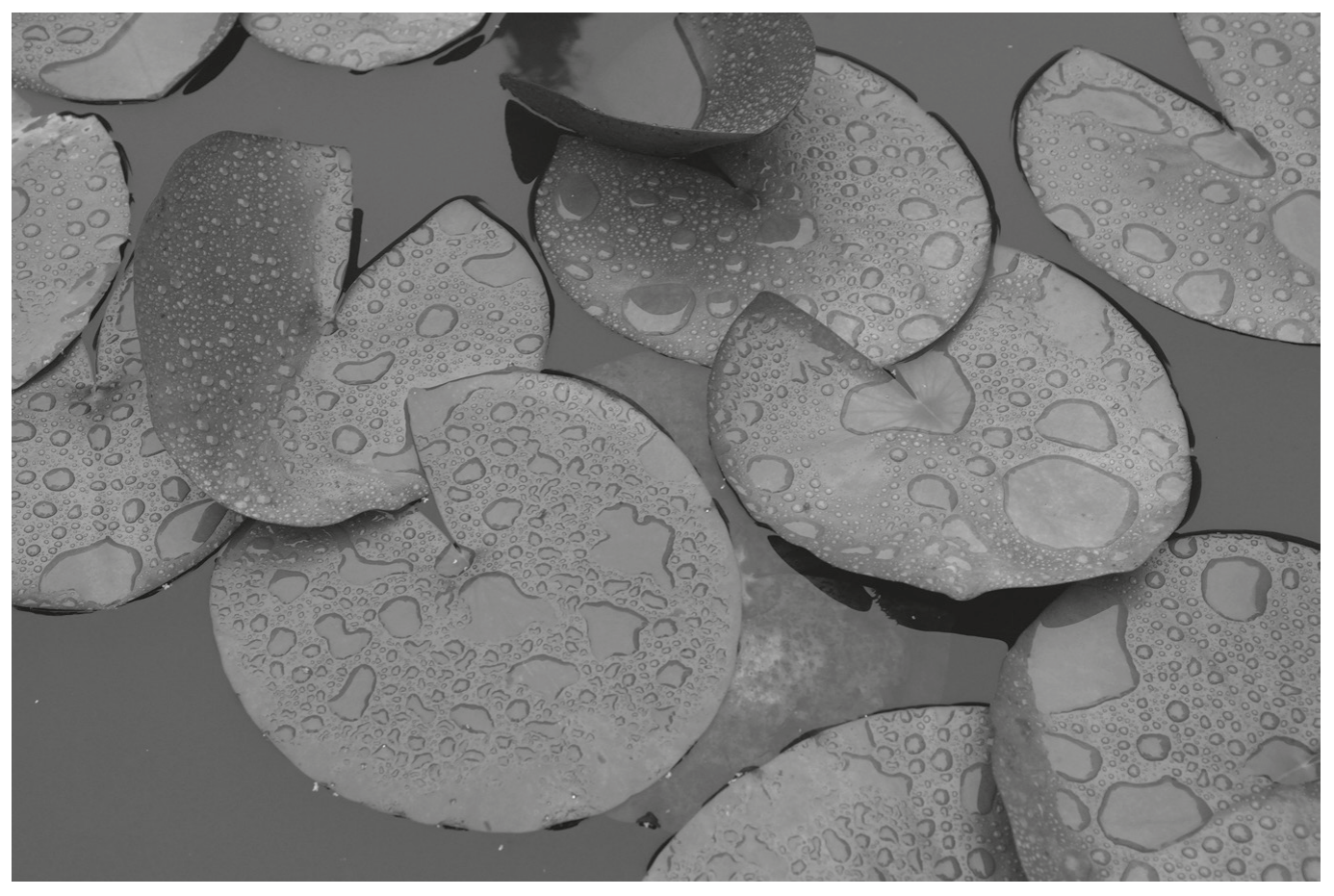
Fig. 2.1 is a photograph of some leaves of a water lily, which is a hydrophyte. The water lily has adaptive features that are found in many different hydrophytes.

Fig. 2.1

Fig. 2.1

Question 2(b)

(a)

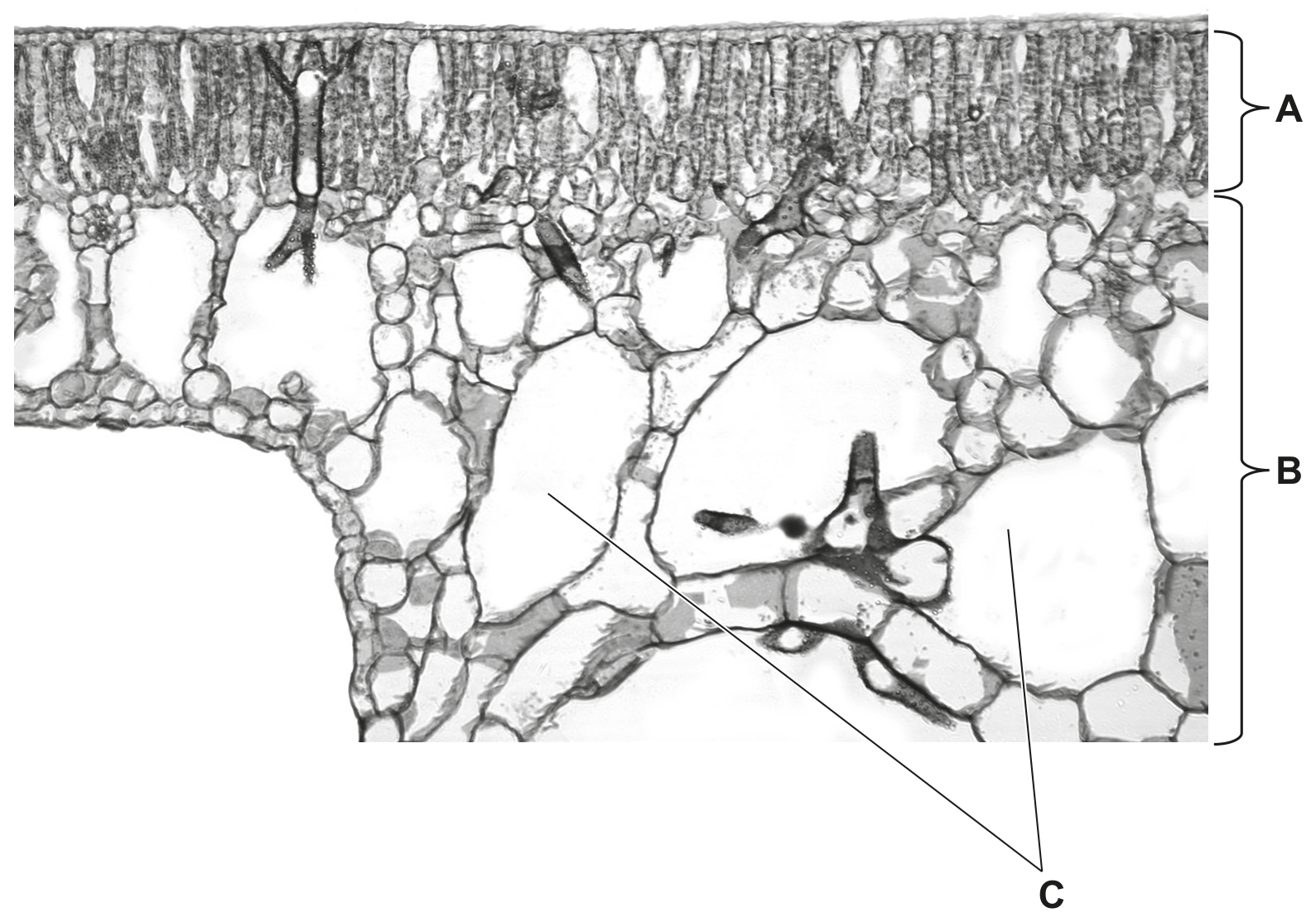
Fig. 2.2 is a photomicrograph of a cross-section of a part of a water lily leaf.

Fig. 2.2

Fig. 2.2

[ 3 ]

Question 2(b)(i)

(i)

State the names of the parts labelled A, B and C in Fig. 2.2.

A
B
C

[ 3 ]

Question 2(c)

(b)

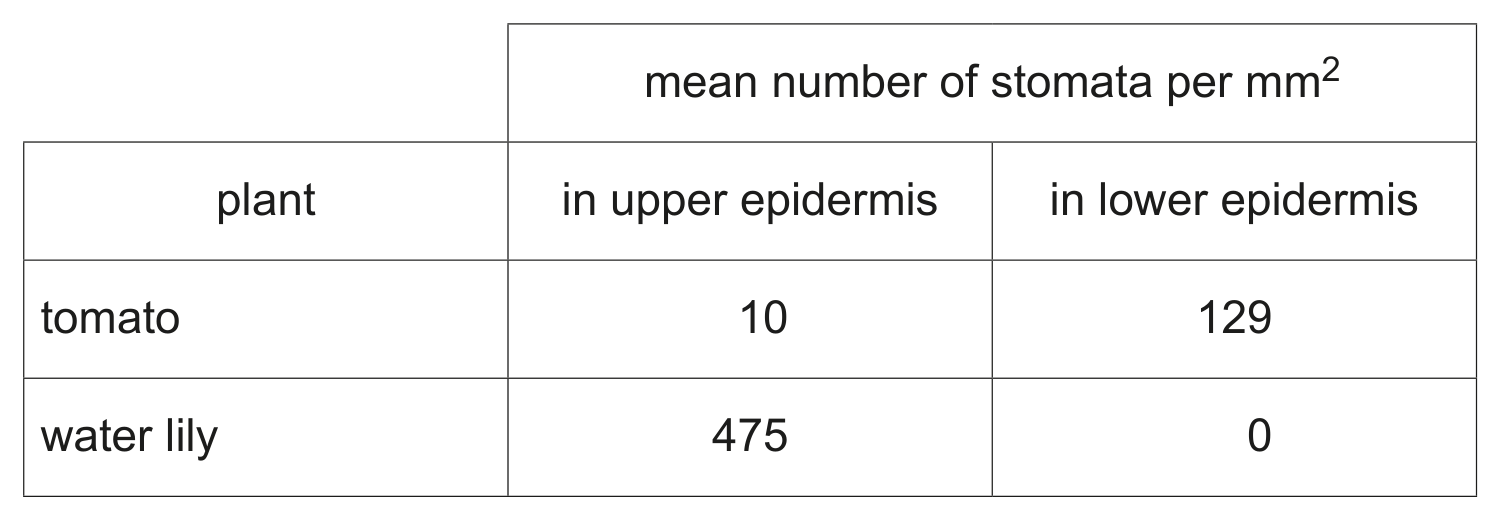
A scientist calculated the mean number of stomata per mm2\mathrm{mm}^{2} in the upper and lower epidermis in tomato plants and water lily plants. Tomato plants are a type of terrestrial plant.

Table 2.1 shows the results.

Table 2.1

Table 2.1

[ 1 ]

Question 2(c)(ii)

(i)

State the name of the cells that control the opening and closing of stomata.

[ 1 ]
0 selected