EduNinja

IGCSE Biology Extended14.4.7—Maintenance of a constant internalTopic Practice

14.4.7—Maintenance of a constant internal

• Describe the maintenance of a constant internal body temperature in mammals in terms of: insulation, sweating, shivering and the role of the brain

Question 2(b)

[Maximum number: 3]

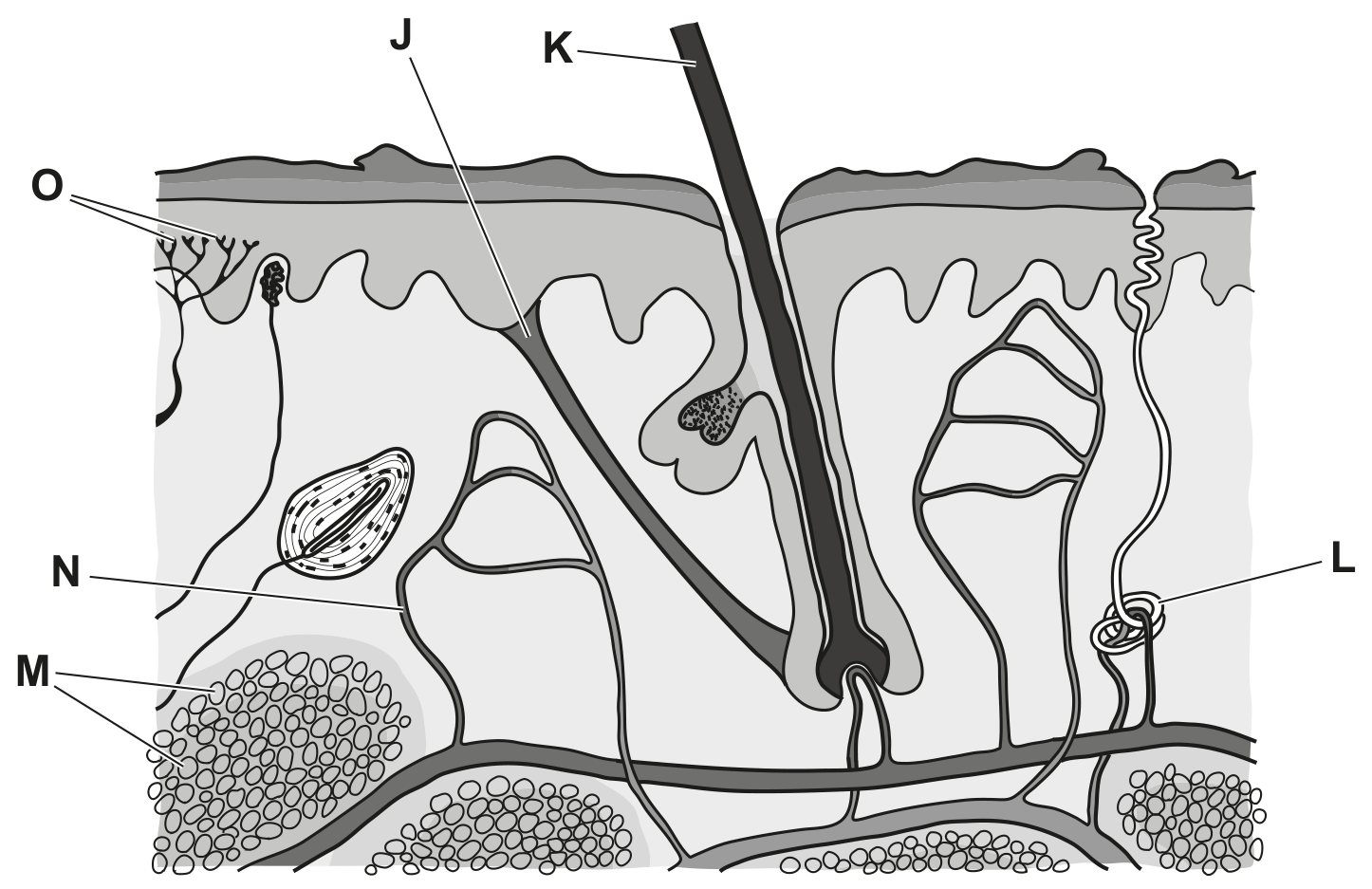
Fig. 2.2 shows a cross-section through human skin.
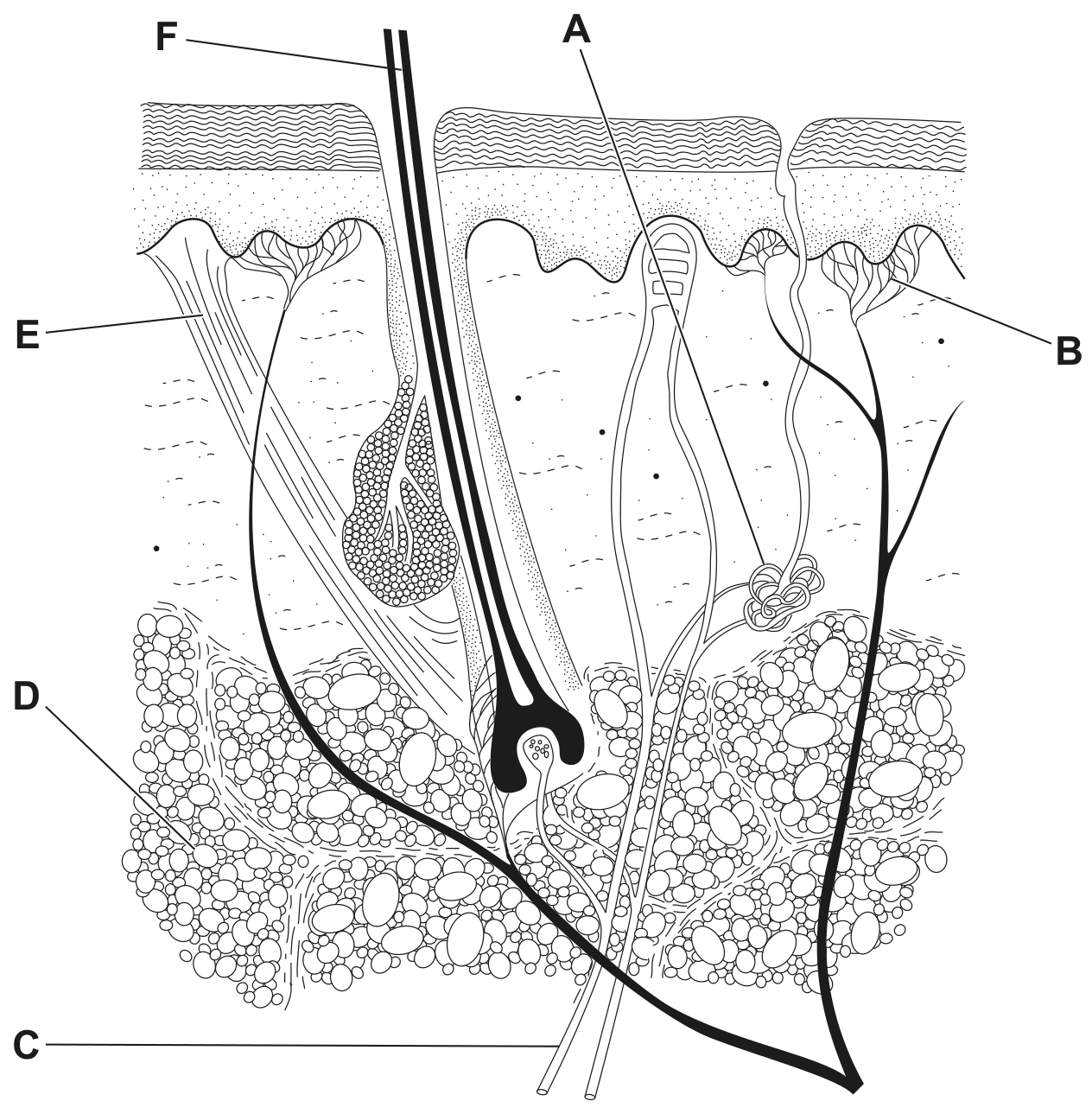
Fig. 2.2

Fig. 2.2

Table 2.1 shows the names of some parts of the skin, the letter identifying the part in Fig. 2.2 and its role in maintaining internal body temperature.

Complete Table 2.1.
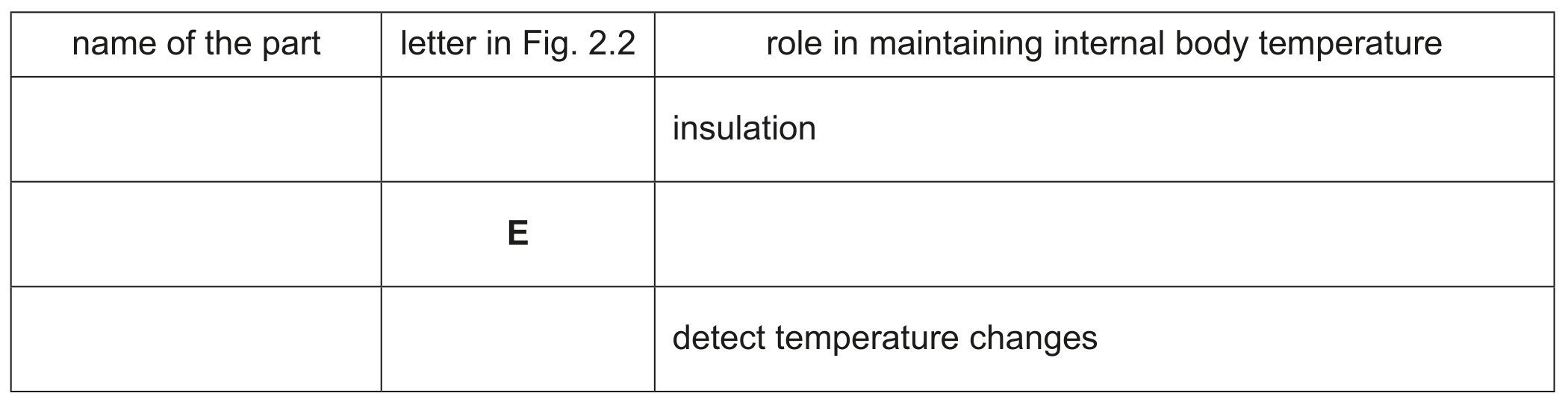
Table 2.1
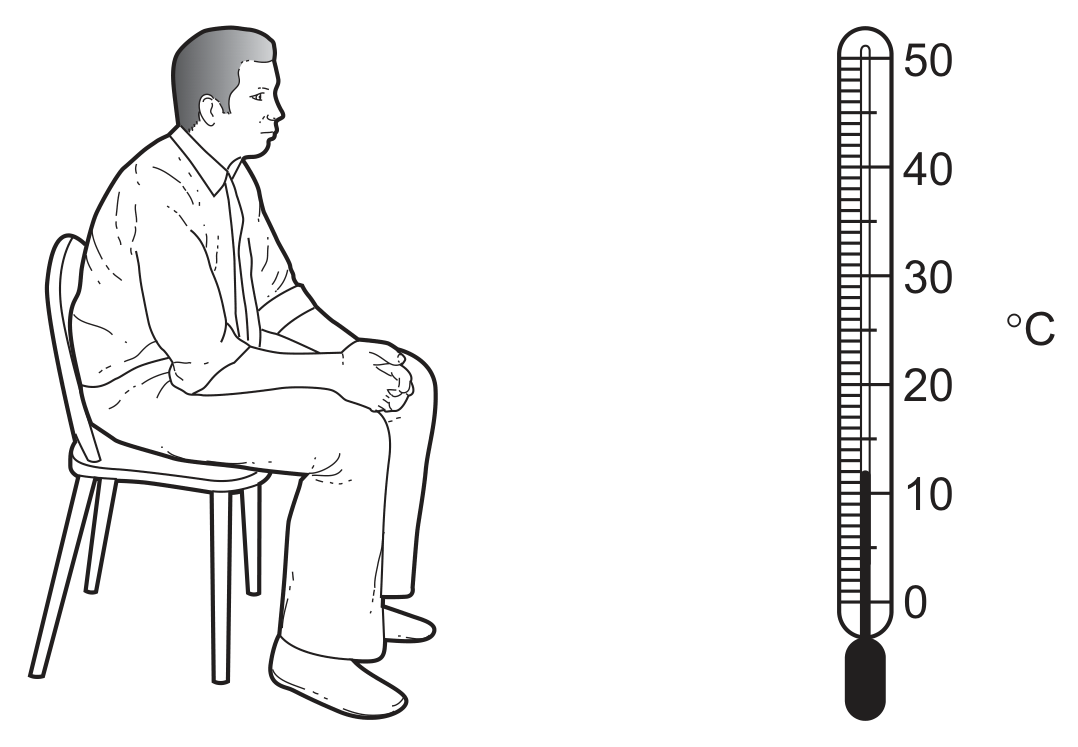
Table 2.1

Question 2(d)

[Maximum number: 5]

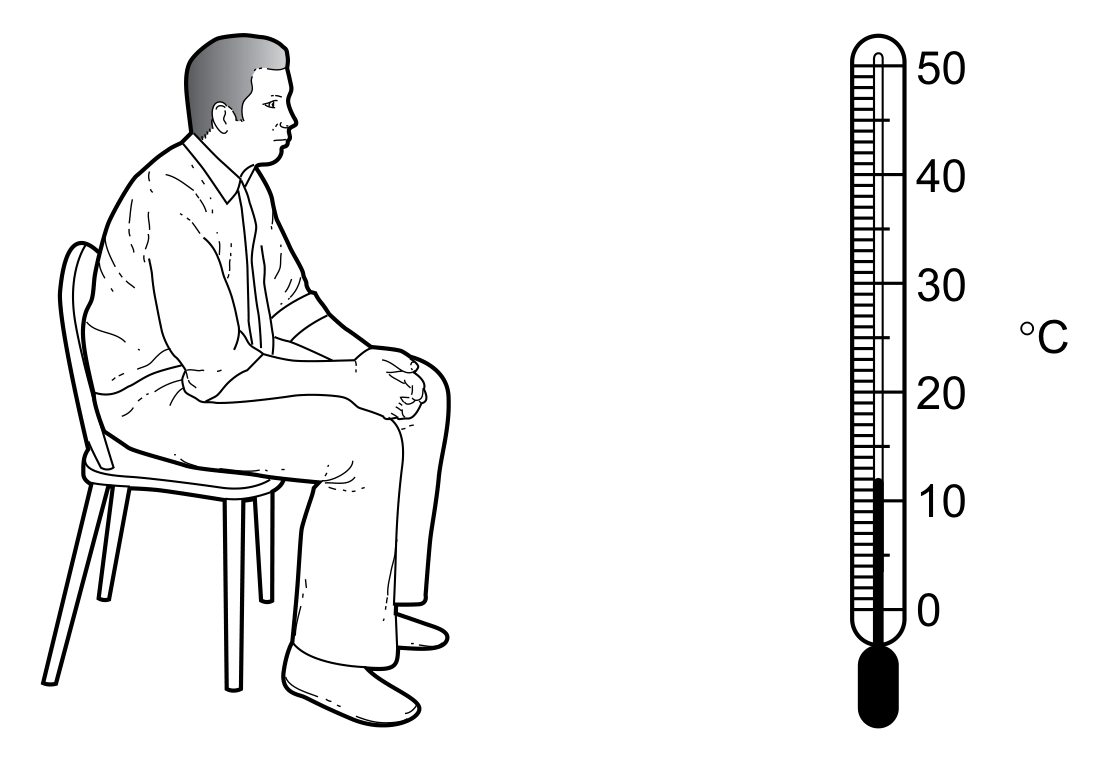
Fig. 2.1 shows a person sitting in a room. A thermometer shows the temperature of the room.

Fig. 2.1

Fig. 2.1

The run results in changes in the skin involving the blood vessels and the sweat glands. Describe what happens to the blood vessels and sweat glands during the run. Explain why these changes happen.

Question 2(d)

[Maximum number: 5]

Fig. 2.1 shows a person sitting in a room. A thermometer shows the temperature of the room.

Fig. 2.1

Fig. 2.1

The run results in changes in the skin involving the blood vessels and the sweat glands. Describe what happens to the blood vessels and sweat glands during the run. Explain why these changes happen.

Question 4

[Maximum number: 7]

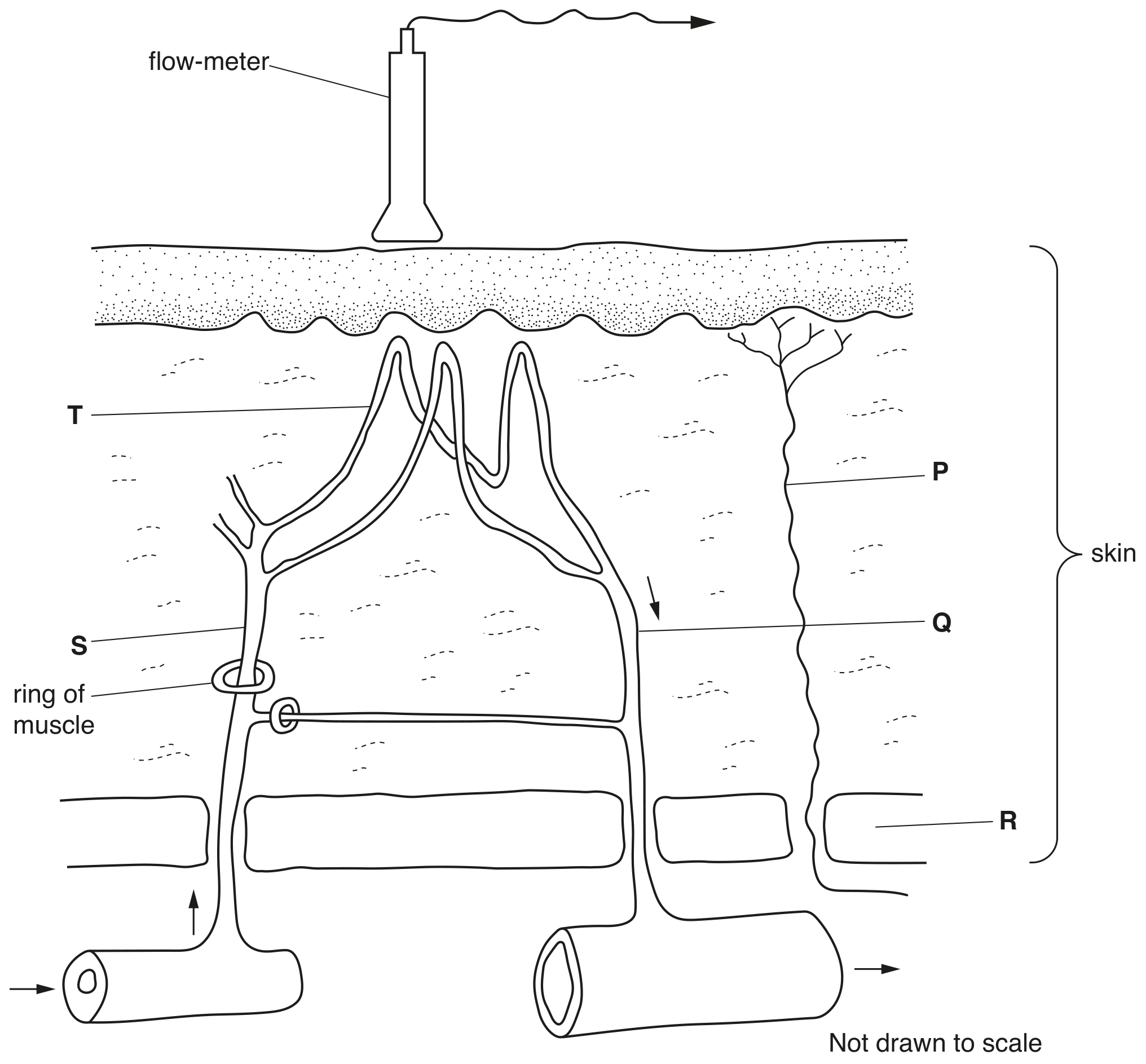
The flow of blood through the skin can be investigated by using a flow-meter.
Fig. 4.1 shows a flow-meter above a section through the skin.

Fig. 4.1

Fig. 4.1

Question 4(b)

(a)

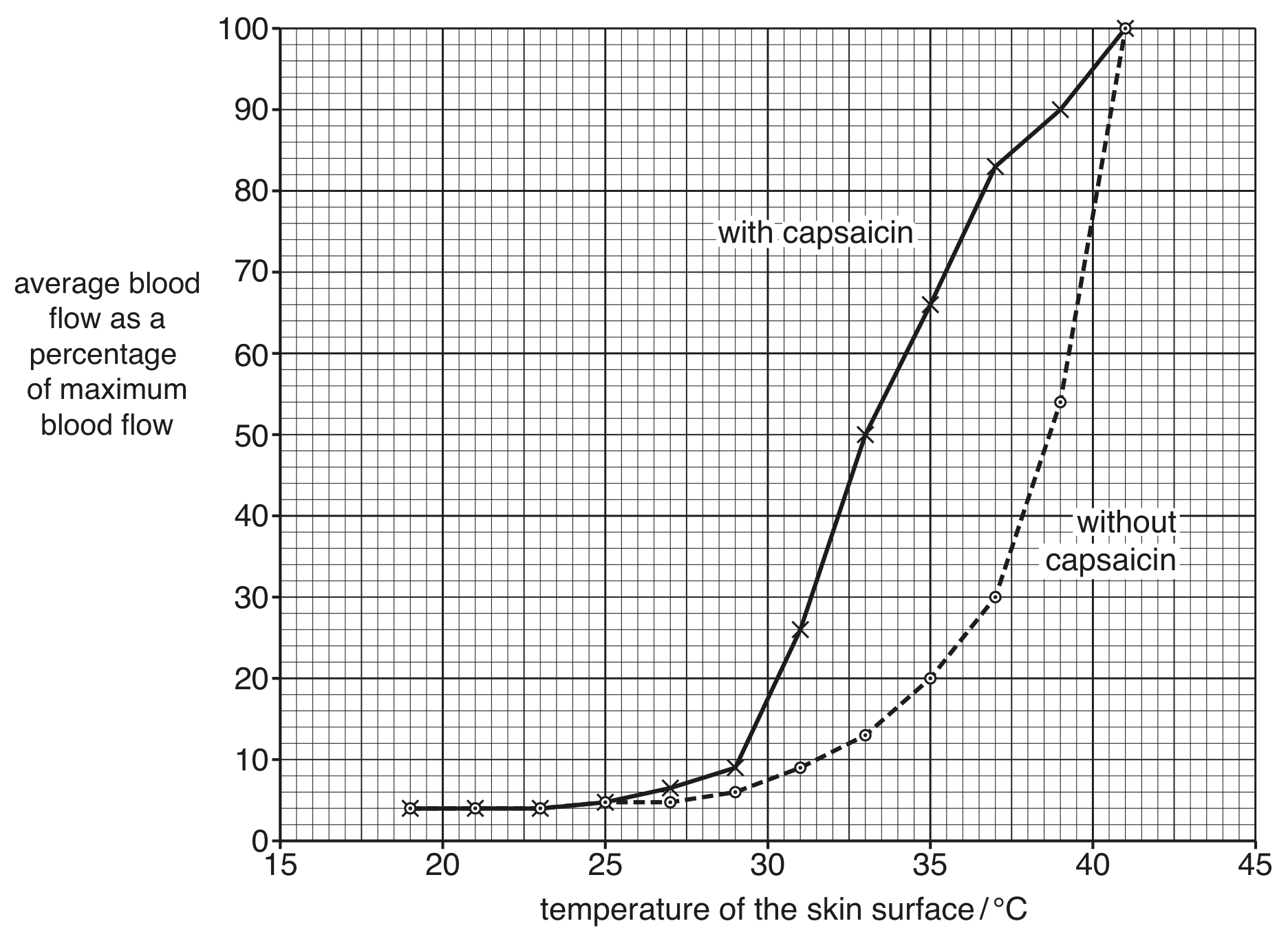
The blood flow through the skin of some volunteers was measured with a flow-meter when their skin was exposed to different temperatures.

Capsaicin is a compound that gives people the sensation of feeling hot when it is put on the skin. Researchers applied capsaicin to the skin of the volunteers and again measured the blood flow through their skin at different temperatures.

Fig. 4.2 shows the results.

Fig. 4.2

Fig. 4.2

[ 7 ]

Question 4(b)(i)

(i)

Use the information in Fig. 4.2 to describe the effect of increasing the temperature of the skin surface on blood flow to the skin without capsaicin.

[ 3 ]

Question 4(b)(ii)

(ii)

Explain the mechanism that increases blood flow through the skin.

[ 3 ]

Question 4(b)(iii)

(iii)

State the difference between the average blood flow for the treatments (with and without capsaicin) at 35C35^{\circ} \mathrm{C}.
. \%

[ 1 ]

Question 23

[Maximum number: 1]

What is the most important function of sweating?

A

to remove excess heat from the body

B

to remove excess salts from the body

C

to remove excess urea from the body

D

to remove excess water from the body

Question 4(b)(ii)

[Maximum number: 6]

Fig. 4.1 is a diagram of a section of human skin.

Fig. 4.1

Fig. 4.1

Describe how humans maintain a constant body temperature when the external temperature decreases.

Use the structures labelled in Fig. 4.1 in your answer.

Question 25

[Maximum number: 1]

In a mammal, body temperature is regulated by negative feedback.
As a result of negative feedback, what happens in the mammal's body as the temperature of the external environment decreases?

A

relaxation of hair erector muscles

B

sweating

C

vasoconstriction

D

vasodilation

Question 25

[Maximum number: 1]

How does the skin react when the body becomes cold?

arterioles supplying
the skin surface

sweat production

constrict

decreases

dilate

increases

move towards skin surface

decreases

move away from skin surface

increases

Question 26

[Maximum number: 1]

When the environment is hot, how do the arterioles in the skin and hair erector muscles react?

arterioles

hair erector

muscles

dilate

relax

dilate

contract

constrict

relax

constrict

contract

Question 6(c)

[Maximum number: 3]

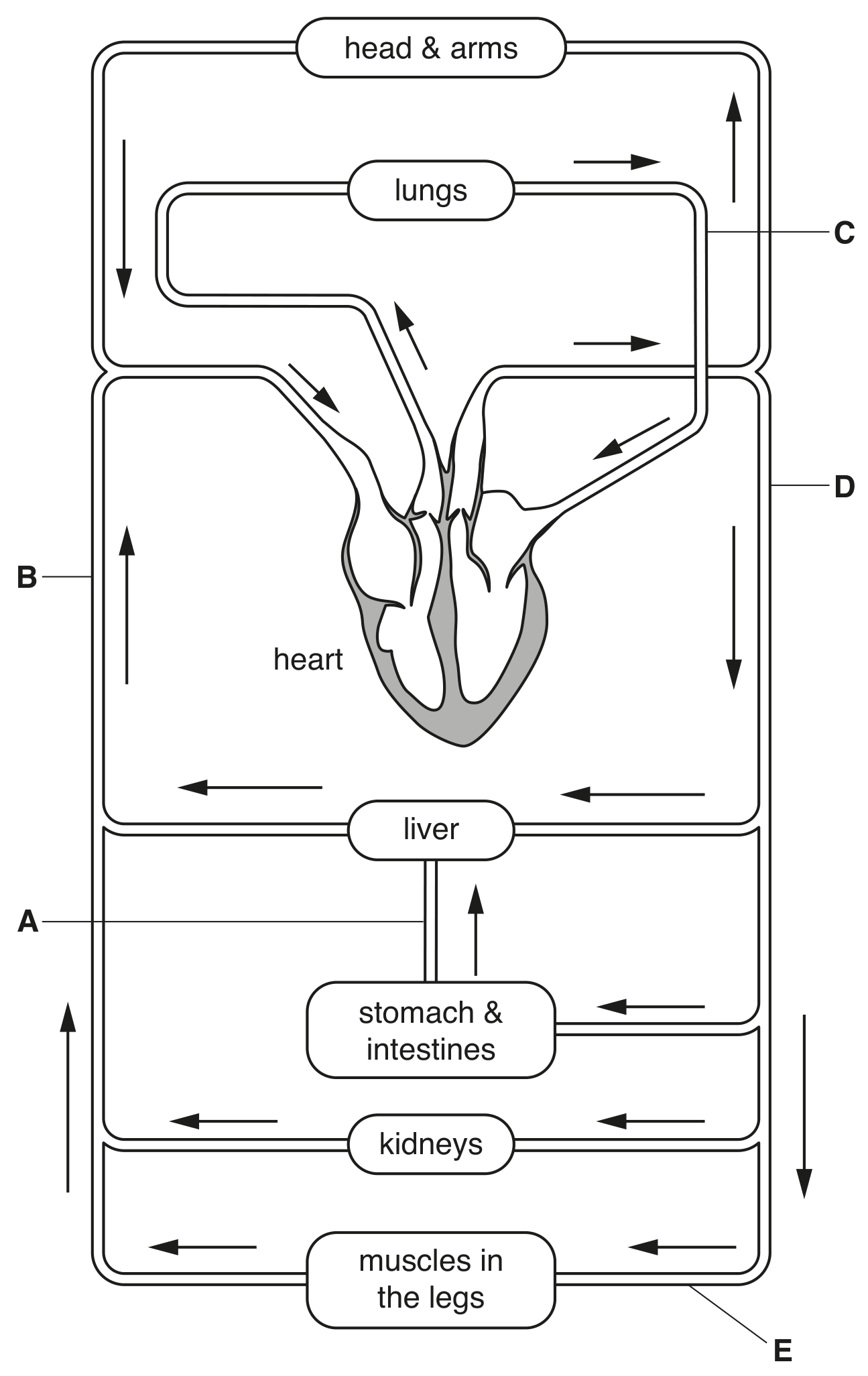
Glucose is absorbed into the blood in the small intestine. Fig. 6.1 shows the human circulatory system and the pathway taken by molecules, such as glucose, when they travel in the blood.

Fig. 6.1

Fig. 6.1

Explain how blood flow in the skin helps to maintain a constant body temperature in very hot conditions.

0 selected