
EduNinja

4.8 Measuring development Topic Practice

4.8 Measuring development Topic Practice
IB Economics syllabusEconomics SL/HLFirst assessment 2025

Students practise comparing development indicators, evaluating GDP’s limitations, defining composite indices, and interpreting data tables for HDI, IHDI, or green GDP.

Exam points

  • compare GDP per capita with HDI to show growth misses health and opportunity
  • evaluate GDP by contrasting market output coverage with unpaid care omissions
  • interpret HDI or Happy Planet Index data tables to calculate or compare rankings

Question 1(a)(ii)

[Maximum number: 2]

Read the extracts and answer the questions that follow.
Text A - Overview of the economy and government policies in Kenya

(1) Kenya, in East Africa, is achieving high annual economic growth rates, averaging above 5 %. Living standards are improving and employment is increasing in the manufacturing, tourism, construction, and education sectors. Kenya's high growth is also changing the distribution of income and affecting the environment. However, climate change, high levels of inequality and youth unemployment may reduce future growth rates.

(2) Floods and droughts are severe and frequent. In 2022-2023, droughts caused agricultural output to fall, affecting the employment of 40 % of the population and doubling the number of people with insufficient food. The government took measures to increase food supplies, such as reducing the tariff on imports of rice. It did not impose a price ceiling for essential food, as food shortages might result.

(3) The rising price of food is the main cause of inflation in Kenya. The central bank used a contractionary monetary policy in 2022 and 2023 to reduce inflation and to prevent the depreciation of the country's currency (Kenyan shilling, KES).

(4) The budget deficit as a percentage of gross domestic product (GDP) became smaller in 2023 because government expenditure grew more slowly than GDP. Moreover, economic growth resulted in higher tax revenue from both income tax and a 16 % indirect tax on goods and services. The government is also receiving revenue from the sale of some state-owned enterprises (SOEs). A World Bank programme, aimed at an expansion of "green" energy in Kenya, provides financial and technological support to the Kenya Power and Lighting Company, an SOE that has been making losses.

(5) The currency depreciation in 2022 boosted exports. Services, which are approximately 38 % of total exports and include tourism and financial services, are growing faster than exports of goods. Manufactured goods account for 37 % of total exports and agricultural goods account for 25 %. Revenue from exports of tea, flowers, vegetables, meat, and coffee are volatile and unpredictable. The droughts in 2022-2023 reduced output, which lowered export revenue from vegetables and flowers by almost 20 %.
Text B - Unequal distribution of the benefits of economic growth in Kenya

(1) Although economic growth has reduced absolute poverty, inequality remains a problem, particularly between the formal and informal sectors and between the urban and rural areas. Rural poverty is caused by low agricultural productivity and farmers' limited access to markets, finance, and technology.

(2) However, the level of education has improved significantly, with a literacy rate of over 90 %. Secondary school attendance rates have increased from 13 % in 2003 to 49 % in 2022, despite the costs of attending school. In 2022, the government introduced a fund (the Hustler Fund), partly financed by foreign aid. The fund provides low-interest loans to women, young people, and small firms, for education or investment.
Text C - Reducing and adapting to climate change in Kenya

(1) Global warming is affecting the Kenyan economy. Consequently, agricultural output and tourism, which account for 70 % of employment and most exports, will probably decline. Therefore, GDP could fall by 2 % annually. However, Kenya has relatively low carbon emissions, particularly because renewable resources generate 90 % of electricity, a figure that is planned to rise to 100 % by 2030.

(2) Measures taken by other economies to reduce carbon emissions provide opportunities for Kenya because the markets for "green" goods are expanding. Kenya is able to sell tradable permits (carbon credits) to high-emitting countries due to its reforestation programmes.

(3) The International Monetary Fund (IMF) recommends that climate-related considerations should be part of macroeconomic and infrastructure policies. It also recommends that carbon taxes should be imposed to reduce the use of fossil fuels by manufacturing firms. Rapid urbanization is increasing the need for electric vehicles and improved public transport. Energy efficiency measures, fuel substitution, and switching to rail transport will not only lower transportation costs but also reduce the trade deficit. This is because fossil fuels used for transportation and manufacturing are imported.

(4) Kenya is able to obtain finance and technology for investment in climate-related projects, such as renewable energy and forestry programmes, through foreign aid and partnerships with the private sector. Overall, these policies will reduce environmental disasters and increase economic growth and jobs in the formal sector.
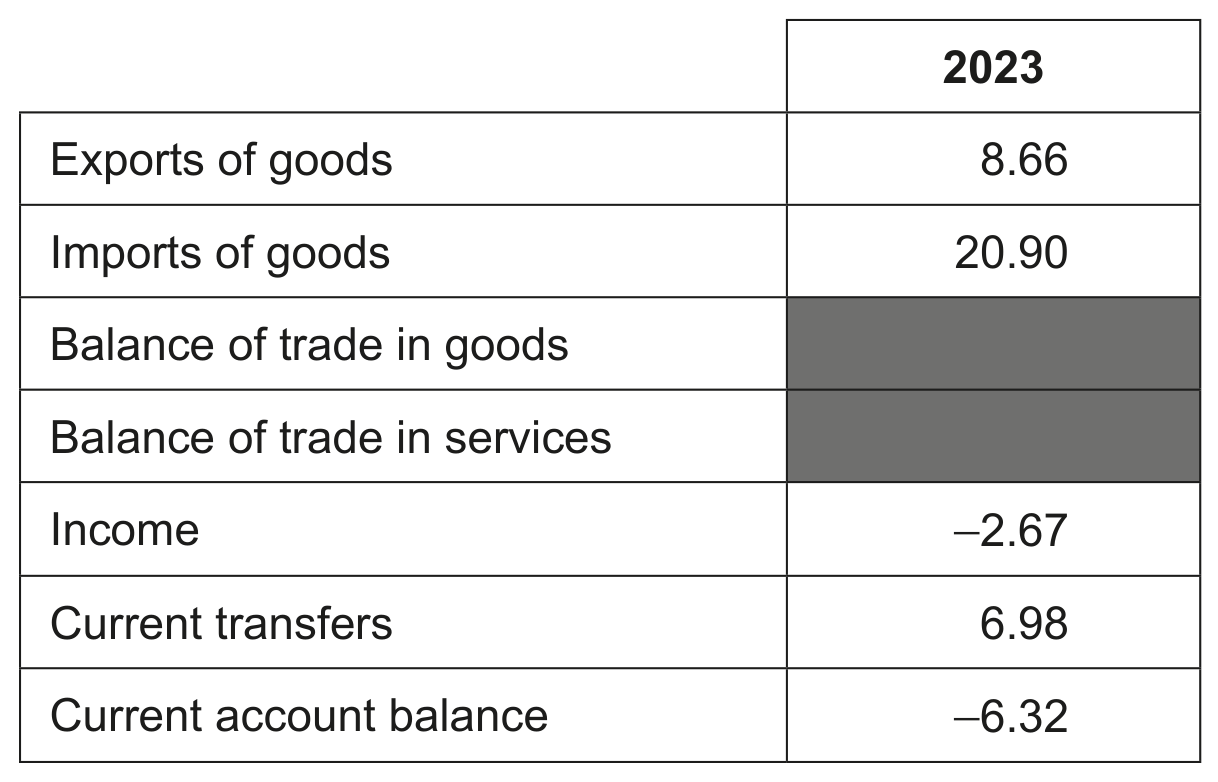
Table 1: Balance of payments accounts for Kenya in billions of USA dollars (USD)
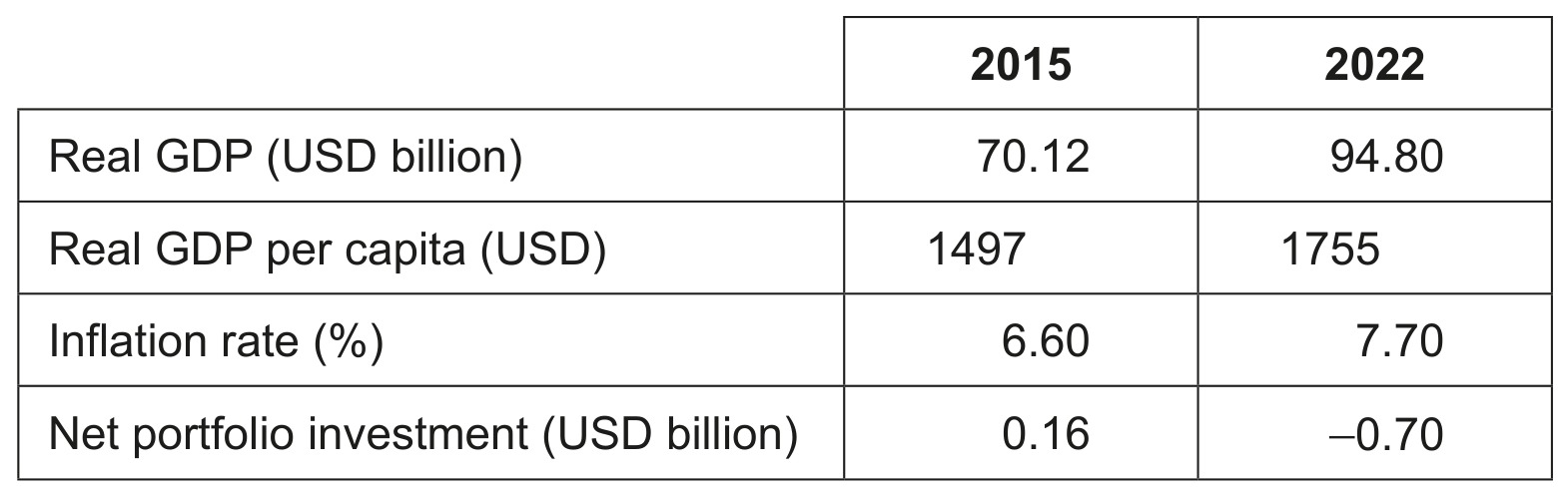
Table 1: Balance of payments accounts for Kenya in billions of USA dollars (USD)

Table 2: Economic data for Kenya
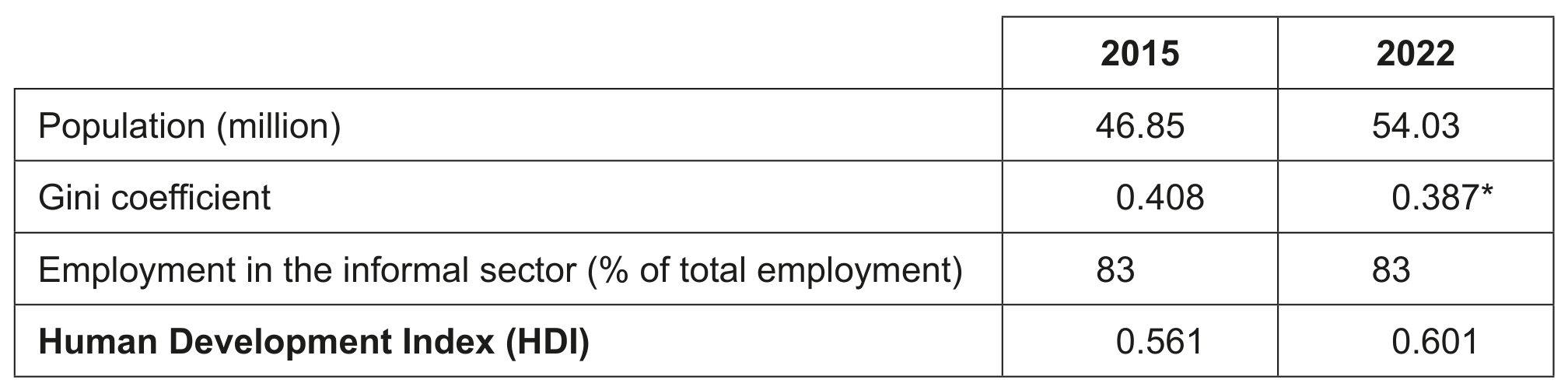
Table 2: Economic data for Kenya

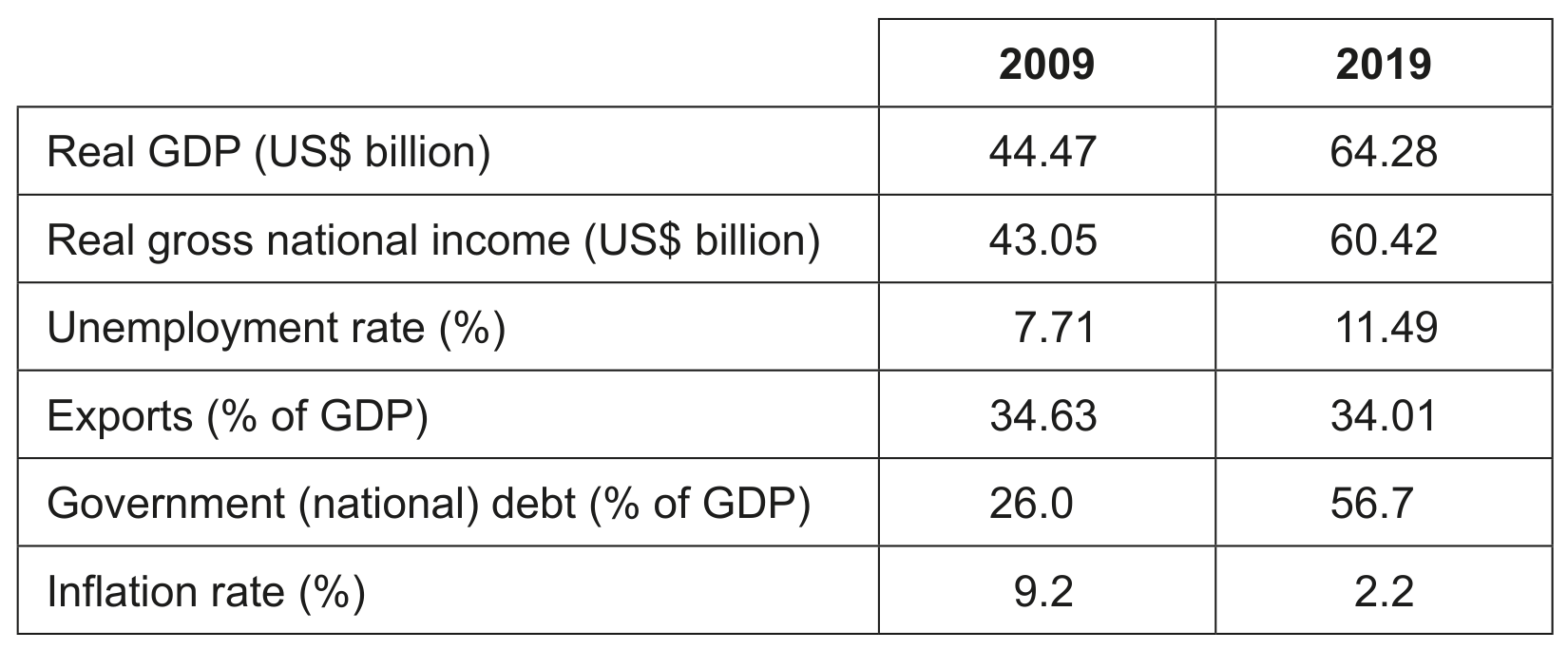
Table 3: Development data for Kenya

Table 3: Development data for Kenya

List two components of the Human Development Index (HDI) indicated in bold in Table 3.
Question 1(a)(ii)

[Maximum number: 2]

Read the extracts and answer the questions that follow.
Text A — Costa Rica: Economic growth and development strategies

(1) In the early 1990s, Costa Rica, a Central American country with a population of approximately 5 million people, was considered an economic development success story. This stable democracy has experienced consistent economic growth (approximately 4 % annually) for the last 20 years. Some experts say this has been due to moving from a failed import substitution policy to outward-oriented economic policies. The outward-oriented policies included export promotion, diversification, trade liberalization and inward foreign direct investment (FDI). During the same period, social and environmental policies were implemented. Public education and healthcare were guaranteed for all citizens, social programmes were improved to include extensive transfer payments and minimum wages were increased. This helped the reduction in absolute poverty rates and Costa Rica became known as a global leader in environmental conservation efforts.

(2) The Dominican Republic-Central America-United States Free Trade Agreement (CAFTA-DR), was a significant move towards trade liberalization. In addition to reducing trade barriers, it established a secure and predictable environment for foreign investors. This agreement also led to the breakup of the state-owned monopolies in the telecommunication and insurance industries in Costa Rica. Additionally, trade agreements with Canada, China, the European Union (EU), Mexico, Peru and Singapore were established.

(3) Costa Rica encouraged inward FDI by lowering regulations and providing tax incentives in manufacturing industries. In 1997, Intel, a large multinational tech company from the United States (US) invested US$300 million in building a computer parts factory. Intel's investment helped diversify Costa Rica's main exports away from coffee and bananas to electronics. Moreover, the FDI allowed Costa Rica to benefit from production externalities, as multinational companies provided training to local employees. Manufacturing and services overtook agriculture in terms of contribution to gross domestic product (GDP), and Costa Rica experienced its first trade surplus in 50 years. The increase in real GDP from the FDI was significant, as the marginal propensity to consume (MPC) was 0.8 at the time.

(4) To promote diversification, export subsidies for companies in the manufacturing sector were granted. Agricultural diversification was also encouraged through subsidising farmers who were adopting new technology to produce higher value-added products, such as roasted coffee beans.
Text B - Current concerns

(1) Despite earlier successes, income inequality in Costa Rica has remained high and poverty levels have remained unchanged for several years. This has been blamed on insufficient transfer payments due to a tax system that is not progressive enough and tax exemptions offered to foreign firms. Unemployment has consistently risen, and despite high levels of spending in education, a significant number of young people have not completed secondary or higher education. The focus on higher value-added sectors did not create jobs for low skilled workers, which had a disproportionate impact on women and youth. Additionally, the social programmes have often failed, and still fail, to reach the very poor.

(2) High social and environmental spending, large increases in public sector wages, and insufficient revenue have resulted in very large government (national) debt. Most of the debt is domestic, which is raising concerns about possible crowding out.

(3) FDI has historically supported economic growth, however, domestic investment and further FDI have slowed down due to rising costs and outdated infrastructure. Additionally, the appreciating colón (Costa Rica's currency) has lowered export competitiveness, and Costa Rica remains heavily dependent on one major trading partner, the US.
Text C - "Green Trademark" environmental policy
The "Green Trademark" policy has reversed deforestation and has resulted in Costa Rica becoming one of the countries with the greatest level of biodiversity in the world. However, it is difficult to maintain the environmental focus due to pressure on government resources and the high opportunity costs associated with land use. The consistent economic growth has made it difficult for Costa Rica to reduce carbon emissions from fossil fuels. Increasing urbanization and the growth in the manufacturing sector have increased air and water pollution. Moreover, the overuse of chemicals in farming has caused river pollution, and the intensive use of land for agriculture has generated concern for environmental conservation.

Table 1: Economic data for Costa Rica

Table 1: Economic data for Costa Rica

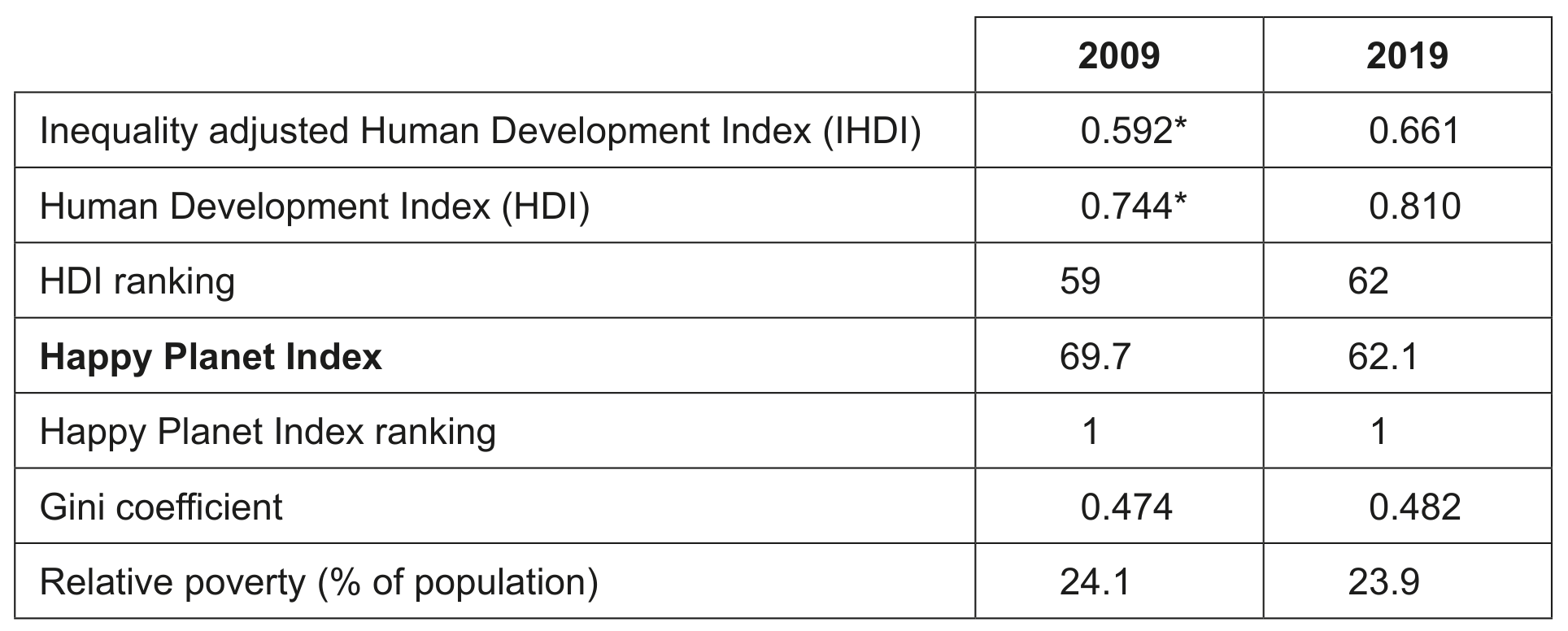
Table 2: Development data for Costa Rica

Table 2: Development data for Costa Rica

\footnotetext{
*2011 figure
}

List two components of the Happy Planet Index indicated in bold (Table 2).

Question 3(b)

[Maximum number: 15]

Using real-world examples, evaluate the view that the level of real gross domestic product (GDP) is the best measure of economic development.

Question 3(b)

[Maximum number: 15]

Using real-world examples, discuss the view that economic growth will always lead to economic development.

Question 2(a)(ii)

[Maximum number: 2]

Read the extracts and answer the questions that follow.
Text D - Overview of Sierra Leone

(1) Sierra Leone is located on the west coast of Africa. Economic activity is concentrated on agriculture and mining, which together contribute 70 % of gross domestic product (GDP) and 77 % of export revenue.

(2) Economic growth rates fluctuated from +20.1 % in 2013 to -21.5 % in 2015. The economic slowdown in China contributed to a significant drop in mining activities and a fall in Sierra Leone's export revenue. China is Sierra Leone's largest market for exported minerals.

(3) Economic growth rates in Sierra Leone have improved in recent years due to increased activity in agriculture, mining and construction. Increased employment in these labour-intensive sectors could help reduce poverty, which remains widespread in the country. Sierra Leone's ranking in the Inequality adjusted Human Development Index (IHDI) is very low.

(4) The fall in export revenue has led to a 50 % depreciation of the leone (Sierra Leone's currency) over the past five years. Even recent increases in the price of commodities have not been sufficient to offset the high import expenditure on food, medication, cars and capital equipment.

(5) The depreciation of the leone has led to inflationary pressures. The removal of a fuel subsidy resulted in an increase in the price of fuel and pushed the inflation rate from 16.8 % in 2018 to 17.2 \% in 2019.

(6) To make matters worse, access to essential, life-saving health care services in Sierra Leone is often disrupted by regional conflicts. Healthcare in Sierra Leone is generally charged for and is provided by a mixture of government, private and non-governmental organizations (NGOs). NGOs are relied on to protect the health and wellbeing of citizens. NGOs help to achieve this by distributing medicine and teaching families about hygiene and proper sanitation.

(7) Another area of concern is the government debt, which stood at 62 % of GDP in 2019. The government has reduced its budget deficit from 5.7 % to 3.4 % of GDP by minimizing non-payment of taxes and implementing cost-saving measures such as the automation of some government services.

(8) The newly elected government has made good progress in its fight against corruption, but it is facing many macroeconomic challenges. Foreign aid has been reduced, infrastructure is inadequate and many economic activities remain untaxed. Youth unemployment is also high due to low literacy rates and a lack of skills required in the job market.
Text E - Sierra Leone's new development plan

(1) In 2019, the government of Sierra Leone introduced a new five-year development plan. The plan includes policies aimed at increasing the welfare of Sierra Leone's citizens by working towards the Sustainable Development Goals.

(2) The development plan ensures access to free primary and secondary education in all public schools. The cost of education is the main reason that many households are not sending their children, particularly girls, to school. For those paying private education fees, switching to public education would allow more of their household income to be spent on other essential services and farming equipment.

(3) The expected increase in human capital should facilitate economic activities and lead to investment. Schools now teach modern farming practices, such as those involving the use of farm machinery and fertilizers. These would benefit rice farmers and help achieve food security (ensuring people have access to enough food).

(4) The provision of technical education should not only increase agricultural output but also allow for the diversification of the economy. The manufacturing sector contributes only 2 % of the country's GDP and could provide an alternative source of employment. The five-year plan also addresses the lack of infrastructure, in particular for electricity generation, which has so far restricted the development of the manufacturing sector.
Text F - Investment in Sierra Leone

(1) The World Bank ranked Sierra Leone 160th among 190 countries in 2018 for the ease of doing business, citing difficulties in accessing electricity and in obtaining loans and business permits. Government borrowing from the banking sector has increased in recent years, resulting in high interest rates and limited credit availability for the private sector. Foreign investors, however, usually bring capital from abroad.

(2) Despite the challenges, Sierra Leone offers significant opportunities for investment. Foreign investors are involved in the energy sector, infrastructure, agriculture, tourism, and natural resources. Reduced tax rates on corporate income are offered for investments in agriculture and tourism.

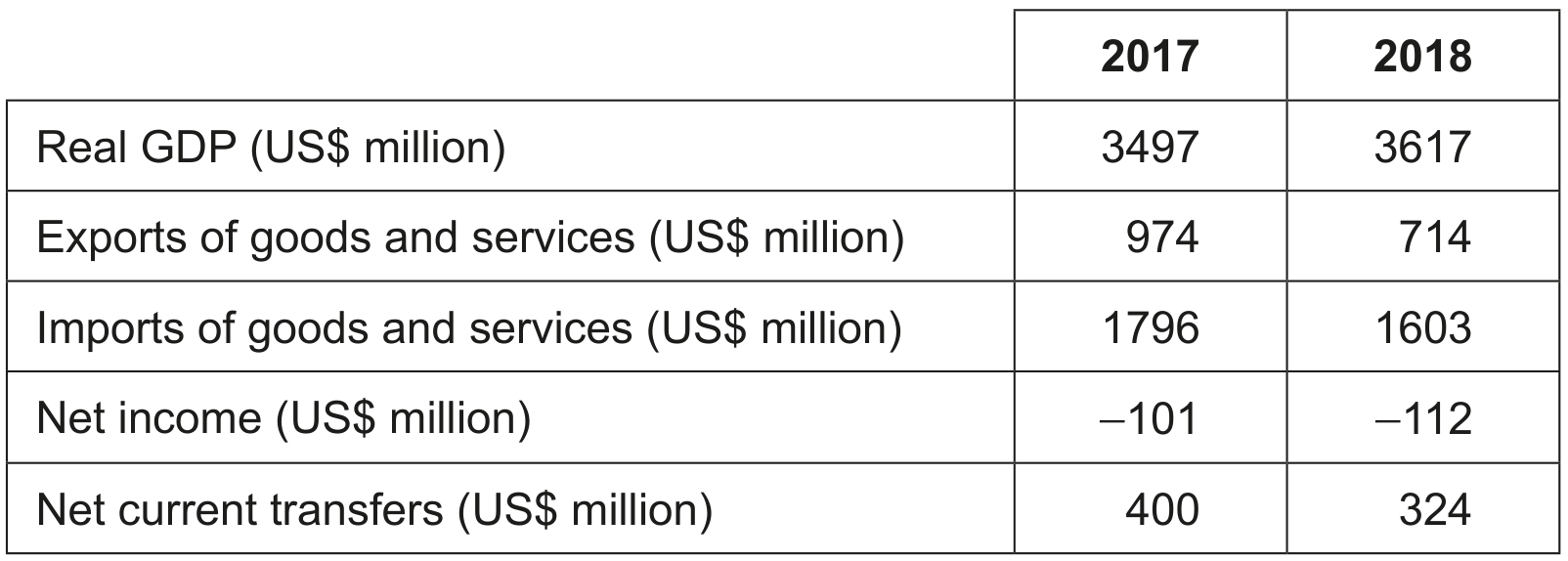
Table 3: Economic data for Sierra Leone

Table 3: Economic data for Sierra Leone

List two dimensions of the Inequality adjusted Human Development Index (IHDI) (Text D, paragraph 3).

Question 3(a)(ii)

[Maximum number: 2]

Study the following extract and answer the questions that follow.
Can the Democratic Republic of the Congo achieve its economic potential?

(1) The Democratic Republic of the Congo (DRC) is a nation of great potential. It has large mineral resources and an abundance of fertile land. The mining and export of cobalt, copper and gold are the main source of government revenue. However, the abundance of natural resources causes devastating conflicts as rebel groups fight for control of the DRC's resources. With a population of 80 million and gross domestic product (GDP) per capita of only US$457, the DRC is one of the world's poorest nations. It is ranked 176 in the world in terms of the Human Development Index (HDI).

(2) The government has been accused of relying too much on tariffs, but to improve living standards, the government needs revenue to spend on agriculture, electricity and roads. Furthermore, business owners in the DRC complain of corruption and increasing "red tape" (excessive regulations).

(3) The government believes that a strong agricultural sector could boost economic growth but only 10 % of the land is used for farming. Rice, maize and other crops grow well in the tropical climate and yet the government spends US$1 billion per year importing basic foods. According to a government spokesperson, the lack of infrastructure is a major barrier to the processing and transporting of agricultural products. The DRC's road network is so bad that farmers and traders often make a two-week trip in small boats down the Congo River to sell their produce. The DRC has just 27877 kilometres ( km ) of roads. It is estimated that 90000 km of national roads and 150000 km of rural roads must be built.

(4) In addition, the World Bank reports that only 17 % of the DRC's population has access to electricity, despite the capacity of the Congo River to generate enough electricity to satisfy the needs of the region.

(5) To make matters worse, the regional conflicts have affected the availability of healthcare services. It is estimated that half of the health centres have been looted*, burnt or destroyed. Government expenditure on healthcare per capita remains one of the lowest in the world. Non-governmental organizations (NGOs) are relied on to protect the health and wellbeing of citizens. NGOs help to achieve this by distributing medicine and teaching families about hygiene and proper sanitation.
* looted: goods stolen from a place, typically during a war or riot

List two components of the Human Development Index (HDI) (paragraph (1)).

Question 3(d)

[Maximum number: 8]

Study the following extract and data and answer the questions that follow.
Economic development in two West African countries
Ghana

(1) Ghana is the world's second largest cocoa producer and Africa's second largest gold producer. It is one of Africa's fastest growing economies and has made major progress in achieving persistent economic growth.

(2) Over the last decade, Ghana has enjoyed increasingly stable and improving democratic governance. Four successful elections during the decade have strengthened the effectiveness of key national institutions, improved investor confidence and created an environment that promotes investment and growth.

(3) Ghana enjoys a high degree of media freedom; the private press and broadcasters operate without significant restrictions. The media are free to criticize the authorities without fear of punishment, says the non-governmental organization (NGO) Reporters Without Borders. The private press is allowed to express criticism of government policy, which increases the accountability and transparency of the government.

(4) Although Ghana's growth has been fairly strong, the source of growth has always been dominated by commodities and the capital-intensive services sector. Neither of these has a direct effect on poverty reduction. Growth in rural areas is often limited by basic infrastructure, such as roads. This limits the ability of people in rural areas to access markets in urban areas.
Nigeria
5 Nigeria is Africa's leading oil producer. In 2016, it experienced its first full year of recession in 25 years. Global oil prices reached a 13-year low and oil production was drastically cut. Oil has continued to dominate Nigeria's growth pattern, but the volatility of oil-dependent growth prevents progress in social and economic development.

(6) On the political front, the transition from military dictatorship to democratic rule has been acclaimed as one of Nigeria's major successes in the last decade. The 2011 general election, supported by the United Nations, was widely acknowledged by international observers and domestic monitors as one of the freest and fairest elections conducted in the country in recent years.
Ghana and Nigeria

(7) Both Ghana and Nigeria have cut fuel subsidies in order to reduce their budget deficits. This has had severe consequences for low-income households.

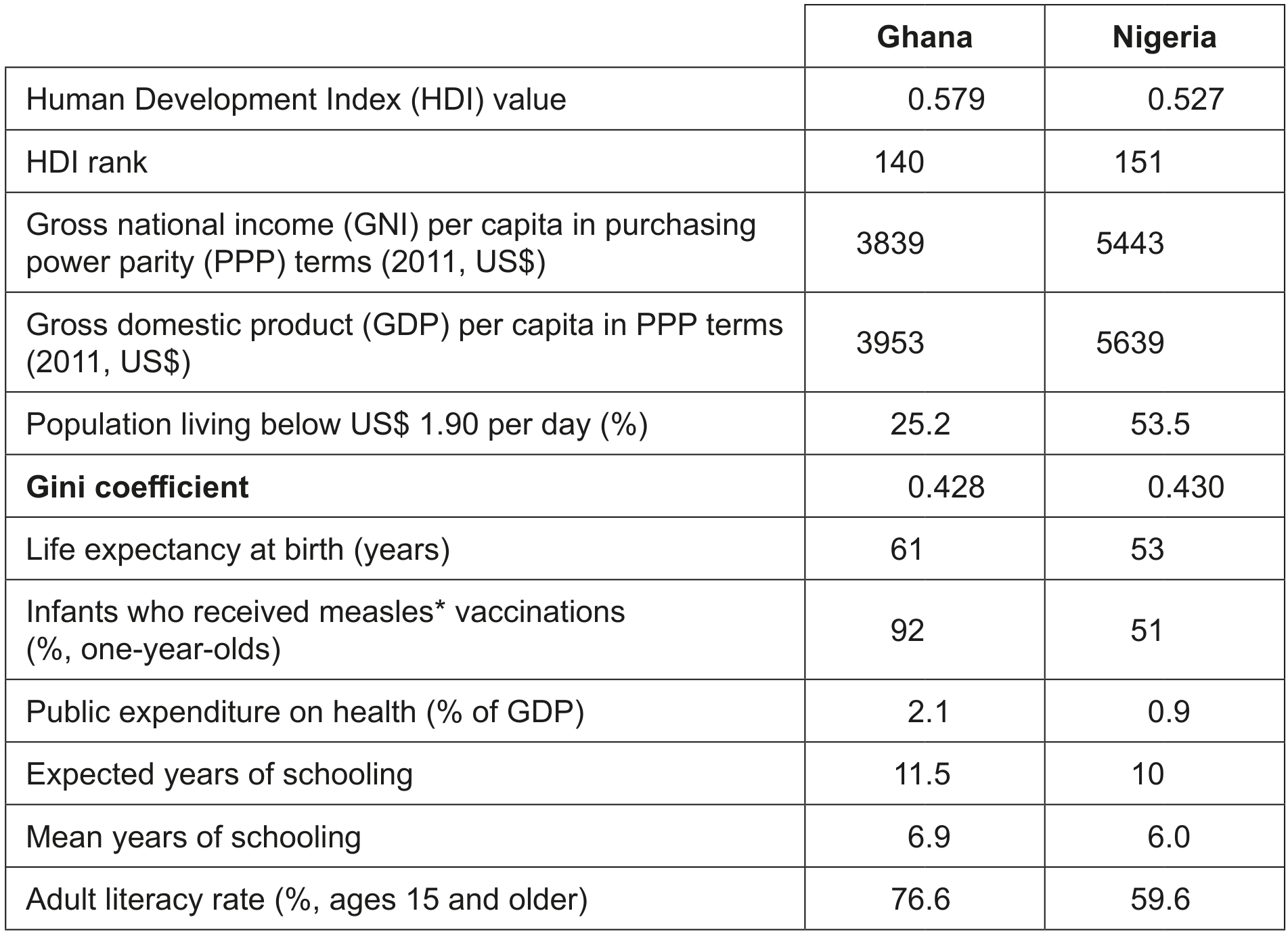
Table 1: Selected economic data for Ghana and Nigeria

Table 1: Selected economic data for Ghana and Nigeria

UNDP Nigeria country profile, http://hdr.undp.org, accessed 19 February 2019; About Ghana, http://hdr.undp.org, accessed 19 February 2019; About Nigeria, http://hdr.undp.org, accessed 19 February 2019]

\footnotetext{
* measles: a highly contagious disease that is one of the leading causes of death among young children
}

Using information from the text/data and your knowledge of economics, compare and contrast the level of economic development in Ghana and Nigeria.

0 selected