
EduNinja

4.7 Sustainable development Topic Practice

4.7 Sustainable development Topic Practice
IB Economics syllabusEconomics SL/HLFirst assessment 2025

Students practise applying SDGs to real-world policy contexts, defining sustainability, listing goals, and evaluating trade-offs between growth and sustainability.

Exam points

  • define sustainability using the standard UN formulation
  • link specific SDGs to economic concepts like externalities, resource depletion, or equity
  • evaluate whether sustainable development policy balances growth and environmental costs

Question 1(a)(ii)

[Maximum number: 2]

Read the extracts and answer the questions that follow.
Text A - Overview of Uruguay

(1) With a population of only 3.5 million, Uruguay is one of the smallest nations in South America. Its membership of the MERCOSUR common market allows Uruguayan producers tariff-free access to 290 million consumers in Argentina, Brazil and Paraguay.

(2) Agriculture accounts for 8 % of Uruguay's gross domestic product (GDP) and 65 % of its export revenue. Exports have increased since the early 2000s, partly due to China's rising demand for commodities. In particular, Uruguay's soybean producers benefitted from significantly higher prices during the commodity boom. China is now Uruguay's most important export destination, with soybeans accounting for over 50 % of its exports to China.

(3) Uruguay's real GDP increased by an average of 5.39 % per year from 2005 to 2014. However, the economy slowed considerably when the commodity boom ended in 2015. It slowed further because of decreased regional demand when the largest members of MERCOSUR, Argentina and Brazil, faced a recession in 2017. Uruguay's real GDP grew on average by 1.04 % per year from 2015 to 2018.

(4) With the increasing importance of China and the European Union (EU) as export markets, Uruguay has managed to reduce its dependency on MERCOSUR. However, attempts to diversify its exports away from agriculture have not been successful. The end of the commodity boom contributed to a fall in export revenue and the depreciation of the peso (Uruguay's currency). The currency has lost over 25\% of its value since 2015.

(5) Inflation stayed at a relatively high rate of 8 % in 2018 due to the weaker currency. The unemployment rate also increased to 7.9 % as a result of the economic slowdown. The higher cost of living and the lower rates of employment could inhibit efforts to reduce inequality and poverty levels.

(6) Despite rising inflation and unemployment, Uruguay's minimal corruption, abundant natural resources and access to a large common market continue to attract foreign direct investment (FDI). Investments in the paper and wood industries have made forestry one of the country's fastest growing industries. Increased FDI inflows have also prevented the peso from depreciating further.
Text B - The EU-MERCOSUR free trade agreement

(1) The EU and MERCOSUR are finalizing the terms of a free trade agreement, which would enable Uruguay to increase its exports to the 27 EU member states. The EU currently buys 11 % of all Uruguayan exports, mostly animal products, paper, vegetables and wood.

(2) Once the free trade agreement comes into effect, almost all agricultural and industrial tariffs between the EU and MERCOSUR will be removed. The imports of beef, poultry and sugar will not be included in the list of tariff-free products but will be subject to very large quotas. This will allow increased exports of these products to EU countries.

(3) The free trade agreement may cause bankruptcies in the manufacturing sector and higher structural unemployment in Uruguay. EU exports to Uruguay largely consist of manufactured goods, such as chemicals, machinery, transport equipment and plastics, which are in high demand despite the current tariffs of up to 35 %.

(4) One third of FDI into Uruguay comes from the EU. Anticipation of the free trade agreement has led to more EU investments in Uruguay's forestry sector. Environmental organizations have warned that the free trade agreement could be a threat to sustainability as South American forests are cleared to create land for cattle farming, paper and wood production. The deforestation might also disrupt water sources that supply rural villages, depriving the villagers of clean water.
Text C — Uruguay seeks trade agreements outside MERCOSUR

(1) Members of MERCOSUR have differing views on trade policies. Brazil, Paraguay and Uruguay believe in trade liberalization and want to increase competition through a reduction of the common external tariff. On the other hand, Argentina wants to maintain the high external tariff to protect industries from cheap imports from China and to avoid prolonging its current recession.

(2) Uruguay has expressed its desire to seek trade agreements apart from MERCOSUR, which is prohibited by the common market's rules. If Uruguay pursues separate bilateral agreements, it is likely to lose its MERCOSUR membership and the benefits of any existing free trade agreement.
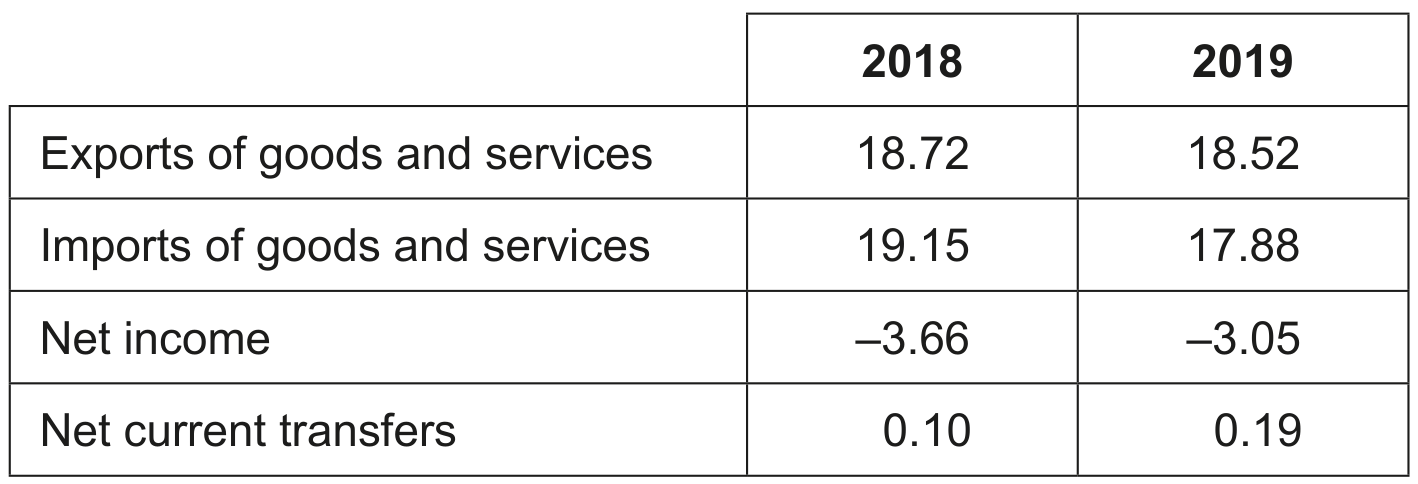
Table 1: Current account data for Uruguay (US\$ billion)

Table 1: Current account data for Uruguay (US\$ billion)

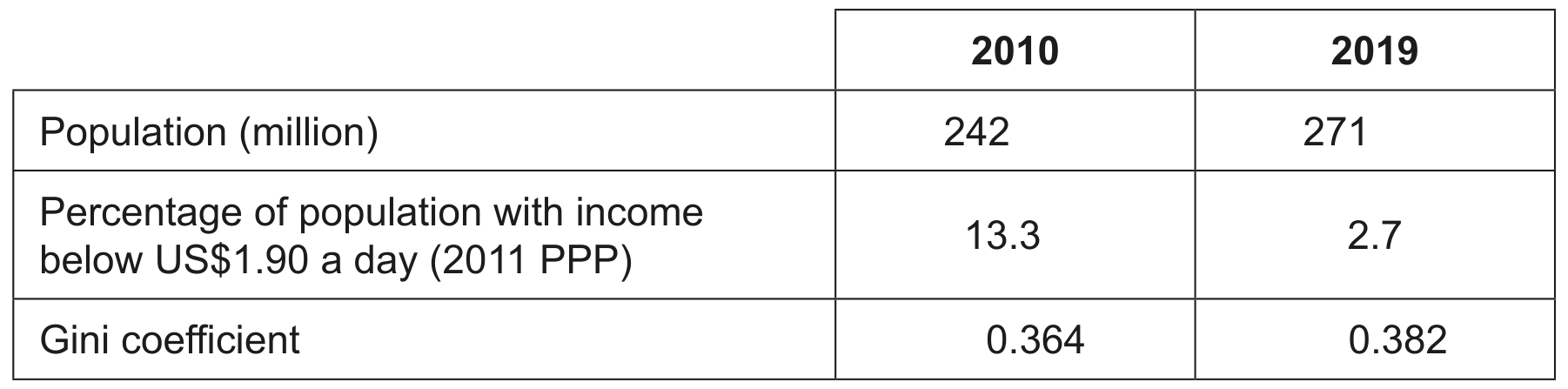
Table 2: Selected income data for Uruguay

Table 2: Selected income data for Uruguay

Define the term sustainability indicated in bold in the text (Text B, paragraph 4).
Question 1(g)

[Maximum number: 15]

Read the extracts and answer the questions that follow.
Text A — India-United Kingdom trade agreement negotiations

(1) India is a country located in South Asia. India's government predicts 7 % annual economic growth and it is expected to become the third-largest global economy by 2030. To support growth, India is establishing trade agreements to diversify trade partners, and reduce the impact of global political and economic shocks. However, the annual inflation rate increased from 4 % in 2021 to 7.8 % in 2022 due to supply chain issues and oil price increases. In response, India's government has reduced taxes on fuel while the central bank has tightened monetary policy.

(2) The United Kingdom (UK), a country in Europe, needs trade agreements with countries in Asia as this area contains some of the world's fastest-growing economies and represents over 40 % of global gross domestic product (GDP). It is currently negotiating a free trade agreement (FTA) with India, which aims to double trade between the two countries by 2030. The agreement is also expected to increase labour movement and job opportunities and protect intellectual property. The Indian government is negotiating easier access to UK work permits and student visas but is concerned that some of its citizens may not return home with their skills.

(3) The India-UK FTA would reduce trade protection, including tariffs and quotas, and administrative barriers. India expects to increase its exports of textiles, leather goods, footwear, and pharmaceutical products, whereas the UK aims to boost its exports of British cars, wine, spirits and vinegar. Additionally, foreign direct investment (FDI) between the two countries is expected to increase. The FDI inflows could help to finance India's large current account deficit, which has increased as worker remittances from abroad have fallen. However, the current account deficit may decrease anyway because of recent increases in portfolio investment outflows, which could also impact the value of the rupee (India's currency).

(4) Increased competition from UK imports may threaten the growth of infant industries in India. An example is the local wine industry in India, which has grown by 30-40 % in recent years. However, to protect infant industries, the reduction in tariffs will be gradual and business taxes will be lowered.

(5) Another discussion area in India-UK trade negotiations is the possible privatization of essential services in India, such as healthcare, education, and water. There has been encouragement from the UK for India to open these markets to foreign investment and competition.

(6) Increased trade and competition could lower prices, forcing firms to cut labour costs. Indian labour protection groups want the UK to stop trade talks until India changes a law restricting labour unions. They believe the trade agreement should include regulations to protect against poor working conditions and low pay, which impact gender inequality and child welfare.
Text B - India-UK trade negotiations and Sustainable Development Goals

(1) India and the UK recognize the relationship between trade and sustainable development and are committed to supporting the sustainable development goals (SDG).

(2) The India-UK FTA negotiations are encouraging collaborative research and development projects in the following areas:
- Clean energy and green technologies; decreasing the market failure associated with fossil fuel energy, developing electric vehicles, and waste management practices.
- Gender inequalities; improving access to credit and markets for women, improving education opportunities, and increasing labour participation rate of females in India.
- Human and labour rights; supporting programmes that create work opportunities and better working conditions.
- The agricultural sector and food security; addressing India's low productivity rates, which are blamed on ineffective fertilizer subsidies, lack of infrastructure, and flooding and drought problems from climate change.
- The healthcare sector; developing pharmaceutical products.

Table 1: Development data for India

Table 1: Development data for India


(3) India-UK's previous health sector collaboration resulted in global vaccine development and helped decrease the market failure in the industry. However, possible FTA intellectual property rules may limit India's ability to produce low-price medication, resulting in reduced export opportunities and possibly creating monopolies. On the other hand, targeted research and development could lead to cheaper medication, and the UK's insurance expertise may improve India's health insurance programme.

(4) Growth in India-UK trade may increase carbon emissions, deforestation, and air and water pollution. Experts estimate the FTA could increase trade-related transport emissions by up to 36 %. Environmental experts believe this is significant as the UK continues cutting solar panel subsidies, slowing the conversion to clean energy.

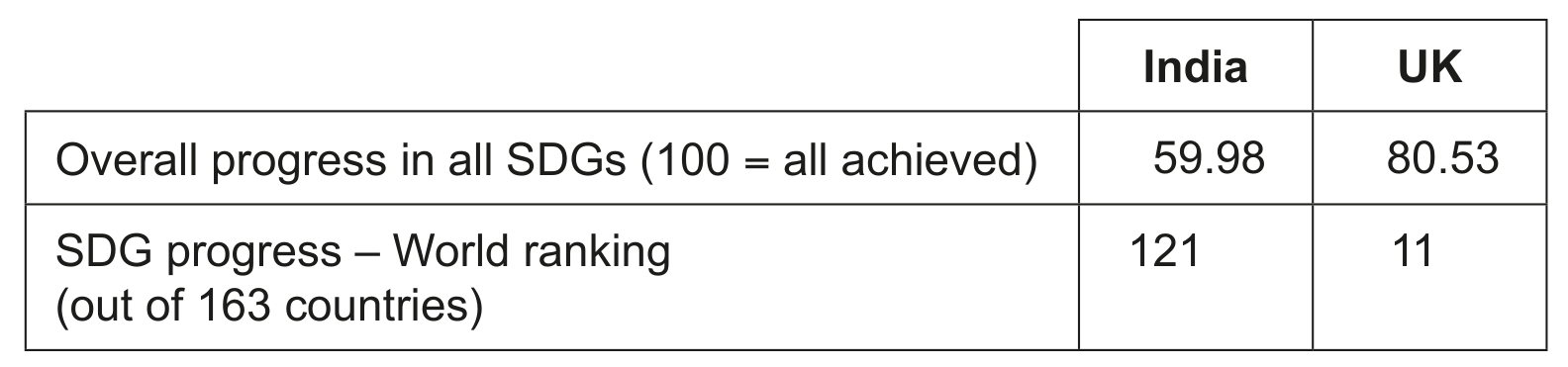
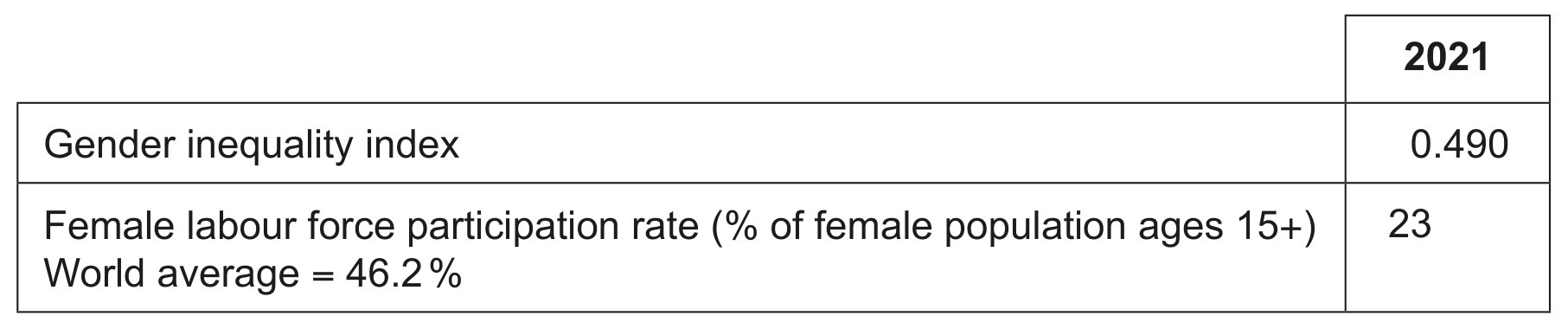
Table 2: India and UK SDG data in 2021

Table 2: India and UK SDG data in 2021

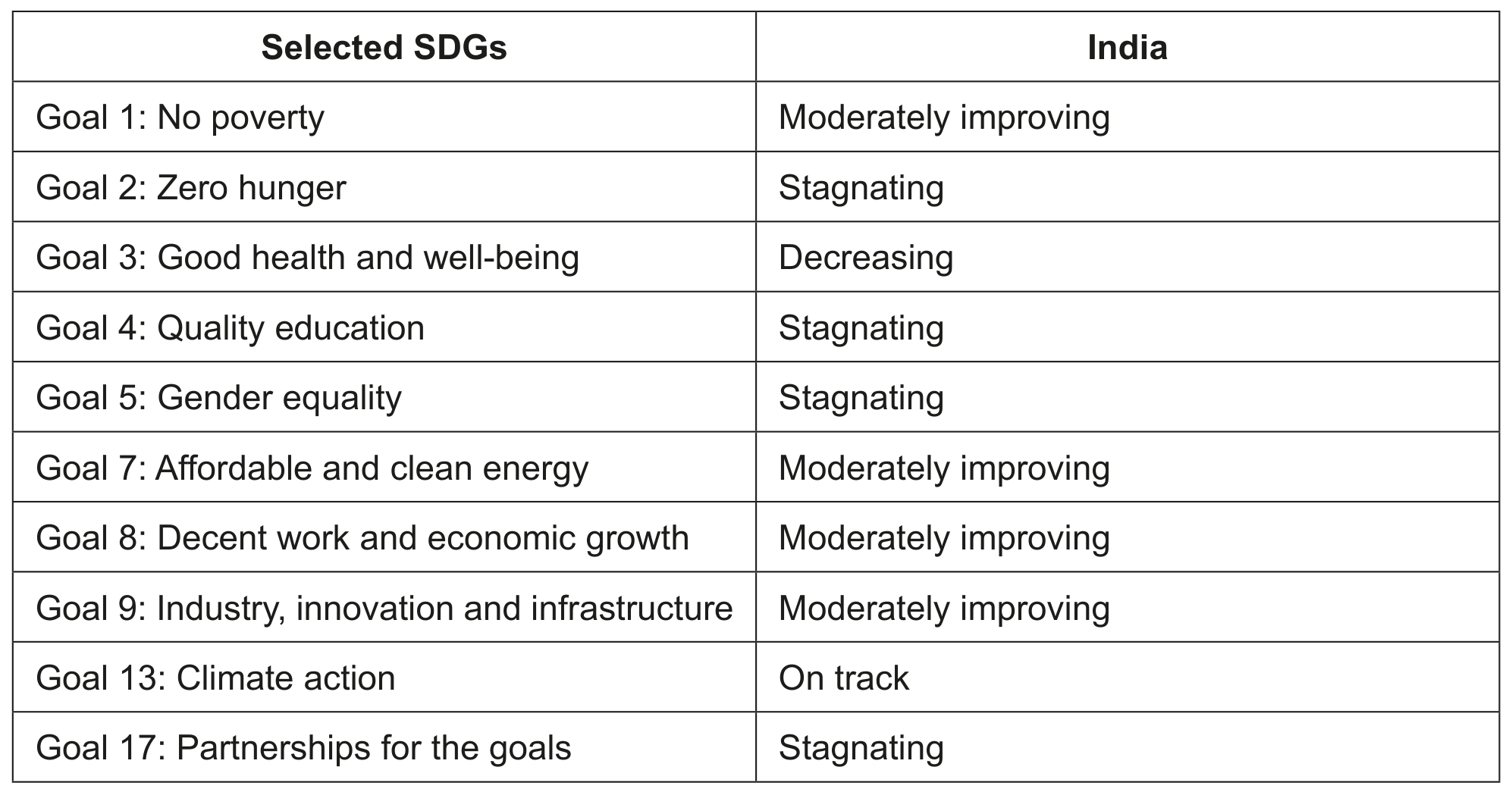
Table 3: India's SDG progress in 2021

Table 3: India's SDG progress in 2021

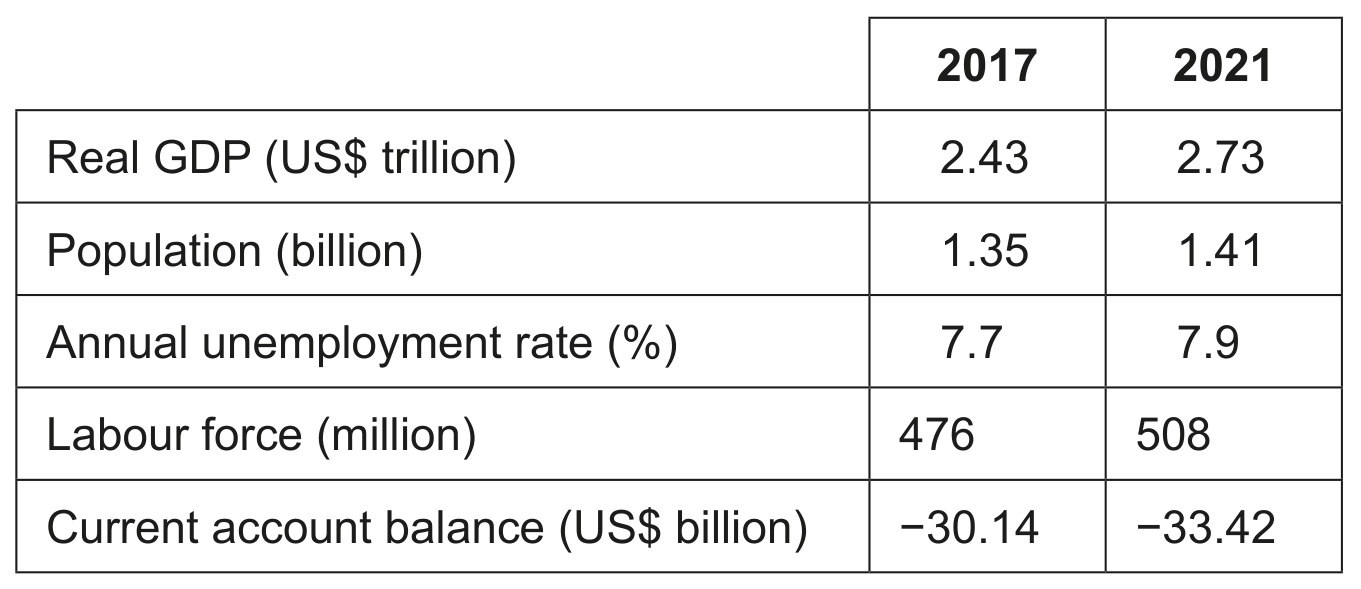
Table 4: Economic data for India

Table 4: Economic data for India

Using information from the text/data and your knowledge of economics, discuss the impact an India-UK trade agreement may have on India's ability to achieve two sustainable development goals.

Question 3(a)

[Maximum number: 10]

Explain how poverty may have a negative impact on sustainability.

Question 2(g)

[Maximum number: 15]

Read the extracts and answer the questions that follow.
Text D - Overview of Indonesia and palm oil production

(1) Indonesia is the largest economy in Southeast Asia and its gross domestic product (GDP) has grown strongly. The proportion of those living in absolute poverty in Indonesia decreased from 37.4 \% in 1999 to 2.7\% in 2019.

(2) The palm oil industry is a major contributor to the Indonesian economy, accounting for 4.5 % of GDP and providing employment for over three million Indonesians. Palm oil production is technologically simple and profit margins are large. As a low-cost producer, Indonesia produces over 50 % of the world's output. Palm oil is the most widely used vegetable oil in the global market. It is an ingredient in many products (including foods, cosmetics, cleaning products and biofuel) and demand continues to increase.

(3) In 2015, despite a widening budget deficit, the Indonesian government began subsidizing biodiesel (a type of renewable fuel) made from palm oil to make it more price competitive with conventional diesel. The subsidies were aimed at reducing Indonesia's dependence on fossil fuel imports and at increasing exports of high-value refined palm oil products.

(4) In Indonesia, 80\% of the palm oil produced is exported, contributing substantially to export revenue and to government tax revenue. However, palm oil prices are volatile, due to changes in supply, making planning difficult and causing fluctuations in the exchange rate. For example, studies show that, due to the low price elasticity of demand (PED) for primary commodities, an increase in the price of palm oil results in greater export revenue. Consequently, the rupiah (Indonesia's currency) may appreciate.

(5) In 2019, the European Union (EU) decided to impose an 18 % tariff on imports of palm oil based biodiesel from Indonesia, partly due to concerns that palm oil production damages the environment. The EU also claimed the tariff was necessary to offset the effects of the biodiesel subsidy.
Text E - Sustainable Development Goal (SDG) 12 and concerns about palm oil production in Indonesia

(1) In the past, the Indonesian government supported the rapid growth of palm oil production in order to increase GDP and employment. This policy often resulted in an inefficient use of land and high carbon emissions, as a result of deforestation.

(2) Sustainable Development Goal (SDG) 12 (responsible consumption and production) requires resources to be used more efficiently and sustainably through changes in production methods. Unsustainable use of Indonesia's natural resources will probably reduce long-term economic growth. Forests are necessary for food security, fuel, shelter and jobs. They also reduce the carbon in the atmosphere and protect against floods.

(3) Rates of deforestation in Indonesia have decreased recently. The World Bank's Forest Carbon Partnership Facility is providing US$110 million in aid to help reduce deforestation. Protecting forests from agricultural expansion will significantly reduce emissions. Profits will be lower, but the reputation of the palm oil industry will be improved and its long-term future made more secure.

(4) More than 50 multinational companies (MNCs) which use palm oil in their products have pledged to ensure that their suppliers do not contribute to deforestation. Pressure from the MNCs is encouraging Indonesian producers to use natural resources more sustainably.
Text F - Small-scale farmers and the Indonesian Sustainable Palm Oil (ISPO) certificate

(1) Small-scale farmers manage approximately 40 % of Indonesian plantations, but produce only 30 % of Indonesia's palm oil, because of poor farming techniques, low quality seeds, and a weak banking system, which limits their access to finance. In addition, land disputes occur due to a lack of property rights. To make up for their low productivity, farmers sometimes illegally clear more land for planting.

(2) The Indonesian Sustainable Palm Oil (ISPO) certification system requires that palm oil producers only occupy land legally, that they do not plant in areas designated as forest, and that they use sustainable agricultural practices. Initially, only large plantations had to get certification. However, the system was extended in 2020 and now small-scale farmers also have to obtain certification. Participating in the system should improve the productivity of small-scale farmers and reduce deforestation.

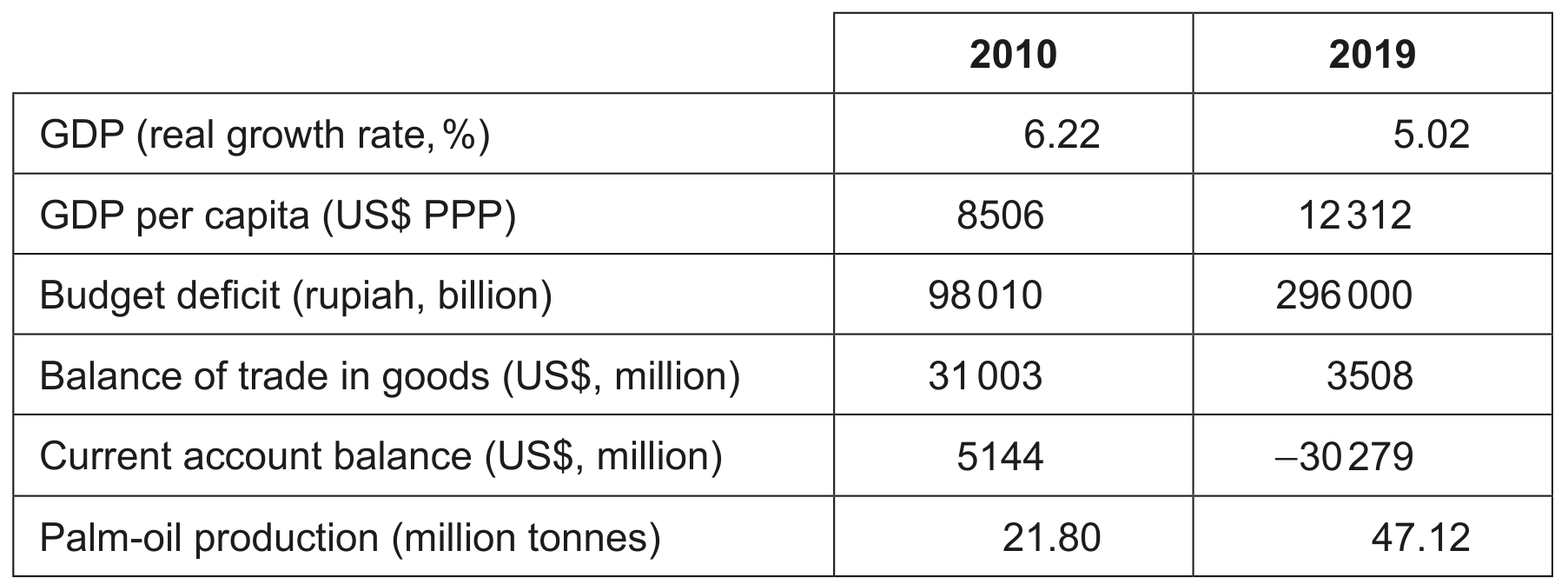
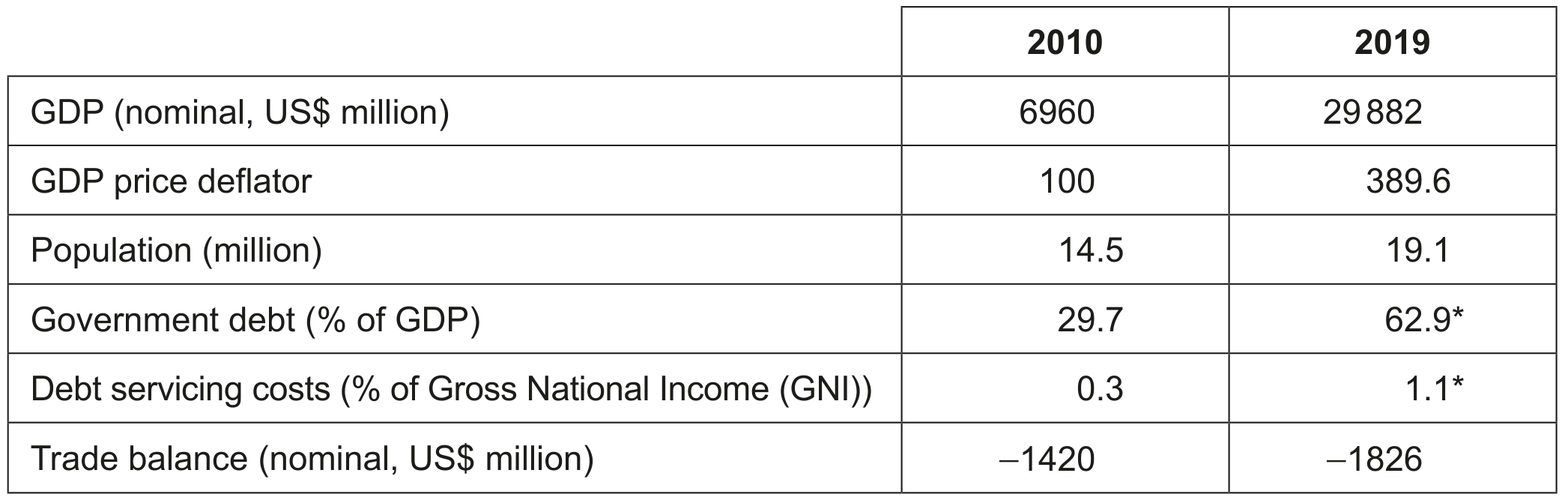
Table 3: Economic data for Indonesia

Table 3: Economic data for Indonesia

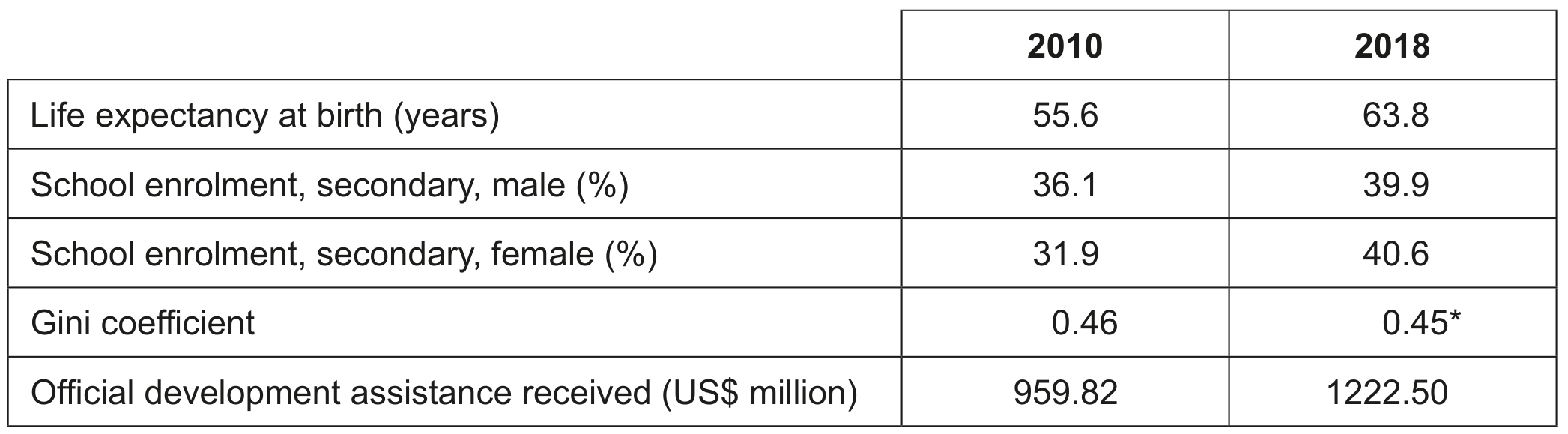
Table 4: Development data for Indonesia

Table 4: Development data for Indonesia

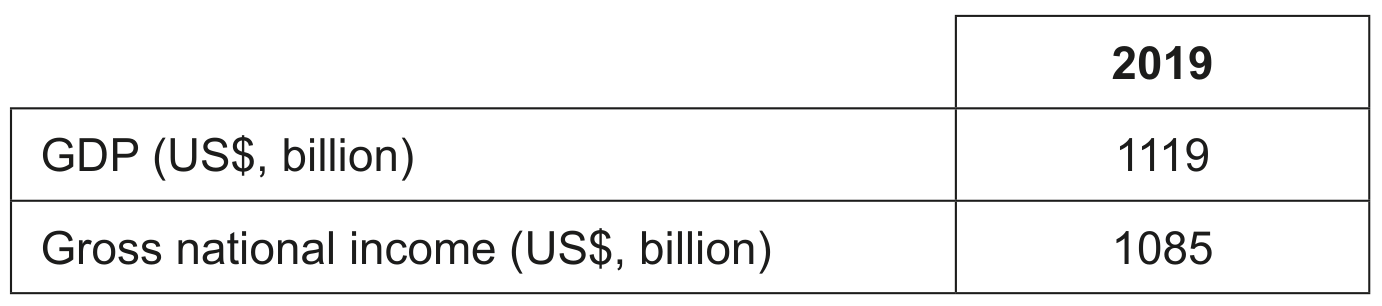
Table 5: National income statistics for Indonesia

Table 5: National income statistics for Indonesia

Using information from the texts/data and your knowledge of economics, discuss whether there is a conflict between meeting Sustainable Development Goal 12 (responsible consumption and production) and the objective of economic growth in Indonesia.

Question 2(a)(i)

[Maximum number: 2]

Read the extracts and answer the questions that follow.
Text D - Overview of Malawi

(1) Malawi is a landlocked country in southern Africa. Its development plans contain 169 targets, based on the Sustainable Development Goals. Ineffective institutions and inequalities, however, make it difficult to reach every target. Although poverty in urban areas has declined, the level of absolute poverty has been increasing in rural areas where 85 % of the population lives. Causes of poverty include land degradation ( 80 % of the land is eroded or lacks nutrients), poor healthcare and rapid population growth. There is also a lack of human capital, which is often due to the difficulties that households have in obtaining loans for education or training. Approximately 75 % of households do not have access to formal banking services.

(2) Aid agencies are providing assistance. The World Bank's Human Capital Project will increase investment and encourage reforms, such as promoting the education of teenage girls. In 2020, the World Bank also approved US $ 157 million ( 50 % as a loan and 50 % as a grant) for a government project. This project aims to increase sustainable land management practices and build water-related infrastructure, such as small dams and irrigation schemes.

(3) The government has encouraged the establishment of microfinance groups that act as rural banks. They provide some finance and guidance for programmes that introduce new types of crops and techniques in order to improve agricultural efficiency.

(4) Although 2019 was a difficult year due to drought, insect infestations, and a tropical cyclone, Malawi's real gross domestic product (GDP) grew by 4.5 %. There is a large budget deficit and the amount of government debt (at approximately 60 % of GDP) is considered to be too high. Therefore, the government has announced plans to reduce its spending. Inflation had been forecast to increase to 14 % in 2020. Due to the planned contractionary fiscal policies, however, inflation may fall below 10\% from 2021 onwards.

(5) Export revenues account for over 30 % of GDP. Malawi aims to increase its exports of cotton, nuts, tea and sugar. Rising exports and lower fuel import prices could reduce the current account deficit. Despite the persistent trade deficit, Malawi is resisting calls for further trade protection. It has signed bilateral trade agreements with both South Africa and Zimbabwe. Tariffs are gradually being reduced, while other indirect and direct taxes are being raised.
Text E - Agricultural Production

(1) Approximately 80 % of the labour force is employed in agriculture, with few job opportunities available in manufacturing and services. Agricultural productivity is low for many reasons. The government promotes manufacturing industries and cultivation of crops for export by large-scale farms. However, small-scale and subsistence farmers have received little support in the past. Farmers use less fertilizer and irrigation than is typical in other countries. Only 3 % of cultivated land is irrigated, compared to the global average of 21 %. Other challenges are the inadequate road and rail links to markets and the limited availability of electricity and fuel.

(2) Maize is the most important staple food in Malawi. The government uses price controls when trying to ensure that maize is available at affordable prices for low-income households. However, the maximum price set by the government is often too low to persuade farmers to supply the maize or to provide them with sufficient revenue. In 2020 , the maximum price was raised from 250 to 310 kwacha per kilogram. Even at the higher price, shortages remain.

(3) The government is planning to invest in commercial agriculture to improve productivity and promote diversification. The 2020 budget includes subsidies on fertilizer for 4.3 million small-scale farmers, which could possibly double maize output but may also pollute waterways. The support given to farmers will improve the nutrition of Malawians and stimulate the rural economy.
Text F - Tobacco Exports
Tobacco is Malawi's major export, providing over 50 % of foreign currency earnings. Due to lower global demand and the purchasing policies of multinational tobacco firms, prices paid to farmers in Malawi are low and falling. To reduce costs, farmers resort to using child labour. Following allegations of labour exploitation, the United States has restricted tobacco imports from Malawi. There is concern that other importing countries might also impose restrictions.

Table 3: Economic data for Malawi

Table 3: Economic data for Malawi

* 2018 figure

Table 4: Development data for Malawi

Table 4: Development data for Malawi

* 2016 figure

List two of the Sustainable Development Goals (Text D, paragraph 1).

Question 3

[Maximum number: 4]

Study the extract and data below and answer the questions that follow.
Removed for copyright reasons
Figure 1 - Economic data for Botswana - 2011
Removed for copyright reasons

Question 3(a)(i)

(a)

List two Millennium Development Goals other than universal primary education (paragraph 4).

[ 2 ]

Question 3(a)(ii)

(b)

Define the term sustainability indicated in bold in the text (paragraph 7).

[ 2 ]

Question 4(a)(ii)

[Maximum number: 2]

Study the following extract and answer the questions that follow.

Removed for copyright reasons

Define the term sustainability indicated in bold in the text (paragraph (5).

0 selected