IB Chemistry SL Reactivity 1.2.1 Bond Energies

Practise estimating reaction enthalpy by counting every gaseous bond broken and formed. Apply ΔH = ΣE(broken) − ΣE(formed), retain stoichiometric factors and explain why average…

Syllabus
First assessment 2025
Objective
1.2.1
Level
SL

Exam points

  • count each bond in the balanced reaction before summing energies for bonds broken
  • subtract the energy released on bond formation from the bond-breaking requirement
  • explain disagreement because listed bond enthalpies are gaseous averages, not exact values

1.2.1—Bond energies question 1

[Maximum number: 4]

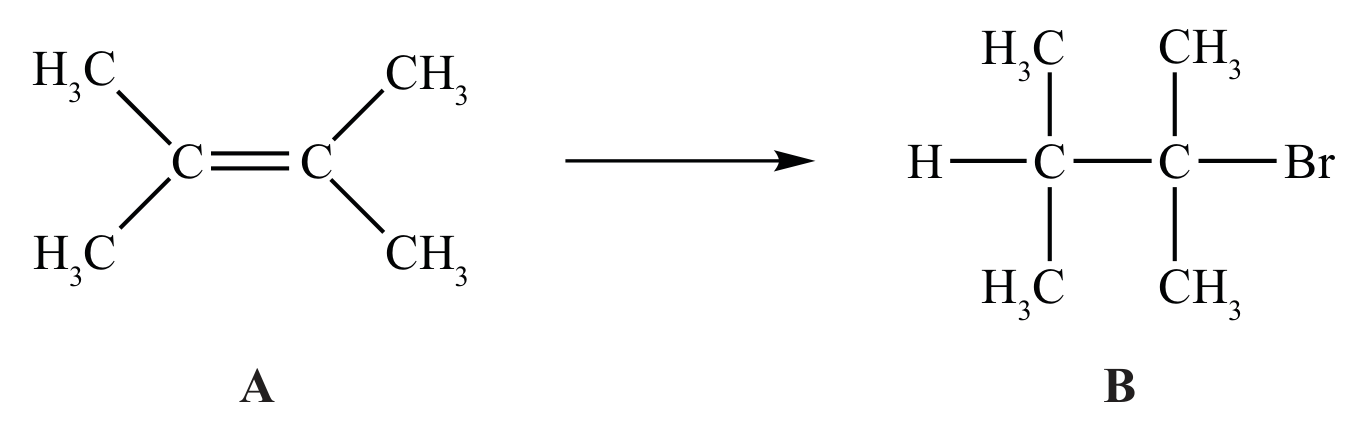
Alkenes, such as A (shown below), are important intermediates in the petrochemical industry because they undergo addition reactions to produce a wide variety of products, such as the conversion shown below.

Figure for Question 1.2.1—Bond energies question 1 — IB Chemistry SL

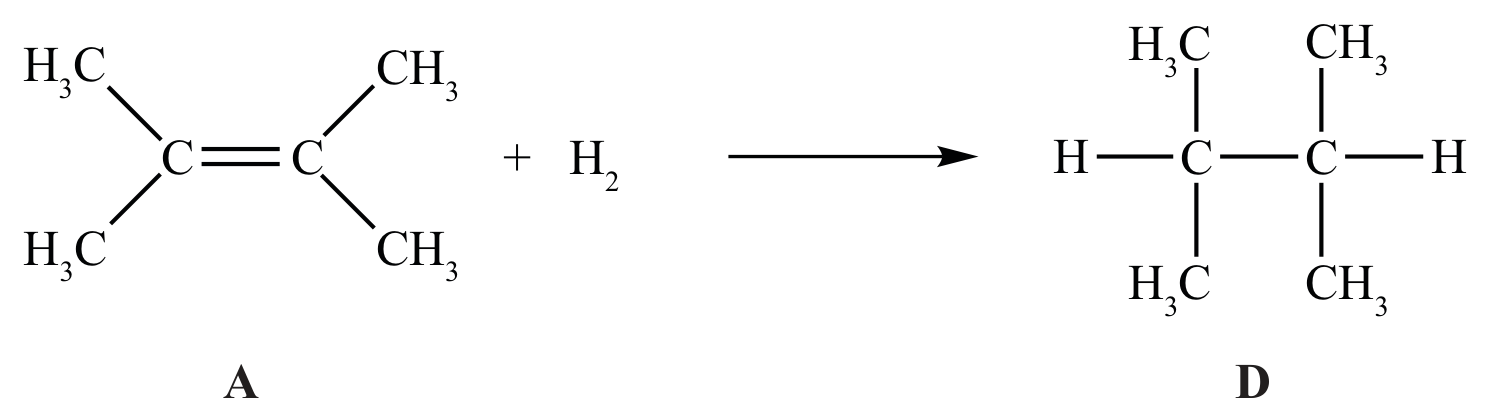
In the gas phase, A reacts with hydrogen to form D.

Figure for Question 1.2.1—Bond energies question 1 — IB Chemistry SL

Determine the enthalpy change, in kJmol1\mathrm{kJ} \mathrm{mol}^{-1}, for the reaction of A with hydrogen, using Table 10 of the Data Booklet, and state whether the reaction is exothermic or endothermic.

All question bank results loaded