
Question 3
[Maximum number: 1]
Which of these compounds would be expected to have the highest boiling temperature?
A
B
C
D
 EduNinja
Identify every force present, compare electron number, shape and hydrogen-bond donors or acceptors and connect total attraction to boiling, solubility or layer position.
Which of these compounds would be expected to have the highest boiling temperature?
Which is not correct about ice?
ice has a lower density than water
molecules are further apart in ice than in water
the H-O-H bond angle is the same in ice and in water
molecules in ice are held together by hydrogen bonds
This question is about alkanes.
Which of these alkanes has the highest boiling temperature?
butane
hexane
pentane
propane
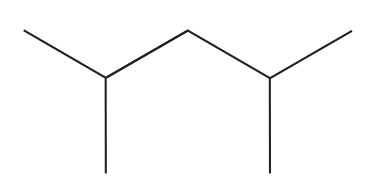
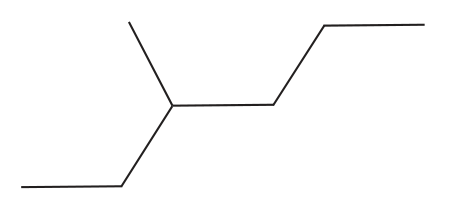
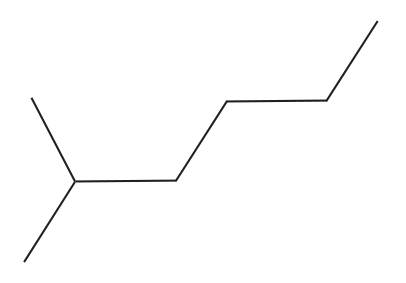
Which of these alkanes has the lowest boiling temperature?
□ A
□ B
□ C
□ D

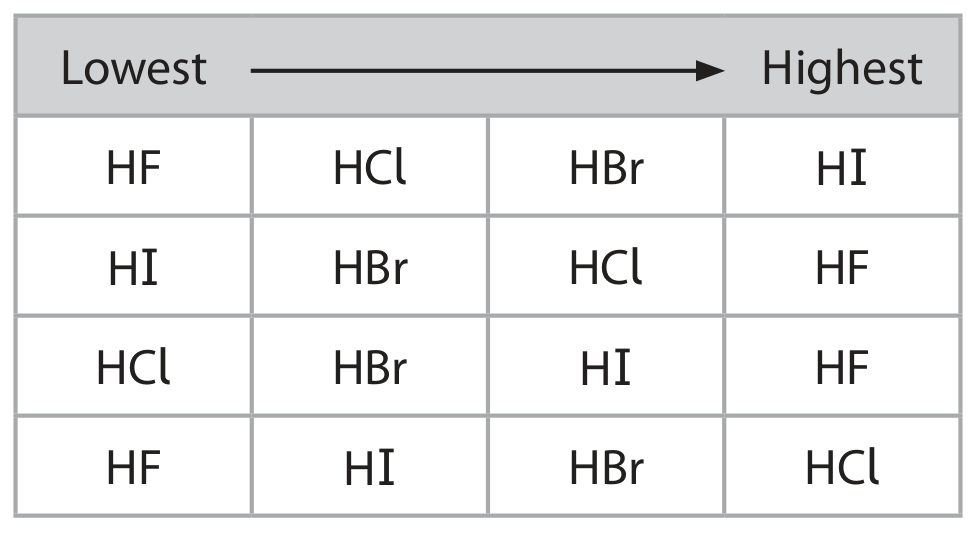
Which row shows the hydrogen halides in order of increasing boiling temperature?
□ A
□ B
□ C
□ D
Enthalpy changes of formation are often difficult to determine directly.
Some enthalpy data are shown.
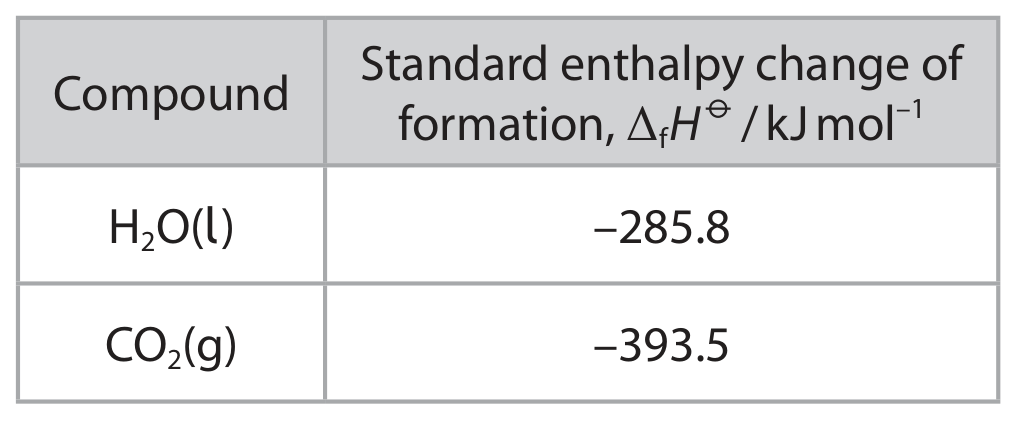
Standard enthalpy change of combustion of propane .
The values for the boiling temperatures and the standard enthalpies of combustion of a series of straight-chain alkanes are shown in the table.
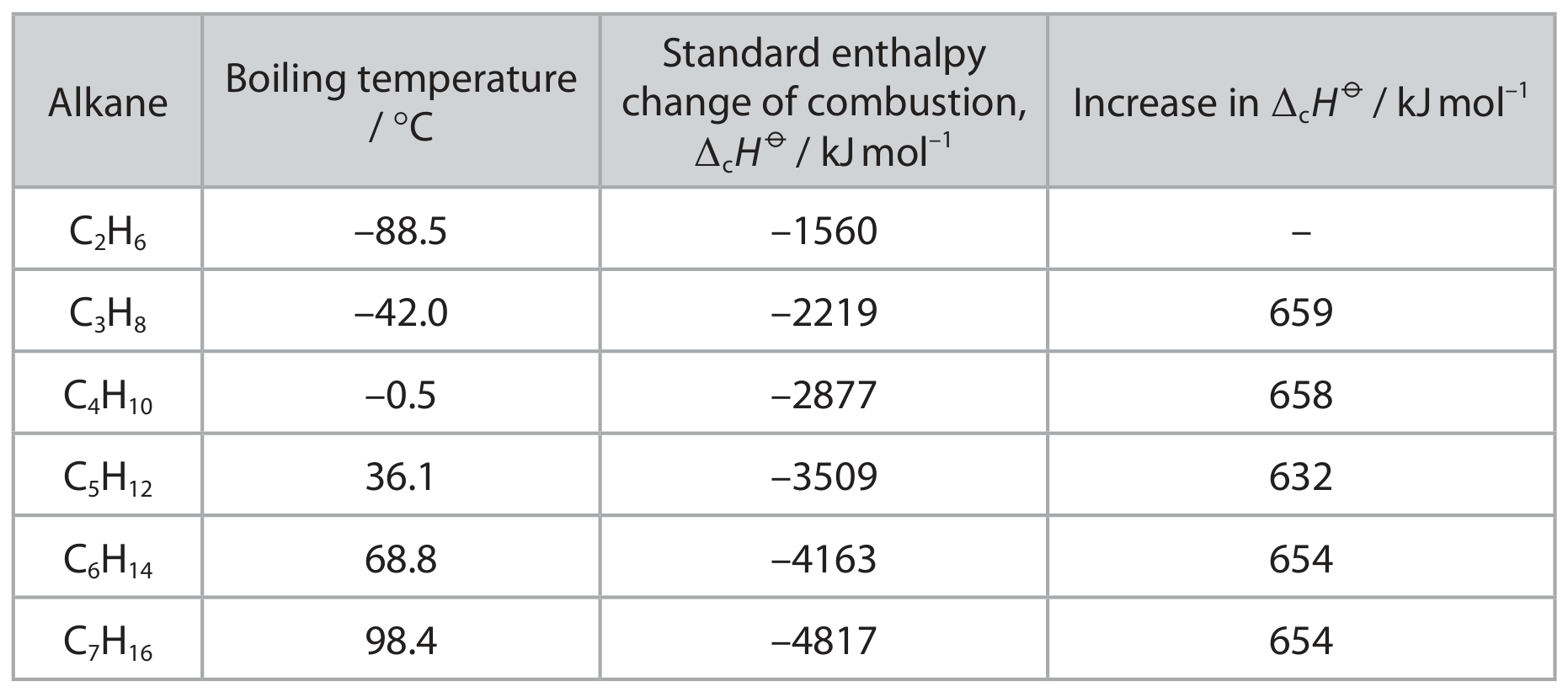
The increase in the value of from butane to pentane is smaller than any other increase.
Suggest an explanation for this.
Explain, with reference to their intermolecular forces, why the boiling temperatures of alkanes increase as the number of carbon atoms increases. A detailed description of the intermolecular forces is not required.
(3)
This question is about the halogens and some of their compounds.
The graph shows the boiling temperatures of the hydrogen halides.
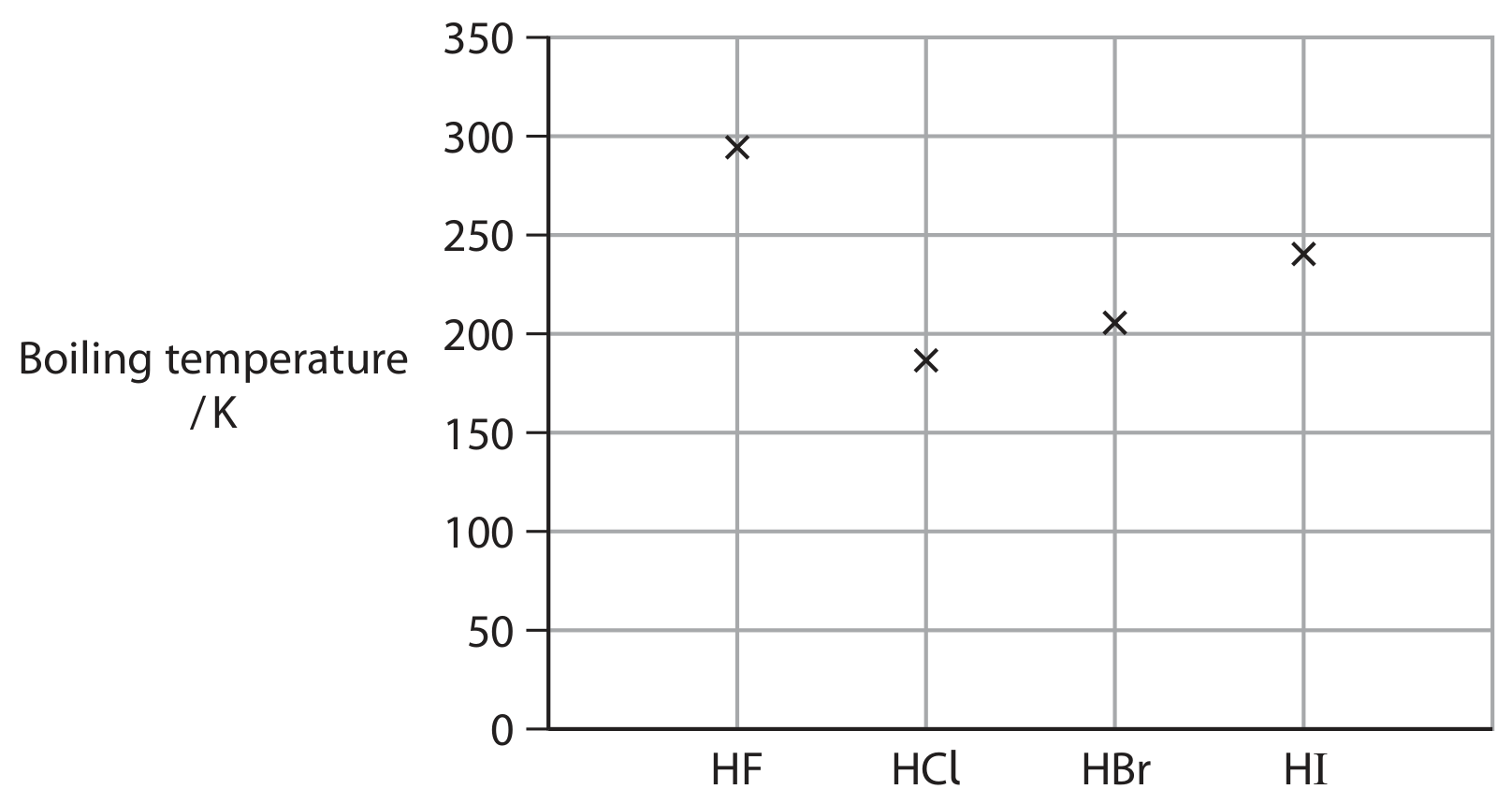
Explain the trend in the boiling temperatures of the hydrogen halides.
Some diesel cars contain an extra catalytic converter for the reduction of nitrogen oxides in exhaust gases.
A solution of urea is used for this process.
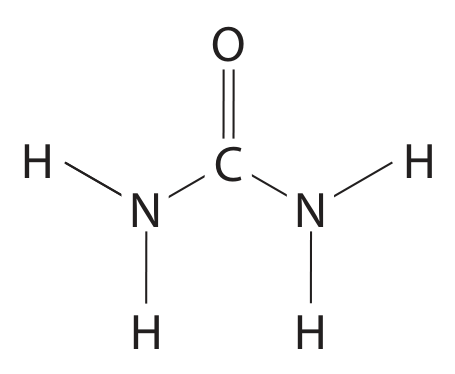
urea
Urea has a melting temperature of .
Explain why this value is higher than expected for a relatively small molecule.
(3)