
EduNinja

Edexcel IAL Chemistry AS Topic 9 Introduction to kinetics and equilibria

Edexcel IAL Chemistry AS Topic 9 Introduction to kinetics and equilibria

Question 10(a)

[Maximum number: 1]

Hydrogen peroxide decomposes as shown.

2H2O2(aq)2H2O(l)+O2( g)2 \mathrm{H}_{2} \mathrm{O}_{2}(\mathrm{aq}) \rightarrow 2 \mathrm{H}_{2} \mathrm{O}(\mathrm{l})+\mathrm{O}_{2}(\mathrm{~g})

A catalyst increases the rate of decomposition by

A

increasing the average kinetic energy of the H2O2\mathrm{H}_{2} \mathrm{O}_{2} molecules

B

decreasing the average kinetic energy of the H2O2\mathrm{H}_{2} \mathrm{O}_{2} molecules

C

increasing the activation energy of the reaction

D

decreasing the activation energy of the reaction
Question 11

A mixture of hydrogen and iodine is left in a sealed container at 300C300^{\circ} \mathrm{C} until equilibrium is established.

H2( g)+I2( g)2HI( g)\mathrm{H}_{2}(\mathrm{~g})+\mathrm{I}_{2}(\mathrm{~g}) \rightleftharpoons 2 \mathrm{HI}(\mathrm{~g})

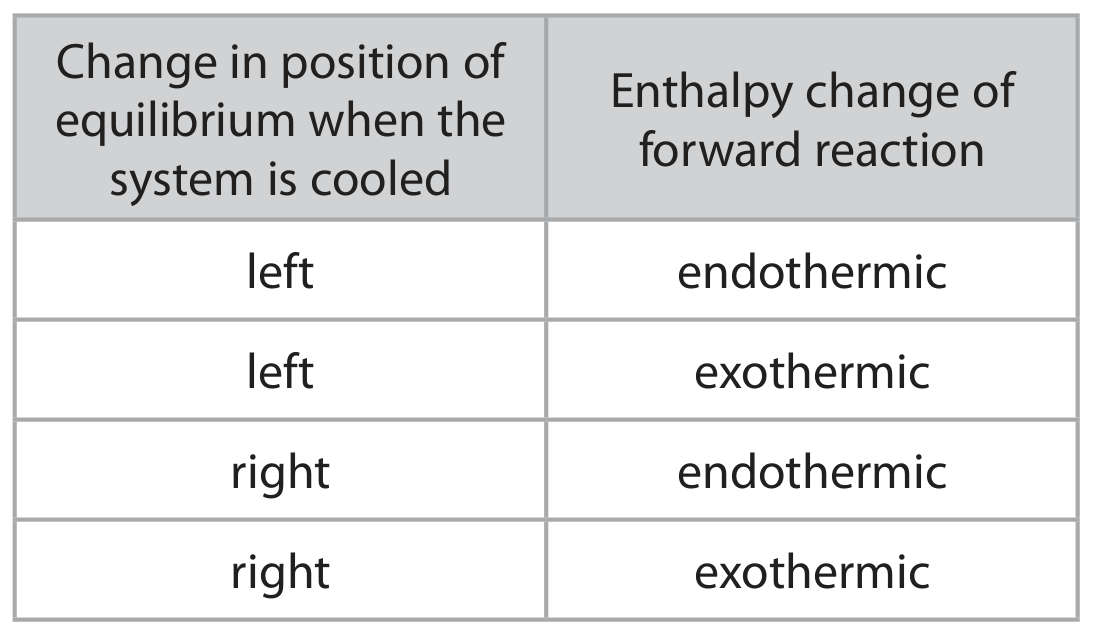
The equilibrium mixture is then cooled and the colour of the mixture darkens.
Which is correct?
□ A
□ B
□ C
□ D

Table

Question 19

[Maximum number: 1]

Nitrogen dioxide and dinitrogen tetroxide exist in equilibrium.

2NO2( g)N2O4( g)2 \mathrm{NO}_{2}(\mathrm{~g}) \quad \rightleftharpoons \quad \mathrm{N}_{2} \mathrm{O}_{4}(\mathrm{~g})

brown gas colourless gas

When an equilibrium is set up in a gas syringe, the mixture is pale brown.
When the mixture is compressed the colour becomes

A

darker

B

lighter

C

darker and then lighter

D

lighter and then darker

Question 15

[Maximum number: 4]

This question is about calcium carbonate, CaCO3\mathrm{CaCO}_{3}.

Question 15(b)

(a)

Calcium carbonate reacts with dilute hydrochloric acid.

CaCO3( s)+2HCl(aq)CaCl2(aq)+CO2( g)+H2O(l)\mathrm{CaCO}_{3}(\mathrm{~s})+2 \mathrm{HCl}(\mathrm{aq}) \rightarrow \mathrm{CaCl}_{2}(\mathrm{aq})+\mathrm{CO}_{2}(\mathrm{~g})+\mathrm{H}_{2} \mathrm{O}(\mathrm{l})

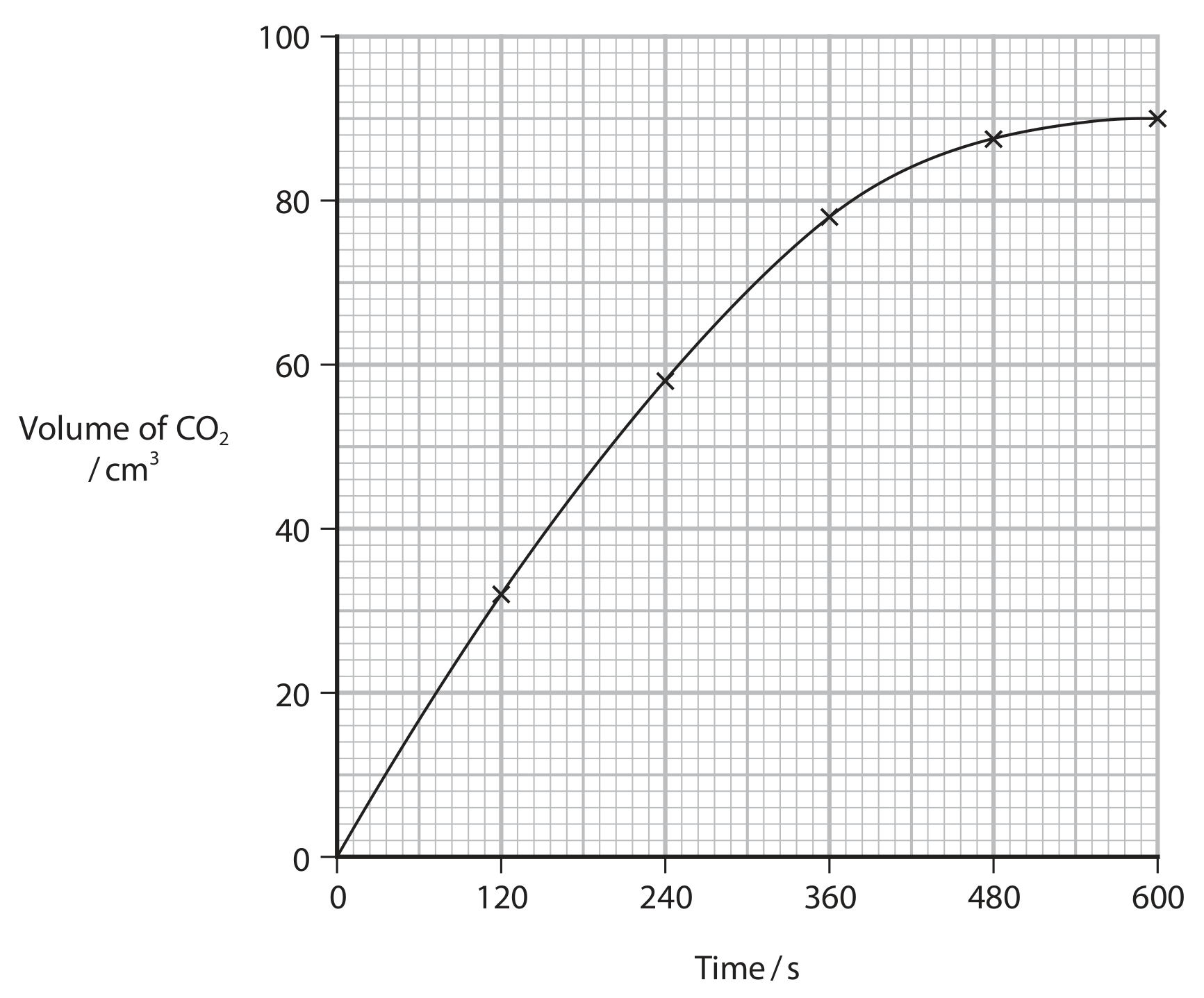
A student determines the initial rate of this reaction by collecting the carbon dioxide in a gas syringe and measuring the volume at regular time intervals.

[ 4 ]

Question 15(b)(ii)

(i)

The results of the student's experiment are shown on the graph.

Question image

Calculate the initial rate of this reaction.
You must show your working on the graph.
Include units in your answer.

[ 3 ]

Question 15(b)(iii)

(ii)

The student repeats the experiment but uses hydrochloric acid with a concentration of 0.250 moldm30.250 \mathrm{~mol} \mathrm{dm}^{-3}. All other variables are kept the same.

State what would happen to the initial rate of reaction and the final volume of carbon dioxide collected.
(1)

Initial rate of reaction

Final volume of carbon dioxide collected

[ 1 ]

Question 18(d)

[Maximum number: 2]


Fuels

Fuels burn in oxygen to release a lot of energy.
Many hydrocarbons and alcohols are used as fuels. During complete combustion, they produce carbon dioxide and water.

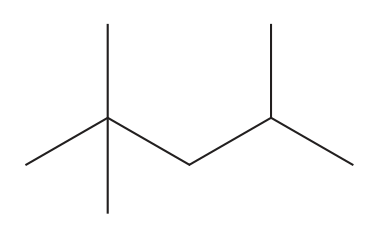
Petrol contains 2,2,4-trimethylpentane, an isomer of octane, that promotes smooth combustion.

Question image

2,2,4-trimethylpentane

Alcohols, such as methanol and ethanol, can be used as fuels either on their own or as additives in petrol.

Ethanol can be manufactured by reacting ethene with steam.

C2H4( g)+H2O( g)C2H5OH( g)ΔrH=45 kJ mol1\mathrm{C}_{2} \mathrm{H}_{4}(\mathrm{~g})+\mathrm{H}_{2} \mathrm{O}(\mathrm{~g}) \rightleftharpoons \mathrm{C}_{2} \mathrm{H}_{5} \mathrm{OH}(\mathrm{~g}) \quad \Delta_{\mathrm{r}} H=-45 \mathrm{~kJ} \mathrm{~mol}^{-1}

This reaction is usually carried out in industry at 300C300^{\circ} \mathrm{C} and 70 atm pressure using a catalyst.

Explain the effect on the equilibrium position and the equilibrium yield of ethanol if the reaction is carried out at 300C300^{\circ} \mathrm{C} and 200 atm pressure.
(2)

Question 24

[Maximum number: 6]

Some diesel cars contain an extra catalytic converter for the reduction of nitrogen oxides (NOx)\left(\mathrm{NO}_{\mathrm{x}}\right) in exhaust gases.
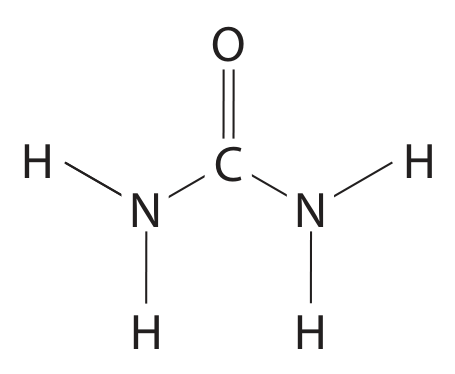
A solution of urea is used for this process.

Question image

urea

Question 24(e)

(a)

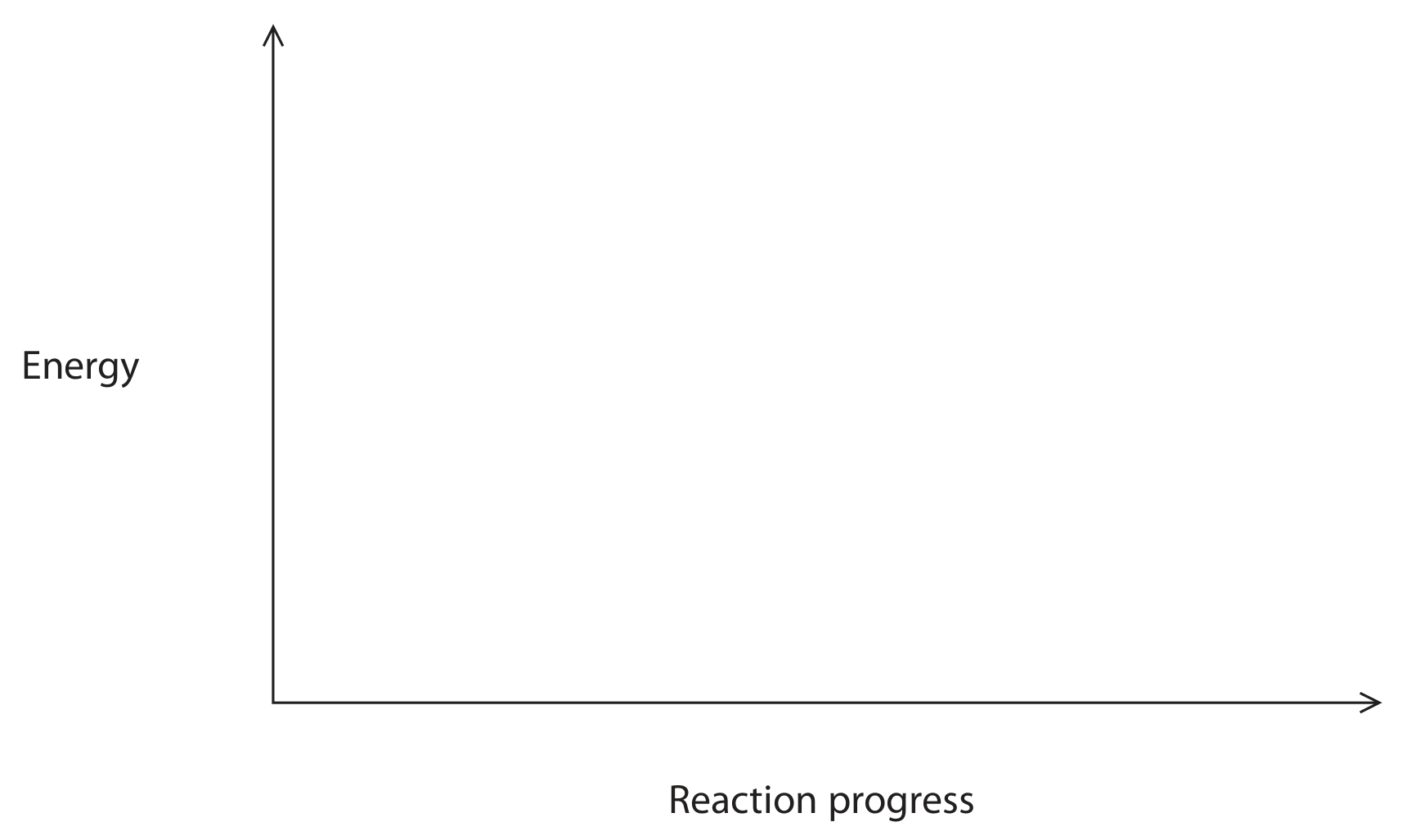
In a diesel car exhaust system, the urea reacts with water to form ammonia and carbon dioxide. The enthalpy change for this reaction is +133 kJ mol1+133 \mathrm{~kJ} \mathrm{~mol}^{-1}.

[ 3 ]

Question 24(e)(ii)

(i)

Sketch the reaction profile for the forward reaction on the axes provided. Include labels for ΔH\Delta H and the activation energy (Ea)\left(E_{\mathrm{a}}\right).

Question image
[ 3 ]

Question 24(f)

(b)

The catalytic converter contains metal oxides. When the exhaust gases pass through the catalytic converter, ammonia reacts with NO×\mathrm{NO}_{\times}gases to form nitrogen and water.

[ 3 ]

Question 24(f)(ii)

(i)

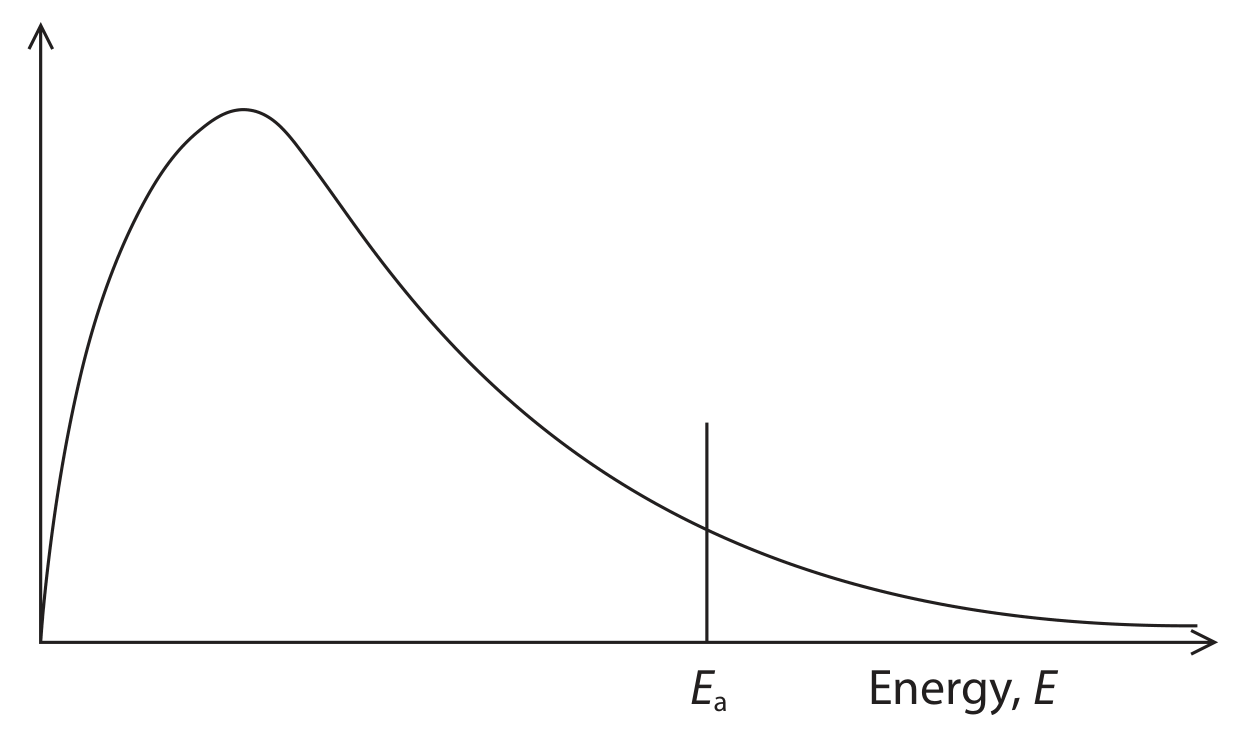
Explain how a catalyst increases the rate of a chemical reaction.

Use the Maxwell-Boltzmann distribution shown and refer to the collision theory.

Number of particles with energy, E

Question image
[ 3 ]

Question 22

[Maximum number: 12]

This question is about ethanol and bioethanol.
The main fuel used as a petrol substitute is bioethanol. Bioethanol is ethanol that has been produced by fermentation. The starting material is usually some form of plant material rich in starch, such as wheat, maize or potatoes. Enzymes in yeast convert this material to simple carbohydrates such as glucose (C6H12O6)\left(\mathrm{C}_{6} \mathrm{H}_{12} \mathrm{O}_{6}\right) and then to ethanol and carbon dioxide.

C6H12O62CH3CH2OH+2CO2\mathrm{C}_{6} \mathrm{H}_{12} \mathrm{O}_{6} \rightarrow 2 \mathrm{CH}_{3} \mathrm{CH}_{2} \mathrm{OH}+2 \mathrm{CO}_{2}

The mixture is left for several days until fermentation is complete.
The percentage of ethanol is never greater than 15% because higher concentrations of ethanol kill the yeast.

A common blend of fuel is 95% petrol and 5% bioethanol. The engine does not need to be modified for this mixture.

Question 22(e)

(a)

Ethanol can also be produced by the hydration of ethene.

CH2=CH2( g)+H2O( g)CH3CH2OH( g)ΔH=45 kJ mol1\mathrm{CH}_{2}=\mathrm{CH}_{2}(\mathrm{~g})+\mathrm{H}_{2} \mathrm{O}(\mathrm{~g}) \rightleftharpoons \mathrm{CH}_{3} \mathrm{CH}_{2} \mathrm{OH}(\mathrm{~g}) \quad \Delta H=-45 \mathrm{~kJ} \mathrm{~mol}^{-1}
[ 10 ]

Question 22(e)(i)

(i)

*(i) Typical conditions are 300C300^{\circ} \mathrm{C} and 60 atm with a catalyst of phosphoric acid.
Explain why these conditions are used, by describing the effect of changing the temperature and pressure on rate of reaction, equilibrium yield and cost.
(6)

DO NOTT WRITE IN THIS AREADO NOTI WRITE IN THIS AREADO NOTI WRITE IN THIS AREA

I

[ 6 ]

Question 22(e)(ii)

(ii)

The rate of this reaction is increased by using a catalyst of phosphoric acid.

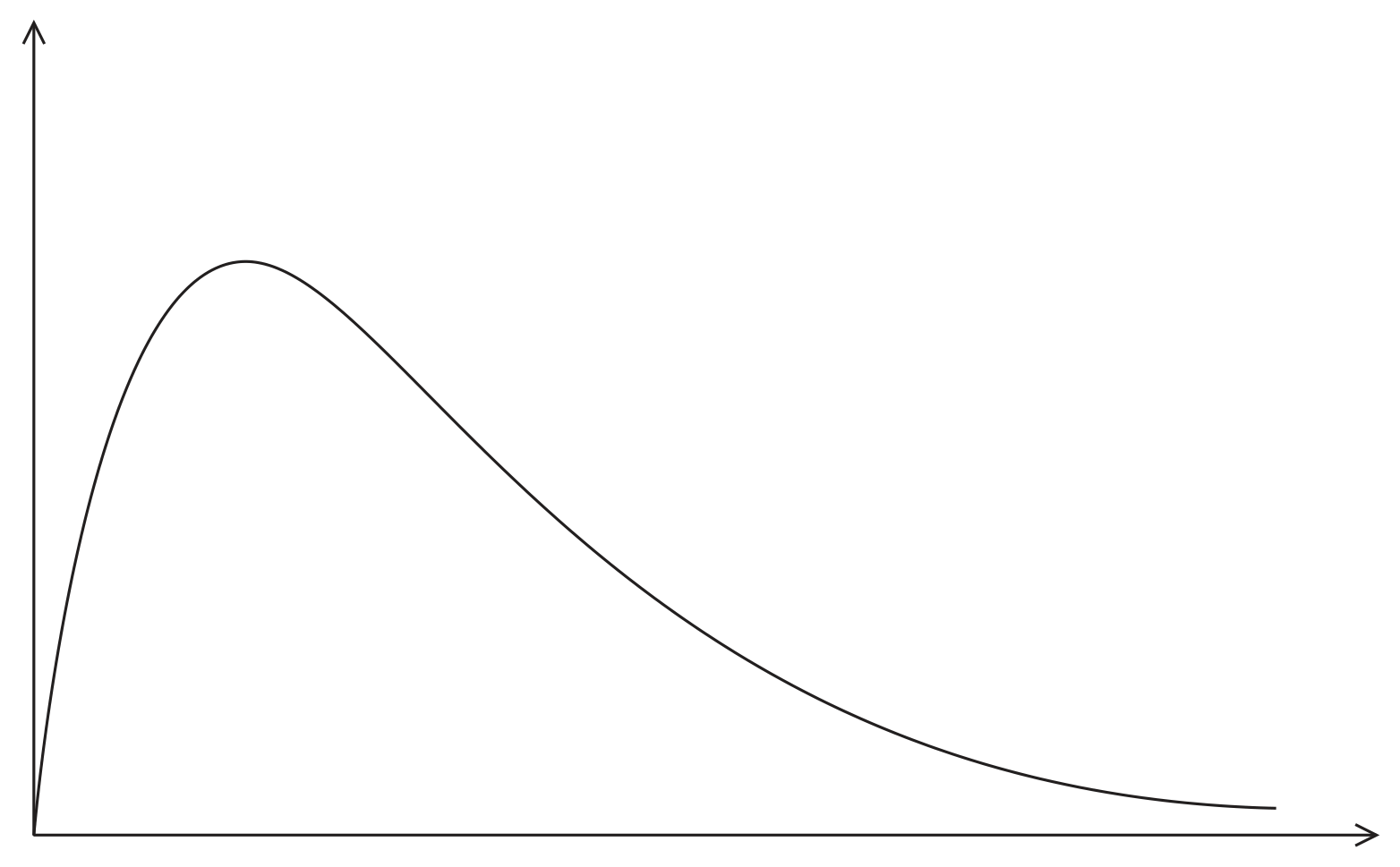
Label the axes on the Maxwell-Boltzmann distribution curve and use it to explain how a catalyst increases the rate of reaction.
(4)

Question image
[ 4 ]

Question 22(f)

(b)

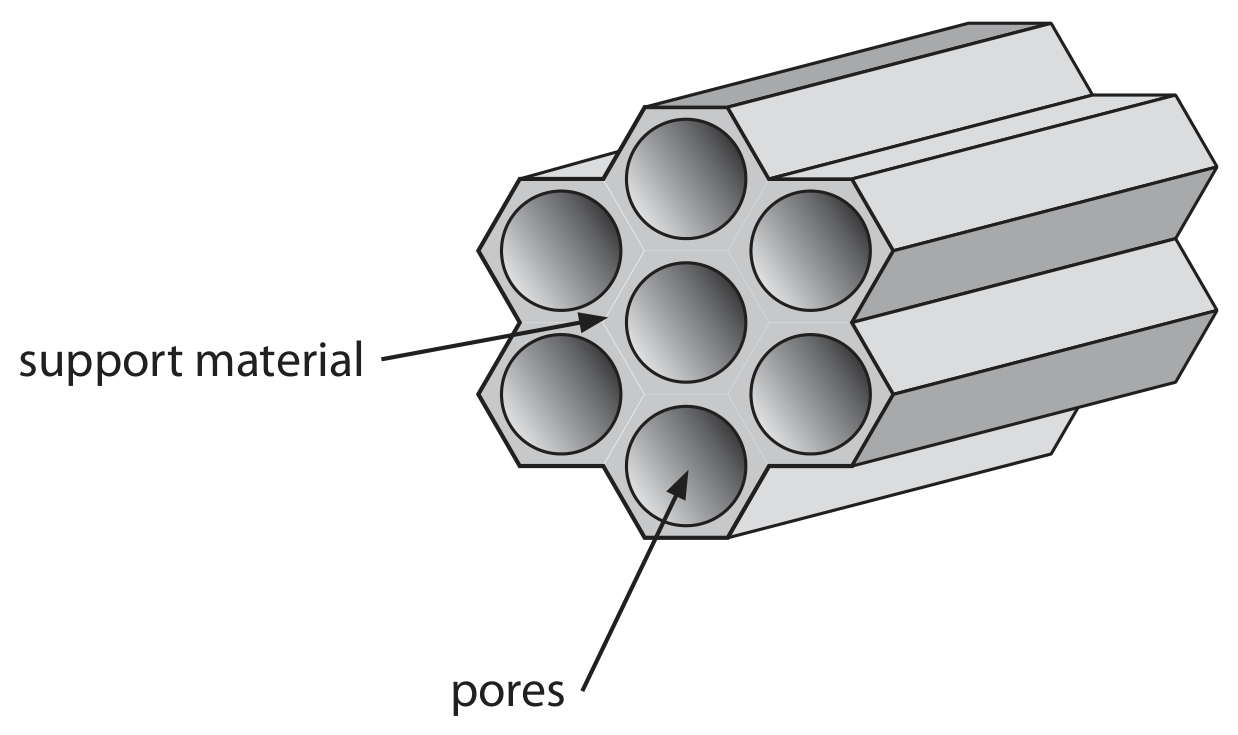
Catalysts such as phosphoric acid are bonded to a support material that contains lots of pores.

Question image
[ 2 ]

Question 22(f)(ii)

(i)

Under these conditions, only about 5% of the ethene is converted into ethanol as it passes over the catalyst.

Suggest how the overall yield of this process can be improved to make it economically viable.

[ 2 ]