
EduNinja

Pearson Edexcel IAL Chemistry AS Topic 5: Alkenes Question Bank

Question 17

[Maximum number: 1]

Which of these is not a way of limiting global problems caused by polymer disposal?

A

developing biodegradable polymers

B

exporting polymer waste

C

removing toxic waste gases produced by the incineration of polymers

D

reusing products made from polymers
Question 12

Question 12(a)

(a)

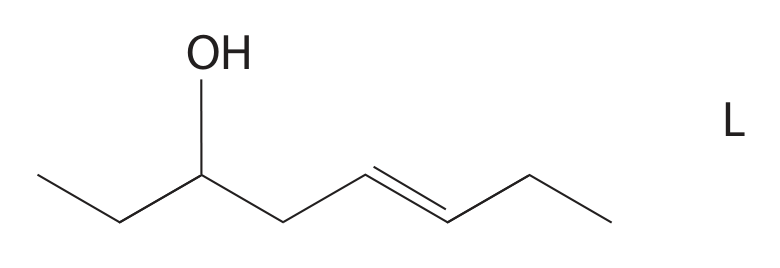
What is the name of compound L ?

Question image
A

Z-oct-3-en-3-ol

B

E-oct-3-en-3-ol

C

Z-oct-5-en-3-ol

D

E-oct-5-en-3-ol

[ 1 ]

Question 12(c)

(b)

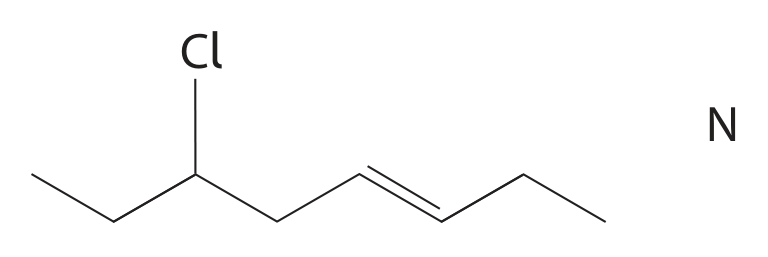
Compound L can also be converted into compound N .

Question image

Which reagent should be used?

A

Cl2( g)\mathrm{Cl}_{2}(\mathrm{~g})

B

HCl(g)

C

PCl5( s)\mathrm{PCl}_{5}(\mathrm{~s})

D

KCl(aq)

[ 1 ]

Question 11

[Maximum number: 2]

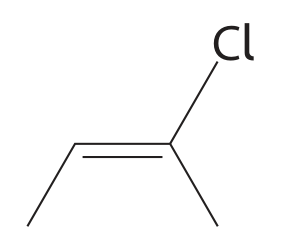
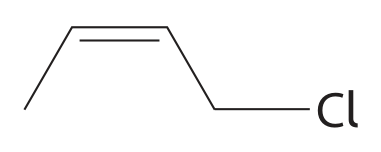
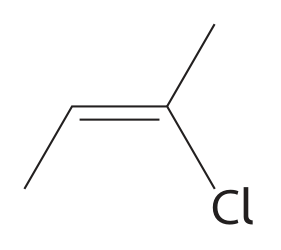
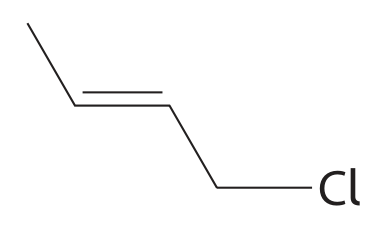
Geometric isomerism is shown by 2-chlorobut-2-ene.

Question 11(a)

(a)

What is the skeletal formula of E-2-chlorobut-2-ene?
□ A

Question image

□ B

Question image

□ C

Question image

□ D

Question image
[ 1 ]

Question 11(b)

(b)

What is the total number of sigma bonds in Z-2-chlorobut-2-ene?

A

3

B

4

C

10

D

11

[ 1 ]

Question 20

[Maximum number: 9]

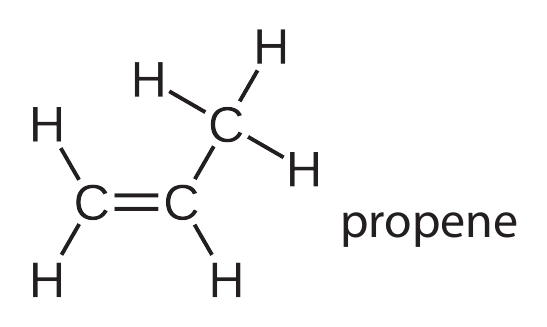
This question is about the reactions of propene.

Question image

Question 20(b)

(a)

State one similarity and one difference that would be seen when propene is mixed with separate samples of acidified potassium manganate(VII) solution and of bromine water.

[ 2 ]

Question 20(c)

(b)

Propene reacts by addition polymerisation to form poly(propene).

Draw the structure of poly(propene), showing two repeat units.

[ 1 ]

Question 20(d)

(c)

Propene reacts with bromine monochloride, BrCl , to form 1-bromo-2-chloropropane as the major product.

[ 3 ]

Question 20(d)(ii)

(i)

Draw the mechanism for the formation of 1-bromo-2-chloropropane in this reaction.
Include curly arrows, and relevant lone pairs.

[ 3 ]

Question 20(e)

(d)

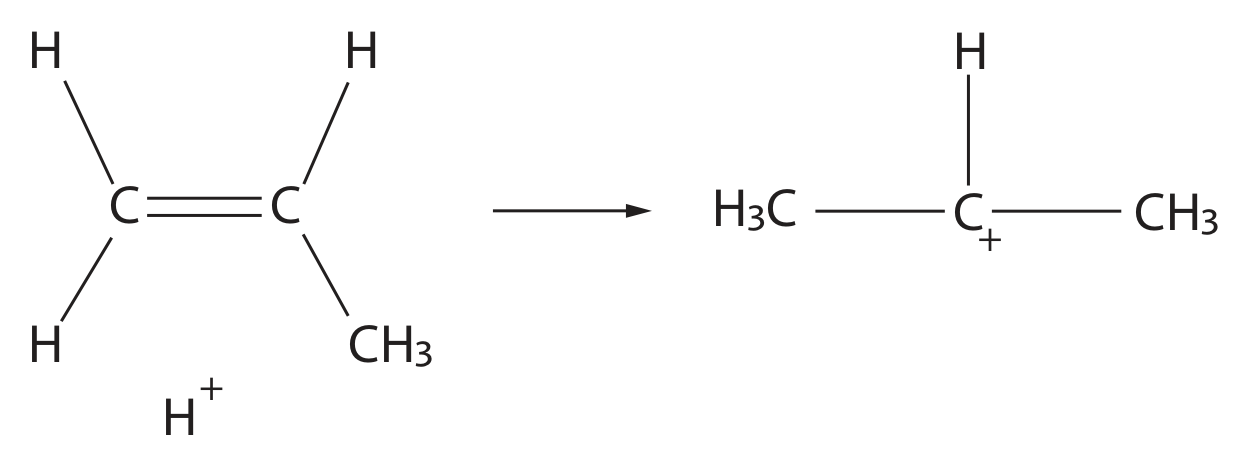
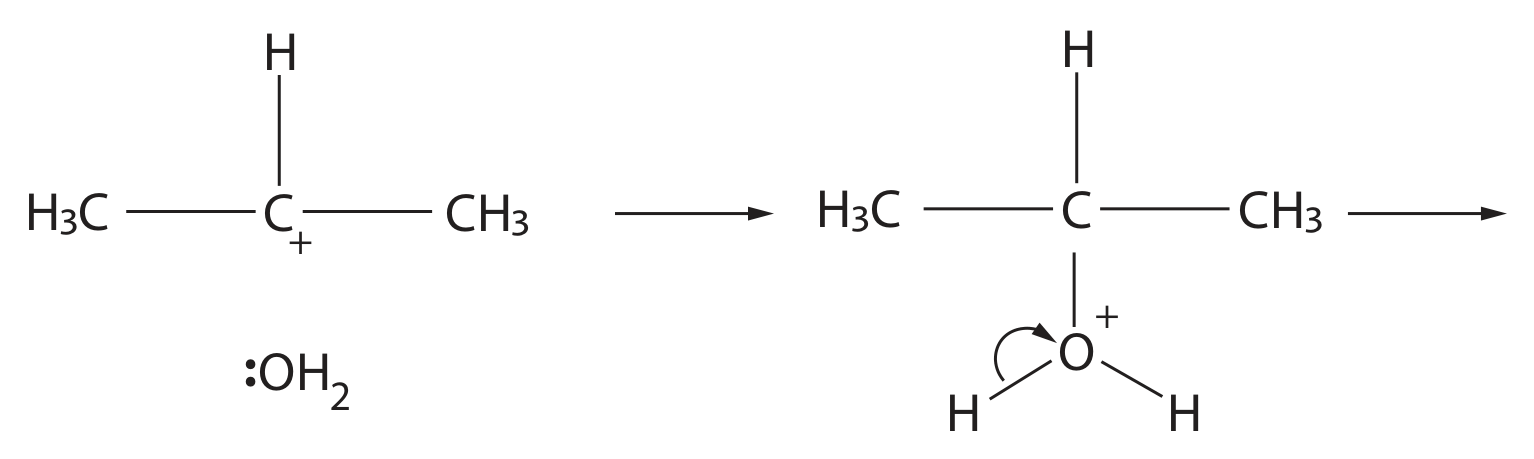
Propene reacts with steam in the presence of an acid catalyst to form a mixture of the alcohols propan-1-ol and propan-2-ol.

Complete the mechanism for the formation of propan-2-ol, by adding curly arrows.
Include the species formed in the final step.

Question image
Question image
[ 3 ]

Question 20

[Maximum number: 9]

This question is about polymers.

Question 20(a)

(a)

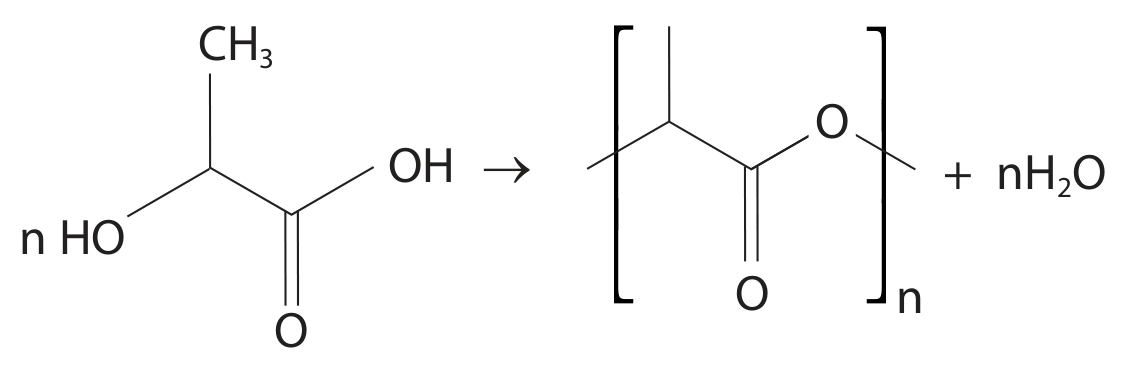
Plastic bags can be made from poly(lactic acid) (PLA), which is biodegradable. Lactic acid is obtained from corn.
An equation for the polymerisation of lactic acid is shown.

Question image
[ 6 ]

Question 20(a)(i)

(i)

Write a balanced equation for the polymerisation of propene using displayed formulae.

[ 2 ]

Question 20(a)(iii)

(ii)

State the meaning of the term biodegradable.

[ 1 ]

Question 20(a)(iv)

(iii)

Give three advantages of biodegradable polymers.
(3)

[ 3 ]

Question 20(b)

(b)

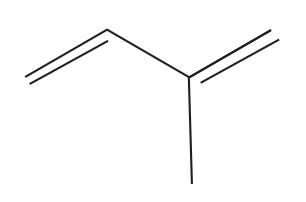
Isoprene is used to make synthetic rubber. The skeletal formula for isoprene is shown.

Question image
[ 3 ]

Question 20(b)(i)

(i)

State why isoprene does not have geometric isomers.

[ 1 ]

Question 20(b)(ii)

(ii)

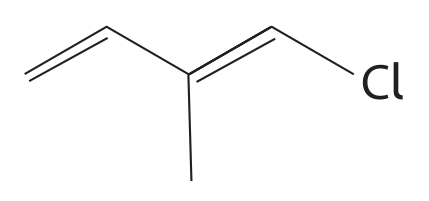
A related molecule does show geometric isomerism.

Question image

Draw the geometric isomer of this molecule.

[ 1 ]

Question 20(b)(iii)

(iii)

Give a reason why a double bond may result in geometric isomerism.
(1)

[ 1 ]

Question 21

[Maximum number: 7]

This question is about ethene, C2H4\mathrm{C}_{2} \mathrm{H}_{4}.

Question 21(c)

(a)

Ethene and chlorine react to form 1,2-dichloroethane.

[ 4 ]

Question 21(c)(i)

(i)

Draw the mechanism for the reaction between ethene and chlorine to form 1,2-dichloroethane.
Include curly arrows, and relevant lone pairs and dipoles.

[ 4 ]

Question 21(d)

(b)

Ethene reacts with oxygen, O2\mathrm{O}_{2}, in the presence of a silver catalyst, to form compound Y as the only product.

[ 1 ]

Question 21(d)(ii)

(i)

Compound Y reacts with water to form compound Z. Compound Z is also produced in the reaction between ethene and acidified potassium manganate(VII).

Give the displayed formula of compound Z.

[ 1 ]

Question 21(f)

(c)

Two reactions of cyclohexene are shown.

Question image
[ 2 ]

Question 21(f)(ii)

(i)

Give the reagents and conditions needed for Reaction 2.

[ 2 ]

Question 21

[Maximum number: 7]

This question is about the production of squalane, a liquid alkane which occurs naturally in human skin and is used in cosmetics.

squalane

squalane

Question 21(c)

(a)

Squalane can be produced from squalene, an alkene present in shark liver oil, by reaction with hydrogen gas in the presence of a suitable catalyst.

[ 2 ]

Question 21(c)(i)

(i)

Give the name of a suitable catalyst for the hydrogenation of squalene.

[ 1 ]

Question 21(c)(iv)

(ii)

Write the equation, using molecular formulae, for the complete hydrogenation of squalene to squalane.
State symbols are not required.

[ 1 ]

Question 21(e)

(b)

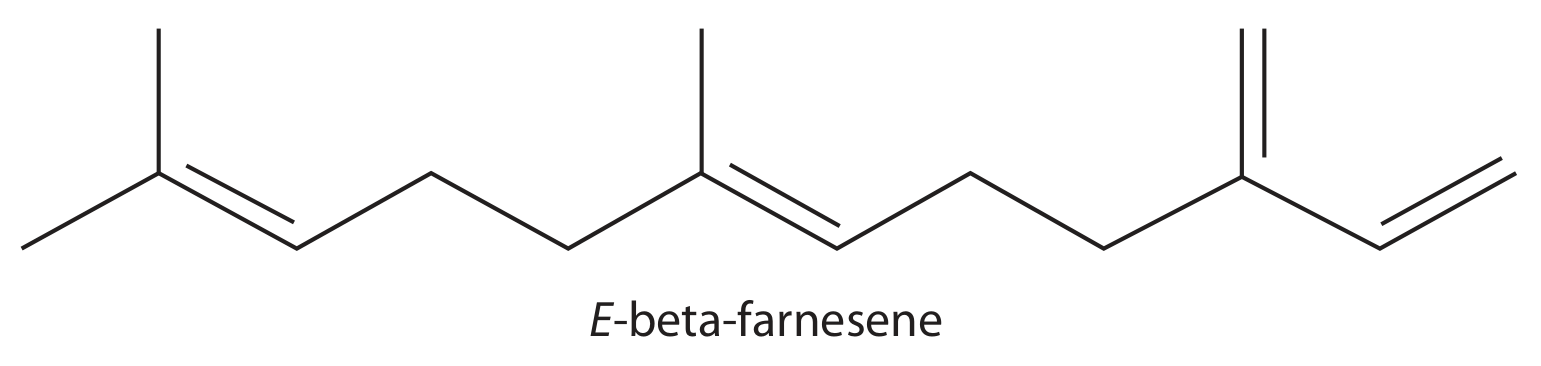
The E-isomer of beta-farnesene can also be obtained from corn starch.

Question image
[ 4 ]

Question 21(e)(i)

(i)

Explain why beta-farnesene exhibits geometric isomerism and has only two geometric isomers.

You may label the structure and use this in your answer.
(2)

[ 2 ]

Question 21(e)(ii)

(ii)

Draw the skeletal formula of the geometric isomer of E-beta-farnesene, giving a reason why this is named the Z-isomer.

[ 2 ]

Question 21(f)

(c)

The compound alpha-farnesene, C15H24\mathrm{C}_{15} \mathrm{H}_{24}, is a structural isomer of beta-farnesene. The structural formula of alpha-farnesene is

(CH3)2C=CHCH2CH2C(CH3)=CHCH2CH=C(CH3)CH=CH2\left(\mathrm{CH}_{3}\right)_{2} \mathrm{C}=\mathrm{CHCH}_{2} \mathrm{CH}_{2} \mathrm{C}\left(\mathrm{CH}_{3}\right)=\mathrm{CHCH}_{2} \mathrm{CH}=\mathrm{C}\left(\mathrm{CH}_{3}\right) \mathrm{CH}=\mathrm{CH}_{2}
[ 1 ]

Question 21(f)(ii)

(i)

State the number of geometric isomers of alpha-farnesene.

[ 1 ]