
EduNinja

Edexcel IAL Chemistry AS Topic 4 Organic chemistry and alkanes

Edexcel IAL Chemistry AS Topic 4 Organic chemistry and alkanes
Pearson Edexcel IAL Chemistry syllabusChemistry YCH11First assessment 2019

Identify the functional group and longest chain, apply locants and formula conventions and use the stated reagent or hazard evidence to classify the reaction or decision.

Exam points

  • Name and draw organic compounds using longest chains, locants and functional groups.
  • Convert among molecular, empirical, structural and displayed formulae accurately.
  • Apply hazard and reaction evidence to alkane practicals and reaction terminology.

Question 8

[Maximum number: 2]

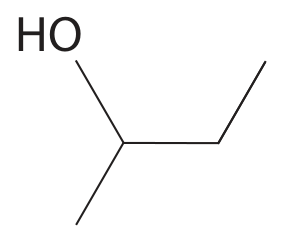
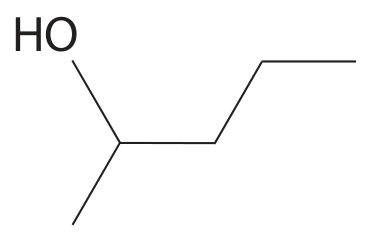
A sequence of four molecules is shown.
Question image
3

3

3

3

4

Question 8(a)

(a)

What is the molecular formula for the fifth molecule in this sequence?

A

CH4O\mathrm{CH}_{4} \mathrm{O}

B

C6H11O\mathrm{C}_{6} \mathrm{H}_{11} \mathrm{O}

C

C6H14O\mathrm{C}_{6} \mathrm{H}_{14} \mathrm{O}

D

C7H16O\mathrm{C}_{7} \mathrm{H}_{16} \mathrm{O}

[ 1 ]

Question 8(b)

(b)

What is the name of this type of sequence?

A

functional group

B

homologous series

C

homolytic series

D

skeletal formulae

[ 1 ]
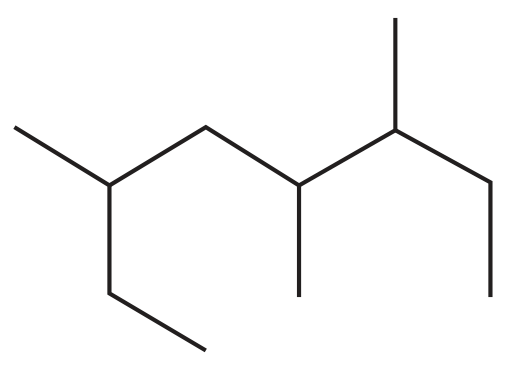
Question 14

What is the IUPAC name of this alkane?

Question image

□ A 2-ethyl-4,5-dimethylheptane
□ B 6-ethyl-3,4-dimethylheptane
□ C 3,4,6-trimethyloctane
□ D 3,5,6-trimethyloctane

Question 16

[Maximum number: 4]

Cyclopentane undergoes free radical substitution with bromine.

Question 16(a)

(a)

Which of these is an overall equation for this reaction?

A C5H8+Br2C5H8Br2\mathrm{C}_{5} \mathrm{H}_{8}+\mathrm{Br}_{2} \rightarrow \mathrm{C}_{5} \mathrm{H}_{8} \mathrm{Br}_{2}

B C5H10+Br2C5H10Br2\mathrm{C}_{5} \mathrm{H}_{10}+\mathrm{Br}_{2} \rightarrow \mathrm{C}_{5} \mathrm{H}_{10} \mathrm{Br}_{2}

C C5H10+Br2C5H8Br2+H2\mathrm{C}_{5} \mathrm{H}_{10}+\mathrm{Br}_{2} \rightarrow \mathrm{C}_{5} \mathrm{H}_{8} \mathrm{Br}_{2}+\mathrm{H}_{2}

D C5H10+Br2C5H9Br+HBr\mathrm{C}_{5} \mathrm{H}_{10}+\mathrm{Br}_{2} \rightarrow \mathrm{C}_{5} \mathrm{H}_{9} \mathrm{Br}+\mathrm{HBr}

[ 1 ]

Question 16(b)

(b)

Which statement is not correct about this reaction system?

A

only the initiation step involves homolytic bond fission

B

only some bromine is converted to free radicals in the initiation step

C

propagation forms more product than termination

D

further substitution reactions are likely to occur

[ 1 ]

Question 16(c)

(c)

Which free radical is least likely to form in a propagation step in this reaction system?

A

C5H9\mathrm{C}_{5} \mathrm{H}_{9}^{\bullet}

B

Br\mathrm{Br}^{\bullet}

C

C5H8Br\mathrm{C}_{5} \mathrm{H}_{8} \mathrm{Br}^{\bullet}

D

H• \mathrm{H}^{\text {• }}

[ 1 ]

Question 16(d)

(d)

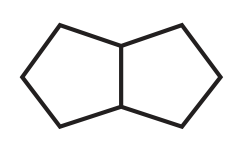
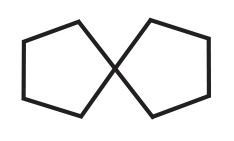
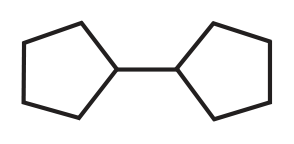
Which alkane could be formed in a termination step in this reaction system?
□ A

Question image

□ B

Question image

□ C

Question image

□ D

Question image
[ 1 ]

Question 10

[Maximum number: 2]

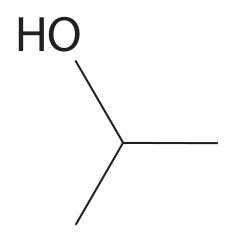
Methane reacts with excess chlorine in UV light.

Question 10(a)

(a)

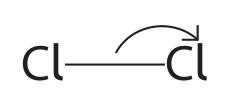
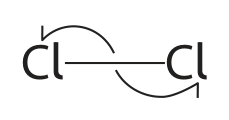
Which process occurs in the initiation step?
□ A

Question image

□ B

Question image

□ c Cl-Cl

D ClCl\mathrm{Cl} \stackrel{\vdash}{\leftarrow} \mathrm{Cl}

[ 1 ]

Question 10(b)

(b)

Which of these molecules could not be formed in a termination step?

A

C2H6\mathrm{C}_{2} \mathrm{H}_{6}

B

CH3Cl\mathrm{CH}_{3} \mathrm{Cl}

C

CH2Cl2\mathrm{CH}_{2} \mathrm{Cl}_{2}

D

HCl

[ 1 ]

Question 20

[Maximum number: 9]

This question is about hexane, C6H14\mathrm{C}_{6} \mathrm{H}_{14}.

Question 20(a)

(a)

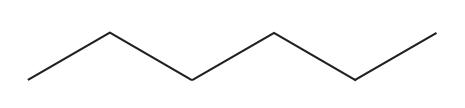
The skeletal formula of hexane is

Question image

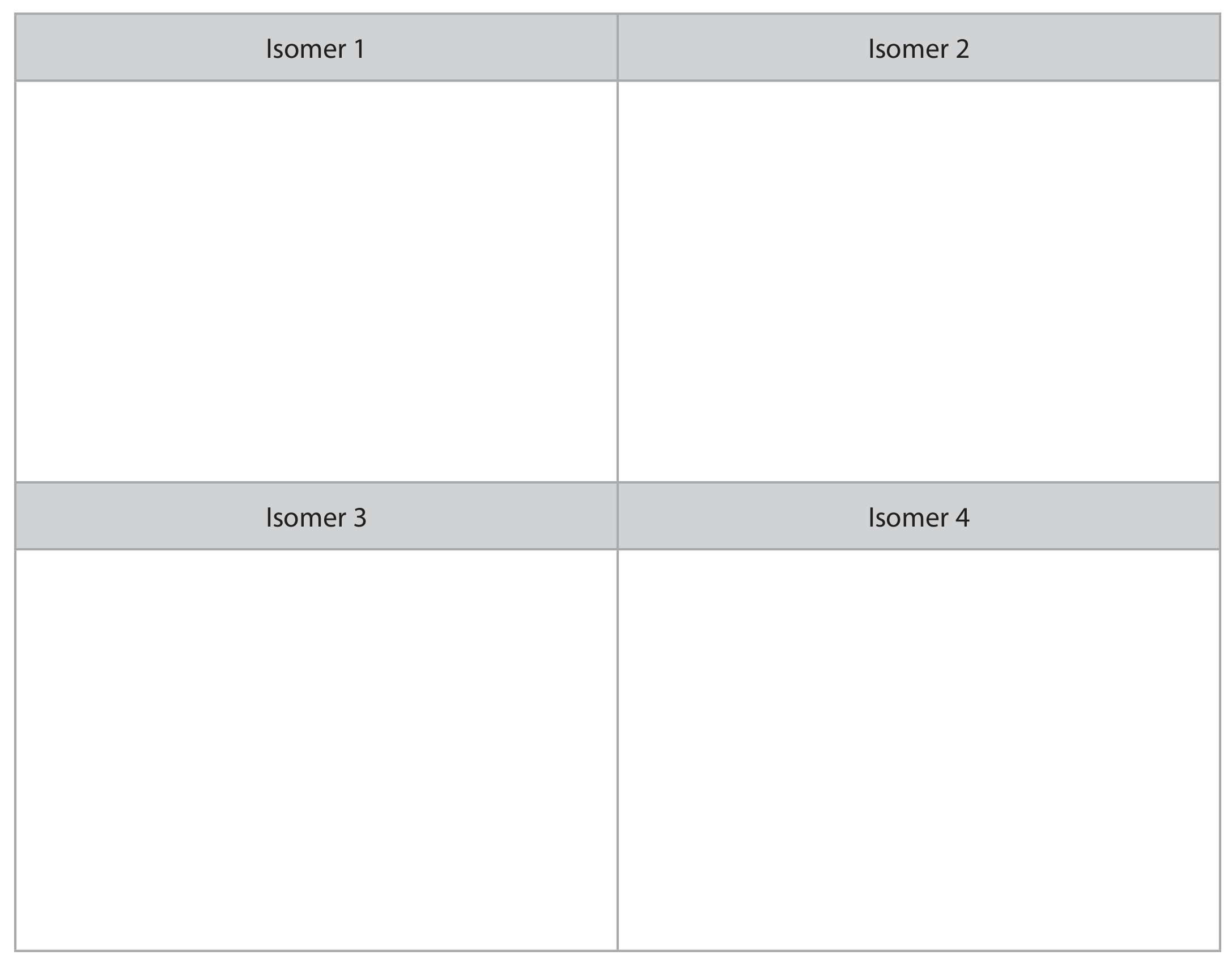
Draw the four structural isomers of hexane in the boxes.

Table
[ 4 ]

Question 20(b)

(b)

Hexane reacts with bromine in the presence of ultraviolet radiation to form a mixture of bromoalkanes.

[ 5 ]

Question 20(b)(i)

(i)

Draw the initiation step of this reaction, using curly half-arrows.

[ 2 ]

Question 20(b)(ii)

(ii)

Write equations for two propagation steps to show how C6H13Br\mathrm{C}_{6} \mathrm{H}_{13} \mathrm{Br} is formed. Curly arrows are not required.

[ 2 ]

Question 20(b)(iii)

(iii)

Give the molecular formula of an alkane formed in a termination step in this reaction.

[ 1 ]

Question 21

[Maximum number: 4]

This question is about ethene, C2H4\mathrm{C}_{2} \mathrm{H}_{4}.

Question 21(c)

(a)

Ethene and chlorine react to form 1,2-dichloroethane.

[ 2 ]

Question 21(c)(ii)

(i)

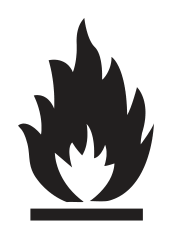
One hazard symbol for 1,2-dichloroethane is shown.

Question image

By identifying this hazard, give one way of minimising the risk when working with 1,2-dichloroethane in a laboratory.

Assume the use of safety goggles and a laboratory coat.

[ 2 ]

Question 21(e)

(b)

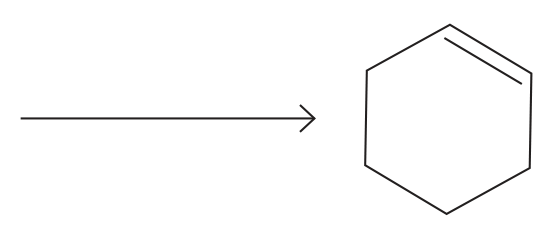
Ethene reacts with buta-1,3-diene to form cyclohexene as the only product.

Complete the equation for the formation of cyclohexene from ethene and buta-1,3-diene using skeletal formulae.

Question image
[ 1 ]

Question 21(f)

(c)

Two reactions of cyclohexene are shown.

Question image
[ 1 ]

Question 21(f)(i)

(i)

Classify the type of reaction occurring in Reaction 1.

[ 1 ]

Question 21

[Maximum number: 4]

This question is about the production of squalane, a liquid alkane which occurs naturally in human skin and is used in cosmetics.

squalane

squalane

Question 21(b)

(a)

Give the molecular formula of squalane.

[ 1 ]

Question 21(f)

(b)

The compound alpha-farnesene, C15H24\mathrm{C}_{15} \mathrm{H}_{24}, is a structural isomer of beta-farnesene. The structural formula of alpha-farnesene is

(CH3)2C=CHCH2CH2C(CH3)=CHCH2CH=C(CH3)CH=CH2\left(\mathrm{CH}_{3}\right)_{2} \mathrm{C}=\mathrm{CHCH}_{2} \mathrm{CH}_{2} \mathrm{C}\left(\mathrm{CH}_{3}\right)=\mathrm{CHCH}_{2} \mathrm{CH}=\mathrm{C}\left(\mathrm{CH}_{3}\right) \mathrm{CH}=\mathrm{CH}_{2}
[ 3 ]

Question 21(f)(i)

(i)

State what is meant by the term structural isomers.
(2)

[ 2 ]

Question 21(f)(iii)

(ii)

Complete the diagram to show another structural isomer of C15H24\mathrm{C}_{15} \mathrm{H}_{24}. (CH3)2C=CHCH2CH2C(CH3)=CHCH2CH=C(CH3)CH=CH2\left(\mathrm{CH}_{3}\right)_{2} \mathrm{C}=\mathrm{CHCH}_{2} \mathrm{CH}_{2} \mathrm{C}\left(\mathrm{CH}_{3}\right)=\mathrm{CHCH}_{2} \mathrm{CH}=\mathrm{C}\left(\mathrm{CH}_{3}\right) \mathrm{CH}=\mathrm{CH}_{2}

[ 1 ]