1.3.5—Orbitals and electron spin
- Syllabus
- First assessment 2025
- Objective
- 1.3.5
- Level
- SL
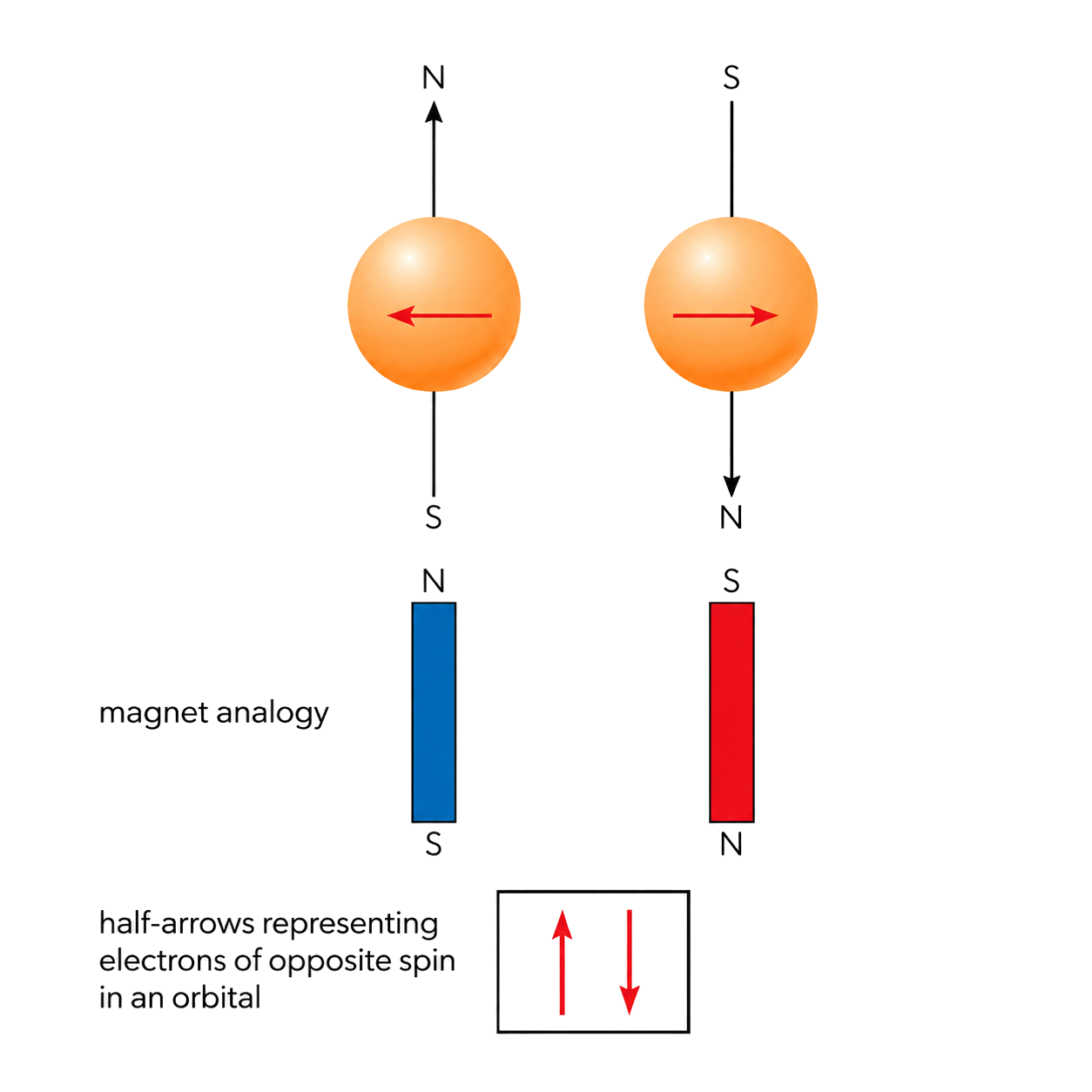
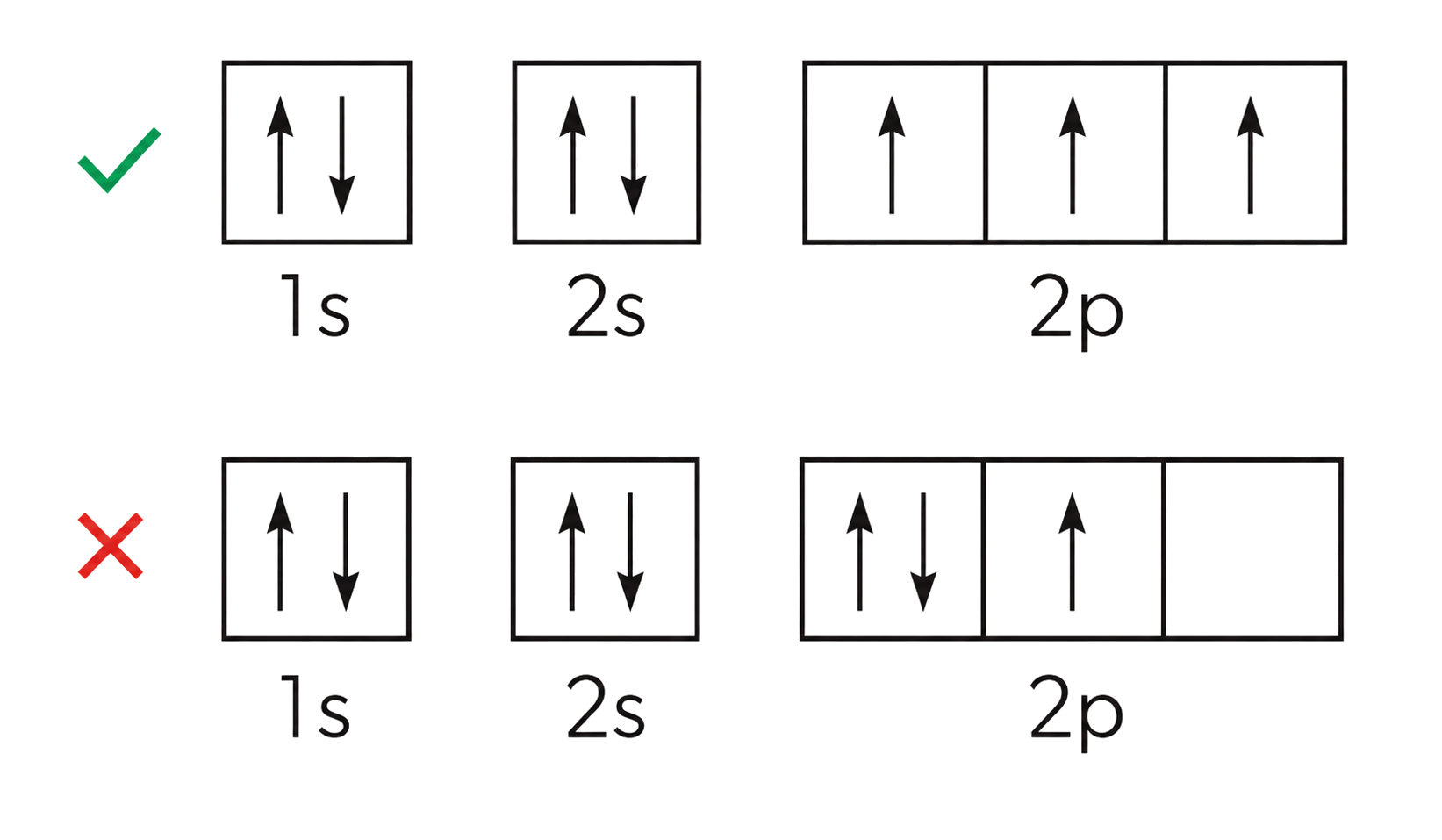
Aufbau fills lower-energy orbitals first. Pauli limits an orbital to two electrons with opposite spins. Hund's rule places electrons singly in degenerate orbitals before pairing.
| Representation | Use |
|---|---|
| Full configuration | Show the complete filling sequence |
| Condensed configuration | Replace the inner electrons with a noble-gas core |
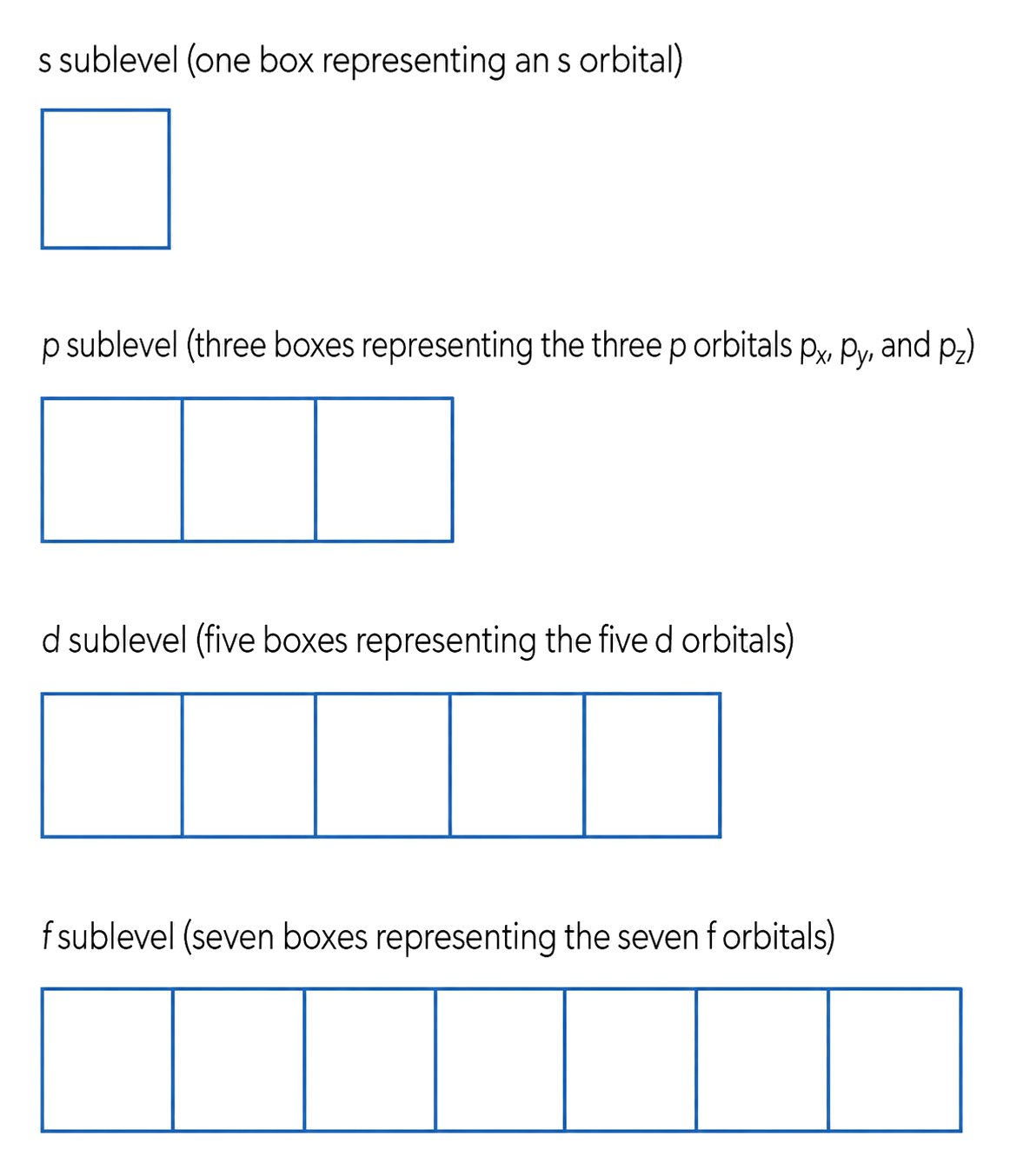
| Orbital-box diagram | Show orbital occupancy and opposite-spin pairing |
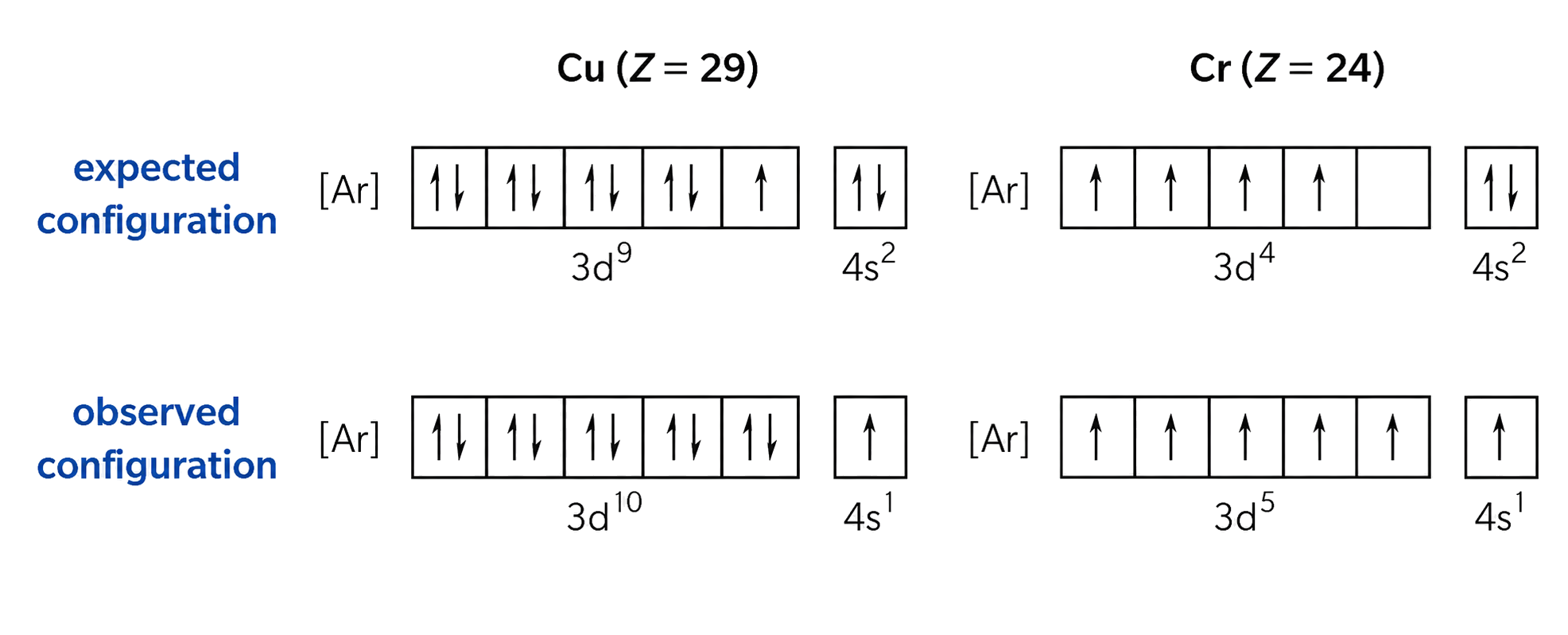
For ions, remove 4s electrons before 3d electrons. The exceptions in scope are Cr: [Ar] 4s1 3d5 and Cu: [Ar] 4s1 3d10.
Check total electrons, obey the filling order, apply Hund and Pauli in each sublevel, and treat the Cr/Cu exceptions explicitly rather than forcing the naive pattern.
Build an orbital diagram by checking electron total, energy order, single occupation of equal-energy orbitals, then opposite-spin pairing. For transition-metal ions remove 4s electrons before 3d, and verify Cr and Cu against the stated exceptions rather than forcing the simple filling pattern.
Worked ion check: Fe has 26 electrons and condensed configuration [Ar] 4s² 3d⁶. To form Fe³⁺, remove the two electrons from the highest principal level, 4s, before removing one 3d electron, giving [Ar] 3d⁵. The final superscripts total 23 electrons, matching 26 − 3.