1.3.4—Sublevels
- Syllabus
- First assessment 2025
- Objective
- 1.3.4
- Level
- SL
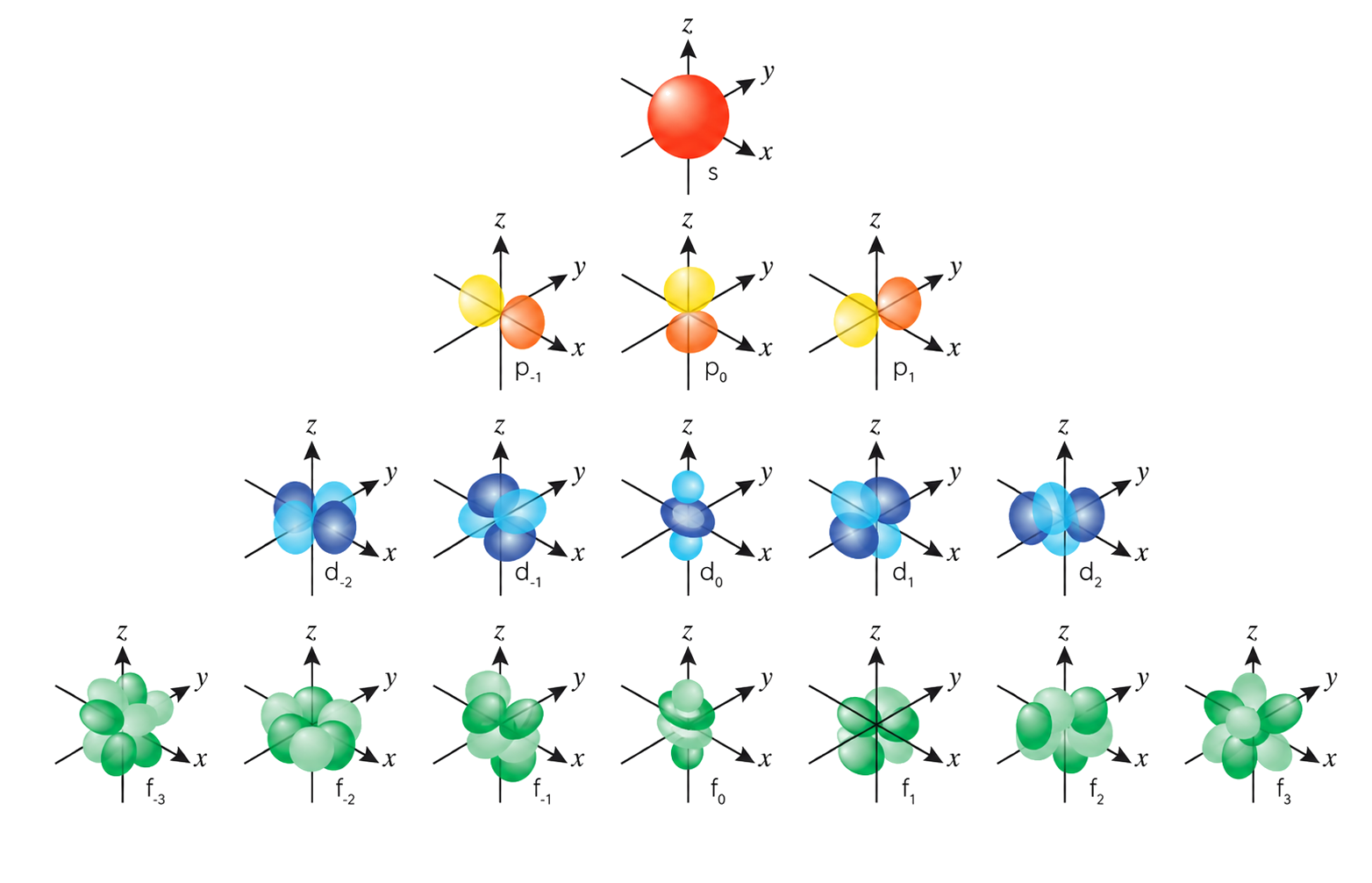
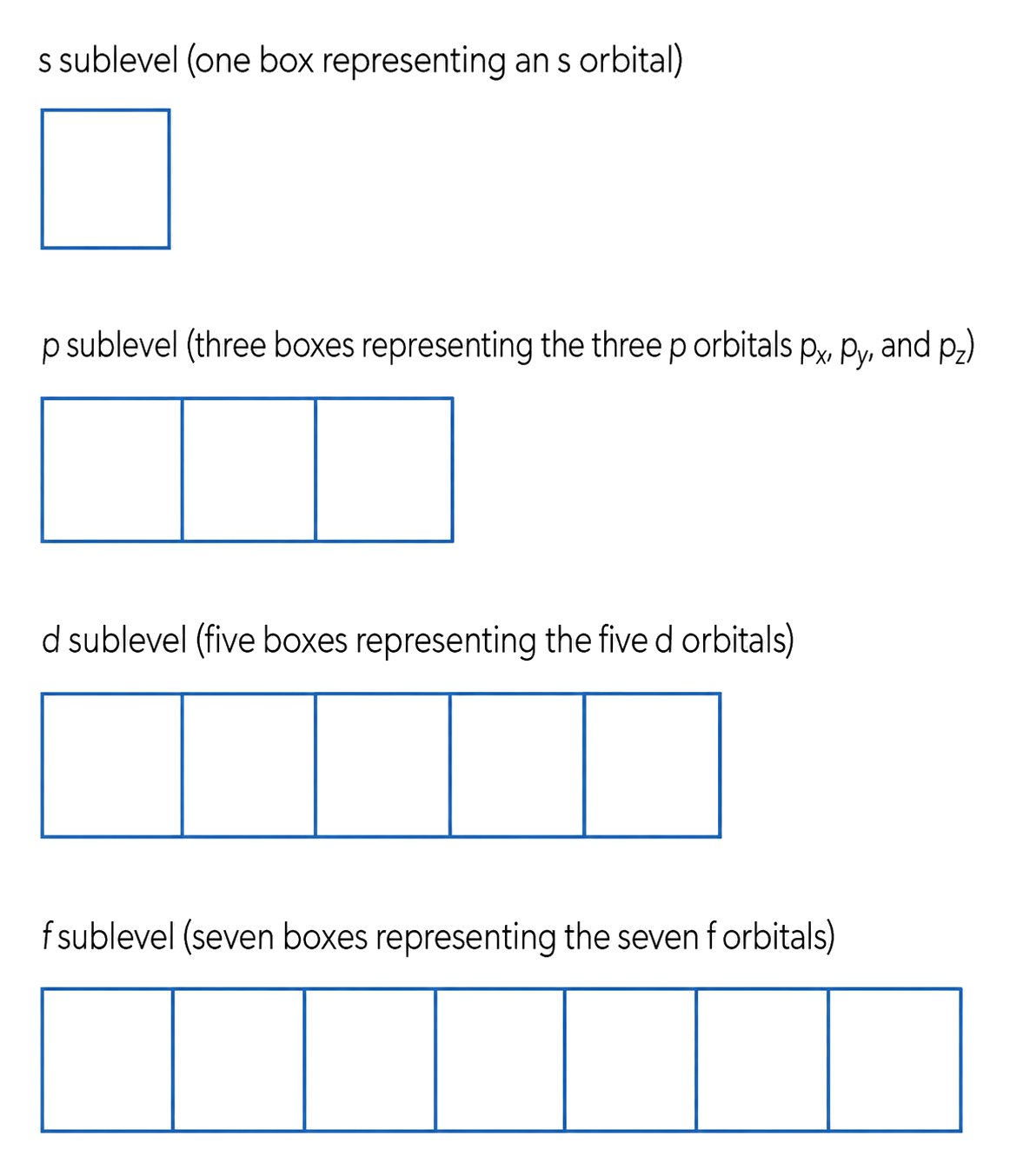
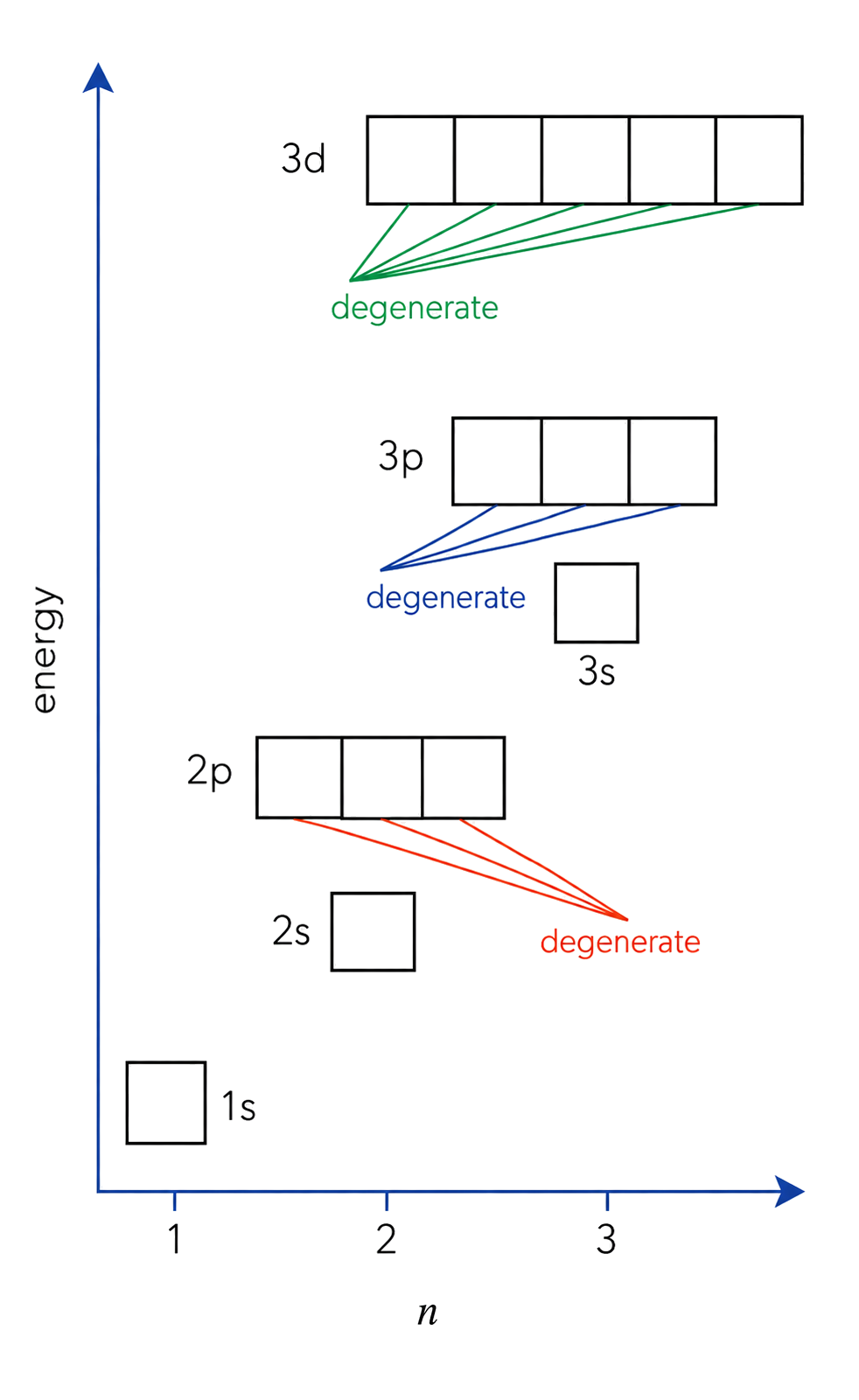
A main energy level contains only the sublevels allowed by its principal quantum number: n = 1 has s; n = 2 has s and p; n = 3 has s, p and d; and n = 4 can include s, p, d and f. Within one main level the sublevels rise in energy s < p < d < f, while the filling order across different levels can interleave, as the next card makes explicit. Each sublevel contains a fixed number of orbitals.
| Sublevel | Number of orbitals | Maximum electrons | Assessed shape evidence | Periodic-table block |
|---|---|---|---|---|
| s | 1 | 2 | spherical | s block |
| p | 3 | 6 | three dumbbell orbitals with different orientations | p block |
| d | 5 | 10 | shape detail not required here | d block |
| f | 7 | 14 | shape detail not required here | f block |
The block is identified by the subshell being filled; sublevel capacity is not the same as actual occupancy.
For recognition questions, keep the hierarchy clear: main energy level → sublevel → orbital. The s and p shapes are the explicitly required shape evidence here.
Use the hierarchy as a classification test: a p sublevel contains three orbitals, and each orbital can hold two electrons. An orbital describes a probability region with a characteristic shape; it is not a circular route travelled by an electron.