B2.2.2—Nucleus-cytoplasm separation

The nuclear envelope separates DNA-containing nucleus from cytoplasm, allowing transcriptional processing, DNA protection, and regulated exchange before translation occurs in eukaryotic cells.

Syllabus
First assessment 2025
Objective
B2.2.2
Level
SL

The Nucleus Separates RNA Processing from Translation

The nuclear envelope keeps DNA and transcription in the nucleus while translation occurs on cytoplasmic ribosomes. This separation permits pre-mRNA processing before mature mRNA reaches a ribosome.

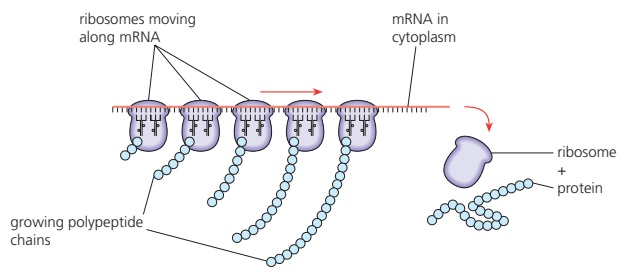
The figure shows a polysome.

DNA transcription → 5′ cap, intron removal and poly-A tail → mature mRNA export through a nuclear pore → several ribosomes can translate it as a polysome

SL Summary: Explain the Advantage, Not Just the Organelle

  • organelle membrane → selected molecules and conditions → faster, regulated pathways
  • nucleus separated from cytoplasm → RNA processing before translation → controlled gene expression
  • distinct cytoplasmic spaces → incompatible reactions remain apart → simultaneous specialized work

For any compartment: name its boundary → state what differs across it → connect that difference to a function.

Concept essentials

  • The nuclear envelope separates DNA from cytoplasmic translation machinery.
  • Nuclear pores regulate movement of RNA and proteins between nucleus and cytoplasm.
  • mRNA processing can occur before mature mRNA leaves the nucleus.
  • Chromosomal DNA remains inside the nucleus rather than passing through pores for translation.