Question 2(a)(i)
[Maximum number: 1]
The table shows properties of four substances, A, B, C and D.
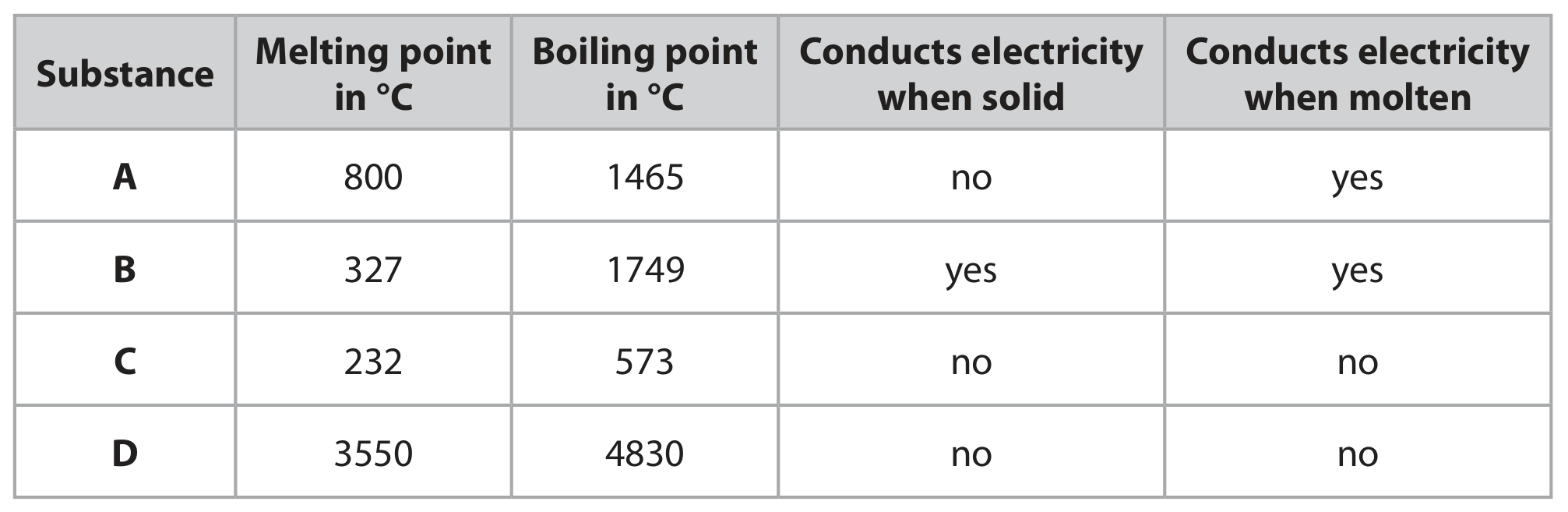
Use information from the table to identify these substances.
Which substance could be a metal?
 EduNinja
Edexcel IGCSE Chemistry (h) Metallic bonding question practice helps you revise this syllabus point with the course map in view. Use this page to focus on one topic, check the style of questions available, and connect each attempt back to the knowledge area it is testing.
EduNinja keeps Chemistry practice aligned to Edexcel, so you can move from topic review into exam-style question bank work without losing the syllabus structure. Start with a small set, mark the weak steps, then return to nearby topic links when a definition, graph, calculation, or explanation needs repair.
The table shows properties of four substances, A, B, C and D.
Use information from the table to identify these substances.
Which substance could be a metal?
This question is about metals and metal compounds.
All metals are malleable and good conductors of electricity.
The diagram shows the structure of a metal.
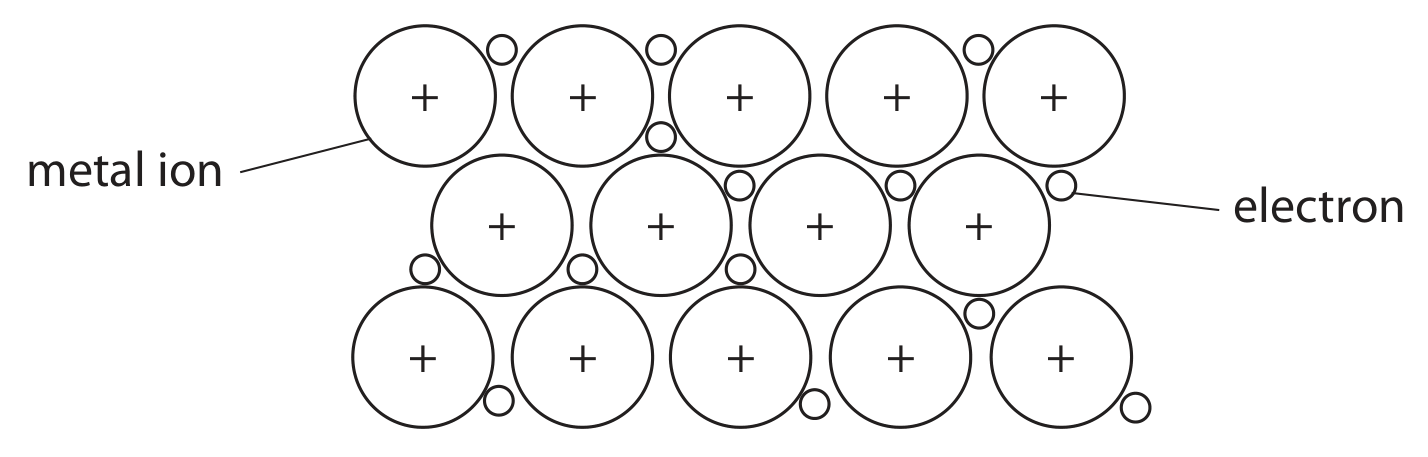
Explain why metals are malleable.
Explain why metals are good conductors of electricity.
This question is about magnesium metal and its compounds.
The diagram represents the structure of magnesium.
Complete the diagram by adding the labels.
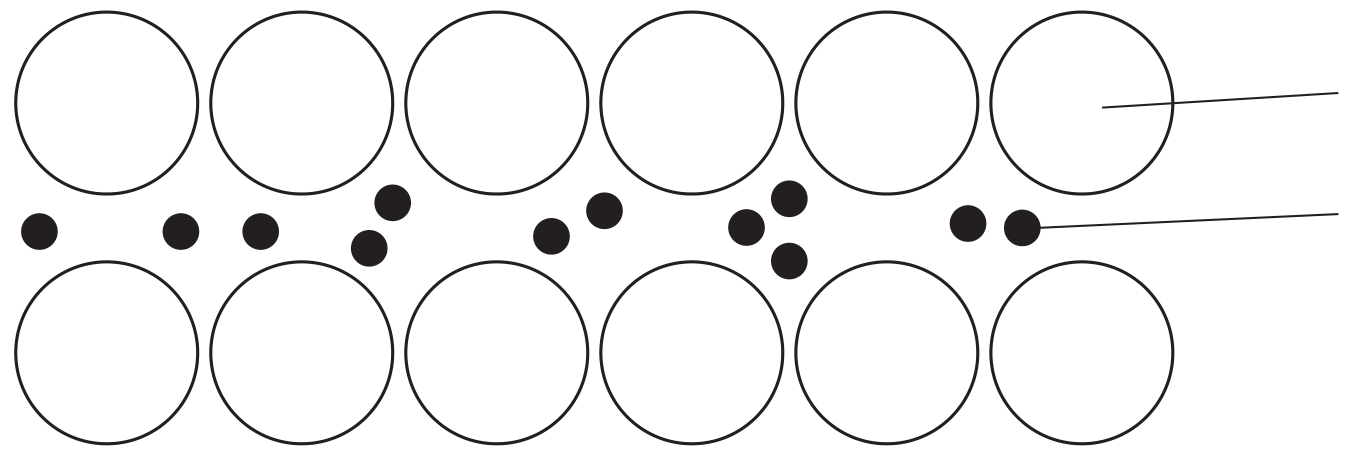
Explain why magnesium is malleable.
Explain why metals conduct electricity but covalent compounds do not conduct electricity.
This question is about metals.
Which statement describes metallic bonding?
electrostatic attraction between oppositely charged ions
electrostatic attraction between the nuclei of two atoms and a pair of electrons shared between them
electrostatic attraction between positively charged particles and delocalised electrons
electrostatic attraction between atoms
This question is about the metal, lead.
Explain why metals, such as lead, are malleable.
A teacher uses this apparatus in a fume cupboard to demonstrate the electrolysis of lead(II) bromide.
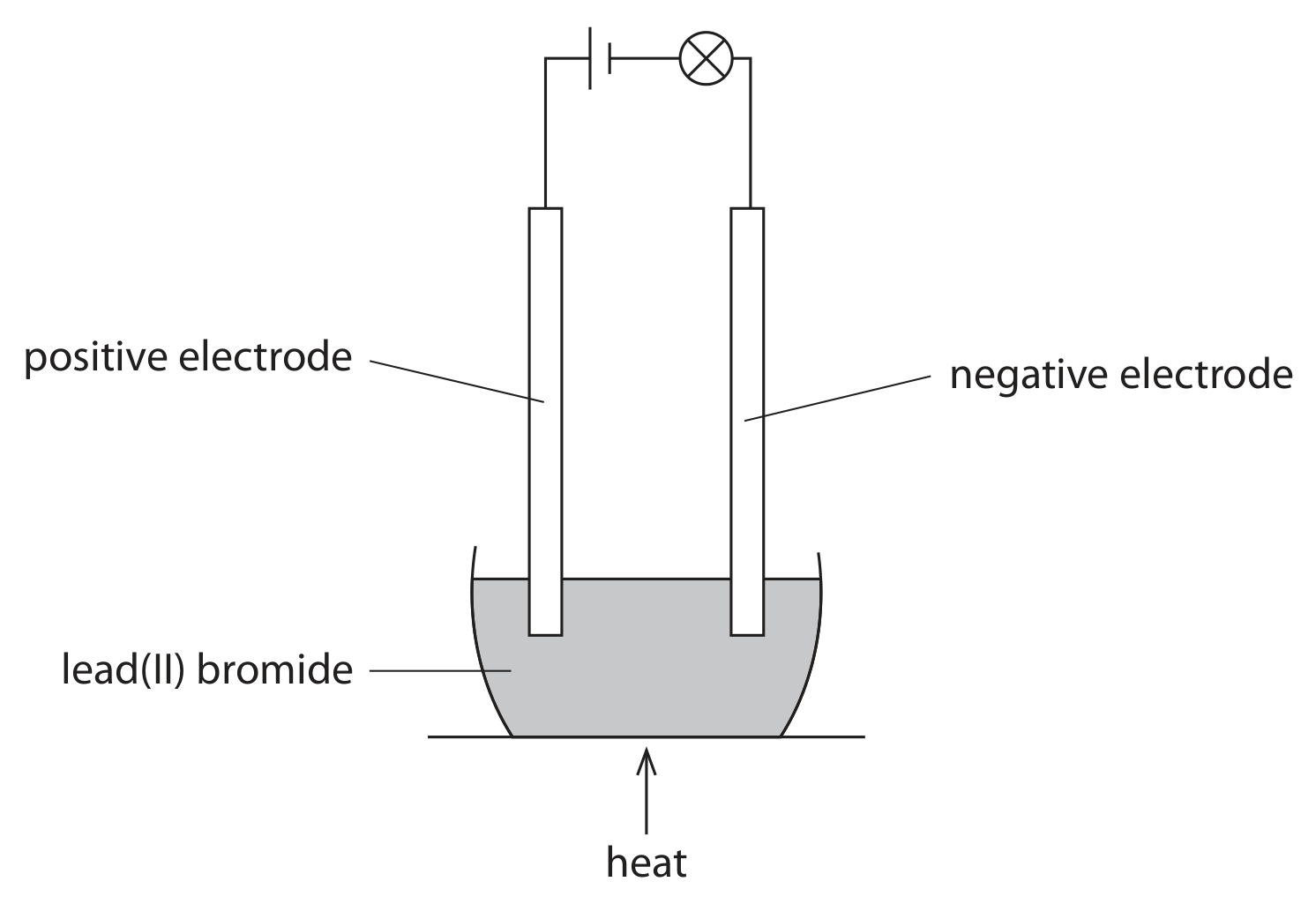
The lead(II) bromide is heated until it melts.
When the lead(II) bromide melts, the lamp lights.
One of the products of this electrolysis is lead.
The teacher stops heating the mixture and allows it to solidify.
Suggest why the lamp stays alight.
This question is about copper and its compounds.
Copper is a metal used for electrical wiring.
Explain why copper is a good conductor of electricity.
The diagram represents the structure of copper metal.
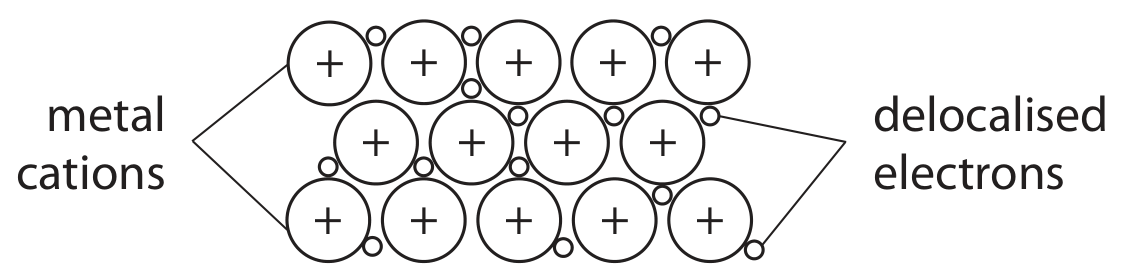
Explain three properties of copper that make it a suitable metal to use in electrical wiring.
This is a question about metals and their compounds.
State one property of metals.
This question is about the metal aluminium.
Aluminium is malleable and conducts electricity.
The diagram shows the arrangement of the ions in aluminium metal.
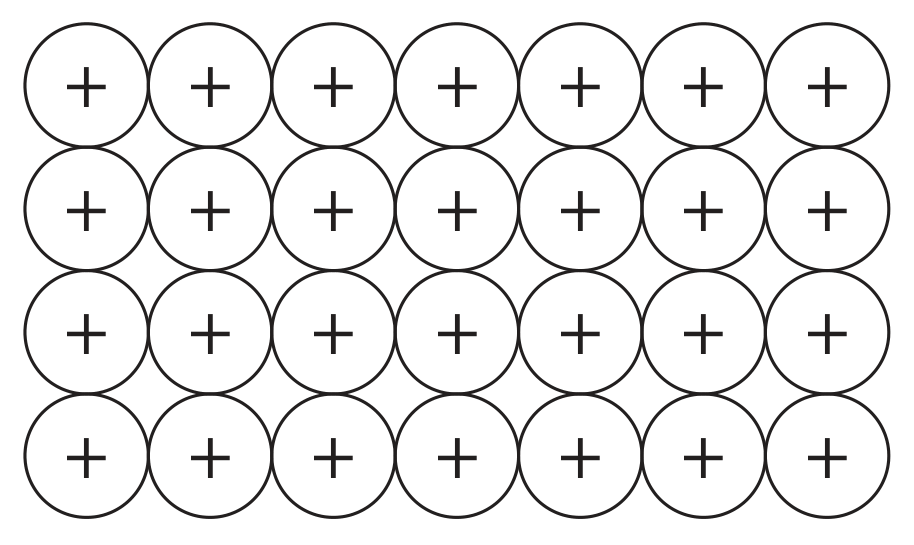

Explain why aluminium is malleable.
Explain why aluminium conducts electricity.