Question 2(a)(i)
[Maximum number: 1]
The box gives the names of some gases in the atmosphere.
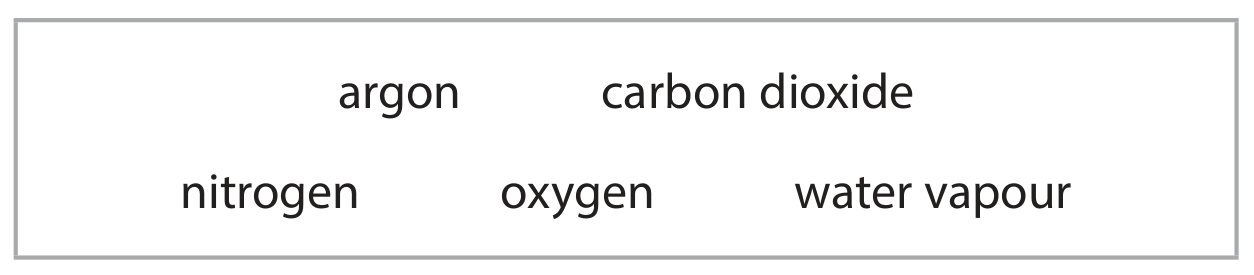
Choose gases from the box to answer these questions.
Identify the gas with a molecule that contains a triple bond.
 EduNinja
Edexcel IGCSE Chemistry (g) Covalent bonding question practice helps you revise this syllabus point with the course map in view. Use this page to focus on one topic, check the style of questions available, and connect each attempt back to the knowledge area it is testing.
EduNinja keeps Chemistry practice aligned to Edexcel, so you can move from topic review into exam-style question bank work without losing the syllabus structure. Start with a small set, mark the weak steps, then return to nearby topic links when a definition, graph, calculation, or explanation needs repair.
The box gives the names of some gases in the atmosphere.
Choose gases from the box to answer these questions.
Identify the gas with a molecule that contains a triple bond.
The table shows properties of four substances, A, B, C and D.
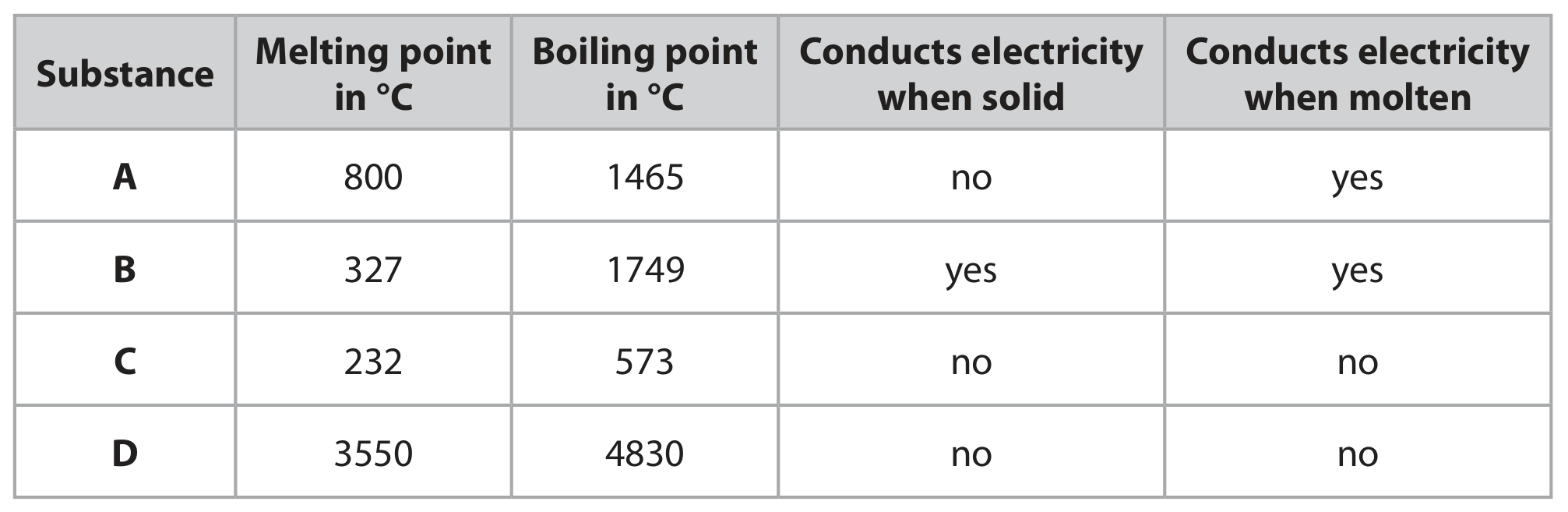
Use information from the table to identify these substances.
Which substance could be diamond?
The table gives some information about five gases.
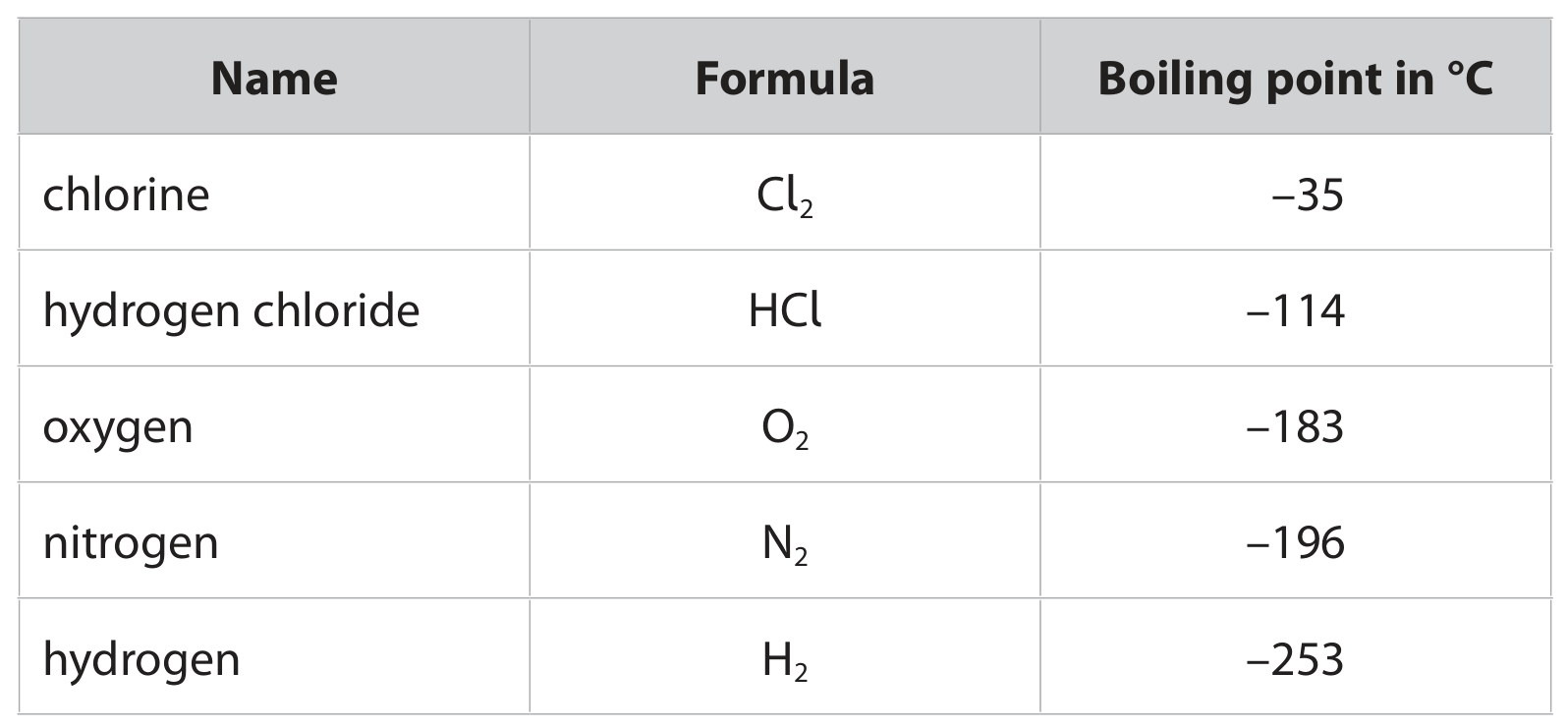
Why does chlorine have the highest boiling point of the gases in the table?
chlorine has the strongest covalent bonds between its atoms
chlorine has the strongest covalent bonds between its molecules □ C chlorine has the strongest ionic bonds between its atoms □ D chlorine has the strongest forces of attraction between its molecules □ □
chlorine has the strongest ionic bonds between its atoms
chlorine has the strongest forces of attraction between its molecules
Butane is an alkane.
Explain why hexane has a higher boiling point than butane .
This question is about organic compounds.
The atoms in methanoic acid are held together by covalent bonds.
State, in terms of electrostatic attractions, what is meant by the term covalent bond.
Draw a dot-and-cross diagram to show the bonding in a molecule of methanoic acid.
Show only the outer electrons of each atom.
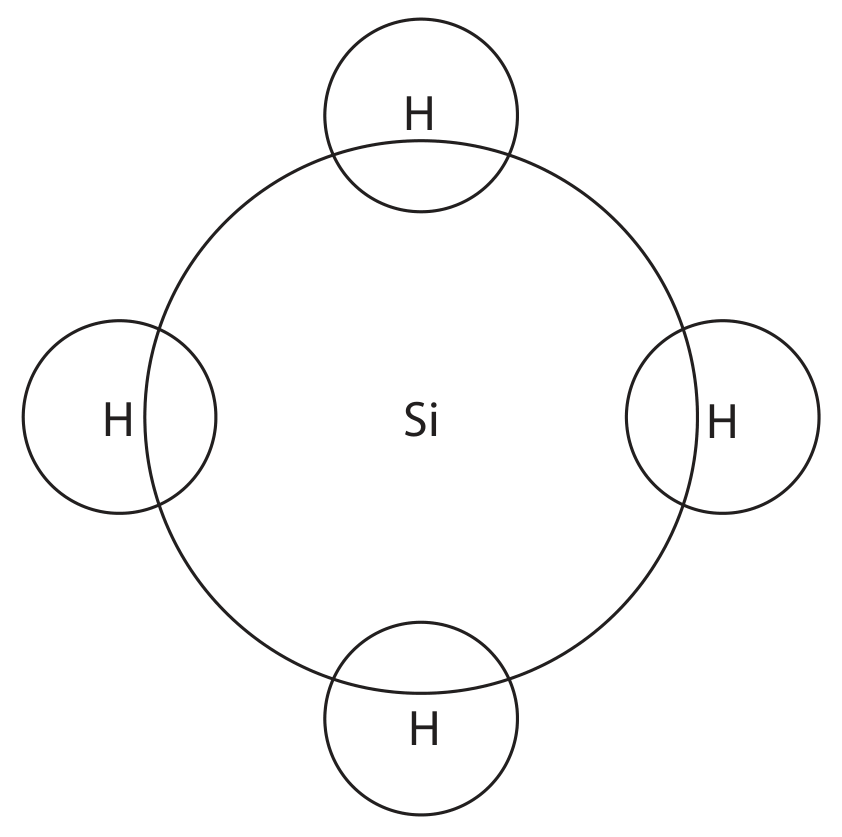
Silicon hydride ( ) and silicon dioxide ( ) both contain covalent bonds but they have different structures.
Describe the forces of attraction in a covalent bond.
Complete the diagram to show the outer shell electrons in a molecule of silicon hydride .
The diagram represents part of the structure of silicon dioxide ( ).
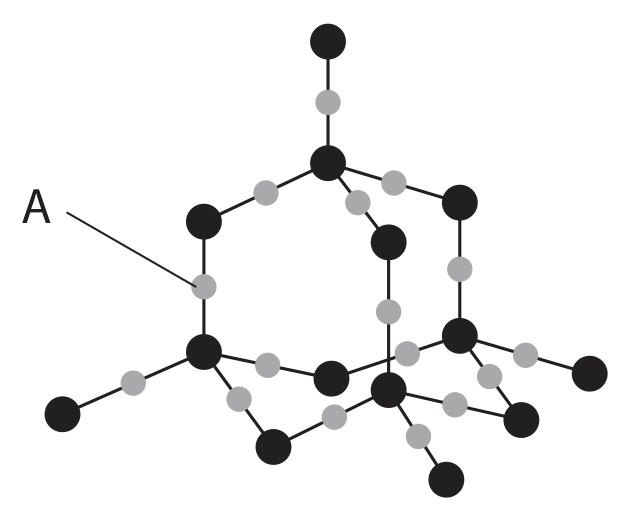
State how the diagram shows that the atom labelled A is oxygen, not silicon.
Silicon hydride has a simple molecular structure.
Silicon dioxide has the same type of structure as diamond.
Explain why silicon dioxide has a much higher melting point than silicon hydride.
Refer to structure and bonding in your answer.
This question is about ionic and covalent compounds.
Complete the dot-and-cross diagram to show the outer shell electrons in a molecule of ammonia.
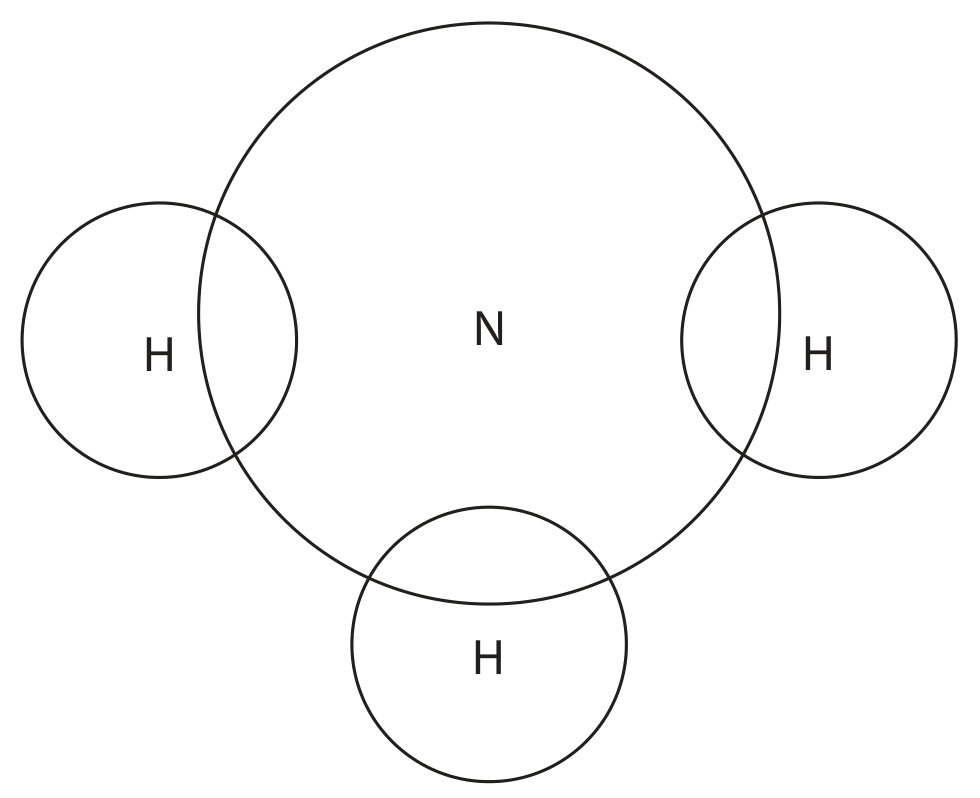
Describe the forces of attraction in a covalent bond.
Chlorine reacts with methane to form and HCl
The bonds in a molecule of are covalent.
Explain, in terms of electrostatic attractions, what is meant by a covalent bond.
Draw a dot-and-cross diagram for a molecule of Show only the outer electrons of the atoms.
H
C
H
has a simple molecular structure.
Explain why has a low boiling point.
Graphite is another substance that contains covalent bonds.
The diagram shows the structure of graphite.


Most covalent substances do not conduct electricity.
Explain why graphite is able to conduct electricity.
Diamond, graphite and silicon dioxide all have giant covalent structures.
The diagram shows the structures of these three substances.
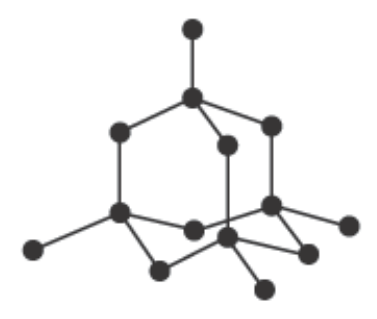
diamond
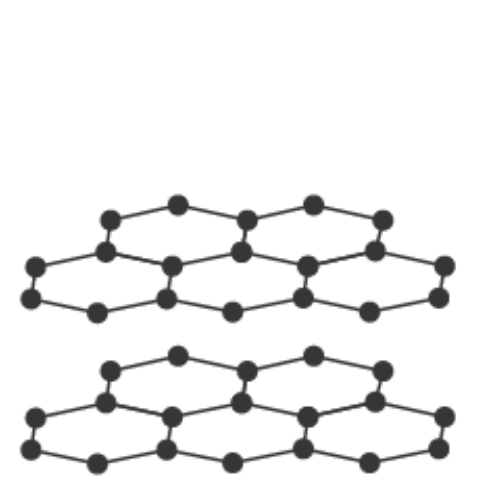
graphite
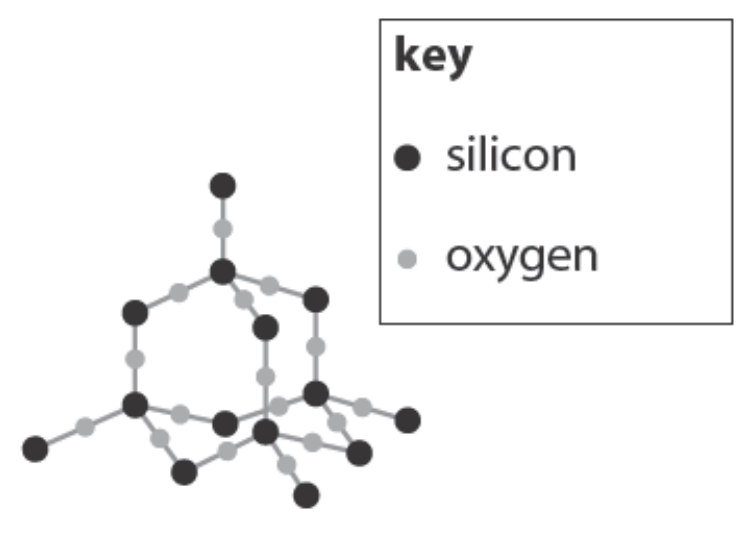
silicon dioxide
Explain why silicon dioxide has a high melting point.
Explain why graphite conducts electricity.
State why diamond is hard but graphite is soft.
The atoms in methanol are held together by covalent bonds.
State what is meant by the term covalent bond.
Draw a dot-and-cross diagram to show the bonding in a molecule of methanol.
Show only the outer electrons of each atom.