EduNinja

IGCSE Chemistry(c) Gases in the atmosphereTopic Practice

(c) Gases in the atmosphere

Edexcel IGCSE Chemistry (c) Gases in the atmosphere question practice helps you revise this syllabus point with the course map in view. Use this page to focus on one topic, check the style of questions available, and connect each attempt back to the knowledge area it is testing.

EduNinja keeps Chemistry practice aligned to Edexcel, so you can move from topic review into exam-style question bank work without losing the syllabus structure. Start with a small set, mark the weak steps, then return to nearby topic links when a definition, graph, calculation, or explanation needs repair.

Question 1

[Maximum number: 2]

This question is about gases in the atmosphere.

Question 1(a)

(a)

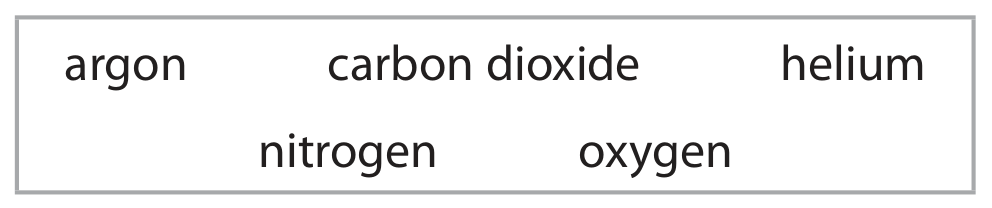
The box gives the names of some gases in the atmosphere.

argon carbon dioxide helium nitrogen oxygen

Use gases from the box to answer the questions.
Each gas may be used once, more than once or not at all.
Table
[ 2 ]

Question 1(a)(iii)

(i)

Identify the most abundant gas in the atmosphere.

[ 1 ]

Question 1(a)(iv)

(ii)

Identify the greenhouse gas.

[ 1 ]

Question 1

[Maximum number: 5]

This question is about gases in the atmosphere.

Question 1(a)

(a)

The box gives the names of some gases in the atmosphere.

argon carbon dioxide helium nitrogen oxygen

Choose gases from the box to answer these questions.
Each gas may be used once, more than once or not at all.

Table
[ 4 ]

Question 1(a)(i)

(i)

Identify a noble gas.

[ 1 ]

Question 1(a)(ii)

(ii)

Identify a gas that makes up about 78% of the atmosphere.

[ 1 ]

Question 1(a)(iii)

(iii)

Identify a greenhouse gas.

[ 1 ]

Question 1(a)(iv)

(iv)

Identify a gas produced by the thermal decomposition of calcium carbonate.

[ 1 ]

Question 1(b)

(b)

Sulfur reacts with oxygen to produce sulfur dioxide gas.

[ 1 ]

Question 1(b)(i)

(i)

Write a chemical equation for this reaction.

[ 1 ]

Question 1

[Maximum number: 3]

This question is about gases in the atmosphere.
The box gives the names of some gases.

Table

Question 1(a)

(a)

Choose gases from the box to answer these questions.

[ 2 ]

Question 1(a)(ii)

(i)

Identify the most abundant gas in the atmosphere.

[ 1 ]

Question 1(a)(iii)

(ii)

Identify the gas that is not normally found in the atmosphere.

[ 1 ]

Question 1(b)

(b)

State an environmental problem caused by increasing amounts of carbon dioxide in the atmosphere.

Question image
[ 1 ]

Question 1

[Maximum number: 2]

This question is about gases.

Question 1(a)

(a)

The box gives the names of some gases.
carbon dioxide carbon monoxide helium neon nitrogen oxygen

Choose gases from the box to answer questions (i) to (iv).
You may use each gas once, more than once or not at all.

[ 2 ]

Question 1(a)(ii)

(i)

Identify the gas that makes up about 21% of the atmosphere.

[ 1 ]

Question 1(a)(iii)

(ii)

Identify a greenhouse gas.

[ 1 ]

Question 2

[Maximum number: 7]

This question is about gases in the atmosphere.

Question 2(a)(i)

(a)

Name the most abundant gas in the atmosphere.

[ 1 ]

Question 2(a)(ii)

(b)

Name the noble gas that makes up about 1% of the atmosphere.

[ 1 ]

Question 2(a)(iii)

(c)

Name a greenhouse gas in the atmosphere.

[ 1 ]

Question 2(b)

(d)

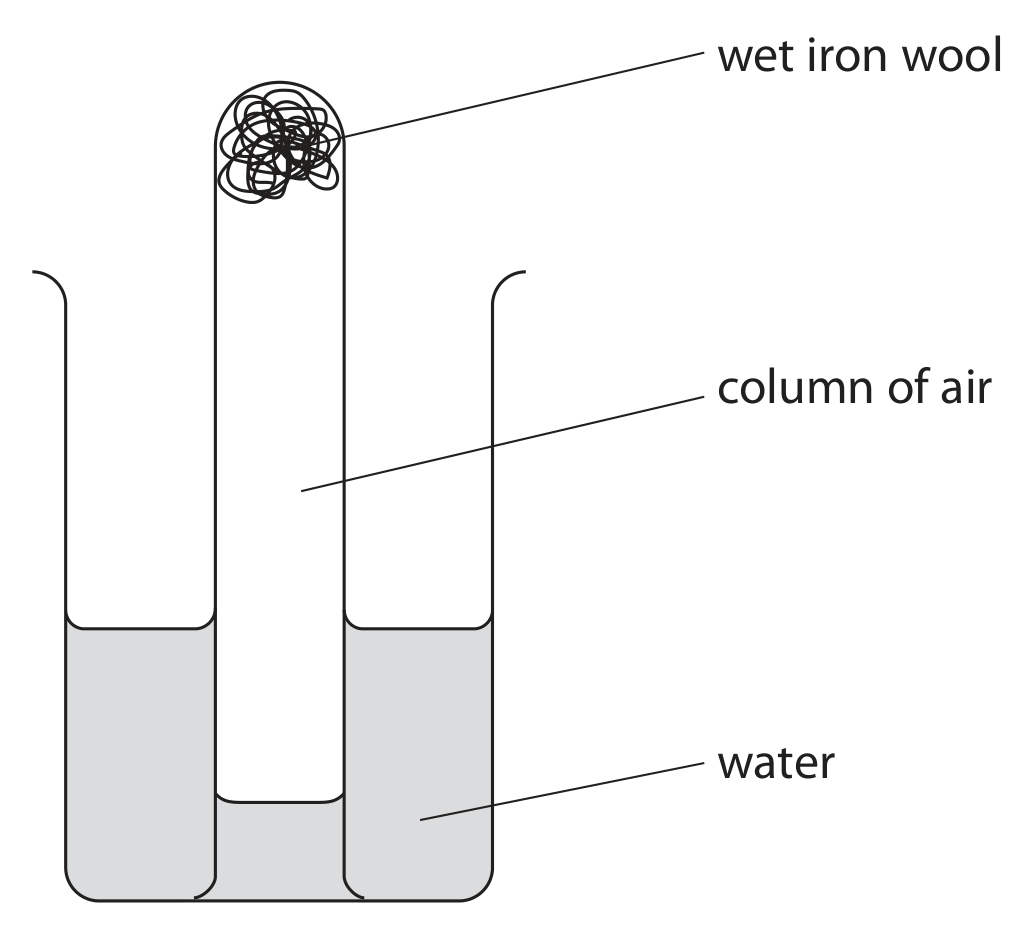
A student uses this apparatus to determine the percentage of oxygen in a sample of air.

Question image

This is the student's method.
- measure the initial length of the column of air in the tube
- leave the apparatus for one week
- measure the final length of the column of air

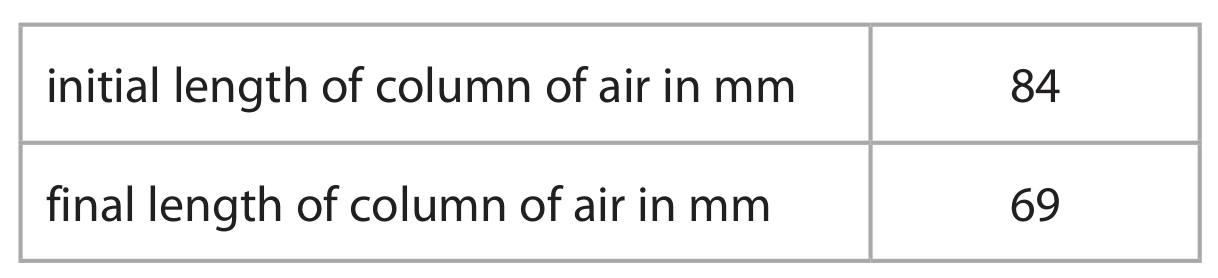
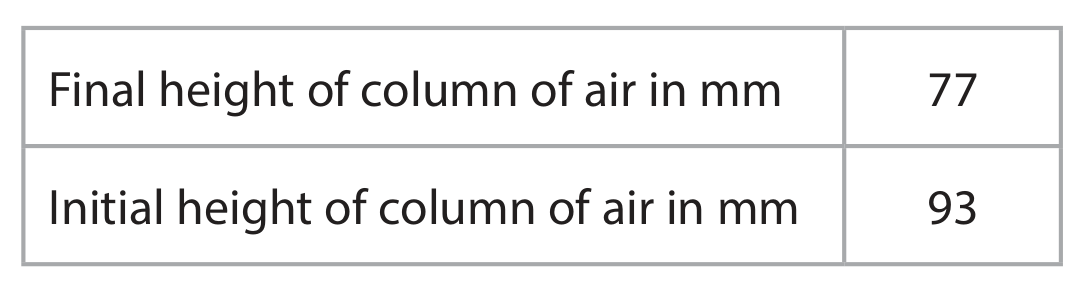
The table shows the student's results.

Table
[ 4 ]

Question 2(b)(i)

(i)

State the appearance of the iron wool after one week.

[ 1 ]

Question 2(b)(ii)

(ii)

Use the student's results to show that the percentage of oxygen in the sample of air is approximately 18%.

[ 2 ]

Question 2(b)(iii)

(iii)

The actual percentage of oxygen in air is approximately 21%.

Give a reason why the percentage of air calculated from the student's results is less than 21%.

[ 1 ]

Question 2

[Maximum number: 6]

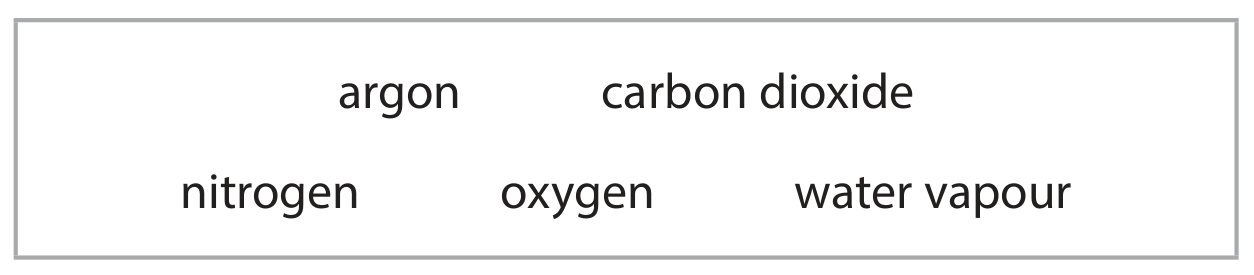
The box gives the names of some gases in the atmosphere.

Table

Question 2(a)

(a)

Choose gases from the box to answer these questions.

[ 1 ]

Question 2(a)(iii)

(i)

Identify the gas needed for combustion reactions.

[ 1 ]

Question 2(b)

(b)

Explain how carbon dioxide can be formed from copper(II) carbonate.

[ 2 ]

Question 2(c)

(c)

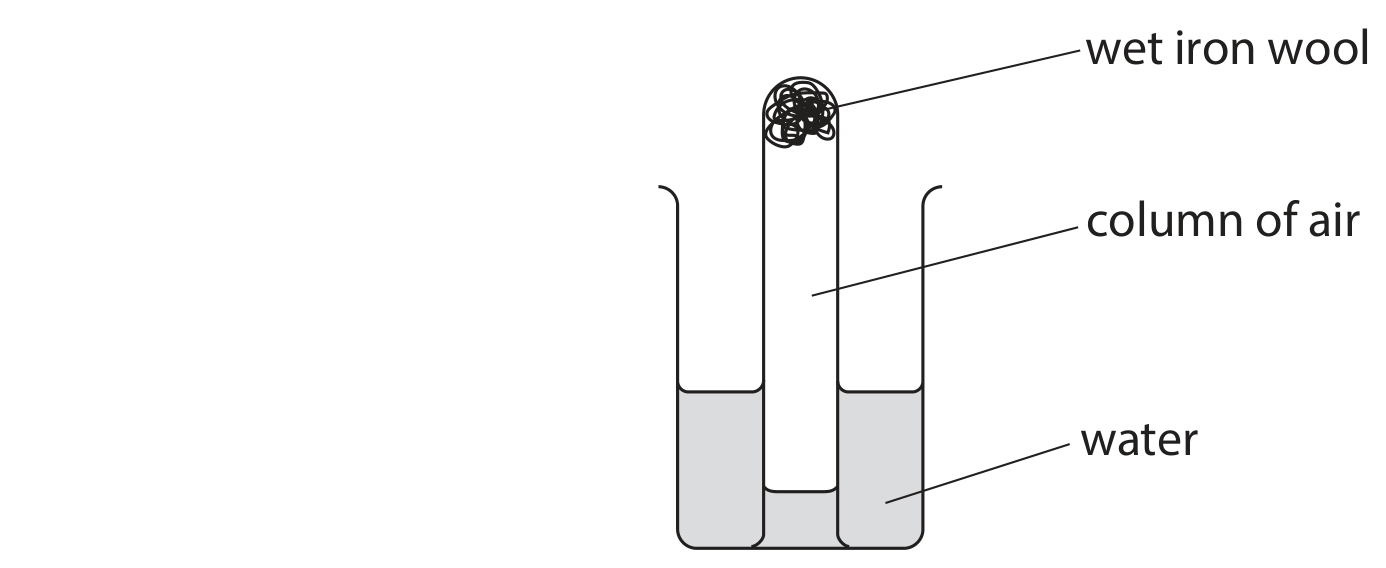
A student uses this apparatus to calculate the percentage of oxygen in a sample of air.

This is the student's method.
- measure the initial height of the column of air
- leave the apparatus for one week
- measure the final height of the column of air

The table shows the student's results.

[ 3 ]

Question 2(c)(i)

(i)

Use the student's results to calculate the percentage of oxygen in the sample of air.

Question image

This is the student's method.
- measure the initial height of the column of air
- leave the apparatus for one week
- measure the final height of the column of air

The table shows the student's results.

Table

of air.

[ 2 ]

Question 2(c)(ii)

(ii)

The percentage of oxygen in air is approximately 21%.

Suggest an improvement to the method that would increase the accuracy of the student's results.

Question image
[ 1 ]

Question 2

[Maximum number: 7]

This question is about gases in the atmosphere.
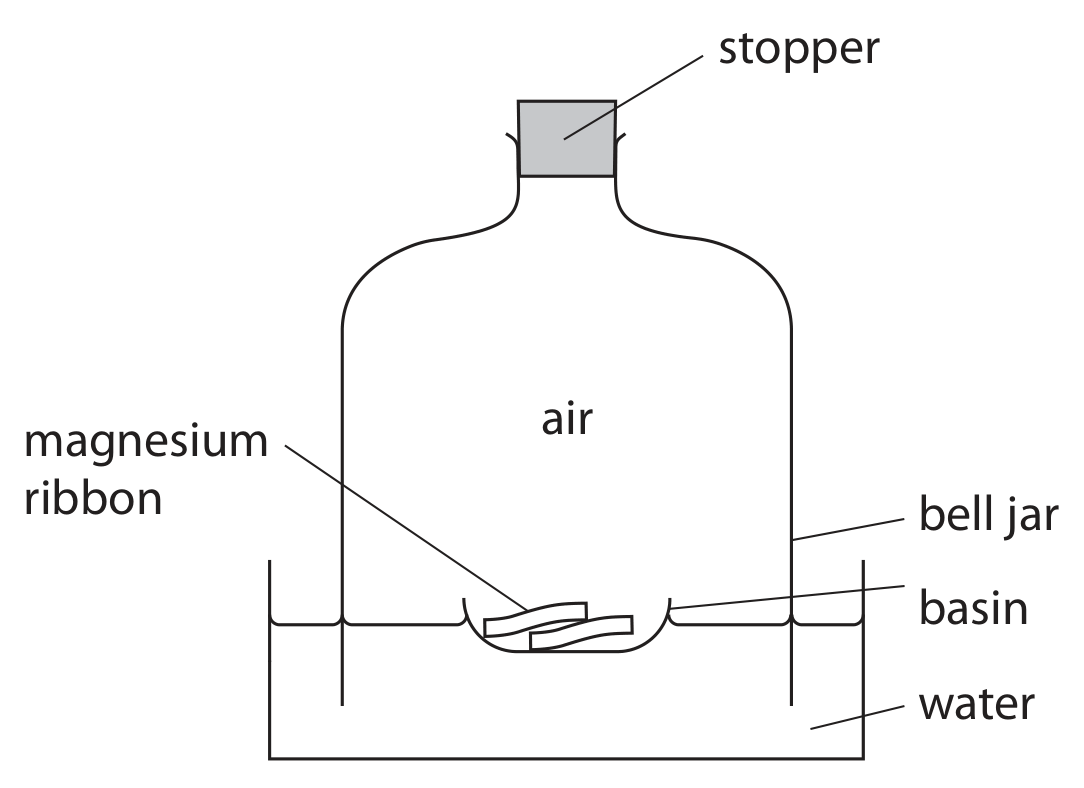
A teacher uses this apparatus to determine the percentage of oxygen in air.

Question image

The teacher removes the stopper, ignites the magnesium ribbon and immediately replaces the stopper.

The magnesium reacts with oxygen to form magnesium oxide.
During the reaction the water level in the bell jar rises.
When the flame goes out, some magnesium remains in the basin.

Question 2(a)(i)

(a)

Give the appearance of the magnesium oxide.

[ 1 ]

Question 2(a)(iii)

(b)

Explain why the water in the bell jar rises.

[ 2 ]

Question 2(b)

(c)

The volume of air in the bell jar at the start of the reaction is 2000 cm32000 \mathrm{~cm}^{3}. When the reaction ends, the apparatus cools down to room temperature. Calculate the expected volume of gas in the bell jar at room temperature.
volume of gas = cm3\mathrm{cm}^{3}

[ 3 ]

Question 2(c)

(d)

State why the gas remaining in the bell jar at the end of the reaction is approximately 99\% nitrogen.

[ 1 ]

Question 2(a)(i)

[Maximum number: 1]

This question is about gases.

The box gives the names of some gases.

argon carbon dioxide hydrogen nitrogen oxygen

Use gases from the box to answer these questions.
Each gas may be used once, more than once or not at all.

Table

Name the most abundant gas in the Earth's atmosphere.

Question 2

[Maximum number: 2]

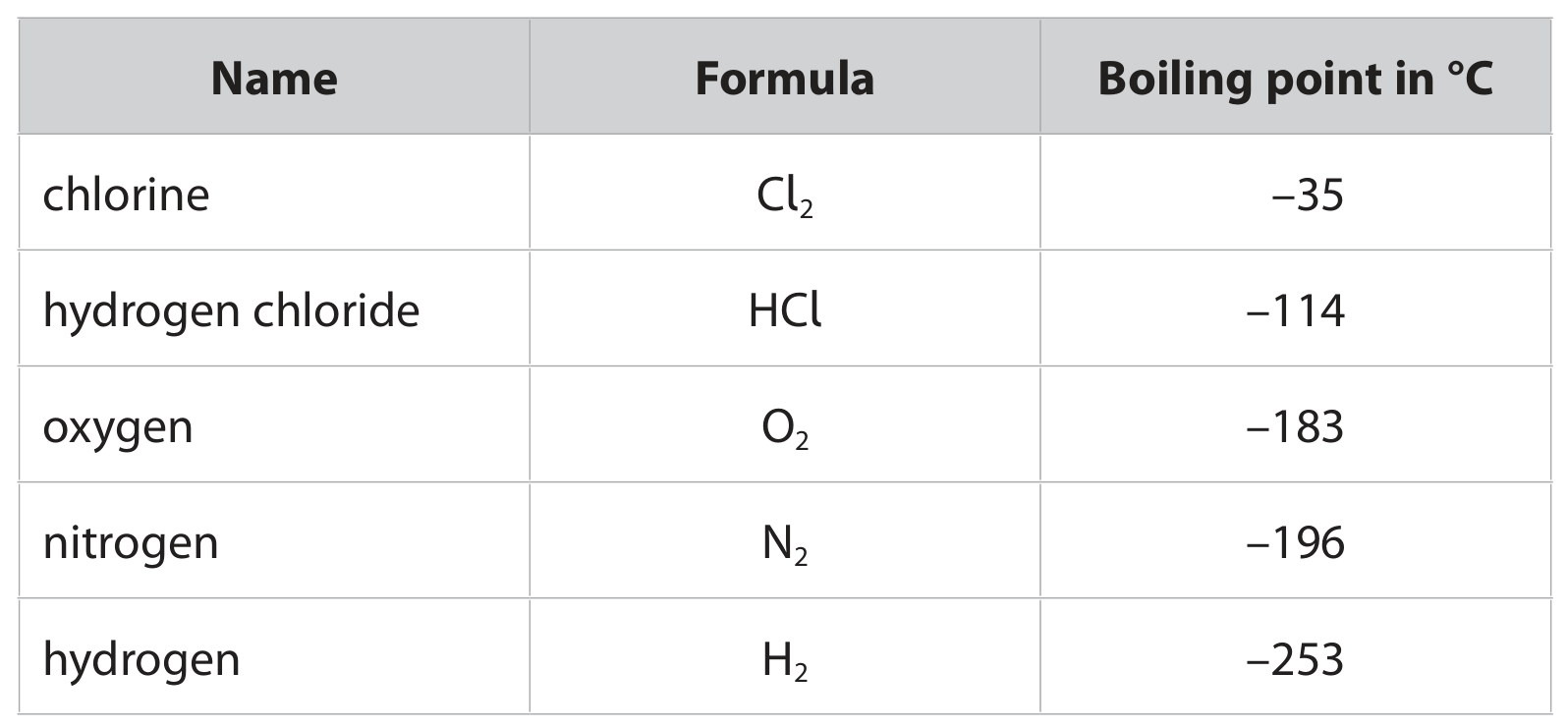
The table gives some information about five gases.

Table

Question 2(a)

(a)

Use gases from the table to answer these questions.

You may use each gas once, more than once or not at all.

[ 2 ]

Question 2(a)(i)

(i)

Name the gas needed for combustion.

[ 1 ]

Question 2(a)(ii)

(ii)

Name the gas that is most abundant in air.

[ 1 ]

Question 3

[Maximum number: 4]

This question is about gases.

Question 3(a)(i)

(a)

Name the gas that is about 1% of dry air by volume.

[ 1 ]

Question 3(a)(ii)

(b)

Which is the most abundant gas in dry air by volume?

A

carbon dioxide

B

methane

C

nitrogen

D

oxygen

[ 1 ]

Question 3(b)

(c)

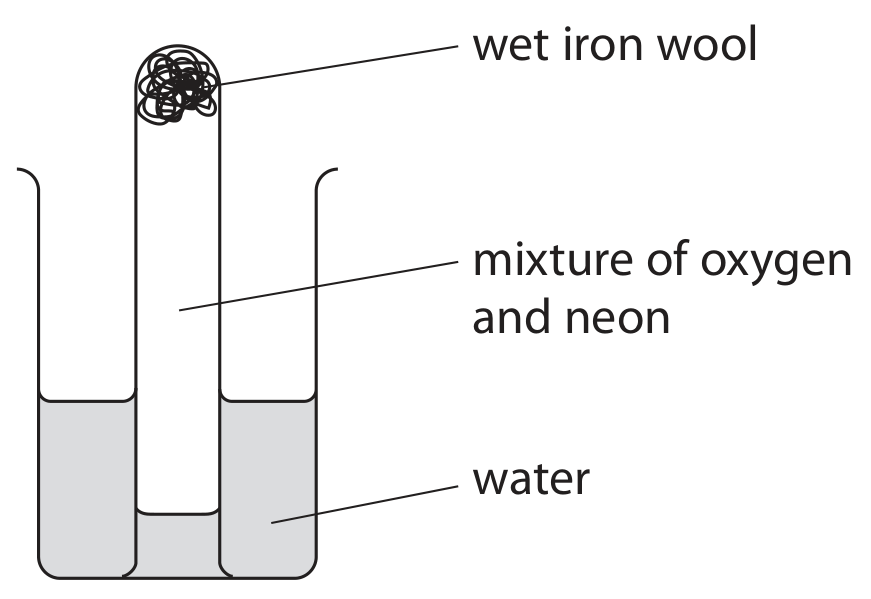
A student uses this apparatus to find the percentage by volume of oxygen in a mixture of oxygen and neon.

Question image

This is the student's method.
- measure the initial length of the column of gas in the inverted test tube
- leave the test tube in the beaker for a week
- measure the final length of the column of gas in the test tube

[ 2 ]

Question 3(b)(iii)

(i)

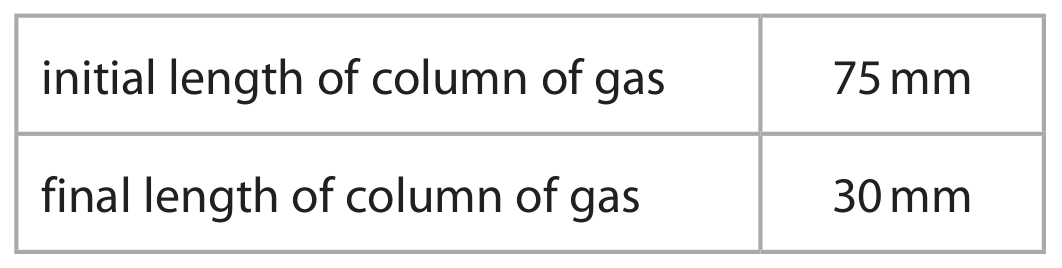
The table shows the student's results.

MeasurementLength
initial length of column of gas75 mm
final length of column of gas30 mm

Use the results to calculate the percentage of oxygen in the mixture of oxygen and neon.

Table
[ 2 ]
0 selected