
Question 6(a)(i)
[Maximum number: 2]
Apples contain an enzyme called phenol oxidase.
When apple tissue is exposed to oxygen in the air, this enzyme turns the apple tissue brown.
A student uses this method to investigate the effect of pH on the time taken for apple tissue to turn brown.
- mash an apple to produce a pulp
- place 25 g of this pulp into a beaker
- mix a pH 7 buffer with the pulp to maintain the pH
- check the colour of the pulp every five minutes
- record the time when the pulp turns brown
The student repeats this method using pH buffers of 3, 5, 9, and 11.
The graph shows the student's results.
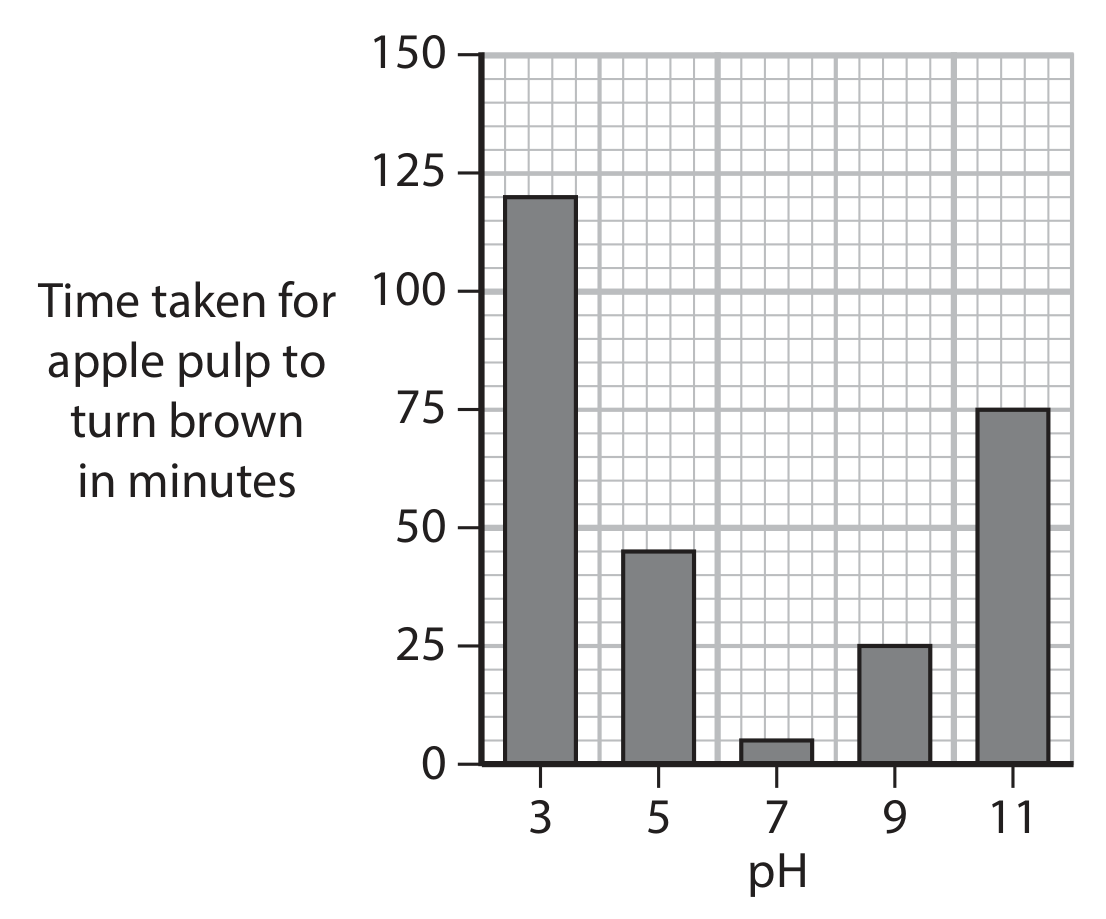
Calculate the percentage increase in time taken for the apple pulp to turn brown at pH 11 compared with the time taken at pH 7.
percentage increase = \%