EduNinja

IGCSE Biology Extended14.5.3—Gravitropism and phototropismTopic Practice

14.5.3—Gravitropism and phototropism

• Investigate and describe gravitropism and phototropism in shoots and roots

Question 2(c)(i)

[Maximum number: 1]

The nervous system coordinates the responses of animals to changes in their environment.

Fig. 2.3 shows three pots of seedlings that have been kept in different conditions.
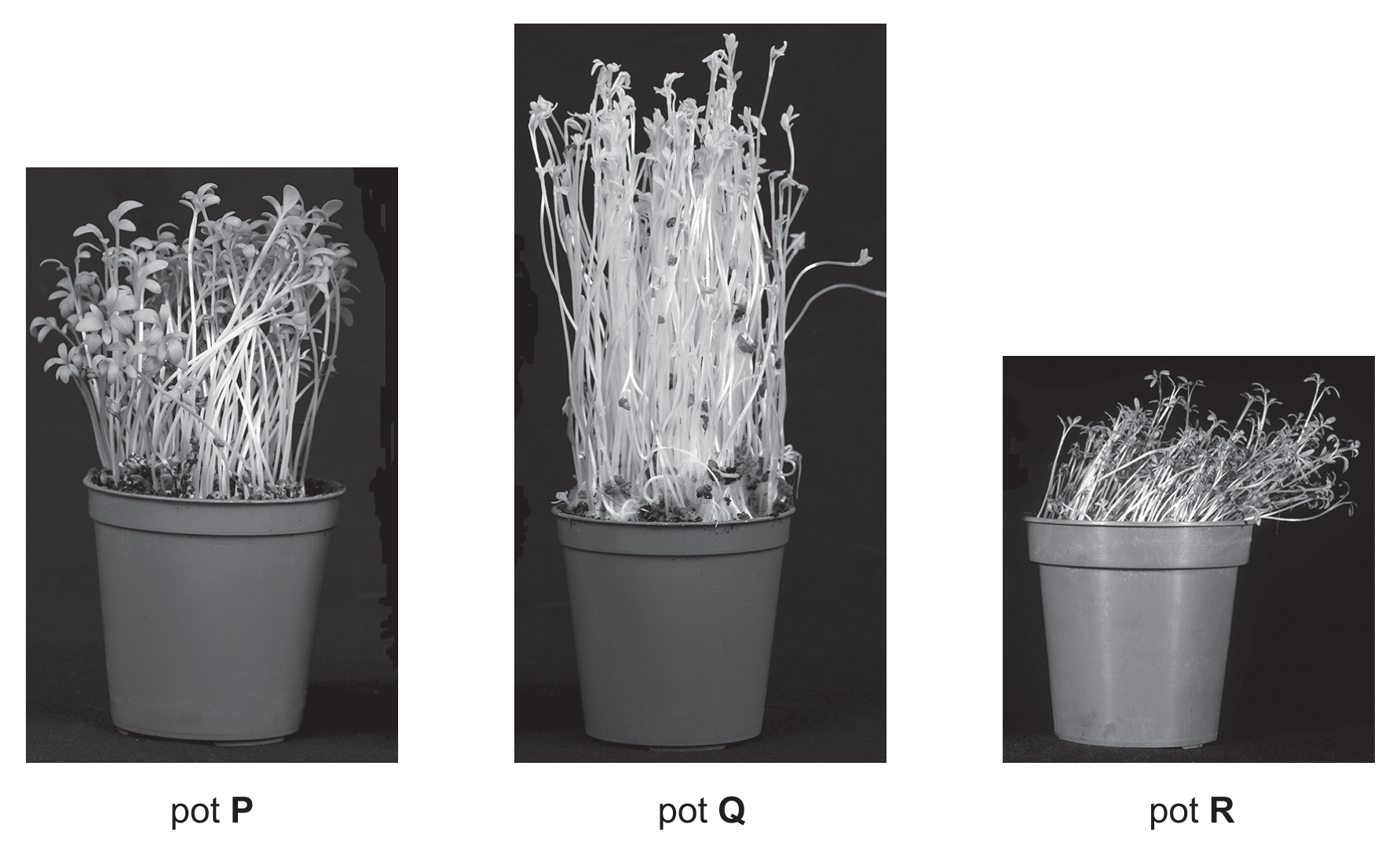
Fig. 2.3

Fig. 2.3

State the conditions in which pots P and Q were kept.

P
Q
Question 24

[Maximum number: 1]

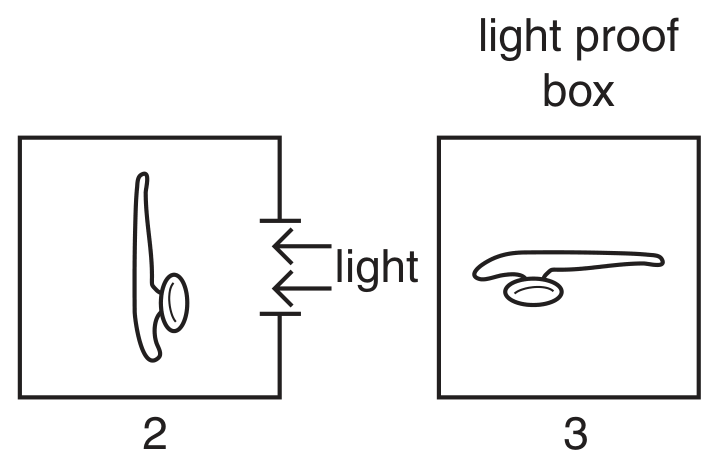
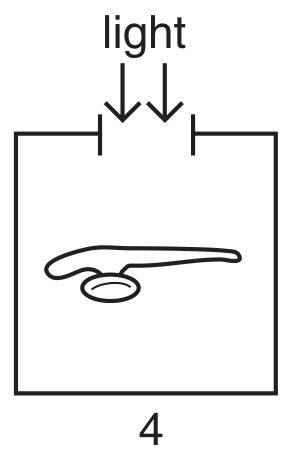
Some roots are known to be gravitropic.
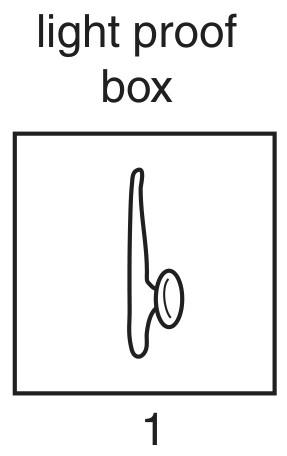
Which pair of diagrams show a controlled experiment to find out if these roots are also phototropic?

Question image
Question image
Question image
A

1 and 2

B

1 and 3

C

2 and 3

D

2 and 4

Question 27

[Maximum number: 1]

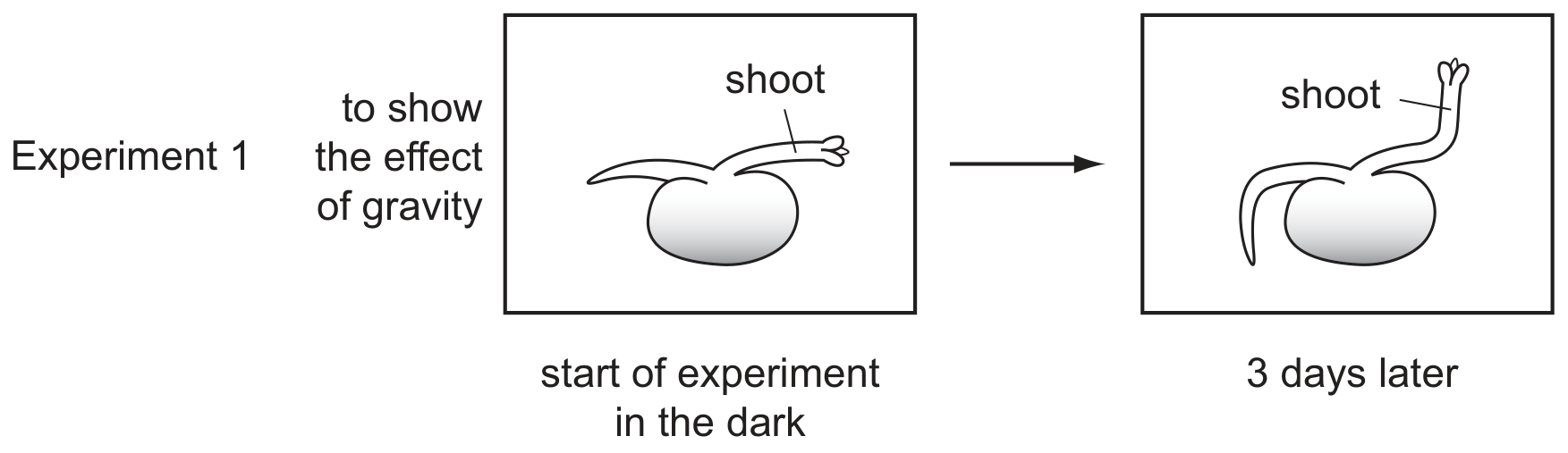
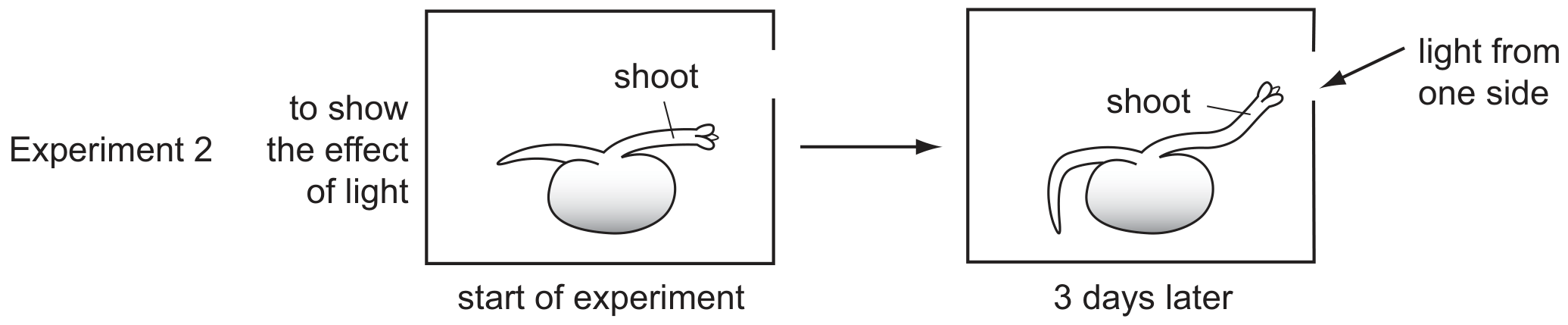
The diagram shows seedlings in two experiments on the tropic response of seedlings to gravity and light.

Question image
Question image

How have the seedlings responded?

to gravity

to light

key

χ\boldsymbol{\chi}

✓ = tropic response shown

×\boldsymbol{\times}

χ=\boldsymbol{\chi}= no tropic response shown

χ\boldsymbol{\chi}

χ\boldsymbol{\chi}

Question 28

[Maximum number: 1]

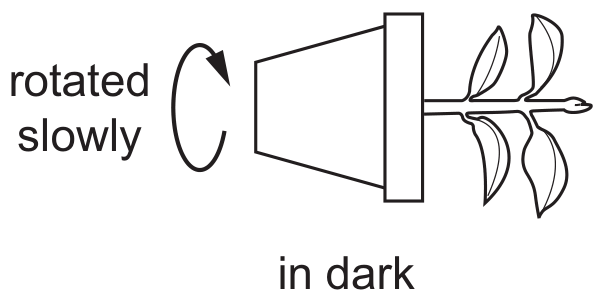
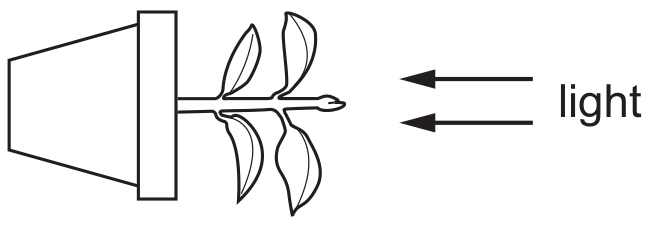
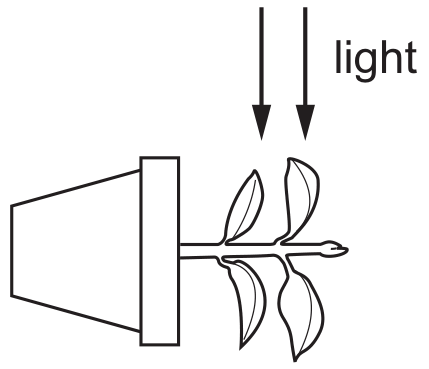
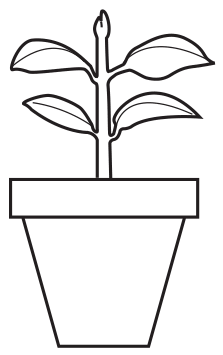
The diagram shows an experiment to investigate the response of a plant stem to gravity.

Question image

in dark

What is a suitable control for this experiment?

A
Question image
B
Question image
C
Question image
D
Question image

in dark

Question 28

[Maximum number: 1]

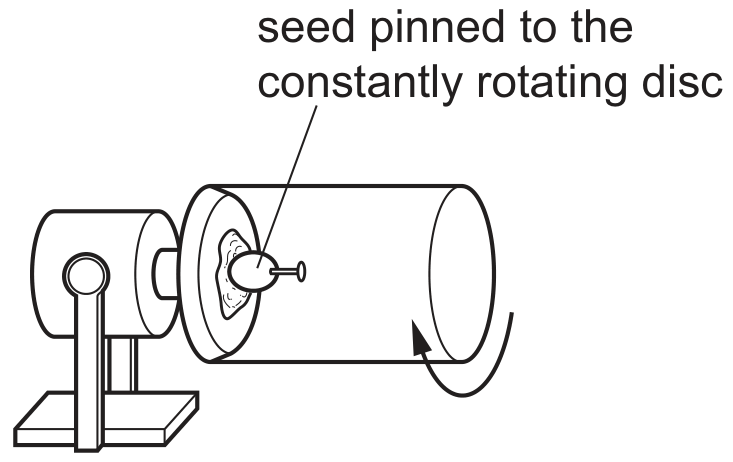
A seed is placed and grown on a rotating disc, as shown.

Question image

Which diagram shows the appearance of the seedling shoot after seven days?

A
Question image
B
Question image
C
Question image
D
Question image

Question 28

[Maximum number: 1]

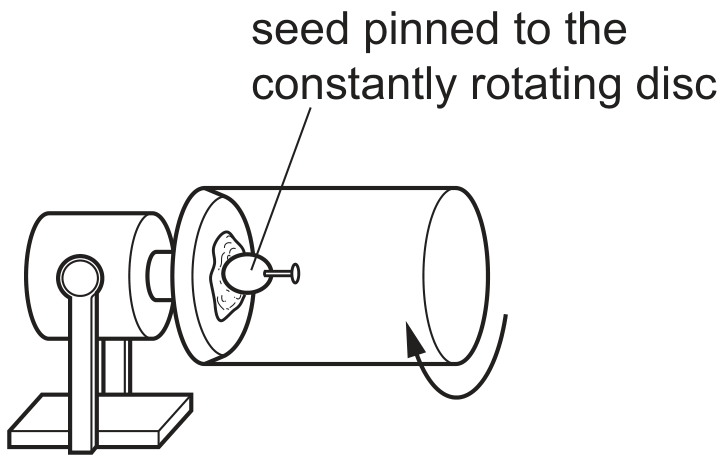
A seed is placed and grown on a rotating disc, as shown.

Question image

Which diagram shows the appearance of the seedling shoot after seven days?

A
Question image
B
Question image
C
Question image
D
Question image

Question 4(b)

[Maximum number: 2]

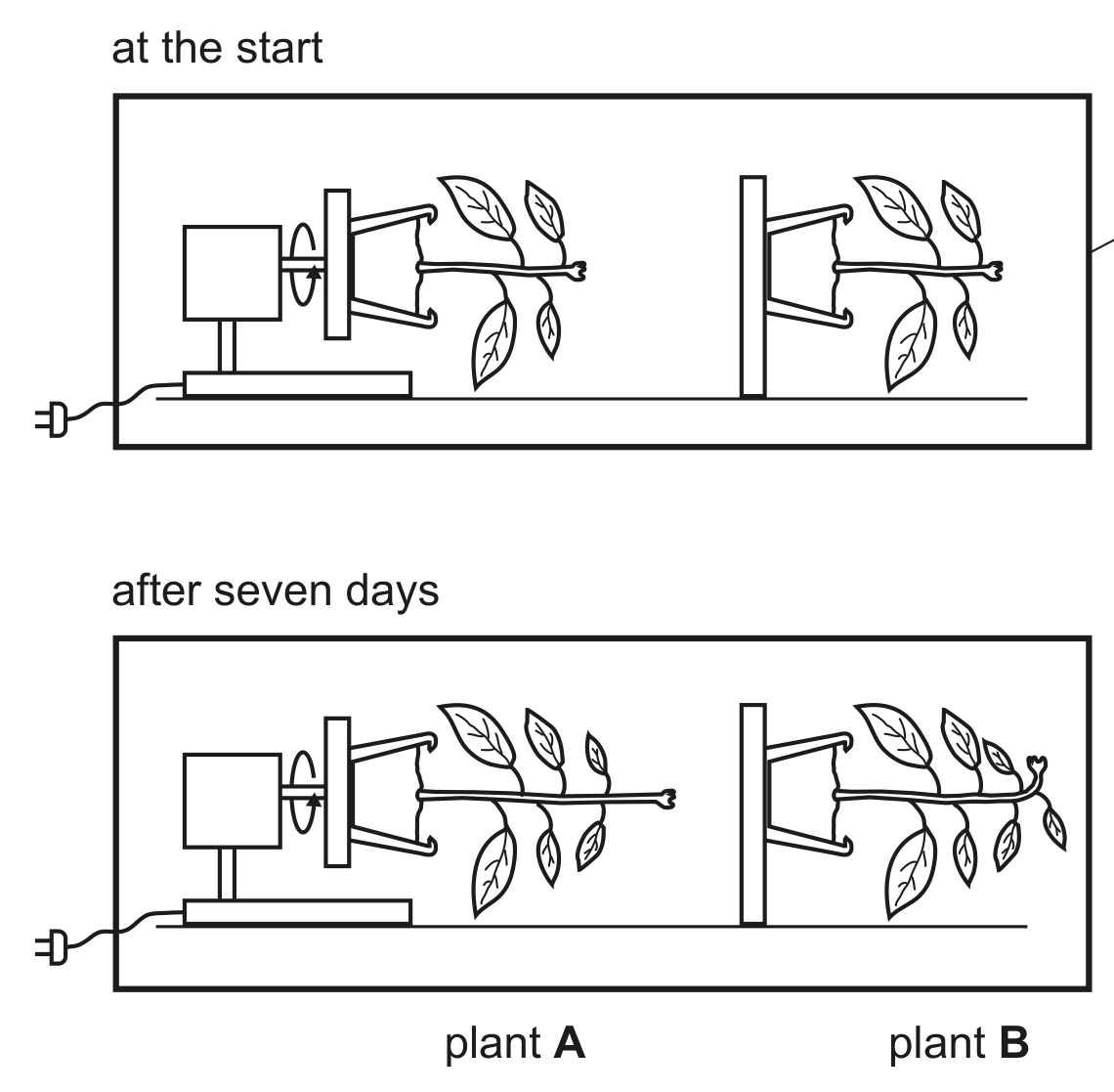
Two identical potted plants were used to investigate plant responses.
Plant A was placed on a clinostat that continually rotated. Plant B was not rotated.
Both plants were then placed on their sides and kept in the dark.
Fig. 4.1 shows the two plants at the start of the experiment and after seven days.

Fig. 4.1

Fig. 4.1

Explain the reason for constantly rotating plant A.

Question 6(a)(i)

[Maximum number: 1]

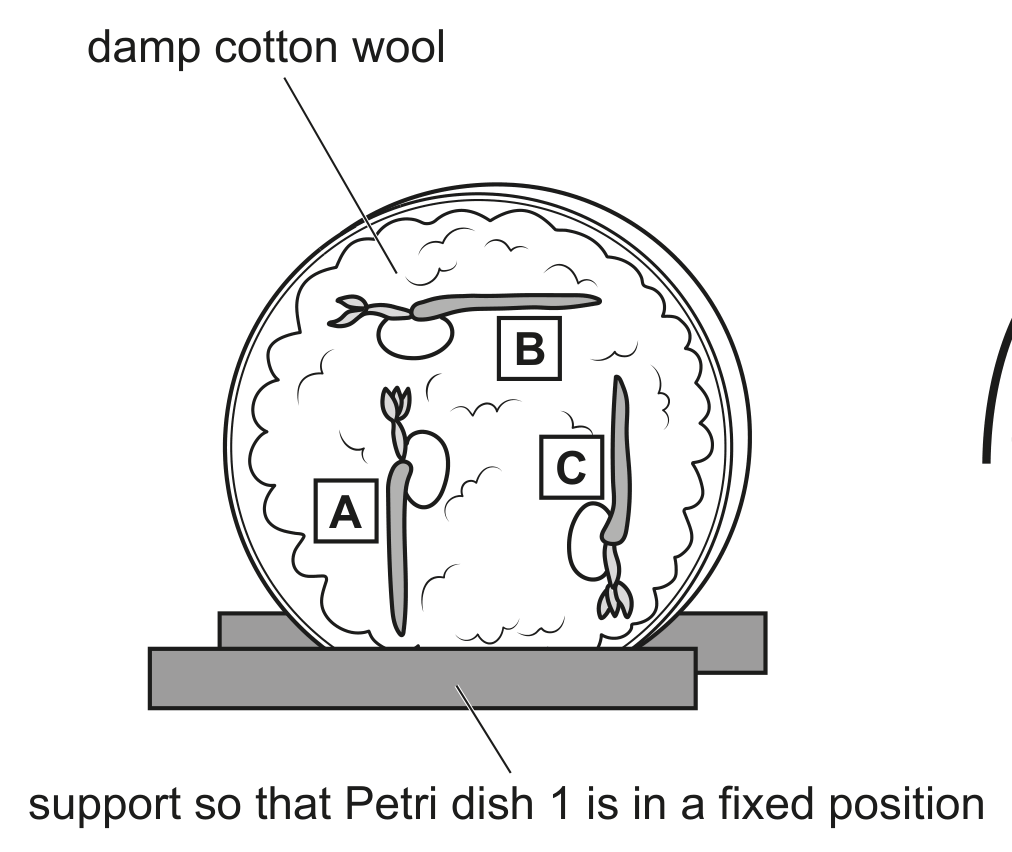
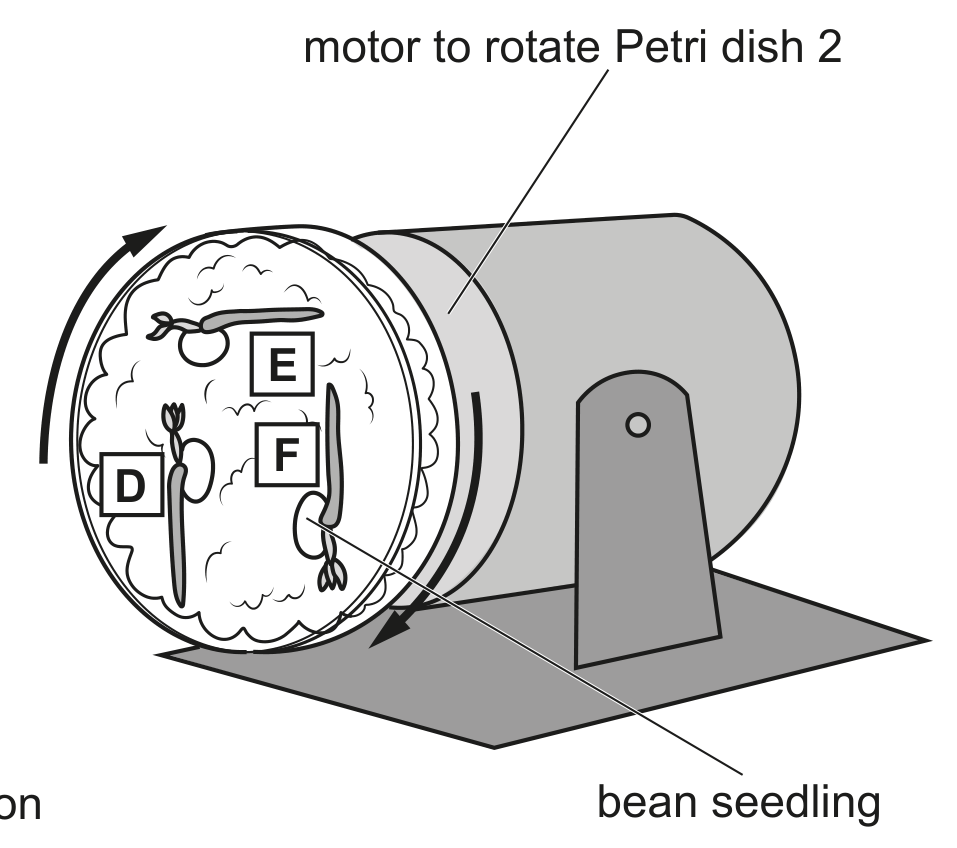
A student investigated plant growth responses in roots and shoots. They used this method:
- Damp cotton wool was placed in two Petri dishes.
- Three bean seedlings were attached to the cotton wool in each Petri dish.
- Each seedling was orientated so that the roots pointed in a different direction in each Petri dish.
- Petri dish 1 was kept on its side in a fixed position.
- Petri dish 2 was kept on its side and rotated constantly.
- Both Petri dishes were kept in the dark.
- Both Petri dishes were kept in these conditions for two days.
- After two days the seedlings were observed.

Fig. 6.1 is a diagram of the apparatus.

Petri dish 1

Petri dish 1

Petri dish 2

Petri dish 2

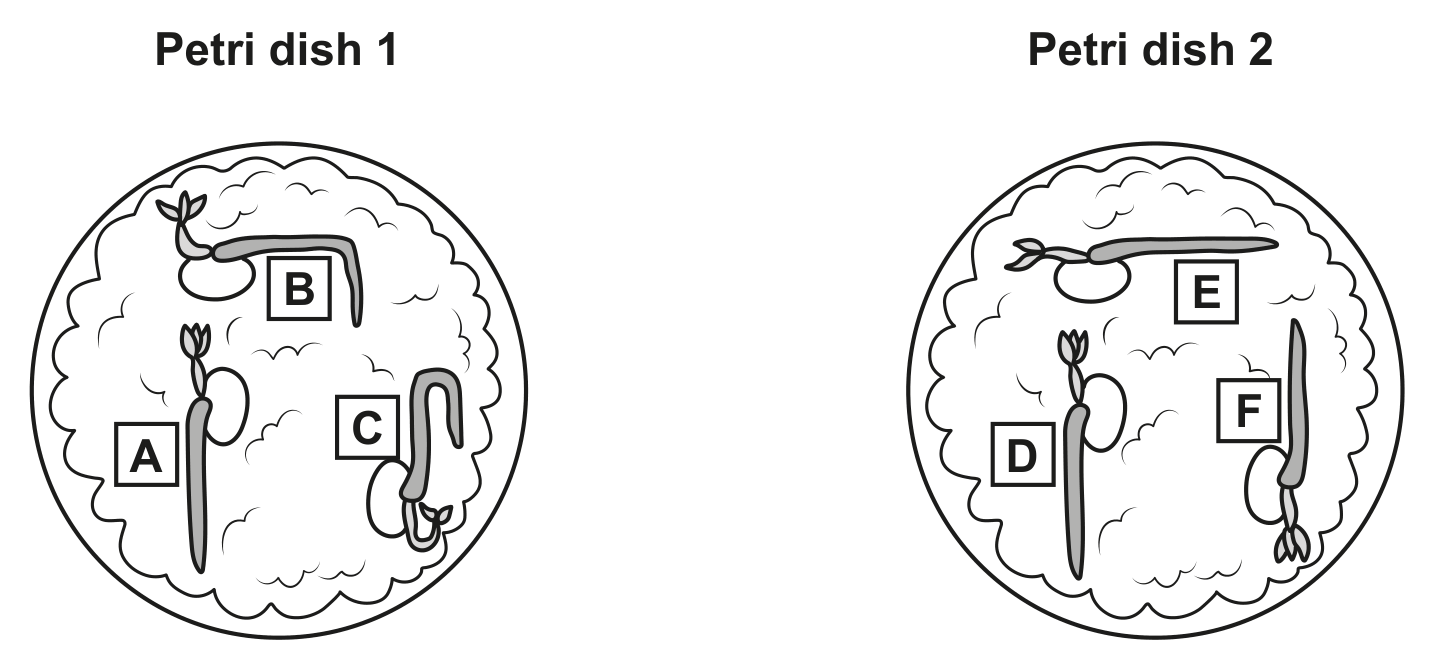
Fig. 6.2 shows the seedlings after two days.

Fig. 6.2

Fig. 6.2

Describe the pattern of growth of the bean roots and shoots in Petri dish 1 shown in Fig. 6.2.

0 selected