EduNinja

IB Biology HLD3.2 InheritanceQuestion Bank

Question 1

[Maximum number: 1]

Bumblebees (Bombus terrestris) are insects that have both individual and social learning capacities. Scientists trained individual bumblebees to push either a blue tab or a red tab on a puzzle box to rotate the lid, exposing a reward consisting of a sucrose solution.
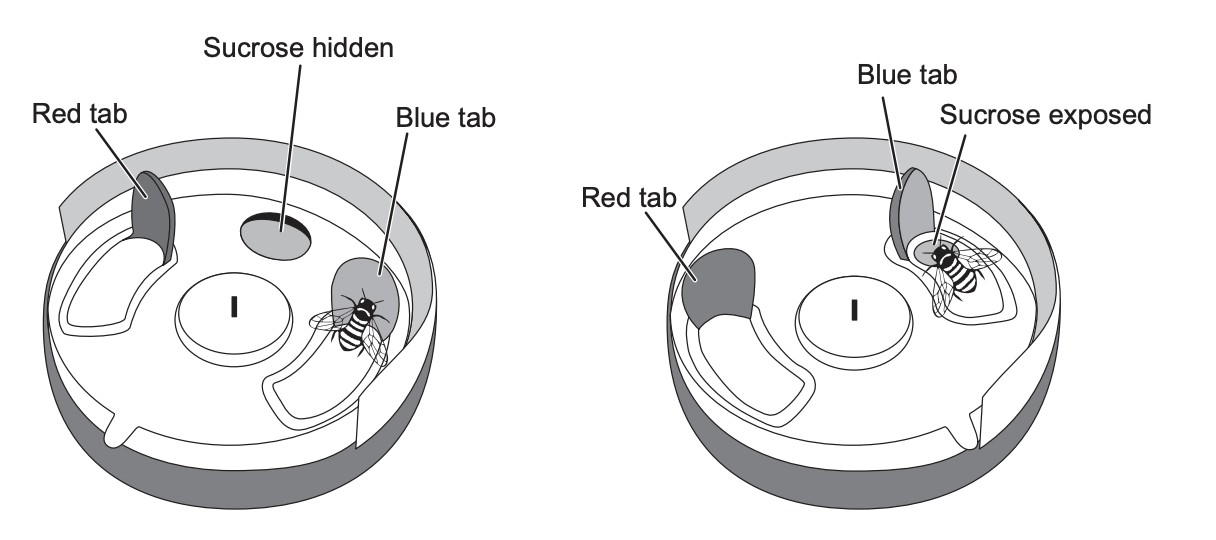
Question image

Individual trained bumblebees were then mixed with untrained bumblebees to determine if the trained ones could teach the untrained ones how to expose the sucrose solution. All groups had the same number of bumblebees.
Experimental groups:
- B: 1 bumblebee trained to open the blue tab plus untrained bumblebees
- R: 1 bumblebee trained to open the red tab plus untrained bumblebees
- C (control): no trained bumblebees, only untrained bumblebees
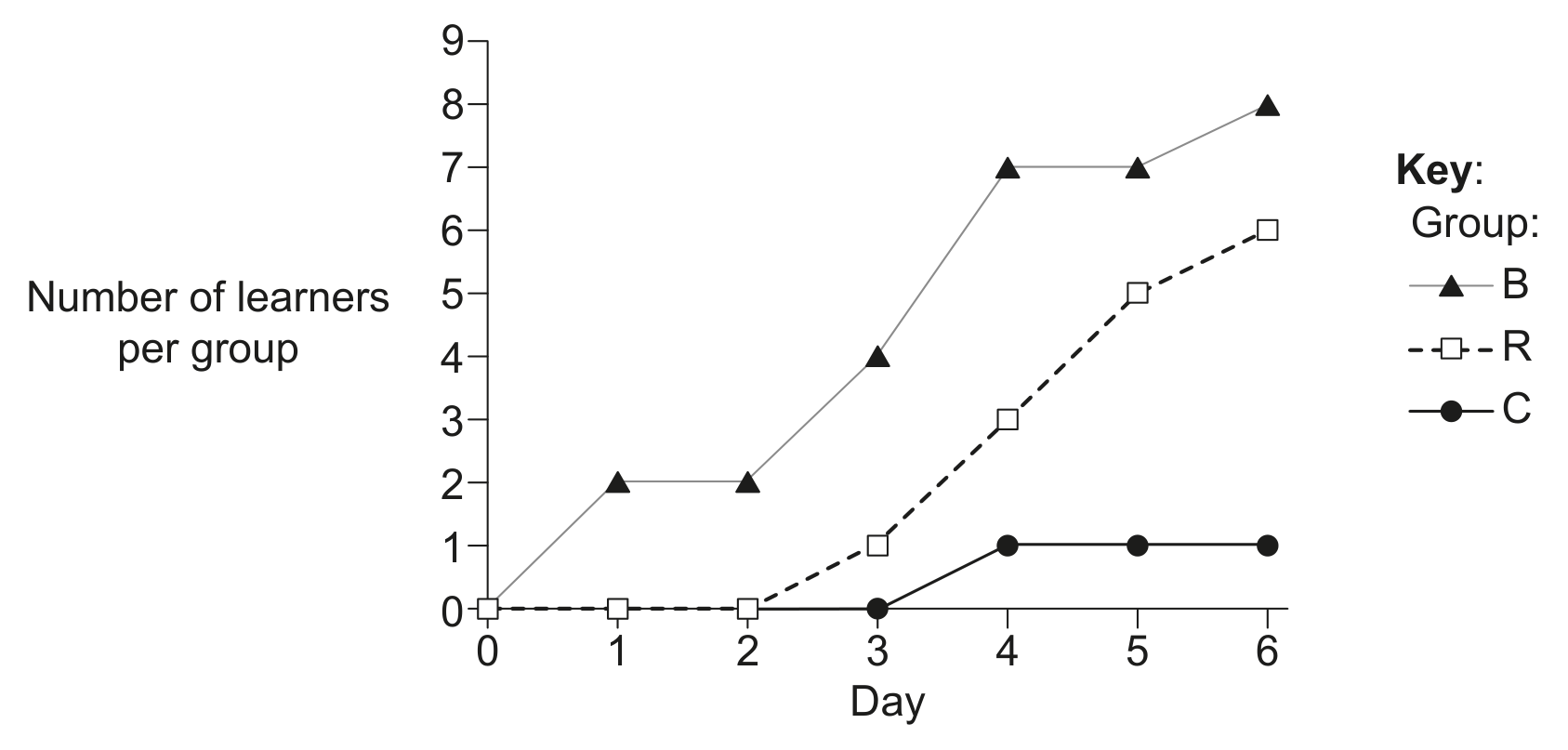
The bumblebees in each group were allowed to try and open the puzzle box. Untrained bumblebees were considered to have become "learners" when they opened the puzzle box twice.
The line graph shows the number of learners per day in the different groups.
Question image

Question 1(f)

(a)

Determine which percentage of the B+R group had an LPI of 28 or less.
[ 1 ]

Question 2

[Maximum number: 1]

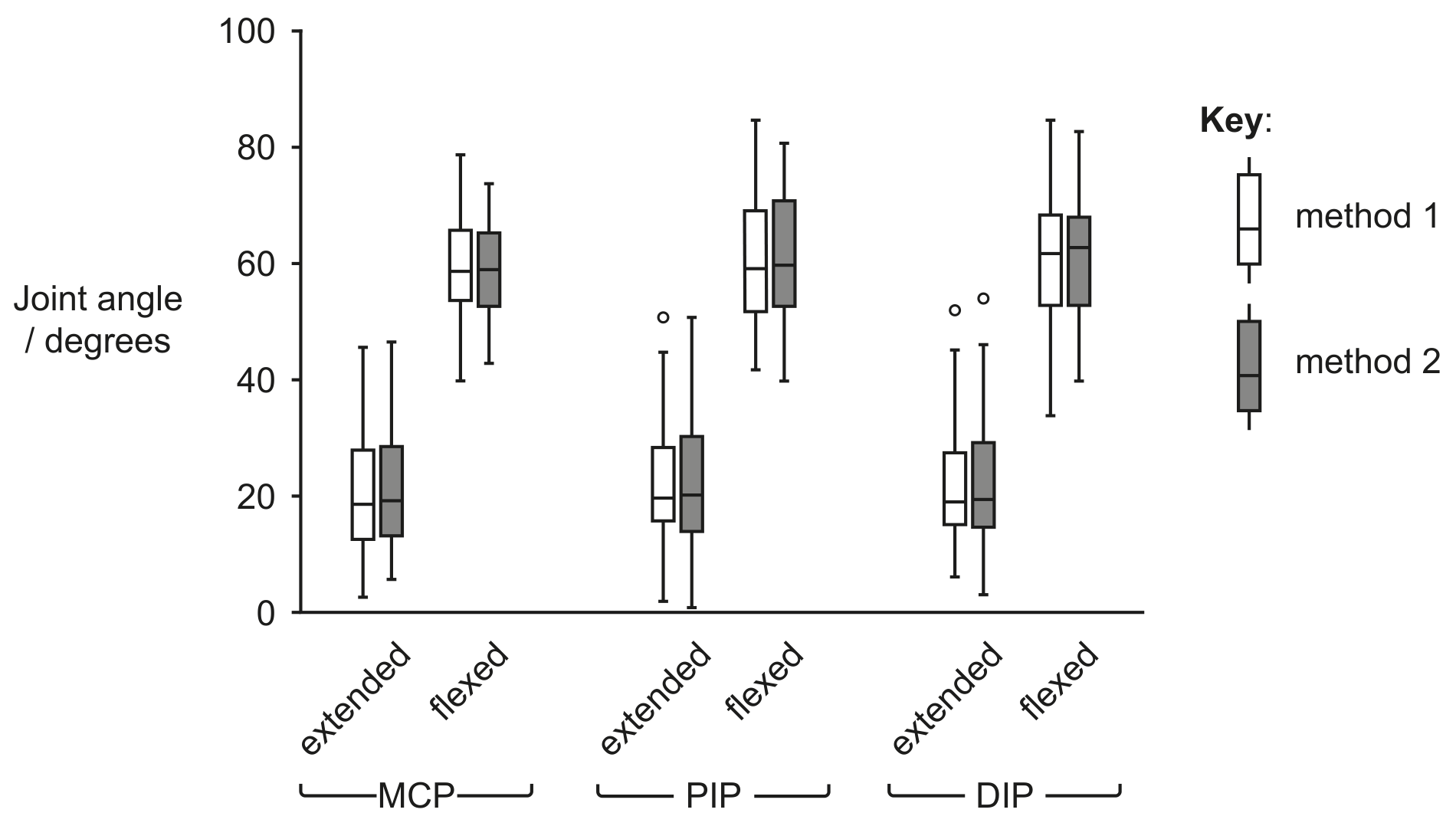
A student used two different methods to measure the left ring finger joint angles in 120 healthy people. The metacarpophalangeal (MCP), proximal interphalangeal (PIP) and distal interphalangeal (DIP) joint angles were measured while the finger was extended (straight) or flexed (bent).

The box-and-whisker plots show the angle measurements at the different joints obtained for both methods.

Question image

Question 2(b)

(a)

Deduce whether method 2 is a good substitute for method 1 .

[ 1 ]

Question 8

[Maximum number: 1]

What is a characteristic of the human Y chromosome?

A

It is made of DNA and histones covered by phospholipids.

B

It contains some genes that are not present on the X chromosome.

C

It is the largest chromosome in the human karyotype.

D

It has a condensed length of approximately 100μ m100 \mu \mathrm{~m}.

Question 2

[Maximum number: 3]

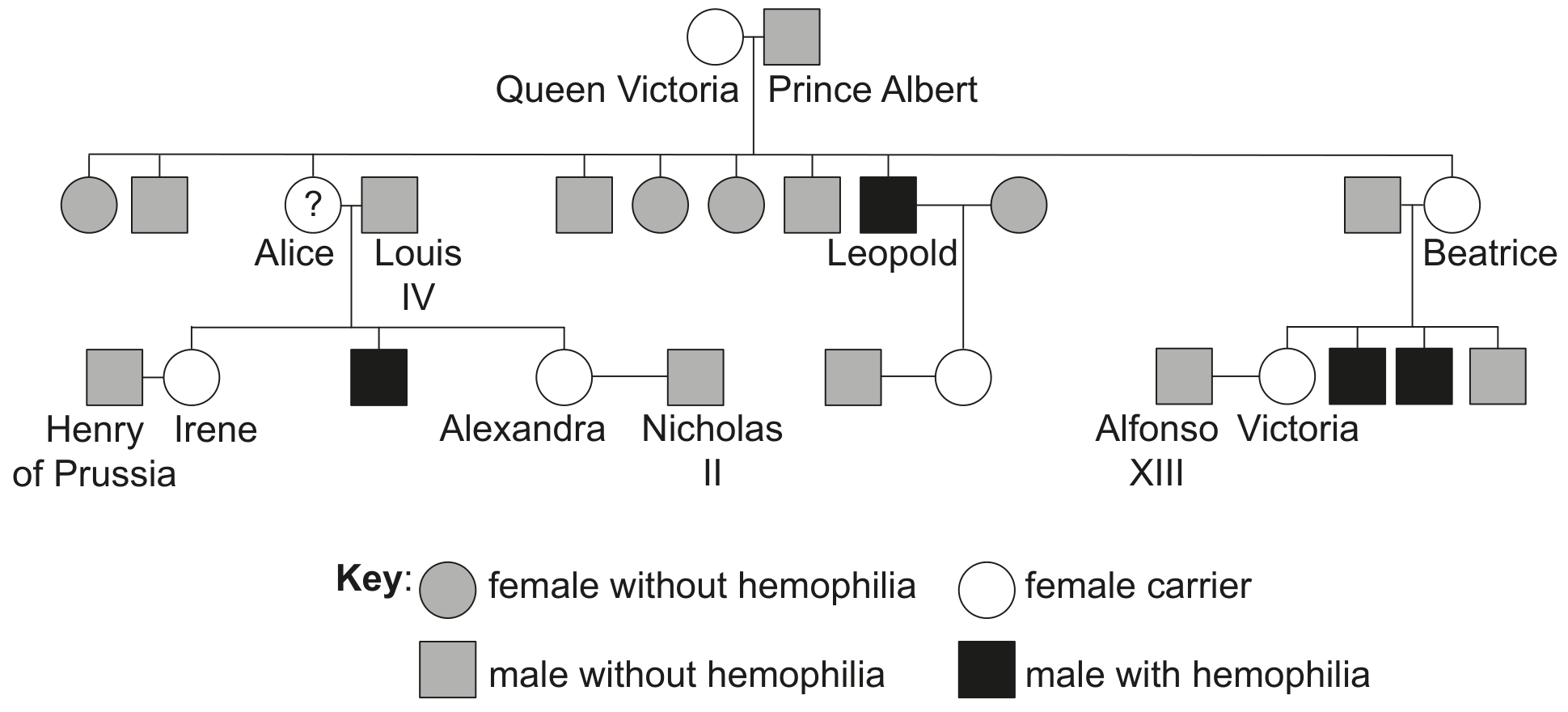
Hemophilia is a sex-linked disease that affected some members of royal families in Europe during the 19th and 20th centuries.

Question image

Question 2(a)

Question 2(a)(ii)

(a)
(i)

Deduce the genotype of Queen Victoria's daughter Alice.

[ 1 ]

Question 2(c)

(b)

Explain gene linkage and its effects on inheritance.

[ 2 ]

Question 10

[Maximum number: 1]

What is always passed to the next generation as a result of sexual reproduction?

A

Homologous chromosomes from the mother

B

A chromatid from every chromosome of the father

C

A haploid set of chromosomes from the mother

D

All alleles from each parent

Question 10

[Maximum number: 1]

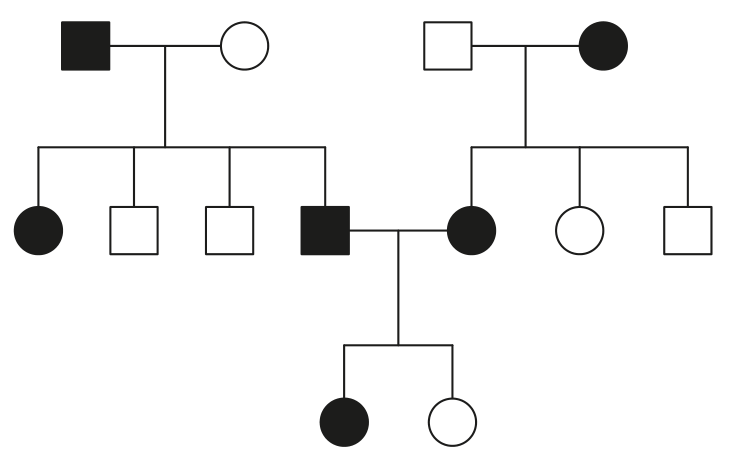
In the pedigree chart, individuals affected by a genetic disease are shown as shaded symbols. Squares represent males and circles females.

Question image

What is the mode of inheritance of the genetic disease?

A

Inherited as a dominant autosomal allele

B

Inherited as a recessive autosomal allele

C

Inherited as a recessive sex-linked allele

D

Inherited as a dominant sex-linked allele

Question 10

[Maximum number: 1]

A pea plant that is homozygous for purple flowers is crossed with a pea plant having white flowers and the descendants are all plants with purple flowers. One of these F1\mathrm{F}_{1} plants is then crossed with a pea plant having white flowers. In the resulting offspring, what can be expected?

A

100 % of plants with purple flowers

B

100 % of plants with white flowers

C

75 % of plants with purple flowers, 25 % with white flowers

D

50 % of plants with purple flowers, 50 % with white flowers

Question 2

Question 2(d)

(a)

Thomas Hunt Morgan established that genes for body colour and wing size in Drosophila are autosomally linked. The allele for grey body ( b+\mathrm{b}^{+}) is dominant over that for black body (b) and the allele for normal wing size ( vg+\mathrm{vg}^{+}) is dominant over that for vestigial wing (vg).

[ 2 ]

Question 2(d)(ii)

(i)

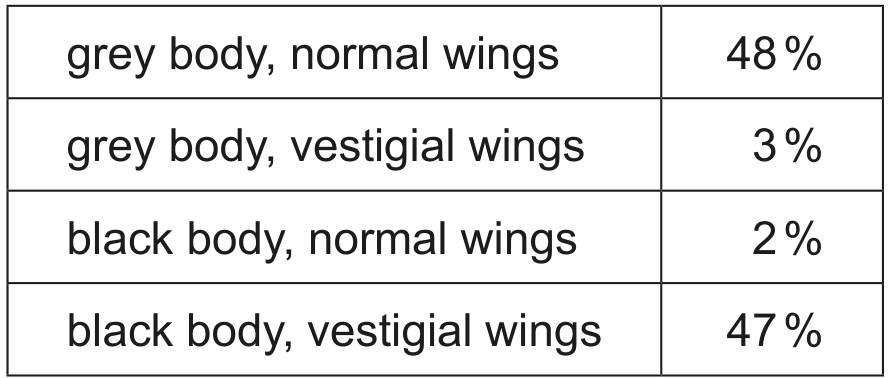
The offspring, which were all heterozygous for grey body and normal wings, were crossed with flies that were homozygous recessive for both genes. The table shows the percentages of offspring produced.

Table

Explain these results, based on the knowledge that the genes for body colour and wing size are autosomally linked.

[ 2 ]

Question 2

[Maximum number: 5]

In a strain of soybeans, high oil content (H) in seeds is dominant to low oil content (h) and four seeds in a pod (F) is dominant to two seeds in a pod (f). A farmer crosses two soybean plants, both with high oil content and four seeds in a pod. The offspring have a phenotypic ratio of 9: 3: 3: 1.

Question 2(a)

Question 2(a)(i)

(a)
(i)

Identify the genotypes of the soybean plants with high oil content and four seeds in a pod that were used in the cross.

[ 1 ]

Question 2(a)(ii)

(ii)

For the soybean cross HhFf × HhFf, determine the genotypes of the gametes and offspring using a Punnett grid.

[ 2 ]

Question 2(a)(iii)

(iii)

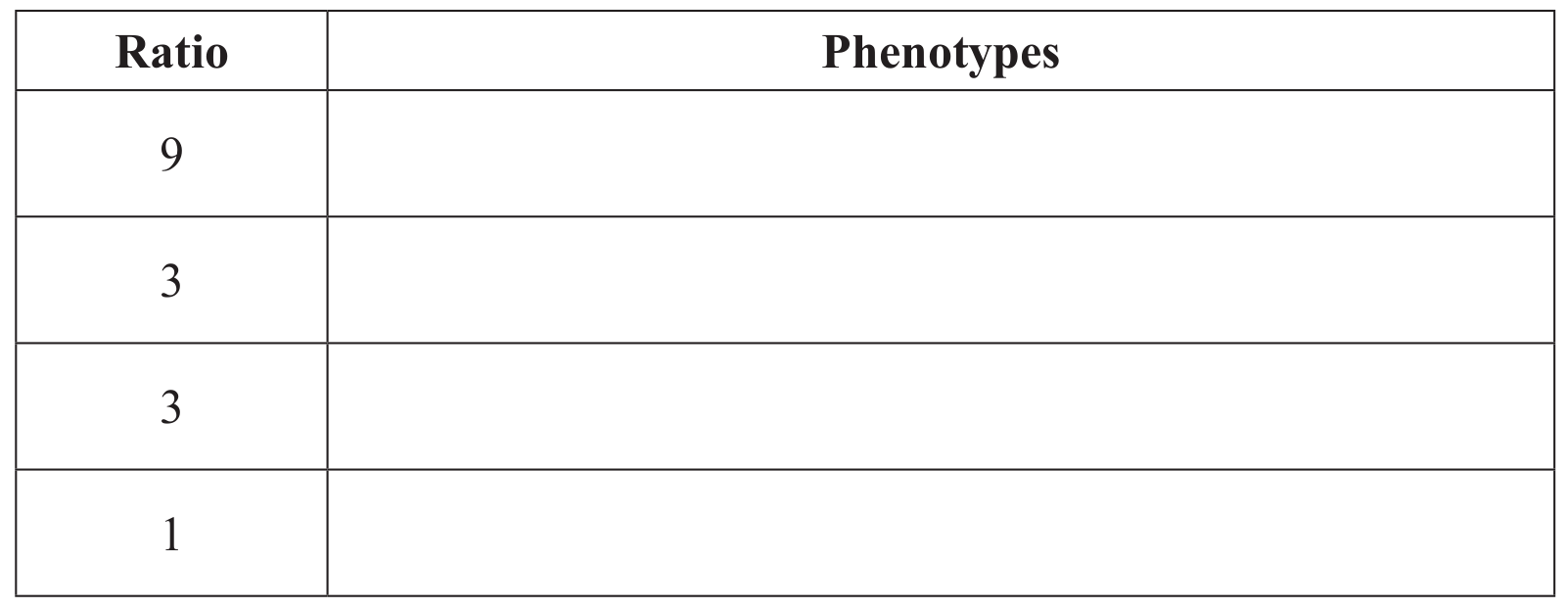
Identify the phenotypes of each part of the phenotypic ratio.

Table
[ 2 ]

Question 11

[Maximum number: 1]

A couple have four children whose blood groups are A, B and A B. What is the likely combination of the parents' genotypes?

A

IAi\mathrm{I}^{\mathrm{A}} \mathrm{i} and IBi\mathrm{I}^{\mathrm{B}} \mathrm{i}

B

IAiI^{A} i and IBIBI^{B} I^{B}

C

IAIB\mid \mathrm{I}^{\mathrm{A}} \mathrm{I}^{\mathrm{B}} and ii

D

AA\left|{ }^{\mathrm{A}}\right|^{\mathrm{A}} and IBIB\mathrm{I}^{\mathrm{B}} \mathrm{I}^{\mathrm{B}}

0 selected