Question 1
[Maximum number: 2]
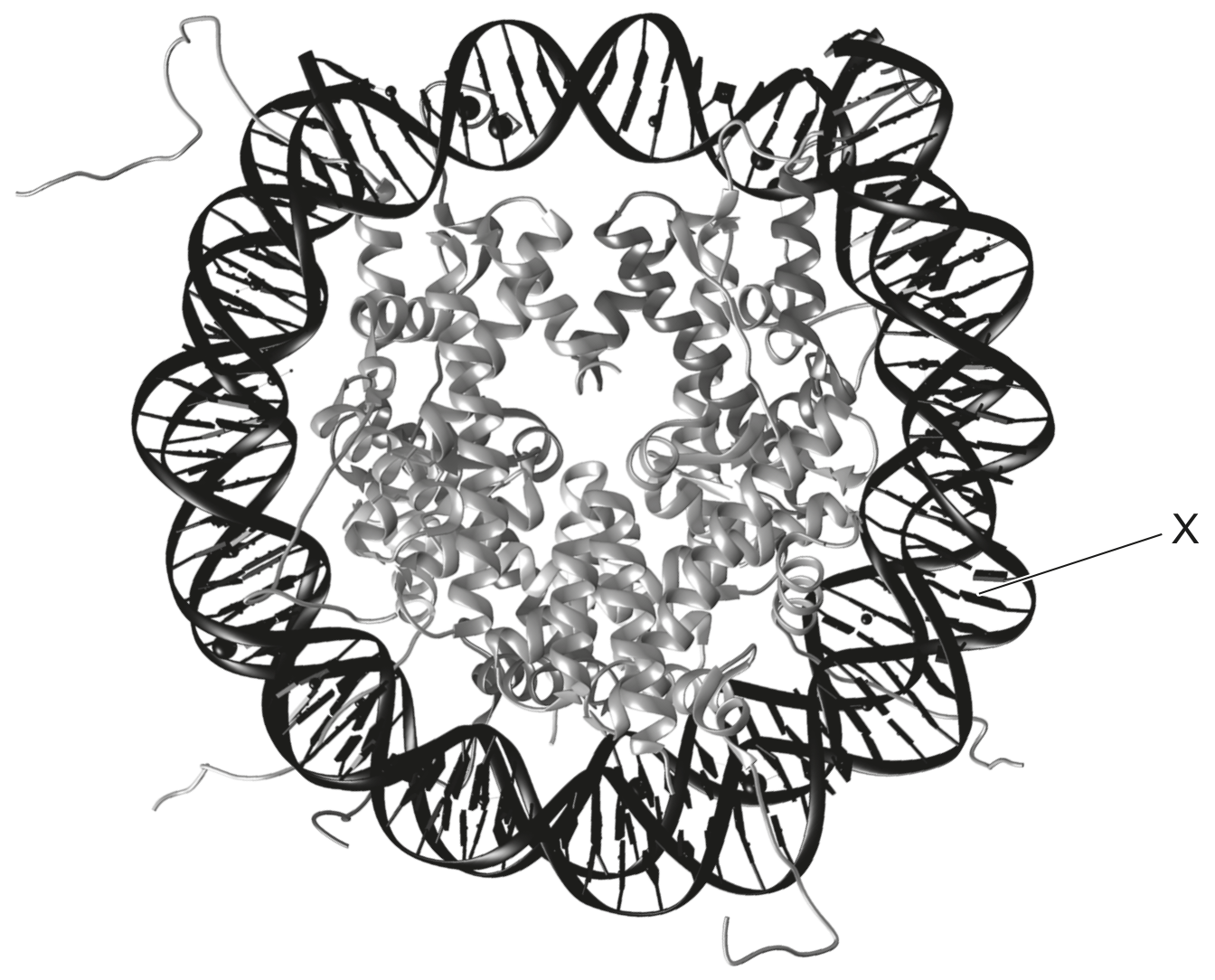
The image of a nucleosome was obtained using molecular visualization software.
Question 1(c)
(a)
Explain how methylation of nucleosomes affects DNA transcription.
[ 2 ]
 EduNinja
The image of a nucleosome was obtained using molecular visualization software.
Explain how methylation of nucleosomes affects DNA transcription.
The Chinese soft-shelled turtle, Pelodiscus sinensis, lives in salt water marshes. The turtle can live under water and out of water.
These turtles have fully developed lungs and kidneys, however, many microvilli have been discovered in the mouth of P. sinensis. A study was undertaken to test the hypothesis that oxygen uptake and urea excretion can simultaneously occur in the mouth.
Initial experiments involved collecting nitrogen excretion data from P. sinensis. The turtle urinates both in water and out of water. When in water it allows waste products to be washed out of its mouth. When out of water it regularly dips its head into shallow water to wash its mouth. The table shows the mean rates of ammonia and urea excretion from the mouth and kidney over six days.

Expression of the urea transporter gene by cells in the turtle's mouth was assessed by measuring mRNA activity. Turtles were kept out of water for 24 hours and then injected with either a salt solution that matched the salt concentration of the turtle, dissolved ammonia or urea, followed by another 24 hours out of water.
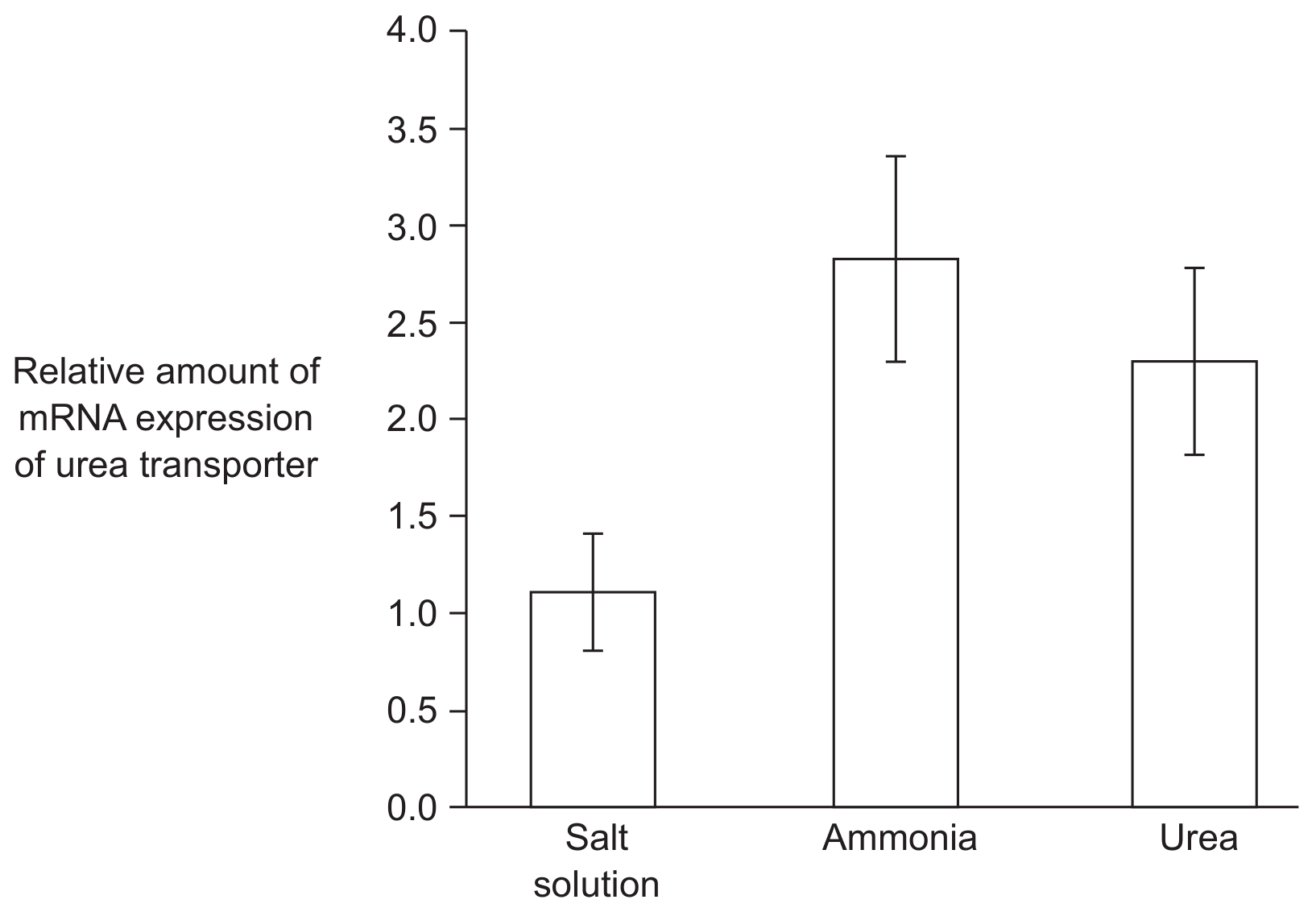
Suggest a reason for the greater expression of the gene for the urea transporter after an injection with dissolved ammonia than an injection of urea.
Arabidopsis is a small flowering plant in the mustard family (Brassicaceae) that is widely used in basic research. It has a short life cycle, flowers quickly producing a large number of seeds and is easy to cultivate. It forms a circle of leaves known as a rosette that lies close to the soil. Flowers form at the end of short stems.
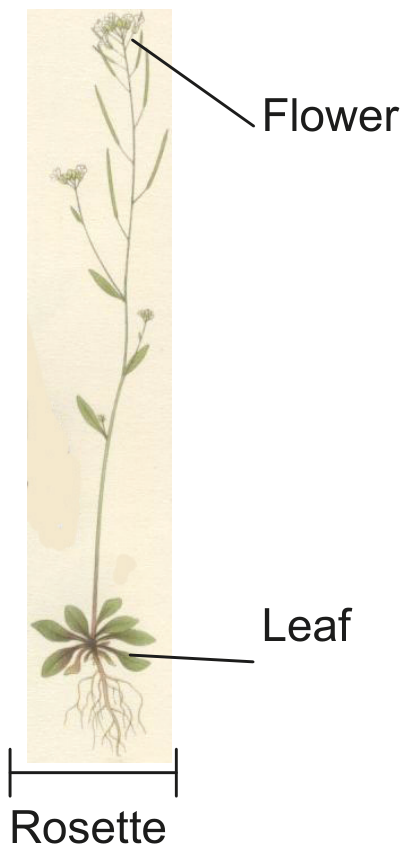
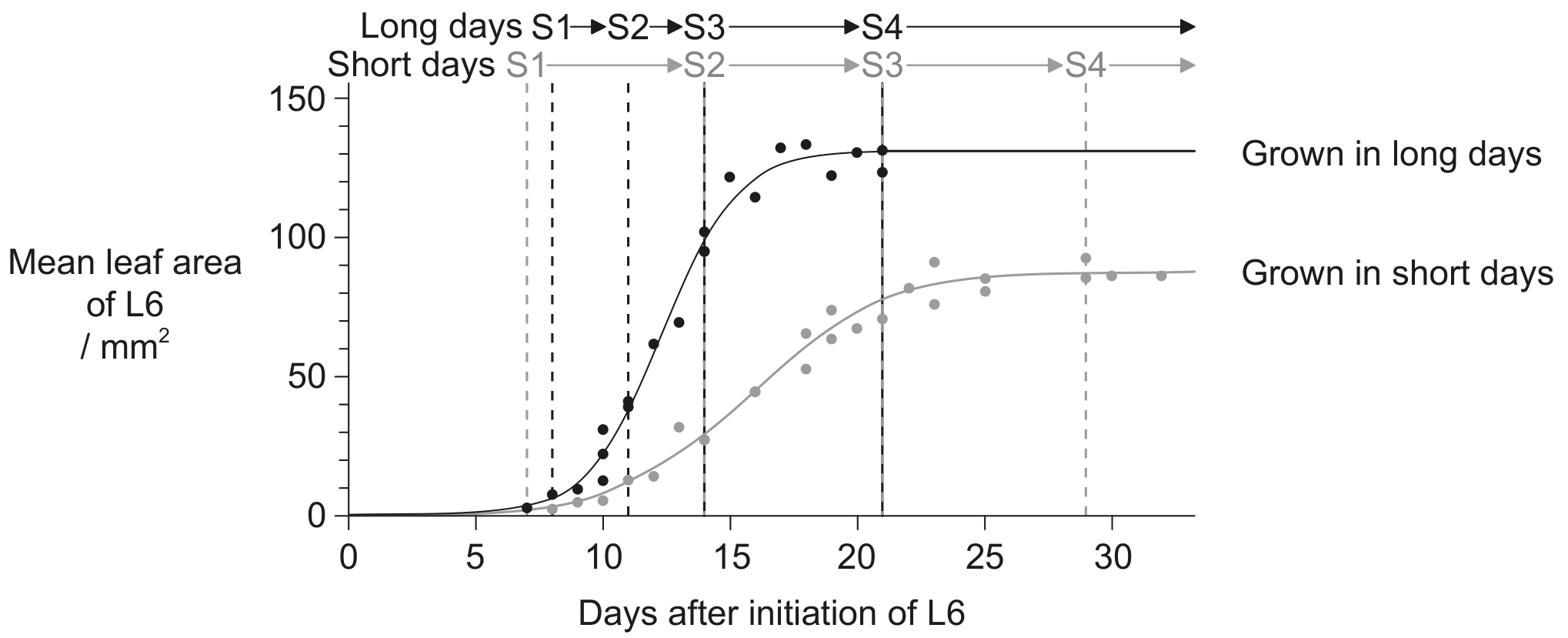
A study was carried out of differences in development between Arabidopsis plants grown in long days ( 16 hours light, 8 hours dark) or short days ( 8 hours light, 16 hours dark). The sixth leaf (L6) to emerge in the rosette of each plant was used in all investigations.
New leaves are initiated by the meristem and go through four stages as they develop.
- Stage 1 (S1) - rapid cell division
- Stage 2 (S2) - cell division has ceased, cell expansion continues
- Stage 3 (S3) - decreasing cell expansion rate
- Stage 4 (S4) - leaf growth complete
The start of each stage of leaf development for plants grown in long days and short days is shown above the first graph.
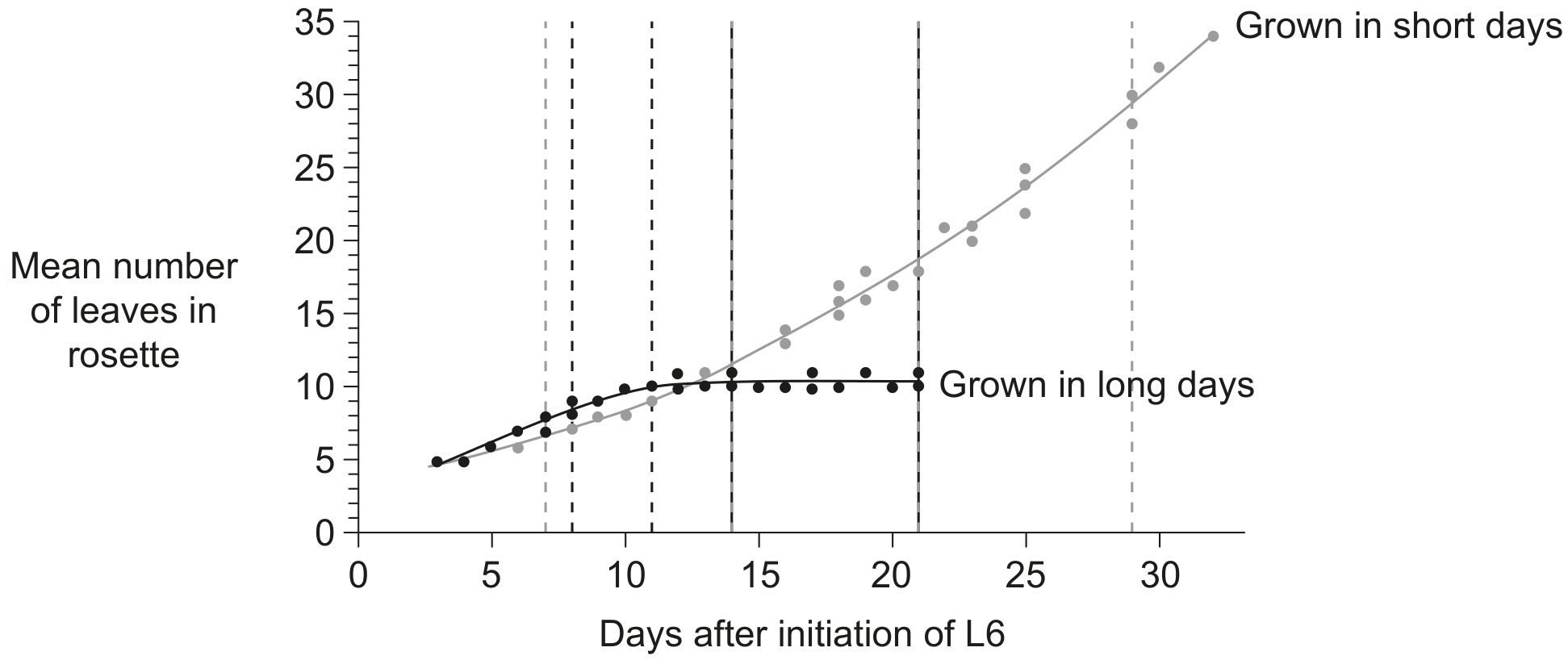
Using the data in the bar chart, discuss the evidence for Arabidopsis plants adapting to different daylight regimes by changing the pattern of gene expression.
Diabetes is often associated with the failure of the (beta) cells in the pancreas, but it is unclear what actually causes this failure. FoxO1 is a protein which acts as a transcription factor to regulate the expression of genes involved in cell growth. FoxO1 also regulates increase in number and differentiation in cells such as pancreatic cells.
A study was conducted using mice lacking the gene for FoxO1 in cells (IKO) as well as normal (control) mice. Blood glucose levels after fasting were compared for four groups of mice: young ( 3 months old) male mice, young ( 3 months old) female mice, older females (who have had several pregnancies) and aging males (16-20 months).
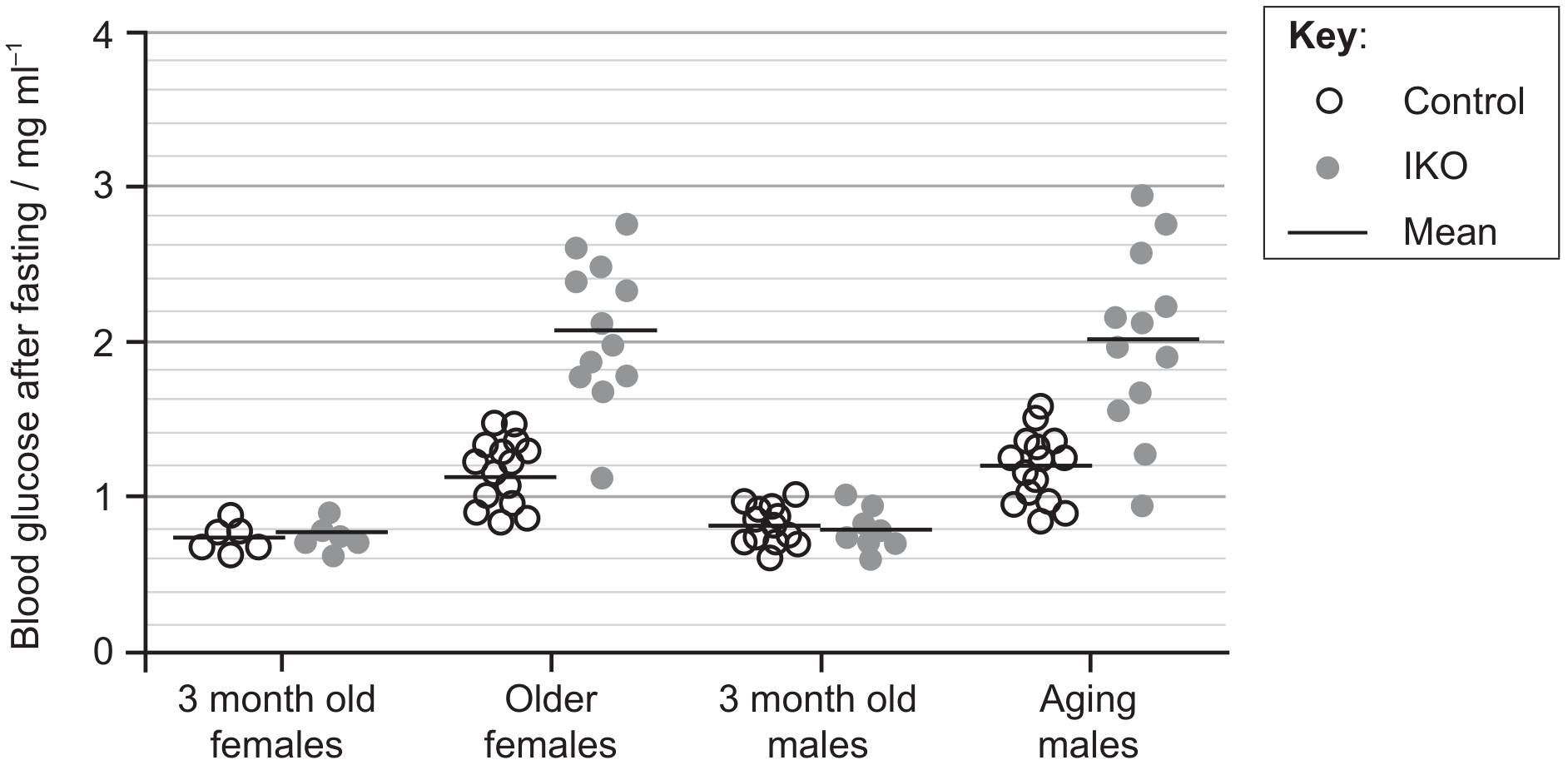
When there are high blood glucose levels, more FoxO1 is found in the nucleus of the cell than in the cytoplasm. Suggest a role of FoxO1 considering this and the data.
What is a proteome?
The genes that code for all the proteins in the ribosome
The group of proteins that generate a proton gradient in mitochondria
The entire genome of a prokaryote
The entire set of proteins expressed by an organism at a certain time
Very soon after fertilization, parental epigenetic methylation is reversed in the DNA. Later, tissue-specific epigenetic modifications are made to the embryonic DNA. The graph follows the degree of methylation from different sources during embryonic development.
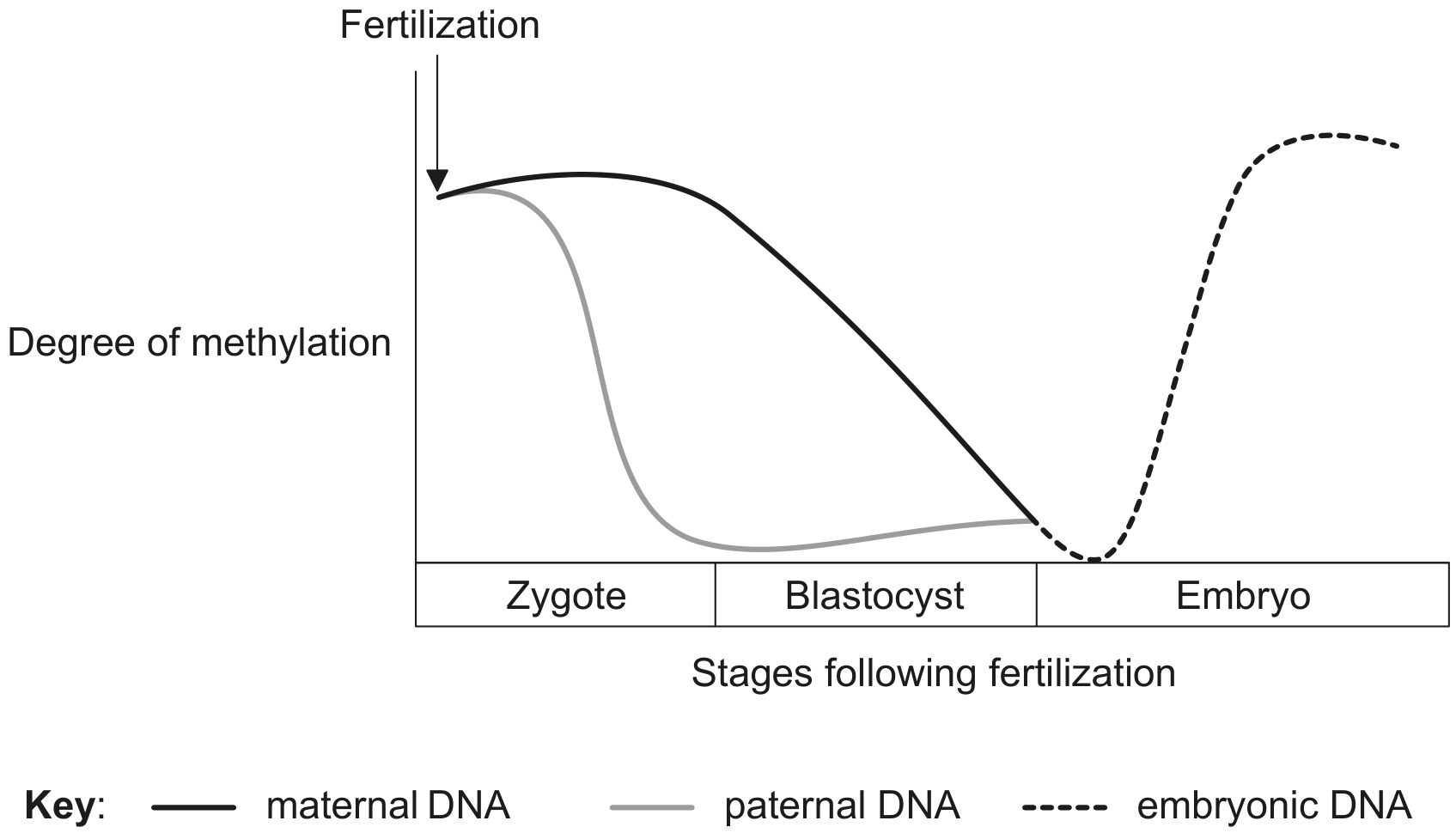
According to the graph, what are the changes in DNA methylation during embryonic development?
Only the paternal DNA becomes demethylated.
The maternal DNA becomes demethylated first.
The methylation patterns of the parents' DNA are erased before fertilization.
The methylation patterns of both parents are erased after fertilization.
What is the proteome of an individual?
The amino acids unique to an individual making up the proteins in cells
The way in which an individual's polypeptides are folded into a three-dimensional structure
The proteins synthesized as an expression of an individual's genes
All possible combinations of amino acids an individual contains
Which statement correctly describes genome and proteome?
Only the genome but not the proteome can be analysed using gel electrophoresis.
The genome and the proteome are the same in all tissues in an organism.
In cells of different tissues, the genome is the same while the proteome varies.
Only mutations in the proteome but not in the genome cause any variability.
DNA methylation has a critical role in gene regulation by affecting transcription. Samples were taken from two colon cancer tumours (T1 and T2) and two normal colon samples (N1 and N2). A particular gene was implicated as a possible cause of cancer. The promoter of this gene was cloned (A-J). The data show the DNA methylation patterns from these samples. The numbers (32-269) represent different markers in the promoter.
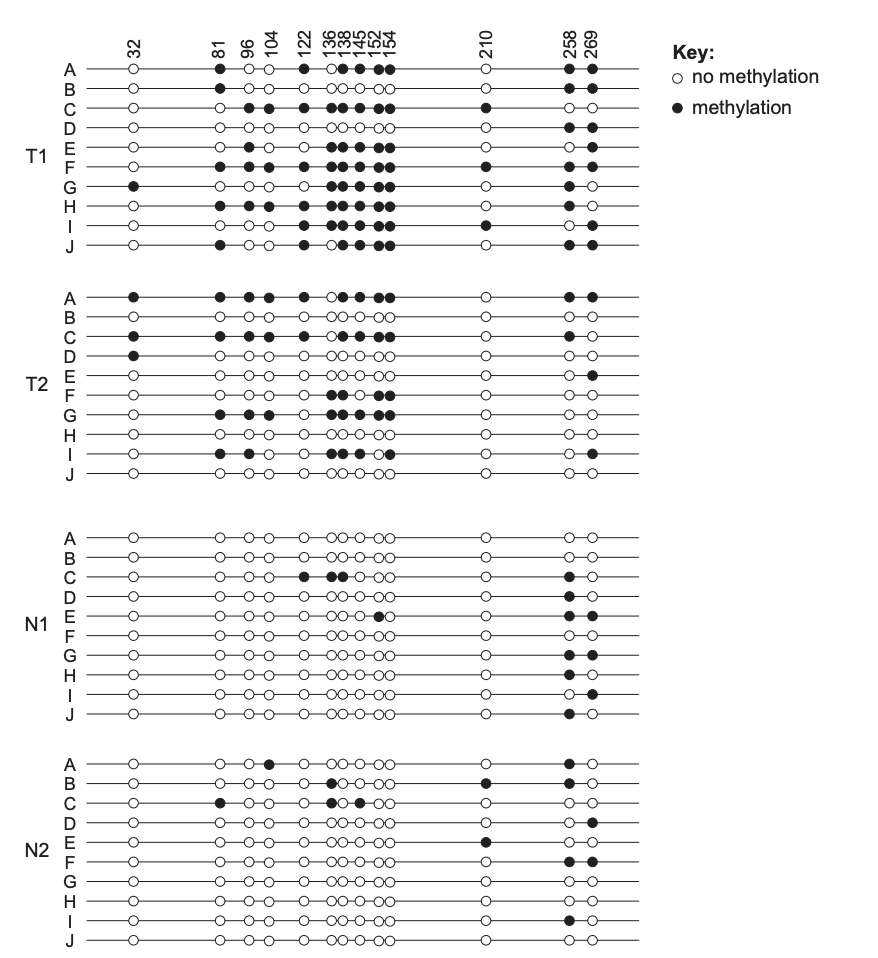
Outline the difference in methylation pattern between tumorous and normal tissue samples.
Suggest a way methylation may affect tumour cell genes.
How can environmental factors affect the expression of genes?
By promoting the replication of nucleosomes
By inactivating epinephrine
By making specific changes to the base sequence of genes
By causing the pattern of DNA methylation to be changed