Question 1
Mitosis in cancerous tissues is uncontrolled and the number of cells undergoing mitosis increases exponentially. Rapidly dividing cells in root tips can be used as a model for studying the effects of anticancer drugs. Aqueous extracts of the fruit of avocado (Persea americana) and the leaves of crepe jasmine (Tabernaemontana divaricata) have been shown to be toxic to some human cancer cell lines. Root tips of the broad bean (Vicia faba) were exposed to these aqueous plant extracts over a range of concentrations.
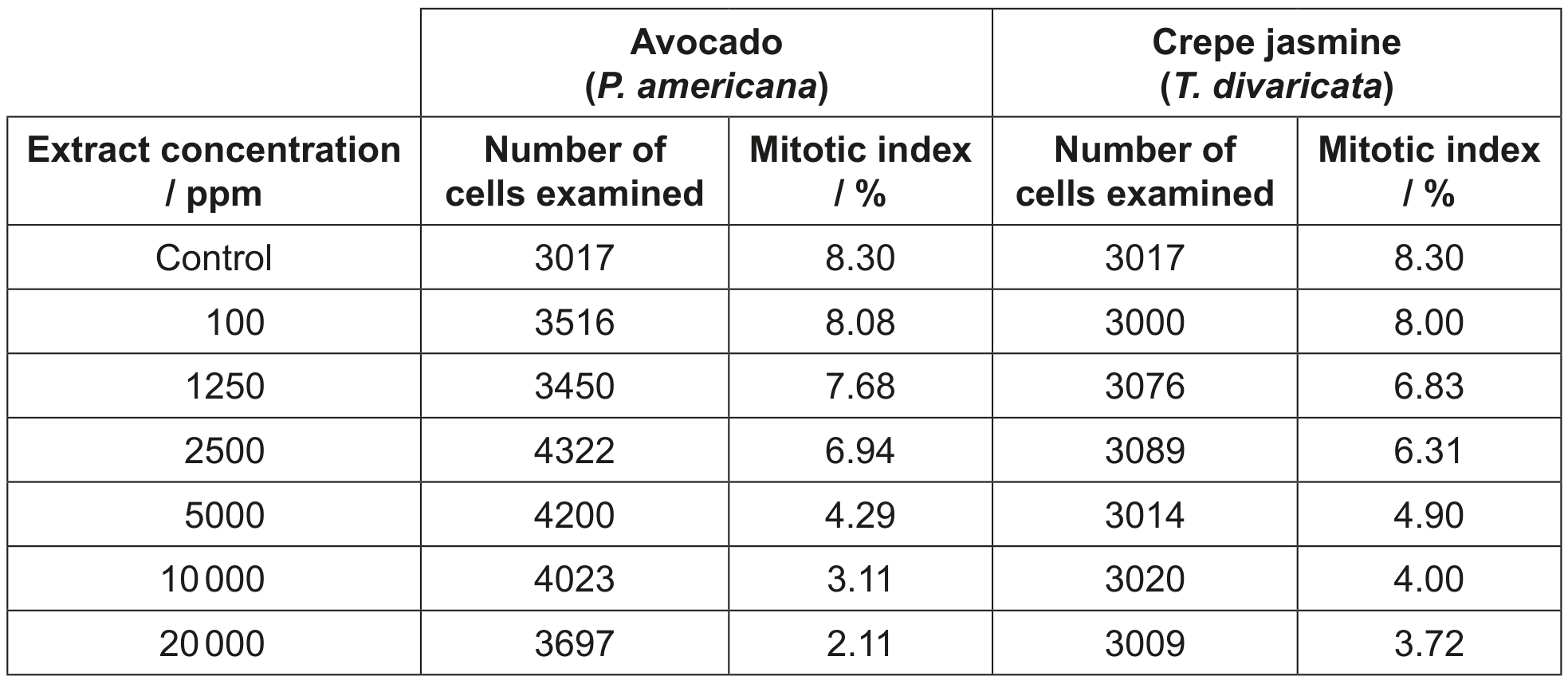
The mitotic index is the percentage of cells examined undergoing mitosis. The table shows the numbers of broad bean root cells examined and the mitotic indices over a range of plant extract concentrations.
Question 1(a)
Question 1(a)(i)
Calculate the number of cells undergoing mitosis using 100 ppm of crepe jasmine extract.
Question 1(a)(ii)
Describe the effect of avocado extract on mitotic index.
Question 1(b)
Compare and contrast the effect of increasing extract concentration on the mitotic indices for the two plant extracts.
Question 1(c)
The percentage of cells in different stages of mitosis in the root tips was also recorded.
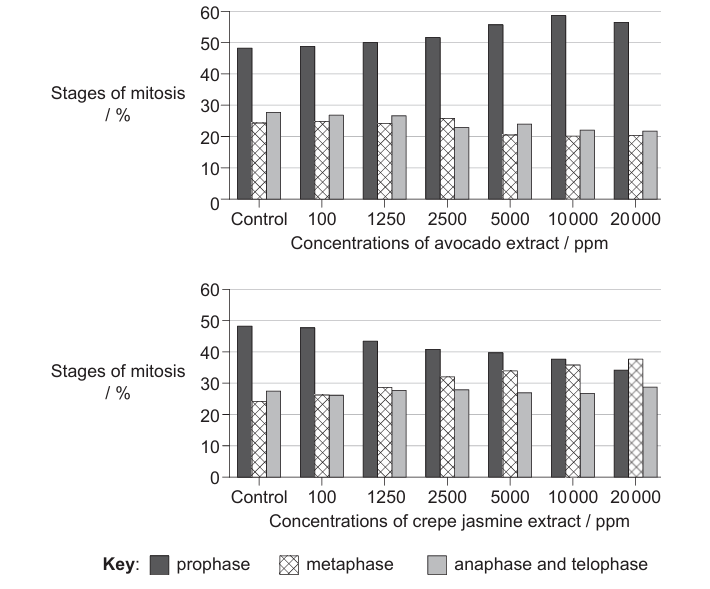
Outline the effect of avocado extract concentration on the percentage of cells in the different stages of mitosis.
Question 1(d)
Using both the table of mitotic indices and the bar charts, deduce whether these extracts contain chemicals that block mitosis in broad bean root tips.
Question 1(e)
The mechanism of action of vinblastine, an anticancer drug, was investigated over a range of concentrations. Vinblastine is an alkaloid isolated from the periwinkle plant (Catharansus roseus). The percentage of cells in mitosis and ratio of anaphase to metaphase in cells exposed to this drug in vitro for a fixed time were recorded. The data are displayed in two graphs.
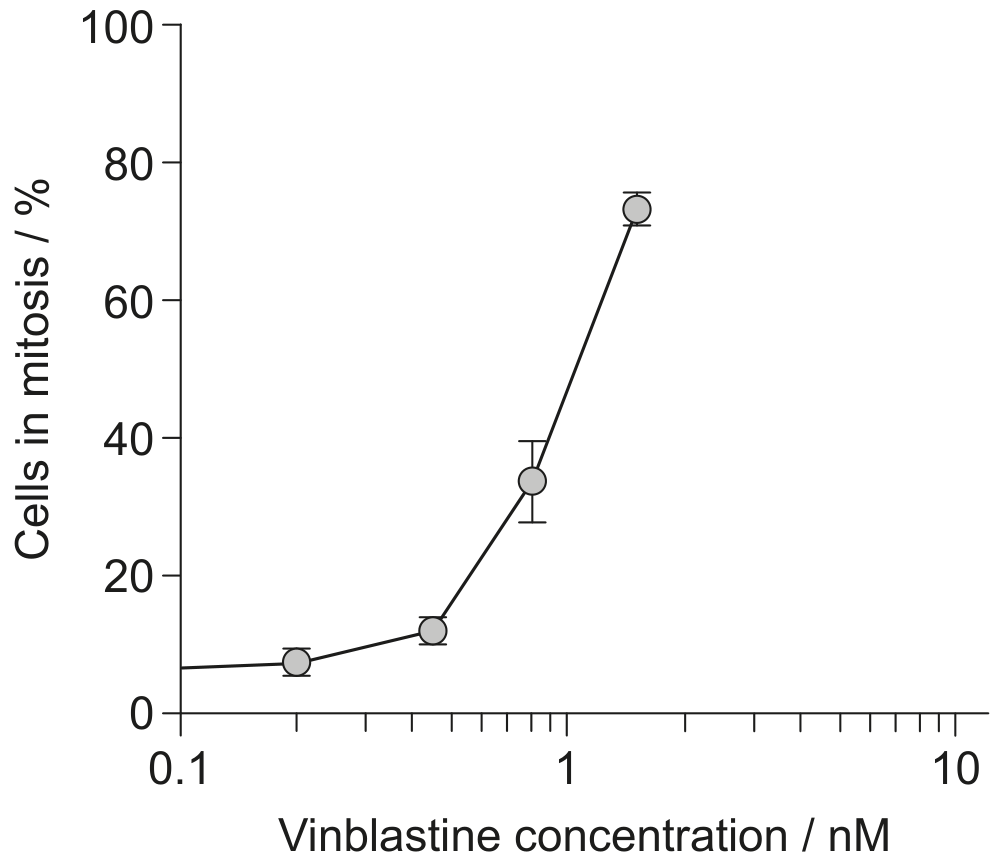
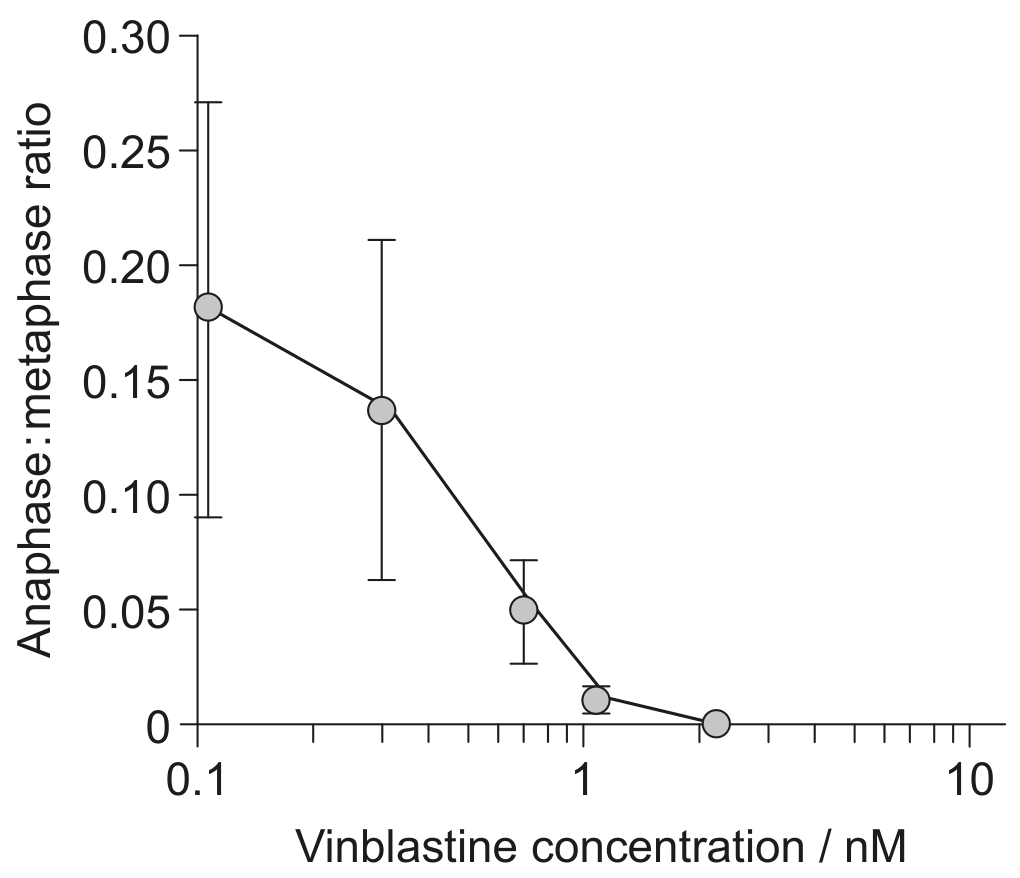
By referring to both graphs, evaluate the hypothesis that vinblastine targets cells in mitosis and prevents them from completing the process.