Question 1
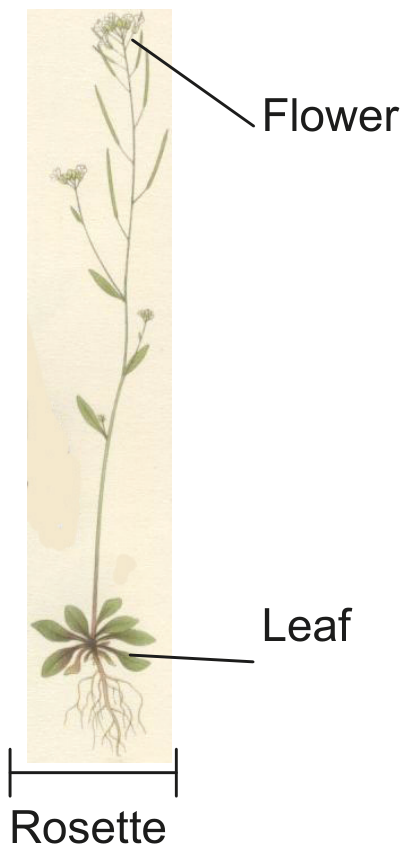
Arabidopsis is a small flowering plant in the mustard family (Brassicaceae) that is widely used in basic research. It has a short life cycle, flowers quickly producing a large number of seeds and is easy to cultivate. It forms a circle of leaves known as a rosette that lies close to the soil. Flowers form at the end of short stems.
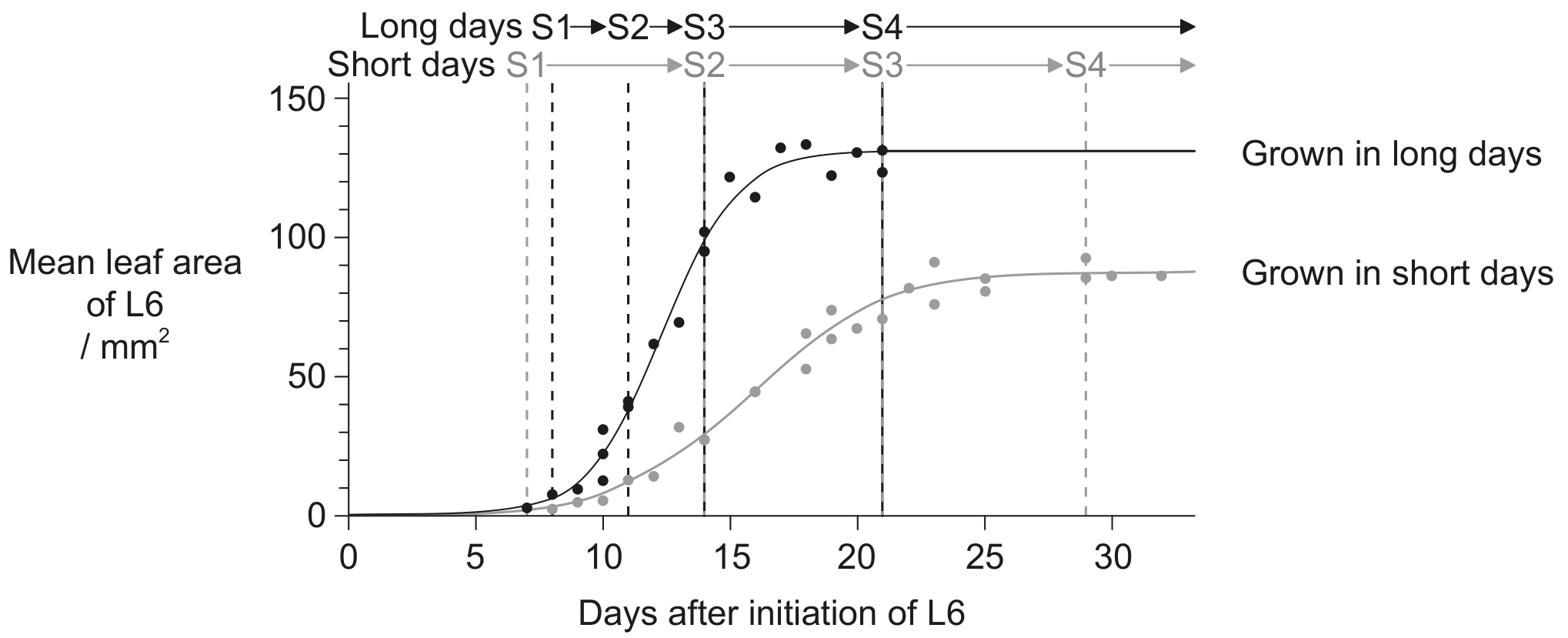
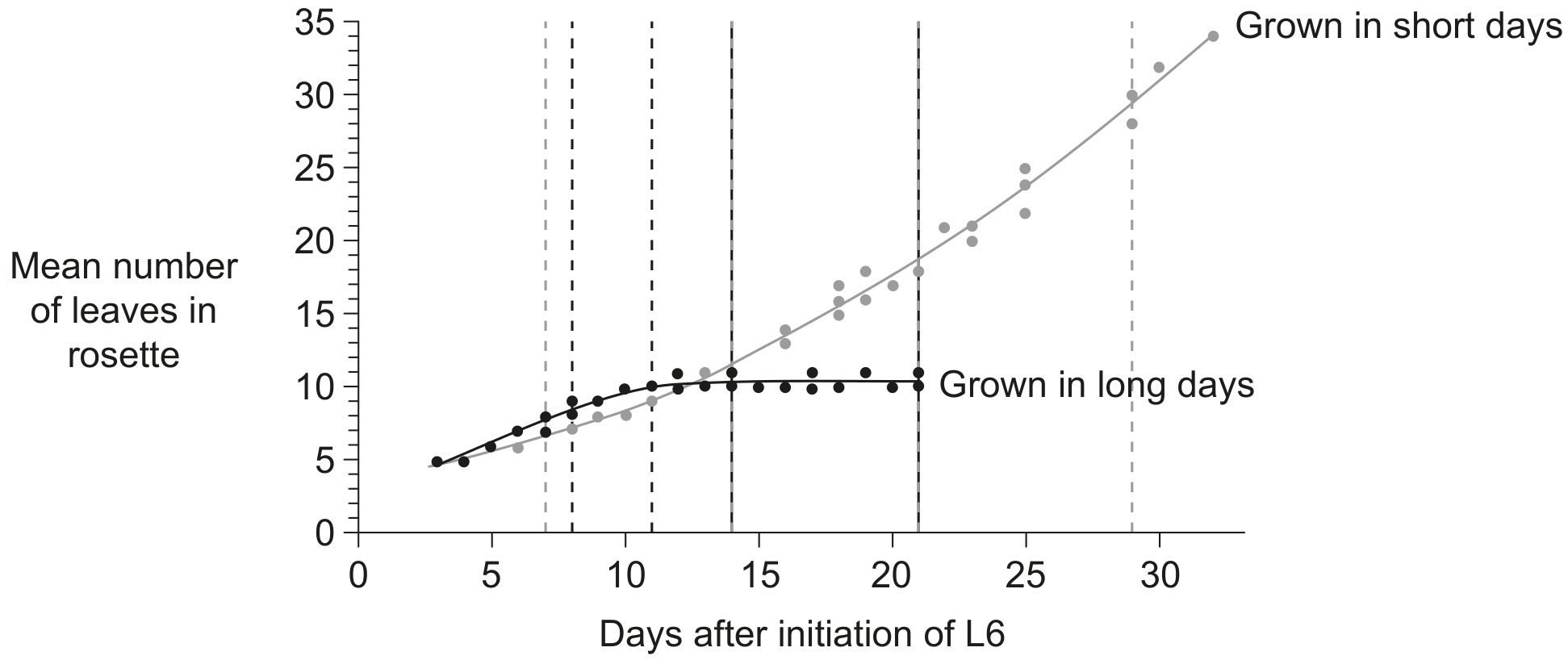
A study was carried out of differences in development between Arabidopsis plants grown in long days ( 16 hours light, 8 hours dark) or short days ( 8 hours light, 16 hours dark). The sixth leaf (L6) to emerge in the rosette of each plant was used in all investigations.
New leaves are initiated by the meristem and go through four stages as they develop.
- Stage 1 (S1) - rapid cell division
- Stage 2 (S2) - cell division has ceased, cell expansion continues
- Stage 3 (S3) - decreasing cell expansion rate
- Stage 4 (S4) - leaf growth complete
The start of each stage of leaf development for plants grown in long days and short days is shown above the first graph.
Question 1(c)
Leaves were removed from Arabidopsis plants that had been grown in long day and short day conditions and the concentration of starch within them was measured. This was done both at the end of the day (D) and at the end of the night (N) in each of the four stages of development (S1, S2, S3, S4).
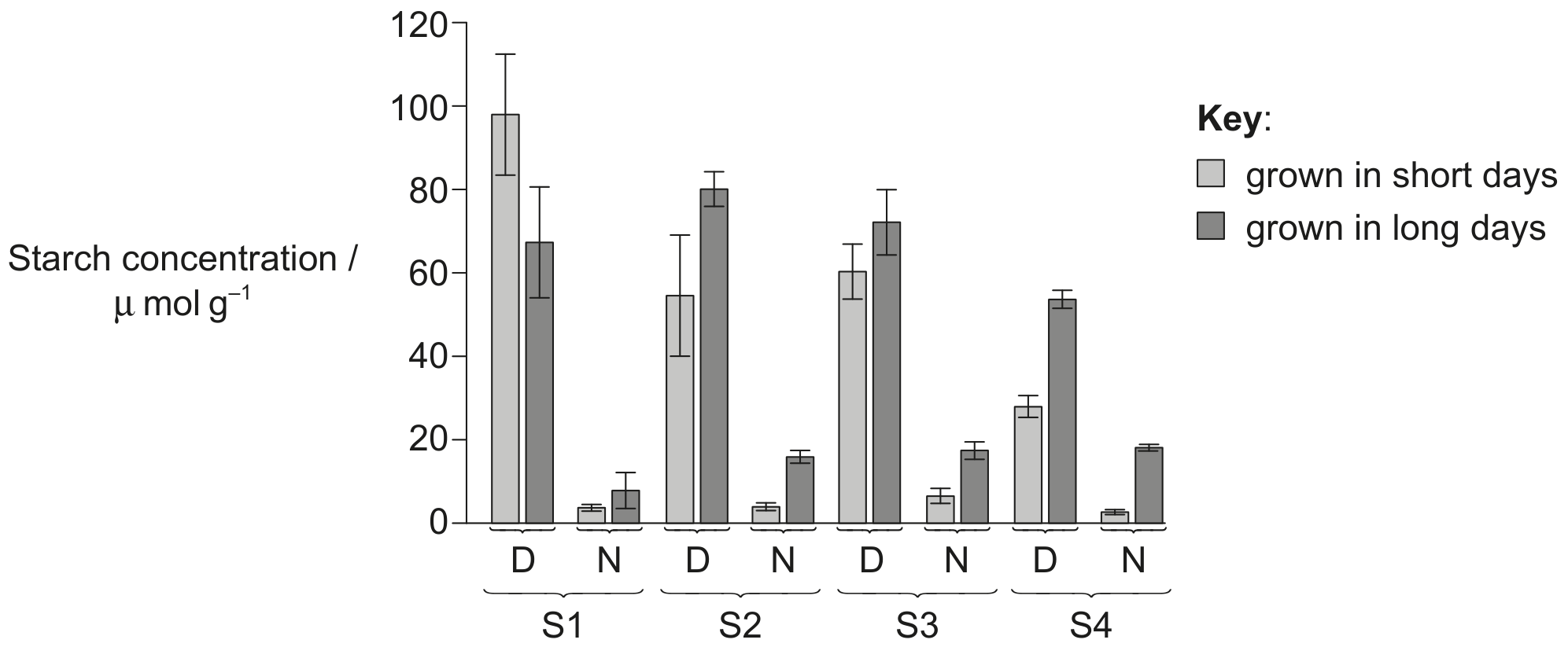
Discuss the evidence provided in the bar chart for the hypothesis that plant leaves use up starch reserves for cell respiration during the night.