[Maximum number: 3]
Iron may be extracted from iron (II) sulfide, FeS.
(a)
Outline why metals, like iron, can conduct electricity.
[ 1 ]
(b)
Explain why the addition of small amounts of carbon to iron makes the metal harder.
[ 2 ]
 EduNinja
Iron may be extracted from iron (II) sulfide, FeS.
Outline why metals, like iron, can conduct electricity.
Explain why the addition of small amounts of carbon to iron makes the metal harder.
Iron may be extracted from iron (II) sulfide, FeS.
Outline why metals, like iron, can conduct electricity.
One definition of atomic volume is given by the formula:
The table gives the atomic volumes of the first nineteen elements, in the form in which they occur at STP.
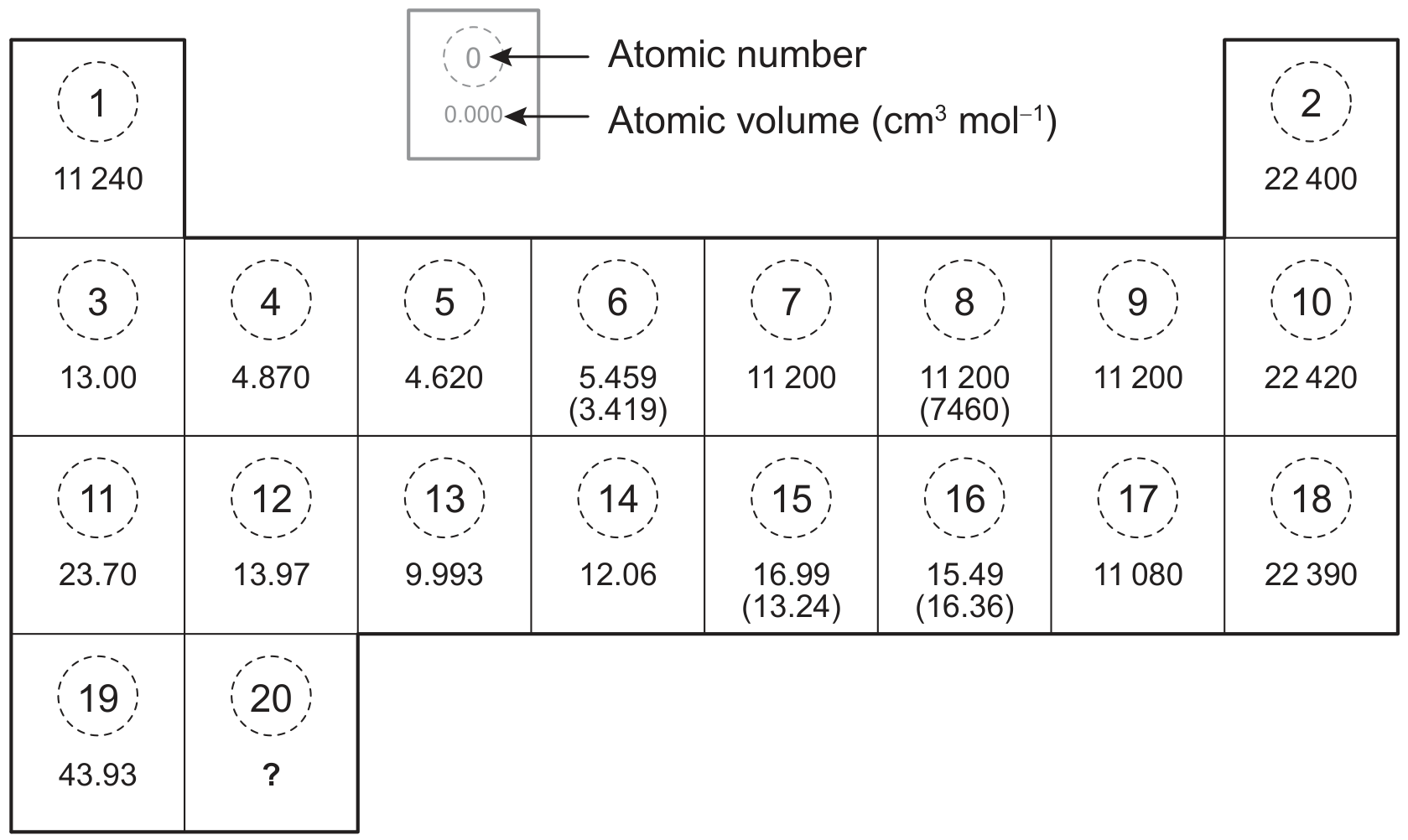
Key:
Explain why the atomic volumes of elements 11, 12 and 13 show a steady decrease.
Estimate the atomic volume, in , of element 20.
A student set up a simple voltaic cell consisting of a copper electrode and a zinc electrode dipped in sodium chloride solution.
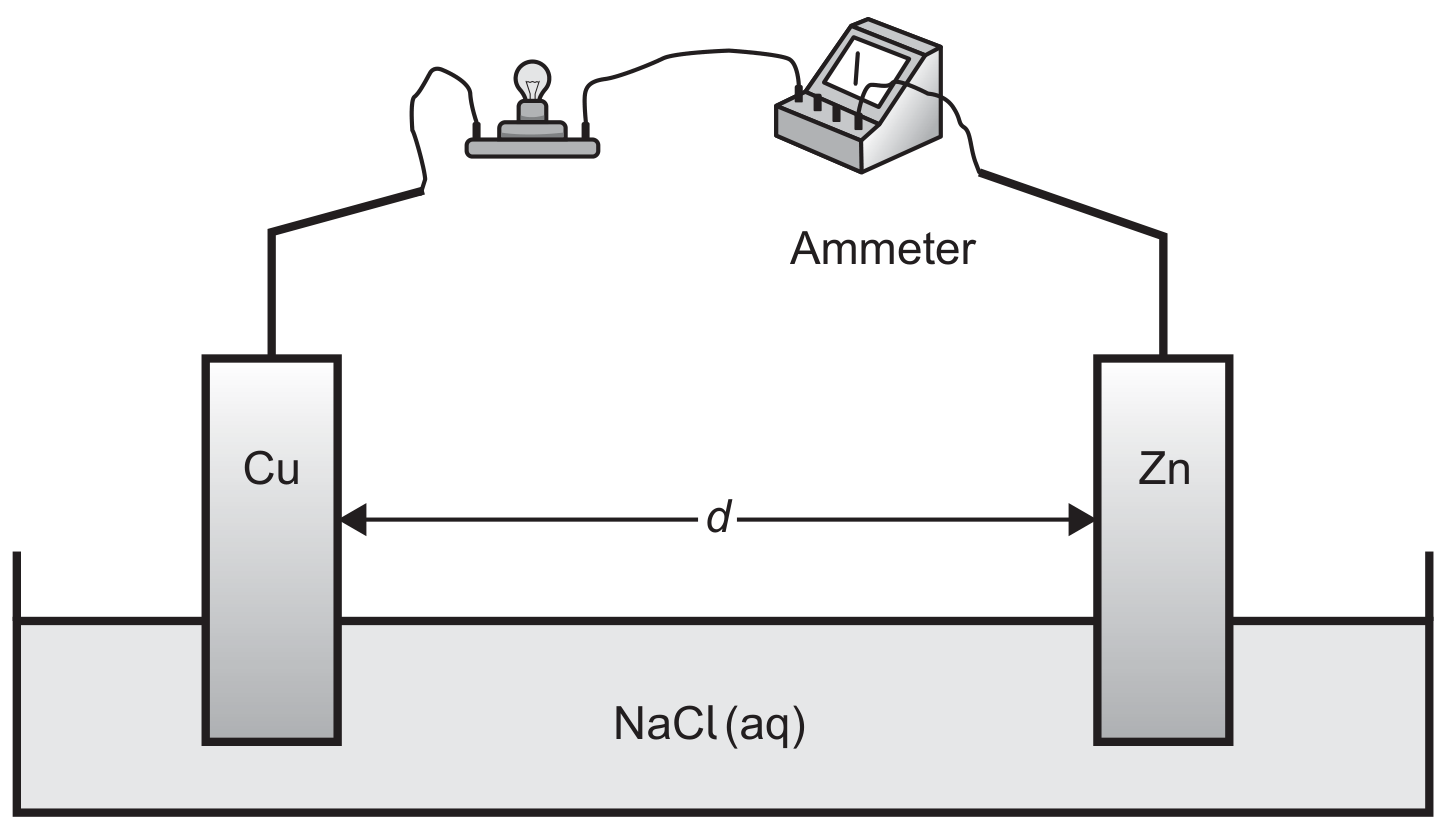
The student gradually increased the distance, d, between the electrodes to study the effect on the initial current, I, passing through the light bulb.
The student hypothesized that the initial current would be inversely proportional to the distance between the electrodes.
The following data was collected over five trials.
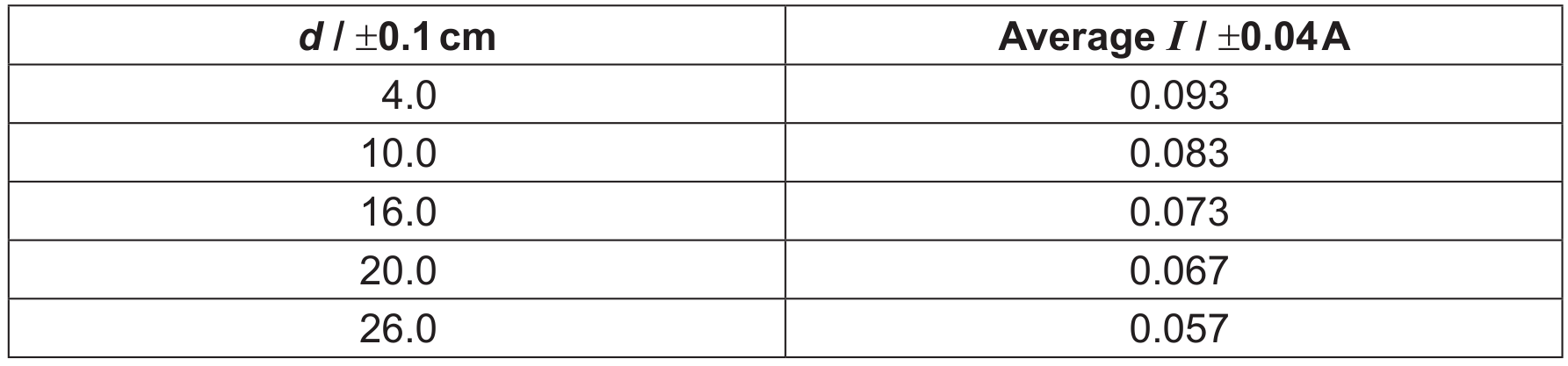
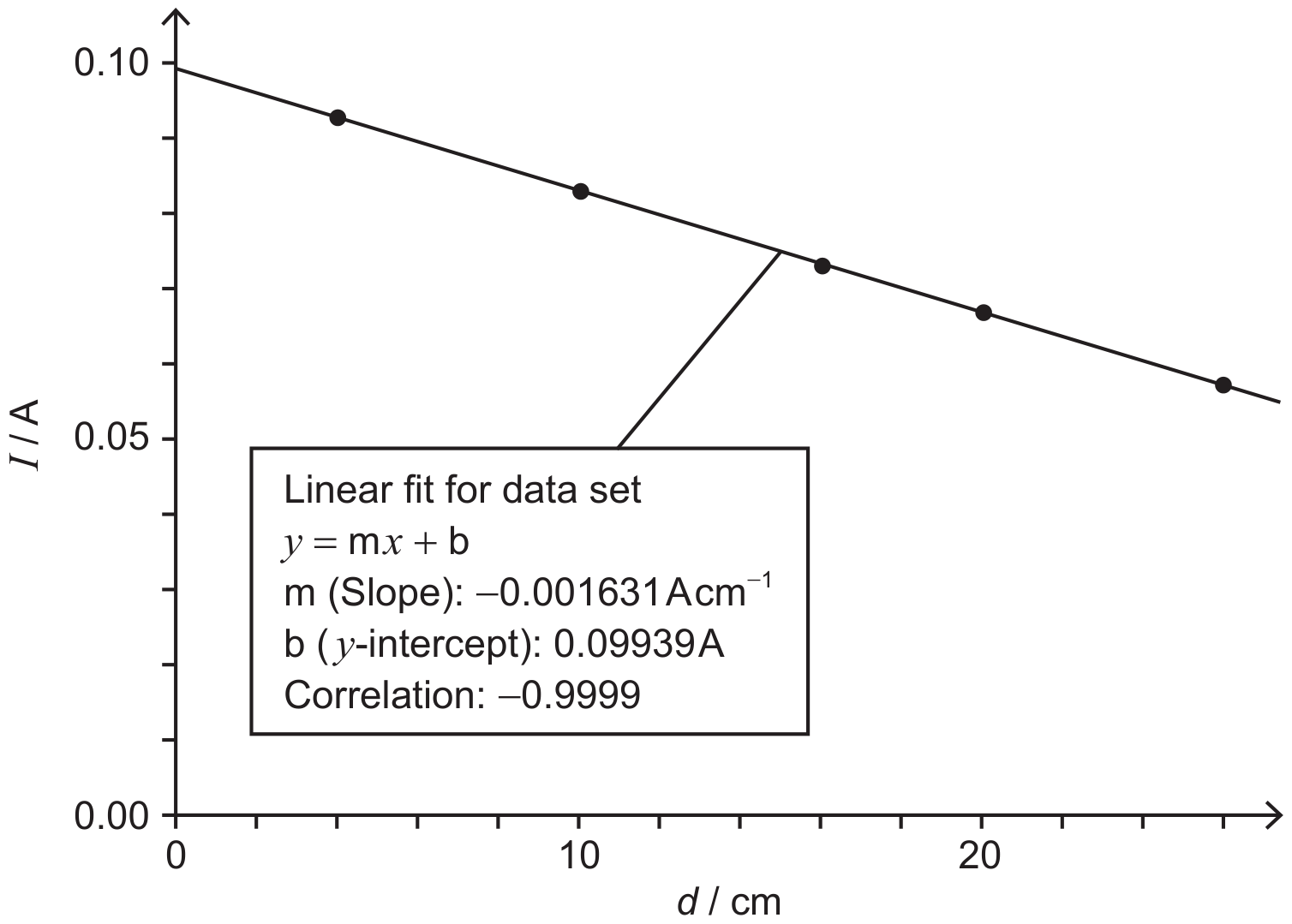
The data did not support the student's hypothesis. He investigated other possible relationships by plotting a graph of the average current against the distance between the electrodes. He obtained the following best-fit line with a correlation coefficient ( r ) of -0.9999 .
Outline how current flows in the sodium chloride solution.
Titanium is a transition metal.
Describe the bonding in metals.
Titanium and vanadium are consecutive elements in the first transition metal series.
Describe the bonding in metals.
Suggest why the melting point of vanadium is higher than that of titanium.
Which metal has the strongest bonding?
Mg
Ca
Sr
Ba
Which answer shows the correct order of metallic bond strength from strongest to weakest?
Al>Mg>Na>K
Al>Mg>K>Na
Na>K>Mg>Al
K>Na>Mg>Al
Which statement best explains the malleability of magnesium metal?
The metal lattice is held together by the attraction between magnesium ions.
The outer shell electrons of magnesium are free to move.
The layers of magnesium ions can slide relative to each other.
There are strong attractions between the magnesium ions and the free moving electrons.
Which metal has the strongest metallic bond?
Mg
Al
K
Ga