Cambridge IGCSE Chemistry Polymers: Repeat Units
Revise Cambridge IGCSE Chemistry polymers, monomers and repeat units with worked examples, exam wording and targeted practice.
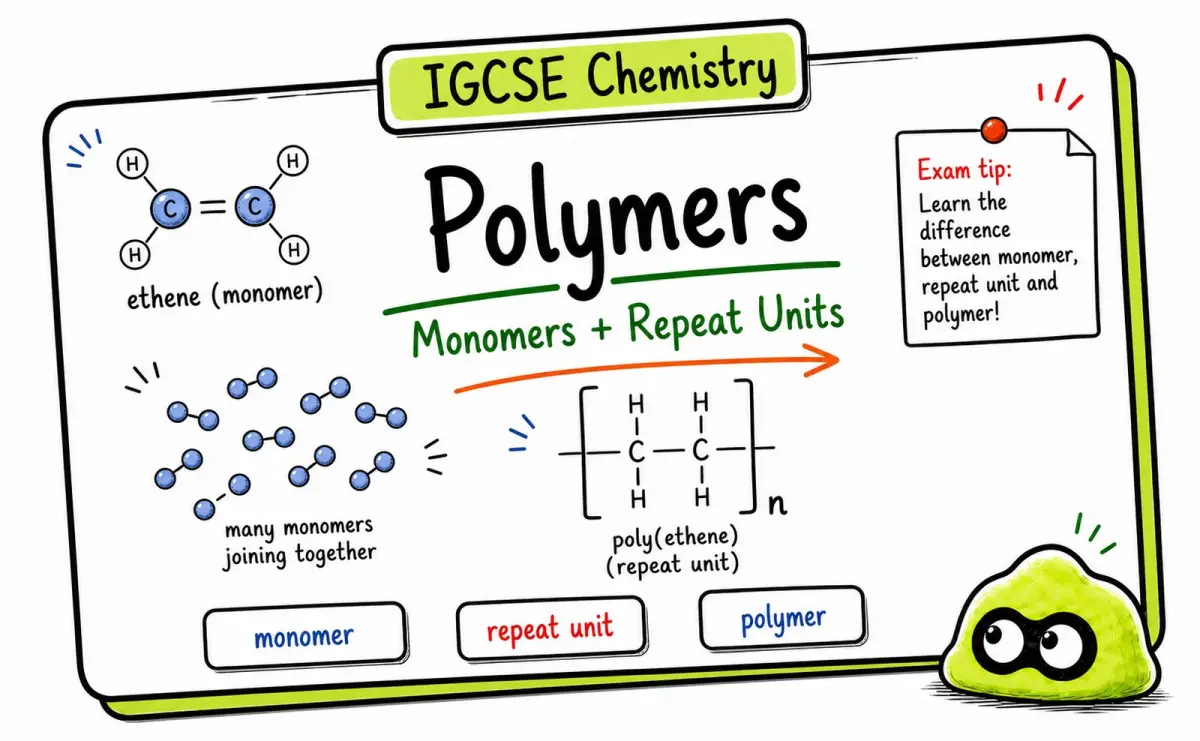
Polymers in Cambridge IGCSE Chemistry are large molecules made when many small molecules join together. The small molecules are called monomers, and the repeating section in the chain is the repeat unit.
This topic is often tested with short wording questions and simple structure diagrams, so the key is using the terms accurately and showing the repeat unit clearly.
Quick Answer
| Term | Meaning | Example |
|---|---|---|
| Monomer | Small molecule that joins to form a polymer | Ethene |
| Polymer | Large molecule made of many repeat units | Poly(ethene) |
| Repeat unit | The section of the polymer chain that repeats | -CH2-CH2- |
From Monomer to Polymer
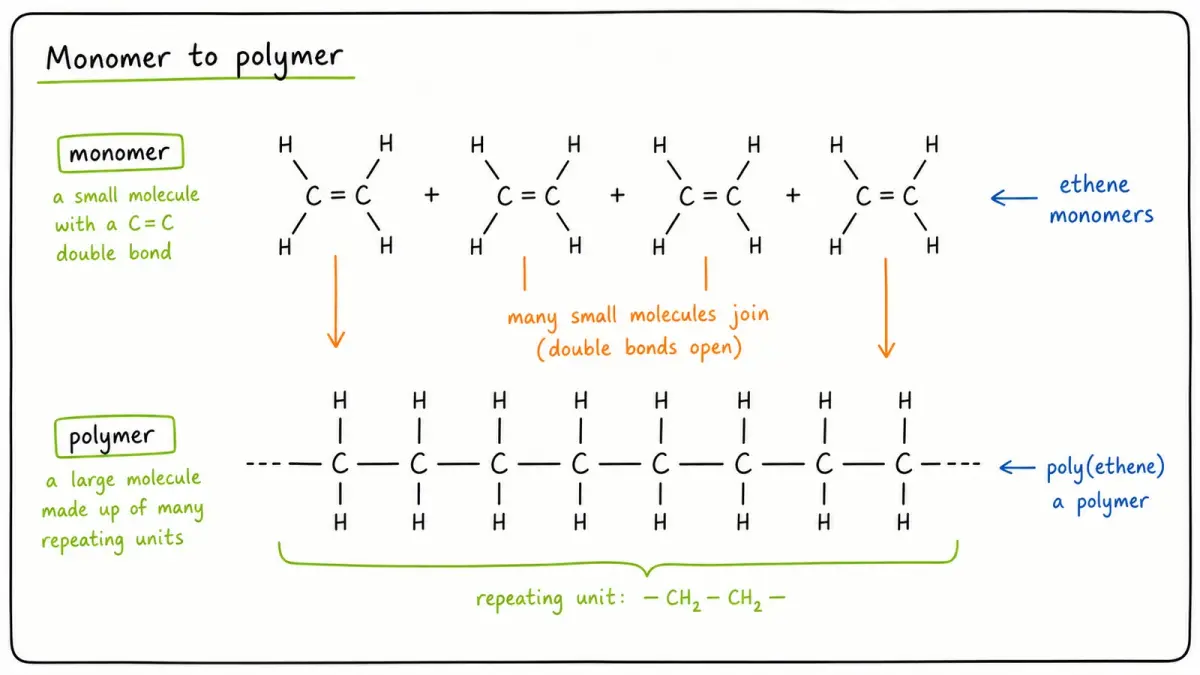
In addition polymerisation, many alkene monomers join together. The carbon-carbon double bond opens, and the monomers form a long chain.
For example, ethene can form poly(ethene). You do not need to make this more complicated than it is: many small molecules join to make one large molecule.
Exam-Style Worked Example: Ethene to Poly(ethene)
Question: Ethene can form poly(ethene). Describe what happens to the ethene molecules during addition polymerisation.
Worked answer:
Many ethene monomers join together. The carbon-carbon double bond in each ethene molecule opens, allowing the molecules to link into a long chain. The polymer formed is poly(ethene), made of many repeat units.
How marks are awarded:
| Mark | What the examiner is looking for |
|---|---|
| 1 | Uses the word monomer or many ethene molecules |
| 1 | States that the C=C double bond opens |
| 1 | Describes formation of a long-chain polymer or repeat units |
This is stronger than only writing "ethene becomes plastic" because it explains the bonding change.
How to Spot the Repeat Unit
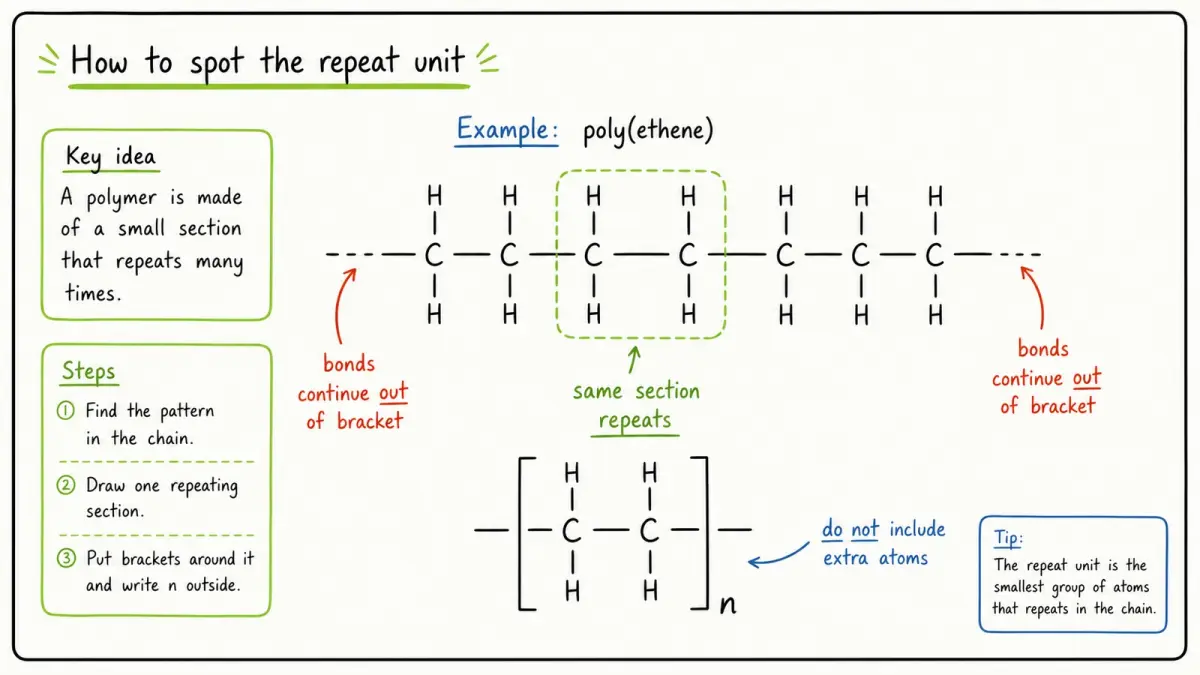
The repeat unit is the smallest section of the polymer chain that repeats. In displayed formula questions, brackets usually show the repeating part, and n means there are many repeats.
Check that the bonds continue out of the bracket. Those open bonds show that the polymer chain keeps going.
What Students Usually Confuse This With
| Confusion | Fix |
|---|---|
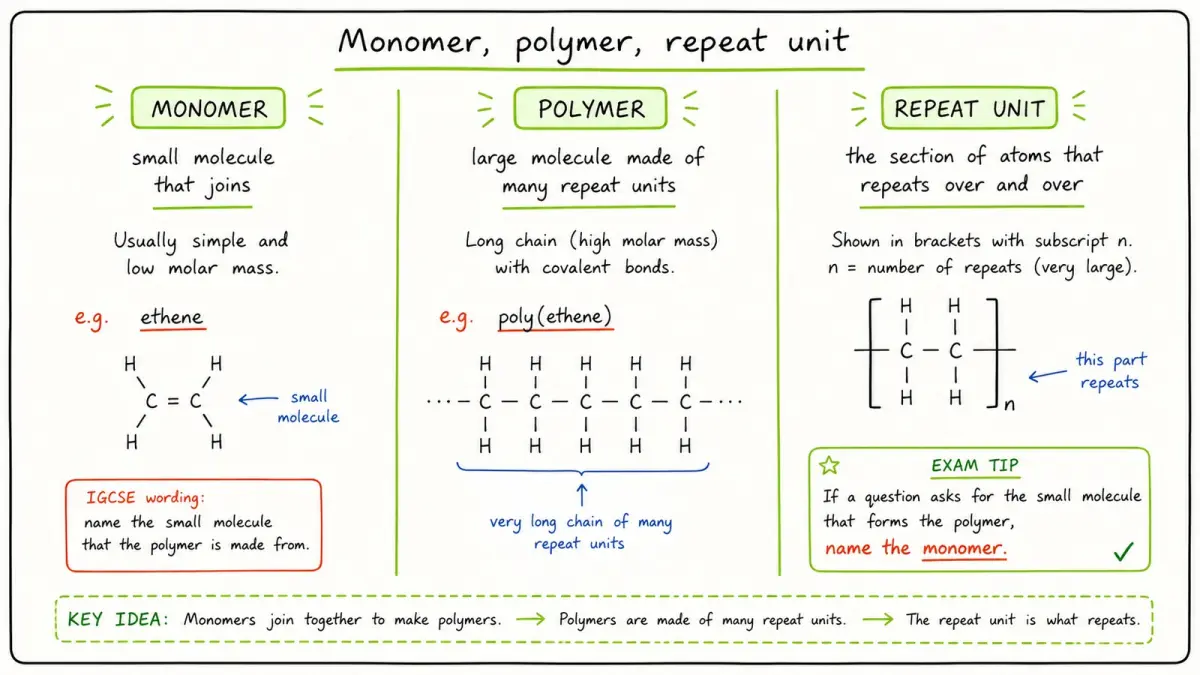
| Monomer vs polymer | Monomer is the small starting molecule; polymer is the long chain |
| Repeat unit vs monomer | The repeat unit is the section shown inside the polymer chain |
| Addition vs general joining | Addition polymerisation usually starts from an alkene double bond |
Mini Practice Set
| Question | Quick check |
|---|---|
| What is the small molecule that forms a polymer called? | Monomer |
| What does n mean outside a polymer bracket? | Many repeating units |
| What happens to the C=C bond in addition polymerisation? | It opens so monomers can join |
Practice This Topic
Try this exam-style question:
State the name given to the small molecules that join together to form polymers, and explain what a repeat unit represents.
Answer guide:
- The small molecules are called monomers.
- Monomers join together to form a long-chain polymer.
- A repeat unit is the section of the polymer chain that repeats many times.
- In addition polymers, the monomer double bond opens to form the chain.
Practice this topic in the question bank
Open Cambridge IGCSE Chemistry practice
Some questions may require an EduNinja membership.
Use the topic filters inside the question bank if you want to explore more available practice by topic.
Related Study Links
FAQ
What is a polymer in Cambridge IGCSE Chemistry?
A polymer is a large molecule made from many repeating units. In Cambridge IGCSE Chemistry, the exam focus is usually on recognising that polymers are long chains formed from smaller monomers. A weak answer says only that polymers are big; a stronger answer explains that many monomers join to form repeating units.
What is a monomer?
A monomer is a small molecule that can join with other monomers to form a polymer. In addition polymerisation, alkene monomers such as ethene join together when the carbon-carbon double bond opens. The common mistake is to call the repeat unit the monomer without checking the original small molecule.
What is a repeat unit?
A repeat unit is the section of the polymer chain that repeats many times. In displayed formula questions, it is usually shown inside brackets with an n outside. For exam diagrams, make sure the bonds continue through the bracket edges, because that shows the polymer chain keeps extending.
What happens to the double bond in addition polymerisation?
In addition polymerisation, the carbon-carbon double bond in the alkene monomer opens. This allows many monomers to join together into a long-chain polymer. Students often lose marks by saying molecules simply stick together, without explaining that the C=C bond changes during the reaction.
How do you draw a polymer repeat unit?
To draw a polymer repeat unit, draw the smallest repeating section of the chain, place it inside brackets and put n outside the brackets. The bonds should continue through the bracket edges. In Cambridge IGCSE Chemistry, this bracket-and-n notation is often the clearest way to show the structure.
Final Takeaway
Keep the vocabulary clean: monomer = small starting molecule, polymer = large chain, repeat unit = repeating section.
Put cambridge IGCSE chemistry back into your full IGCSE CAIE Chemistry study plan.
Return to the complete course overview, or move directly into the most relevant study tool.
Related articles
More course notes, updates and study resources from the EduNinja blog.
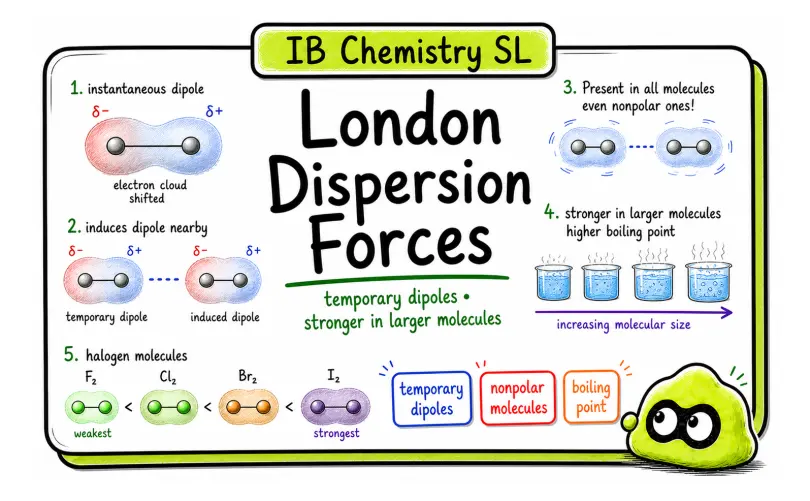
London Dispersion Forces Explained for IB Chemistry
Learn London dispersion forces for IB Chemistry with temporary dipoles, induced dipoles, molecular size, boiling point trends, examples and practice.
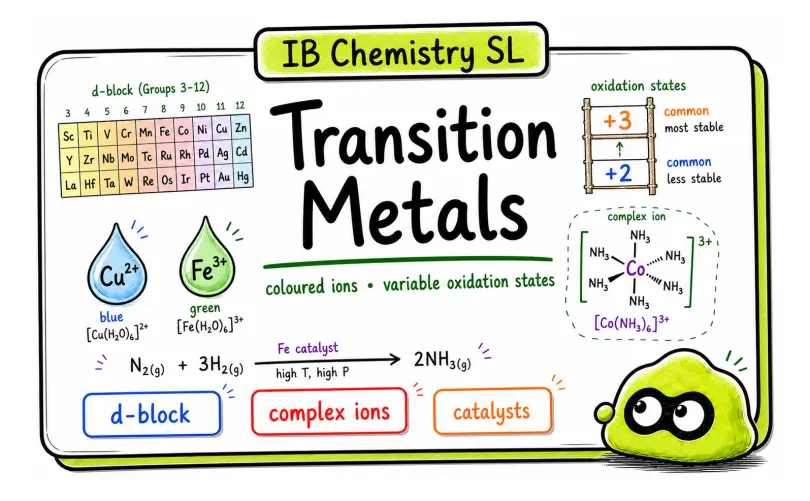
Transition Metals Explained for IB Chemistry
Revise transition metals in IB Chemistry, including coloured ions, variable oxidation states, complex ions, catalysts and common exam mistakes.
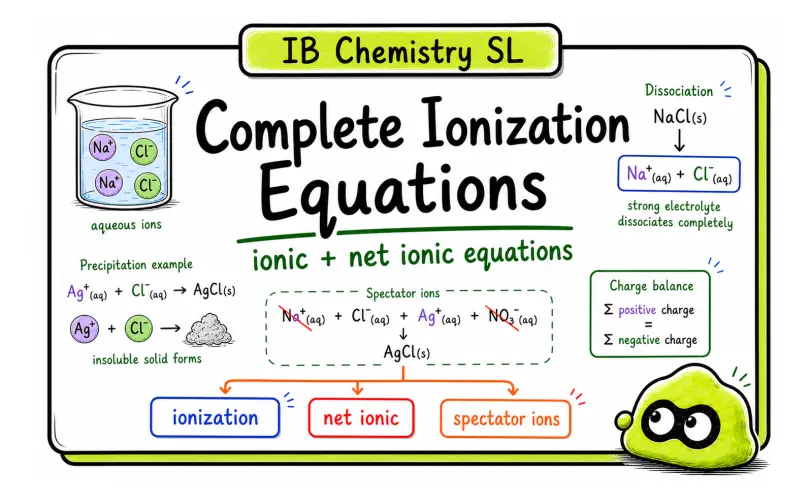
How to Complete Ionization and Net Ionic Equations
Learn complete ionization and net ionic equations for IB Chemistry, with ion charges, state symbols, spectator ions, worked examples and practice.