IGCSE Biology Coordination: Nerves, Hormones, Reflexes
Revise IGCSE Biology coordination through reflex arcs, synapses, nervous control, hormones, effectors, and markscheme-ready response pathways.
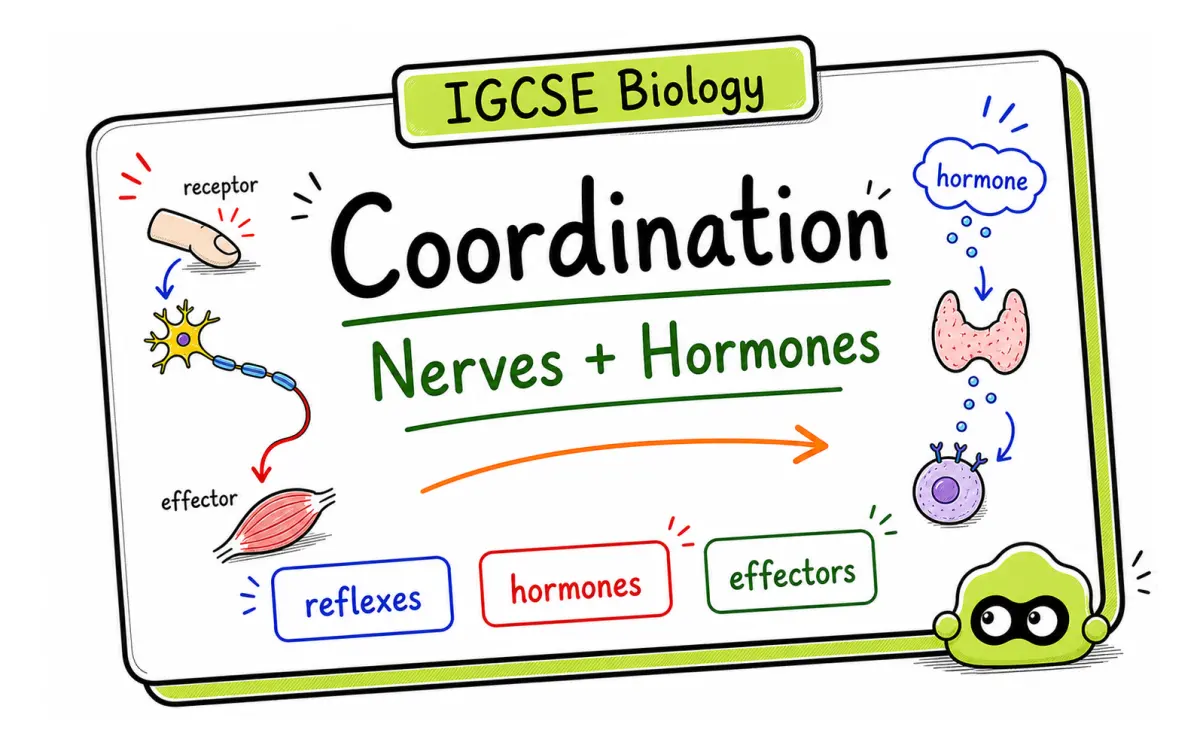
Coordination and response is a pathway topic. The markscheme often rewards the order of information flow: receptor, neurone, central nervous system, effector, and response.
Use this guide to revise nerves, hormones, and reflexes as routes through the body, not as isolated definitions.
Quick Answer
For IGCSE Biology coordination, revise pathways:
- A stimulus is detected by a receptor.
- Sensory neurones carry impulses to the central nervous system.
- Relay neurones pass impulses within the CNS.
- Motor neurones carry impulses to effectors.
- Effectors produce responses, such as muscle contraction or gland secretion.
- Hormones travel in the blood and usually act more slowly than nerve impulses.
Why Students Lose Marks on Coordination and Response
Most lost marks in this topic come from small gaps, not total misunderstanding. A student may know the rough idea but miss the exact relationship, the correct unit, the sequence of steps, or the wording that the markscheme expects.
That is why passive reading feels productive but does not always improve marks. You can spend an hour reading a clean note page and still lose marks if you have not practised retrieval, calculation setup, diagram interpretation, or explanation chains.
Use the relevant EduNinja course pages as your base:
- 14.1.2 Mammalian nervous system
- 14.1.3 Role of the nervous system
- 14.1 Coordination and response
- IGCSE Biology Question Bank
- CIE IGCSE Biology Revision Notes - Coordination and response
- IGCSE CIE Biology Model Answer by Topics - Coordination and response
Do not open every link at once. Start with the notes or topic page, then move into question practice and use any PDF resource only when it helps clarify the exact idea you are revising.
- 14.1.3 Role of the nervous system
<!-- backend-minimal-fix-applied -->
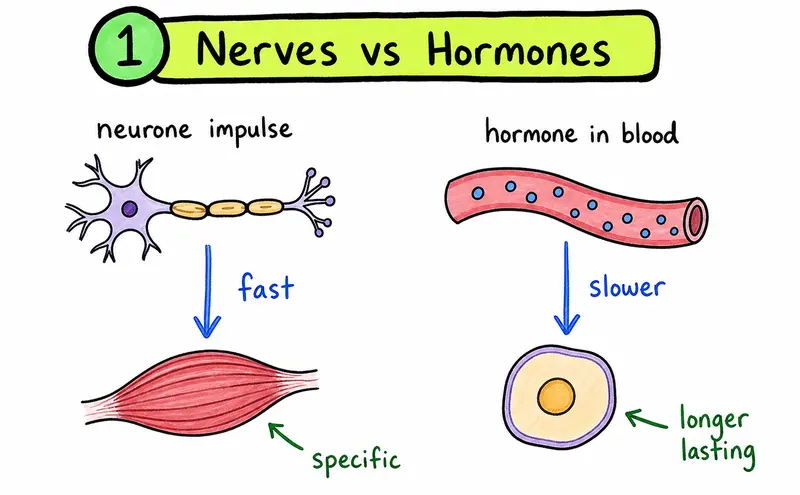
Nerve Pathways vs Hormone Pathways
| Feature | Nervous coordination | Hormonal coordination |
|---|---|---|
| Signal | Electrical impulse, then chemical signal at synapse | Chemical hormone |
| Route | Neurones | Bloodstream |
| Speed | Usually fast | Usually slower |
| Duration | Often short-lived | Often longer-lasting |
| Target | Specific effectors | Target cells with receptors |
This comparison is useful because many exam questions ask why a reflex is fast or why hormones can affect organs far from the gland.
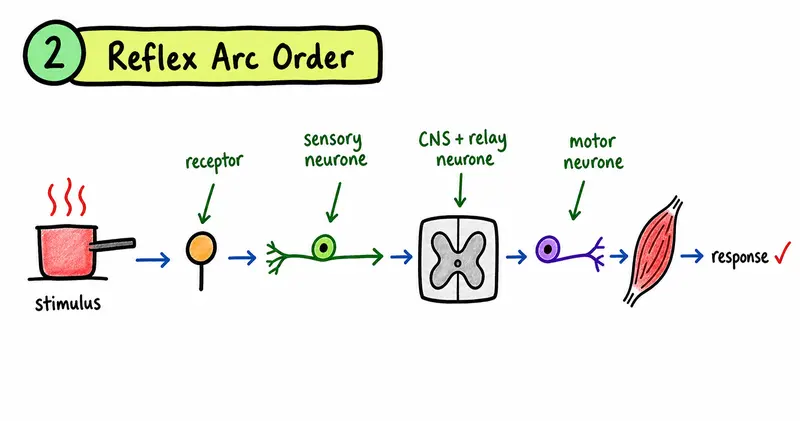
Reflex Arc: The Exam Sequence
A reflex arc is a rapid automatic response. The safe order is:
- Stimulus detected by receptor.
- Sensory neurone carries impulse to the CNS.
- Relay neurone passes impulse inside the CNS.
- Motor neurone carries impulse to the effector.
- Effector produces the response.
If you miss one neurone or put the CNS in the wrong place, the pathway becomes unclear.
Worked Example: Touching a Hot Object
Question: Describe the reflex response when a person touches a hot object.
Mark-worthy answer: Heat is detected by receptors in the skin. A sensory neurone carries an impulse to the spinal cord. A relay neurone passes the impulse to a motor neurone. The motor neurone carries the impulse to a muscle, which contracts and pulls the hand away.
Why this scores: It gives the pathway in order and includes receptor, neurones, CNS, effector, and response.
Coordination Checklist
Before finishing, check:
- Did I name the stimulus?
- Did I identify the receptor?
- Did I use sensory, relay, and motor neurone correctly?
- Did I name the effector?
- Did I describe the response?
- Did I separate nerves from hormones?
How EduNinja Helps with Coordination
Use EduNinja Notes to rebuild the pathway, then practise labelled diagram and sequence questions in the Question Bank. If you lose a mark, write the missing pathway step as a flashcard rather than rereading the whole chapter.
FAQ
Why are reflex actions fast?
Reflex actions are fast because impulses travel through a short pathway and the response does not require conscious decision-making before it happens.
What is the difference between a receptor and an effector?
A receptor detects a stimulus. An effector carries out the response, such as a muscle contracting or a gland secreting.
How are hormones different from nerve impulses?
Hormones are chemical messengers carried in the blood. Nerve impulses travel along neurones and usually produce faster, shorter responses.
Related Study Links
- IGCSE Biology Question Bank
- Coordination and response
- Mammalian nervous system
<!-- backend-minimal-top-up-applied -->
Worked Example: Nerves vs Hormones
Question: Compare nervous and hormonal coordination.
Mark-worthy answer: Nervous coordination uses electrical impulses along neurones and is usually fast and short-lived. Hormonal coordination uses chemical messengers carried in the blood and is usually slower but can last longer. Both systems help the body respond to changes, but they use different signalling routes.
Why this scores: It compares route, speed, duration, and function instead of giving isolated definitions.
What the Markscheme Wants
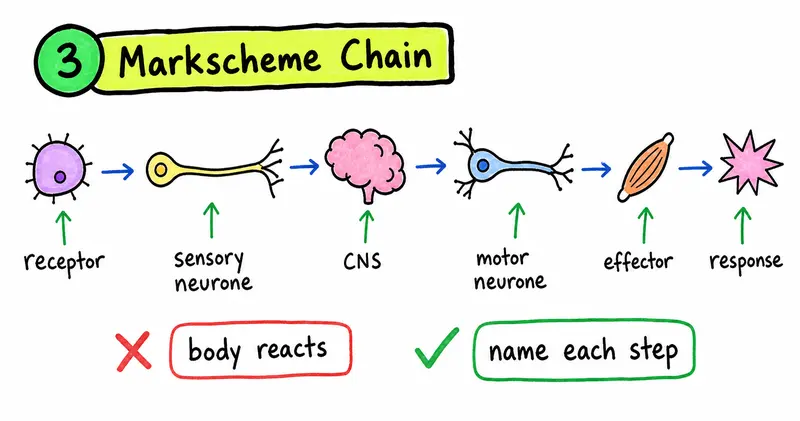
For coordination questions, the markscheme usually rewards sequence. In reflex questions, write receptor, sensory neurone, CNS or spinal cord, relay neurone, motor neurone, effector, and response. In hormone questions, mention blood and target cells. In comparison questions, compare the same feature on both sides.
If the question gives a diagram, follow the arrow direction before writing. Labels should match the pathway, not just the words you remember from notes.
Put coordination and response back into your full IGCSE CAIE Biology study plan.
Return to the complete course overview, or move directly into the most relevant study tool.
Related articles
More course notes, updates and study resources from the EduNinja blog.
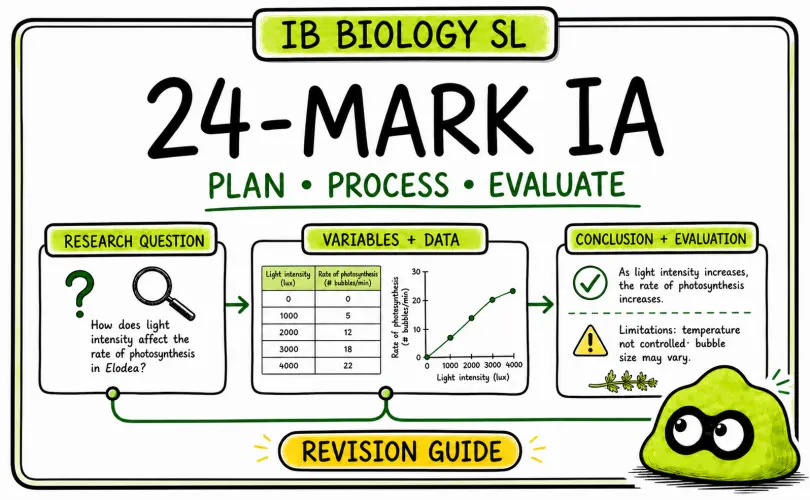
IB Biology Scientific Investigation Guide: How to Build a Strong 24-Mark IA
A practical IB Biology guide to the 24-mark Scientific Investigation: choose a workable research question, control variables, process data, draw a supported conclusion and evaluate limitations with specific improvements.
Abiotic Factors Explained | IB Biology SL
Revise IB Biology SL abiotic factors, tolerance ranges, limiting factors and how environmental variables affect distribution.
Active Transport vs Passive Transport | A-Level Biology
Revise A-Level Biology active and passive transport with concentration gradients, ATP, carrier proteins, examples, common mistakes and practice.