IB Biology SL B3/C3 Human Physiology: Systems and Homeostasis
Revise IB Biology 2025 SL B3/C3 human physiology with digestion, gas exchange, circulation, defence, homeostasis and system answers.
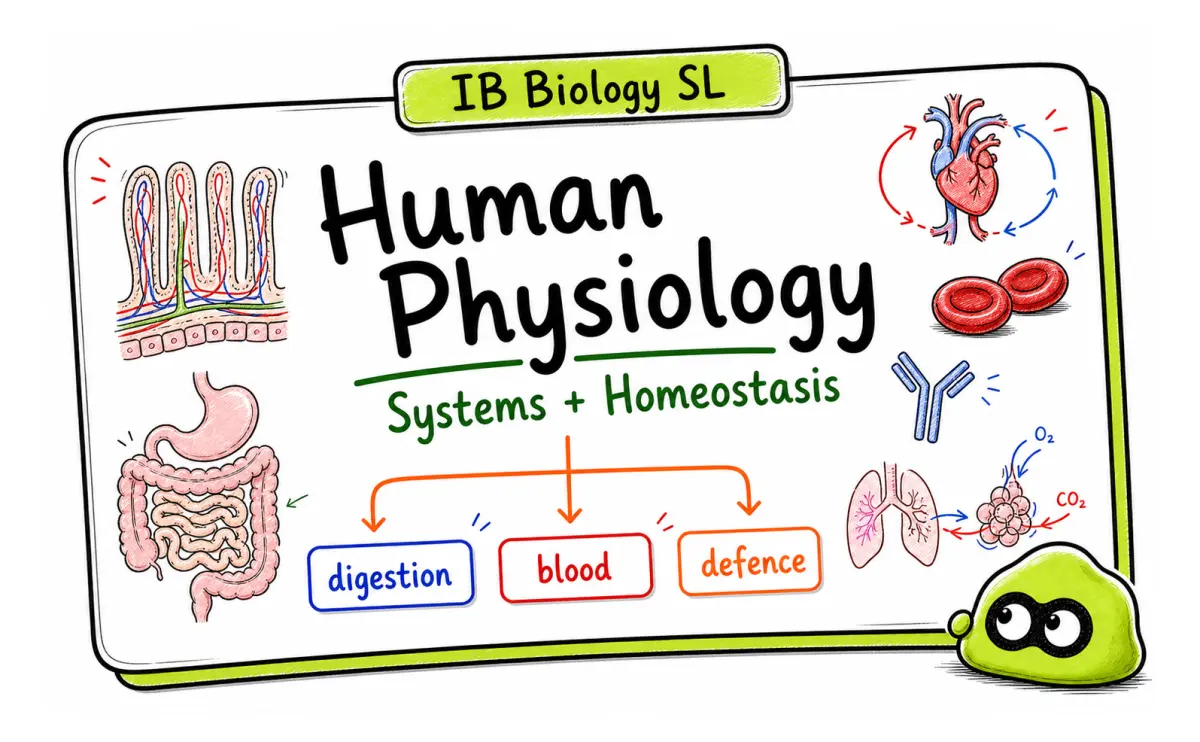
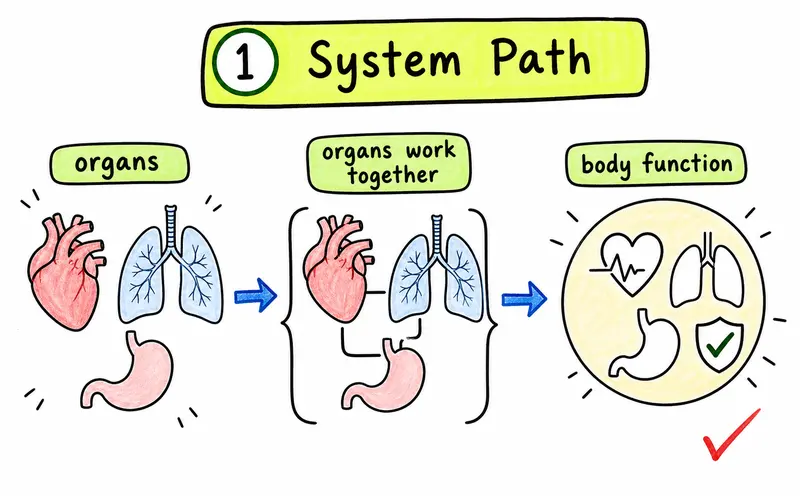
Human physiology is not one small topic. It is a set of linked systems: food is digested and absorbed, blood transports materials, the heart maintains pressure, lungs exchange gases, defences respond to pathogens, and homeostasis keeps conditions close enough for cells to function.
Current syllabus map: This article is aligned to the IB Biology first assessment 2025 roadmap, especially B3/C3 organism-level human systems, exchange, transport, defence and homeostasis.
The easiest way to lose marks is to revise each system as a separate labelled diagram. IB Biology questions usually ask you to connect structure, function, and evidence. A villus is not just a drawing; it is a surface-area and transport argument. A heart chamber is not just a label; it is a pressure and one-way-flow argument.
Use the relevant EduNinja course pages as your base:
Do not open every link at once. Start with the notes or topic page, then move into question practice and use any PDF resource only when it helps clarify the exact idea you are revising.
Quick Answer
For IB Biology SL Human Physiology, revise the chapter as four answer chains:
- Digestion and absorption: food is broken down mechanically and chemically, then villi absorb products using short diffusion distances, large surface area, blood supply, lacteals, and membrane transport.
- Blood and heart: arteries, veins, capillaries, valves, pressure changes, and heart chambers work together to maintain one-way circulation.
- Disease defence: barriers and phagocytes are non-specific, while B cells, antibodies, and memory cells create specific immune responses.
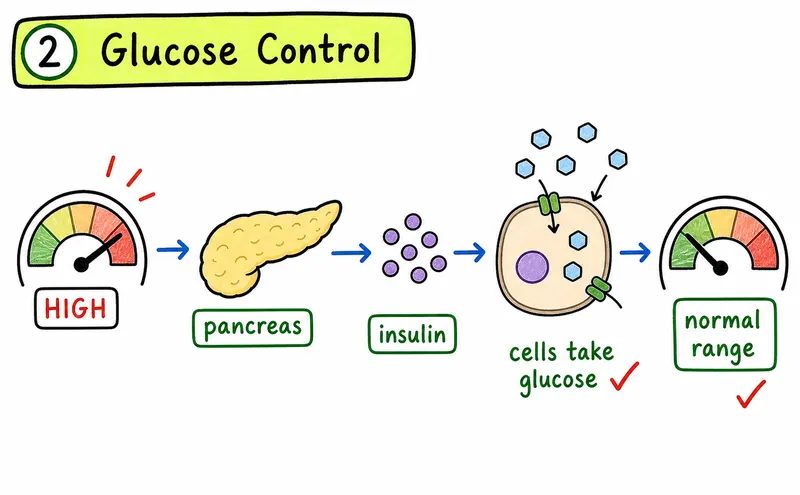
- Gas exchange and control: ventilation maintains concentration gradients at alveoli, while neurons, hormones, and feedback loops help the body respond to change.
If you can explain each chain with "structure -> function -> mark" you are much closer to exam-ready than if you only memorise labels.
Core Concept That Gets Marks
The core idea is system design. Human physiology questions reward students who explain why a structure is shaped the way it is and how that shape supports survival.
Use this sentence pattern:
The structure helps because it increases/decreases/maintains ________, which allows ________ to happen efficiently.
Examples:
| Structure | Function phrase | Mark-worthy link |
|---|---|---|
| Villi and microvilli | Increase surface area | More membrane area for absorption of digested food molecules |
| Single-cell epithelium | Short diffusion path | Faster movement from lumen into blood or lymph |
| Capillary network in villi | Maintains concentration gradient | Absorbed glucose and amino acids are carried away quickly |
| Heart valves | Prevent backflow | Blood moves in one direction during pressure changes |
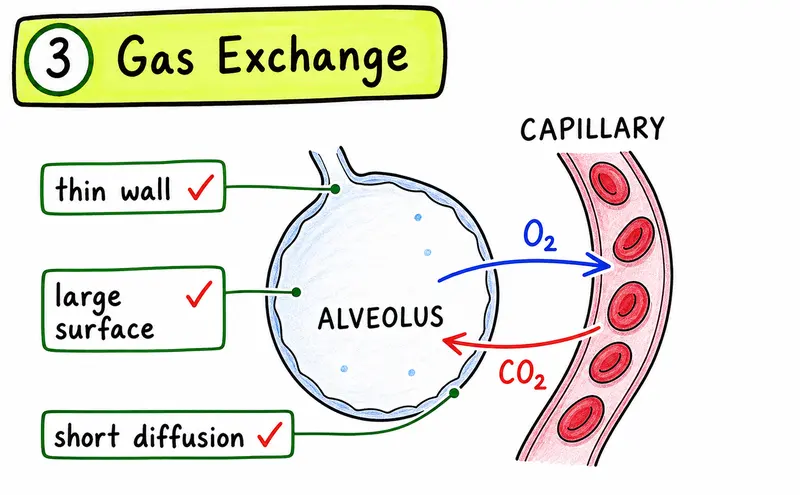
| Alveoli | Large surface area and thin wall | Efficient diffusion of oxygen into blood and carbon dioxide out |
| Antibodies | Specific binding | Target antigens for neutralisation, agglutination, or phagocytosis |
Weak Answer vs Mark-Worthy Answer
| Question | Weak answer | Mark-worthy answer |
|---|---|---|
| Why are villi useful? | They absorb food. | Villi increase surface area, have a thin epithelium, and contain capillaries, so digested molecules can move quickly into blood while the concentration gradient is maintained. |
| Why do arteries have thick walls? | Blood is under pressure. | Arteries carry blood away from ventricles at high pressure, so thick elastic and muscular walls withstand and smooth the pressure pulse. |
| What is an antibody? | It fights disease. | An antibody is a specific protein produced by B cells that binds to a complementary antigen and helps target pathogens for immune responses. |
| Why does ventilation matter? | It brings in oxygen. | Ventilation replaces air in the lungs, maintaining steep oxygen and carbon dioxide concentration gradients across the alveolar surface. |
Worked Example 1
Question: Explain how villi are adapted for absorption in the small intestine.
Markscheme-style answer:
Villi provide a large surface area for absorption. Their epithelium is only one cell thick, so the diffusion distance from the intestinal lumen to the blood is short. Capillaries carry away absorbed glucose and amino acids, maintaining a concentration gradient. Lacteals absorb lipids into the lymphatic system, while microvilli further increase the membrane surface area for transport proteins and enzymes.
Why this scores:
The answer does not just list villus features. It links each feature to a function: surface area, diffusion distance, gradient maintenance, lipid transport, and membrane transport.
Worked Example 2
Question: Explain how the heart maintains one-way blood flow during the cardiac cycle.
Markscheme-style answer:
Blood flows from atria into ventricles when ventricular pressure is low. As ventricles contract, pressure rises and the atrioventricular valves close to prevent backflow into the atria. When ventricular pressure becomes higher than arterial pressure, the semilunar valves open and blood is forced into the arteries. When ventricles relax, semilunar valves close to stop blood flowing back from the arteries.
Why this scores:
It uses the mark-bearing words: pressure, atria, ventricles, valves, backflow, contraction, relaxation, and arteries.
Question-Type Breakdown
| Question type | What to do first | Detail that earns marks |
|---|---|---|
| Label a diagram | Identify the system before naming parts | Use exact labels: villus, lacteal, capillary, atrium, ventricle, valve, alveolus |
| Explain an adaptation | State the feature, then the function | Use "so that" or "therefore"to link structure to survival |
| Compare vessels | Anchor the comparison to pressure and flow | Arteries away from heart; veins back to heart; capillaries exchange materials |
| Immune response | Separate non-specific and specific defence | Phagocytes belong to innate defence; antibodies are specific to antigens |
| Data or graph | Identify what changes and why | Connect rate, pressure, oxygen demand, or concentration gradient to the system |
Topic-Specific Revision Route
- Start with digestion and villi because it trains the structure-to-function answer style.
- Move to the blood system and heart, focusing on pressure, valves, and one-way flow.
- Add disease defence by separating barriers, phagocytes, B cells, antibodies, and memory cells.
- Revise gas exchange with alveoli and ventilation as a concentration-gradient problem.
- Finish with homeostasis, neurons, and hormones as control systems that detect change and restore balance.
Do not revise by redrawing every diagram repeatedly. Redraw once, then cover the diagram and explain why each part matters.
Common Mistakes That Cost Marks
- Saying villi "digest food" instead of explaining absorption after digestion.
- Forgetting that lacteals absorb lipids, while capillaries carry many water-soluble absorbed products.
- Mixing up arteries and veins by oxygen content instead of direction of flow. The better rule is: arteries carry blood away from the heart; veins return blood to the heart.
- Describing antibodies as cells. Antibodies are proteins produced by B cells/plasma cells.
- Saying ventilation is gas exchange. Ventilation moves air in and out; gas exchange is diffusion across the alveolar surface.
- Explaining heart valves without mentioning pressure differences or prevention of backflow.
- Treating homeostasis as "keeping everything constant" rather than maintaining variables within a narrow range through feedback.
Exam-Ready Mini Checklist
Before you finish a Human Physiology answer, check:
- Did I name the system correctly?
- Did I link structure to function?
- Did I explain the direction of movement: lumen to blood, heart to arteries, air to alveoli, or pathogen to immune response?
- Did I use the correct control word: pressure, concentration gradient, diffusion distance, specificity, feedback, or one-way flow?
- Did I avoid mixing up similar terms such as ventilation/gas exchange, antibody/antigen, artery/vein, digestion/absorption?
How EduNinja Helps
Use EduNinja as the practice loop after you rebuild the concept. Read the smallest useful note section, answer one focused question, then mark whether your answer included the structure-function link.
For this topic, the best loop is:
- Revise one system.
- Answer one diagram or explanation question.
- Mark for exact terminology.
- Save the repeated mistake as a flashcard.
- Return 24 to 72 hours later and answer a similar question without notes.
FAQ
How should I revise IB Biology Human Physiology quickly?
Revise by systems, not pages. Spend one block on digestion and absorption, one on blood and heart, one on defence, and one on gas exchange/control. For each block, write one structure-function answer before moving on.
What is the most common Human Physiology exam mistake?
The most common mistake is listing structures without explaining their function. IB Biology marks usually sit in the link: villi increase surface area, valves prevent backflow, ventilation maintains gradients, antibodies bind specifically to antigens.
Should I memorise every diagram?
Memorise the core labels, but do not stop there. You need to explain what the diagram is showing. A labelled villus diagram only becomes a high-mark answer when you connect villi, epithelium, capillaries, lacteals, and microvilli to absorption.
How do I avoid confusing ventilation and gas exchange?
Use this rule: ventilation is bulk movement of air in and out of the lungs; gas exchange is diffusion of oxygen and carbon dioxide across the alveolar surface.
Related Study Links
- IB Biology SL revision hub
- EduNinja study guides
- IB Biology SL question bank
- IB Biology study hub
Closing
Human Physiology is easier when you stop treating it as a list of body parts. Each system is an answer machine: identify the structure, explain the function, connect it to evidence, and write the mark-bearing sentence clearly.
Put PDF source back into your full IB Biology SL study plan.
Return to the complete course overview, or move directly into the most relevant study tool.
Related articles
More course notes, updates and study resources from the EduNinja blog.
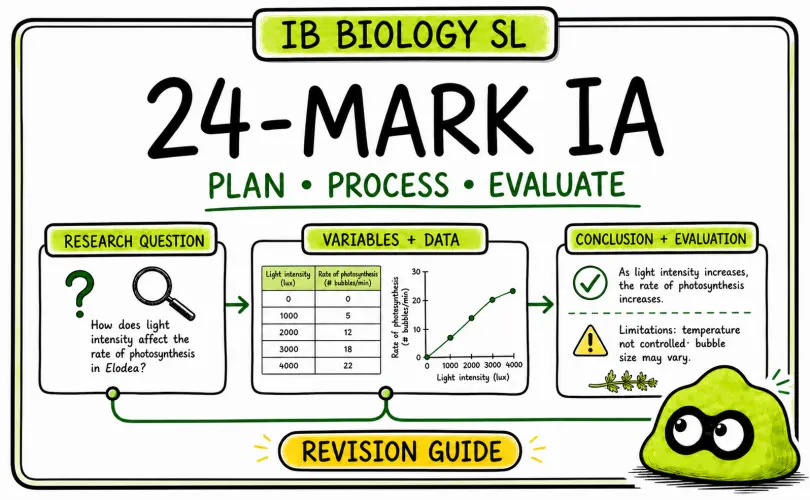
IB Biology Scientific Investigation Guide: How to Build a Strong 24-Mark IA
A practical IB Biology guide to the 24-mark Scientific Investigation: choose a workable research question, control variables, process data, draw a supported conclusion and evaluate limitations with specific improvements.
Abiotic Factors Explained | IB Biology SL
Revise IB Biology SL abiotic factors, tolerance ranges, limiting factors and how environmental variables affect distribution.
Active Transport vs Passive Transport | A-Level Biology
Revise A-Level Biology active and passive transport with concentration gradients, ATP, carrier proteins, examples, common mistakes and practice.