IB Biology Cellular Respiration Equation, ATP and Exam Mistakes
Revise the IB Biology cellular respiration equation, ATP role, aerobic vs anaerobic respiration, and common markscheme mistakes with exam-style guidance.
Cell respiration is not one long paragraph to memorise. It is a set of linked explanations about how cells release energy from glucose and transfer that energy into ATP.
The general word equation for aerobic cellular respiration is:
glucose + oxygen -> carbon dioxide + water
In formula form, students often write it as:
C6H12O6 + 6O2 -> 6CO2 + 6H2O
For IB Biology, the equation is only the start. The markscheme usually wants the energy idea too: energy from glucose is transferred to ATP, which cells can use for processes such as active transport, movement, biosynthesis, and muscle contraction.
Current syllabus map: This article is aligned to the IB Biology first assessment 2025 roadmap, especially C1.2 cell respiration and ATP-based energy transfer.
This guide focuses on the exam moves that matter most: writing the right respiration equation, explaining why ATP is useful, and comparing aerobic with anaerobic respiration without becoming vague.
Quick Answer
For IB Biology cell respiration, revise the answer chain:
- The general equation for aerobic cellular respiration is glucose + oxygen -> carbon dioxide + water.
- The formula is C6H12O6 + 6O2 -> 6CO2 + 6H2O.
- Respiration releases energy from glucose and transfers it to ATP.
- Aerobic respiration uses oxygen and releases more ATP than anaerobic respiration.
- Anaerobic respiration involves incomplete breakdown of glucose.
- ATP is useful because it supplies energy for cellular processes.
- Compare processes by products, oxygen requirement, and ATP yield.
- Avoid saying cells 'make energy'; they transfer energy into ATP.
Why Students Lose Marks on Cell Respiration
Most lost marks in this topic come from small gaps, not total misunderstanding. A student may know the rough idea but miss the exact relationship, the correct unit, the sequence of steps, or the wording that the markscheme expects.
That is why passive reading feels productive but does not always improve marks. You can spend an hour reading a clean note page and still lose marks if you have not practised retrieval, calculation setup, diagram interpretation, or explanation chains.
Do not open every link at once. Start with the notes or topic page, then move into question practice and use any PDF resource only when it helps clarify the exact idea you are revising.
<!-- backend-minimal-fix-applied -->
The Respiration Equation Students Should Know
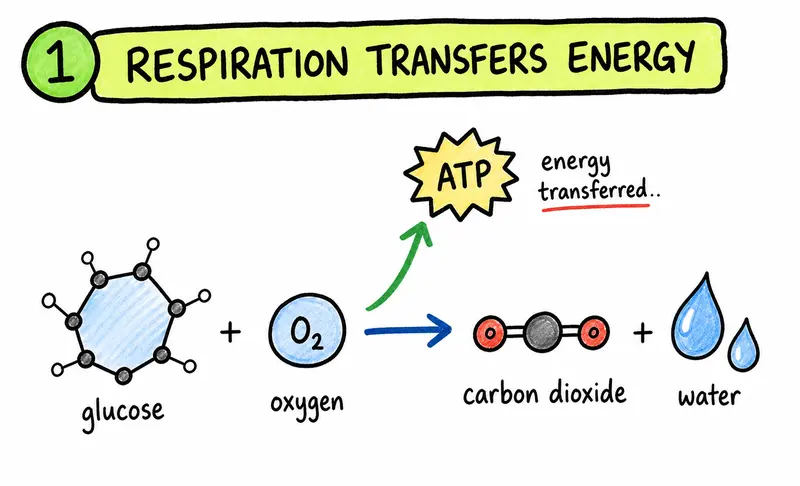
For aerobic respiration, a safe word equation is:
glucose + oxygen -> carbon dioxide + water
The balanced symbol equation is:
C6H12O6 + 6O2 -> 6CO2 + 6H2O
Students search for this in different ways, including cellular respiration equation, equation for cellular respiration, cellular respiration formula, and formula for cellular respiration. All of those searches are asking for the same core idea: glucose reacts with oxygen, carbon dioxide and water are produced, and usable energy is transferred to ATP.
The important exam idea is not only the products. It is that energy from glucose is transferred into ATP, which cells can use immediately. Avoid saying that respiration "creates energy." Energy is transferred and made available in a useful form.
Word equation vs symbol equation
The word equation is usually enough for a short Biology explanation:
- glucose + oxygen -> carbon dioxide + water
The symbol equation is useful when the question focuses on balancing or formula recall:
- C6H12O6 + 6O2 -> 6CO2 + 6H2O
In an IB Biology answer, do not stop at either equation if the command term is explain. Add what the equation means: glucose is broken down, oxygen is used in aerobic respiration, and energy is transferred to ATP.
Aerobic vs Anaerobic Respiration
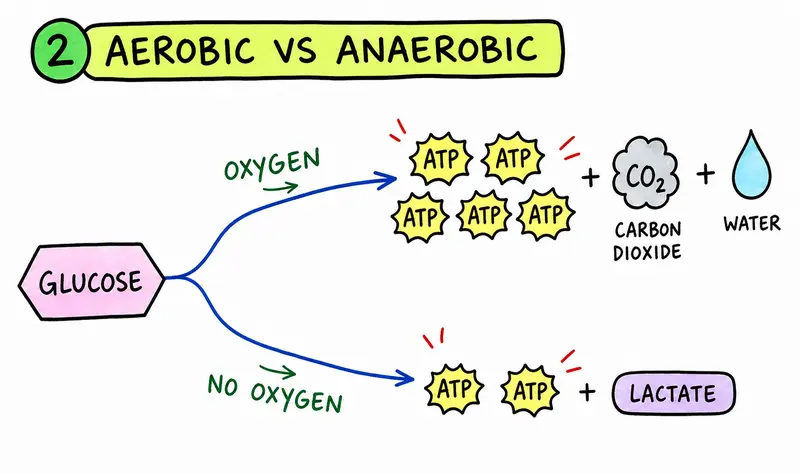
| Feature | Aerobic respiration | Anaerobic respiration |
|---|---|---|
| Oxygen | Requires oxygen | Does not require oxygen |
| Breakdown of glucose | More complete | Incomplete |
| ATP yield | Higher | Lower |
| Products in humans | Carbon dioxide and water | Lactate |
| Exam trap | Forgetting oxygen role | Saying it produces no ATP |
When comparing the two, use the same comparison point on both sides. Do not write three facts about aerobic respiration and only one vague fact about anaerobic respiration.
Worked Example: Why ATP Is Useful
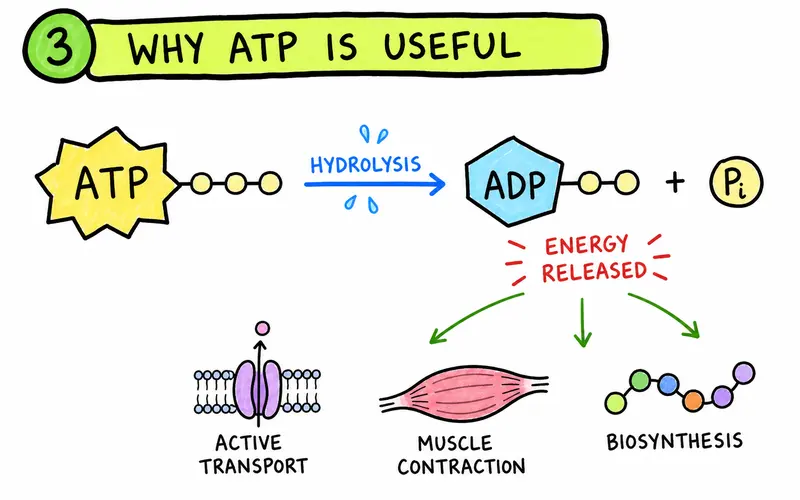
Question: Explain why ATP is useful in cells.
Mark-worthy answer: ATP is a short-term energy carrier. When ATP is hydrolysed, energy is released in small manageable amounts for cellular processes such as active transport, muscle contraction, biosynthesis, and movement of vesicles.
Why this scores: It explains the role of ATP instead of only naming it. It also gives biological examples, which makes the answer less vague.
Common Mistakes in Respiration Answers
- Saying cells make energy instead of transferring energy to ATP.
- Writing photosynthesis as simply the reverse of respiration.
- Forgetting that anaerobic respiration still releases some ATP.
- Comparing aerobic and anaerobic respiration without mentioning oxygen.
- Giving products but not linking them to glucose breakdown.
Respiration Revision Checklist
Before you finish this topic, check that you can:
- Write the aerobic respiration word equation.
- Explain ATP as an energy carrier.
- Compare aerobic and anaerobic respiration using oxygen, products, and ATP yield.
- Explain why respiration is needed for active transport and other cell processes.
- Answer one data or graph question about respiration rate.
How EduNinja Helps with Respiration
Use EduNinja Notes to rebuild the sequence, then use the Question Bank for comparison and explanation questions. When an answer loses marks, turn the missing phrase into a flashcard: "ATP is hydrolysed to release energy" is more useful than "revise respiration."
For additional application-style practice, use the IB Biology SL Question Bank.
Practice This Topic
Try this exam-style question: Explain how ATP is produced during aerobic cellular respiration and state what changes when oxygen is unavailable.
Answer guide:
- Aerobic respiration uses oxygen as the final electron acceptor and produces ATP through glycolysis, the Krebs cycle and oxidative phosphorylation.
- ATP is made when energy from electron transfer drives phosphorylation of ADP.
- Without oxygen, the electron transport chain cannot continue normally, so cells rely more on anaerobic pathways and produce much less ATP.
Practise IB Biology C1.2 cellular respiration questions.
FAQ
Does respiration make energy?
No. Respiration transfers energy from glucose into ATP. ATP can then be used by cells for processes such as active transport, movement, and biosynthesis.
Why does aerobic respiration release more ATP?
Aerobic respiration uses oxygen and allows more complete breakdown of glucose. That means more energy can be transferred to ATP than in anaerobic respiration.
What is the biggest IB Biology respiration mistake?
The biggest mistake is being too vague about ATP. A stronger answer explains what ATP does and gives a specific cell process that uses it.
What is the correct equation for cellular respiration?
The general word equation is glucose + oxygen -> carbon dioxide + water. The balanced formula is C6H12O6 + 6O2 -> 6CO2 + 6H2O. In Biology, also mention that energy from glucose is transferred to ATP.
Is the cellular respiration formula enough for an exam answer?
Not always. If the question asks you to state the equation, the formula may be enough. If it asks you to explain respiration, add that energy is transferred from glucose to ATP for cell processes.
Related Study Links
-
IB Biology Cellular Respiration: ATP and Exam Mistakes Notes
-
IB Biology Cellular Respiration: ATP and Exam Mistakes Question Bank
-
IB Biology HL Question Bank
<!-- backend-minimal-top-up-applied -->
Worked Example: Aerobic vs Anaerobic Wording
Question: Compare aerobic and anaerobic respiration in muscle cells.
Mark-worthy answer: Aerobic respiration requires oxygen and allows more complete breakdown of glucose, releasing more ATP. Anaerobic respiration does not require oxygen, releases less ATP, and in humans produces lactate. Both processes transfer energy from glucose into ATP, but aerobic respiration is more efficient.
Why this scores: It compares the same features on both sides: oxygen requirement, glucose breakdown, ATP yield, and product.
What the Markscheme Wants
For respiration questions, the markscheme usually wants precise energy language. Write "ATP is produced" or "energy is transferred to ATP" rather than "energy is made." If a question asks for a comparison, mention oxygen and ATP yield. If it asks for usefulness, connect ATP to a cell process such as active transport, muscle contraction, or protein synthesis.
Put cell respiration back into your full IB Biology SL study plan.
Return to the complete course overview, or move directly into the most relevant study tool.
Related articles
More course notes, updates and study resources from the EduNinja blog.
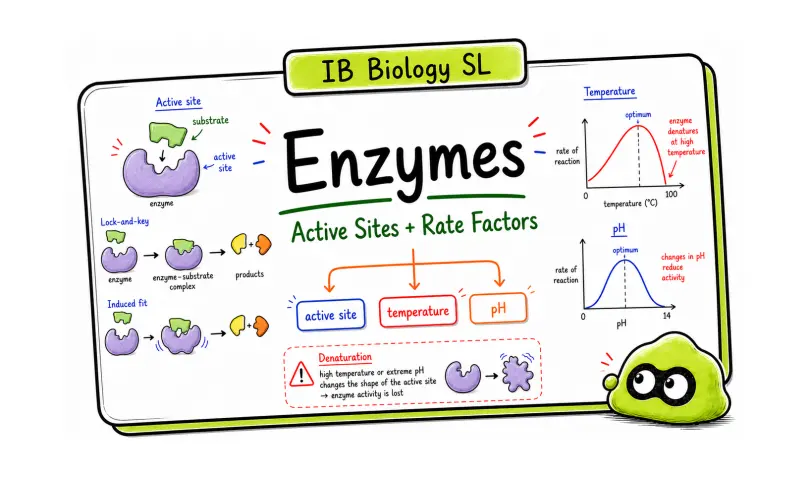
IB Biology SL Enzymes: Active Sites, Rate Factors, and Exam Answers
A source-backed IB Biology guide for IB Biology enzymes, using EduNinja PDF notes, worked examples, and markscheme-style answers.
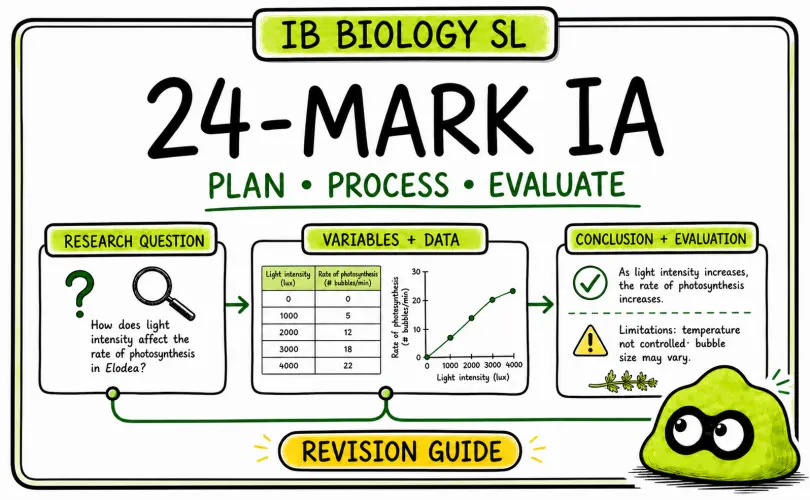
IB Biology Scientific Investigation Guide: How to Build a Strong 24-Mark IA
A practical IB Biology guide to the 24-mark Scientific Investigation: choose a workable research question, control variables, process data, draw a supported conclusion and evaluate limitations with specific improvements.

IB Biology SL Assessment and Grade Boundaries: How 55 + 50 + 24 Marks Become Your Final Grade
Learn how IB Biology SL Paper 1, Paper 2 and the scientific investigation combine through weighted assessment, how grade boundaries work and how to plan component-level revision.