A-Level Chemistry Organic Mechanisms: Curly Arrows Guide
Revise A-Level Chemistry organic mechanisms with curly arrows, nucleophiles, electrophiles, substitution, addition, elimination, and common arrow errors.
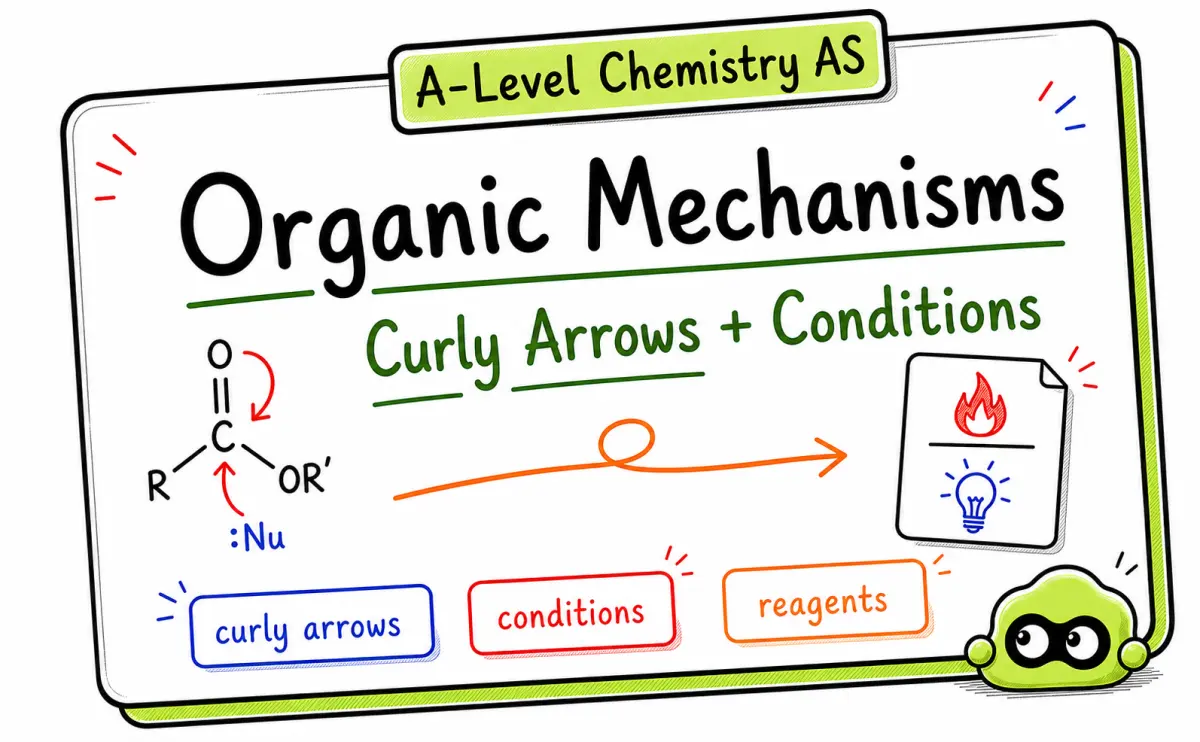
Organic mechanisms can look intimidating because the page is full of arrows, partial charges, and reaction names. The good news is that the markscheme usually wants a small number of precise moves: where the electron pair starts, where it goes, and what bond changes.
This guide is for students who know the reaction type but hesitate when drawing the mechanism. The aim is to make curly arrows less like decoration and more like readable chemical logic.
Quick Answer
For A-Level Chemistry organic mechanisms, focus on the movement of electrons:
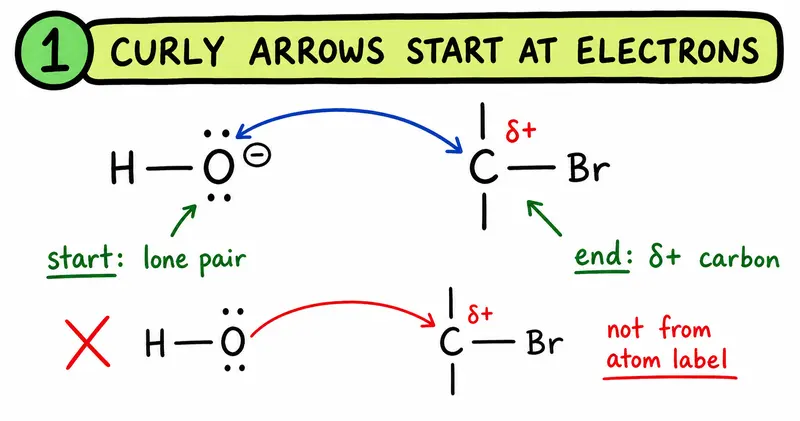
- Curly arrows must start from a lone pair or bond, not from a random atom.
- Identify the nucleophile or electrophile before drawing the mechanism.
- Show the leaving group when a bond breaks.
- Keep charges, partial charges, and lone pairs consistent.
- Use reaction conditions only when they help distinguish the pathway.
- Practise drawing small mechanism fragments before full exam questions.
Why Students Lose Marks on Organic Mechanisms
Most lost marks in this topic come from small gaps, not total misunderstanding. A student may know the rough idea but miss the exact relationship, the correct unit, the sequence of steps, or the wording that the markscheme expects.
That is why passive reading feels productive but does not always improve marks. You can spend an hour reading a clean note page and still lose marks if you have not practised retrieval, calculation setup, diagram interpretation, or explanation chains.
Use the relevant EduNinja course pages as your base:
- A-Level Chemistry Question Bank
- A-Level Chemistry Notes
- AS CIE Chemistry Notes - Unit 15 Halogen compounds
Do not open every link at once. Start with the notes or topic page, then move into question practice and use any PDF resource only when it helps clarify the exact idea you are revising.
<!-- backend-minimal-fix-applied -->
How to Read a Curly Arrow Mechanism
Start every mechanism by asking where the electron pair is before the reaction begins. A curly arrow shows movement of an electron pair, so it must start from a lone pair, a negative charge, or a bond. It should point to the atom or bond that receives those electrons.
This is why mechanisms are not just drawings. They are explanations of bond breaking and bond forming. If the arrow starts from the wrong place, the chemistry is wrong even if the final product looks familiar.
Nucleophiles, Electrophiles, and Leaving Groups
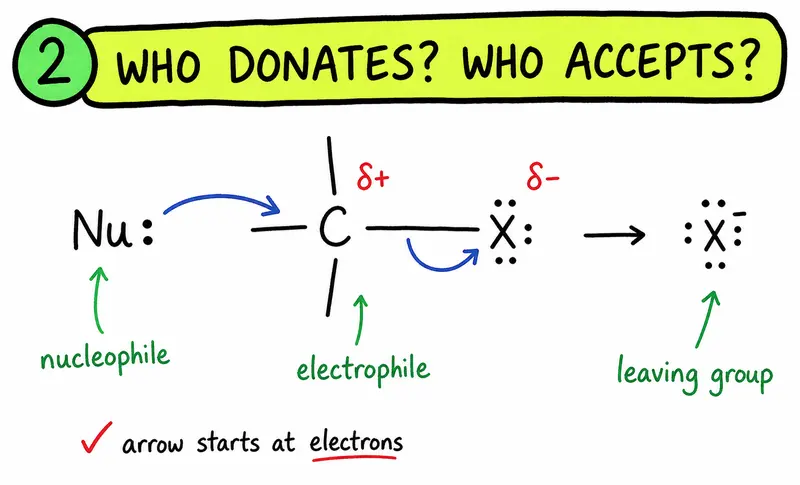
| Term | What to look for | Exam wording that helps |
|---|---|---|
| Nucleophile | Lone pair, negative charge, or electron-rich bond | Donates an electron pair |
| Electrophile | Positive charge or partial positive atom | Accepts an electron pair |
| Leaving group | Atom or group that takes a bonding pair away | Bond breaks heterolytically |
| Curly arrow | Movement of an electron pair | Starts at electrons, not at a charge label |
For halogenoalkanes, the carbon bonded to the halogen is often partially positive because the C-X bond is polar. That carbon can be attacked by a nucleophile. The halogen can leave with the electron pair from the bond.
Worked Example: Nucleophilic Substitution
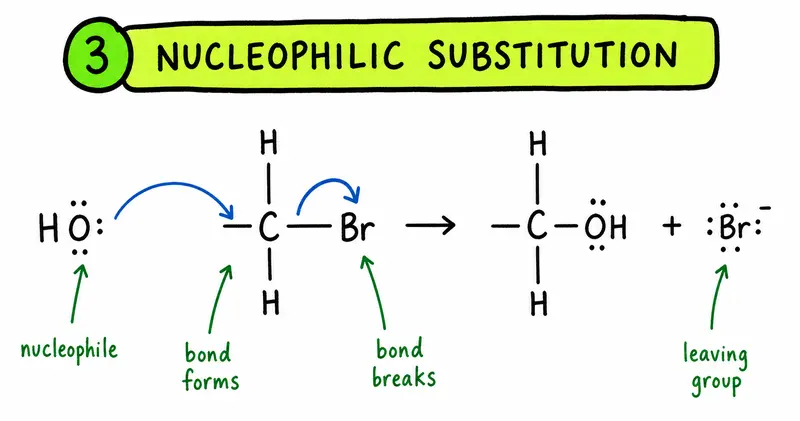
Question: Explain the mechanism when hydroxide ions react with a bromoalkane.
Mark-worthy answer: The hydroxide ion has a lone pair and acts as a nucleophile. A curly arrow goes from the lone pair on the hydroxide ion to the carbon bonded to bromine. A second curly arrow shows the C-Br bond breaking, with the electron pair moving to bromine. Bromide leaves as Br-, and an alcohol forms.
Why this scores: It names the nucleophile, identifies the electron-pair movement, shows the leaving group, and explains the bond change. Those are the parts that usually carry the marks.
Checklist Before You Finish a Mechanism
Use this checklist before moving on:
- Did every curly arrow start from a lone pair or bond?
- Did every arrow point to the atom or bond receiving electrons?
- Did charges balance before and after the step?
- Did the leaving group take the bonding pair when the bond broke?
- Did the product match the reaction conditions?
- Did you avoid drawing arrows from atoms with no available electron pair?
If one answer keeps going wrong, do not redraw ten full mechanisms. Practise the single arrow move that failed.
How EduNinja Helps with Organic Mechanisms
Use EduNinja Notes to review the reaction family, then practise topic questions in the Question Bank. After marking, turn each mistake into a short flashcard such as "curly arrows start from electrons" or "leaving group takes the bonding pair." This creates a mechanism routine instead of a memory pile.
FAQ
Where should a curly arrow start?
A curly arrow should start from an electron pair. That could be a lone pair, a negative charge with a lone pair, or a bond. It should not start from a random atom label.
What is the difference between a nucleophile and an electrophile?
A nucleophile donates an electron pair. An electrophile accepts an electron pair. In mechanisms, the arrow usually starts from the nucleophile and points toward the electrophilic atom.
Why do organic mechanisms lose marks?
They lose marks when arrows start in the wrong place, charges are missing, leaving groups are not shown correctly, or the product does not match the conditions.
Related Study Links
- Review the complete syllabus Study Hub
- A-Level Chemistry Question Bank
- A-Level Chemistry Notes
- Organic reaction terminology
Put organic mechanisms back into your full A-Level CAIE Chemistry AS study plan.
Return to the complete course overview, or move directly into the most relevant study tool.
Related articles
More course notes, updates and study resources from the EduNinja blog.
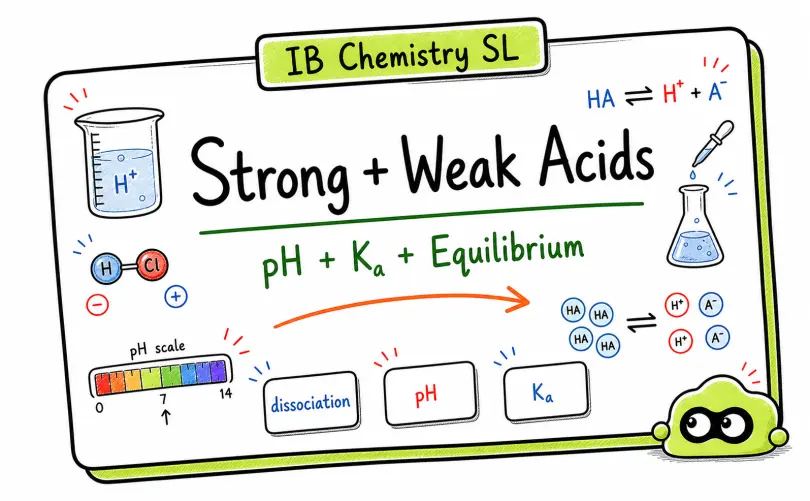
IB Chemistry SL Strong and Weak Acids: Exam Answer Guide
Revise IB Chemistry SL strong and weak acids with pH logic, equilibrium language, Ka, neutralisation, and mark-worthy answer patterns.
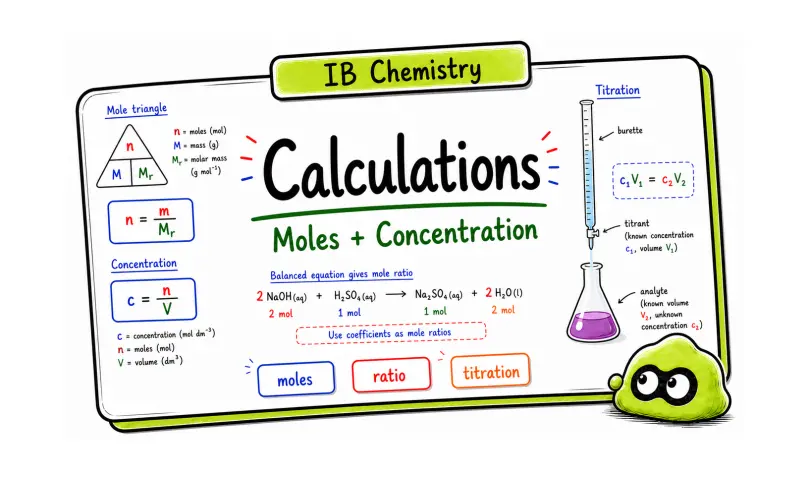
IB Chemistry Calculations: Mole Ratios, Concentration, and Titration Practice
A source-backed IB Chemistry guide for IB Chemistry calculations, using EduNinja PDF notes, worked examples, and markscheme-style answers.
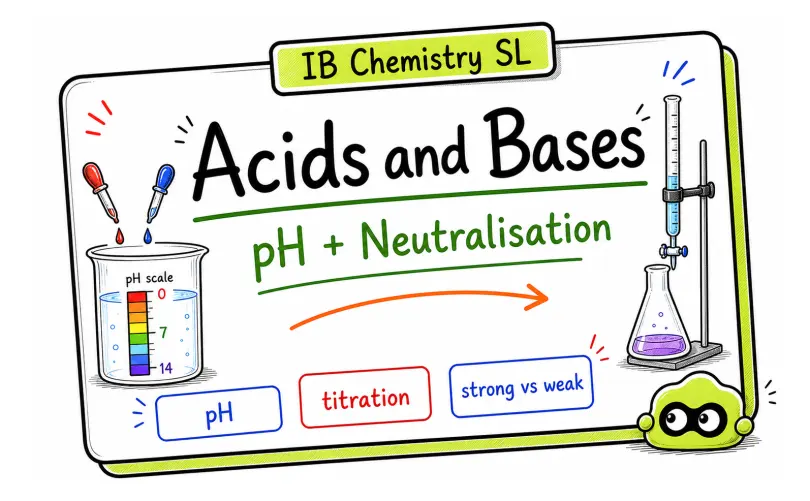
IB Chemistry Acids and Bases: pH, Neutralisation, and Common Mistakes
Revise IB Chemistry acids and bases with pH, strong vs weak acids, conjugate pairs, neutralisation, buffers, and markscheme wording. Includes examples and targeted FAQ.